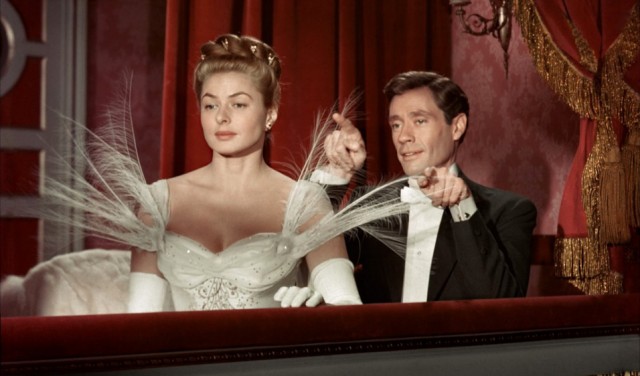
Count Henri de Chevincourt (Mel Ferrer) seeks a better view with Princess Elena Sokorowska (Ingrid Bergman) in Jean Renoir farce
ELENA AND HER MEN (PARIS DOES STRANGE THINGS) (Jean Renoir, 1956)
MoMA Film, Museum of Modern Art
11 West 53rd St. between Fifth & Sixth Aves.
Sunday, September 6, 2:00
Series runs through September 10
Tickets: $12, in person only, may be applied to museum admission within thirty days, same-day screenings free with museum admission, available at Film and Media Desk beginning at 9:30 am
212-708-9400
www.moma.org
 MoMA’s “Ingrid Bergman: A Centennial Celebration” series includes several classic favorites featuring the immensely popular international star (Gaslight, Casablanca, Notorious), but the key to enjoying this festival lies in numerous lesser-known surprises. One of the most intriguing is the 1956 Jean Renoir “musical fantasy” Elena and Her Men, also known as Paris Does Strange Things. In this small gem of a film, Bergman plays Elena Sokorowska, a splendiferous Polish princess living the high life in fin de siècle Paris, quickly running out of money and strongly advised by her aunt to find a rich husband. After dispatching one lover, composer Lionel Villaret (Jean Claudio), the princess has a trio of suitors: the much older Martin-Michaud (Pierre Bertin), a stuffy, aristocratic shoe mogul; the heroic General François Rollan (Jean Marais, playing a character based on the real-life General Georges Boulanger), who is being celebrated on Bastille Day; and the playboy Count Henri de Chevincourt (Mel Ferrer), who instantly falls madly in love with her — and wishes to take her home the very day he meets her. It’s 1915, and the streets are filled with French men, women, and children singing the praises of General Rollan while wondering what will come next for the government, with talk of a coup and a dictatorship making the rounds. In the middle of it all is Princess Sokorowska, whose lavish charm beguiles nearly everyone she meets, except, of course, the general’s mistress, Paulette Escoffier (Elina Labourdette). As the men fight over her, the princess hands out daisies to bring various people good luck.
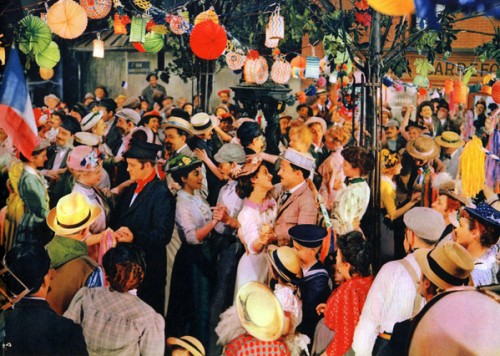
The people in Paris party in the streets in Jean Renoir farce about love, war, politics, and sex
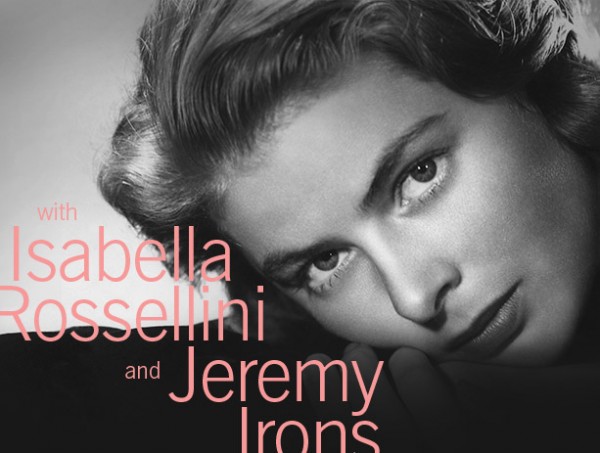
Elena and Her Men was Bergman’s first film after leaving Roberto Rossellini, and French was the fourth language she’d spoken onscreen, following Swedish, English, and Italian. Renoir and cinematographer Claude Renoir, Jean’s nephew, bathe Bergman in an effervescent glow, as if she is an angel making her way through her would-be lovers and the always-crowded Paris. The film is not a musical in the traditional sense; no one suddenly bursts out into song to further the plot or flesh out characters. Instead, all of the singing is natural, from the princess playing piano to people singing in the streets to a visit to the opera. The color is sensational, with bright and cheerful rainbow hues popping up everywhere; the spectacular costumes — and oh, those amazing hats on Bergman — are by Rosine Delamare and Monique Plotin. This is Renoir, so there is plenty of social and political commentary as well, with a healthy dose of dark comedy and cynicism, evoking the auteur’s masterpiece, The Rules of the Game, but it’s primarily a wild farce that has fun playing with the image of Frenchmen as suave and sophisticated, especially when Eugène (Jacques Jouanneau), a goofball who’s engaged to Martin-Michaud’s daughter, Denise (Michèle Nadal), repeatedly chases after Elena’s alluring maid, Lolotte (Magali Noël), like he’s Harpo Marx. More than love and war, the film is about sex and power, as the men want it, and the women decide who is going to get it. It’s also about having faith in humanity, which is what drives the princess. “This is ridiculous! I’m ending this farce,” Henri says at one point; thank goodness Renoir keeps it going, full speed ahead, even if it often gets too silly. Elena and Her Men is the third in an unofficial trilogy, following 1953’s The Golden Coach and 1955’s French Cancan, that Criterion has packaged as “Stage & Spectacle,” as it’s also about art and the theatricality of film, which is by its very nature a fantasy, not reality. Selected for the MoMA series by Isabella Rossellini, one of Ingrid’s three daughters, Elena and Her Men is screening September 6 at 2:00; the celebration of the hundredth anniversary of Bergman’s birth — and the thirty-third anniversary of her death — continues through September 10 with such other works as Fear, Stromboli, Journey to Italy, and Autumn Sonata.

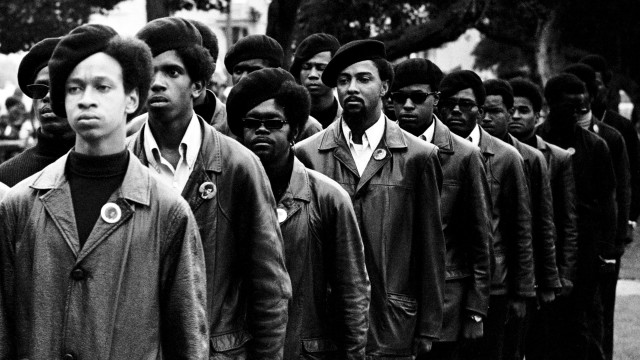
 At the beginning of The Black Panthers: The Vanguard of the Revolution, Black Panther Ericka Huggins says, “We know the party we were in, and not the entire thing. We were making history, and it wasn’t nice and clean.” Documentarian Stanley Nelson spent seven years making the revelatory film, which details the rise and fall of a group of radical militant African American men and women who decided to fight back against the white establishment and show that black lives matter, almost half a century ago, and no, it isn’t all nice and clean. Nelson (Freedom Riders, The Murder of Emmett Till) combines powerful, rarely seen archival footage with new interviews of the people who were involved in this revolution, which was more complicated than it is often given credit for. The film is sharply one-sided; although a handful of former police officers and FBI agents state their case, their views are given short shrift. “The Panthers were a criminal organization, were violent, and they wanted to kill cops. That’s all I needed to know,” says Ron McCarthy of the LAPD. But Nelson primarily speaks with many surviving members of the party, including Kathleen Cleaver, Elaine Brown, Emory Douglas, Elbert “Big Man” Howard, Jamal Joseph, Flores Forbes, in addition to historians and journalists who put it all in perspective.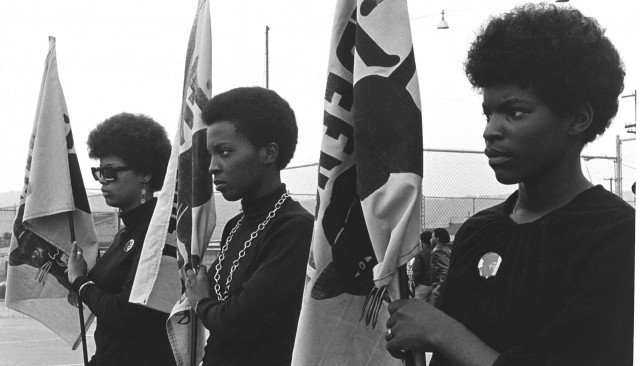

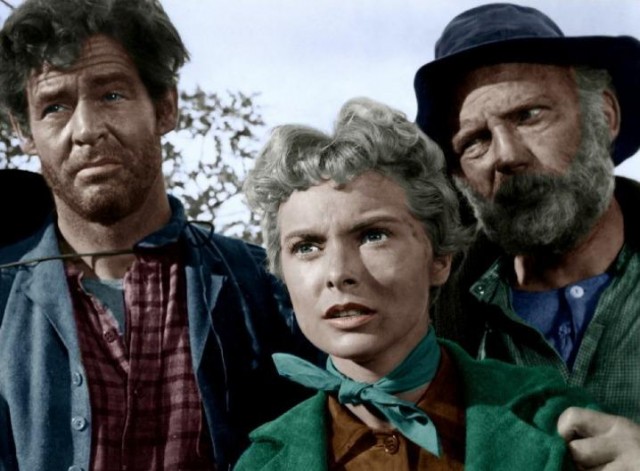
 Shortly after the Civil War, bounty hunter Howard Kemp (James Stewart) is determined to bring in wanted murderer Ben Vandergroat (Robert Ryan) and claim the reward. Joined by grizzled old prospector Jesse Tate (Millard Mitchell) and dishonorably discharged Union lieutenant Roy Anderson (Ralph Meeker), Kemp gets his man, along with Ben’s companion, the young Lina Patch (Janet Leigh), the daughter of Ben’s dead best friend. They tie up Ben’s hands, put him on a burro, and head out on the long, arduous trail to turn him over to the federal marshals. But the smug, wisecracking outlaw has other plans, continually planting various seeds to try to set Howard, Roy, and Jesse against one another. Directed by Anthony Mann (Winchester ’73, The Man from Laramie) and shot in the Rocky Mountains, The Naked Spur is not just another Western; it is a multilayered exploration of lust and greed, love and sexuality, with Lina at the center of it all. When Ben needs his sore back rubbed, he asks her, “Can you do me?” Roy thinks he can do anything he wants with any woman. And Howard can’t get over a part of his past, suffering from nightmares that haunt him. Unfortunately, the complex story is dragged down by overly conventional music — “Beautiful Dreamer”? Really? — and some ridiculously staged, hard-to-believe action scenes, but it’s still worth saddling up your horse and going along for the ride. The Naked Spur is screening September 5, 7, and 9 as part of the Anthology Film Archives series “Robert Ryan: An Actor’s Actor,” which continues with such other Ryan flicks as Daniel Mann’s About Mrs. Leslie, Nicholas Ray’s On Dangerous Ground, John Sturges’s Bad Day at Black Rock, Fred Zinnemann’s An Act of Violence, and Mann’s God’s Little Acre. Select screenings will be followed by a discussion with Cheyney Ryan, Robert’s son, and professor J. R. Jones, the author of the new book The Lives of Robert Ryan. A Dartmouth grad who was born in Chicago, Ryan was an outspoken civil rights activist who made more than fifty films during his thirty-plus-year career, which ended when he died of lung cancer in 1973 at the age of sixty-four.