
Jonathan Pryce will play Shylock in Shakespeare’s Globe production of THE MERCHANT OF VENICE at Lincoln Center Festival this summer (photo by Manuel Harden)
Multiple venues at Lincoln Center
July 13-31, $30-$125
Tickets on sale now
www.lincolncenterfestival.org
For twenty years, one of the highlights of every summer arts season has been the Lincoln Center Festival, and 2016 is no exception, with another stellar lineup of dance, music, opera, and theater from around the globe. The festival begins with six presentations by Japan’s Kanze Noh Theatre at the Rose Theater in Jazz at Lincoln Center. Led by Grand Master Kiyokazu Kanze, the troupe, which rarely ventures outside its home country, will perform Okina with Kanze’s son, Saburota, and Hagoromo on July 13, Sumida Gawa, Busshi, and Shakkyo on July 14, Hagoromo, Kaki Yamabushi, and Sumida Gawa on July 15, Okina and Aoi No Ue on July 16 at 1:30, Hagoromo, Busshi, and Aoi No Ue on July 16 at 7:30, and Okina and Shakkyo on July 17. From July 13 to 16 at the Gerald W. Lynch Theater, visual artist Jennifer Wen Ma directs composer Huang Ruo’s Ming Dynasty romantic opera, Paradise Interrupted. Japan’s Takarazuka Revue will bring “All That Jazz” and more to the David H. Koch Theater July 20–24 with an all-female version of Chicago, with a rotating cast, lyrics in Japanese, and Bob Fosse’s original choreography. Shakespeare’s Globe, which recently staged the marvelous Broadway double shot of Twelfth Night and Richard III, will make its Lincoln Center debut July 20–24 at the Rose Theater with Jonathan Pryce in The Merchant of Venice, directed by Jonathan Munby. British company 1927 reinvents a traditional tale in Golem, incorporating animation, puppetry, crazy set design and costumes, and general absurdity July 26–31 at the Lynch.
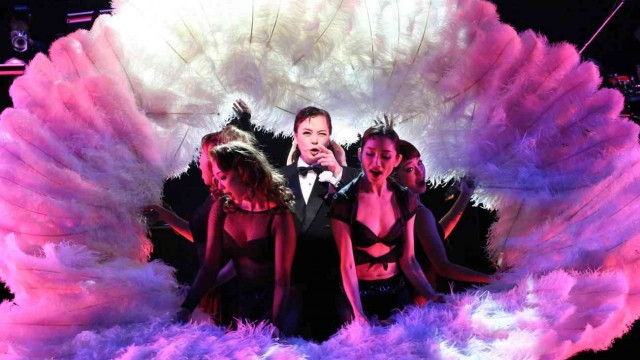
Japan’s Takarazuka Revue will present an all-female version of CHICAGO at Lincoln Center Festival (photo by Maiko Miagawa and Nobuhiko Hikichi)
The National Ballet of Canada waltzes into the Koch Theater July 28–31 with Tony winner Christopher Wheeldon’s unique take on The Winter’s Tale, featuring music by Joby Talbot, scenic design by Tony winner Bob Crowley, and silk effects by Basil Twist. In addition, Goran Bregović’s Wedding and Funeral Orchestra marches into David Geffen Hall July 15–16; Reich/Reverberations pays tribute to Steve Reich July 16, 19, and 21 with Sō Percussion, Ensemble Signal, and JACK Quartet; C.I.C.T. / Théâtre des Bouffes du Nord’s version of Molière’s Le Bourgeois Gentilhomme goes for laughs July 20–24 at the Lynch, directed by Denis Podalydès and with choreography by Kaori Ito; musicians Wang Li and Wu Wei team up on July 23 at the Stanley H. Kaplan Penthouse; and a few days later Sō Percussion’s Trilogy takes over the Penthouse, with Eric Cha-Beach, Josh Quillen, Adam Sliwinski, and Jason Treuting playing works by Reich, Dessner, and Lang on July 28, Xenakis, Ergun, and Trueman on July 29, and Cage, Lansky, and Mackey on July 30. There are various special ticket packages that can save you between twenty and thirty-five percent if you go for multiple shows, but those deals are going fast.

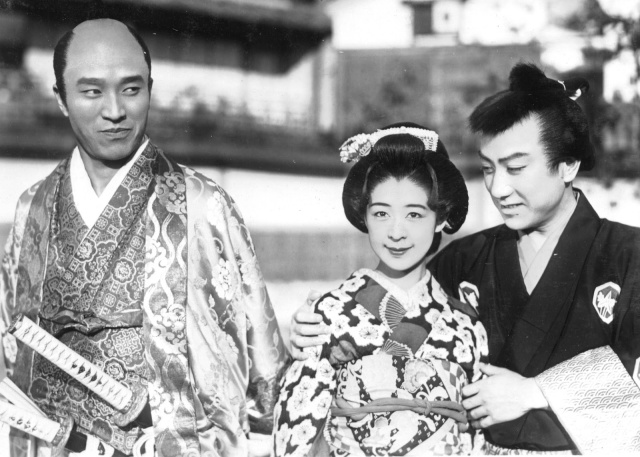
 In the 1930s, on the cusp of WWII, Japan was in the process of creating its own cinematic musical genre. One of the all-time classics is the wonderful Singing Lovebirds, a period romantic rectangle set in the days of the samurai. Oharu (Haruyo Ichikawa) is in love with handsome ronin Reisaburō (Chiezō Kataoka), but he is also being pursued by the wealthy and vain Otomi (Tomiko Hattori) and the merchant’s daughter, Fujio (Fujiko Fukamizu), who has been promised to him. Meanwhile, Lord Minezawa (jazz singer Dick Mine) has set his sights on Oharu and plans to get to her through her father, Kyōsai Shimura (Takashi Shimura), a former samurai who now paints umbrellas and spends all of his minuscule earnings collecting antiques. “It’s love at first sight for me with this beautiful young woman,” Lord Minezawa sings about Oharu before telling his underlings, “Someone, go buy her for me.” But Oharu’s love is not for sale. Directed by Masahiro Makino, the son of Japanese film pioneer Shōzō Makino, Singing Lovebirds is utterly charming from start to finish, primarily because it knows exactly what it is and doesn’t try to be anything else, throwing in a few sly self-references for good measure.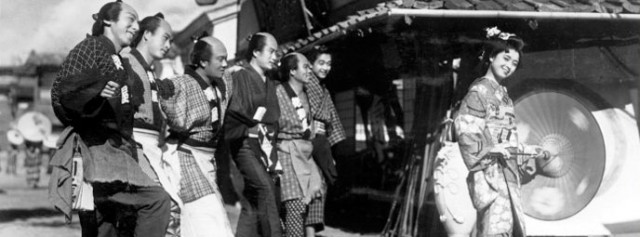

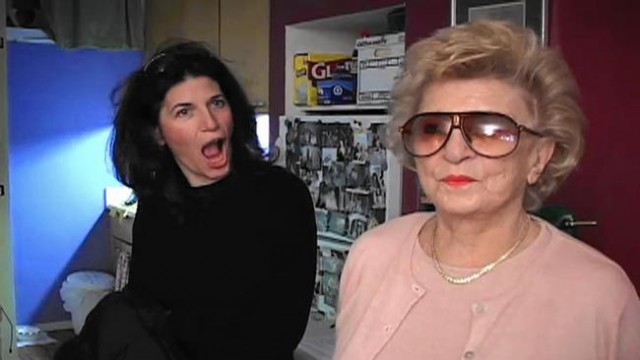
 “Am I ever going to be able to understand, forgive, and cherish my mother, before time runs out?” filmmaker Gayle Kirschenbaum asks at the beginning of her debut feature documentary, Look at Us Now, Mother! In the film, Kirschenbaum, who previously made the cable hit A Dog’s Life: A Dogamentary and the film festival short My Nose, about her mother’s extreme dislike of her daughter’s nose — and which Kirschenbaum is currently attempting to turn into a full feature, The Bigger Version — spends eighty-four minutes detailing her relationship with her mother, Mildred Abramowitz Kirschenbaum, which was more than rocky from the day Gayle was born, when Mildred, who clearly expected and wanted another boy to join her two older sons, got a baby girl instead. Gayle brings together old home movies, travel footage, visits to a pair of therapists and a plastic surgeon, and interviews with her two brothers and her mother’s friends and first cousins to paint a not-too-pretty picture of Mildred, who lives in Boca Raton and has been putting Gayle down and blaming her since the very beginning. In the film, Mildred claims that she has no idea why her daughter is complaining now, although on one therapist visit, she does admit to at least one Mommie Dearest moment. It’s often painful to watch as Gayle, who wrote, directed, and produced the film in addition to editing it with Alex Keipper and shooting it with Steven Gladstone, relives much of the psychological and emotional torture she experienced at the hands of her parents, primarily her mother, who continues to be nasty, rude, uncaring, and disapproving, even if Mildred doesn’t admit it and even if, deep down, she truly loves her daughter. “We are now off to go to see a therapist,” Mildred says at one point. “We’re going to find out what’s wrong with Gayle’s relationship with me.”