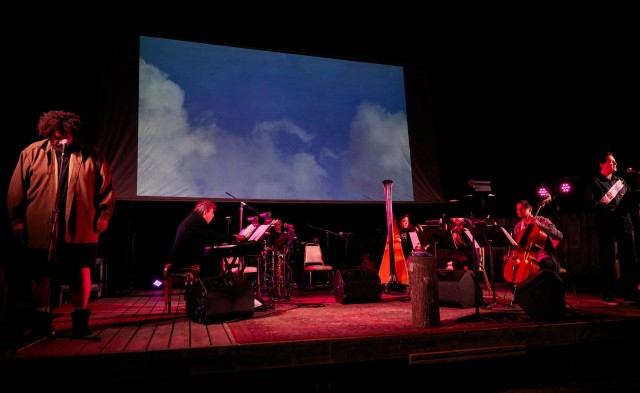
Philip Glass and friends will share music and poetry at City Winery at benefit for Days and Nights Festival
Who: Philip Glass, the Days and Nights Festival Players
What: Benefit for Days and Nights Festival
Where: City Winery, 155 Varick St. between Spring & Vandam Sts., 212-608-0555
When: Sunday, May 15, $70-$115, 2:00 & 8:00
Why: New Yorkers can get a taste of the sixth annual Days and Nights Festival, held in Big Sur every September, at this benefit for the Central Coast arts festival, a program of the nonprofit Philip Glass Center for the Arts, Science and the Environment. On May 15, Glass, who founded the center “to gather the world’s leaders in the fields of art, science, and the environment for a broad array of interdisciplinary activities including performances, seminars, and education programs that inspire and motivate the public to become engaged with matters vital to the future of the natural environment and the quality of human existence,” will be at City Winery with the Days and Nights Festival Players for two shows of music and poetry, at 2:00 and 8:00. In between, at 6:00, you can join the seventy-nine-year-old Glass and friends for a pre-evening-show dinner ($325).

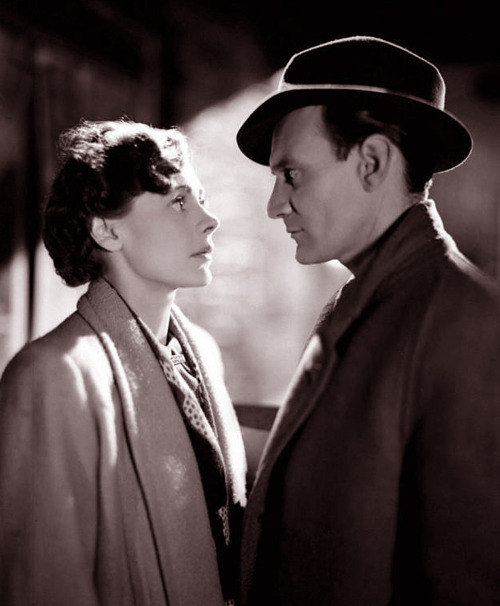
 “Don’t hurry. I’m perfectly happy,” Laura Jesson (Celia Johnson) tells her rather boring husband, Fred (Cyril Raymond), as he returns to his crossword puzzle one night. “How can I possibly say that?” she then thinks to herself. “‘Don’t hurry. I’m perfectly happy.’ If only it were true. Not, I suppose, that anybody’s ever perfectly happy, really. But just to be ordinarily contented, to be at peace. It’s such a little while ago really but it seems an eternity since that train went out of the station, taking him away into the darkness. I was happy then.” In David Lean’s Brief Encounter, one of the greatest romantic films ever made, Laura, a housewife and mother, can’t stop herself from falling for dapper doctor Alec Harvey (Trevor Howard), who is also married. As they explore a potential physical relationship, Laura is wracked with guilt, especially as she keeps bumping into nosy gossip Myrtle Bagot (Joyce Carey). But the two potential lovers are so drawn to each other, filling the holes in each other’s lives, that they consider risking all they have for just one more moment together. Winner of the 1946 Palme d’Or at Cannes, Brief Encounter is told in flashback in Laura’s voice as she goes over every wonderful and terrifying detail in her mind while contemplating whether to spill the beans to the generally oblivious Fred. Written by Noël Coward based on his 1936 one-act play, Still Life, the film features terrifically subtle performances by Johnson and Howard as the daring couple; you can’t help but root for them, despite the possible consequences. Lean, who earned the first of his seven Best Director Oscar nominations for the heartbreaking film, keeps things relatively, well, lean, getting right to the point in less than ninety minutes; he would go on to helm such sprawling epics as The Bridge on the River Kwai, Lawrence of Arabia, Doctor Zhivago, and A Passage to India before his death in 1991 at the age of eighty-three. Brief Encounter is screening May 15 and 16 in Film Forum’s one-week, thirteen-film tribute to the one and only Coward, consisting of movies he wrote, appeared in, or were based on his writing, from such beloved classics as Blithe Spirit, Private Lives, and Cavalcade to such lesser-known fare as The Astonished Heart, Tonight Is Ours, and Boom!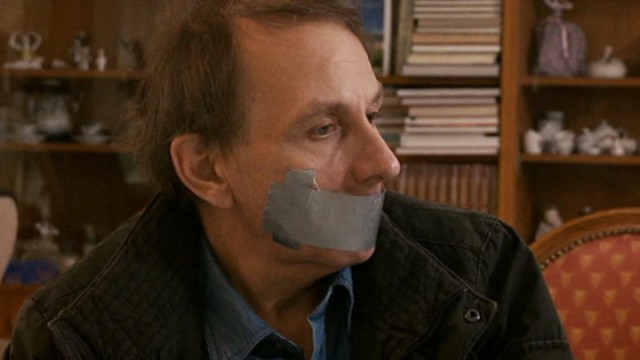
 In 2010, French writer, actor, poet, and filmmaker Michel Houellebecq won the prestigious Prix Goncourt for his novel The Map and the Territory. The controversial Houellebecq — who has been accused of plagiarism, misogyny, and inciting racial hatred — then went missing in 2011, failing to show up for a book tour in Belgium and the Netherlands. As it turns out, the novelist merely forgot about the readings and claims he was unreachable at the time, by either phone or e-mail. But writer-director Guillaume Nicloux tells a far more entertaining story in the absurdist black comedy The Kidnapping of Michel Houellebecq, which imagines that he really was taken hostage and held for a never-specified ransom. Even better, Nicloux got Houellebecq to play himself in the film, spoofing his image as an intellectual recluse. The fictionalized Houellebecq is taken captive by Mathieu (Mathieu Nicourt), Max (Maxime Lefrançois), and Luc (Luc Schwarz), who eventually bring him to a country house owned by elderly couple Ginette (Ginette Suchotzky) and Dede (Andre Suchotzky), where Houellebecq is almost always handcuffed and chained to his bed at night. His kidnappers engage him in literary discussions, talk about bodybuilding, bring him books to read, drink wine and smoke cigarettes with him, and even procure female accompaniment (Marie Bourjala) when he asks for it. The real Houellebecq (Platform; H. P. Lovecraft: Against the World, Against Life) plays his fictionalized self with a deadpan comic turn worthy of Buster Keaton, never letting on whether anything that is happening is even the slightest bit true to who Houellebecq actually is. Nicloux (The Nun, Valley of Love) keeps the audience guessing all the way about the characters and their motives, but don’t expect any simple answers or trite resolutions. The Kidnapping of Michel Houellebecq is screening May 10 at 4:00 and 7:30 in FIAF’s “Creative Encounters” CinéSalon series, with the later show introduced by Albertine Books deputy director Tom Roberge, who has admitted to his