Chiron (Alex Hibbert) looks out at a hard future in Barry Jenkins’s powerful MOONLIGHT
MOONLIGHT (Barry Jenkins, 2016)
Film Society of Lincoln Center, Walter Reade Theater
165 West 65th St. at Amsterdam Ave.
Thursday, January 5, 6:30
Series runs January 4-9
212-875-5601
www.filmlinc.org
moonlight-movie.com
 The Film Society of Lincoln Center is paying tribute to one of the best films of the year, Barry Jenkins’s Moonlight, with the six-day series “Illuminating Moonlight,” running January 4-9 and consisting of screenings of the L.A.-based writer-director’s 2008 debut, Medicine for Melancholy, starring Wyatt Cenac and Tracey Heggins, which Jenkins will introduce; his follow-up, Moonlight, which will be followed by a Q&A with Jenkins; and six diverse works that directly influenced Jenkins in making Moonlight: Carlos Reygadas’s Silent Light, Hou Hsiao-hsien’s Three Times, Charles Burnett’s Killer of Sheep, Wong Kar-wai’s Happy Together, Nagisa Ôshima’s Gohatto, and Claire Denis’s Beau Travail. In Moonlight, Jenkins tells the powerful and moving story of Chiron, a shy, troubled boy growing up in Liberty City, Florida, in three chapters as Chiron goes from a young boy (Little, played by Alex Hibbert) to a teenager (Chiron, played by Ashton Sanders) to a twenty-seven-year-old man (Black, played by Trevante Rhodes). The semiautobiographical film is based on playwright and actor Tarell Alvin McCraney’s In Moonlight Black Boys Look Blue and Jenkins’s own experiences; both men are from Liberty City but did not know each other there. In the first section, Little is chased by bullies and runs into an abandoned building, where he is found by Juan (Mahershala Ali), a drug dealer who brings him home to his girlfriend, Teresa (Janelle Monáe). They become a kind of surrogate family, as Little’s mother, Paula (Naomie Harris), is a crack addict who will do just about anything for her next score. Little also finds solace in his friendship with Kevin (Jaden Piner, later played by Jharrel Jerome and André Holland). In the second chapter, Chiron is taunted and bullied by Terrel (Patrick Decile) while trying to come to terms with his sexual orientation. In the third section, the passage of time reveals how much has changed, although the film turns overly melodramatic at the end. Taking its inspiration from the source material, Moonlight is beautifully photographed by James Laxton, who has previously shot Medicine for Melancholy and Jenkins’s 2003 shorts, My Josephine and Little Brown Boy, and 2011 “Remigration” episode of Futurestates, bathing the film in lush blues. Jenkins’s subtly paced style is accompanied by a gorgeous classical-inspired score by Nicholas Britell (The Big Short). Moonlight is anchored by superb performances by Emmy nominee Ali (House of Cards, Hidden Figures) as the cool and caring Juan; Harris (Mandela: Long Walk to Freedom, 28 Days Later) as the drug-addicted Paula, who has lost control of her life; Monáe (Hidden Figures, The Electric Lady) as the sweet and understanding Teresa; and Sanders (The Retrieval) as the in-between Chiron, who feels overwhelmed by all the maelstrom swirling around him.
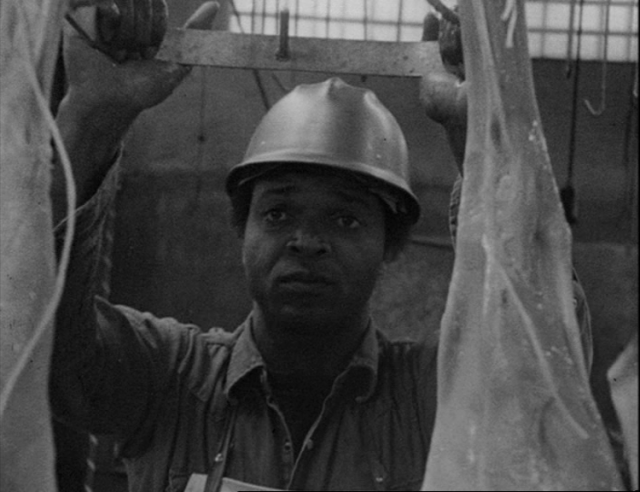
Charles Burnett’s KILLER OF SHEEP examines black life in postwar America
KILLER OF SHEEP (Charles Burnett, 1977)
Wednesday, January 4, 7:00
Sunday, January 8, 8:45
www.filmlinc.org
www.killerofsheep.com
In 2007, Milestone Films restored and released Charles Burnett’s low-budget feature-length debut, Killer of Sheep, with the original soundtrack intact; the film had not been available on VHS or DVD for decades because of music rights problems that were finally cleared. (The soundtrack includes such seminal black artists as Etta James, Dinah Washington, Little Walter, and Paul Robeson.) Shot on weekends for less than $10,000, Killer of Sheep took four years to put together and another four years to get noticed, when it won the FIPRESCI Prize at the 1981 Berlin Film Festival. Reminiscent of the work of Jean Renoir and the Italian neo-Realists, the film tells a simple story about a family just trying to get by, struggling to survive in their tough Watts neighborhood in the mid-1970s. The slice-of-life scenes are sometimes very funny, sometimes scary, but always poignant, as Stan (Henry Gayle Sanders) trudges to his dirty job in a slaughterhouse in order to provide for his wife (Kaycee Moore) and children (Jack Drummond and Angela Burnett). Every day he is faced with new choices, from participating in a murder to buying a used car engine, but he takes it all in stride. The motley cast of characters, including Charles Bracy and Eugene Cherry, is primarily made up of nonprofessional actors with a limited range of talent, but that is all part of what makes it all feel so real. Killer of Sheep was added to the National Film Registry of the Library of Congress in 1989, the second year of the program, making it among the first fifty to be selected, in the same group as Rebel Without a Cause, The Godfather, Duck Soup, All About Eve, and It’s a Wonderful Life, which certainly puts its place in history in context. Killer of Sheep is screening January 4 and 8 in the “Illuminating Moonlight” series.

The beautifully minimalist SILENT LIGHT served as an influence on Barry Jenkins’s MOONLIGHT
SILENT LIGHT (STELLET LICHT) (Carlos Reygadas, 2007)
Thursday, January 5, 3:30
Sunday, January 8, 6:00
www.filmlinc.org
 Carlos Reygadas’s Silent Light is a gentle, deeply felt, gorgeously shot work of intense calm and beauty. The film opens with a stunning sunrise and ends with a glorious sunset; in between is scene after scene of sublime beauty and simplicity, as Reygadas uses natural sound and light, a cast of mostly nonprofessional actors, and no incidental music to tell his story, allowing it to proceed naturally. In a Mennonite farming community in northern Mexico where Plautdietsch is the primary language, Johan (Cornelio Wall Fehr) is torn between his wife, Esther (Miriam Toews), and his lover, Marianne (Maria Pankratz). While he loves Esther, he finds a physical and spiritual bond with Marianne that he does not feel with his wife and their large extended family. Although it pains Johan deeply to betray Esther, he is unable to decide between the two women, even after tragedy strikes. Every single shot of the spare, unusual film, which tied for the Jury Prize at the 2007 Cannes Film Festival (with Vincent Paronnaud and Marjane Satrapi’s Persepolis), is meticulously composed by Reygadas (Japon, Battle in Heaven) and cinematographer Alexis Zabe, as if a painting. Many of the scenes consist of long takes with little or no camera movement and sparse dialogue, evoking the work of Japanese minimalist master Yasujiro Ozu. The lack of music evokes the silence of the title, but the quiet, filled with space and meaning, is never empty. And the three leads — Fehr, who lives in Mexico; Toews, who is from Canada; and Pankratz, who was born in Kazakhstan and lives in Germany — are uniformly excellent in their very first film roles. Screening January 5 and 8 in the “Illuminating Moonlight” series, Silent Light is a mesmerizing, memorable, and very different kind of cinematic experience.

Chang Chen and Shu Qi fall in love in three different decades in Hou Hsiao-hsien’s THREE TIMES
THREE TIMES (Hou Hsiao-hsien, 2005)
Friday, January 6, 4:00
Sunday, January 8, 3:00
www.filmlinc.org
Hou Hsiao-hsien’s gorgeous Three Times is an evocative, poetic trilogy of tales about life and love in Taiwan, all starring the mesmerizing Shu Qi (Hou’s Millennium Mambo) and the stalwart Chang Chen (Wong Kar-wai’s 2046 and Happy Together). In A Time for Love, set in 1966 and featuring a repeated soft-rock soundtrack, Chen, about to leave for military service, meets May, a pool-hall girl, and promises to write to her even though they have only just met and barely said a word to each other. When he gets a furlough, he goes to the pool hall only to find that she’s on the move, so with Zen-like cool he tries to track her down. A Time for Freedom, a silent film with interstitial dialogue and period music, takes place in an elegant brothel in 1911, where Mr. Chang regularly visits a beautiful courtesan. But while she dreams of him buying out her contract and marrying her, he seems intent on helping out another couple instead. Hou concludes the trilogy with A Time for Youth, set in fast-paced modern-day Taipei, as Jing, an epileptic singer, and Zhen, a motorcycle-riding photographer, embark on a passionate, nearly wordless affair that has serious consequences for their significant others. Three Times is a rare treat for cineastes, a poetic, intelligent, though overly long study of relationships between men and women in a changing Taiwan over the last hundred years, focusing on character, time and place, and the art of filmmaking itself. Three Times is screening January 6 and 8 in the “Illuminating Moonlight” series.


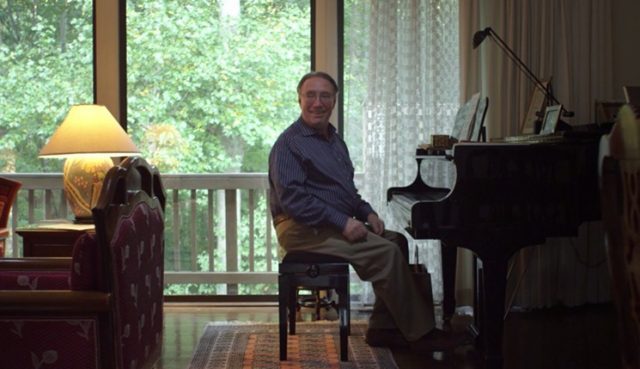
 There’s an odd element that runs through Eve Marson’s documentary Dr. Feelgood: Dealer or Healer? In nearly every new interview with film subject Dr. William Hurwitz, whose treatment of chronic pain included prescribing sometimes tens of thousands of opioids over a twelve-to-eighteen-month period for a single patient, the physician has a sly smile, as if this is all a kind of joke, or that he doesn’t understand what all the fuss is about. “One of the best reasons to go into medical practice is to help people. When somebody comes to you and they feel their life is constrained by pain, the ability to relieve that pain gives enormous satisfaction,” he explains at the beginning of the film. And he is still very satisfied, despite the death of at least two of his patients, time in prison, and the loss of his medical license. The film points out that one in three Americans suffer from chronic pain and that more than 200 million prescriptions for opioid painkillers are written each year. Marson shows viewers several sides of the controversial topic, in interviews with Dr. Hurwitz’s daughter, Gabriela; his ex-wife, Nilse Quercia; his former nurse, Ann Wierbinski; his former receptionist, Georgia Tsourounis; his defense attorney, Lawrence Robbins; patients Molly Shaw, Bret McCarter, and Jane Tanner; pain-treatment expert Dr. Anna Lembke; FBI agent Aaron Weeter; retired Fairfax County police officer Ken Pedigo; New York Times journalist John Tierney; Paul Nye and Michaelina Woodson, who believe Dr. Hurwitz’s treatment killed their spouses; and retired physician Dr. Hal Talley, who points out, “We have never come up with a test that tells you whether somebody is in pain or not.”