twi-ny recommended events

YANIRA CASTRO | A CANARY TORSI: PERFORMANCE | PORTRAIT

Performance Portrait

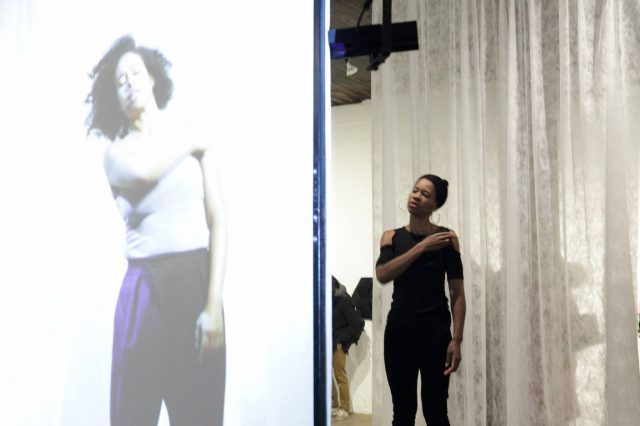
a canary torsi’s responsive multimedia installation “Performance Portrait” offers visitors a chance to respond to dancers (photo by Julie Wyman)

PERFORMANCE | PORTRAIT @ APAP
The Glass House, the Invisible Dog Art Center
51 Bergen St.
January 5-15, free, 4:30 – 8:30
theinvisibledog.org
acanarytorsi.org

After being exhibited as part of the “Wonderland” group show at the Invisible Dog Art Center, a canary torsi’s latest collaborative project, Performance | Portrait, moves just down the street to the IDAC’s Glass House in conjunction with APAP | NYC, the annual Association of Performing Arts Presenters conference, which features special performances throughout New York City every January. Puerto Rico–born Yanira Castro founded a canary torsi (an anagram of her name) in 2009, specializing in site-adaptive interactive works that blur the boundaries between audience and performer. In Paradis, the audience followed the dancers around the Brooklyn Botanic Garden, occasionally interacting with one another. In Court/Garden, Castro created a space inspired by the court of Louis XIV, exploring image, assembly, presentation, and consumption.

Many of those elements are at the center of Performance | Portrait, which runs at the Glass House from January 5 to 15. The responsive multimedia work, made in conjunction with installation artist Kathy Couch, interaction designer Stephan Moore, and filmmaker Julie Wyman, consists of a projector that is activated once a person steps on a small box in between a screen and a curtain. The projector beams an image of four dancers, one at a time (Anna Azrieli, Leslie Cuyjet, Peter Schmitz, David Thomson), who were previously filmed by Wyman at a different location but in front of the same curtain where the viewer now stands. Each dancer gazes directly into the camera, essentially right into the viewer’s eyes; just as the viewer is waiting for the dancer to do something entertaining, it appears that the often uncomfortable dancers (each was filmed for four hours) are waiting for the viewer to do something entertaining as well. Castro is calling into question the gaze, audience expectation, the interplay before performer and crowd, and performer expectation, the dancers turning the tables on the viewer, who is likely to get antsy rather quickly unless he or she can just settle in and go head-to-head with the dancer for a while. It feels like a different take on the staring contests Marina Abramović held with MoMA visitors in “The Artist Is Present.” As the viewer stands there, the performers change over the course of time, but once the viewer steps off the box, the dancer fades into nothingness, for without an audience, can there be a performance?

MARCEL PAGNOL’S MARSEILLE TRILOGY

MARIUS (courtesy Janus Films)

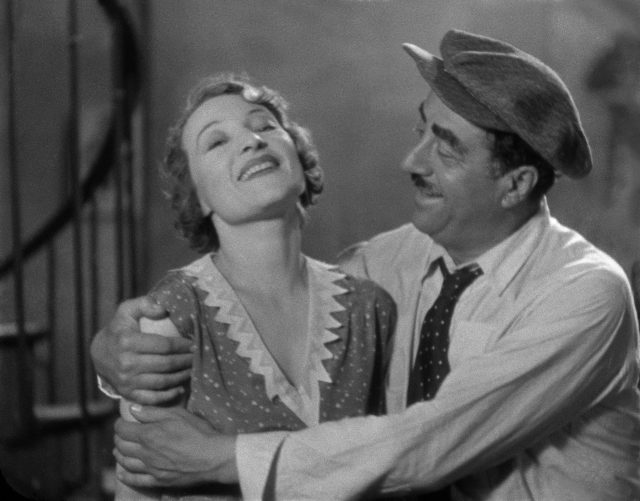
Fanny (Orane Demazis) and César (Raimu) share a moment of happiness in MARIUS (courtesy Janus Films)

MARIUS (Alexander Korda, 1931)
FANNY (Marc Allégret, 1932)
CÉSAR (Marcel Pagnol, 1936)
Film Forum
209 West Houston St.
January 4-12
212-727-8110
filmforum.org

One of the great trilogies in the history of cinema, Marcel Pagnol’s Marseille Trilogy will be playing at Film Forum January 4-12 in a new 4K restoration, including marathon viewings of Marius, Fanny, and César on January 7, 8, 11, and 12. French novelist, playwright, screenwriter, and director Pagnol penned all three scripts, the first two based on his stage plays, as he investigated love, honor, betrayal, friendship, religion, scandal, and social ritual among the petit bourgeois, the lower-middle-class citizens of the port town of Marseille. Shot on location, the three films, also known as the Fanny Trilogy, center on the big, boisterous César (Raimu in a marvelous comedic tour de force), who runs a local bar with his ne’er-do-well son, Marius (Pierre Fresnay). Marius is childhood friends with the sweet Fanny (Orane Demazis), who declares her love for him only after the rich, successful older merchant Honoré Panisse (Fernand Charpin) requests her hand in marriage. As Fanny’s mother, Honorine (Alida Rouffe), and aunt, Claudine (Milly Mathis), contemplate the potential match, Fanny tries to convince Marius to marry her instead, but he is hesitant, drawn instead to the sea despite his love for Fanny. Directed by Alexander Korda (Rembrandt, The Private Life of Henry VIII), Marius is a rollicking good romance with a surprising dash of naughtiness and featuring an outstanding group of minor characters, including Paul Dullac as Félix Escartefigue, Alexandre Mihalesco as Piquoiseau, Robert Vattier as Albert Brun, and Edouard Delmont as Dr. Félicien Venelle. The camaraderie among the characters is infectious — many of the actors previously played the same roles onstage — with César leading the way, a big, boisterous man whose bravura mix of insults and praise is as potent as the drinks in his bar.

FANNY (courtesy Janus Films)

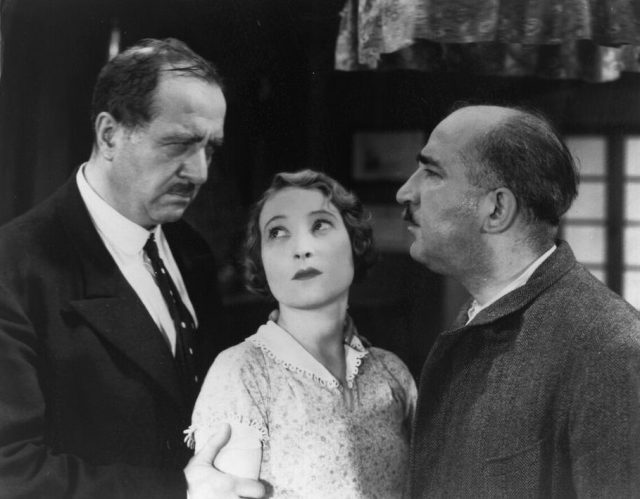
Things get serious for César (Raimu), Fanny (Orane Demazis), and Honoré Panisse (Fernand Charpin) in FANNY (courtesy Janus Films)

It’s a great start to the trilogy, which continues with 1932’s Fanny, directed by Marc Allégret (Zouzou, Lady Chatterley’s Lover). If you don’t want to know what happens next, don’t read on, but make sure to see all three films, as each one is a gem. Marius has headed out to sea for five years, leaving behind a pregnant Fanny, who is shocked but delighted when Panisse agrees to marry her anyway, raising the child as if he were his own. César is overjoyed to have a grandson, who is named after him, Césariot, even though all have decided to keep everything secret in order to avoid scandal. But when Marius shows up during a brief layover, he is curious about the baby and is determined to find out the truth. Most of the cast returns for Fanny, except Auguste Mouries now plays Escartefigue, along with such new characters as Mangiapan (Marcel Maupi) and the local priest, Elzéar Bonnegrâce (Louis Boulle).

CÉSAR (courtesy Janus Films)

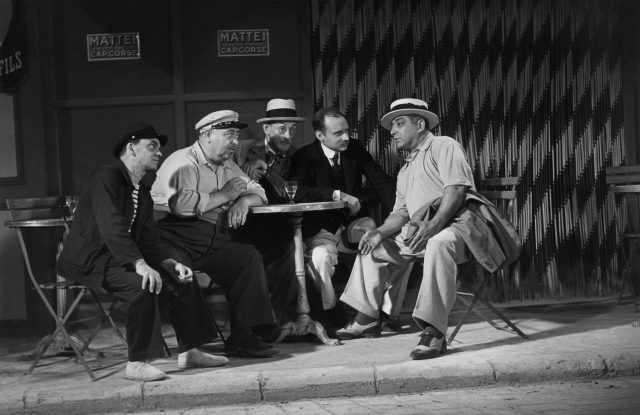
Marcel Pagnol’s Marseille Trilogy concludes with CÉSAR (courtesy Janus Films)

The conclusion, directed and written for the screen by Pagnol, César was made four years later but takes place twenty years in the future. As Panisse lies dying in bed, Father Elzear (Thommeray) presses him to confess his sins and, most important, reveal the truth about his son’s birth to the boy himself, Césariot (André Fouche). Meanwhile, Marius toils away in a garage in another town, having been out of everyone’s life for fifteen years. (If the plot of the entire trilogy sounds very familiar, then you must have seen Jacques Demy’s The Umbrellas of Cherbourg.) The setup makes for some hysterical battles between the priest, the doctor, and Panisse, as organized religion takes some heavy hits. Pagnol also explores different reactions to death, sharing clever insight as well as sharp humor. The trilogy, which was restored by Compagnie Méditerranéenne de Film — MPC and the Cinémathèque Française and has been remade (in part or whole) by such directors as James Whale, Joshua Logan, and Daniel Auteuil, is thoroughly charming, a realistic depiction of life with all its grace and indignities. It won’t take long until you feel like you’re a member of this dysfunctional but enchanting family.

NEVER BEFORE, NEVER AGAIN

never-before-never-again

Triskelion Arts
Muriel Schulman Theater
106 Calyer St. (enter on Banker St.)
January 5-8, $16-$20
www.triskelionarts.org

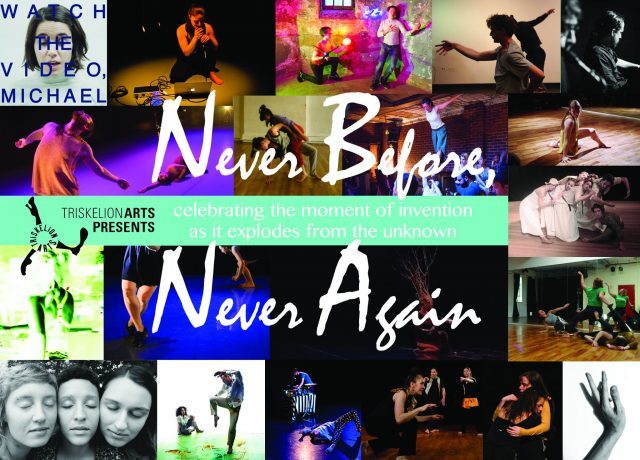
Most of the winter performance festivals, such as Under the Radar, COIL, Prototype, and American Realness, consist of experimental works that have either already been performed elsewhere or will afterward. However, the nonprofit Triskelion Arts, which was founded in Brooklyn in 2000 to “foster the development and presentation of the performing arts,” has something very different in mind with its “Never Before, Never Again” festival, which consists of dance, music, comedy, theater, poetry, and other disciplines in improvisational performances that have never been presented before and never will again quite like they will be during the third annual event, running January 5-8. The improv celebration begins January 5 with the Lovelies; Alyssa Gersony; Judah Levenson, Hank Mason, and Shane Gertner; kamrDANCE; NOW ACCEPTING ALL OFFERS MADE; and Katelyn Halpern & Dancers. On January 6, the lineup features Schmidt / Keenoy Movement / Sound Lab; slowdanger; Jog Films; Debbie Z & Friends; and the Lovelies. Saturday’s roster boasts Mauri Connors and Mindy Toro; TanzKlub; the Shelburne Trio (bassist Kevin Farrell, dancer Rachel Mckinstry, and poet Josh Adler); stb x at; Sarah Foster / MoveWorks; and Boom Bat Gesture Performance Group. The festival concludes January 8 with Ali Perkins; Kirsten Schnittker; Jason Mears / Quentin Tolimieri; There’s No Law (Rachel Cohen, Michael Henry, Irene Siegel); and Lokasparsa Dance Projects / clyde forth. Tickets are $16 in advance, $20 at the door to check out these now-you-see-it, now-you-don’t performances.

THE STRANGE UNDOING OF PRUDENCIA HART

National Theatre of Scotlands THE STRANGE UNDOING OF PRUDENCIA HART

Melody Grove stars as the title character in THE STRANGE UNDOING OF PRUDENCIA HART at the McKittrick Hotel (photo by Jenny Anderson)

The Heath in the McKittrick Hotel
542 West 27th St. between Tenth & Eleventh Aves.
Extended through April 23, $65-$125
www.strangeundoing.com
www.mckittrickhotel.com

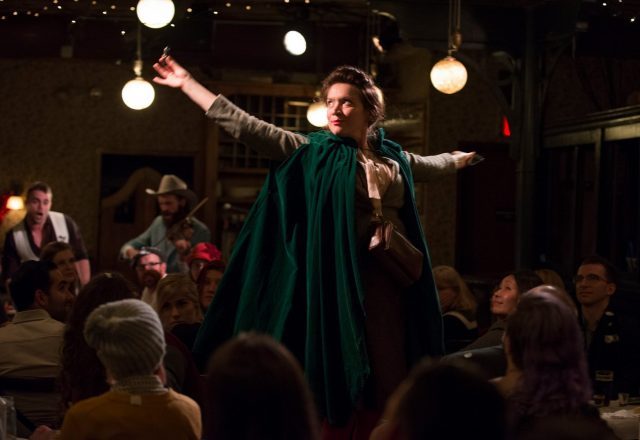
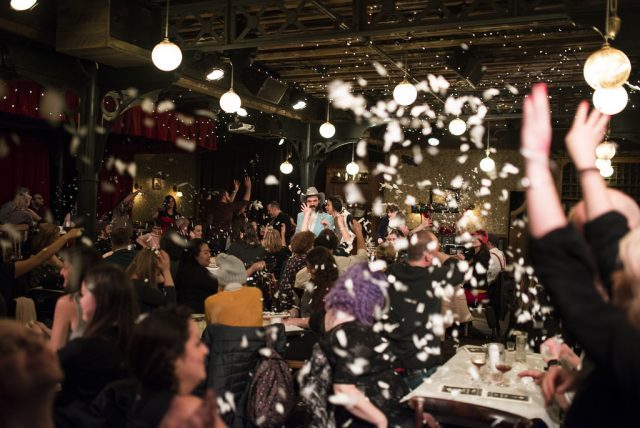
Since March 2011, audiences in masks have been roaming around the McKittrick Hotel in Chelsea, following characters into nearly every nook and cranny in Punchdrunk’s Sleep No More, a show, inspired by Macbeth, that redefined immersive theater. Now the same production company, Emursive, is presenting a twist on theatrical immersion with the National Theatre of Scotland’s international hit The Strange Undoing of Prudencia Hart, which continues at the McKittrick’s Heath Bar through April 23. This time, instead of the audience chasing the characters, the characters, who don masks at one point, move throughout the pub, talking to audience members, weaving around the space, sitting and standing on tables and chairs, and requesting audience help manufacturing some paper props. Created by writer David Greig (who appropriately enough wrote Dunsinane, a sequel to Macbeth) and director Wils Wilson, The Strange Undoing is about Edinburgh academic Prudencia Hart (Melody Grove), who is attending a conference in Kelso on border ballads, folk songs that were most famously written and collected by Sir Walter Scott. Also at the conference is Prudencia’s archrival, the motorcycle-riding Dr. Colin Syme (Paul McCole), who is described as “Dr. Colin Syme blokeish — obsessed with his kit / He’d eat himself if he was a biscuit.” (Much of the tale is related in delightful rhythmic couplets.) Snowed in on Midwinter’s Night, the prudish Prudencia rejects Colin’s offer to stay with him and instead makes her way through a Costco parking lot to a bed and breakfast that appears to be run by the devil himself (Peter Hannah). Meanwhile, musical director Alasdair Macrae and Annie Grace play multiple roles as well as various instruments, singing traditional ballads in addition to shanties written for the show, imbedded with a sly sense of humor. There’s even karaoke.

(photo by Jenny Anderson)

The National Theatre of Scotland’s THE STRANGE UNDOING OF PRUDENCIA HART is devilishly good fun (photo by Jenny Anderson)

There are also plenty of self-referential treats. “This is exactly the sort of snow that if it were in a border ballad would poetically presage some kind of doom for an innocent heroine or an encounter on the moor with a sprite or villain or the losing of the heroine’s selfhood in the great white emptiness of the night,” Prudencia says at a critical juncture. Movement director Janice Parker keeps the cast, dressed in terrific period costumes with a contemporary twist, from knocking into the customers on Georgia McGuinness’s set, as references are made to the Proclaimers and Kylie Minogue, such topics as “Border Ballads: Neither Border nor Ballad?” and “The Topography of Hell in Scottish Balladry” are raised, the legendary ballad character Tam Lin is discussed, and free shots of Scotch are offered before the show and complimentary finger sandwiches are passed around at intermission. As with Sleep No More, the more you invest yourself into the proceedings, the more you will get out of it. Our enjoyment of the production was enhanced by our tablemates, who just happened to be the parents of one of the actors, making for some great conversation and many toasts. It’s all devilishly good fun, a time-traveling ballad that would make Sir Walter Scott proud.

DAVID SHRIGLEY: MEMORIAL

(photo by twi-ny/mdr)

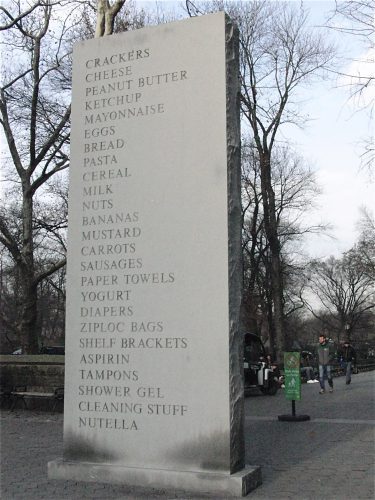
David Shrigley’s “Memorial” is a monument to memory, shopping lists, and monuments themselves (photo by twi-ny/mdr)

Scholars’ Gate, Doris C. Freedman Plaza
Central Park entrance, 60th St. & Fifth Ave.
Through February 12, free
www.publicartfund.org

In 2008, British artist David Shrigley made “Gravestone,” a granite slab, shaped like a gravestone, on which he carved the words “Bread / Milk / Cornflakes / Baked Beans / Tomatoes / Aspirin / Biscuits” in gold, a memorial to the shopping list. That year he also created “Gate,” a rectangle with geometric shapes that warned passersby, “Do not linger at the gate.” He has now combined the two in “Memorial,” a seventeen-foot-tall granite shopping list that stands at the Scholars’ Gate entrance to Central Park, in Doris C. Freedman Plaza. Inspired by the mysterious 1980 Georgia Guidestones, the forty-eight-year-old painter, sculptor, photographer, illustrator, cartoonist, spoken-word artist, and self-described list lover includes twenty-five items on “Memorial,” from Crackers, Cheese, Peanut Butter, and Ketchup to Tampons, Shower Gel, Cleaning Stuff, and Nutella. There is no text on the back. The Public Art Fund project memorializes the death of the handwritten shopping list in the digital age while also standing as a public monument to memory. In a 2016 text-based drawing, Shrigley wrote, “I am a signwriter / I write signs / I do not decide what the signs say / My job is just to write the signs and nothing more.” That is, of course, an absurdist take on the role of the artist, emblematic of the Turner Prize nominee’s playfully strange oeuvre that incorporates elements of the mundane and the everyday, such as “The Artist,” a robotic head with pens coming out of its nose, drawing on a sheet of paper; “Hanging Sign,” a hanging sign on which is written “Hanging Sign”; the bronze sculpture “Lady Doing a Poop,” a “Thinker”-like statue of, well, a woman going number two; and “How Are You Feeling?,” a 2012 High Line billboard consisting of a conversation in word bubbles. If nothing else, “Memorial” reminded me that I needed to do a little shopping myself; I also suddenly wanted a nutella waffle from the nearby Wafels & Dinges cart.

PopRally / THE CONTENDERS: DON’T BLINK — ROBERT FRANK

Robert Frank

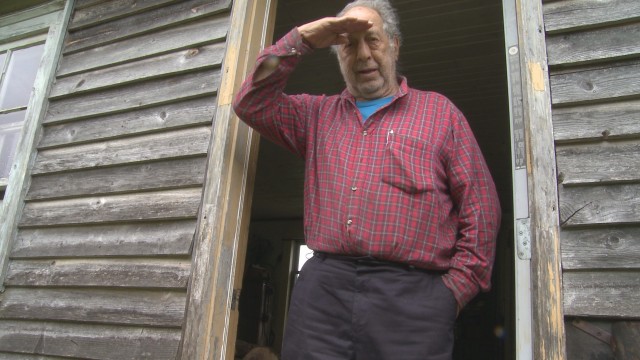
Robert Frank takes a unique look at his life and career in documentary made by his longtime editor

DON’T BLINK — ROBERT FRANK (Laura Israel, 2015)
MoMA Film, Museum of Modern Art
11 West 53rd St. between Fifth & Sixth Aves.
Saturday, January 7, $15, 7:30
Series runs through January 12
Tickets: $12, may be applied to museum admission within thirty days
212-708-9400
www.dontblinkrobertfrank.com
www.moma.org

“I hate these fucking interviews,” innovative, influential, ornery, and iconoclastic photographer and filmmaker Robert Frank says while preparing to be interviewed in 1984; the scene is shown in Laura Israel’s new documentary, Don’t Blink — Robert Frank. “I’d like to walk out of the fucking frame,” he adds, then does just that. But in Don’t Blink, Frank finds himself walking once more into the frame as Israel, his longtime film editor, attempts to get him to open up about his life and career. Born in Zurich in 1924, Frank immigrated to the United States in 1947, became a fashion photographer, and had his artistic breakthrough in 1958 with the publication of the controversial photo book The Americans, which captured people unawares from all over the country, using no captions, just image, to get his point across. (In 2009, “The Americans”) was installed at the Metropolitan Museum of Art, in addition to a gallery show of related photographs at Pace/McGill.) In the film, Frank does talk about his past and present, discussing his time with such Beats as Jack Kerouac, Allen Ginsberg, William S. Burroughs, and Peter Orlovsky, which he displayed in the 1959 film Pull My Daisy, narrated by an improvising Kerouac and codirected by Alfred Leslie; touching on the tragic early deaths of his son and daughter; sharing details about his parents, including his father, whose hobby was photography; hanging out with his wife, fellow artist June Leaf; and delving into such influences as Walker Evans and his creative process, which is not exactly complex. “Usually the first picture is the best one. Make sure they’re smiling, say cheese,” Frank says with a laugh, then adds, “The main thing is get it over, quick.” Israel takes that advice to heart, trying to get what she can out of Frank before he changes his mind; at first he didn’t want to participate in the film at all, but once he went with it, he also made sure to playfully battle with Israel over who was really in control.

Robert Frank

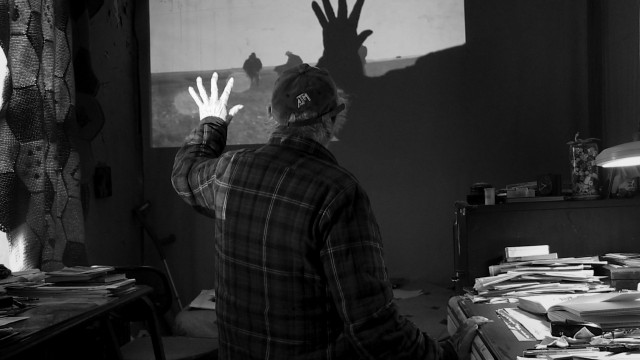
Robert Frank has fun with some of his old films in DON’T BLINK

Israel (Windfall) does not tell Frank’s story chronologically but instead relies on a kind of thematic wandering through his life, intercutting old lectures, interviews, home movies, and photographs with clips from such Frank films as Conversations in Vermont, About Me: A Musical, Energy and How to Get It, Candy Mountain, One Hour, and Paper Route. Israel spends the most time on Cocksucker Blues, an unreleased work about the Rolling Stones on tour in 1972 (and about which Mick Jagger told Frank, “It’s a fucking good film, Robert, but if it shows in America we’ll never be allowed in the country again”), and Me and My Brother, which focuses on Julius Orlovsky, Peter Orlovsky’s brother, who suddenly awakened from a catatonic state and had some fascinating things to say. Just as Frank’s films went back and forth between color and black-and-white and avoided conventional storytelling methods, Israel does the same with Don’t Blink, using offbeat angles, also switching between color and black-and-white, and incorporating other deft touches that lend insight to Frank, who is now ninety-one and still has disheveled hair, and his work, especially when he’s taking Polaroids and scratching and painting on the back of the pictures. (Alex Bingham served as both editor and art director, while the cinematography is by Lisa Rinzler.) The film’s fierce soundtrack meshes well with Frank’s independent streak, with songs by the Velvet Underground, Bob Dylan, the Mekons, New Order, the Kills, Yo La Tengo, Patti Smith, Johnny Thunders, the White Stripes, and Tom Waits, many of whom Israel has made music videos for. Perhaps at the heart of Frank’s methodology is what he calls “spontaneous intuition,” something that works for both life and art and helps propel Israel’s warmhearted but never worshipful documentary; their camaraderie is evident in nearly every frame. Don’t Blink — Robert Frank is screening January 7 at 7:30, presented by MoMA’s PopRally programming for ages twenty-one and older, and will be followed by a conversation with MoMA curator Josh Siegel, producer Melinda Shopsin, editor Alex Bingham, and Israel, as well as a reception with wine, beer and music; it is also part of MoMA’s annual series “The Contenders,” which consists of films the institution believes will stand the test of time; the festival continues through January 12 with such other favorites as Barry Jenkins’s Moonlight, Damien Chazelle’s La La Land, Yeon Sang-ho’s Train Busan, and Johnnie To’s Three.

WINTER 2017 PERFORMANCE FESTIVALS

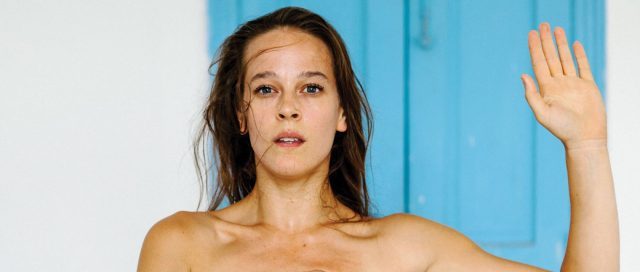
Bobbi Jene Smith and Keir GoGwilt team up for A STUDY ON EFFORT at Invisible Dog Center as part of COIL festival

Bobbi Jene Smith and Keir GoGwilt team up for A STUDY ON EFFORT at Invisible Dog Center as part of COIL festival

The always exciting winter performance festival season gets under way right after New Year’s, with a slew of popular programs occurring all over town and in multiple boroughs. PS122’s COIL 2017 festival, the last under artistic director Vallejo Gantner, consists of fourteen events, with a dozen performances, a sewing bee, and the Red + White Party. The Public Theater’s fourteenth annual Under the Radar fest includes twenty-one programs, centering on experimental music, theater, and dance, along with postshow discussions and the Incoming festival within a festival. The NYC Winter Jazzfest will celebrate the centennial of Thelonius Monk’s birth while also concentrating on social justice. Focusing on “socially and aesthetically marginal and subversive artists tearing at the boundaries of form and wrestling with the realities of identity,” American Realness was founded in 2010 by Thomas Benjamin Snapp Pryor and Abrons Arts Center in 2010, directly modeled after the Public Theater’s Under the Radar festival; the eighth annual event comprises more than two dozen performances, readings, workshops, discussions, installations, and a party. The fifth annual Prototype festival, which presents cutting-edge opera-theater and music-theater, hosts seven productions, an anniversary party, panel discussions and talkbacks, and the Out of Bounds series of free performances in public spaces. Below are a handful of recommendations for each of the above January festivals.

COIL
Multiple venues
January 3-22
www.ps122.org/coil-2017

January 3, 4-7, 10-15
CVRTAIN, by Yehuda Duenyas, immersive virtual reality experience, 151 Gallery, 132 West 18th St., $10

January 5-8
Custodians of Beauty, by Pavel Zuštiak/Palissimo, dance-theater piece exploring beauty, La MaMa, the Downstairs, 66 East Fourth St., $20

January 7-10
Basketball, by Molly Lieber and Eleanor Smith, dance exploring past shames, Howard Gilman Performance Space, Baryshnikov Arts Center, 450 West 37th St., $20

January 8
Umyuangvigkaq: PS122 Long Table and Durational Sewing Bee, by Emily Johnson/Catalyst, featuring breakfast, “This Is Lenapehoking: Countering Perceived Invisibility,” “Indigenizing the Future: The Continuance of Aesthetic, Invention, Ceremony,” “My Dad Gives Blueberries to Caribou He Hunts: Indigenous Process and Research as Ceremony,” and “Radical Love: Indigenous Artists and Our Allies,” Ace Hotel New York, 20 West 29th St., free with advance RSVP, 11:30 am – 6:00 pm

January 12-14
A Study on Effort, by dancer and choreographer Bobbi Jene Smith in collaboration with violinist Keir GoGwilt, Invisible Dog Art Center, 51 Bergen St., $20
(photo by Jesse Hunniford)

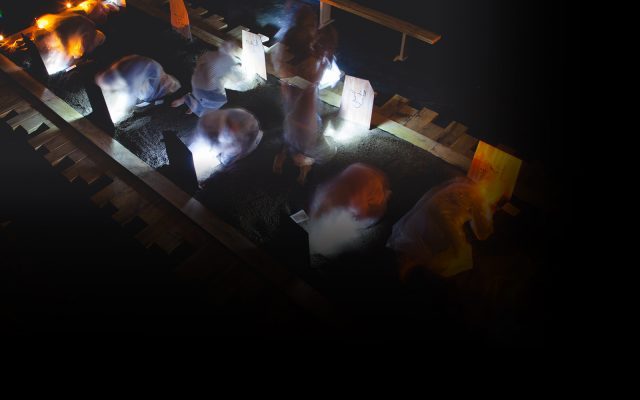
Tania El Khoury’s GARDENS SPEAK give voice back to dead Syrian activists and protesters (photo by Jesse Hunniford)

UNDER THE RADAR
Public Theater and other venues
425 Lafayette St. by Astor Pl.
January 4-15
publictheater.org

January 4, 6, 10
Erin Markey: Boner Killer, words and music by Erin Markey, directed by Ellie Heyman, starring Markey and Emily Bate, Joe’s Pub at the Public Theater, $25

January 6-9
Gardens Speak, interactive sound installation about ten deceased Syrian activists, by Tania El Khoury, NYU Tisch School of the Arts Abe Burrows Theatre, 721 Broadway, $25

January 9
Incoming! They, Themselves and Schmerm, written and performed by Becca Blackwell, directed and developed by Ellie Heyman, the Robert Moss Theater at Playwrights Downtown, 440 Lafayette St., $25, 5:00 & 8:30

January 11, 12, 14, 15
Latin Standards, written and performed by Marga Gomez, directed by David Schwizer, Martinson Hall, the Public Theater, $25

January 12-15
Time of Women by Belarus Free Theatre, about a trio of women (Maryia Sazonava as Iryna Khalip, Maryna Yurevich as Natalya Radina, Yana Rusakevich as Nasta Palazhanka) fighting for a free and democratic Belarus, written by Nicolai Khalezin and Natiala Kaliada and directed by Khalezin, NYU Tisch School of the Arts Shop Theatre, 721 Broadway, $25
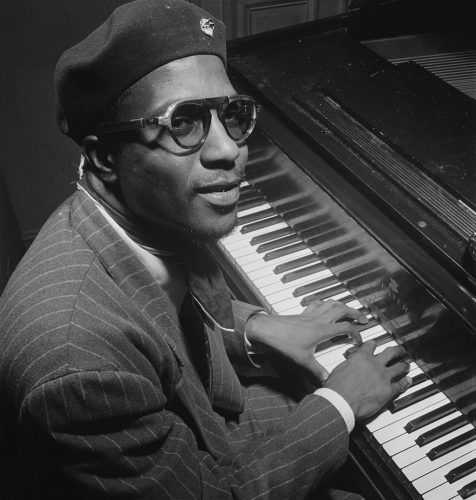
NYC Winter Jazzfest will celebrate one hundredth birthday of Thelonius Monk (photo by William P. Gottlieb)

NYC Winter Jazzfest will celebrate one hundredth birthday of Thelonius Monk (photo by William P. Gottlieb)

NYC WINTER JAZZFEST
Multiple venues
January 5-10
www.winterjazzfest.com

January 6, 7
NYC Winter Jazzfest Marathon, multiple venues, $45-$55 per day, $80-$90 for both

Sunday, January 8
Thelonious Monk Makes a Hundred, panel discussion, the New School, Fifth Floor Theater, 55 West Thirteenth St., 3:00

Thelonius Monk 100th Birthday Improv Show, with Kris Davis, David Virelles, Shabaka Hutchings, Sam Newsome, Marc Ribot, Charlie Burnham, Erik Friedlander, Linda Oh, Trevor Dunn, Hamid Drake, Andrew Cyrille, and Deva Mahal playing Solo Monk, Littlefield, 622 Degraw St., $20-$25, 8:00

Tuesday, January 10
Charlie Haden’s Liberation Music Orchestra: A Concert for Social Justice, with special guest Geri Allen and arrangements by Carla Bley, Le Poisson Rouge, 158 Bleecker St., $30-$40, Social and Environmental Justice panel at 6:00, show at 8:00
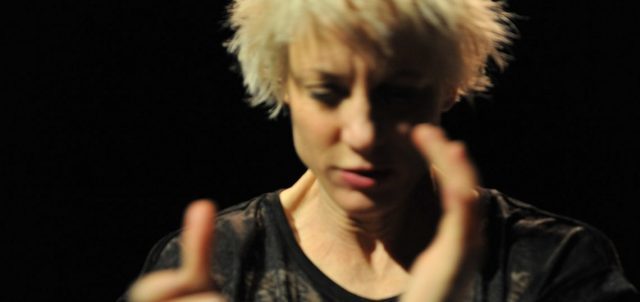
Meg Stuart will present an evening of solo works at Abrons Arts Center as part of American Realness festival (photo by Giannina Urmeneta Ottiker)

Meg Stuart will present an evening of solo works as part of American Realness festival (photo by Giannina Urmeneta Ottiker)

AMERICAN REALNESS
Abrons Arts Center and other venues
466 Grand St. at Pitt St.
January 5-12
americanrealness.com

January 5-7
An Evening of Solo Works by Meg Stuart, including XXX for Arlene and Colleagues and Signs of Affection, Abrons Arts Center, Playhouse, $20

January 6, 7
Étroits sont les Vaisseaux, by Kimberly Bartosik / daela, duet for Joanna Kotze and Lance Gries, inspired by Anselm Kiefer’s large-scale sculpture, Gibney Dance, Agnes Varis Performing Arts Center, 280 Broadway, $15

January 6, 7, 10
Twenty Looks or Paris Is Burning at the Judson Church (s), solo by Trajan Harrell, first work in series, Abrons Arts Center, Playhouse, $20

January 7, 8, 9, 10
Adult Documentary by Juliana F. May, piece for five dancers about trauma and form, Abrons Arts Center, Experimental Theater, $20

January 8
In the Works: Dance in Process Resident Artists & Guests, with performances by Melinda Ring, Anna Sperber, Michelle Boulé, Jaamil Olawale Kosoko, Larissa Velez-Jackson, Gibney Dance Company, Antonio Ramos, Katie Workum, Bjorn Safsten, Yanira Castro, iele paloumpis, Gibney Dance Choreographic Center, 890 Broadway, free, 10:00 am – 4:00 pm
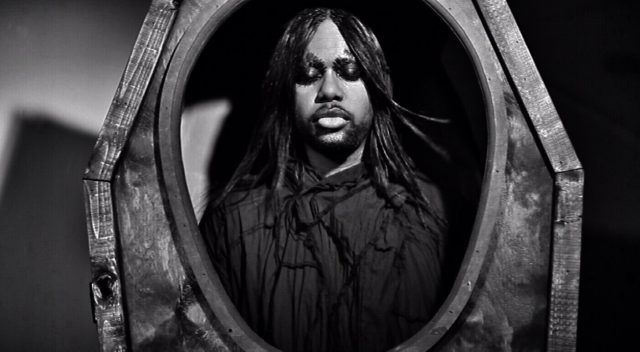
FUNERAL DOOM SPIRITUAL will have its New York premiere at National Sawdust as part of Prototype festival (photo by M. Lamar)

FUNERAL DOOM SPIRITUAL will have its New York premiere at National Sawdust as part of Prototype festival (photo by M. Lamar)

PROTOTYPE
Multiple venues
January 5-15, $25 unless otherwise noted
www.prototypefestival.org

January 5
Out of Bounds: Amirtha Kidambi, inspired by Nina Simone’s performance at the Harlem Cultural Festival in 1969, 60 Wall St. Atrium, free, 1:00

January 5-14
Mata Hari, composed by Matt Marks, directed and with libretto by Paul Peers, conducted by David Bloom, and starring Tina Mitchell, HERE, 145 Sixth Ave., $30

January 6
Out of Bounds: Leah Coloff, inspired by Patti Smith’s Kimberly and a set at CBGB’s, 60 Wall St. Atrium, free, 1:30

January 6, 7, 9
Breaking the Waves, New York City premiere of opera based on Lars Von Trier film, composed by Missy Mazzoli, directed by James Darrah, conducted by Julian Wachner, with libretto by Royce Vavrek, and starring Bess McNeill and Jan Nyman, NYU Skirball Center, 566 LaGuardia Pl., $30-$75, 7:30

January 13, 14
Funeral Doom Spiritual, multimedia concert by composers M. Lamar and Hunter Hunt-Hendrix and librettists Lamar and Tucker Culbertson, with Lamar on piano and vocals, string arrangements by Hunt-Hendrix, and additional arrangements by James Ilgenfritz & the Anagram Strings, National Sawdust, 80 North Sixth St., $30, 7:00 & 10:00