twi-ny recommended events

DARK NIGHT

DARK NIGHT

Tim Sutton explores the shadowy underbelly of America in DARK NIGHT

DARK NIGHT (Tim Sutton, 2016)
Alamo Drafthouse Downtown Brooklyn
445 Albee Square West
Opens Friday, February 3
718-513-2547
drafthouse.com/nyc

There’s an ominous cloud hanging over Tim Sutton’s deeply poetic Dark Night, a grim, gripping journey into the dark night of America’s soul. The title of Sutton’s third film, following Pavilion and Memphis, also references Christopher Nolan’s 2012 Batman movie, The Dark Knight Rises, for reasons that become apparent about halfway through. Dark Night opens with a close-up of a young woman’s disbelieving eyes, red, white, and blue lights flashing across her face; the camera then pulls back as the woman, wearing an American flag top, lowers her head, taking stock of an unrevealed tragedy. For the next eighty-five minutes, Sutton goes back to the beginning of this fateful day, following the lives of a small group of men, women, and children in a suburban Florida community as they go about their usual business. They play on computers, put on makeup, pet animals, and head over to the mall. One concerned mother and her detached son speak with an off-screen interviewer as if searching for reasons in the aftermath of a horrific event, but in this case it hasn’t happened yet. In many of the vignettes, there is little or no dialogue, as the characters, all nonprofessional actors mostly found on the streets of Sarasota, speak with their actions, particularly when several of the males, including a military vet and a teen with dazzling blue eyes, load firearms. In this Blue Velvet-like town, danger lurks just below the surface.

DARK NIGHT

A cast of nonprofessional actors play realistic characters facing tragedy in DARK NIGHT

Dark Night is photographed by French cinematographer Hélène Louvart (Pina, The Beaches of Agnès) in a documentary style, with fly-on-the-wall shots occasionally broken up by stunning aerial views of perfectly trimmed green lawns and cookie-cutter rooftops that look like video-game targets, static shots of light poles as if they are living creatures, and a striking scene of a woman walking along the outdoor hallway of one of Florida’s ubiquitous motel-like apartment complexes. Canadian singer-songwriter Maica Armata’s (Caro Diaro, MaicaMia) score features five haunting songs, including “Om,” “Oh Well,” and a gloomy, reimagined version of the old standard “You Are My Sunshine,” her ethereal vocals utterly frightening. Evoking such indie works as Larry Clark’s Kids, Gus van Sant’s Elephant, Lance Hammer’s Ballast, and Harmony Korine’s Gummo, the Brooklyn-based Sutton paces the unsettling film with a delicate, disquieting subtlety, the community overwhelmed by an unspoken ennui that’s representative of the dissatisfaction and disconnection being felt all across the country. He might not offer any answers, but he asks many of the right questions, giving the riveting tale an uncomfortable, beguiling immediacy. Dark Night opens February 3 at the Alamo Drafthouse in downtown Brooklyn, with Sutton participating in Q&As following the 6:30 screenings on Friday, Saturday, and Sunday.

TAKE ME (I’M YOURS)

(photo by twi-ny/mdr)

Jewish Museum exhibit gives visitors a chance to go home with actual objets d’art (photo by twi-ny/mdr)

The Jewish Museum
1109 Fifth Ave. at 92nd St.
Thursday – Sunday, $7.50 – $15 (free admission Saturday 11:00 am – 5:45 pm, pay-what-you-wish Thursday 5:00 – 8:00)
212-423-3200
thejewishmuseum.org

“Don’t just look. Touch, take, share,” the Jewish Museum advises about its interactive exhibition “Take Me (I’m Yours),” which continues through Sunday. In 1995, curator Hans Ulrich Obrist and artist Christian Boltanski teamed up at the Serpentine Gallery in London for a show of the same name, in which a dozen artists created works that visitors could literally take home, exploring such ideas as creation, engagement, interactivity, participation, ownership, value, consumerism, and the art market itself. The Jewish Museum show features pieces by forty-two artists and collectives, several from the original Serpentine presentation; a Kickstarter campaign helped fund approximately ten thousand of each work so visitors could add to their own personal art collection. “In principle a work of art has always been reproducible,” Walter Benjamin wrote in his 1935 essay “The Work of Art in the Age of Mechanical Reproduction,” adding, “Even the most perfect reproduction of a work of art is lacking in one element: its presence in time and space, its unique existence at the place where it happens to be.” Andrea Bowers’s “Political Ribbons,” featuring feminist mottos, were taken from the museum and worn by protesters at the recent women’s march on Washington. Boltanski’s “Dispersion” consists of used clothing that is meant to be taken and used; the ever-changing mound evokes Felix Gonzalez-Torres’s nearby “Untitled (USA Today),” edible (and kosher) sugar-free candies that, when taken, not only change the shape of the work as a whole but reference loss, especially poignant since Gonzales-Torres and his partner both died of AIDS in the 1990s. Carsten Höller’s “Pill Clock (Red and White),” a mechanism high in a corner, slowly dispensing edible capsules one by one, and Ian Cheng and Rachel Rose’s untitled container of fortune cookies call into question material possession as visitors decide whether to take the objects home to keep or to just eat them, which is a completely different experience.

(photo by twi-ny/mdr)

“Take Me (I’m Yours)” is filled with items that call into question consumerism, consumption, and the art market itself (photo by twi-ny/mdr)

The concepts of immateriality and ownership are also raised in such pieces as aaajiao’s “Email Trek,” in which the art is an email; Kelly Akashi’s “Cavelike,” a sound installation; Alison Knowles’s “Shoes of Your Choice,” involving audience performance; James Lee Byars’s “Be Quiet,” in which a slow-moving woman in a dark dress approaches people who are talking and silently gives them a small, circular piece of colored paper that says, “Be Quiet”; General Sisters’ “No One Is Disposable” recycled, sustainable toilet paper that declares “I am not illegal”; and Daniel Spoerri’s “Eat Art Happening,” a large-scale skeleton made of nonkosher sugar paste that will be devoured by museumgoers on February 5 in “Everything Must Go,” providing the sweet taste of death on the last day of the exhibition. Other pieces to look out for are Uri Aran’s untitled plaster casts of the tops of takeout coffee lids, Andrea Fraser’s “Preliminary Prospectuses” detailing art as corporate commodity, Gilbert & George’s anarchistic buttons, Yngve Holen’s wearable “Evil Eye” contact lenses, Jonas Mekas’s “With Thanks to Joseph Cornell and Rose Hobart” filmstrip (a museum employee will cut a segment for those who ask), Yoko Ono’s “Air Dispenser” capsules (which cost a quarter), Rirkit Tiravanija’s “Untitled (Form Follows Function or Vice Versa No. Two)” T-shirts, Daniel Joseph Martinez’s “(America) Adopt a Refugee” kit, and Jonathan Horowitz’s “Hillary 16” poster depicting the official portraits of all the presidents — except with Hillary Clinton following Barack Obama. Scattered throughout the exhibition are definitions of such words and phrases as New Materialism, Economy, Market, Gift, Charity, Relics, Immateriality, Relational Aesthetics, Exchange, and Democratization, placing it all in sociopolitical perspective. Perhaps it is all summed up by Lawrence Weiner’s pidgin English installation “NAU EM I ART BILONG YUMI,” which translates as “The art of today belongs to us.” Among the other artists giving away cool stuff are Luis Camnitzer, Maria Eichhorn, Hans-Peter Feldmann, Alex Israel, Rivane Neuenschwander, Martha Rosler, Allen Ruppersberg (paying homage to Gonzalez-Torres), Tino Sehgal, and Haim Steinbach. (Note that some works are not available on Saturday.) You’re likely to go home with a bag filled with goodies, but how many will you keep long-term as you reevaluate their worth over time? However, the experience will never go away; just be sure not to pocket any items throughout the rest of the museum.

BROOKLYN MUSEUM FIRST SATURDAY: “I SEE MYSELF IN YOU” AND BEVERLY BUCHANAN’S “RUINS AND RITUALS”

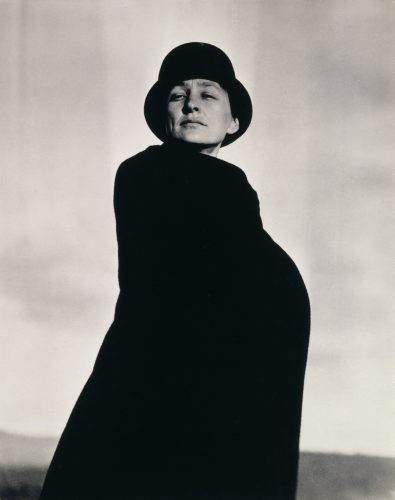
Beverly Buchanan (American, 1940–2015). Untitled (Double Portrait of Artist with Frustula Sculpture) (detail), n.d. Black-and-white photograph with original paint marks, 8½ x 11 in. (21.6 x 27.9 cm). Private collection. © Estate of Beverly Buchanan

Beverly Buchanan, detail, “Untitled (Double Portrait of Artist with Frustula Sculpture), black-and-white photograph with original paint marks, n.d. (Private collection / © Estate of Beverly Buchanan)

Brooklyn Museum
200 Eastern Parkway at Washington St.
Saturday, February 4, free, 5:00 – 11:00
212-864-5400
www.brooklynmuseum.org

The Brooklyn Museum continues its 2017 First Saturdays theme, “A Year of Yes: Reimagining Feminism at the Brooklyn Museum,” on February 4 with a focus on the exhibitions “I See Myself in You: Selections from the Collection” and Beverly Buchanan — Ruins and Rituals.” There will be live performances by Courtnee Roze, OSHUN, Leikeli47, and Everyday People (DJs mOma, Rich Knight, and Lola Chung, hosted by Saada Ahmed and Chef Roblé Ali); a tour of “Beverly Buchanan — Ruins and Rituals” led by curator and artist Park McArthur; an interactive performance inspired by the graphic novel The Other Side of Wall Street by Black Gotham Experience (William Ellis, Adrian Franks, Kamau Ware, and Cliff Washington) with DJ GoodWill; excerpts from SHE’s multimedia choreoplay by Jinah Parker, followed by a discussion with the dancers and Kevin Powell; a hands-on art workshop in which participants can make miniature homes inspired by “Beverly Buchanan — Ruins and Rituals”; a screening of Fit the Description, followed by a community talk with retired detective Clifton Hollingsworth Jr., founder of 100 Blacks in Law Enforcement Who Care, and U.S. Air Force veteran and composer and producer Malik Abdul-Rahmaan; pop-up gallery talks on African diaspora artists and revolutionaries, hosted by teen apprentices; a community resource fair with booths from Cultural Row Block Association on Eastern Parkway (CuRBA), Brooklyn Navy Yard, Black Youth Project 100, NYC Books Through Bars, the Safe OUTside the System Collective from the Audre Lorde Project, and others; a book club discussion about Audre Lorde’s Sister Outsider facilitated by Glory Edim and Jessica Lynne; a kids corner with drumming and storytelling by Garifuna artist James Lovell; and screenings of A Nick in Time and American Falls, part of Bé Garrett’s Legacy Projects, followed by a Q&A with members of the casts; In addition, you can check out such exhibits as “Iggy Pop Life Class by Jeremy Deller,” “The Dinner Party by Judy Chicago,” “Life, Death, and Transformation in the Americas,” “Marilyn Minter: Pretty/Dirty,” and “Infinite Blue.”

UNIVERSAL IN THE ’70s — PART ONE: SLAP SHOT

The Hanson Brothers revel in some old-time hockey in SLAP SHOT

The Hanson Brothers revel in some good old-time hockey fun in SLAP SHOT

SLAP SHOT (George Roy Hill, 1977)
Metrograph
7 Ludlow St. between Canal & Hester Sts.
Friday, February 3, 1:30 & 7:30
212-660-0312
metrograph.com
www.hansonbrothers.net

One of the best sports films ever made, Slap Shot is a riotously bloody look at minor-league hockey. Paul Newman — who declared this one of his favorite pictures — stars as Reggie Dunlop, an aging loser serving as player-coach of the Charlestown Chiefs and trying to keep his marriage going with Francine (Jennifer Warren). When the general manager (Strother Martin) tells him that the team is being shut down at the end of the season, Dunlop decides to send it off with a bang. Lying to his team that if the Chiefs fill the seats and start winning they will move to Florida, he incorporates a different style of play into their game, led by the brutal, vicious, and utterly hilarious Hanson brothers (real-life brothers Jeff and Steve Carlson and their Johnstown Jets teammate Dave Hanson), who never met an opponent they wouldn’t punch, trip, slash, spear, or slam face-first into the boards well after the whistle. Even Dunlop gets in on the fun, throwing his share of right hands. The only player not participating in the hijinks is Ned Braden (Michael Ontkean), who believes in sportsmanship and a more gentlemanly game of skill and beauty, not exactly what men like Ogie Oglethorpe (minor-league player Ned Dowd, whose sister, Nancy, wrote the book that the movie is based on, inspired by the real-life antics of the Johnstown Jets) and Tim “Dr. Hook” McCracken (Paul D’Amato) have in mind. You don’t have to be a hockey fan to love Slap Shot, which is really, when it comes right down to it, just a little film about the trials and tribulations of everyday life. Look for cameos by Paul Dooley, M. Emmett Walsh, Melinda Dillon, Nancy Dowd as Andrea, and actual hockey players Bruce Boudreau, Jean Tétreault, Connie Madigan, Cliff Thompson, and Joe Nolan, among others. Slap Shot is screening February 3 in the Metrograph series “Universal in the 70’s: Part One,” a tribute to the decade when the studio took advantage of the growing independent-cinema movement; the two-week, eighteen-film festival continues through February 7 with such other gems as Clint Eastwood’s awesome High Plains Drifter, Alfred Hitchcock’s Family Plot, Jeremy Kagan’s The Big Fix, and Don Siegel’s underseen Charley Varrick.

THE DAUGHTER

THE DAUGHTER

Three generations of Finches (Ewen Leslie, Odessa Young, and Sam Neill) find themselves in the calm before the storm in THE DAUGHTER

THE DAUGHTER (Simon Stone, 2015)
Cinema Village
22 East 12th St. between University Pl. & Fifth Ave.
Through Thursday, February 2
212-529-6799
www.cinemavillage.com
www.kinolorber.com

The Daughter is a taut Australian melodrama from actor, director, and writer Simon Stone, his feature directorial debut, inspired by his 2014 stage adaptation of Henrik Ibsen’s The Wild Duck for Sydney’s Belvoir St Theatre company. The film builds slowly, teasing out the tension, until it gets so wrapped up in itself that the stream of revelations unfolding near the end feels overwrought and anticlimactic, as viewers will have figured out many of the twists much earlier. Still, it’s a compelling tale, well acted by a solid cast, although one overblown character nearly brings it all tumbling down. Ne’er-do-well prodigal son Christian (Paul Schneider) has returned home for the first time in fifteen years, for the wedding of his father, Henry (Geoffrey Rush), to his much younger housekeeper, Anna (Anna Torv). The wealthy local mill owner in a rural New South Wales town, Henry has just announced that his factory is closing. Christian, an alcoholic who is having problems with his girlfriend, Grace (Ivy Mak), and has never gotten over his mother’s death, reconnects with his childhood friend, Oliver (Ewen Leslie), a millworker who is married to Charlotte (Miranda Otto); they have a lovely daughter, teenager Hedvig (Odessa Young), a smart girl who is very close to her grandfather, Walter (Sam Neill), who takes care of a forest on his property as well as a home-made sanctuary for injured animals. Long-held secrets begin to emerge, spinning both families into severe crises as the past refuses to stay hidden.

THE DAUGHTER

Odessa Young is outstanding as fourteen-year-old girl whose life is about to be turned upside down in debut feature by Simon Stone

Nominated for ten Australian Oscars and winner of three — Young for Best Lead Actress, Otto for Best Supporting Actress, and Stone for Best Adapted Screenplay — The Daughter can’t break free of its major flaw, though it tries — Christian might be the driving force behind the narrative, but the character, and Schneider’s performance, is too over-the-top in what is otherwise an intriguing and involving story with subtle touches. (For instance, Henry’s wood mill cuts down trees while Walter and Hedvig seek solace in a tree-laden forest.) Rush (Quills, Shine) is staunch as Henry, whose misdeeds trigger everything. Stone regular Leslie (Richard III, Stone’s The Wild Duck) and Otto (Lord of the Rings, The Last Days of Chez Nous) are terrific as a couple very much in love, but rising star Young steals the film as the blossoming fourteen-year-old Hedvig, whether acting with a fine Neill, nursing a wild duck shot down by Henry, or exploring her sexuality with her classmate Adam (Wilson Moore). She is definitely one to watch, as is Stone, who, at least for much of the film, expertly captures an uneasy atmosphere in which love grows ever-more-complicated minute by minute.

ONE NITE ONLY: GROUNDHOG DAY

Bill Murray stars as a cynical weatherman reliving day over and over until he gets it right in GROUNDHOG DAY

GROUNDHOG DAY (Harold Ramis, 1993)
Nitehawk Cinema
136 Metropolitan Ave. between Berry St. & Wythe Ave.
Thursday, February 2, 9:30
718-384-3980
www.nitehawkcinema.com

If this post looks familiar, well, perhaps you read it last year, and before that, and maybe even before that. “Well, what if there is no tomorrow?” asks weatherman Phil Connors in Groundhog Day. “There wasn’t one today.” Bill Murray gives one of his most nuanced performances in the 1993 comedy, ably directed by his Stripes cohort, SCTV alum Harold Ramis. Murray stars as cynical, smarmy, mean-spirited meteorologist Phil Connors, who has been sent by his local TV station to Punxsutawney, Pennsylvania, to cover the annual Groundhog Day festivities and report on whether Punxsutawney Phil sees his shadow. He is joined by segment producer Rita (a radiant Andie MacDowell) and cameraman Larry (the always funny Chris Elliott), who find him to be a pompous ass. But just like Punxsutawney Phil comes out of his hole every February 2, Phil Connors is soon getting out of bed reexperiencing the same exact day, given the chance over and over to change, for better or worse. Besides being downright hysterical, Groundhog Day has a lot of heart, making it the kind of movie you can watch, well, over and over again, still pulling each time for Connors (who, not coincidentally, has the same name as the famous groundhog) to do the right thing and become a worthwhile human being. It seems that Murray does some of his best work when paired with a small, furry creature, like when he desperately tried to catch and kill a too-smart gopher in Caddyshack. And be on the lookout for Michael Shannon in his film debut, as the wet-behind-the-ears groom at a wedding celebration. The annual repeat Valentine screening of Groundhog Day at Nitehawk Cinema takes place on Groundhog Day itself at 9:30, with a Sweet Vermouth on the Rocks with a Twist drink special; it’s also National Tater Tot Day, so you can enjoy free tots if you bring a toy to donate to Toys for Tots. And if you needed yet more reasons to see Groundhog Day again, there’s the upcoming Broadway musical, which begins previews at the August Wilson Theatre on March 16.

BATSHEVA DANCE COMPANY: LAST WORK

(photo by Gadi Dagon)

Batsheva Dance Company will perform LAST WORK at BAM February 1-4 (photo by Gadi Dagon)

BAM Howard Gilman Opera House
30 Lafayette Ave. between Ashland Pl. & St. Felix St.
February 1-4, $25-$65, 7:30
718-636-4100
www.bam.org
www.batsheva.co.il

Israeli choreographer Ohad Naharin and his Batsheva Dance Company return to BAM this week with Last Work, which, happily, is not the outstanding troupe’s farewell piece. Previously at BAM with 2014’s Sadeh21 and 2012’s Hora, Batsheva is presenting the New York premiere of the sixty-five-minute Last Work, which debuted in 2015 at the Suzanne Dellal Centre in Tel-Aviv. Gaga guru Naharin’s collaborators include lighting designer Avi Yona Bueno (Bambi), soundtrack designer Maxim Warratt, stage designer Zohar Shoef, composer Grischa Lichtenberger, and costume designer Eri Nakamura; the piece, which melds the personal with the political in unpredictable and surprising ways, will be performed by William Barry, Yael Ben Ezer, Matan Cohen, Omri Drumlevich, Bret Easterling, Hsin-Yi Hsiang, Rani Lebzelter, Ori Moshe Ofri, Rachael Osborne, Nitzan Ressler, Ian Robinson, Kyle Scheurich, Or Meir Schraiber, Maayan Sheinfeld, Yoni Simon, Bobbi Jene Smith, Zina (Natalya) Zinche, and Nakamura. In addition, Tomer Heymann’s new documentary about Naharin and Batsheva, Mr. Gaga, will be shown at BAMcinématek on January 30, followed by a Q&A with Naharin and producer Barak Heymann, moderated by Wendy Perron. The film opens February 1 at Film Forum and the Film Society of Lincoln Center, with several screenings followed by Q&As and Gaga demonstrations.