3 West 57th St. between Fifth & Sixth Aves.
June 16-18, free, 11:00 am – 7:00 pm
www.cc.com
Following in the exalted footsteps of New Jersey’s Jon Stewart, South African comedian Trevor Noah has continued the political humor that has made The Daily Show must-see TV for two decades. Noah is not exactly a fan of Donald Trump’s, bringing a serious edge to his nightly jokes about what is going on in Washington and around the world. This weekend Comedy Central and The Daily Show is presenting “The Donald J. Trump Presidential Twitter Library,” an installation on East Fifty-Seventh St. that celebrates the president’s obsession with tweeting his thoughts on social media without a filter, often in the wee hours of the morning, when few people are doing their best thinking. President Trump is expert at getting himself into deeper hot water time and time again in 140 characters or less, impacting court cases, federal investigations, and public policy with his often bizarre diatribes. The display features a silhouette of the commander-in-tweet’s head filled with many of his favorite words and hashtags, a look at how Trumpstradamus has done as a prognosticator, a list of the “most attacked,” caricatures of some of his more famous twitter victims, a photo op at a replica of the president’s desk in the oval office, and tweets organized into such themes as “Always the Best,” “Holiday Cheer,” and “Concern for the Integrity of the American Presidency.” You can also generate your own Trump nickname. The free exhibition, which gets right down to the nitty-gritty of the art of the tweet, considers these “unpresidented” messages important historical documents, and you’ll be able to revel in their bigly-ness through June 18; expect plenty of covfefe.
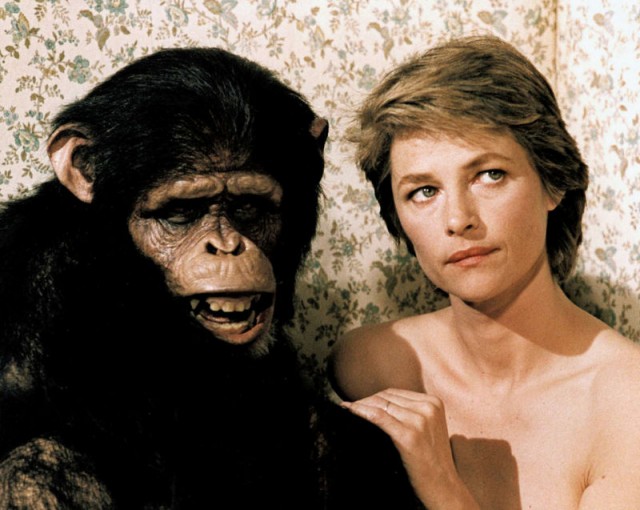
 It’s rather hard to tell how much Japanese auteur Nagisa Ôshima is monkeying around with his very strange 1986 movie, Max, Mon Amour, a love story between an intelligent, beautiful woman and a chimpanzee. The director of such powerful films as Cruel Story of Youth; Merry Christmas, Mr. Lawrence; Taboo; and In the Realm of the Senses seems to have lost his own senses with this surprisingly straightforward, tame tale of bestiality, a collaboration with master cinematographer Raoul Coutard, who shot seminal works by Truffaut and Godard; screenwriter Jean-Claude Carrière, who has written or cowritten nearly ninety films by such directors as Pierre Étaix (who plays the detective in Max), Luis Buñuel, Volker Schlöndorff, Philippe Garrel, and Miloš Forman; and special effects and makeup artist extraordinaire Rick Baker, the mastermind behind the 1976 King Kong, the Michael Jackson video Thriller, Ratboy, Hellboy, and An American Werewolf in London, among many others. Evoking Bedtime for Bonzo and Ed more than Planet of the Apes and Gorillas in the Mist, Max, Mon Amour is about a well-to-do English family living in Paris whose lives undergo a rather radical change when husband Peter Jones (Anthony Higgins) catches his elegant wife, Margaret (Charlotte Rampling), in bed with a chimp. Margaret insists that she and the chimp, Max, are madly in love and somehow convinces Peter to let her bring the sensitive yet dangerous beast home, which confuses their son, Nelson (Christopher Hovik), and causes their maid, Maria (Victoria Abril), to break out in ugly rashes. Peter, a diplomat, works for the queen of England, so as he prepares for a royal visit to Paris, he also has to deal with this new addition to his ever-more-dysfunctional family.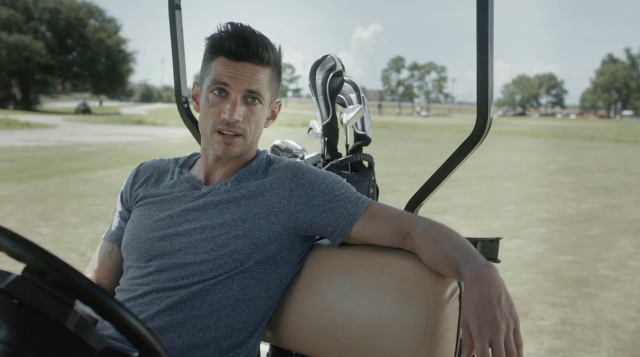
 Named the Outstanding Narrative Feature at the 2017 Sacramento Film Festival, Michael Clayton’s debut, The Dunning Man, begins with a rather strange shot of an American flag flying in the foreground as a plane heads toward the Chrysler Building, disappears behind it, then emerges on the other side. It’s impossible not to think about 9/11, but fortunately the rest of the film is a quirky little black comedy about the travails of poor Connor Ryan (James Carpinello), a man who hightails it out of New York, leaving his job and his rich girlfriend, and heads to Atlantic City, where he owns several apartments he’s leasing to tenants who don’t exactly pay him on time, if at all. “I hate thinking that the best I got coming for me is being Mr. Roper,” he tells his well-connected Uncle Bishop (Tom Kemp). But Connor doesn’t like accepting help from anyone, even when he’s trapped in some questionable situations. He’s kind of a schmegegge, a luckless loser who can’t catch a break. He’s rented one of his lo-rise condos to Gillian (Karen Howell), who lives with a pair of killer Chechen “warriors in the spirit of the wolf,” Ferdinand (Scott Oakley) and Ramos (Matthew Rimmer), who are members of a group that likes to have sex as furries. Meanwhile, he develops a friendship with his other tenant, Alice (Dawn-Lyen Gardner), a single mother with a violent boyfriend. Living above Alice is party animal Stryker Jones (Nicoye Banks), a rapper with a hit album who is lying relatively low as he struggles to make his follow-up record. Connor just wants a normal life, but he can’t stay out of trouble, refusing to sacrifice his principles even when his very existence is at stake.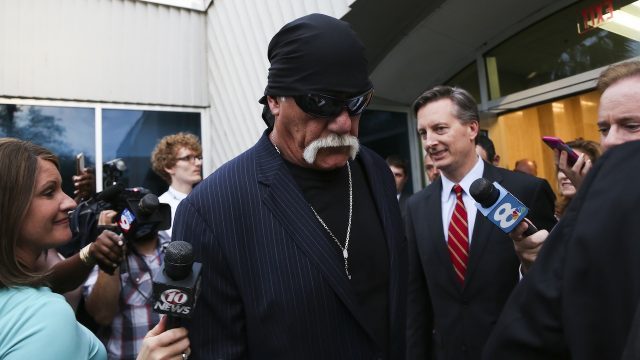
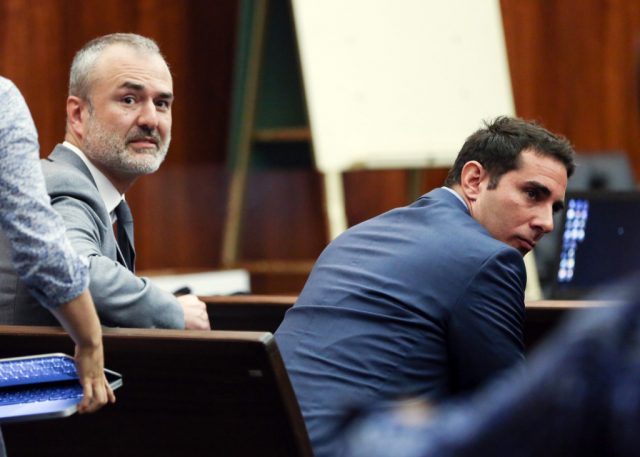
 The 2017 Human Rights Watch Film Festival comes to a close June 18 with the New York premiere of Brian Knappenberger’s Nobody Speak: Trials of the Free Press, a deeply troubling Netflix original that looks into the growing battle between billionaires and the fourth estate, between a person’s right to privacy and freedom of the press. Knappenberger begins by exploring the landmark Bollea v. Gawker case, in which Hulk Hogan, whose real name is Terry Gene Bollea, sued online media outlet Gawker for posting nine seconds of a tape depicting Bollea having sex with Heather Clem, the wife of his then-best friend, Todd Alan Clem, better known as radio personality Bubba the Love Sponge. The jury awarded Bollea $140 million, bankrupting Gawker, but Knappenberger reveals that the case was about a lot more than invasion of privacy — it was really about control of the media by the extremely wealthy. And Hogan/Bollea is not that wealthy. “Don’t be fooled into thinking that just because this case is so sleazy and rests on sex that it’s not important; this is one of the most important First Amendment cases in American history,” says Leslie Savan, who blogs on politics and the media for The Nation. “We’re talking about the very notion of truth,” she later adds. Knappenberger speaks extensively with Gawker cofounder Nick Denton, who defends what the company did as well as its overall journalistic ethics, covering stories that others wouldn’t; Knappenberger also meets with Gawker cofounder Elizabeth Spiers; former editor in chief A. J. Daulerio, who posted the Hogan story and sees himself as a patsy; former deputy editor James Wright; Hogan lawyers David Houston and Charles Harder; and former Gawker executive editor John Cook, who is boldly outspoken about Gawker’s purpose. “I wanted to write true things about bad people, and that’s what Gawker gave us all the freedom to do,” he says. First Amendment lawyer Floyd Abrams notes, “The reason to save Gawker was not because Gawker is worth saving. The reason to save it is that we don’t pick and choose what sort of publications are permissible, because once we do, it empowers the government to limit speech in a way that ought to be impermissible.” Among the other talking heads offering compelling insight are Politico media writer Peter Sterne, associate professor of journalism Jay Rosen, Buzzfeed business reporter Will Alden, NPR media correspondent David Folkenflik, and former New York Times columnist David Carr. The story takes a strange turn when it is discovered that there were potential improprieties involving Judge Pamela Campbell and that the lawsuit is being funded by billionaire venture capitalist Peter Thiel, who was outed by Gawker in 2007 and is now exacting a dangerous kind of revenge.