Who:Ólafur Eliasson What:LIVE from the NYPL Where: Stephen A. Schwarzman Building, Celeste Bartos Forum, 476 Fifth Ave. at 42nd St., 917-275-6975 When: Thursday, September 21, $40, 7:00 Why: Danish-born Icelandic artist Ólafur Eliasson has presented environmentally related projects around the world, including here in New York, in such exhibitions and installations as “Volcanoes and Shelters” at Tanya Bonakdar in Chelsea, “The New York City Waterfalls” along the East River, and the career-defining “Take Your Time” at MoMA PS1. Eliasson, who lives and works in Copenhagen and Berlin, will be at the New York Public Library on September 21 to participate in “Arctic Imagination” as part of the “Live from the NYPL” series. “Arctic Imagination” is a library initiative involving speakers in the United States and Northern Europe sharing their thoughts on climate change and melting Arctic ice. “In just one hundred years, the Arctic and the North Pole have been transformed from extremely dangerous, mysterious peripheral areas to regions which, in the race against climate change, are now in need of our protection and sense of responsibility,” the project explains in its mission statement. “In 2017 the libraries will be focusing on this theme in ‘Arctic Imagination’ — a series of events, readings, and live conversations in New York, Copenhagen, Stockholm, Oslo, and Nuuk.” Eliasson will be in conversation with the NYPL’s Paul Holdengräber. If you are unable to attend the event, which is copresented with the Royal Danish Library and the Consulate General of Denmark in New York, you can follow the livestream here.
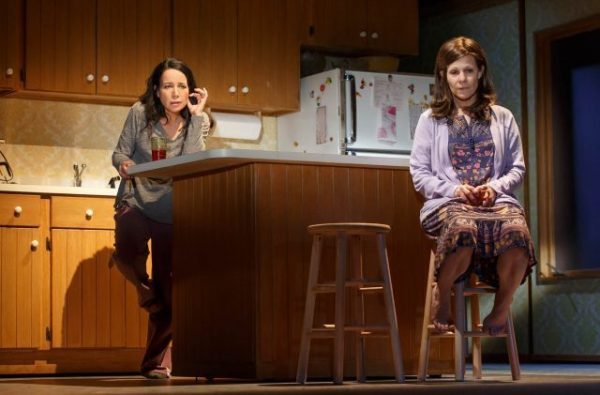
Sisters Lee (Janeane Garofalo) and Bessie (Lily Taylor) reunite after eighteen years in Marvin’s Room (photo by Joan Marcus)
American Airlines Theatre
227 West 42nd St. between Broadway & Eighth Ave.
Through August 27, $47-$127
212-719-1300 www.roundabouttheatre.org
Scott McPherson’s 1990 play, Marvin’s Room, is finally making its Broadway debut, in a touching and funny Roundabout production directed gracefully by Anne Kaufman. The work, which focuses on the complex relationship between two sisters, ran in New York at Playwrights Horizon and the Minetta Lane Theater in 1992-93, winning two Drama Desk Awards (including Outstanding Play) and an Obie, and was then turned into a film in 1996 with an Oscar-nominated Diane Keaton, Meryl Streep, Leonardo DiCaprio, and Gwen Verdon. For its Great White Way bow, it has enlisted a pair of fab actresses to portray the sisters. Lily Taylor stars as Bessie, a forty-year-old woman who has been caring for her ailing father, Marvin (Carman Lacivita), and her partially incapacitated aunt, Ruth (Celia Weston), in their Florida home for decades. “Dad’s dying but he’s been dying for about twenty years. He’s doing it real slow so I don’t miss anything,” Bessie tells Dr. Wally (Triney Sandoval), who is filling in for her regular physician. “And Dr. Serat has worked a miracle with Ruth,” she adds. “She’s had constant pain from her back since she was born, and now the doctor had her get an electronic anesthetizer; you know, they put the wires right into the brain and when she has a bad pain she just turns her dial. It really is a miracle. . . . If she uses it in the kitchen our automatic garage door goes up. But that’s a small price to pay, don’t you think?” The scene’s elements of vaudeville slapstick prepare the audience for Bessie’s discovery that she is sick as well. Her sister, Lee (Janeane Garofalo), arrives from Ohio to offer assistance, along with her two boys, Charlie (Luca Padovan) and the older, deeply troubled Hank (Jack DiFalco). It’s not exactly the most heartwarming of family reunions as everyone tries to decide how far they’re willing to go to help.
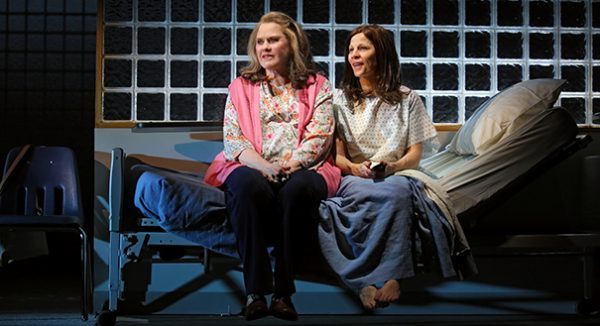
Ruth (Celia Weston) and Bessie (Lily Taylor) have their hands full in Broadway debut of 1990 Scott McPherson play (photo by Joan Marcus)
Garofalo (Russian Transport, The Truth about Cats and Dogs), in her Broadway debut, and Emmy winner Taylor (Aunt Dan & Lemon, Six Feet Under) get the sibling thing just right; they even look somewhat similar, and more so as the play continues. Taylor plays Bessie with a soft vulnerability beneath her hard shell, while Garofalo is excellent at keeping Lee’s motives just under the surface. Whenever they are together, Marvin can be seen in silhouette lying down in the bedroom, a constant reminder of what drove the sisters apart. Tony nominee Weston (True West, The Last Night of Ballyhoo) provides comic relief as the slow-moving, God-fearing Ruth, who refers to a bowel movement as a “stinky.” The set by Laura Jellinek (The Nether,The Wolves) easily slides from kitchen to doctor’s office to hospital room to retirement home while Obie winner Kauffman (Marjorie Prime, Belleville) moves the story at a calm pace despite the occasional fireworks. The play was inspired by childhood memories as well as a different play McPherson was writing, about an AIDS clinic. McPherson later cared for his partner, a cartoonist and activist who died of AIDS in February 1992 at the age of thirty-three; McPherson, who also wrote Scraped, passed away from AIDS complications later that year, at the same age. Marvin’s Room is a tragicomic story that boldly addresses the question of what happens when a caregiver needs a caregiver as well as a bittersweet reminder of the weight of family responsibility and heartbreaking loss.
The 2017 US Open championships begin at the USTA Billie Jean King National Tennis Center in Flushing Meadows Park on August 28, but there is plenty to do leading up to the main event, mostly for free. Fan Week kicks off August 21 with free admission to the grounds to watch the pros practice, daily through August 27. From August 22 to 25, the qualifying tournament takes place, as men and women fight for the final sixteen spots. On August 23, Queen’s Day will feature live entertainment and booths from local institutions. On August 24-25, the festivities move downtown to the Seaport District for the US Open Experience, serving live entertainment, appearances by tennis stars, interactive games, food tastings, the US Open Draw Ceremony, and more. And Arthur Ashe Kids’ Day swings into action on August 26 back at the National Tennis Center, with interactive activities, workshops, storytelling, competitions, practicing pros, Jack & Jack, Roger Federer, Sofia Carson, Rafael Nadal, Alex Aiono, and Venus Williams and a free concert with Skylar Stecker, Spencer Sutherland, Aja9, Summer Valentine, and Sky Katz from 9:30 to 12:30, followed by a ticketed live show at 1:00.
Little Steven and the Disciples of Soul will be playing four area shows in September and October
Saturday, September 23, Capitol Theatre, Port Chester, 149 Westchester Ave., $35-$90, 8:00
Monday, September 25, Gramercy Theatre, 127 East 23rd St., Manhattan, $39-$499, 8:00
Wednesday, September 27, St. George Theatre, 35 Hyatt St., Staten Island, $39-$499, 8:00
Wednesday, October 4, the Paramount, Huntington, $59.50-$499, 8:00 littlesteven.com
While Bruce Springsteen has been touring with his autobiography and preparing to make his Broadway debut in October, longtime compadre Steve Van Zandt is hitting the road in support of the first Little Steven and the Disciples of Soul record in nearly thirty years, Soulfire. The Boston-born actor, anti-apartheid activist, radio host (“Underground Garage”), producer, music historian, and songwriter, also known as Miami Steve, released four Disciples discs between 1982 and 1989 (Men without Women, Voice of America, Freedom — No Compromise, Revolution), followed by the 1999 solo album Born Again Savage, before turning to television, playing Silvio Dante on The Sopranos and then Frank Tagliano on the Norway-set Lilyhammer. But he’s a musician first and foremost. “I’ve always been very thematic with my work, very conceptual,” he announced in a statement about Soulfire. “I need a big picture. I can’t just do a collection of songs; that doesn’t work for me. In this case, the concept became me. Who am I? I’m kind of my own genre at this point. So I tried to pick material that, when you added it all up, really represented me. So there are a couple of covers, a couple of new songs, and some of what I feel are the best songs I’ve written and cowritten over the years. This record is me doing me.” The twelve-song record includes the title track, longtime favorites “Love on the Wrong Side of Town” and “I Don’t Want to Go Home,” “Blues Is My Business,”“Saint Valentine’s Day,” and “Down and Out in New York City.” Among the Disciples of Soul are Marc Ribler on guitar, Lowell “Banana” Levinger on piano and mandolin, Jak Daley on bass, Charley Drayton on drums, Andy Burton on organ, strings, and accordion, Eddie Manion, Stan Harrison, Clark Gayton, Ravi Best, and Ron Tooley on horns, Everett Bradley on percussion and backing vocals, and Erika Jerry and YahZarah on backing vocals. The band will be at the Capitol Theatre in Port Chester on September 23 (Bruce’s birthday), the Gramercy in Manhattan on September 25, the St. George on Staten Island on September 27, and the Paramount in Huntington on October 4.
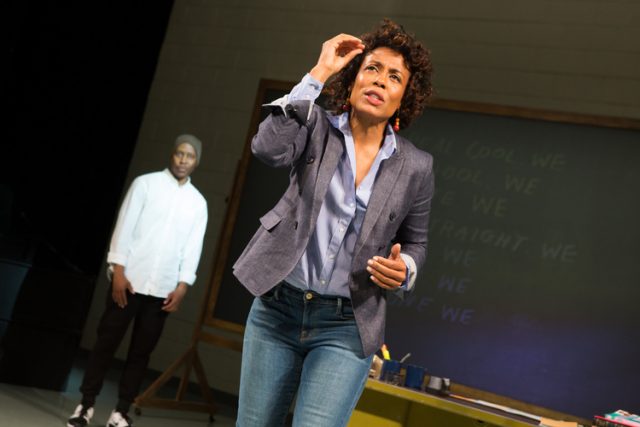
Nya (Karen Pittman) desperately tries to protect her son, Omari (Namir Smallwood), in Dominique Morisseau’s riveting Pipeline (photo by Jeremy Daniel)
Lincoln Center Theater at the Mitzi E. Newhouse
150 West 65th St. between Broadway & Amsterdam Ave.
Tuesday – Sunday through August 27, $87
212-362-7600 www.lct.org
Pipeline is an up-to-the-minute, honest, and hard-hitting look at race, class, and the education system in the United States from Detroit native Dominique Morisseau. Continuing at the Mitzi E. Newhouse through August 27, the intensely intelligent, powerful play was created by Morrisseau shortly after completing her award-winning Detroit Projects trilogy (Detroit ’67, Paradise Blue, Skeleton Crew) and before she begins her Residency Five at the Signature Theatre in April 2018 with a revival of Paradise Blue. In this new work, Morisseau brilliantly introduces Nya (Karen Pittman), a divorced public-school teacher in an unidentified city facing a family crisis, as she leaves a complicated, heart-rending phone message for her ex-husband, Xavier (Morocco Omari), explaining in fractured sentences that their son, Omari (Namir Smallwood), is facing explusion from school. However, she decides to delete the message, replacing it with a blunt “Calling to talk to you about our son. Give me a call back when you get this. Thanks. Bye.” In the span of just a few minutes, Morisseau has set the stage beautifully, establishing character, plot, and mood. Omari is a dour teenager who has attacked one of his teachers during a discussion about Richard Wright’s Native Son, an incident that was captured on video and is about to go viral. Omari’s girlfriend, Jasmine (Heather Velazquez), is a whirling dervish of opinions who’s never afraid to say what she is thinking. Meanwhile, Nya’s fellow teacher, the bitter, old-fashioned Laurie (Tasha Lawrence), has returned to school after getting involved in a serious fight between two students. “A good old ass whipping can teach a lot,” she says. The teachers are sometimes joined by Dun (Jaime Lincoln Smith), a flirtatious school security guard who promises Nya and Laurie that he’ll do whatever he can to prevent further clashes with students. But when Omari runs off, Nya becomes desperate to find him before his future comes crashing down. It’s all summed up by Jasmine, who tells Nya, “Sometimes somebody mess with you on the wrong day. . . . It’s like THEY don’t know it’s your last straw. But they ain’t seen how many times you been sucked of everything you got. They go pickin’ at you like lint, and be lookin’ surprised when you knock ’em flat the hell out.”
Jasmine (Heather Velazquez) and Omari (Namir Smallwood) face a troubling situation in poetic Lincoln Center production (photo by Jeremy Daniel)
Nya occasionally addresses the audience directly, as if they are in class themselves, but Morisseau, a former teacher whose mother was a public school teacher, and Obie-winning director Lileana Blain-Cruz (War, The Death of the Last Black Man in the Whole Entire World) never allow the play to become overly preachy or pedantic. (There’s even a program insert, “Playwright’s Rules of Engagement,” which notes, “This can be church for some of us, and testifying is allowed.”) The set, by Matt Saunders, swiftly changes from office to lunchroom to dorm room to classroom to hospital waiting room, with occasional scenes taking place in what Morisseau, who is also a writer and executive story editor for the Showtime series Shameless, calls “undefined space.” Omari’s fight with his teacher is representative in many ways of the confrontations between police and black and brown men and the need for personal space, and it’s all sensitively portrayed by an exceptionally strong cast and exceptional writing. “It’s a gamble, Jasmine,” Nya says. “All the time. You send your young man out into the world everyday, or away for a weekend. A semester. A school year. But you don’t know . . . You have no idea if they’re safe. You have no idea if one day someone will try to expire them because they are too young. Or too Black. Or too threatening. Or too loud. Or too uninformed. Or too angry. Or too quiet. Or too everyday. Or too cool. Or too uncomposed. Or too mysterious. Or just too TOO. You don’t know, Jasmine.” The relationships between the characters are fully believable as Morisseau steers clear of genre clichés in making the many issues Pipeline raises a microcosm of what is happening in twenty-first-century America. And at the center of it all is Gwendolyn Brooks’s 1960 poem “We Real Cool,” which is projected onto a blackboard and adorns the cover of Lincoln Center Theater Review: “We real cool. We / Left school. We / Lurk late. We / Strike straight. We / Sing sin. We / Thin gin. We / Jazz June. We / Die soon.” Pipeline is a poetic indictment of institutionalized societal constraints, a lesson we all need to learn.
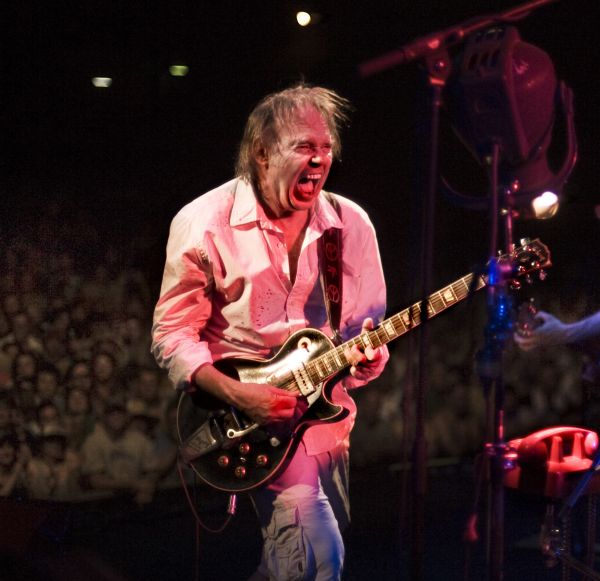
Neil Young lets it all hang out in Jonathan Demme concert film (photo by Larry Cragg)
NEIL YOUNG TRUNK SHOW (Jonathan Demme, 2009)
BAMcinématek, BAM Rose Cinemas
30 Lafayette Ave. between Ashland Pl. & St. Felix St.
Sunday, August 20, 7:00
Series runs through August 24
718-636-4100 www.bam.org www.trunkshowmovie.com
BAMcinématek’s three-week tribute to Oscar-winning director Jonathan Demme, who passed away in April at the age of seventy-three, continues with a pair of outstanding concert films. In April 2005, Neil Young underwent brain surgery for an aneurysm. Four months later, he gathered together friends for two special nights at Nashville’s historic Ryman Auditorium, captured on film by Demme, who had previously helmed such fab music docs as Stop Making Sense and Storefront Hitchcock.Neil Young: Heart of Gold was an intimate portrait of man who looked death in the face and survived; the film featured acoustic songs primarily from Young’s beautiful Prairie Wind album. But the Godfather of Grunge wasn’t about to let a little thing like a brain aneurysm stop him from rocking in the free world. As he continued his long-term project of reaching deep into his past for his archival box sets, he released Chrome Dreams II in October 2007, a sequel to an unreleased 1977 album that was rumored to include such future Young classics as “Pocahontas,” “Like a Hurricane,” “Homegrown,” and “Powderfinger.” For Chrome Dreams II, Young strapped on the electric guitar and held nothing back, joined by longtime partners in crime Ralph Molina on drums, Rick Rosas on bass, and Ben Keith on guitars and keyboards.
Young took the show on the road, playing small clubs across the country, where each song was announced by a live painting by Eric Johnson. Demme captured two searing performances at the Tower Theater in Pennsylvania, filming them guerrilla-style with eight cameras, mostly handheld, that get right up in Young’s face. While the actual concerts were divided into two separate sets, first solo acoustic, then electric with the band, which also featured backup vocals by then-wife Pegi Young and Anthony “Sweetpea” Crawford, Demme mixes them up in Neil Young Trunk Show, an exhilarating music documentary that limits behind-the-scenes patter and instead concentrates on the powerful music. At the time, Young had been at the game for nearly fifty years, but he plays with a young man’s abandon in the film, his eyes deep in thought on such gorgeous acoustic gems as “Harvest,” “Ambulance Blues,” “Sad Movies,” and “Cowgirl in the Sand” while really letting loose with extended jams on the new “Spirit Road” and “No Hidden Path” before tearing everything apart on “Like a Hurricane.” The sixty-two-year-old Canadian legend even includes an instrumental from his high school days with the Squires, “The Sultan,” complete with Cary Kemp banging a gong. As with most Young concerts, Trunk Show is not about the greatest hits; to truly enjoy it, just let the music take you away – and make sure the theater has the volume turned up loud. The movie is screening August 20 at 7:00 as part of the “Jonathan Demme: Heart of Gold” retrospective and will be followed by a Q&A with cinematographer Declan Quinn and camera operators Charlie Libin, Kathleen Corgan, Gerard Sava, Patrick Capone, Hollis Meminger, and Anthony Jannelli.
Neil Young reveals his heart of gold in Jonathan Demme concert film
NEIL YOUNG: HEART OF GOLD (Jonathan Demme, 2006)
BAMcinématek, BAM Rose Cinemas
30 Lafayette Ave. between Ashland Pl. & St. Felix St.
Sunday, August 20, 4:30
Series runs through August 24
718-636-4100 www.bam.org
The BAMcinématek screening of Neil Young Trunk Show will be preceded by another stellar collaboration between Jonathan Demme and Neil Young, Neil Young: Heart of Gold. In March 2005, less than a week before a scheduled operation for a brain aneurysm, Canadian country-folk-rock legend Neil Young headed to Nashville, assembled friends and family, and in four days recorded one of the best — and most personal — albums of his storied four-decade career, Prairie Wind. On August 18, he had recovered enough to put on a poignant show at the Ryman Auditorium in Nashville, captured on film by Demme, whose previous music-related works included Talking Heads in Stop Making Sense, Robyn Hitchcock in Storefront Hitchcock, and videos by the Pretenders and Bruce Springsteen. The concert film begins with brief interviews with band members as they prepare for the show; Demme does not harp on Young’s health but instead focuses on the music itself and the warming sense of a family coming together. And what music it is.
Using an ever-changing roster of participants, including Emmylou Harris, then-wife Pegi Young, steel guitarist Ben Keith, keyboardist Spooner Oldham, bass player Rick Rosas, the Nashville String Machine, the Fisk University Jubilee Singers, the Memphis Horns, and others, Young goes song by song through Prairie Wind (skipping only the Elvis tribute “He Was the King,” which can be found as an extra on the DVD), a moving album written by a man looking death squarely in the face. (Pegi Young points out that it was like Neil’s life flashing before his eyes.) Young introduces several songs with stories about his recently deceased father, growing up on a chicken farm, his daughter’s departure for college, and Hank Williams, whose guitar Young plays. (He also does a few songs on a Steinway.) Cinematographer Ellen Kuras (Eternal Sunshine of the Spotless Mind, No Direction Home: Bob Dylan) gets up close and personal with Young, zooming in for extended shots of his face, his eyes peeking out from under his cowboy hat. Eleven years later, Young is still at the top of his game, releasing great new music and playing incendiary live shows. “Jonathan Demme: Heart of Gold” continues through August 24 with The Master Builder, Ricki and the Flash, a program of music videos, and a double feature of What’s Motivating Hayes and Haiti Dreams of Democracy.
Vietnamese Zen master Thich Nhat Hahn practices mindfulness in new documentary
WALK WITH ME (Max Pugh & Marc J. Francis, 2017)
Rubin Museum of Art
150 West 17th St. at Seventh Ave.
August 18-26
212-620-5000 walkwithmefilm.com rubinmuseum.org
In 2011, Franco-British documentarian Max Pugh was asked by an elder monk to make a film about Zen Master Thich Nhat Hanh’s teaching tour of the United States and Canada. Pugh, whose younger brother had become a Buddhist monk studying with Thich Nhat Hanh, teamed up with codirector Marc J. Francis to follow the popular Vietnamese master as he and his monastics visited various towns and cities in North America before returning to their home base, Plum Village, in the southwest of France. The result is the gentle, meditative, and poetic Walk with Me, which is having its New York premiere at the Rubin Museum. In agreeing to the film, Thich Nhat Hanh, who was born in Vietnam in 1926, conveyed that he did not want to be the focus of the narrative; instead, Pugh and Francis, who also served as producers, editors, and cinematographers, concentrate on a group of monastics who, as the tour continues, perform rituals, chant, get their hair cut off, and go about their daily duties. There are no labels identifying anyone by name, no text telling viewers the date or location, no talking heads discussing Buddhism, Thich Nhat Hanh, or his teachings. Every once in a while they break away from the fly-on-the-wall narrative to present voice-over recitations by Benedict Cumberbatch, reading from Thich Nhat Hanh’s Fragrant Palm Leaves journals from the 1960s as the camera sets its sights on scenes from nature, from snow rushing past trees to shimmering reflections on a lake. “At first, it seemed like a passing cloud, but after several hours I began to feel my body turning to smoke and floating away,” Cumberbatch says as clouds slowly make their way across the moon. “I became a faint wisp of a cloud. I had always thought of myself as a solid entity, and suddenly I saw that I am not solid at all. I saw that the entity I had taken to be me was really a fabrication. My true nature, I realized, was much more real, both uglier and more beautiful than I could ever have imagined.”
The film works best when Thich Nhat Hanh, who was nominated for the Nobel Peace Prize by Dr. Martin Luther King Jr. in 1967, is present and when his words are read by Cumberbatch, offering an enveloping warmth and solace. As the master, who was exiled from his home country by both sides because of his opposition to the Vietnam War, ventures through natural settings, often wearing his brown knit cap, his eyes take in everything around him, zeroing in on the present moment, experiencing a constant state of mindfulness. It’s not nearly as interesting when it shows the monastics — Sister An Nghiem, Sister Dang Nghiem, Brother Phap Huu, Brother Phap Linh, Brother Phap Dung, Brother Phap De, Brother Phap Sieu, and Sister Dinh Nghiem — interacting with prisoners, discussing why they became monks, tracing their personal history, and meeting up with long-lost friends or visiting with relatives. The film concludes with a glorious sunset, as one day ends and another one is ready to begin. Shortly after filming was completed, Thich Nhat Hanh suffered a debilitating stroke, in November 2014, but his mindfulness programs and humanitarian foundation continue. Walk with Me is screening at the Rubin August 18-26, with all three shows on August 19 featuring some combination of group meditation (in conjunction with the sound installation “Le Corps Sonore”), a monastic encounter, and/or a Q&A with Francis, Pugh, and some of the monks from the film. In addition, on August 19 at 10:00 am, there will be a free pop-up, monastic-led group meditation in Union Square Park that will also be livestreamed here.


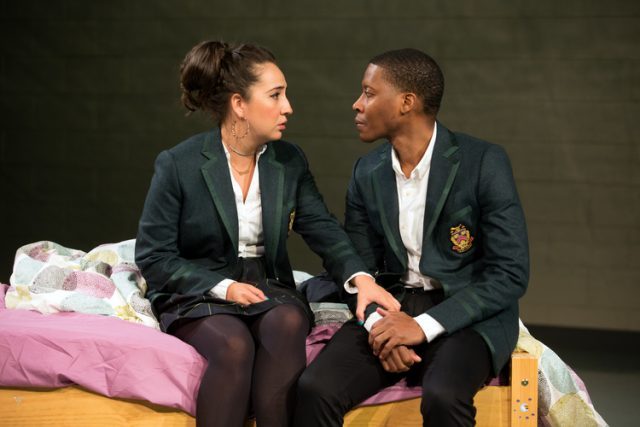
 BAMcinématek’s three-week tribute to Oscar-winning director Jonathan Demme, who passed away in April at the age of seventy-three, continues with a pair of outstanding concert films. In April 2005, Neil Young underwent brain surgery for an aneurysm. Four months later, he gathered together friends for two special nights at Nashville’s historic Ryman Auditorium, captured on film by Demme, who had previously helmed such fab music docs as Stop Making Sense and Storefront Hitchcock. Neil Young: Heart of Gold was an intimate portrait of man who looked death in the face and survived; the film featured acoustic songs primarily from Young’s beautiful Prairie Wind album. But the Godfather of Grunge wasn’t about to let a little thing like a brain aneurysm stop him from rocking in the free world. As he continued his long-term project of reaching deep into his past for his archival box sets, he released Chrome Dreams II in October 2007, a sequel to an unreleased 1977 album that was rumored to include such future Young classics as “Pocahontas,” “Like a Hurricane,” “Homegrown,” and “Powderfinger.” For Chrome Dreams II, Young strapped on the electric guitar and held nothing back, joined by longtime partners in crime Ralph Molina on drums, Rick Rosas on bass, and Ben Keith on guitars and keyboards.
 The BAMcinématek screening of Neil Young Trunk Show will be preceded by another stellar collaboration between Jonathan Demme and Neil Young, Neil Young: Heart of Gold. In March 2005, less than a week before a scheduled operation for a brain aneurysm, Canadian country-folk-rock legend Neil Young headed to Nashville, assembled friends and family, and in four days recorded one of the best — and most personal — albums of his storied four-decade career, Prairie Wind. On August 18, he had recovered enough to put on a poignant show at the Ryman Auditorium in Nashville, captured on film by Demme, whose previous music-related works included Talking Heads in Stop Making Sense, Robyn Hitchcock in Storefront Hitchcock, and videos by the Pretenders and Bruce Springsteen. The concert film begins with brief interviews with band members as they prepare for the show; Demme does not harp on Young’s health but instead focuses on the music itself and the warming sense of a family coming together. And what music it is.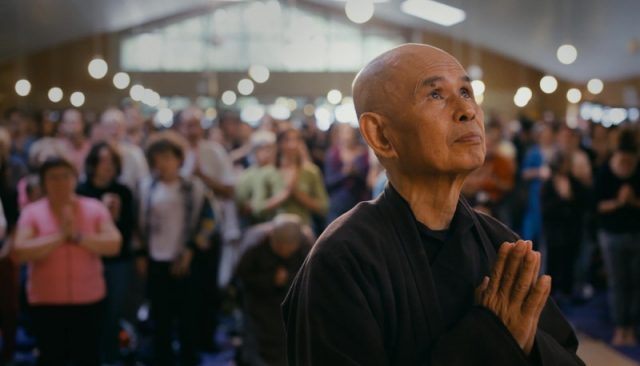
 In 2011, Franco-British documentarian Max Pugh was asked by an elder monk to make a film about Zen Master Thich Nhat Hanh’s teaching tour of the United States and Canada. Pugh, whose younger brother had become a Buddhist monk studying with Thich Nhat Hanh, teamed up with codirector Marc J. Francis to follow the popular Vietnamese master as he and his monastics visited various towns and cities in North America before returning to their home base,