twi-ny recommended events

THE RED LETTER PLAYS: FUCKING A

Hester Smith (Christine Lahti) cries out at her continuing misfortune in Signature revival of Suzan-Lori Parks play (photo © 2017 Joan Marcus)

Hester Smith (Christine Lahti) cries out at her continuing misfortune in Signature revival of Suzan-Lori Parks play (photo © 2017 Joan Marcus)

The Pershing Square Signature Center
The Romulus Linney Courtyard Theatre
480 West 42nd St. between Tenth & Eleventh Aves.
Tuesday – Sunday through October 8, $30 ($85 after October 1)
212-244-7529
www. signaturetheatre.org

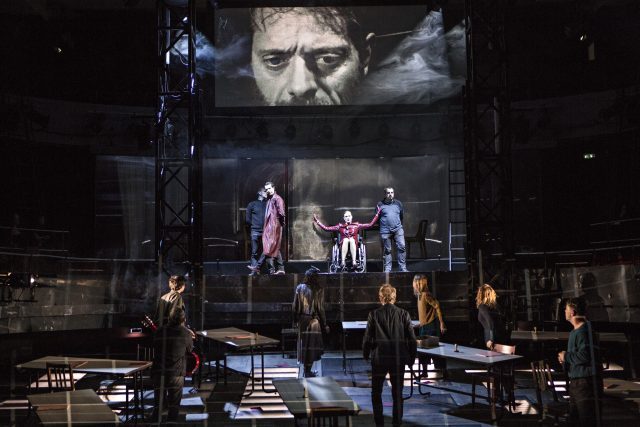
While canoeing about twenty years ago, Suzan-Lori Parks was randomly struck with the title of a play inspired by Nathaniel Hawthorne’s The Scarlet Letter: She wanted to write a show called Fucking A. It’s a great name for an ambitious work that turned out to be neither a reimagining of nor a response to the 1850 literary classic about adultery and punishment in 1642 Puritanical Boston but instead something wholly its own, with just a few key references to Hawthorne’s book. A fresh, stirring revival of that 2000 play opened last night as part of Parks’s Signature Theatre residency, running in tandem for the first time with its Hawthorne-related companion, 1999’s In the Blood, which together are known as the Red Letter Plays. Fucking A takes place in “a small town in a small country in the middle of nowhere,” where Hester Smith (Christine Lahti) works as an abortionist, an always-visible “A” branded into her skin. She is saving money so she can have a picnic with her son, Boy Smith, who has been in jail for thirty years for having stolen some meat from the very wealthy family he and his mother cleaned for. The rich girl who told on him is now the First Lady (Elizabeth Stanley), wife of the Mayor (Marc Kudisch). Furious that his spouse has been unable to give birth to his heir, the Mayor is having an affair with Canary Mary (Joaquina Kalukango), Hester’s best friend, who wants to marry the Mayor but in the meantime is more than willing to accept his money as payment for services rendered. Commenting on Canary Mary’s sexy yellow dress and high heels, Hester says, “It makes you look like a whore.” Canary responds, “I am a whore.” Hester counters, “Yr a kept woman,” to which Canary replies, “Im a whore. Yr an abortionist Im a whore.” Everyone in this unnamed place, in an unnamed time that could be the past, the present, or a postapocalyptic future, is just as direct, knowing exactly who they are and what they want out of this world, as indicated by the appellations Parks gives them, most of which describe their position and/or their inner nature. Hester is being courted by the kindhearted Butcher (Raphael Nash Thompson), who is not bothered by what she does for a living. (In a crafty touch, they wear matching bloodstained aprons.) Everyone is on edge when a convict, Monster (Brandon Victor Dixon), breaks out of prison and is on the loose, being tracked by a trio of Hunters (J. Cameron Barnett, Ben Horner, and Ruibo Qian) who can’t wait to capture and torture him, setting up a brutal conclusion.

The First Lady (Elizabeth Stanley) slyly eyes her husband (Marc Kudisch) in Fucking A (photo © 2017 Joan Marcus)

The First Lady (Elizabeth Stanley) slyly eyes her husband (Marc Kudisch) in Fucking A (photo © 2017 Joan Marcus)

In Fucking A, Parks, the first African American woman to win the Pulitzer Prize for Drama (in 2002 for Topdog / Underdog), has created an updated classical tragedy fraught with contemporary societal issues. Despite the characters’ descriptive names, they go beyond mere caricature as they deal with systemic misogyny, racism, class conflict, financial and education imbalance, fearmongering, legalized abortion, rape, and general injustice. Determined to get vengeance, Hester declares about the Mayor’s wife, “When she was a little Rich Girl she thought she owned the world. And anything she wanted she could buy. Sent my son away to prison with a flick of her little Rich Girl finger. She cant buy a son or a daughter now but I can buy mine. Im buying mine back.” Hester has been paying into the Freedom Fund for years in order to just visit her son, but the cost keeps going up as his sentence keeps getting longer; as the fund’s motto says, “Freedom Ain’t Free!” The actors, many of whom also play musical instruments in the balcony, occasionally turn to Brechtian song, both serious and funny, to further their characterization and the plot, something that Obie-winning director Jo Bonney (Lynn Nottage’s Meet Vera Stark, Parks’s When Father Comes Home from the Wars) works in seamlessly. The Hunters sing, “With jobs so scarce and times so hard / Some folks have turned to crime / The law locks all the bad ones up / They lock em up all the time / When law locks em up, they make a fuss / But when they escape, it’s good for us! / Cause we hunt.” Referring to his semen and the loyalty he so craves, the virile Mayor proudly belts out, “Marching and swimming / And marching and swimming / Saddle up! / Take aim! / Atten-tion! / At ease! / Charge! Charge! Charge! Charge!” And in a duet Hester and Canary explain, “Its not that we love / What we do / But we do it / We look at the day / We just gotta get through it. / We dig our ditch with no complaining / Work in hot sun, or even when its raining / And when the long day finally comes to an end / We’ll say: ‘Here is a woman / Who does all she can.’”

An escaped convict rattles a close-knit community in one of Suzan-Lori Parks’s Red Letter Plays (photo © 2017 Joan Marcus)

An escaped convict (Brandon Victor Dixon) rattles a close-knit community in one of Suzan-Lori Parks’s Red Letter Plays (photo © 2017 Joan Marcus)

Rachel Hauck’s ramshackle set usually serves as the room where Hester cleans up after performing abortions but is swiftly turned into a local pub, Butcher’s shop, a bench by the ocean, and the Mayor’s house, with a dark open doorway and stairs in the back that harken to something more outside. When talking about abortions, sex, and their vaginas, the women often speak in a different language called Talk, which is translated in surtitles; the only male who can understand even a few words and sentences of the women’s Talk is the sensitive and caring Butcher. Emilio Sosa’s costumes further define the characters while maintaining the mystery of time and place; Hester’s blood-soaked apron and the Scribe’s (Kudisch) outfit seem to fit in the Middle Ages, while the Mayor’s suit and the First Lady’s and Canary Mary’s clothing is decidedly modern. Oscar, Obie, and Emmy winner Lahti (Chicago Hope, Swing Shift) is transcendent as Hester, her every gesture signaling the utter desperation she feels, trapped by her “stinking weeping” brand. Thompson (Black Codes from the Underground, Pericles) is sweetly touching as Butcher, who delivers an extensive monologue on all of the crimes his daughter has committed, listing just about everything under the sun, including at least several sins that every member of the audience knows only too well, tacitly implicating each one of us in the proceedings. Three-time Tony nominee Kudisch (Hand to God, Assassins) deliciously chews up whatever is in his path as the Mayor and the drunken Scribe while also playing the bass guitar, and Stanley (On the Town, Company), in her daringly red dress, and Kalukango (The Color Purple, Our Lady of Kibeho), in her bold yellow attire, are excellent as two very different women who are essentially after the same thing. Parks, whose Signature residency began with The Death of the Last Black Man in the Whole Entire World AKA the Negro Book of the Dead and Venus and continues with In the Blood, which opens September 17, is fierce in her writing, which sparkles with overt and subtle dichotomies that bring it all together beautifully. Lastly, in a time when color-blind casting is all the rage, the ethnicity of the actor playing Hester has a critical impact on the play. In the 2003 production at the Public Theater, S. Epatha Merkerson was Hester (with Bobby Cannavale as the Mayor, Daphne Rubin-Vega as Canary Mary, and Peter Gerety as Butcher); the entire power dynamic shifts depending on Hester’s color (as well as that of other characters), a thought that can send even more shivers down your spine than you’re already experiencing watching this superb revival. We can think all we want that we don’t see color, but it’s another key part of what makes Fucking A fucking awesome.

BILL MURRAY, JAN VOGLER & FRIENDS: NEW WORLDS

 Photo by Jim Rakete (Jan Vogler) and Marco Grob (Bill Murray),

Jan Vogler (Photo by Jim Rakete) and Bill Murray (photo by Marco Grob) seek out new worlds in unique collaboration

Who: Bill Murray, Jan Vogler, Mira Wang, Vanessa Perez
What: Carnegie Hall concert
Where: Carnegie Hall, Stern Auditorium / Perelman Stage, 881 Seventh Ave. at Fifty-Seventh St., 212-247-7800
When: Monday, October 16, $40-$250, 8:00
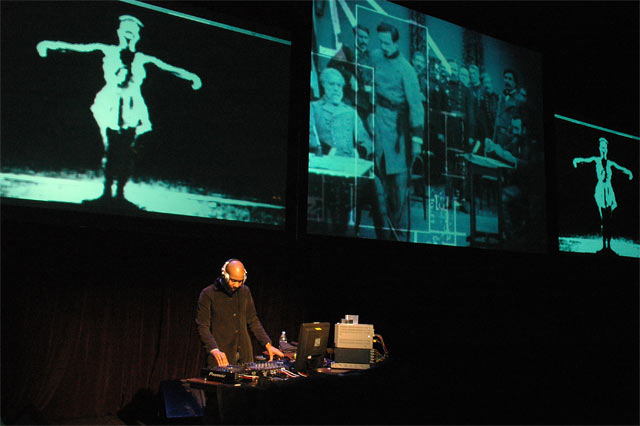
Why: Bill Murray has been singing his whole career, from goofing around as Nick the lounge singer on Saturday Night Live, where he would make up words to the Star Wars theme and annoy Linda Ronstadt, to delivering a rousing rendition of “Let’s Get Physical” on Late Night with David Letterman and a tender karaoke version of Roxy Music’s “More than This” in Lost in Translation. But just as he went from being a comedian to a more serious actor, he will be taking his vocal career to unseen heights on October 16 at Carnegie Hall for “Bill Murray, Jan Vogler & Friends: New Worlds,” an evening of classical music and American literature. Suburban Chicago native Murray and German cellist Jan Vogler, who met on an airplane in 2013, attended a poetry walk across the Brooklyn Bridge together in 2015, and then decided to team up on this project, will be joined by Chinese-born violinist Mira Wang (Vogler’s wife) and Venezuelan-born pianist Vanessa Perez on compositions by Johann Sebastian Bach, Astor Piazzola, Stephen Foster, George Gershwin, Henry Mancini, Van Morrison, Leonard Bernstein, and others; Murray will recite text by Ernest Hemingway, Stephen Sondheim, Mark Twain, Walt Whitman, and more alongside Vogler’s Stradivari cello. With its international quartet, the show will also focus on various connections between America and Europe. “I am bathing in this experience, really. I can’t get enough of it,” Murray said in a statement. The New Worlds studio album will be released by Decca Gold on September 9. For a sneak peek at what to expect, check out this promotional video.

TICKET ALERT: FALL FOR DANCE 2017

fall for dance 2017

New York City Center
131 West 55th St. between Sixth & Seventh Aves.
Tickets go on sale Sunday, September 10, 11:00 am (get place in line starting at 10:00 am)
Festival runs October 2-14, $15
212-581-1212
www.nycitycenter.org

One of the hottest tickets of the season is always the annual Fall for Dance Festival at City Center, ten days of performances by twenty companies from around the world, each show a mere fifteen bucks. This year’s lineup is stellar once again, with such troupes as Trisha Brown Dance Company, American Ballet Theatre, Alvin Ailey American Dance Theater, Abraham.In.Motion, the San Francisco Ballet, Stephen Petronio Company, and the Pennsylvania Ballet performing works by such choreographers as Christopher Wheeldon, Kyle Abraham, Alexei Ratmansky, Ronald K. Brown, Crystal Pite, Mark Morris, and Michelle Dorrance. Most evenings will be preceded by free dance lessons by members of one of that night’s performing companies, open to all ticket holders (Tango Fire, October 4; Cie Art Move Concept, October 5; Alvin Ailey American Dance Theater with Ronald K. Brown, October 6; Ballet BC, October 11; Company Wang Ramirez, October 12; Danza Contemporanea de Cuba, October 13). More advanced dancers can sign up for master classes ($15) with Dorrance Dance (tap) on October 3 at 6:00 and with Wendy Whelan (ballet) on October 14 at noon. Tickets go on sale Sunday, September 10, at 11:00 am, but you need to get your place in line at 10:00, so don’t waste any time if you want to see any of the below programs, because these events sell out ridiculously fast.

Monday, October 2, and Tuesday, October 3, 8:00
Miami City Ballet
Vincent Mantsoe, GULA, choreographed by Vincent Sekwati KoKo Mantsoe
Trisha Brown Dance Company, You can see us, choreographed by Trisha Brown
Dorrance Dance, Myelination, world premiere Fall for Dance commission, choreographed by Michelle Dorrance

Wednesday, October 4, and Thursday, October 5, 8:00
Pennsylvania Ballet, Rush©, choreographed by Christopher Wheeldon
Cie Art Move Concept, Nibiru, choreographed by Soria Rem and Mehdi Ouachek
Stephen Petronio Company, Bloodlines: Yvonne Rainer and Steve Paxton
German Cornejo’s Tango Fire, Tango Fire, choreographed by German Cornejo

Friday, October 6, and Saturday, October 7, 8:00
Sanjukta Sinha, IceCraft Dance Company, Kin-Incede, choreographed by Padma Bhusan Kumudini Lakhia
American Ballet Theatre, Souvenir d’un lieu cher, choreographed by Alexei Ratmansky
Alvin Ailey American Dance Theater, Open Door, choreographed by Ronald K. Brown
Les Ballets Trockadero de Monte Carlo, Paquita, after Marius Petipa

Wednesday, October 11, and Thursday, October 12, 8:00
Gauthier Dance//Dance Company Theaterhaus Stuttgart, Streams, choreographed by Andonis Foniadakis
Abraham.In.Motion, Drive, world premiere Fall for Dance commission, choreographed by Kyle Abraham
Sara Mearns and Honji Wang, No. 1, world premiere co-commission, choreographed by Honji Wang and Sébastien Ramirez
Ballet BC, Bill, choreographed by Sharon Eyal and Gai Behar

Friday, October 13, and Saturday, October 14, 8:00
Hubbard Street Dance Chicago, Solo Echo, choreographed by Crystal Pite
San Francisco Ballet, Concerto Grosso, choreographed by Helgi Tomasson
David Hallberg, Twelve of ’em, world premiere Fall for Dance commission, choreographed by Mark Morris
Danza Contemporanea de Cuba, Matria Etnocentra, choreographed by George Céspedes

SCHOOL LIFE

School Life

John Leyden teaches music to Headfort students in the extraordinary School Life

SCHOOL LIFE (Neasa Ní Chianáin & David Rane, 2017)
IFC Center
323 Sixth Ave. at West Third St.
Opens Friday, September 8
212-924-7771
www.schoollifefilm.com
www.ifccenter.com

I never went to boarding school, but if I had, I’d like it to have been at the Headfort School in Kells, County Meath, Ireland, which promises “an education that lasts a lifetime.” The institution, founded in 1949 in a two-hundred-year-old building, is highlighted in the extraordinarily enchanting documentary School Life. Director and cinematographer Neasa Ní Chianáin and director and producer David Rane focus on the daily exploits of husband and wife teachers John and Amanda Leyden, who have been at Headfort for more than forty-five years. The film follows them from their quaint house to their classrooms and special projects: John, tall and thin, with an acerbic wit and scraggly white hair on the back of his head, is putting together the school rock band, while Amanda, short and stout with an infectious enthusiasm for life, is staging Hamlet with a handpicked group of students. Headmaster Dermot Dix, who attended the school himself and had the Leydens as teachers, gives them a wide berth, and they are allowed to be themselves, questioning the existence of a supreme being and supporting same-sex marriage; in fact, everyone at Headfort, from the teachers to the students and the administrators, is encouraged to be themselves, rather than pigeonholed into standard, uniform expectations. Dix even considers it a place where students can “horse around” and “get mucky and muddy”; at one point John, who also teaches math and Latin, is outside in the forest, pushing one of the girls on a makeshift swing. Previously titled In Loco Parentis — “in place of parents” — when it was a hit at Sundance, School Life rarely shows any mothers or fathers, which is extremely refreshing in this age of helicopter parenting. Ní Chianáin (Fairytale of Kathmandu, The Stranger) also avoids talking heads, instead opting for a fly-on-the-wall style that puts us right in the middle of things, without so-called experts explaining to us what is happening and why it’s all so engaging.

School Life

Amanda Leyden gets students excited about Shakespeare in Neasa Ní Chianáin and David Rane’s magical School Life

John and Amanda can be brutally honest when it comes to their students’ artistic talents — witness John’s interaction with a new girl who had stopped coming to the music room — but they care deeply about the kids, discussing them at home to figure out if they were too hard on someone or whether a specific child needs special attention. They both also know that this is what they were meant to do, and that they are still at the top of their game. “I wouldn’t be wasting their time if I was no good,” Amanda says. Meanwhile, John opines, “What else would you do all day?” As the end of the school year nears and the graduating students start receiving acceptances from their next institution of higher learning, there is a heart-tugging cathartic pain as they contemplate saying farewell to their Headfort friends, and particularly John and Amanda. You’re likely to feel the same way, having gotten to know such unique kids as Eliza, Florrie, Ted, Megan, Charlie, and Olivia while falling under the spell of the Leydens. “Remember me,” Ted shouts in the play, portraying the ghost of Hamlet’s father. After watching School Life, you’ll never forget the extraordinary John and Amanda Leyden and everyone else at Headfort. Is it too late to go back to boarding school?

TROPHY

Trophy

Trophy explores hunting and conservation of wild animals in African in surprising and complex ways

TROPHY (Shaul Schwarz & Christina Clusiau, 2017)
Quad Cinema
34 West 13th St. between Fifth & Sixth Aves.
Opens Friday, September 8
www.trophyfilm.com
quadcinema.com

In 2015, Minnesota dentist Dr. Walter Palmer shot and killed the beloved Cecil the lion in Zimbabwe, setting off international outrage about trophy hunting. Director Shaul Schwarz and codirector Christina Clusiau explore the much-reviled sport, with surprising results, in Trophy. The film, beautifully photographed in South Africa, Zimbabwe, and Namibia by Schwarz and Clusiau, can be extremely difficult to watch, but it is a must-see even though it includes several scenes of brutal animal shootings, including the harrowing killing of an elephant that cries out after it falls to the ground, its family nearby. But what starts out as a horrific look at hunters who pay seemingly ridiculous amounts of money to hunt the Big Five — it can cost upwards of half a million dollars to shoot a buffalo, leopard, elephant, lion, and rhino — quickly turns into a compelling study of conservation, poaching, and sustainability. “I know that a lot of people are confused how hunting and conservation go together,” Safari Club International Foundation president Joe Hosmer says. Despite a serious decline in the number of lions, elephants, and rhinos in the world since 1900 — the film points out that sixty percent of all wild animals have been lost since 1970 — some argue that hunting is necessary and that breeders are helping keep these animals from disappearing from the planet, while others claim just the opposite. “There’s a big industry in our country, not just the crocodiles — the lions, the sable, the buffalo. Everything has been bred for a purpose,” says Christo Gomes, hunting outfitter for Mabula Pro Safaris. “So, yeah, sure, some of them will be hunted. We as humans are going to eat it, we are going to use the skins; that’s the cycle of life.” Born Free USA CEO Adam Roberts explains, “You can just pick whatever animal you want from the menu that they offer you, see the price, and book the kill.” Ecologist and author Craig Packer sees both sides of the issue but can’t escape the basic idea that “canned hunting [is] not sport; it’s just killing.” South African Predator Association president Pieter Potgieter complains, “If we can’t get hunters to hunt our lions, we slaughter the lions and sell their bones.” Somewhere in the middle is South African wildlife officer Chris Moore, whose job is to find a balance between canned hunting, poaching, and animals that can destroy local families’ livelihoods. “Every single morning I look in the mirror because we’ve got to make sure that we don’t cross the bounds . . . that we can’t lose our humanity for humanity,” he says, acknowledging that some hunting is absolutely necessary to help both the animal population and the people, who are desperately poor, but adding, “We have to keep this fight going.”

Trophy

John Hume is on a virtual one-man crusade to protect the rhinos in Trophy

One of the central figures in the film is Buffalo Dream Ranch owner John Hume, the world’s largest rhino breeder, who has been selling off his vast assets to maintain the species. Every two years, Hume shaves off his rhinos’ horns so poachers won’t kill the animals in order to get the valuable objects; he firmly believes that the legalization of the rhino horn trade is essential to the survival of the animals. “The odds are stacked against them, and I’m always for the underdog. But more to the point, I got to know them, and they are the last animal in the world that deserves the persecution,” he says. “They don’t deserve it. They are the nicest, most user friendly animal that wants to stay this side of extinction.” Schwarz and Clusiau also follow Texas sheep breeder Philip Glass, a Bible thumper who comes from a hunting family and is seeking to score the Big Five. In describing a kill, Glass says, “And then you pull the trigger, and boom! You got him. And then all of that anticipation changes into a different emotion, of joy, and relief, and excitement, and anticipation, because you want to go over to him and see, what does he look like. What does he feel like. Where did he fall.” But it’s hard to feel much sympathy for the hunters as they clean up their kill, cover up the blood, and then pose for photographs over their trophy. As professional hunter Gysbert van der Westhuyzen, who leads trips in Namibia, says, “You have to work for your trophy. We believe here that if you want to hunt, it’s all in the foot, it’s walk and stalk. It’s also giving the animal a chance.” But he then tears up and heads off camera when asked if he ever gets attached to any of the animals he ultimately releases to be hunted. “There [are] animals you can’t let go of. You know, you will be playing with them and they become like a friend.” The film also includes a breeding auction, a look inside the Safari Club Convention in Las Vegas, a heated court case, and an intense debate over conservation between Hume and Born Free Foundation CEO Will Travers. But then you watch a hunter shoot a crocodile and yell, “It’s party time!” and it’s hard to think of anything other than what’s right in front of you. Schwarz (Narco Cultura) and Clusiau, who previously collaborated on A Year in Space and Aida’s Secrets, have done an outstanding job examining all sides of a surprisingly complex issue, which is about a lot more than just a dentist shooting a gorgeous beast and proudly posing with his victory. Trophy opens September 8 at the Quad with a series of Q&As with Schwarz and Clusiau on September 8 at 6:50 joined by producer Chris Moore and editor Jay Sternberg, September 9 at 6:50 with Time magazine photo editor Kira Pollack, and September 10 at 4:20 and then 6:50 with New York Times international photo editor David Furst.

COMPANY TOWN

Nicolaus Czarnecki

Crossett, Arkansas, pastor David Bouie leads fight against Koch Industries over environmental injustice and corporate accountability in Company Town (photo by Nicolaus Czarnecki)

COMPANY TOWN (Natalie Kottke-Masocco & Erica Sardarian, 2016)
Cinema Village
22 East 12th St. between University Pl. & Fifth Ave.
Opens Friday, September 8
212-529-6799
www.companytownfilm.com
www.cinemavillage.com


In Company Town, director, writer, and producer Natalie Kottke-Masocco and codirector, writer, and producer Erica Sardarian investigate the cancer cluster affecting Crossett, Arkansas, which has experienced an alarming number of men, women, and children suffering from the disease. Pastor David Bouie and others firmly place the blame on illegal dumping and sewage wastewater from the local Georgia-Pacific paper and chemical plant, which was purchased by Koch Industries, owned by controversial billionaire brothers Charles and David Koch, in 2005. Kottke-Masocco and Sardarian spent nearly four years in Crossett, documenting the town’s fight against big business, an uphill battle all the way as it makes its case to the EPA, the Crossett Water Commission, ADEQ (Arkansas Department of Environmental Quality), the Arkansas Department of Health, and other organizations that are responsible for public health issues. “Koch Industries is one of the all-time champions of using the levers of political influence throughout the nation . . . and, yes, including Arkansas,” says investigative journalist and professor Charles Lewis. Former Obama administration environmental adviser Van Jones adds, “This is happening all across America; this is not just about one town. This is about a whole series of small towns in vulnerable neighborhoods that are being preyed upon by economic power and big polluters. They think they can get away with this. It is a century-defining problem, but it’s going to be resolved by little towns like Crossett fighting their way to some kind of justice.” The fight is led by Pastor Bouie, who refuses to take no for an answer as Crossett, the Forestry Capital of the World, uncovers the abuses by Georgia-Pacific and the “door-to-door cancer” occurring in the town of about 5,500 people, primarily of African-American heritage. Among those residents willing to go on camera and speak out against the plant that is also the financial lifeblood of the community are Jessie Johnson, Hazel Parker, Leona Edwards, young child and cancer sufferer Simone Smith, and former GP contractor Ken Atkins. They are joined by environmental scientist (and folk musician) Barry Sulkin; Elaine Shannon, editor in chief of Environmental Working Group; Huffington Post reporter Paul Blumenthal; research scientist Anthony Samsel; chemist Wilma Subra of the Louisiana Environmental Action Network; whistleblower Diki Guice, who only reveals his identity after he loses his job at GP; environmental law and policy expert Heather White; and Ouachita Riverkeeper Cheryl Slavant, who declares, “Everyone who lives in Crossett or works in Crossett is in danger.”

Nicolaus Czarnecki

A community comes together to fight environmental and corporate injustice in Company Town (photo by Nicolaus Czarnecki)

Company Town is one of those documentaries that reveals mind-boggling injustice, where the average person seemingly has no recourse against corporate greed and a government turning its back on them. When regional EPA administrators finally do come to Crossett to check out the residents’ claims firsthand, it is clear that Georgia-Pacific, which did not respond to requests from the filmmakers to participate in the film in any way, was warned in advance and has made some changes that last only a week. Despite evidence that families in eleven of fifteen homes on one block have members who have died from or are battling cancer, the various government organizations don’t find that unusual. Pastor Bouie, who is also a former GP employee and reserve deputy sheriff, is determined to never give up. “How many of us that have worked to keep the company going, keep the company in business, how many of us have to die? How many of our children and family members have to die in order to keep one job at this plant?” he says. And his wife, Barbara Bouie, states the situation very succinctly. “They know what they’re doing is wrong, and they need to correct it.” Unfortunately, there is still a long way to go. The film opens September 8 at Cinema Village, with the 8:00 shows Friday and Saturday night followed by Q&As with Kottke-Masocco and Sardarian along with producer Adam Paul Smith and cinematographer, editor, and producer Edgar Sardarian. The Friday night discussion will also feature New York State attorney general Eric Schneiderman and members of the cast.

PLUS ÇA CHANGE: FRENCH NEW WAVE IN THE NEW MILLENNIUM

Film Socialisme

Good luck figuring out what Godard’s Film Socialisme is about

FILM SOCIALISME (Jean-Luc Godard, 2010)
BAMcinématek, BAM Rose Cinemas
30 Lafayette Ave. between Ashland Pl. & St. Felix St.
Friday, September 8, 7:00 & 9:30
Series runs September 8-17
718-636-4100
www.bam.org

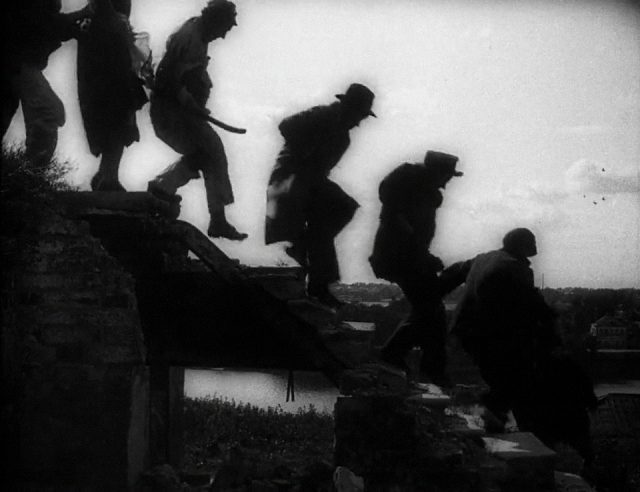
In the late 1950s and 1960s, the French New Wave exploded around the world, redefining cinema through independent production and the auteur theory, led by such innovative directors as Jean-Luc Godard, François Truffaut, Agnès Varda, Claude Chabrol, Éric Rohmer, Alain Resnais, and Jacques Rivette. Fifty years later, several of these filmmakers were still creating outstanding motion pictures, as evidenced by the BAMcinématek series “Plus ça change: French New Wave in the New Millennium,” running September 8-17. The twelve-film festival kicks off September 8 with Godard’s highly contentious and polemical Film Socialisme, his first work to be made fully in high-definition digital video. After watching the 2010 film, I was not quite sure what I had just witnessed. There was beautiful imagery shot by Fabrice Aragno and Paul Grivas, pretentious and funny literary dialogue and narration taken from such writers as Hannah Arendt, Jacques Derrida, Jean-Paul Sartre, and Walter Benjamin, appearances by punk icons Patti Smith and Lenny Kaye, and archival footage from old movies, divided into three sections: The first (“Such Things”) takes place on a cruise ship (that capsized a few years later), the second (“Our Europe”) at a gas station, and the third (“Our Humanities”) a trip through the Mediterranean, with stops at Egypt, Palestine, Odessa, Hellas, Naples, and Barcelona. There’s bullfighting, Stalin, Hitler, soccer, a llama, war, cats on the internet, and a girl reading Balzac’s Lost Illusions. There’s also anti-Semitism, with parts of the film inspired by Léon Daudet’s Le Voyage de Shakespeare and Godard using the name Palestine instead of Israel. In doing research on Film Socialisme to try to find out what I had seen — not usually a good sign for a movie — I found lavish five-star reviews, angry one-star condemnations, and a series of fascinating essays by Richard Brody in the New Yorker discussing, among other things, Stalin looting the Spanish treasury, Godard’s fondness for tennis, and the strange story of Willi Münzenberg. And of course, there are statements about life and cinema, truth and fiction. “You see, with the verb ‘to be,’ the lack of reality becomes flagrant,” one character says. “Liberty is expensive. But one can’t buy her with gold, and not with blood but with cowardice, prostitution, and betrayal,” another says. Film Socialisme comes to an abrupt end as the words “No Comment” take over the screen in a stark, bold sans serif font. ’Nuf said.

In addition to the below films, the series includes Resnais’s You Ain’t Seen Nothing Yet and Wild Grass, Chabrol’s The Girl Cut in Two, Varda’s The Gleaners & I, Rohmer’s The Romance of Astrea and Celadon, and Rivette’s The Duchess of Langeais.

Jeanne Balibar is extraordinary in Jacques Rivette masterpiece

Jeanne Balibar is extraordinary in Jacques Rivette masterpiece

VA SAVOIR (WHO KNOWS?) (Jacques Rivette, 2001)
Saturday, September 9, 2:00, 6:30
www.bam.org

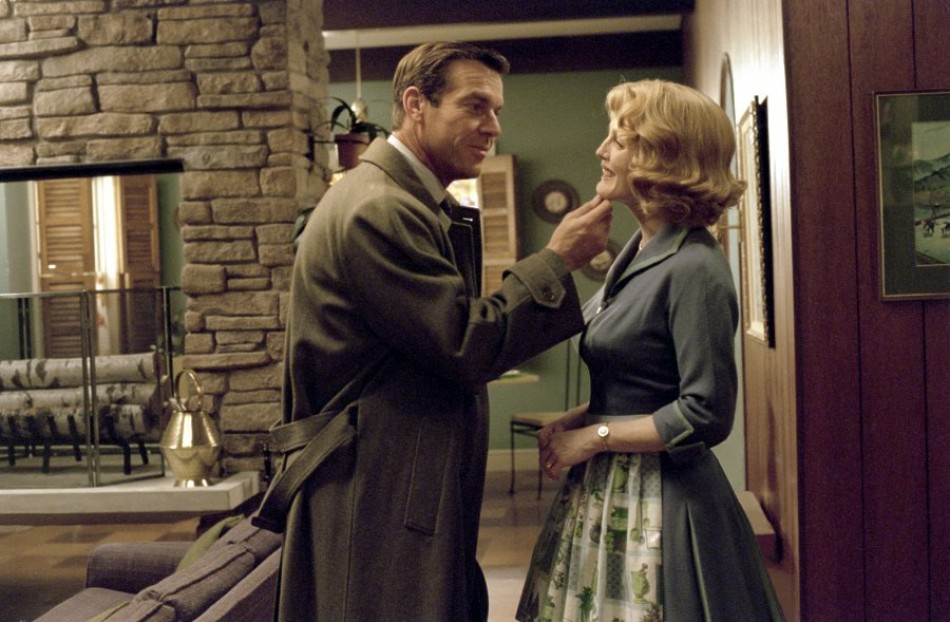
Jacques Rivette’s Va Savoir is a long, talky French movie about very beautiful, very complicated, sex-crazed men and women — and it just might be the master filmmaker’s crowning glory, a magnificent masterpiece that deserved its slot as the New York Film Festival’s opening night selection back in 2001. This erotically charged, very funny drama is set around a traveling theater company’s return to Paris to put on Pirandello’s As You Desire Me in the original Italian. Ugo (Sergio Castellitto), the director and costar of the play, is romantically involved with Camille (Jeanne Balibar), the lead actress, who visits her former lover Pierre (Jacques Bonnaffé), a philosopher with a thing for Heidegger, who is now living with Sonia (Marianne Basler), a dance instructor who is being chased by Arthur (Bruno Todeschini), a ne’er-do-well whose half sister, Do (Hélène de Fougerolles), has taken a liking to Ugo and offers to help him find an unpublished ghost play by Carlo Goldini, which her mother (Catherine Rouvel) just might have. Every minute of this film is pure magic, and at the center of it all is the fantastique Camille, an instinctual, graceful actress whom everyone — men and women — fall in love with, played by the fantastique, instinctual, graceful Balibar, whom audiences will fall in love with as well. French film enthusiasts should watch for Claude Berri in a small role. Lovingly photographed by William Lubtchansky and edited by his wife, Nicole Lubtchansky, Va Savoir is screening at 2:00 and 6:30 on September 9 in the BAMcinématek series “Plus ça change: French New Wave in the New Millennium.”

The Case of the Grinning Cat

Chris Marker goes in search of smiling felines in The Case of the Grinning Cat

THE CASE OF THE GRINNING CAT (Chris Marker, 2006)
Sunday, September 10, 2:00, 5:15, 8:30
www.bam.org

Legendary cat lover and filmmaker Chris Marker (La Jetée, Sans Soleil) goes on a search for a friendly feline in the slight, playful hour-long documentary The Case of the Grinning Cat. In post-9/11 Paris, when much of the world was proclaiming “We are all Americans,” Marker discovered a series of stenciled yellow cats showing up in odd places, from the sides of buildings to internet sites to classical works of art. After disappearing for a short time — causing Marker great frustration — they return as placards and masks at protest movements against U.S. imperialism and other causes. Although the film is fun to watch, it never quite connects all the dots. The Case of the Grinning Cat is screening at 2:00, 5:15, and 8:30 on September 10 in the BAMcinématek series “Plus ça change: French New Wave in the New Millennium.”

GOODBYE TO LANGUAGE

Jean-Luc Godard’s Goodbye to Language speaks for itself

GOODBYE TO LANGUAGE (ADIEU AU LANGAGE) (Jean-Luc Godard, 2014)
Saturday, September 16, 2:00, 4:30, 7:00, 9:30
www.bam.org
www.kinolorber.com

After the New York Film Festival advance press screening of Jean-Luc Godard’s 3D Goodbye to Language in 2014, a colleague turned to me and said, “If this was Godard’s first film, he would never have had a career.” While I don’t know whether that might be true, I do know that Goodbye to Language is the 3D flick Godard was born to make, a 3D movie that couldn’t have come from anyone else. What’s it about? I have no idea. Well, that’s not exactly right. It’s about everything, and it’s about nothing. It’s about the art of filmmaking. It’s about the authority of the state and freedom. It’s about extramarital affairs. It’s about seventy minutes long. It’s about communication in the digital age. (Surprise! Godard does not appear to be a fan of the cell phone and Yahoo!) And it’s about a cute dog (which happens to be his own mutt, Miéville, named after his longtime partner, Anne-Marie Miéville). In the purposefully abstruse press notes, Godard, eighty-three at the time, describes it thusly: “the idea is simple / a married woman and a single man meet / they love, they argue, fists fly / a dog strays between town and country / the seasons pass / the man and woman meet again / the dog finds itself between them / the other is in one / the one is in the other / and they are three / the former husband shatters everything / a second film begins / the same as the first / and yet not / from the human race we pass to metaphor / this ends in barking / and a baby’s cries.” Yes, it’s all as simple as that. Or maybe not.

Jean-Luc Godard has fun with 3D in GOODBYE TO LANGUAGE

Jean-Luc Godard has fun with 3D in Goodbye to Language

Godard divides the film into sections labeled “La Nature” and “La Métaphore,” cutting between several ongoing narratives, from people reading Dostoyevsky, Pound, and Solzhenitsyn at an outdoor café to an often naked man and woman in a kitchen to clips of such old movies as Dr. Jekyll and Mr. Hyde and The Snows of Kilimanjaro to Lord Byron and the Shelleys on Lake Geneva. Did I say “narrative”? It’s not really a narrative but instead storytelling as only Godard can do it, and this time in 3D, with the help of cinematographer Fabrice Aragno. Godard has a blast with the medium, which he previously used in a pair of recent shorts. He has fun — and so do we — as he toys with the name of the film and the idea of saying farewell (he plays with the French title, Adieu au langage, forming such puns as “Ah, dieu” and “Ah, dieux,” making the most of 3D layering); creates superimpositions and fast-moving shots that blur the image, making the glasses worthless; changes from sharp color to black-and-white to wild pastel-like bursts of red, blue, and green; evokes various genres, with mystery men in suits and gunshots that might or might not involve kidnapping and murder; and even gets a kick out of where he places the subtitles. These games are very funny, as is the voiceover narration, which includes philosophy from such diverse sources as Jacques Ellul (his essay “The Victory of Hitler”) and Claude Monet (“Paint not what we see, for we see nothing, but paint that we don’t see”). And for those who, like my colleague, believe the film to be crap, Godard even shows the man sitting on the bowl, his girlfriend in the bathroom with him, directly referencing Rodin’s The Thinker and talking about “poop” as he noisily evacuates his bowels. So, in the end, what is Godard saying farewell to? Might this be his last film? Is he saying goodbye to the old ways we communicated? Is he bidding adieu to humanity, leaving the future for the dogs, the trees, and the ocean? Does it matter? A hit at Cannes, Goodbye to Language is screening September 16 at 2:00, 4:30, 7:00, and 9:30 in the BAMcinématek series “Plus ça change: French New Wave in the New Millennium.” You can check out the NSFW French trailer here.

BEACHES OF AGNES

Agnès Varda takes an unusual approach to autobiography in THE BEACHES OF AGNES

THE BEACHES OF AGNÈS (LES PLAGES D’AGNÈS) (Agnès Varda, 2008)
Sunday, September 17, 2:00
www.bam.org

“The whole idea of fragmentation appeals to me,” filmmaker, photographer, and installation artist Agnès Varda says in the middle of her unusual cinematic autobiography, the César-winning documentary The Beaches of Agnès. “It corresponds so naturally to questions of memory. Is it possible to reconstitute this personality, this person Jean Vilar, who was so exceptional?” She might have been referring to her friend, the French actor and theater director, but the exceptional Belgian-French Varda might as well have been referring to herself. Later she explains, “My memories swarm around me like confused flies. I hesitate to remember all that. I don’t want to.” Fortunately for viewers, Varda (Jacquot de Nantes, The Gleaners & I) does delve into her past in the film, sharing choice tidbits from throughout her life and career, in creative and offbeat ways that are charmingly self-effacing. Using cleverly arranged film clips, re-creations, photographs, and an array of frames and mirrors, the eighty-year-old Varda discusses such colleagues as Jean-Luc Godard, Chris Marker, and Alain Resnais; shares personal details of her long relationship with Jacques Demy; visits her childhood home; rebuilds an old film set; speaks with her daughter, Rosalie Varda, and son, Mathieu Demy; talks about several of her classic films, including La Pointe Courte, Cléo from 5 to 7, and Vagabond; and, in her ever-present bangs, walks barefoot along beaches, fully aware that the camera is following her every move and reveling in it while also feigning occasional shyness. Filmmakers don’t generally write and direct documentaries about themselves, but unsurprisingly, the Nouvelle Vague legend and first woman to win an honorary Palme d’or makes The Beaches of Agnès about as artistic as it can get without becoming pretentious and laudatory. The film is screening September 17 at 2:00 in the BAMcinématek series “Plus ça change: French New Wave in the New Millennium.”