twi-ny recommended events

SIKKEMA JENKINS AND CO. IS COMPELLED TO PRESENT THE MOST ASTOUNDING AND IMPORTANT PAINTING SHOW OF THE FALL ART SHOW VIEWING SEASON!

Kara Walker, “Slaughter of the Innocents (They Might be Guilty of Something),” cut paper on canvas, 2017 (Photo: © Kara Walker / Courtesy of Sikkema Jenkins & Co., New York)

Kara Walker, “Slaughter of the Innocents (They Might Be Guilty of Something),” cut paper on canvas, 2017 (Photo: © Kara Walker / Courtesy of Sikkema Jenkins & Co., New York)

Sikkema Jenkins & Co.
530 West 22nd St. between Tenth & Eleventh Aves.
Tuesday – Saturday through October 15, free
212-929-2262
sikkemajenkinsco.com

In the summer of 2014, California-born, New York City–based multidisciplinary artist Kara Walker entered the public consciousness in a big way with “A Subtlety or the Marvelous Sugar Baby: an Homage to the unpaid and overworked Artisans who have refined our Sweet tastes from the cane fields to the Kitchens of the New World on the Occasion of the demolition of the Domino Sugar Refining Plant,” her massive white-sugar sculpture of a Sphinx-like “mammy” in the Domino Sugar Refining Plant, shortly before the factory was torn down. While the piece worked magnificently on many levels, including artistically, historically, and politically, many visitors entertained themselves by taking selfies and posting photos in which they made fun of various parts of the figure’s body, leading Walker to question the ways people, especially of different races, look at and experience such work. In fact, throughout her career, her oeuvre has been misunderstood and/or taken at face value; her cut-out silhouettes in particular can seem adorable and playful until one zeroes in on their harrowing portraits of Civil War–era rape, violence, child abuse, and more perpetrated by white plantation owners and their families on black slaves. Walker attempts to preempt any such critical or popular misunderstandings or misreadings in her major follow-up exhibition, essentially titled, “Sikkema Jenkins and Co. is Compelled to present The most Astounding and Important Painting show of the fall Art Show viewing season!,” a timely collection of new paintings, drawings, and collages that closely examine the state of race relations from slavery to the present time, when the president of the United States has declared that some white supremacists are “very fine people,” the media is under attack, and the country is arguing over patriotism and flags that represent different things to different ethnicities.

Kara Walker, “Christ’s Entry into Journalism,” Sumi ink and collage on paper, 2017 (Photo: © Kara Walker / Courtesy of Sikkema Jenkins & Co., New York)

Kara Walker, “Christ’s Entry into Journalism,” Sumi ink and collage on paper, 2017 (Photo: © Kara Walker / Courtesy of Sikkema Jenkins & Co., New York)

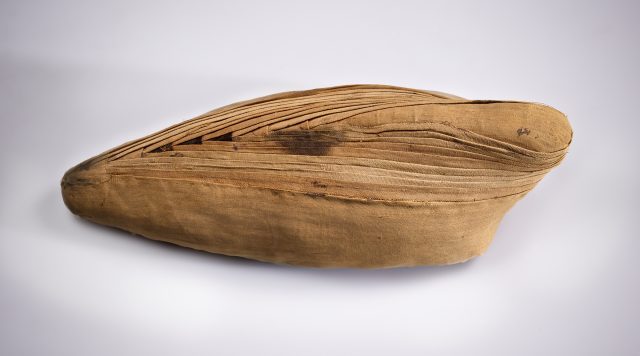
In fact, Donald Trump makes an appearance in the centerpiece of the new exhibit, Walker’s grand “Christ’s Entry into Journalism,” a reimagining of James Ensor’s “Christ’s Entry into Brussels,” complete with depictions of James Brown, a Confederate soldier, the Rev. Dr. Martin Luther King Jr., Trayvon Martin, a mummy, black stereotypes, and a wilting flag. Flags also appear in the watercolors “Rebel Flag (with Ghosts)” and “Rebel Flag (with Bows)” and “Libertine Alighting the World,” with a partially undressed, flaming Lady Liberty, a mixed-race couple, and a black female centurion burning the Confederate flag, and “U.S.A. Idioms,” with characters in a winding tree, a stump and a freshly dug grave below. Graves play a role as well in “The (Private) Memorial Garden of Grandison Harris” and “Dredging the Quagmire (Bottomless Pit),” death ever present. But some semblance of life emerges in the cut-paper, black-and-white “Slaughter of the Innocents (They Might Be Guilty of Something),” with images of eggs and birth alongside snakes and demons.

Kara Walker, “Paradox of the Negro Burial Ground,” oil stick, collage, and mixed media on paper, 2017 (Photo: © Kara Walker / Courtesy of Sikkema Jenkins & Co., New York)

Kara Walker, “Paradox of the Negro Burial Ground,” oil stick, collage, and mixed media on paper, 2017 (Photo: © Kara Walker / Courtesy of Sikkema Jenkins & Co., New York)

Walker takes on colonialism in the oil-stick “Brand X (Slave Market Painting),” references classical paintings of Judith holding the head of Holofernes in “Scraps,” takes a shot at French academic painter Jean-Léon Gérôme and colonialism in “A Piece of Furniture for Jean Leon Gerome,” and shows a black child proudly raising his left fist in the air, his right hand on his heart, in “A Spectacle,” paying no attention to the white man with the lasso near him. This is heavy stuff that demands extended attention, reveling in not only the allegorical and true-to-life scenes but also the majestic skill displayed by Walker, who takes a giant step with her use of paint, oil stick, and cut-outs.

The official press release was prepared for all kinds of reactions, from critics and the public:

“Collectors of Fine Art will Flock to see the latest Kara Walker offerings, and what is she offering but the Finest Selection of artworks by an African-American Living Woman Artist this side of the Mississippi. Modest collectors will find her prices reasonable, those of a heartier disposition will recognize Bargains! Scholars will study and debate the Historical Value and Intellectual Merits of Miss Walker’s Diversionary Tactics. Art Historians will wonder whether the work represents a Departure or a Continuum. Students of Color will eye her work suspiciously and exercise their free right to Culturally Annihilate her on social media. Parents will cover the eyes of innocent children. School Teachers will reexamine their art history curricula. Prestigious Academic Societies will withdraw their support, former husbands and former lovers will recoil in abject terror. Critics will shake their heads in bemused silence. Gallery Directors will wring their hands at the sight of throngs of the gallery-curious flooding the pavement outside. The Final President of the United States will visibly wince. Empires will fall, although which ones, only time will tell.”

Kara Walker, “Dredging the Quagmire (Bottomless Pit),” triptych, oil stick and Sumi ink on paper collaged on linen, 2017 (Photo: © Kara Walker / Courtesy of Sikkema Jenkins & Co., New York)

Kara Walker, “Dredging the Quagmire (Bottomless Pit),” triptych, oil stick and Sumi ink on paper collaged on linen, 2017 (Photo: © Kara Walker / Courtesy of Sikkema Jenkins & Co., New York)

Meanwhile, in her artist’s statement, Walker makes her purpose very clear:

“I don’t really feel the need to write a statement about a painting show. I know what you all expect from me and I have complied up to a point. But frankly I am tired, tired of standing up, being counted, tired of ‘having a voice’ or worse ‘being a role model.’ Tired, true, of being a featured member of my racial group and/or my gender niche. It’s too much, and I write this knowing full well that my right, my capacity to live in this Godforsaken country as a (proudly) raced and (urgently) gendered person is under threat by random groups of white (male) supremacist goons who flaunt a kind of patched together notion of race purity with flags and torches and impressive displays of perpetrator-as-victim sociopathy. I roll my eyes, fold my arms and wait. How many ways can a person say racism is the real bread and butter of our American mythology, and in how many ways will the racists among our countrymen act out their Turner Diaries race war fantasy combination Nazi Germany and Antebellum South — states which, incidentally, lost the wars they started, and always will, precisely because there is no way those white racisms can survive the earth without the rest of us types upholding humanity’s best, keeping the motor running on civilization, being good, and preserving nature and all the stuff worth working and living for?”

Alive, not Dead, 2017 Sumi ink and collage on paper

Kara Walker, “Alive, not Dead,” Sumi ink and collage on paper, 2017 (Photo: © Kara Walker / Courtesy of Sikkema Jenkins & Co., New York)

Walker’s show at Sikkema Jenkins is bold and in-your-face, daring viewers to feel deeply no matter what part of the political spectrum they find themselves on. It’s both threatening and thrilling, offering little comfort as it lays bare the ills of contemporary society in fearless ways. When I visited the show on a crowded Saturday afternoon, there were a lot of people, black, white, and brown, taking photos, but nobody posing stupidly or making fun of the artwork. Does that mean we have made progress since “A Subtlety”? Just roll your eyes, fold your arms, and wait.

BAM NEXT WAVE FESTIVAL: RICHARD III

(photo by Arno Declair)

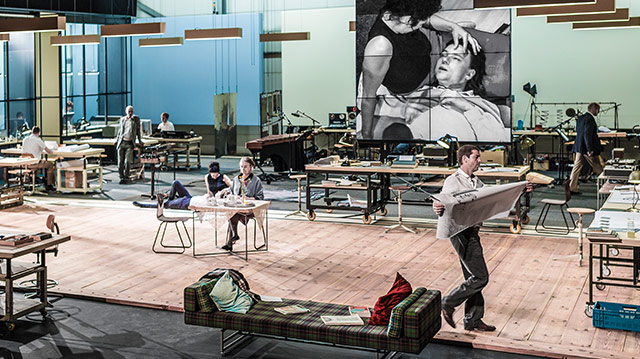
Thomas Ostermeier transforms Richard III into a glittery spectacle in German production (photo by Arno Declair)

Brooklyn Academy of Music
BAM Harvey Theater
651 Fulton St.
October 11-14, $35-$115, 7:30
718-636-4100
www.bam.org
www.schaubuehne.de

German director Thomas Ostermeier and Schaubühne Berlin return to BAM with a wildly unpredictable, glittery, contemporary take on William Shakespeare’s paean to power and ego, Richard III, running October 11-14 at the BAM Harvey as part of BAM’s 2017 Next Wave Festival. Last at BAM in 2013 with An Enemy of the People —his previous shows at BAM include Nora in 2004, Hedda Gabler in 2006, and The Marriage of Maria Braun in 2010 — Ostermeier now presents the Bard as if caught up in endless expressionistic glam decadence. Lars Eidinger plays the hunchbacked villain, with Moritz Gottwald as Buckingham, Eva Meckbach as Elizabeth, and Jenny König as Lady Anne. The pulsating soundtrack is by Nils Ostendorf, with songs by Tyler Gregory Okonma, Laurie Anderson, Iannis Xenakis, and Thomas Tomkins and Andrew John Powell; Thomas Witte provides live drumming. The luxuriously gaudy visual style comes courtesy of set designer Jan Pappelbaum, with costumes by Florence von Gerkan, video by Sébastien Dupouey, dramaturgy by Florian Borchmeyer (who adapted An Enemy of the People), and lighting by Erich Schneider. On October 12 at 6:00 ($25) at BAM Rose Cinemas, Ostermeier will sit down for an “Iconic Artist Talk” with playwright Branden Jacobs-Jenkins (Everybody, An Octoroon), who is adapting Ostermeier and Borchmeyer’s An Enemy of the People for a Broadway run later this season.

HONK NYC! INTERNATIONAL STREET BAND EXPLOSION

honk 2017

Multiple venues
October 10-15, free – $15
honknyc.com

The eleventh annual international street band extravaganza known as the HONK NYC Festival runs October 10-15, a yearly celebration of grassroots brass and percussion music, focusing on fun and revelry. The festivities kick off October 10 with a free party at the City Reliquary in Brooklyn, with the Nevermind Orchestra, the L Train Brass Band, and New Creations Brass Band. On October 11, it’s off to Staten Island for the free HONK! for Healing in Tompkinsville Park and the Everything Goes Book Cafe, with Damas de Ferro, Kenny Wollesen and Wollesonic Lab’s Sonic Massage, and New Creations Brass Band. On October 12, HONK! heads to Jersey with the Hungry March Band, Veveritse Brass Band, Pussy Grabs Back: the Band, Damas de Ferro, and New Creations Brass Band for a parade beginning at the Newark Pavilion, followed by a 7:00 gig at WFMU’s Montgomery Hall ($10). On Friday the Thirteenth, the festival moves uptown for HONK Harlem at the Shrine with Damas de Ferro and New Creations Brass Band ($10, 9:30). There will be several shows on October 14, starting with a HONK Pop Up at the NY Transit Museum at 1:30 with the L Train Brass Band and at Anita’s Way at 3:30, with the Brasstastic Blow Out! taking place at Rubulad from 8:30 pm to 3:30 am ($12 in advance, $15 at the door), with Raya Brass Band, Funkrust Brass Band, Nation Beat, Plezi Rara, de Ferro, DJ Ryan Midnight, DJ Baby K, projections by the Sperm Whale NYC, Norm Francouer’s Light Circus extraordinaire, and more. On Sunday, October 15, the HONK for More Gardens! Parade will march through the Lower East Side and the East Village from 1:00 to 5:00, followed by the closing party at DROM (5:00 – 10:00, $10) with William Parker and the Artists for a Free World Marching Band, Frank London, the Three Million Majority Marching Band, and Damas de Ferro.

OPEN HOUSE NEW YORK WEEKEND 2017

(photo by twi-ny/mdr)

The Renee & Chaim Gross Foundation is one of hundreds of architectural sites that invite in guests for free during fifteenth annual Open House New York Weekend (photo by twi-ny/mdr)

Multiple venues in all five boroughs
Saturday, October 14, and Sunday, October 15
Advance reservations required for some sites ($5 per guest)
OHNY Passport: $150
212-991-OHNY
www.ohny.org

Reservation lines for the fifteenth annual Open House New York Weekend are open, so act quickly if you want to gain access to some of New York City’s most fascinating architectural constructions, as many of them have already sold out. Among those locations still available for advance RSVP ($5 per guest, up to two per reservation) are the Caribbean Cultural Center African Diaspora Institute, the Design within Reach Flagship Store, the East Harlem School, the Elmhurst Library, the Flushing Quaker Meeting House, ISSUE Project Room, Maple Grove Cemetery, the Ocean Breeze Track and Field Athletic Center, Plymouth Church, Ridgewood Reservoir, Snug Harbor Cultural Center and Botanical Garden, the Town Hall, and Waterside Plaza. Even if you don’t snag one of the highly coveted reservations, there’s still plenty to do and see during Open House New York Weekend, as there are hundreds of participating buildings, parks, museums, studios, neighborhoods, and other architectural wonders in all five boroughs that will not require an RSVP and are free to enter and enjoy, including the Edgar Allan Poe Cottage, the Kingsland Wildflowers Green Roof, the Bartow-Pell Mansion Museum, Gowanus SuperFUN Canoe Voyages, the Brooklyn Army Terminal, the Alexander Hamilton U.S. Custom House, the African Burial Ground National Monument, the US Coast Guard Cutter Lilac, Grace Church, the Jefferson Market Library, the Van Alen Institute, the General Society of Mechanics and Tradesmen of the City of New York, Central Synagogue, the Ukrainian Institute of America, the Renee & Chaim Gross Foundation, Westbeth, the Brooklyn Grange, the New York State Pavilion, the Little Red Lighthouse, the General Grant National Monument, the Mount Vernon Hotel Museum & Garden, and so many more.

NOH-NOW: LEFT-RIGHT-LEFT

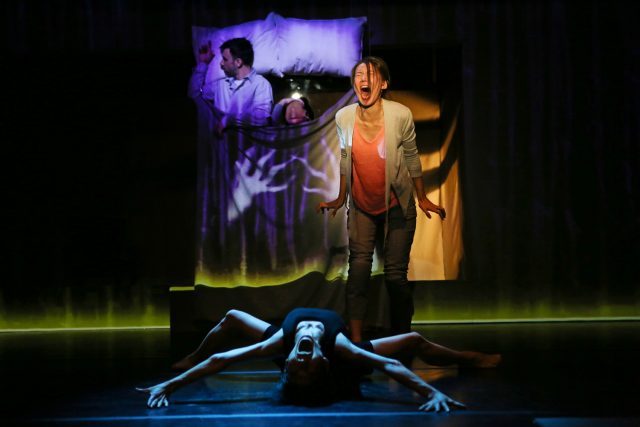
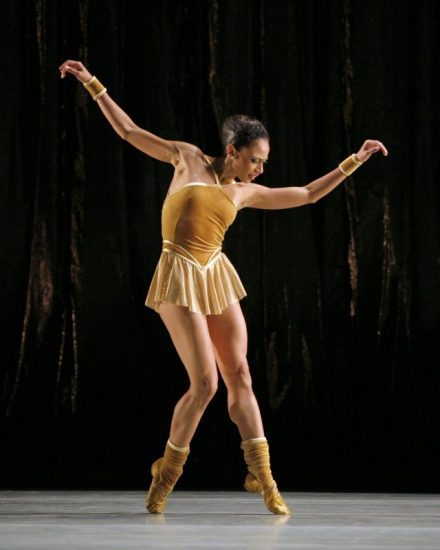
Luca Veggettis Left-Right-Left will make its North American premiere at Japan Society October 13-14 as part of NOH NOW series

Luca Veggetti’s Left-Right-Left will make its North American premiere at Japan Society October 13-14 as part of “NOH-NOW” series

Japan Society
333 East 47th St. at First Ave.
Friday, October 13, and Saturday, October 14, $35, 7:30
212-715-1258
www.japansociety.org

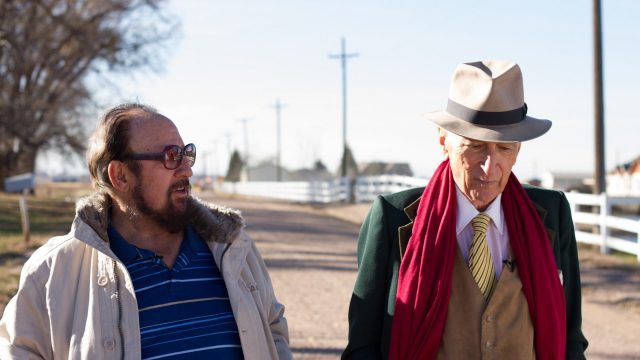
In May 2014, Italian director and choreographer Luca Veggetti brought Project IX — Pléïades to Japan Society, a graceful collaboration with Japanese percussionist Kuniko Kato and Japanese dancer Megumi Nakamura that was the finale of the sixtieth anniversary season of the institution’s performing arts program. Veggetti and Nakamura are now back for the North American premiere of Left-Right-Left, part of Japan Society’s 110th anniversary and the series “NOH-NOW,” which blends the traditional Japanese musical drama with contemporary styles. The work, commissioned by Japan Society and Yokohama Noh Theater, is conceived, directed, and choreographed by Veggetti, with the esteemed author and scholar Dr. Donald Keene of the Donald Keene Center of Japanese Culture serving as project advisor and text translator. The three-part piece is inspired by the ancient play Okina, a sacred ritual about peace, prosperity, and safety. It will be performed by butoh dancer Akira Kasai, contemporary dancer Nakamura, and butoh-trained dancer Yukio Suzuki, with music director Genjiro Okura on noh small hand drum and Rokurobyoe Fujita on noh fue. Child noh actor Rinzo Nagayama will recites the new English translation of passages from Okina and another popular traditional noh play, Hagoromo, about a celestial feather robe. The lighting is by Clifton Taylor, with costumes by Mitsushi Yanaihara. “Noh has very precise patterns in the space that the performers follow,” Veggetti says in a promotional interview, explaining that his goal was “to use this archaic blueprint form and infuse it with different choreographic ideas, with that to find a language that is somehow organic.” Left-Right-Left, or “sa-yu-sa” in Japanese, will be at Japan Society on October 13, followed by a Meet-the-Artists Reception, and October 14, followed by an artist Q&A. In addition, Okura, Grand Master of the Okura School of kotsuzumi, will lead a noh music workshop on October 14 at 10:30 am ($45). “NOH-NOW” continues November 3-5 with the world premiere of Hiroshi Sugimoto’s Rikyu-Enoura, December 7-9 with Leon Ingulsrud’s adaptation of Yukio Mishima’s Hanjo, and January 11-14 with Satoshi Miyagi’s Mugen Noh Othello.

NYFF55: CLAUDE LANZMANN’S FOUR SISTERS

Holocaust survivor Ruth Elias tells her amazing story to Claude Lanzmann — and sings — in The Hippocratic Oath

Holocaust survivor Ruth Elias tells her amazing story to Claude Lanzmann — and sings — in The Hippocratic Oath

CLAUDE LANZMANN’S FOUR SISTERS (Claude Lanzmann, 2017)
New York Film Festival, Film Society of Lincoln Center
Sunday, October 8, The Hippocratic Oath, Walter Reade Theater, $25, 11:30 am, introduced by Claude Lanzmann
Sunday, October 8, Baluty, Walter Reade Theater, $25, 2:00
Tuesday, October 10, The Merry Flea and Noah’s Ark, Francesca Beale Theater, $25, 6:00
Festival runs September 28 – October 14
212-875-5601
www.filmlinc.org

“You are very well informed,” Holocaust survivor Ruth Elias tells filmmaker Claude Lanzmann in The Four Sisters: The Hippocratic Oath. Thanks to the Paris-born Lanzmann, a French resistance fighter during WWII, we are all very well informed about so many of the atrocities perpetrated by the Nazis, told to him in moving, powerful stories by “living witnesses” for decades. In The Four Sisters, making its world premiere at the New York Film Festival on October 8 and 10, the Shoah director focuses on the extraordinary experiences of four strong women who survived concentration camps, each one originally interviewed for Shoah. “The more I thought about these four women, the more the necessity to bring the spotlight on these female faces of the Shoah seemed important,” Lanzmann explains in his director’s note about deciding to turn them into four separate portraits. “Each of them deals with a little-known chapter of the Holocaust, each from a unique point of view. . . . The incredible strength in each of them has to exist in its own right, and yet the exceptional quality they all share also had to come through — that searingly sharp, almost physical intelligence, and an irrepressible survival instinct which could not be extinguished, despite an apparently certain death awaiting them.”

Ada Lichtman details her time in Sobibór in The Merry Flea

Ada Lichtman details her time in Sobibór in The Merry Flea

In The Hippocratic Oath, which the ninety-one-year-old Lanzmann (The Last of the Unjust) will introduce at the Walter Reade Theater on October 8 at 11:30 am, Elias tells her remarkable story from the Nazi occupation of Czechoslovakia in March 1939 to her deportation in April 1942 to Theresienstadt, where she was reunited with and married her boyfriend, to her pregnancy in the winter of 1943, which led to her being sent to Ravensbrück and Auschwitz, where she met Dr. Josef Mengele, who chose to use her baby in an inhuman experiment. Filmed in a little garden, Elias, an accordion player, is firm and direct as she shares the details of precisely what happened, her dark eyes seemingly sent back to Eastern Europe as her words bring it all to vivid life; one can visualize each location, each movement, each glance. The camera occasionally turns to Lanzmann, smoking a cigarette as he listens to her, mesmerized, just as the audience is. Lanzmann is more active in Baluty, walking along the shore in Panama City, Florida, with Paula Biren, whose story begins in Lodz, Poland. An elegant woman, Biren needs a little more prodding to speak, which she does very carefully, with a brutally cold honesty. She describes how Lodz was turned into a ghetto, how she became a police officer there, and then was sent to Auschwitz, where her younger sister and mother were killed, followed by her father’s death shortly thereafter. Lanzmann supplements the film with archival photographs of Lodz. Throughout The Merry Flea, Ada Lichtman is cleaning and mending dolls; it is eerie as viewers eventually find out why. Lichtman, from the Polish town of Wieliczka, relates her story of being captured by the Germans and sent to Sobibór, speaking at a determined, almost eager pace, sometimes skipping around so that Lanzmann has to interject to get her back on track or to go into more specifics, particularly regarding her treatment at the hands of a Nazi officer named Wagner and her description of cattle cars where naked men, women, and children were forced to dance with one another. The camera occasionally shifts to her husband, who she met in the camps; he stares ahead almost blankly, with hollow, haunted eyes, then hides his head in his hands. The sound of traffic outside can be heard, as if coming from another time and place.

Hanna Marton has a frightening tale to tell Claude Lanzmann in Noah’s Ark

Hanna Marton has a frightening tale to tell Claude Lanzmann in Noah’s Ark

Finally, in Noah’s Ark, Lanzmann introduces Hungarian native Hanna Marton, who sits calmly in a chair, holding a small notebook as she speaks in Hebrew, the director sitting right in front of her, nearly knocking knees; in the film’s production notes, Lanzmann explains, “I’ve never heard an account that is as constantly, relentlessly painful as the one that Hanna Marton gave me when I filmed her during the shoot for Shoah in her Jerusalem apartment.” Her eyes sometimes tearing up, Marton, continually on edge and at times defensive, talks about the early Zionist movement in her hometown of Cluj, the capital of Transylvania; discusses how Jews were used by the Hungarian army, which supported Germany and Italy, as living mine detectors; details the creation of the Kolozsvár ghetto in May 1944 as a way to quickly exterminate Jews; and delves into her involvement with the Kastner train, a deal made between Jewish-Hungarian lawyer Rudolf Kastner and Nazi Obersturmbannführer Adolph Eichmann. The Four Sisters is no mere addendum to Shoah, nor is it a footnote to Lanzmann’s long, important career; together, the four films make a powerful statement about hatred and bigotry, about violence and war, and about the indomitable strength and spirit of women, especially during the war and its aftermath. They are also a terrifying reminder that given the state of the world today, it’s not impossible that something like this could happen again, even right here in America, as there are fewer and fewer concentration-camp eyewitnesses, Holocaust deniers litter the internet, nations build walls and fences to keep out refugees, and a sitting president insists that some white supremacists are “very fine people.”

IF THESE WALLS COULD TALK: CELEBRATING THE LIFE AND TIMES OF THE BOTTOM LINE

if these walls could talk

Who: David Bromberg, Jimmy Vivino, Darlene Love, David Johansen, Sean Altman, Marshall Chapman, Clint de Ganon, the GrooveBarbers, Ula Hedwig, Garland Jeffreys, Christine Lavin, Curtis King, Terre Roche, Feifei Yang, Garry Dial, the Uptown Horns, Will Lee, Paul Shaffer, Gregg Bendian
What: Music and memories about the Bottom Line
Where: Schimmel Center at Pace University, 3 Spruce St. between Park Row and Gold St., 212-346-1715
When: Friday, October 13, and Saturday, October 14, $29-$55, 7:30
Why: From February 11, 1974, to January 22, 2004, the Bottom Line was one of the great music clubs in the country, a four-hundred-seat venue that featured acts from a multitude of genres, good food and drink, and large pillars that could block part of your view depending where you were sitting, but there was no place else like it. Among the myriad performers who played there from a multitude of genres were Lou Reed, Bruce Springsteen, Charles Mingus, Patti Smith, Donovan, Warren Zevon, Prince, Little Feat, Mary Chapin Carpenter, Meat Loaf, Janis Ian, Santana, Melissa Etheridge, Steve Earle, the Indigo Girls, the New York Dolls, Mose Allison, Joan Armatrading, the Uncle Floyd Show, Tom Waits, Captain Beefheart, Barry Manilow, Cheech & Chong, Television, Jimmy Buffett, Buddy Guy and Junior Wells, Nona Hendryx, Gil Scott-Heron, the Roches, the Cars, Miles Davis, the Hollies, Richard Thompson, Suzanne Vega, Steve Forbert, Dolly Parton, 10,000 Maniacs, Jorma Kaukonen, Carly Simon with James Taylor, Richard Belzer, and regulars Flo & Eddie from the Turtles and Buster Poindexter, the alter ego of David Johansen. Owners Allan Pepper and Stanley Snadowsky had a knack for finding new talent; in some ways, the Bottom Line was the folk version of CBGB, a key step on an artist’s rise to national, and international, success.

On October 13 and 14, tribute will be paid to the legendary club with the special program “If These Walls Could Talk: Celebrating the Life and Times of the Bottom Line,” two evenings of live music and personal stories about the venerable venue, which closed its doors over back-rent and lease issues with NYU. Hosted by Paul Shaffer and with Gregg Bendian serving as music director, the shows will feature Sean Altman, David Bromberg (Friday), Clint de Ganon, the GrooveBarbers, Nona Hendryx, Garland Jeffreys (Saturday), David Johansen, Christine Lavin (Saturday), Will Lee, Darlene Love with Ula Hedwig and Curtis King, Terre Roche with Feifei Yang and Garry Dial (Friday), the Uptown Horns, and Jimmy Vivino. It’s like the ultimate version of “In Their Own Words,” the Bottom Line’s long-running series of “a Bunch of Songwriters Sittin’ Around Singing,” which was started on May 24, 1990, by the great Vin Scelsa. The Bottom Line had a personality all its own, and it is dearly missed by those of us who frequented its hallowed halls on the corner of Mercer and West Fourth Sts., so this should bring back some grand memories, along with some great music.