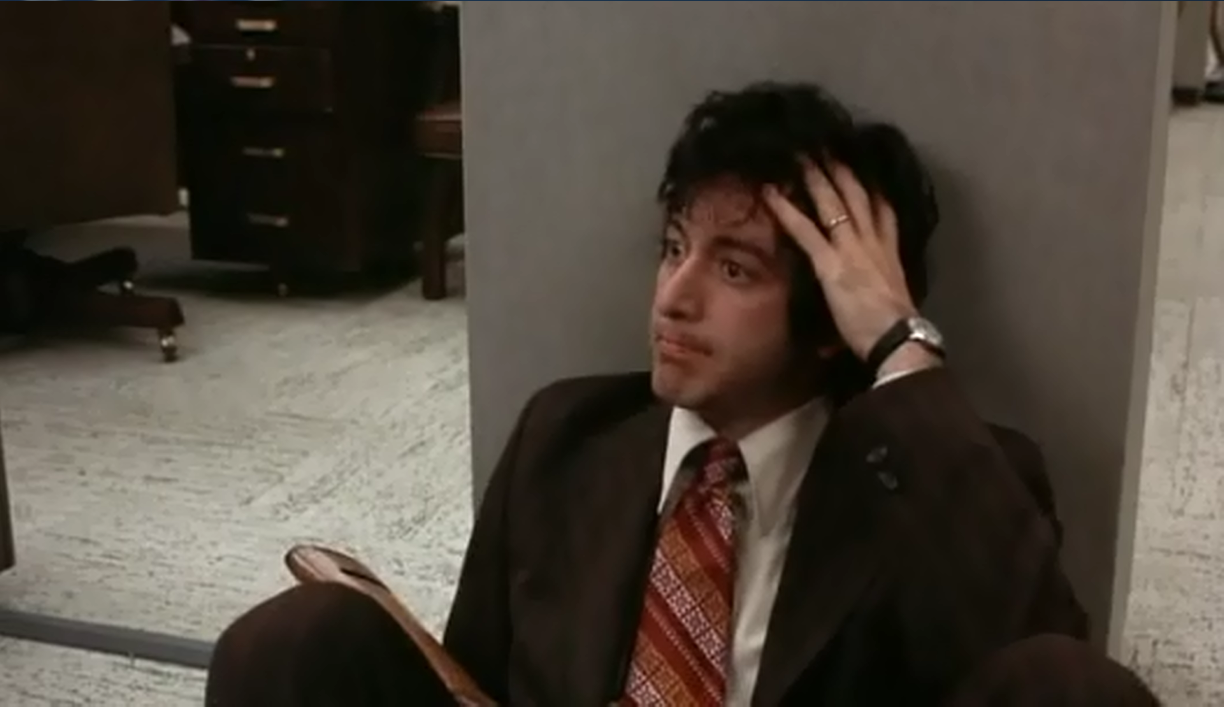
Al Pacino is wondering what amazing line he will utter next in classic film
Quad Cinema
34 West 13th St. between Fifth & Sixth Aves.
March 14-30
212-255-2243
quadcinema.com
“In a sense this is a homecoming for me,” stage and screen legend Al Pacino says of the extensive Quad series “Pacino’s Way,” running March 14-30 and consisting of more than thirty films starring and/or directed by the East Harlem–born, Bronx-raised Oscar, Tony, and Grammy winner. The seventy-seven-year-old Method actor will be at the Quad for the New York City premiere of the double feature Wilde Salomé and Salomé, both directed by the longtime Greenwich Village resident and based on the Oscar Wilde play. Pacino is one of the most quotable actors in the history of cinema, delivering memorable lines, as only he can, in films both great and, well, not so great. “The more naturalistic, photogenic qualities of film complement the language-driven essence of classical theater,” he notes. Below are some of his best movie quotes, followed by when the films they’re from will play at the Quad, but you’re gonna have to figure out which movie is which yourselves.
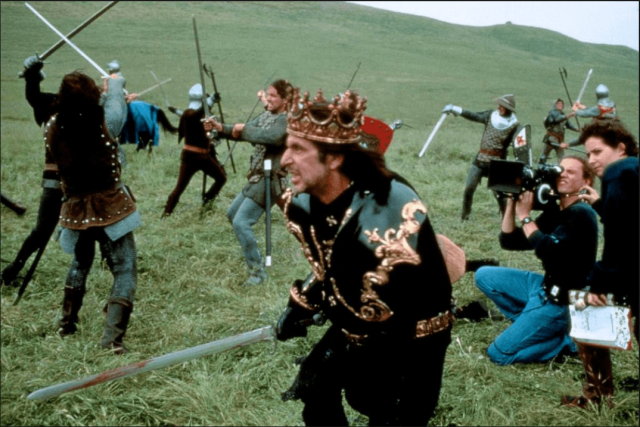
Al Pacino is looking for his next William Shakespeare quote
“I want to kill myself sometimes when I think that I’m the only person in the world and that part of me that feels that way is trapped inside this body, that only bumps into other bodies, without ever connecting to the only other person in the world trapped inside of them. We have to connect. We just have to.”
Wednesday, March 14, 1:45, and Wednesday, March 21, 4:25
“Are you listening to me, son? I’m giving you pearls here.”
Wednesday, March 14, 4:05, and Monday, March 19, 7:40
“You think you’re big time, you gonna fuckin’ die big time. You ready? Here comes the pain.”
Wednesday, March 14, 9:00, and Thursday, March 22, 6:00
“Four seconds is a lifetime!”
Thursday, March 15, 8.45, and Sunday, March 25, 4:10
“You’re out of order. You’re out of order. The whole trial is out of order.”
Friday, March 16, 5:10, and Tuesday, March 20, 6:40
“I’m a germ. You should split.”
Friday, March 16, 3:00, and Saturday, March 24, 3:25
“I always tell the truth. Even when I lie.”
Friday, March 16, 7:30, and Sunday, March 25, 1:00
“Max, you should be more careful where you drop your drawers. Some scorpion will put a lip-lock on your big ass.”
Saturday, March 17, 1:00, and Thursday, March 22, 3:50
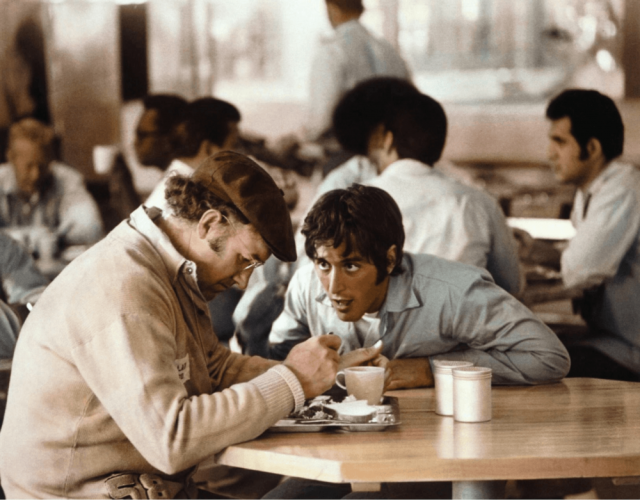
Al Pacino isn’t scared of having plenty to say to Gene Hackman in indie drama
“The reality is, we do not wash our own laundry!”
Saturday, March 17, 5:30, and Wednesday, March 28, 4:00
“It’s not personal. It’s strictly business.”
Saturday, March 17, 8:00, and Monday, March 26, 7:00
“Wait a minute! Wait. I’m having a thought. Oh, yes. Oh, yes. I’m gonna have a thought. It’s coming . . . It’s gone.”
Sunday, March 18, 1:00, and Sunday, March 25, 11:00 am
“I’m Donald Duck.”
Sunday, March 18, 3:05, and Thursday, March 22, 8:45
“There are many things my father taught me here in this room. He taught me: Keep your friends close, but your enemies closer.”
Sunday, March 18, 6:20, and Tuesday, March 27, 7:00
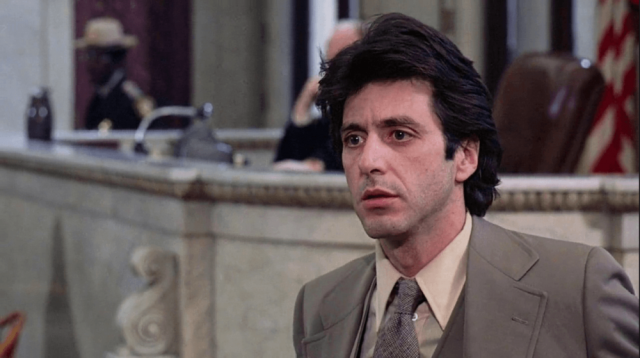
No need to worry; Al Pacino is only temporarily speechless in courtroom fave
“I subscribe to the law of contrary public opinion: If everyone thinks one thing, then I say bet the other way.”
Tuesday, March 20, 2:30, Friday, March 23, 7:00, and Thursday, March 29, 4:30
“Look at me. Underestimated from day one. You’d never think I was master of the universe, now would you?”
Tuesday, March 20, 9:00, and Friday, March 23, 1:45
“What’s she gonna do, shoot me? We’re in a restaurant!”
Wednesday, March 21, 2:05, and Thursday, March 29, 6:30
“Wyoming, that’s not a country.”
Wednesday, March 21, 6:45, and Friday, March 30, 3:30
“A wise guy’s always right; even when he’s wrong, he’s right.”
Friday, March 23, 4:30, Saturday, March 24, 5:40, and Wednesday, March 28, 1:30
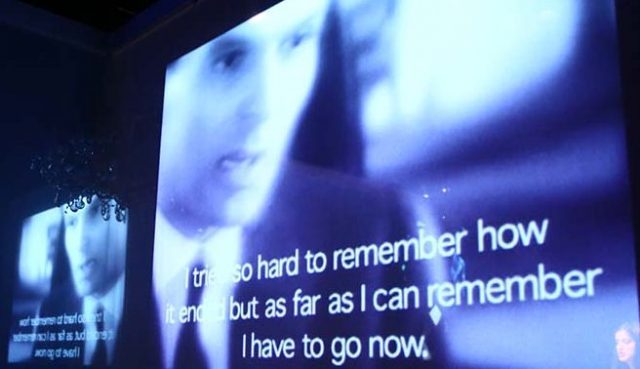




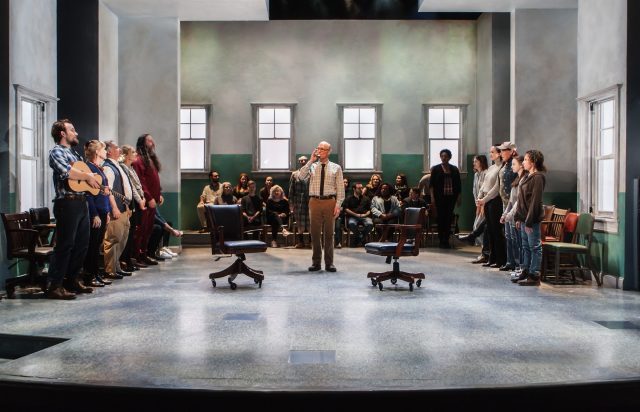


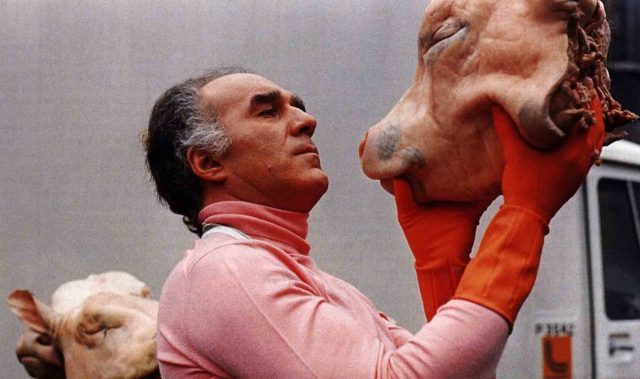
 Fed up with their lives, four old friends decide to literally eat themselves to death in one last grand blow-out. Cowritten and directed by Marco Ferreri (Chiedo asilo, La casa del sorriso), La Grande Bouffe features a cast that is an assured recipe for success, bringing together a quartet of legendary actors, all playing characters with their real first names: Marcello Mastroianni as sex-crazed airplane pilot Marcello, Philippe Noiret as mama’s boy and judge Philippe, Michel Piccoli as effete television host Michel, and Ugo Tognazzi as master gourmet chef Ugo. They move into Philippe’s hidden-away family villa, where they plan to eat and screw themselves to death, with the help of a group of prostitutes led by Andréa (Andréa Ferréol). Gluttons for punishment, the four men start out having a gas, but as the feeding frenzy continues, so does the flatulence level, and the men start dropping one by one. While the film might not be quite the grand feast it sets out to be, it still is one very tasty meal. Just be thankful that it’s not shown in Odoroma. Winner of the FIPRESCI Prize at the 1973 Cannes Film Festival, La Grande Bouffe is screening March 17, 18, 19, and 22 in Film Forum’s Michel Piccoli series. Bon appetit!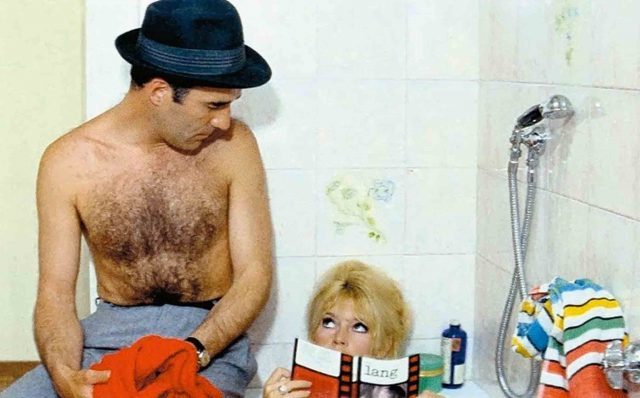
 French auteur Jean-Luc Godard doesn’t hold back any of his contempt for Hollywood cinema in his multilayered masterpiece Contempt. Loosely based on Alberto Moravia’s Il Disprezzo, Contempt stars Michel Piccoli as Paul Javal, a French screenwriter called to Rome’s famed Cinecittà studios by American producer Jeremy Prokosch (Jack Palance ) to perform rewrites on Austrian director Fritz Lang’s (played by Lang himself) adaptation of The Odyssey by ancient Greek writer Homer. Paul brings along his young wife, the beautiful Camille (Brigitte Bardot), whom Prokosch takes an immediate liking to. With so many languages being spoken, Prokosch’s assistant, Francesca Vanini (Giorgia Moll), serves as translator, but getting the various characters to communicate with one another and say precisely what is on their mind grows more and more difficult as the story continues and Camille and Paul’s love starts to crumble. Contempt is a spectacularly made film, bathed in deep red, white, and blue, as Godard and cinematographer Raoul Coutard poke fun at the American way of life. (Both Godard and Coutard appear in the film, the former as Lang’s assistant director, the latter as Lang’s cameraman — as well as the cameraman who aims the lens right at the viewer at the start of the film.)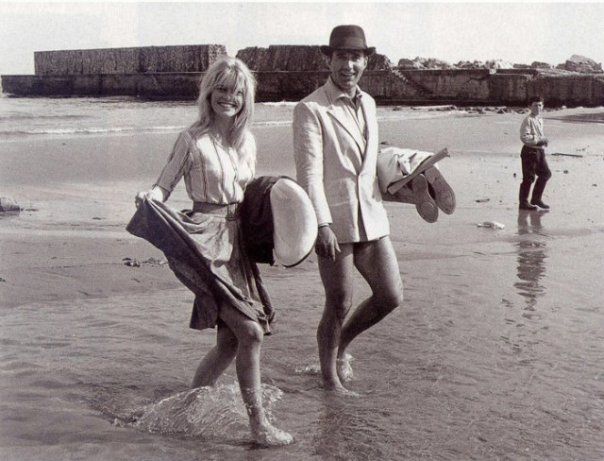
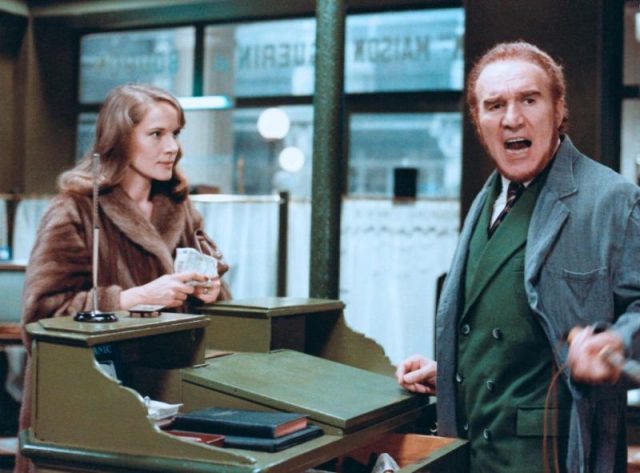
 From the very opening of Une Chambre en Ville (A Room in Town), French New Wave director Jacques Demy announces that the 1982 musical melodrama is going to be something a little different. As a rising sun changes color over a construction site across the Loire River, what appear to be closing credits run up the screen, set to Michel Colombier’s romantic score, as if the film is ending. But Demy and cinematographer Jean Penzer are only getting started, shifting from black-and-white to color to black-and-white again as they cut to the hard streets of 1955 Nantes, where a shipyard strike is under way. Riot police are in a stand-off with hundreds of male and female strikers, characters on both sides singing instead of talking and shouting — in a scene that eerily evokes Tom Hooper’s Les Misérables, which came thirty years later. Soon the intricate plot unfolds, as the striking, and broke, François Guilbaud (Richard Berry), who is renting a room from former baroness Margot Langlois (Danielle Darrieux) and dating doe-eyed Violette Pelletier (Fabienne Guyon), instantly falls for femme fatale Edith Leroyer (Dominique Sanda), Mme. Langlois’s recently married daughter, who is already fed up with her impotent cheapskate of a husband, television salesman Edmond Leroyer (Michel Piccoli). The over-the-top drama plays out in wonderfully garish rooms of deep, intoxicating colors, which are echoed by Rosalie Varda’s (daughter of Demy and Agnès Varda) costumes, which even go so far as to have Violette wearing violet and Edith going bare beneath her luxurious fur coat, with no one changing clothes over the course of the two days in which the story takes place. As the strike continues, the main characters connect with one another in good and bad ways, especially when straight razors and guns are involved.