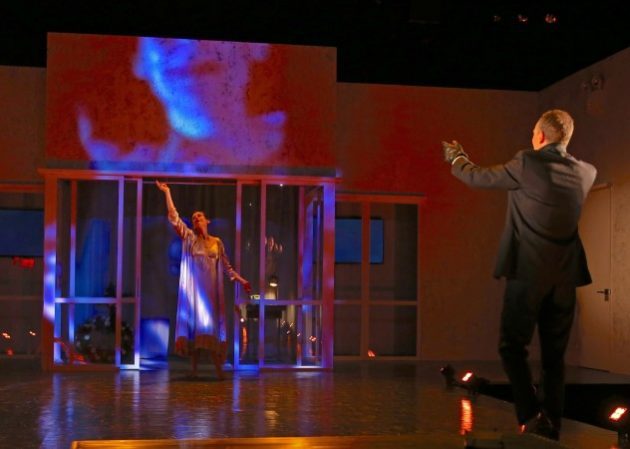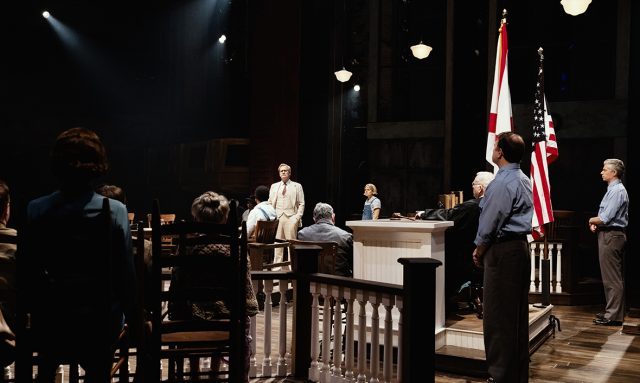
Atticus Finch (Jeff Daniels) addresses the court in Aaron Sorkin’s Broadway adaptation of Harper Lee’s To Kill a Mockingbird (photo by Julieta Cervantes)
Shubert Theatre
225 West 44th St. between Broadway & Eighth Aves.
Tuesday – Sunday through November 3, $89-$199
tokillamockingbirdbroadway.com
About a dozen years ago, friends of mine had a baby they named Atticus, after the lawyer in Harper Lee’s Pulitzer Prize–winning 1960 novel, To Kill a Mockingbird; Gregory Peck won his only Oscar for portraying the highly principled Atticus Finch in Robert Mulligan’s 1962 film. If my friends had seen Aaron Sorkin’s Broadway adaptation of Lee’s book before giving birth, they may have chosen a different name. Following a legal dispute with the estate, which claimed that Oscar and Emmy winner Sorkin — who has written such plays as A Few Good Men and The Farnsworth Invention, such films as Moneyball and The Social Network, and such series as The West Wing and The Newsroom, — had broken their contract by making too many changes to Lee’s original story, the play opened at the Shubert Theatre after an undisclosed settlement to mixed reviews, some celebrating Sorkin’s version, others vilifying it as a disgrace. I find myself somewhere in between; directed by Bartlett Sher, the production is outstanding, but too many of Sorkin’s alterations scream out, too patently obvious and political-minded.
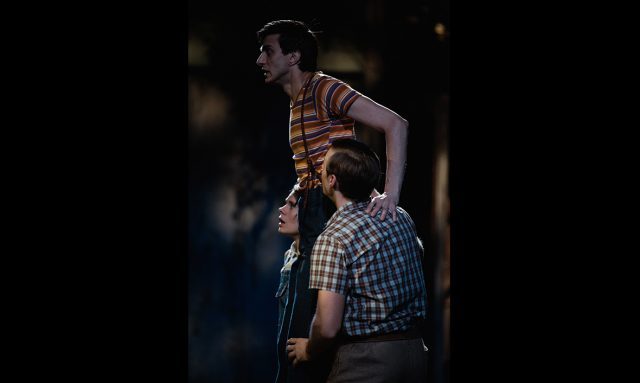
Dill (Gideon Glick) is lifted up by Scout (Celia Keenan-Bolger) and Jem (Will Pullen) in To Kill a Mockingbird (photo by Julieta Cervantes)
Set in sweltering Maycomb, Alabama (inspired by Lee’s hometown of Monroeville), in 1934, the poignant story about racial injustice is narrated by Atticus’s young daughter, Scout, played by forty-one-year-old actress Celia Keenan-Bolger, retelling what happened when a black man named Tom Robinson (Gbenga Akinnagbe) is accused of raping a white woman, Mayella Ewell (Erin Wilhelmi), and is defended by the widowed Atticus Finch (Jeff Daniels). Scout spends the summer hanging out with her older brother, Jem (Will Pullen), and new neighbor Dill (Gideon Glick), goofing around, traipsing too close to the house where local weirdo Arthur “Boo” Radley (Danny Wolohan) resides, and watching the trial. The white townspeople are furious that Atticus is helping a black man, and they make sure to let him know it, threatening Finch and his family with violence. But Atticus is determined not to give up, believing that he has enough evidence on his side to convince the all-white jury of Tom’s innocence. But racism rules all in Maycomb.
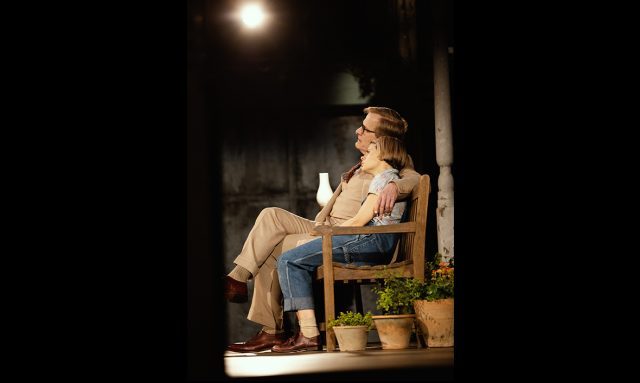
Atticus (Jeff Daniels) and daughter Scout (Celia Keenan-Bolger) take a break on the front porch in Aaron Sorkin adaptation of classic novel (photo by Julieta Cervantes)
Sorkin makes some critical adjustments to Lee’s novel and the film, focusing on different aspects and characters. Judge Taylor (the ever-reliable Dakin Matthews) becomes more involved in the trial, castigating prosecutor Horace Gilmer (Stark Sands) and such witnesses as Bob Ewell (Frederick Weller), Mayella’s father, for ignoring protocol. The Finches’ maid, Calpurnia (LaTanya Richardson Jackson), speaks with a decidedly twenty-first-century attitude, intent on getting Atticus woke. Atticus also is a modern-day figure, beset by a political correctness that makes him want to see the best in all people, even men who don white hoods in the middle of the night and lie on the stand. His determination to reserve judgment of those who so obviously deserve it feels oddly reminiscent of President Trump’s declaration that there are good people on both sides of the Charlottesville conflict, although nothing else about Atticus is Trumpian.
Miriam Beuther has crafted a homey southern set, complete with musicians on either side of the stage for added atmosphere, with Kimberly Grigsby on pump organ and Allen Tedder on guitar, playing original music by Adam Guettel. Two-time Tony nominee and Emmy and Obie winner Daniels (Blackbird, God of Carnage) is both tender and stalwart as Atticus, an understanding man who has too much faith in humankind, while three-time Tony nominee Keenan-Bolger (The Glass Menagerie, The 25th Annual Putnam County Spelling Bee) is terrific as the adventurous and curious Scout, a young girl wise beyond her years, without being overly precocious. The cast also features Danny McCarthy as Sheriff Heck Tate, Wolohan as Mr. Cunningham, Phyllis Somerville as Mrs. Henry Dubose, and Neal Huff as the mysterious Link Deas. Sorkin’s version of Lee’s classic Bildungsroman is not your mother’s To Kill a Mockingbird, nor your grandmother’s. It is built around the continuing legacy of America’s greatest shame, from the seventeenth century to now, when it’s sadly still relevant, even if it’s been fiddled with far too much and there are unlikely to be a glut of babies named Atticus in the near future.

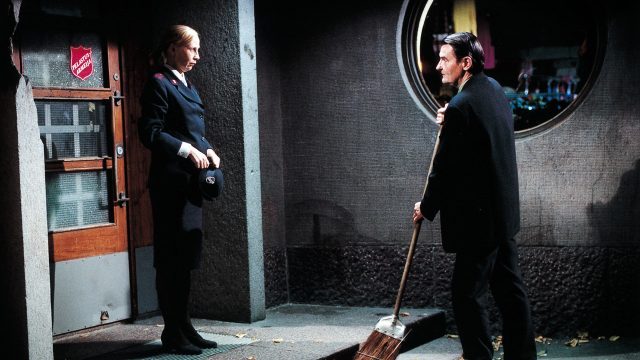
 Metrograph celebrates the career of Finnish auteur Aki Kaurismäki with the fab series “Total Kaurismäki Show,” consisting of seventeen features and an evening of nine shorts by the uniquely talented writer-director who sees the world like nobody else. On April 9, Metrograph will be screening The Man Without a Past, Kaurismäki’s touching, funny, dark, and satiric film that won the 2002 Grand Jury Prize at Cannes. In the brutal opening, an unidentified character gets severely beaten and dies, then wakes up with amnesia. M (Markku Peltola) is soon taken in by a desperately poor family who lives in a shack they call a container. He meets Irma (Kati Outinen, in a small role that won her Best Actress at Cannes), and their potential romance is both sweet and absurd. Kaurismäki wrote, produced, and directed this splendid example of the offbeat nature of his work, which is always intelligent, challenging, and rewarding.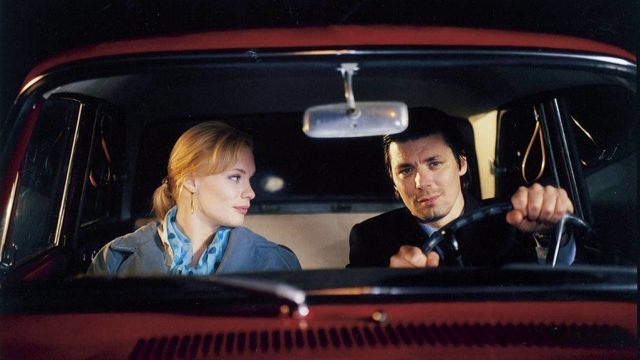
 The final installment in his self-described Loser Trilogy (following Drifting Clouds and