World Science Festival kicks off with theatrical production written by Brian Greene
Multiple venues
May 22 – June 2, free – $100
www.worldsciencefestival.com
Tickets are now on sale for the twelfth annual World Science Festival, as many of the globe’s finest minds gather at the NYU Skirball Center, John Jay College, Lincoln Center, Washington Square Park, and other venues to discuss the state of the planet, the universe, and ourselves, in lectures, panel discussions, workshops, multimedia presentations, and theatrical performances. This year, boasting the theme “Awaken Your Inner Genius,” features celebrations of the centennial of the confirmation of Albert Einstein’s Theory of Relativity and the fiftieth anniversary of the moon landing. Some of the events have already sold out, so you better act quick; below are a dozen highlights, including an evening science sail.
Wednesday, May 22
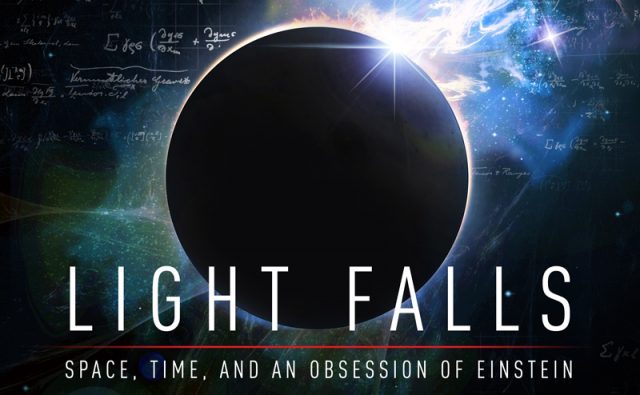
Light Falls: Space, Time, and an Obsession of Einstein, theatrical piece with Brian Greene, Francesca Faridany, Michael Winther, Joanna Kaczorowska, Brian Avers, and Drew Dollaz, written by Greene, designed by 59 Productions, and directed by Scott Faris, with music by Jeff Beal, Rose Theater, Jazz at Lincoln Center, $45-$85, 7:00
Wednesday, May 29
Big Ideas — The Right Stuff: What It Takes to Boldly Go, with Miles O’Brien, Michael Collins, Scott Kelly, and Leland Melvin, NYU Skirball Center, $20-$100, 7:00
Big Ideas: We Will Be Martians, with Kim Binsted, Yvonne Cagle, and Ellen Stofan, NYU Skirball Center, $20-$100, 8:00
Thursday, May 30
Big Ideas — Revealing the Mind: The Promise of Psychedelics, with Alison Gopnik, Stephen Ross, and Anil Seth, Gerald W. Lynch Theater at John Jay College, $20-$100, 8:00
Friday, May 31
Big Ideas — Making Room for Machines: Getting Ready for AGI, with Garry Kasparov, Yann LeCun, Hod Lipson, and Shannon Vallor, Gerald W. Lynch Theater at John Jay College, $20-$100, 8:00
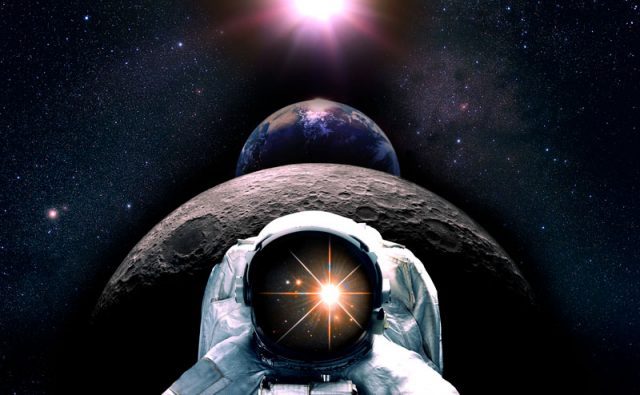
Astronauts Michael Collins, Scott Kelly, and Leland Melvin will discuss the Right Stuff at World Science Festival
Saturday, June 1
The Great Fish Count, multiple locations in all five boroughs, free (advance RSVP encouraged,) 10:00 am – 6:00 pm
Women in Science: Lab Tours for Girls, with Chiye Aoki, Shara Bailey, Daniela Buccella, Catherine Hartley, Lara K. Mahal, Wendy Suzuki, and Alexandra Zidovska, NYU Center for Genomics and Systems Biology, free with advance registration, 1:00
Big Ideas — Rethinking Thinking: How Intelligent Are Other Animals?, with Faith Salie, Simon Garnier, Frank Grasso, Suzana Herculano-Houzel, and Denise Herzing, NYU Skirball Center, $20-$100, 4:00
Scientific Sails: Evening Sail, with Denise Herzing, aboard the Hudson River Sloop Clearwater, Brooklyn Bridge Park Pier 5, $65, 7:00
Big Ideas: The Richness of Time, with Brian Greene, Lera Boroditsky, and Dean Buonomano, NYU Skirball Center, $20-$100, 8:00
Sunday, June 2
City of Science, Washington Square Park, free (advance RSVP encouraged), 10:00 am – 5:00 pm
Science and Storytime, with Jennifer Swanson, Rachel Dougherty, Brian Floca, Bruce Goldstone, Ruth Spiro, and Lily Xu, NYU Kimmel Center, Commuter Lounge, free (advance RSVP encouraged), 11:00 am – 4:30 pm
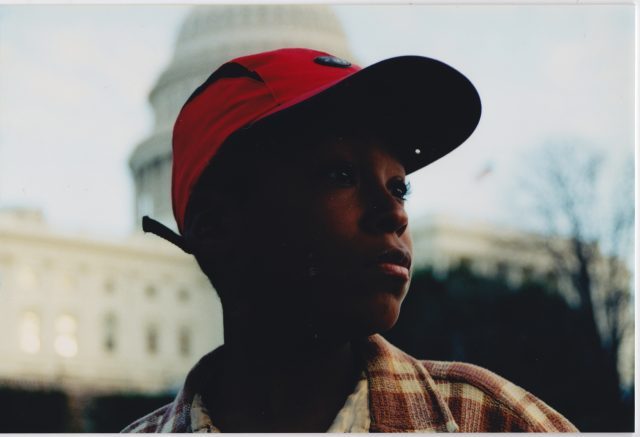
 Davy Rothbart follows a Washington, DC, family trying to break the cycle of drugs, gun violence, and poverty over twenty years in 17 Blocks, a powerful documentary making its world premiere at the Tribeca Film Festival, where it won Best Editing in a Documentary Film. “The award for best editing goes to a film for its profound treatment of vast amounts of honest, often raw footage. The film is structured in a way that renders some of the most affecting moments with great subtlety. Viewers are transformed over the course of the film, a testament to the choices made in its making,” the jury said in its official announcement. Written, produced, and directed by Rothbart and written and edited by Jennifer Tiexiera, 17 Blocks features footage shot in 1999, 2009, and more recently, much of it taken by members of the Sanford family, including Cheryl Sanford, her sons Emmanuel Durant Jr. and Akil “Smurf” Sanford, and her daughter Denice Sanford-Durant, in addition to Rothbart and cinematographer Zachary Shields. Rothbart became friends with fifteen-year-old Smurf in 1999 and taught nine-year-old Emmanuel how to use a video camera, so the family was comfortable sharing intimate, deeply personal details of their lives over the years.