twi-ny recommended events

DIVIDE LIGHT: AN EXCLUSIVE OPERA FILM SCREENING

(photo by Skyler Smith)

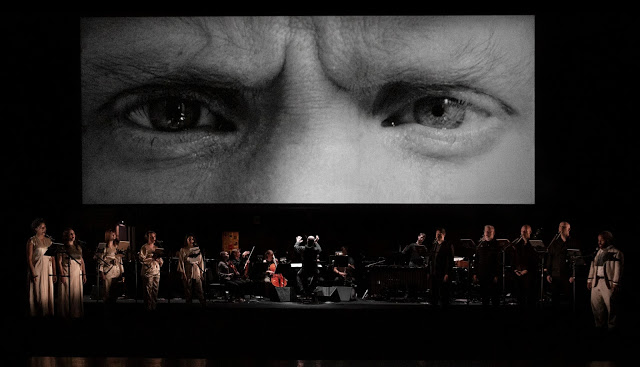
Lesley Dill’s Divide Light will have a special screening April 18 at SVA Theatre (photo by Skyler Smith)

SVA Theatre
333 West Twenty-Third St. between Eighth & Ninth Aves.
Thursday, April 18, $15, 8:00
www.nohrahaimegallery.com
www.dividelight.com

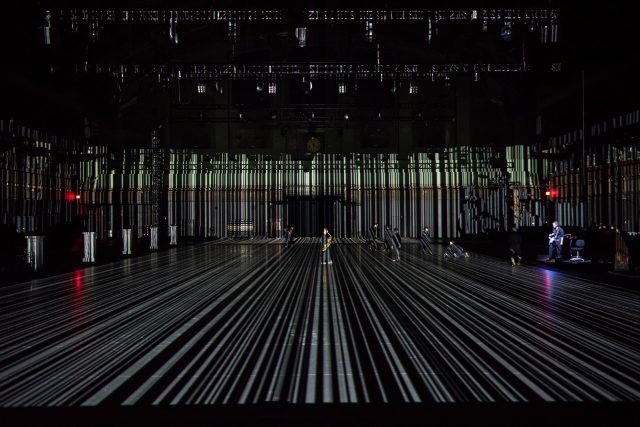
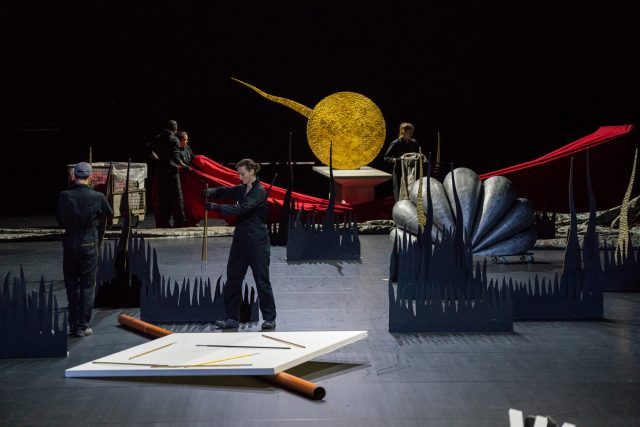
On April 18, multidisciplinary American artist Lesley Dill will present an exclusive screening of her experimental opera, Divide Light, at the SVA Theatre. The opera, based on the complete poetry works of Emily Dickinson, was conceived and created by Dill, with music by Richard Marriott, performed by New Camerata Opera, accompanied by the Curiosity Cabinet String Quintet; the film is directed by Ed Robbins. The multimedia opera, which debuted at the Montalvo Arts Center in the summer of 2008, links the nineteenth-century Transcendental movement to the present day, using words, music, black-and-white and color projections, and extravagant costumes. Among the Dickinson poems in the opera are “For Each Ecstatic Instant,” “I Am Afraid,” “I Am Alive,” “Much Madness,” “The Soul,” and “The Loneliness.” Tickets are $15 and must be purchased in advance; seating is limited.

LAWRENCE WEINER AND GLENN FUHRMAN IN CONVERSATION

flag art foundation book

Who: Lawrence Weiner and Glenn Fuhrman
What: Artist talk in conjunction with publication of The FLAG Art Foundation: 2008-2018
Where: Gagosian Shop, 976 Madison Ave. at 75th St., 212-796-1224
When: Tuesday, April 16, free with RSVP, 6:00
Why: In celebration of its tenth anniversary, the Chelsea-based FLAG Art Foundation has published The FLAG Art Foundation: 2008-2018, a fully illustrated catalog that looks back at its first fifty exhibitions, which has featured such artists as Louise Bourgeois, Mark Bradford, Maurizio Cattelan, Robert Gober, Félix González-Torres, Jim Hodges, Ellsworth Kelly, Charles Ray, Gerhard Richter, and Cindy Sherman. On April 16, gallery founder Glenn Fuhrman and seventy-seven-year-old Bronx-born conceptual artist Lawrence Weiner will be at the Gagosian Shop on the Upper East Side to discuss the history of FLAG as well as its current exhibition “On Board the Ships at Sea Are We,” consisting of works by Weiner, Rachel Whiteread, and Robert Therrien examining scale, materiality, and absence. The catalog includes a foreword by Fuhrman, preface by founding director Stephanie Roach, and original contributions from Ashley Bickerton, Delia Brown, Patricia Cronin, Cynthia Daignault, Lisa Dennison, Sarah Douglas, Elmgreen & Dragset, Eric Fischl, James Frey, Louis Grachos, Stamatina Gregory, Jane Hammond, Hilary Harkness, Jim Hodges, Philae Knight, Josephine Meckseper, Richard Patterson, Jack Shear, Carolyn Twersky, Lesley Vance, Rebecca Ward, and Heidi Zuckerman. Admission is free with advance RSVP.

IN PERPETUAL FLIGHT: THE MIGRATION OF THE BLACK BODY

(photo by Steve Vaccariello)

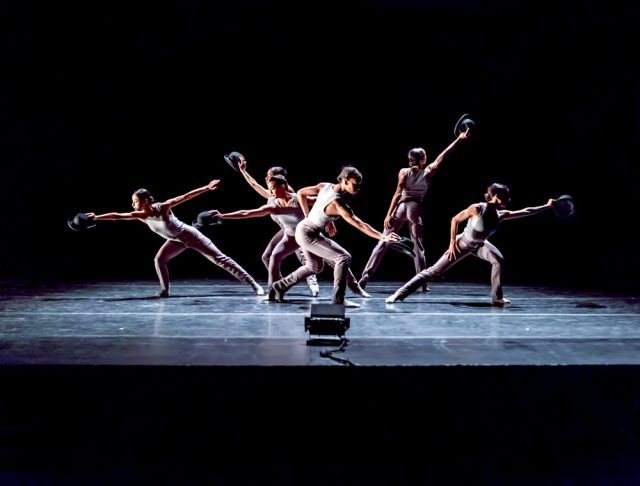
Alvin Ailey dancer and choreographer Hope Boykin will perform at “In Perpetual Flight: The Migration of the Black Body” presentation at Schomburg Center (photo by Steve Vaccariello)

The Schomburg Center for Research in Black Culture
Langston Hughes Auditorium
515 Malcolm X Blvd.
Tuesday, April 16, free with advance registration, 6:30
www.nypl.org

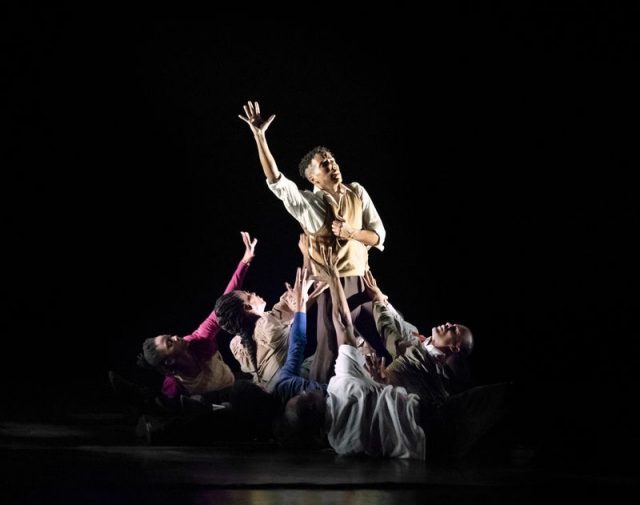
Carnegie Hall’s wide-ranging, multidisciplinary Migrations: The Making of America festival comes to the Langston Hughes Auditorium at the Schomburg Center for Research in Black Culture on April 16 for “In Perpetual Flight: The Migration of the Black Body.” Through dance, music, and theater, the program traces the journey toward liberation of the black body across time in the US, from the slave trade and the Great Migration to the Civil War and the Back to Africa movement, exploring its impact on contemporary American culture. The evening, held in conjunction with the fiftieth anniversary of Dr. Barbara Ann Teer’s National Black Theatre and its current NBT Beyond Walls initiative, features four live performances and presentations by Alvin Ailey dancer and choreographer Hope Boykin, screenwriter, playwright, and director Keith Josef Adkins, Obie-winning actress and singer Kenita R. Miller, composer and sound designer Justin Hicks, NBT CEO Sade Lythcott, and NBT artistic director Jonathan McCrory, utilizing works from the Schomburg Center archives from such seminal figures as James Baldwin, Harriet Powers, Marcus Garvey, Harriet Tubman, and Jacob Lawrence. “This event is allowing us to acknowledge the consistent flight, movement, and navigation black people have been engaged in within this country ever since the black body was ripped from the shores of Africa — human bodies stripped from home and forced into slavery,” McCrory said in a statement. “That perpetual flight has produced four hundred years of migration that have generated moments of agitation, acceleration, acclimation, and aspiration.” Admission is free; advance registration is strongly recommended.

TRIBECA FILM FESTIVAL: FREE FILM FRIDAY

Juno Temple and Simon Pegg star in world premiere at Tribeca Film Festival

Juno Temple and Simon Pegg star in world premiere of Lost Transmissions at Tribeca Film Festival

Tribeca Film Festival
Multiple venues
Friday, May 3, free
Festival runs April 24 – May 5
www.tribecafilm.com

The Tribeca Film Festival continues its tradition of offering free films on Friday this year, with a host of feature narratives, documentaries, and shorts being shown on May 3. Admission is free, but you must reserve tickets in advance.

Tribeca Talks: Master Class — Irwin Winkler on the Art and Craft of Producing, SVA Theater 2 Beatrice, 3:30

Viewpoints: Changing the Game (Michael Barnett, 2019), about transgender teen athletes, Village East Cinema-04, 3:45

Shorts: Road Less Traveled, destination shorts by multiple directors, Village East Cinema-02, 5:00

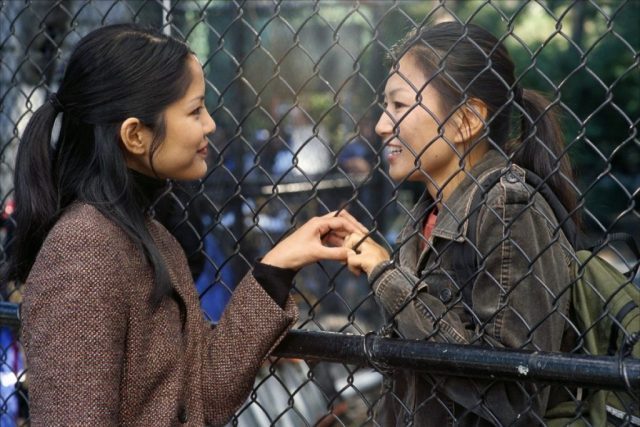
Section: Viewpoints: 37 Seconds (HIKARI, 2019), staring Mei Kayama, Regal Cinemas Battery Park 11-1, 5:30

Shorts: Down to Earth, sci-fi shorts by multiple directors, Village East Cinema-03, 5:45

Viewpoints: Plucked (Joel Van Haren, 2019), about a stolen Stradivari violin, Village East Cinema-06, 6:00

The Quiet One examines the life and times of Rolling Stones bassist Bill Wyman

The Quiet One examines the life and times of Rolling Stones bassist Bill Wyman

Spotlight Documentary: The Quiet One (Oliver Murray, 2019), about Rolling Stones bassist Bill Wyman, Village East Cinema-01, 6:00

Section: Viewpoints: What Will Become of Us (Steven Cantor, 2019), about Sir Frank Lowy, Regal Cinemas Battery Park 11-9, 6:15

Tribeca Critics’ Week: The Weekend (Stella Meghie, 2018), starring Sasheer Zamata, Tone Bell, and DeWanda Wise, SVA Theater 1 Silas, 6:30

Documentary Competition: Our Time Machine (S. Leo Chiang and Yang Sun, 2019), about Chinese artist Maleonn, Regal Cinemas Battery Park 11-3, 7:00

Documentary Competition: Scheme Birds (Ellen Fiske and Ellinor Hallin, 2019), about a Scottish teenager, Regal Cinemas Battery Park 11-6, 8:00

Spotlight Documentary: Lil’ Buck: Real Swan (Louis Wallecan, 2019), about dancer Lil’ Buck, Regal Cinemas Battery Park 11-4, 8:45

Movies Plus: The Remix: Hip Hop X Fashion (Lisa Cortés and Farah X, 2019), Village East Cinema-01, 9:00

Spotlight Narrative: Lost Transmissions (Katharine O’Brien, 2019), starring Simon Pegg and Juno Temple, Regal Cinemas Battery Park 11-5, 9:30

Viewpoints: Wild Rose (Tom Harper, 2018), starring Jessie Buckley, Regal Cinemas Battery Park 11-3, 9:30

Spotlight Narrative: Skin (Guy Nattiv, 2019), starring Jamie Bell, Village East Cinema-07, 9:30

Shorts: On Tour, documentary shorts by multiple directors, Village East Cinema-04, 9:45

Shorts: Funhouse, comedic shorts by multiple directors, Village East Cinema-02, 11:00

INTERROGATIONS OF FORM: MUSEUM AS SANCTUARY

 (image © Julio Salgado)

(image © Julio Salgado)

SUNDAY SALON
Park Ave. Armory
643 Park Ave. at 67th St.
Sunday, April 14, $25, 3:00
212-933-5812
www.armoryonpark.org

In December, Cuban artist and activist Tania Bruguera was arrested in Havana for protesting Decree 349, which criminalizes public and private art that the Ministry of Culture deems unpatriotic or does not receive government permission for commercialization. “Before there was censorship, you could play around. Now you go to jail, now they take your house. It’s not a joke. There are no more games to play,” Bruguera told the Guardian in February. “What we want is to eliminate the decree and work together to find regulations that are based on the needs of the artists and what will protect them, not only the government.” Bruguera, an artist-in-residence at Park Avenue Armory, will be at the armory on April 14 for the Sunday Salon discussing a place to seek refuge: The presentation, part of the Interrogations of Form series, is entitled “Museum as Sanctuary.” The salon kicks off at 3:00 with an introduction by Bruguera and “Make Sanctuary Not Art,” a ritual gathering on safe spaces led by Luba Cortes, Geoff Trenchard, Jackie Vimo, and Abou Farman. From 4:30 to 5:30, the pop-up exhibition “You See Me?!?” displays work by undocumented LGBTQ Mexican American artist Julio Salgado and the collective Emulsify, including the video installation “Con Cámaras y Sín Papeles.” The afternoon concludes at 5:30 with “Institutions as Sanctuary in Times of Exclusion,” a conversation with Alexandra Délano Alonso, Camilo Godoy, Sonia Guiñansaca, Bitta Mostofi, and Verónica Ramírez, moderated by Bruguera.

THE LEHMAN TRILOGY

(photo by Stephanie Berger)

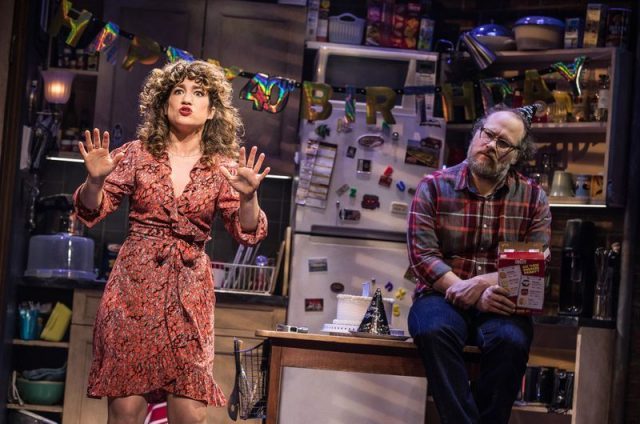
Henry Lehman (Simon Russell Beale) is the first Lehman brother to arrive in America in epic play at Park Ave. Armory (photo by Stephanie Berger)

Park Ave. Armory, Wade Thompson Drill Hall
643 Park Ave. at 67th St.
Tuesday – Sunday through April 20
212-933-5812
www.armoryonpark.org

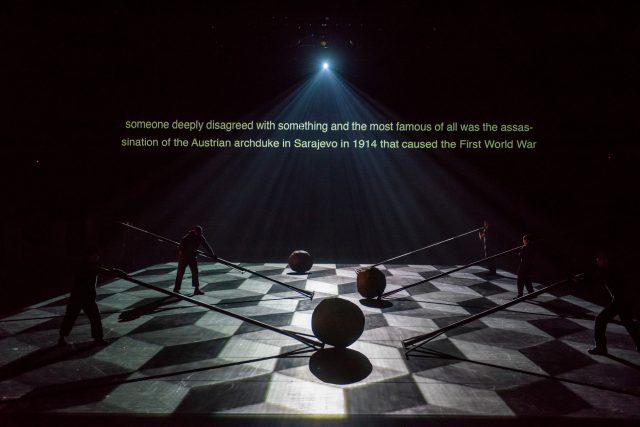
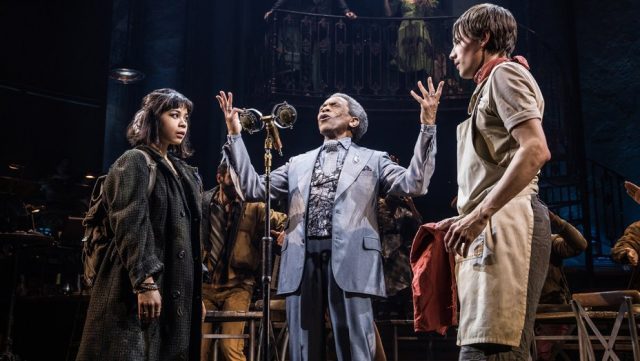
The prospect of sitting through a nearly three-and-a-half-hour play about the history of Lehman Brothers performed by a mere three actors might not necessarily be your idea of fun, but the US premiere of Ben Power’s adaptation of Stefano Massini’s Italian original is an epic masterpiece, must-see theater at its finest. Running in the massive Wade Thompson Drill Hall at the Park Ave. Armory through April 20 — advance tickets are sold out but a limited number of $45 rush tickets are available day of show — The Lehman Trilogy begins with a prologue in 2008 as a man packs boxes following the Black Thursday stock market crash on Es Devlin’s breathtaking set, a large, revolving transparent cube with several office-like rooms. Video designer Luke Halls projects geographic scenes onto the huge semicircle at the back of the stage and onto the floor around the cube, from the vast sea and plantation estates to cotton fields and the New York City skyline.

The first act, “Three Brothers,” quickly shifts to the past, to September 1844, with the arrival of twenty-one-year-old Henry Lehman (Simon Russell Beale) from his native Rimpar in Bavaria. He opens a small fabric store in Montgomery, Alabama, amid the plantations and is determined to live the American dream. “He left with an idea of America in his head / and got off the boat with America before him: / no longer in his mind but there in front of his eyes. / AMERICA. / Baruch HaShem,” Henry says about himself. Much of the play is related in poetic language spoken in the third person, interwoven with dialogue. Through it all, Candida Caldicot plays the piano just offstage, adding atmosphere and playful humor.

(photo by Stephanie Berger)

Henry (Simon Russell Beale), Emanuel (Ben Miles), and Mayer Lehman (Adam Godley) change the face of American capitalism in The Lehman Trilogy (photo by Stephanie Berger)

Henry is joined three years later by middle brother Emanuel (Ben Miles), who was twenty at the time, and then by nineteen-year-old Mayer Lehman (Adam Godley) in 1850; Henry is considered the head, Emanuel the arm, and Mayer the potato, an unequal partner sent to mediate any disputes between his older siblings. Henry has a brilliant mind for adapting to evolving market conditions, including inventing them in order to help the company flourish as it goes from selling fabrics to raw cotton, coffee, and coal to, ultimately, trading money itself once they move to New York City, setting up shop at 119 Liberty St. With each advance, they change their business sign, represented by writing the company’s new name on the glass wall. In the second act, “Fathers & Sons,” the next generation grows up and enters the organization: Emanuel’s son, Philip (Beale), and Mayer’s son, Herbert (Miles), who continue to expand the family’s holdings while getting further away from their heritage. “He was born in New York: / in his blood, not even a drop / of Germany or Alabama. / New Herbert. / Very new Herbert. / Son of New York, Herbert,” Mayer says. Act three, “The Immortal,” starts with a harrowing depiction of the suicides that came with the crash of 1929 as the more flashy Robert “Bobby” Lehman (Godley), Philip’s son, becomes the face of the company. Eventually, the firm runs out of Lehmans, instead being led by Pete Peterson (Beale) and Lewis Glucksman (Miles) as the 2008 mortgage crisis awaits.

(photo by Stephanie Berger)

Es Devlin’s set is another character in The Lehman Trilogy at Park Ave. Armory (photo by Stephanie Berger)

Power (Husbands and Sons, Medea) and Oscar-, Tony-, and Olivier Award–winning director Sam Mendes (The Ferryman, American Beauty) have streamlined Stefano Massini’s five-hour Italian original, which featured a much larger cast. Beale (Candide, Uncle Vanya), Miles (The Norman Conquests, Coupling), and Godley (Rain Man, Anything Goes) are a sight to behold, each onstage for nearly the entire play; they remain in Katrina Lindsay’s business-suit costumes, but it’s clear which of the many characters they are portraying at any given moment. Devlin’s cube is its own star, especially when, late in the show, it starts whipping around faster and faster, at speeds that will make you dizzy, never mind the three remarkable actors, who take it all in stride and as if they are one entity. The script doesn’t judge the Lehmans’ morality; it doesn’t mention that the Lehmans owned slaves in Alabama, and it avoids focusing on the ethical issues inherent in their rise to the heights of the financial world. “I don’t think I’m hated,” Bobby says, concerned about what his employees think of him. “No slave likes his master,” his wife, Ruth (Beale), says. “Am I the master?” Bobby asks.

The Lehman Trilogy also doesn’t turn the siblings into heroes or villains; each family member has his or her flaws and proclivities, and they become evident throughout the show, as does their genius when it comes to making money. It’s a riveting story of immigration and assimilation, with a particularly Jewish flavor as the Lehmans pave a path to fortune and wealth from a Bavarian shtetl to the cotton fields of the South and the golden streets of New York City. Henry touches the mezuzah and kisses his hand every time he enters and leaves his shop/office and often punctuates his desires by saying, “Baruch HaShem” (“Thank G-d”) — it’s as if his place of business is sacred ground, a holy temple — and the brothers sit shiva (a mourning ritual) whenever a family member passes. Although you know how it all ends in 2008, The Lehman Trilogy shines an absorbing light on just who the Lehman brothers were and how they made the most of their American dream.

KAROLE ARMITAGE’S YOU TOOK A PART OF ME

(photo © Julieta Cervantes; Karole Armitage © Marco Mignani)

Egumi Eda plays the lead role in Karole Armitage’s You Took a Part of Me at Japan Society (photo © Julieta Cervantes; Karole Armitage © Marco Mignani)

Japan Society
333 East 47th St. at First Ave.
Friday, April 12, and Saturday, April 13, $30, 7:30
212-715-1258
www.japansociety.org

Wisconsin-born, Tony-nominated choreographer Karole Armitage follows up Art of the In-Between, which debuted last October at National Sawdust in Brooklyn in the Celebrate Mexico Now festival, with the world premiere of You Took a Part of Me at Japan Society this weekend with her company, Armitage Gone! Dance. Loosely inspired by the fifteenth-century noh play Nonomiya, the kazura-mono piece features Lady Rokujō, a character from The Tale of Genji, and deals with memory, obsession, and love. Created in collaboration with MIT Media Lab and part of Carnegie Hall’s Migrations: The Making of America festival, You Took a Part of Me features a live score by Reiko Yamada played live by multi-instrumentalist Yuki Isami; longtime Armitage dancer Megumi Eda will perform the lead role. The set includes a bridge known as a hashigakari that extends into the audience. The April 12 show will be followed by a meet-the-artists reception, while the April 13 program will conclude with an artist Q&A.