twi-ny recommended events

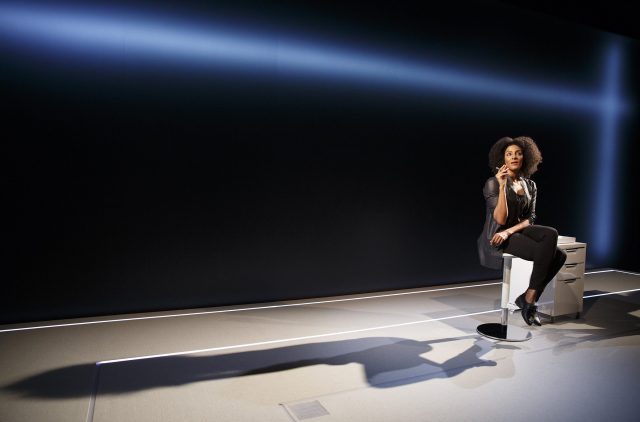
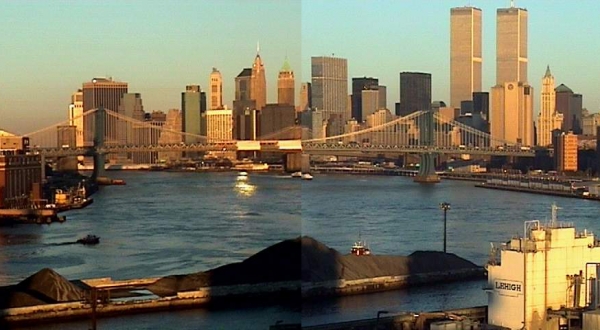
JANET BIGGS AND SCOTT MacDONALD IN CONVERSATION — THE SUBLIMITY OF DOCUMENT: CINEMA AS DIORAMA

sublimity

Who: Janet Biggs and Scott MacDonald
What: Panel discussion and book launch
Where: Cristin Tierney Gallery, 219 Bowery, second floor, 212-594-0550
When: Thursday, July 11, free with advance RSVP, 6:30
Why: In his new book, The Sublimity of Document: Cinema as Diorama (Oxford University Press, August 1, 2019, $125), author and film history professor Scott MacDonald writes of visual artist Janet Biggs, “I first became aware of Biggs when she visited Hamilton College in the spring of 2017 to present a talk about her work. As she showed stills and clips from recent videos, I was struck by the fact that Biggs had traveled to and filmed particular far-flung locations that I had been introduced to by other filmmakers. . . . I was interested not only that multiple artists would be drawn to these precise locations, but also that, in somewhat different ways, these locations can be dangerous to visit. As I became familiar with Biggs’s work, I came to wonder why an artist would go through the considerable difficulties of visiting distant, potentially dangerous locations, not in order to produce films that might have substantial audiences, but to offer relatively brief visual experiences to comparatively smaller audiences within gallery and museum spaces. I came to realize that my experiences with Biggs’s work offered an opportunity to explore, at least in a small way, the issue of installation cinema versus theatrical cinema.” The book continues with an interview between MacDonald and Biggs that was conducted online.

On July 11, MacDonald and Biggs will be together in person at the Cristin Tierney Gallery for a discussion on film and art in conjunction with the publication of The Sublimity of Document and Biggs’s most recent exhibition, “Overview Effect,” the second part of which, Seeing Constellations in the Darkness between Stars, continues at Cristin Tierney through August 2. MacDonald’s book features interviews with Biggs and more than two dozen other “avant-doc” filmmakers, including Ron Fricke, Laura Poitras, Frederick Wiseman, Bill Morrison, Abbas Kiarostami, and James Benning. Biggs has also contributed the article “Fragility Curve” to the current edition of the Brooklyn Rail, writing about her experiences making her latest films, which deal with Mars. “The earth will remake itself and survive the legacy of its human inhabitants, but will we?” she asks. The conversation with Biggs and MacDonald will be followed by a book signing; in addition, Biggs, who has participated in two twi-ny talks, will be presenting the multimedia performance piece How the Light Gets In July 18 at the New Museum.

MOSTLY MOZART FESTIVAL

(photo by Carl Fox)

Boy Blue’s Blak Whyte Gray makes a special return engagement at 2019 Mostly Mozart Festival at Lincoln Center (photo by Carl Fox)

Multiple venues at Lincoln Center
July 10 – August 9, free – $120
www.lincolncenter.org

With the demise of the Lincoln Center Festival last year, the institution’s Mostly Mozart Festival has filled in many of the gaps, expanding its breadth to cover much more than classical music and related events. Thus, its fifty-third season is a multidisciplinary affair with a wide variety of dance, theater, music, and film that is mostly non-Mozart. The summer festival begins July 10-13 with the world premiere of Mark Morris Dance Group’s Sport at Jazz at Lincoln Center’s Rose Theater, set to Erik Satie’s “Sports et divertissements,” along with the company’s Empire Garden and V. Other dance programs include a special return engagement of Boy Blue’s Blak Whyte Gray August 1-3 at the Gerald Lynch Theater at John Jay College, with Kenrick “H2O” Sandy and Margo Jefferson participating in a talk after the August 2 performance, and the US premiere of Yang Liping Contemporary Dance’s Under Siege August 8-10 at the David H. Koch Theater, a lavish dance-theater production inspired by historic events in Chen Kaige’s Farewell, My Concubine, the 1993 epic that will be screened July 28 at the Walter Reade Theater. The festival will also be showing Ang Lee’s Crouching Tiger, Hidden Dragon on August 4, which features Oscar-winning production design by Tim Yip, the set and costume designer of Under Siege.

(photo by Ding Yi Jie)

Yang Liping Contemporary Dance’s Under Siege makes its US premiere at Mostly Mozart Festival (photo by Ding Yi Jie)

Of course, there is plenty of Wolfgang Amadeus and other classical programs at the festival. The Mostly Mozart Festival Orchestra will present Beethoven’s “Eroica Symphony” July 23-24, Vivaldi’s “The Four Seasons” July 26-27, “Mozart & Brahms” July 30-31, “Beethoven & Schubert” August 2-3, “Joshua Bell Plays Dvořák” August 6-7, and “Mozart à la Haydn” August 9-10, all at David Geffen Hall. British theater group 1927’s production of The Magic Flute July 17-20 at the Koch features the Mostly Mozart Festival Orchestra, a cast from Komische Oper Berlin, colorful animation, and imaginative set design. The intimate series “A Little Night Music” in the Stanley H. Kaplan Penthouse includes performances by cellist Kian Soltani and pianist Julio Elizalde; pianist Michael Brown; vocalist Nora Fischer and guitarist and vocalist Marnix Dorrestein; violinist Pekka Kuusisto and bassist Knut Erik Sundquist; soprano Susanna Phillips and pianist Myra Huang; pianist Martin Helmchen; pianists Lucas and Arthur Jussen in their New York debut; Brooklyn Rider; and pianist Steven Osborne. And on August 4, the Budapest Festival Orchestra will play works by Haydn, Handel, and Mozart at the Geffen, with soprano Jeanine De Bique, conducted by Iván Fischer.

(photo by Michael Daniel)

Mostly Mozart Festival features New York production premiere of The Magic Flute by British theater group 1927 (photo by Michael Daniel)

One of the highlights of the festival is sure to be Davóne Tines and Michael Schachter’s The Black Clown July 24-27 at the Gerald Lynch, a musical theater piece based on Langston Hughes’s 1931 poem, with Tines as the title character, choreography by Chanel DaSilva, and set and costumes by Carlos Soto; the July 25 show will be followed by a talk with Tines, director Zack Winokur, and DaSilva. In addition, there are several free, first-come, first-served events: the panel discussion “Mozart’s Magic Flute: In His Time and Ours” July 20 at 3:00 at the Kaplan Penthouse; the International Contemporary Ensemble (ICE) performing works by Anna Thorvaldsdottir, Bergrún Snæbjörnsdóttir, and Ashley Fure at the David Rubenstein Atrium on July 25 at 7:30; the Mostly Mozart Festival Orchestra, conducted by Louis Langrée, playing Mozart’s “Gran Partita” July 27 at 3:00 at St. Paul’s Chapel; ICE’s “Composer Portraits” program of works by Iranian composers Anahita Abbasi, Aida Shirazi, and Niloufar Nourbakhsh at the atrium August 5 at 7:00; and violinist Tessa Lark and bassist Michael Thurber at the atrium August 8 at 7:30.

IN PERSON EVENT: NO HOME MOVIE

NO HOME MOVIE

Chantal Akerman creates a unique profile of her mother in deeply personal No Home Movie

NO HOME MOVIE (Chantal Akerman, 2015)
IFC Center
323 Sixth Ave. at West Third St.
Tuesday, July 9, 7:30
212-924-7771
www.ifccenter.com
icarusfilms.com

Chantal Akerman’s No Home Movie was meant to be a kind of public eulogy for her beloved mother, Natalia (Nelly) Akerman, who died in 2014 at the age of eighty-six, shortly after Chantal had completed shooting forty hours of material with her. But it also ended up becoming, in its own way, a public eulogy for the highly influential Belgian auteur herself, as she died on October 5, 2015, at the age of sixty-five, only a few months after the film screened to widespread acclaim at several festivals (except at Locarno, where it was actually booed). Her death was reportedly a suicide, following a deep depression brought on by the loss of her mother. IFC is presenting a special screening on July 9, introduced by Akerman translator Corina Copp, who will read from Akerman’s final book, My Mother Laughs.

No Home Movie primarily consists of static shots inside Nelly’s Brussels apartment as she goes about her usual business, reading, eating, preparing to go for a walk, and taking naps. Akerman sets down either a handheld camera or a smartphone and lets her mother walk in and out of the frame; Akerman very rarely moves the camera or follows her mother around, instead keeping it near doorways and windows. She’s simply capturing the natural rhythms and pace of an old woman’s life. Occasionally the two sit down together in the kitchen and eat while discussing family history and gossip, Judaism, WWII, and the Nazis. (The elder Akerman was a Holocaust survivor who spent time in Auschwitz.) They also Skype each other as Chantal travels to film festivals and other places. “I want to show there is no distance in the world,” she tells her mother, who Skypes back, “You always have such ideas! Don’t you, sweetheart.” In another exchange, the daughter says, “You think I’m good for nothing!” to which the mother replies, “Not at all! You know all sorts of things others don’t know.”

NO HOME MOVIE

Shots of a tree fluttering in the Israeli wind enhance the peaceful calm of No Home Movie

Later they are joined by Chantal’s sister, Sylviane, as well as Nelly’s home aide. The film features long sections with no dialogue and nobody in the frame; Akerman opens the movie with a four-minute shot of a lone tree with green leaves fluttering in the wind in the foreground, the vast, empty landscape of Israel in the background, where occasionally a barely visible car turns off a far-away road. Akerman returns to Israel several times during the film, sometimes shooting out of a moving car; these sections serve as interludes about the passage of time as well as referencing her family’s Jewish past. At one point, Akerman makes potatoes for her mother that they eat in the kitchen, a direct reference to a scene in Akerman’s feminist classic, Jeanne Dielman, 23 Quai due Commerce, 1080 Bruxelles. Knowing about what happened to both mother and daughter postfilming casts a shadow over the documentary, especially when Chantal tells her mother, “I’m in a very, very good mood. . . . Let’s enjoy it; it’s not that common.” As the film nears its conclusion, there is almost total darkness, echoing the end of life. Through it all, Akerman is proud of her mother; reminiscing about kindergarten, she remembers, “And to everybody, I would say, this is my mother.” No Home Movie achieves that very same declaration, now for all the world to see and hear.

FIRST SATURDAYS: VISUALIZING INDEPENDENCE

Portrait of Garry Winogrand. Credit: Judy Teller

Screening of Garry Winogrand: All Things Are Photographable is part of free Brooklyn Museum First Saturday program on July 6 (photo by Judy Teller)

Brooklyn Museum
200 Eastern Parkway at Washington St.
Saturday, July 6, free (some events require advance tickets), 5:00 – 11:00
212-864-5400
www.brooklynmuseum.org

The Brooklyn Museum celebrates the 243rd birthday of the United States of America in the July edition of its free First Saturday program. There will be live performances by Brooklyn Maqam musicians, Dj InO, Tunde Olaniran, Snips, and Cumbia River Band; a curator tour of “Garry Winogrand: Color” led by Drew Sawyer; a hands-on workshop in which participants can design wearable art inspired by “Nobody Promised You Tomorrow: Art 50 Years After Stonewall”; a book club discussion with Adreinne Waheed, author of the photo book Black Joy and Resistance, with artist Zun Lee and moderator Delphine Adama Fawundu; teen pop-up gallery talks in honor of the fortieth anniversary of The Dinner Party and creator Judy Chicago’s eightieth birthday; a screening of Garry Winogrand: All Things Are Photographable (Sasha Waters Freyer, 2018), followed by a talkback with Sawyer and Susan Kismaric; Cave Canem poetry readings with JP Howard, Raven Jackson, and Trace DePass responding to “Liz Johnson Artur: Dusha”; and a community talk about the Lesbian Herstory Archives with Flavia Rando, Shawn(ta) Smith-Cruz, Ashley-Luisa Santangelo, and Elvis Bakaitis. In addition, the galleries will be open late so you can check out “Garry Winogrand: Color,” “Nobody Promised You Tomorrow: Art 50 Years After Stonewall,” “Eric N. Mack: Lemme walk across the room,” “Liz Johnson Artur: Dusha,” “One: Egúngún,” “Something to Say: Brooklyn Hi-Art! Machine, Deborah Kass, Kameelah Janan Rasheed, and Hank Willis Thomas,” “Infinite Blue,” “Rembrandt to Picasso: Five Centuries of European Works on Paper,” “Kwang Young Chun: Aggregations,” and more.

THE RETURN OF MARTIN GUERRE 4K RESTORATION

The Return of Martin Guerre

Gérard Depardieu stars as a man claiming to be a long-missing peasant in Daniel Vigne’s The Return of Martin Guerre

THE RETURN OF MARTIN GUERRE (LE RETOUR DE MARTIN GUERRE) (Daniel Vigne, 1982)
Quad Cinema
34 West 13th St. between Fifth & Sixth Aves.
Opens Friday, July 5
212-255-2243
quadcinema.com

Identity theft was much different in the sixteenth century than it is today. Daniel Vigne’s award-winning 1982 drama, The Return of Martin Guerre, relates the based-on-fact story of a man who has come back to the small, poor village of Artigat in the French countryside after being away for nearly a decade, fighting a war and journeying across Europe. “You will not regret having followed this story, for it is neither a tale of adventure nor an imaginary fable,” a narrator says at the beginning of the film. “It is a true story.” It also looks and sounds better than ever, in a lovely 4K director’s cut restoration opening at the Quad on July 5. The rather quiet and dull Martin Guerre (Stéphane Pean) disappears one night in 1542, to the consternation of his wife, Bertrande de Rols (first Sylvie Méda, then Nathalie Baye). She raises their son, Sanxi Guerre (Adrien Duquesne), by herself, with the help of her family, and remains faithful to Martin, believing he will return. Years later, Martin (Gérard Depardieu) suddenly shows up, more educated and worldly, filled with tales of his time away. The villagers are quick to welcome him back into the fold, including Bertrande and Sanxi; Martin’s sister Guillemette (Valérie Chassigneux); their uncle Pierre (Maurice Barrier), who has run the farm and married Bertrande’s mother, Raimonde de Rols (Rose Thiéry); and Martin’s friend Jacques (Philippe Babin). But slowly some of the peasants start questioning whether this Martin is actually an imposter taking advantage of Bertrande and Artigat, which leads to the arrival of Jean de Coras (Roger Planchon) of the Toulouse Parlement to interview Bertrande.

The Return of Martin Guerre

A family is reunited in The Return of Martin Guerre — or is it?

Written by honorary Oscar winner Jean-Claude Carrière (Danton, The Discreet Charm of the Bourgeoisie) and Vigne (One Woman or Two, Jean de La Fontaine — le défi ) with Natalie Zemon Davis, a Princeton University professor and historian who consulted on the film and later wrote a book on the subject, The Return of Martin Guerre is gorgeously photographed by Andre Neau, inspired by the paintings of Dutch masters Johannes Vermeer and Pieter Brueghel the Elder. The film won three Césars, for Best Original Screenplay, Best Music (Michel Portal), and Best Production Design (Alain Negre), and received a nomination for Most Promising Actor (Dominique Pinon, who would become a mainstay in the films of Jean-Pierre Jeunet), in addition to an Oscar nod for Best Costume Design (Anne-Marie Marchand); it was also remade by Jon Amiel in 1993 as the Civil War drama Sommersby with Richard Gere and Jodie Foster. Depardieu is big and boisterous as the man claiming to be Martin, while Baye is soft and gentle as Bertrand in the second of seven films they have made together. The Return of Martin Guerre might be set nearly half a millennium ago, but its exploration of faith, honor, virtue, poverty, the law, education, and truth, as well as how people can change over time — or not — is not as old-fashioned as it might at first seem in this age of fake news, income inequality, religious extremism, and social media.

IMPLICIT TENSIONS: MAPPLETHORPE NOW

Self Portrait 1985, printed 2005 Robert Mapplethorpe 1946-1989 ARTIST ROOMS   Tate and National Galleries of Scotland. Lent by the Robert Mapplethorpe Foundation 2014

Robert Mapplethorpe, Self Portrait, gelatin silver print, 1985 (Solomon R. Guggenheim Museum, New York; gift, the Robert Mapplethorpe Foundation, 1996)

Solomon R. Guggenheim Museum
1071 Fifth Ave. at 89th St.
Through July 10, $18-$25 (pay-what-you-wish Saturday 5:00-7:00)
Part 2 runs July 24 – January 5
212-423-3587
www.guggenheim.org

There’s only one week left to see the first phase of the Guggenheim’s yearlong, two-part exhibition “Implicit Tensions: Mapplethorpe Now,” a concise survey in conjunction with the thirtieth anniversary of the death of visual artist Robert Mapplethorpe in 1989 at the age of forty-two. Mapplethorpe’s reputation has been growing since the January 2010 publication of Patti Smith’s award-winning book Just Kids, which details the punk rocker’s relationship with Mapplethorpe, from lovers to best friends and artistic collaborators in the late 1960s and 1970s. More recently, there was the 2016 documentary Mapplethorpe: Look at the Pictures and the 2018 biopic Mapplethorpe as well as Bryce Dessner’s multimedia Triptych (Eyes of One on Another), which used music and images to focus on several of the controversies surrounding Mapplethorpe’s work, from obscenity charges to questions about racism and his photos of black bodies. “Implicit Tensions” circumvents all of that and concentrates on his immense skill in composition and his immeasurable artistic vision in his photographs of flowers, sadomasochism, male and female nudes, and, most notably, himself, although he’s no mere narcissistic selfie taker.

Robert Mapplethorpe

Robert Mapplethorpe, Ken and Tyler, platinum-palladium print, 1985 (Solomon R. Guggenheim Museum, New York; gift, the Robert Mapplethorpe Foundation, 1996)

The Guggenheim show consists of more than fifty photographs and unique objects from the museum’s collection, gifts from the Robert Mapplethorpe Foundation between 1993 and 1998 that led to the Guggenheim developing and expanding its photography collection and forming its Photography Council. The wholly satisfying exhibit is somewhat of a greatest hits display, with iconic photos as well as pictures of such well-known figures as Arnold Schwarzenegger, Louise Bourgeois, Andy Warhol, Cindy Sherman, Laurie Anderson, Candy Darling, Philip Glass with Robert Wilson, David Hockney with Henry Gelzahler, and Smith. Mapplethorpe treated all his subjects equally, whether a celebrity, a lover, a flower, an S&M scene, or himself. “My interest was to open people’s eyes, get them to realize anything can be acceptable,” he said in an interview. “It’s not what it is, it’s the way it’s photographed.”

Using Polaroid and Hasselblad cameras, among others, Mapplethorpe captured a bold intimacy in his work, which, in 2019, seems more revolutionary than shocking, although some photos are still daring and outrageous. Early on, he created such collages as Black Bag, Green Bag, and Red Bag, made of clippings from gay porn magazines arranged behind a mesh screen, placing homosexuality tantalizingly out of reach (and seemingly imprisoned). In Dominick and Elliot, a bound and naked Dominick is upside down, as if in a reverse crucifixion pose, next to the shirtless Elliot, who has a cigarette in one hand, Elliot’s testicles in the other. In Ken Moody and Robert Sherman, Moody’s and Sherman’s heads are seen sideways as they look seriously off into the distance, the former’s blackness and the latter’s whiteness almost blending together. It’s a visual companion piece to Ken and Tyler, with Moody’s and Tyler’s nude bodies — their heads are out of the frame — right behind each other, facing the same direction as Ken’s and Robert’s heads.

Robert Mapplethorpe (1946-1989) Thomas, 1987 Gelatin silver print A.P. 1/2 image: 19 1/4 x 19 3/16 inches (48.9 x 48.7 cm); sheet: 23 3/4 x 19 13/16 inches (60.3 x 50.3 cm) Solomon R. Guggenheim Museum, New York Gift, The Robert Mapplethorpe Foundation, 1993 93.4304

Robert Mapplethorpe, Thomas, gelatin silver print, 1987 (Solomon R. Guggenheim Museum, New York; gift, the Robert Mapplethorpe Foundation, 1993)

This theme of dichotomy is central to the bisexual Mapplethorpe’s oeuvre and is fully evident at the Guggenheim. Two of the most telling photos are a pair of 1977 works titled Pictures/Self Portrait, which were invitations to a gallery show. In both, Mapplethorpe’s hand is writing the word “Pictures”; in one, the hand is shown in a conventional man’s shirt and watch, while in the other the hand wears a black leather glove and a brash metal bracelet, equalizing and contrasting so-called normal and S&M costuming. In one gelatin silver print of bodybuilder Lisa Lyon, she is dressed in black, as if at a funeral, while in another she is nude except for a white sheet over her face that falls like the train of a wedding dress to the floor.

The implicit tension is also on display in Mapplethorpe’s numerous self-portraits, which range from the angelic to the demonic; he has evil horns in one and holds a skull-topped cane in another, while in a third he is elegant in a lush fur and wearing lipstick. In two 1980 self-portraits, he is shirtless and androgynous in one, smoking a cigarette and wearing a leather jacket in the other, comparing sensitivity with toughness as he addresses gender identity and societal ideas of maleness. And then there’s American Flag, a photograph of a ratty, torn flag that speaks volumes. Mapplethorpe had a very personal way of depicting both the private and the public, and thirty years after his death from HIV/AIDS complications, his pictures still get under your skin, the man behind the camera — and in front of it — as elusive as ever, and just as beautiful and beguiling. The second phase of “Implicit Tensions” opens July 24 and will examine Mapplethorpe’s legacy and influence, combining his works with those of Rotimi Fani-Kayode, Lyle Ashton Harris, Glenn Ligon, Zanele Muholi, Catherine Opie, and Paul Mpagi Sepuya.

NATHAN’S FAMOUS FOURTH OF JULY INTERNATIONAL HOT DOG EATING CONTEST

Joey Chestnut will defend his hot-dog-eating record on July 4 at Nathan’s (photo courtesy Nathan’s Famous)

Joey “Jaws” Chestnut will defend his hot-dog-eating record on July 4 at Nathan’s (photo courtesy Nathan’s Famous)

Sweikert Alley, Nathan’s Famous
1310 Surf Ave. at Stillwell Ave.
Thursday, July 4, free, women’s competition at 10:45 am, men at noon
212-627-5766
www.nathansfamous.com
majorleagueeating.com

San Jose’s Joey “Jaws” Chestnut did it again in 2018, devouring a record seventy-four hot dogs in ten minutes to win the Nathan’s Famous Fourth of July International Hot Dog Eating Contest for the eleventh time in twelve years; his lone defeat during this streak was in 2015 to Matthew Stonie. Miki Sudo, the number six overall Major League Eater in the world — Chestnut, who fasts for two to three days before the frank showdown, is #1 — took home the women’s belt for the fifth straight year by consuming thirty-seven dogs. Chestnut, the man with a tasty food for a last name, currently holds forty-six eating records and is the defending champion in devouring White Hut cheeseburgs, bratwurst, street-style carnitas tacos, poutine, St. Elmo shrimp cocktail, Catalina croquetas, chopped mutton sliders, pepperoni rolls, and canteen sandwiches, while Sudo rules the roost in Fortune Bay wild rice hotdish and Æbleskivers. On July 4, Chestnut will be up against seventeen competitors, including Juan “More Bite” Rodriguez, Adrian “the Rabbit” Morgan, Pablo Martinez, George Chiger, Max Suzuki, Darron Breeden, #2 Geoffrey Esper, and Stonie; Sudo will be battling such hot-dog downers as “The Lovely” Juliet Lee, Holly Titus, Mary Bowers, Dr. René Rovtar, Katherine Wong, and #2-ranked female chomper Michelle Lesco. For a different perspective on the event, with a special focus on the controversy surrounding 2001-6 mustard belt winner Takeru Kobayashi, check out Jeff Cerulli and Barry Rothbart’s documentary Hungry.