twi-ny recommended events

WE CAN’T EVEN — MILLENNIALS ON FILM: FRANCES HA

FRANCES HA

Frances (Greta Gerwig) has to reexamine her life when her best friend moves on in Frances Ha

FRANCES HA (Noah Baumbach, 2012)
BAMfilm, BAM Rose Cinemas
30 Lafayette Ave. between Ashland Pl. & St. Felix St.
Saturday, August 3, 4:30 & 9:15
Series continues through August 6
718-636-4100
www.franceshamovie.com
www.bam.org

Lena Dunham meets Woody Allen and François Truffaut in Noah Baumbach’s utterly delightful and frustratingly believable Frances Ha, screening August 3 in BAM’s “We Can’t Even: Millennials on Film” series. Breakout mumblecore star Greta Gerwig (Hannah Takes the Stairs, Nights and Weekends) plays the title character, a twenty-seven-year-old New York dancer living with her best friend from college, Sophie (Mickey Sumner). They tell each other everything and even sleep in the same bed. “The coffee people are right — we are like a lesbian couple that doesn’t have sex anymore,” Frances playfully tells Sophie. But when Sophie suddenly announces that she’s moving in with her boyfriend, Patch (Patrick Heusinger), Frances’s life starts going on a downward spiral, her childlike manner and carefree attitude no longer as charmingly quirky as it used to be.

She first moves in with hot stud Lev (Adam Driver) and Benji (Michael Zegen), who nicknames her “Undateable.” She suffers a serious setback in the dance company where she apprentices, she’s running out of money, and Sophie is becoming more and more distant. But as Frances grows more and more desperate, she also finally starts taking a longer look at who she is — and who she wants to be. Shot in a deep, penetrating black-and-white by cinematographer Sam Levy, Frances Ha wonderfully captures the life of millennial twentysomethings, from their dependence on texting and self-involvement to their often bewildering inability to think about a real future.

Greta Gerwig cowrote and stars in Noah Baumbachs delightful FRANCES HA

Greta Gerwig cowrote and stars in partner Noah Baumbach’s delightful Frances Ha

Baumbach (The Squid and the Whale, Margot at the Wedding) follows Frances as she moves around New York City and goes back to her alma mater, Vassar (which is Baumbach’s also), marking each location as a new phase in her life. Gerwig, who took dance as a child and studied the discipline at Barnard (the choreography in the film is by Max Stone and Travis Waldschmidt), cowrote the script with Baumbach — they are romantic partners as well and had a son in March 2019. Although Gerwig initially did not consider herself for the title role, she is terrific as Frances, sort of the illegitimate daughter of Annie Hall and Antoine Doinel. The soundtrack features music by indie duo Dean + Britta — Dean Wareham and Britta Phillips also play the hosts of a dinner party Frances attends — in addition to Georges Delerue, the French composer of hundreds of films, including many by Truffaut. And yes, Gerwig’s real parents play her mother and father in the film. “We Can’t Even: Millennials on Film” continues at BAM through August 6 with such other works as Gerwig’s directorial debut, Ladybird, Xavier Dolan’s I Killed My Mother, Sean Baker’s Tangerine, and Laura Poitras’s Citizenfour.

MOSCOW MOSCOW MOSCOW MOSCOW MOSCOW MOSCOW

(photo by Joan Marcus)

Irina (Tavi Gevinson), Olga (Rebecca Henderson), and Masha (Chris Perfetti) dream of returning to their beloved Moscow in Halley Feiffer’s Chekhov adaptation (photo by Joan Marcus)

Susan & Ronald Frankel Theater, the Robert W. Wilson MCC Theater Space
511 West 52nd St. between Tenth & Eleventh Aves.
Monday – Saturday through August 17
646-506-9393
www.mcctheater.org

Earlier this year, I declared Wheelhouse Theater’s Life Sucks., Aaron Posner’s hysterical adaptation of Anton Chekhov’s Uncle Vanya, to be one of the best plays of the year. You can add to that list Halley Feiffer’s uproarious Moscow Moscow Moscow Moscow Moscow Moscow, an ingenious version of Chekhov’s Three Sisters. The past few years have seen an explosion of clever, entertaining takes on classic nineteenth-century works by Jane Austen, Henrik Ibsen, William Makepeace Thackeray, Louisa May Alcott, Chekhov, and others, including Posner’s Stupid Fucking Bird (The Seagull) at the now-defunct Pearl, Christopher Durang’s Vanya and Sonia and Masha and Spike, Kate Hamill’s Sense and Sensibility, Pride and Prejudice, Vanity Fair, and Little Women, and Lucas Hnath’s A Doll’s House, Part 2 (not to mention Taylor Mac’s vaudevillian Shakespeare update, Gary: A Sequel to Titus Andronicus). Feiffer and director Trip Cullman have transformed Three Sisters into a viciously satiric and riotous black comedy that gets right to the heart of Chekhov’s 1900 tragedy: Life. Really. Does. Suck. . . . Big-time. Chekhov funny? Well, there’s a reason Pulitzer Prize winner Lanford Wilson subtitled his 1994 translation of Three Sisters “A Comedy in Four Acts.”

(photo by Joan Marcus)

The Prozorova clan suffers through a hysterically awful birthday party in Moscow Moscow Moscow Moscow Moscow Moscow (photo by Joan Marcus)

Continuing at the Robert W. Wilson MCC Theater Space through August 17, Moscow . . . takes place on Mark Wendland’s spare set, with a few pieces of furniture on an elevated central platform, the audience seated on two sides, facing each other. At one end is a clock that keeps ticking through most of the show, which is annoying until you get used to it. At the other end is a large, colorful mural of Moscow, or “Mockba,” taunting the Prozorova clan, who desperately want to return to their home city, which they departed from when their father’s brigade was reassigned to the country. As the play opens, it is eleven years to the day since they left, in addition to the one-year anniversary of their father’s death and Irina’s (Tavi Gevinson) twentieth birthday, and her celebration isn’t going well. “No offense, but this is the worst party I have ever attended,” middle sister Masha (Chris Perfetti) says. Meanwhile, oldest sister and teacher Olga (Rebecca Henderson) is going off on herself, declaring, “I look like shit, but what else is new. I’ve always looked like shit. Even when I was born, I looked like a little baby-shaped turd. . . . I’m not complaining, mind you. Just stating facts.”

The ersatz leader of this supremely dysfunctional and perpetually depressed family is violinist and intellectual Andrey (Greg Hildreth, who played Olaf in Frozen), an underachiever with the hots for Natasha Ivanovna (Sas Goldberg), who Masha calls “the duuuuuumbest whore.” Soon joining the party are alcoholic army doctor Ivan Romanich Chebutykin (Ray Anthony Thomas), who is holding a torch for the siblings’ long-dead mother; Baron Nikolai Lvovich Tuzenbach (Steven Boyer, whose portrayal of the baron recalls Jeff Biehl’s performance as Vanya in Life Sucks.), who is in love with Irina but is probably gay; Captain Vassily Vasilyevich Solyony (Matthew Jeffers), an angry man obsessed with violence and who regularly sprays perfume in front of himself and then walks into the mist, attempting to make his whole being fragrant; and Alexander Ignatych Vershinin (Alfredo Narciso), a ruggedly handsome lieutenant colonel with a suicidal wife and two daughters and who is in love with Masha, who is married to mousey Latin teacher Fyodor Ilyich Kulygin (Ryan Spahn, who cocreated the Web series What’s Your Emergency with Feiffer).

(photo by Joan Marcus)

Anton Chekhov’s Three Sisters is given the comic treatment by Halley Feiffer and Trip Cullman (photo by Joan Marcus)

As Andrey and the sisters go nowhere and do nothing, Natasha turns power hungry; meanwhile, Kulygin adores his wife and so puts up with her endless put-downs. “Amo amas amat!” Kukygin says. “UGGHHH!!!” Masha responds despondently. Also shuffling around are the siblings’ elderly, bent-over servant, Anfisa (Ako), who can’t really do much anymore, and the extremely hard-of-hearing octogenarian Ferapont (Gene Jones). “Fuck all of us,” Chebutykin proclaims with a laugh. Indeed, they are all fucked, in one way or another, as they lambaste each other and take refuge in their shared anhedonia, refusing to be happy, mired in their communal misery. It’s a comic frenzy, from start to finish.

Longtime collaborators Feiffer (The Pain of My Belligerence, I’m Gonna Pray for You So Hard) and Cullman (Lobby Hero, Six Degrees of Separation) have captured the essence of Chekhov and Three Sisters, taking the themes of loneliness, home, family, cuckoldry, and unrequited love to rousing extremes. Paloma Young’s costumes contribute mightily to the merriment, particularly Masha’s elegant black mourning dress, worn beautifully by Perfetti (The Low Road, Picnic), who looked resplendent in a white gown a few years back in the Atlantic’s revival of Caryl Churchill’s Cloud Nine, and Henderson (The Wayside Motor Inn, Bright Half Life) in a stylish “J’aime Rodarte, Je Deteste Rodarte” gray T-shirt. The whole cast has a blast, as does the audience in this relentlessly absurd and knee-slapping show that honors Chekhov in its comic madness. For those who believe that life actually does suck, it’s plays like this that give us hope that maybe, just maybe, things aren’t so bad after all in our own lives.

FOR SAMA

For Sama

Waad al-Kateab documents daily life under constant bombardment in Aleppo in For Sama

FOR SAMA (Waad al-Kateab & Edward Watts, 2019)
Quad Cinema
34 West 13th St. between Fifth & Sixth Aves.
Opens Friday, July 26
212-255-2243
quadcinema.com
www.forsamafilm.com

“You’re the most beautiful thing in our life, but what a life I’ve brought you into. You didn’t choose this. Will you ever forgive me?” Waad al-Kateab asks in the extraordinary documentary For Sama. In 2012 during the Arab Spring, Waad, a marketing student at Aleppo University, joined the protests against the regime of President Bashar al-Assad. She started taking photos and cell-phone video, then got a film camera as she became a citizen journalist, documenting the escalating conflict, trying to find moments of joy amid the brutal, senseless murders of innocent men, women, and children. She met and fell in love with heroic doctor Hamza al-Kateab, who was determined to keep his hospital running as the bombings got closer. Waad and Hamza got married, and on January 1, 2016, she gave birth to a healthy girl, Sama.

The film, directed by Waad (who also served as cinematographer and producer) and Edward Watts (Escape from ISIS), is a poignant, unflinching confession from mother to daughter, explaining in graphic detail what the families of Aleppo are going through as Russian and Syrian forces and Islamic extremists maintain a constant attack. “We never thought the world would let this happen,” Waad explains as the body count rises — which she intimately shows, not shying away from shots of bloodied victims being brought into the hospital, a pile of dead children, or a desperate attempt to save the life of a mother and a newborn after an emergency caesarean. “I keep filming. It gives me a reason to be here. It makes the nightmares feel worthwhile,” Waad says.

She captures bombings as they happen, films families huddled inside their homes while machine guns can be heard outside, talks to a child who says he wants to be an architect when he grows up so he can rebuild Aleppo. Because she is a woman, Waad gains access to other women that would not be available to a male filmmaker as they share their stories of love and despair. Waad and Hamza plant a lovely garden to bring color to the dank, brown and gray city. A snowfall covers the turmoil in a beautiful sheet of white. The pitter-patter of rain offers a brief respite. But everything eventually gets destroyed as Waad and Hamza struggle with the choice of leaving with Sama or staying to continue their critical roles in the rebellion, she depicting the personal, heart-wrenching images of war — in 2016, her Inside Aleppo reports aired on British television — he tending to the ever-increasing wounded. “The happiness you brought was laced with fear,” Waad tells Sama in voiceover narration. “Our new life with you felt so fragile, as the freedom we felt in Aleppo.” Winner of the Prix L’Œil d’Or for Best Documentary at Cannes among other awards, For Sama opens at the Quad on July 26; on July 27, Waad, Hamza, and Watts will participate in Q&As with Nermeen Shaikh after the 4:45 show and with Tomris Laffly at the 7:00 screening.

ABBAS KIAROSTAMI: A RETROSPECTIVE

Abbas Kiarostami

Abbas Kiarostami is subject of comprehensive retrospective at IFC, featuring three talks with Godfrey Cheshire

IFC Center
323 Sixth Ave. at West Third St.
July 26 – August 15
212-924-7771
www.ifccenter.com

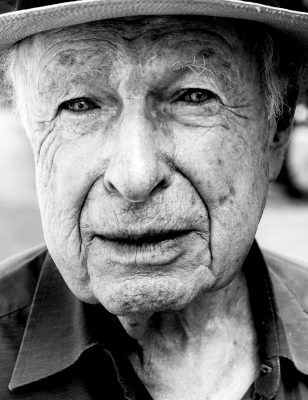
“During Godfrey’s several visits to Iran throughout a decade, he formed a relationship with my father that I had rarely seen him having with other writers. I believe this is because of Godfrey’s ability to go beyond the surface, his unique views and interpretations,” Ahmad Kiarostami writes in the foreword to film critic Godfrey Cheshire’s latest book, Conversations with Kiarostami (Film Desk, July 29, $18). In the 1990s, Cheshire went to Iran on multiple occasions to interview writer-director Abbas Kiarostami, helping introduce the new Iranian cinema to the West. Cheshire will be at IFC Center for three special presentations during the fab festival “Abbas Kiarostami: A Retrospective,” a three-week series comprising virtually all of Kiarostami’s shorts and full-length works, from award-winning, well-known tales to rarely screened gems, many in 2K or 4K restorations. Among the films being shown are the Koker Trilogy (Where Is the Friend’s House?, And Life Goes On, Through the Olive Trees), Palme d’Or winner Taste of Cherry, Silver Lion winner The Wind Will Carry Us, the early documentaries First Graders and Homework, and Kiarostami’s first two features, The Traveler and The Report.

Abbas Kiarostami retrospective will feature three special events with critic Godfrey Cheshire (photo by twi-ny/mdr)

Abbas Kiarostami looks ever-so-cool at MoMA show in 2007 (photo by twi-ny/mdr)

In his Criterion essay on Taste of Cherry, Cheshire writes, “In Abbas Kiarostami’s universe, it might be said, there are no things, only relations between things. Likewise, in his cinema: no films, only relations between films—and within them. And between them and us.” Cheshire will delve into those relations at a trio of talks, beginning July 27 at 7:10 with “Kiarostami and Koker,” focusing on the trilogy and showing Through the Olive Trees. On August 3 at 5:10, for “Unseen Kiarostami,” Cheshire will screen the 1976 comedy A Wedding Suit and talk about that film as well as such other early works as Bread and Alley, Experience, and Fellow Citizen. And on August 4 at 5:20, for “Cinema in Revolution,” Cheshire will be joined by film professor Jamsheed Akrami for a screening of the initially banned Case No. 1, Case No. 2 and a discussion. In his online bio of Kiarostami, Cheshire calls the auteur “the most acclaimed and influential of Iran’s major filmmakers” and notes how in the twenty-first century “Kiarostami broadened his creative focus, devoting more time to forms including photography, installation art, poetry, and teaching,” exemplified by his 2007 exhibition “Image Maker” at MoMA and MoMA PS1. Keep watching twi-ny for reviews of individual films during this must-see retrospective.

HARLEM WEEK: A GREAT DAY IN HARLEM

Harlem Week kicks off July 29 with A Great Day in Harlem

Harlem Week kicks off July 28 with the annual celebration “A Great Day in Harlem”

U.S. Grant National Memorial Park
Wes 122nd St. & Riverside Dr.
Sunday, July 28, free, 12 noon – 8:30 pm
Festival runs July 28 – August 31
harlemweek.com

Tens of thousands of people are expected to converge in U.S. Grant National Memorial Park on July 28 for the beloved Great Day in Harlem festival, part of the forty-fifth annual summer Harlem Week celebration. This year’s theme is “Our Local History Creates a Global Impact,” focusing on Harlem’s cultural influence around the world, while the music theme is Bill Withers’s classic “Lovely Day.” A Great Day in Harlem will feature an International Vendors Village from 12 noon to 8:00, the Artz, Rootz, and Rhythm International Cultural Showcase at 1:00, the Regional Gospel Caravan at 3:00 with Bishop Hezekiah Walker, the McDonald’s Gospel Super Choir, Kirk Franklin, and a tribute to Dr. Bobby Jones, a Fashion Fusion Showcase at 4:30 honoring the Black Fashion Museum, and “A Concert under the Stars” at 6:00 with Nicole Bus, Harlem Week music director Ray Chew, and more paying tribute to Spike Lee and the thirtieth anniversary of Do the Right Thing and Robert “Kool” Bell of Kool & the Gang in honor of the group’s fiftieth anniversary. Harlem Week continues through August 31 with such other events as the Youth S.T.E.A.M. Hackathon on August 1, New York City Economic Development Day on August 8, Summer in the City on August 17, Harlem Day on August 18, and Harlem Restaurant Week beginning August 19.

SENSATION 1 / THIS INTERIOR

(photo by twi-ny/ees)

Ligia Lewis’s Sensation 1 / This Interior creates a shared space on the High Line (photo by twi-ny/ees)

The High Line, Fourteenth Street Passage
July 23-25, free with advance RSVP, 7:30
www.thehighline.org
ligialewis.com
online slideshow

Dancer and choreographer Ligia Lewis takes her Sensation series outside with the captivating Sensation 1 / This Interior, continuing in the High Line’s Fourteenth Street Passage through July 25. The free show is set in one half of the divided passageway under a building, protecting it from potential rain, and the audience gathers at either of the two ends or lines up against the long, horizontal walls. Over the course of sixty minutes, Trinity Bobo, Emma Cohen, Rebecca Gual, Miguel Ángel Guzmán, Stephanie Peña, and Jumatatu M. Poe slowly walk into the space one at a time, moving extremely slowly as they head to spots marked on the ground by a pink “X.” When they reach their destination, they stay there for an extended period of time, their feet firmly planted on the ground as their bodies convulse, their hands reach out, and their faces contort into silent screams, set to an electronic score by Twin Shadow (aka George Lewis Jr., Lygia’s brother) that begins as noise, then incorporates words and phrases before transforming into a song.

(photo by twi-ny/mdr)

Dancers reach out in Sensation 1 / This Interior in the High Line’s Fourteenth Street Passage (photo by twi-ny/mdr)

To best experience the powerful performance — admission is free with advance RSVP — attendees are strongly encouraged to walk throughout the area, weaving around the dancers and making direct eye contact; it is like a sculpture garden where the statues have come to life, moving in agonizing, yearning ways. (Of course, the High Line is itself a sculpture garden, its 1.4-mile length filled with changing site-specific artworks.) Very few audience members, however, took advantage of that opportunity on opening night; after the show, I spoke with several of the dancers, who said they want the people to walk around them in the shared space, to become part of what is happening together. The Dominican-born, Berlin-based Lewis, who has recently completed a trilogy consisting of Sorrow Swag (2014), minor matter (2016), and Water Will (in Melody) (2018), rightfully calls this outdoor piece Interior, as it delves deep into what’s inside all of us, and needs to get out.

JAPAN CUTS: BLUE HOUR

Blue Hour

Kiyoura (Shim Eun-Kyung) and Sunada (Kaho) wonder what’s next in Yuko Hakota’s Blue Hour

FESTIVAL OF NEW JAPANESE FILM: BLUE HOUR (BURU AWA NI BUTTOBASU) (ブルーアワーにぶっ飛ばす) (Yuko Hakota, 2019)
Japan Society
333 East 47th St. at First Ave.
Sunday, July 28, 8:00
Festival runs July 19-28
212-715-1258
www.japansociety.org

The Japan Cuts festival at Japan Society concludes July 28 with the North American premiere of Yuko Hakota’s beautiful, wistful Blue Hour. The movie is named after one of the two magic times of day, particularly for filmmakers: The golden hour occurs right after sunrise and before sunset, when the sky turns a warm, golden color, while the blue hour takes place right before sunrise and after sunset, when a colder, deep blue permeates. In the film, Kaho stars as Sunada, a television commercial director with a habit of making poor decisions in her life and career. She’s just turned thirty and wants to do more than produce ads but does not appear to be driven enough. She is married to a kindhearted man-child (Daichi Watanabe) but is having an affair with the married Togashi (Yusuke Santamaria). At a party, she drinks to excess, embarrassing herself in front of her crew. And she hasn’t been home to visit her family in several years. She seemingly could have it all, but she lacks ambition and often seems chilly and aloof to others. “I don’t like people who like me,” she says at one point. Later, she admits, “I don’t know what it’s like to be close.”

Blue Hour

Sunada (Kaho) has trouble finding happiness in Blue Hour

When Sunada mentions to one of her only friends, the impulsive, unemployed, and very charming Kiyoura (Shim Eun-Kyung), that she is getting ready to go home to see her grandmother, Kiyo proclaims that she will drive them there right away, so they get into her car and away they go. We learn a lot about the two women on the road trip — although this is no Thelma and Louise — but even more when they arrive at Sunada’s family’s small farm in the boondocks, where her oddball brother, Sumio (Daisuke Kuroda), lives with their sweet mother (Kaho Minami) and eclectic father (Denden). Sunada looks like she would rather be anywhere else. As Sunada refuses to relate to her significantly un-Ozu-like clan, Kiyo fits right in, always seeking fun in whatever she does, the polar opposite of her friend.

Lovingly photographed in soft hues by Ryuto Kondo, Hakota’s debut is a moving and poignant tale of a woman who has, sadly, apparently given up too soon; she’s an unusual protagonist in that just as she says that she doesn’t like people who like her, she herself is difficult to like. It’s hard not to see her as emblematic of Japan’s current troubled younger generation, one noted for its failure to socialize, date, marry, get a job, or even leave the house. Former teen model Kaho (A Gentle Breeze in the Village, Our Little Sister) wonderfully captures the character’s ennui, while award-winning South Korean actress and former child star Shim (Happy Killers, Miss Granny) is radiant as the ever-positive Kiyo, who is in love with life no matter where it takes her. Blue Hour is a small gem, quirky and insightful, delicate and alluring. The screening will be followed by a Q&A with Hakota, Kaho, and Shim. Among the other films playing at Japan Cuts are Mitsuaki Iwago’s The Island of Cats, Hiroshi Okuyama’s Jesus, and Makoto Sasaki’s Night Cruising in addition to the free panel discussion “The Current State of Film Restoration in Japan” on July 26 at 4:30, which will examine the industry itself and the restoration of Kenji Mizoguchi’s masterpiece Ugetsu.