twi-ny recommended events

ABBAS KIAROSTAMI — A RETROSPECTIVE: CLOSE-UP

Close-Up

Hossain Sabzian has to explain why he impersonated Mohsen Makhmalbaf in Abbas Kiarostami’s Close-Up

CLOSE-UP (کلوزآپ ، نمای نزدیک‎) (Abbas Kiarostami, 1990)
IFC Center
323 Sixth Ave. at West Third St.
Wednesday, August 7, 7:50, Saturday, August 10, 1:10, Monday, August 12, 1:05, Tuesday, August 13, 7:30
Series continues through August 15
212-924-7771
www.ifccenter.com/films/close-up

In his 1996 short Opening Day for Close-Up, Italian actor-writer-director Nanni Moretti plays a theater manager preparing to show Abbas Kiarostami’s 1990 masterpiece, Close-Up. As the first screening approaches, he worries about the parking situation, the size of the ad in the local paper, the specific angle the projectionist is using, the precise minute when the film should start, how it’s going to compete with big Hollywood blockbusters, and how one of his employees is handling phone calls. “The film is about the power of cinema. Let’s be a little more enticing,” he tells her. It won’t take much enticing to get people to show up at IFC Center to see Close-Up, which is screening August 7, 10, 12, and 13 in the exhaustive, comprehensive series “Abbas Kiarostami: A Retrospective.”

In 1989, Kiarostami read about a strange case that was unfolding: A man named Hossain Sabzian had been arrested for impersonating Iranian auteur Mohsen Makhmalbaf, convincing the Ahankhah family that he was Makhmalbaf and that he was going to make a movie with them in their house. Kiarostami immediately turned his attention to the story, meeting with Sabzian in prison, persuading judge Haj Ali Reza Ahmadi to let his crew film the trial, and getting all the participants, including Sabzian, Ahmadi, journalist Hossain Farazmand, and the Ahankhahs — husband and father Abolfazl, his wife, Mahrokh, and their sons, Mehrdad and Monoochehr — to allow themselves not only to be filmed going forward but to re-create specific scenes together. Thus, for example, Kiarostami restages Mahrokh’s initial encounter with Sabzian on a bus, where they talk about Makhmalbaf’s The Cyclist, and Sabzian’s arrest is also performed, complete with soldier (Mohammad Ali Barrati) and sergeant (Davood Goodarzi).

Abbas Kiarostami

Abbas Kiarostami on the set of his 1990 masterpiece, Close-Up

It’s often difficult to tell what is happening in the present and what has been remade from the past, which is a significant part of the film’s charm. The trial scene is an eye-opener as we watch the Iranian justice system at work; Kiarostami shoots the scene with different equipment, resulting in a grainier texture. Part of the boom mic is often visible, further blurring the lines between fiction and nonfiction, reminding us that this is a film. Kiarostami also injects some pure poetry, most beautifully when the taxi driver (Hooshang Shamaei) picks a few flowers outside the Ahankhahs’ home, then kicks a green and pink aerosol can that cinematographer Ali Reza Zarrindast follows as it clinks noisily down the street. Close-Up is much more than a celebration of the power of cinema; it is a magisterial film about what makes us profoundly human. (You can find out more about Sabzian in Moslem Mansouri and Mahmoud Chokrollahi’s 1996 Close-Up Long Shot.) “Abbas Kiarostami: A Retrospective” continues through August 15 with such other films by the Iranian director as Through the Olive Trees, The Wind Will Carry Us, Taste of Cherry, Ten, and numerous shorts.

TICKET ALERT: LITTLE STEVEN & THE DISCIPLES OF SOUL / PETER WOLF & THE MIDNIGHT TRAVELERS

Little Steven & the Disciples of Soul will play the Beacon on November 6 (photo by twi-ny/mdr)

Little Steven & the Disciples of Soul will play the Beacon on November 6 (photo by twi-ny/mdr)

Who: Little Steven & the Disciples of Soul, Peter Wolf & the Midnight Travelers
What: Summer of Sorcery Tour
Where: Beacon Theatre, 2124 Broadway between West 74th & 75th Sts.
When: Wednesday, November 6, $45 – $125, 7:30
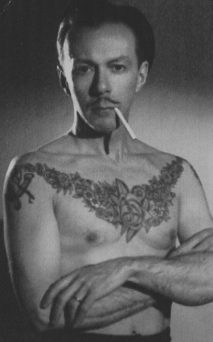
Why: While the Boss is away, Little Stevie still must play. Steven Van Zandt, aka Little Steven, aka Miami Steve, is one of the busiest men in rock and roll. He starred in The Sopranos and Lillyhammer, runs the Underground Garage and Renegade Nation, tours the world with Bruce Springsteen and the E Street Band, and produces such shows as The Rascals: Once upon a Dream on Broadway. But with Bruce first spending a year on the Great White Way with his (mostly) one-man show and now taking a year off from touring, Stevie has returned to his solo career with a vengeance, bringing back the Disciples of Soul, with whom he recorded such great albums as Men without Women and Freedom — No Compromise in the 1980s. Steve and his band have been on the road since March 2017, first in support of Soulfire, consisting of reworkings of some of his best songs given to other artists, and now Summer of Sorcery, his first album of new material since 1999’s Born Again Savage, which featured songs from 1989-90 recorded in 1994. Tickets are now on sale to catch Little Steven and the Disciples of Soul at the Beacon on November 6, with a very special opening act, Peter Wolf and the Midnight Travelers; Wolf’s latest album is 2016’s A Cure for Loneliness. Teachers get in free as part of Stevie’s TeachRock initiative.

SHAKESPEARE IN THE PARK: CORIOLANUS

(photo by Joan Marcus)

Coriolanus comes to Shakespeare in the Park for the first time in forty years (photo by Joan Marcus)

Central Park
Delacorte Theater
Tuesday – Sunday through August 11, free, 8:00
shakespeareinthepark.org

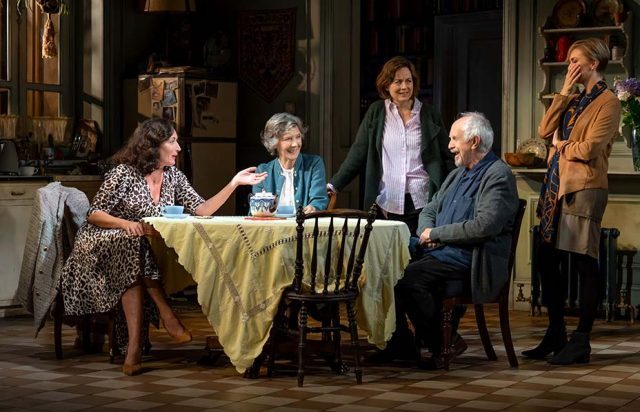
Jonathan Cake portrays Shakespeare’s brash antihero, Coriolanus, like a mix between superstar New England Patriots quarterback Tom Brady and Keanu Reeves in Bill & Ted’s Excellent Adventure in Daniel Sullivan’s riveting version, which opened tonight at the Public’s Delacorte Theater. The first Shakespeare in the Park production of the 1607 play since Wilford Leach’s staging in 1979 with Morgan Freeman — James Earl Jones starred as the title character in the only other Delacorte presentation of the work, Gladys Vaughn’s 1965 adaptation — Sullivan sets the play in a contemporary junkyard strewn with old tires, a burned-out car, random detritus, and a rickety steel gate. (The postapocalyptic design is by Tony winner Beowulf Boritt.)

(photo by Joan Marcus)

Martius (Jonathan Cake) gets a talking-to from his mother (Kate Burton) in Daniel Sullivan’s latest Shakespeare adaptation (photo by Joan Marcus)

Caius Martius (Cake) has returned to Rome after singlehandedly defeating the Volscians, who are led by his longtime nemesis, General Tullus Aufidius (Louis Cancelmi). Rechristened Coriolanus after his victory, Martius has nothing but disdain for the common folk, who are starving, scavenging for food on the streets. The conquering hero is soon the centerpiece of a power struggle in pre-imperial Rome, championed by the upper classes as their savior against the rabble. While his patrician supporters, including Senator Menenius Agrippa (Teagle F. Bougere), army commander Cominius (Tom Nelis), and General Titus Lartius (Chris Ghaffari), want him to run for consul to gain political power over the “beastly plebians,” the people’s tribunes Junius Brutus (Enid Graham) and Sicinius Velutus (Jonathan Hadary) are suspicious of him and so attempt to turn the starving mob against him in the upcoming election. Martius, who is married to the pregnant Virgilia (Nneka Okafor), father to Young Martius (Emeka Guindo), and son to the forceful, determined Volumnia (Kate Burton), is a fiery, insolent, and almost monstrously arrogant character, and he can’t keep his mouth shut; all too soon he comes up with a dangerous plan of revenge that threatens everything, and everyone, he loves.

(photo by Joan Marcus)

Martius (Jonathan Cake) and Menenius (Teagle F. Bougere) have a tense moment in Shakespeare in the Park presentation (photo by Joan Marcus)

At more than two and a half hours (with intermission), Coriolanus is long and drawn out, with a compelling main storyline but mundane, barely there subplots, perhaps because this tale is entirely fictional, not based on actual historical events. The play has never been brought to Broadway, and it is rarely revived; Michael Sexton’s 2016 Red Bull production found a way in by setting it during the Occupy movement and placing the audience in the center of the action. However, on a more conventional stage, it can prove significantly problematic, although Sullivan does a good job navigating through the bumps. The acting is inconsistent, although Public Theater mainstay Bougere (Cymbeline, Is God Is) is excellent as Martius’s right-hand man, Nelis (Girl from the North Country, Indecent) is a fine Cominius, and three-time Tony nominee Burton (The Elephant Man, The Constant Wife) is brilliant as Martius’s strong-willed mother. Tony winner Sullivan (Proof, The Comedy of Errors) makes the most of Volumnia’s line about her son being a man-child; the warrior Martius often turns into a little boy when speaking to his mommy, eliciting major laughs. It’s a stark counterpoint to his bravery in battle and his burgeoning frenemy bromance with Aufidius. It’s also a keen look at the voting process, particularly now that election season is under way in the United States, as the people and the pundits debate over who’s worthy and who’s not, who’s genuine and who is a power-hungry, mean-spirited liar.

ABBAS KIAROSTAMI — A RETROSPECTIVE: LIKE SOMEONE IN LOVE

The lives of three very different individuals intertwine in Abbas Kiarostami’s remarkable Like Someone in Love

LIKE SOMEONE IN LOVE (Abbas Kiarostami, 2012)
IFC Center
323 Sixth Ave. at West Third St.
Tuesday, August 6, 12:55, Friday, August 9, 1:05, and Tuesday, August 13, 12:30
Series continues through August 15
212-924-7771
www.ifccenter.com

Following the Tuscany-set Certified Copy, his first film made outside of his home country, master Iranian auteur Abbas Kiarostami headed to Japan for the beautifully told Like Someone in Love. Rin Takanashi stars as Akiko, a sociology student supporting herself as an escort working for bar owner and pimp Hiroshi (Denden). An older, classy businessman, Hiroshi insists that Akiko is the only person to handle a certain client, so, despite her loud objections, she is put in a cab and taken to meet Takashi (Tadashi Okuno), an elderly professor who seems to just want some company. But soon Akiko unwittingly puts the gentle old man in the middle of her complicated life, which includes her extremely jealous and potentially violent boyfriend, Noriaki (Ryō Kase), and a surprise visit from her grandmother (Kaneko Kubota). Taking its title from the song made famous by, among others, Ella Fitzgerald, Like Someone in Love is an intelligent character-driven narrative that investigates different forms of love and romance in unique and engaging ways. Kiarostami (Taste of Cherry, Close-Up) and cinematographer Katsumi Yanagijima, who has worked on numerous films by Takeshi Kitano, establish their visual style from the very beginning, as an unseen woman, later revealed to be Akiko, is on the phone lying to her abusive boyfriend about where she is, the camera not moving for extended periods of time as people bustle around her in a crowded bar.

As is often the case with Kiarostami, much of the film takes place in close quarters, including many in cars, both moving and parked, forcing characters to have to deal with one another and face certain realities they might otherwise avoid. Takanashi is excellent as Akiko, a young woman trapped in several bad situations of her own making, but octogenarian Okuno steals the show in the first lead role of a long career that has primarily consisted of being an extra. The soft look in his eyes, the tender way he shuffles through his apartment, and his very careful diction are simply captivating. Despite his outstanding performance, Okuno said at the time that he was committed to returning to the background in future films, shunning the limelight, but he did star in one more film, Yûichi Onuma’s Kuujin in 2016. A music-filled tale that at times evokes the more serious work of Woody Allen, another director most associated with a home base but who made movies in other cities for a lengthy period, Like Someone in Love is like a great jazz song, especially one in which the notes that are not played are more important than those that are. The film is screening August 6, 9, and 13 in IFC’s comprehensive series “Abbas Kiarostami: A Retrospective,” which continues through August 15 with such other films by Kiarostami, who died in 2016 at the age of seventy-six, as Homework, 10 on Ten, ABC Africa, Shirin, and numerous shorts.

SUMMER SHORTS

(photo by Carol Rosegg)

Blake DeLong and Christine Spang star in Sharr White’s Lucky at 59E59 (photo by Carol Rosegg)

THE FESTIVAL OF NEW AMERICAN SHORT PLAYS
59E59 Theaters
59 East 59th St. between Park & Madison Aves.
Tuesday – Sunday through August 31, $35
212-279-4200
www.summershortsfestival.com
www.59e59.org

Summer Shorts is a breath of fresh air every summer at 59E59, presenting works by established and emerging writers, from Tina Howe, Robert O’Hara, Terence McNally, and William Inge to Lucas Hnath, Keith Reddin, Alan Zweibel, and Paul Weitz. The thirteenth annual event consists of two programs: Series A, comprising Interior by Nick Payne, The Bridge Play by Danielle Trzcinski, and Here I Lie by Courtney Baron, opened July 28; series B, which I saw, opened this afternoon and continues through August 31. Series B is a trio of compelling works with small casts, featuring sets by Rebecca Lord-Surratt and costumes by Amy Sutton. The triple bill begins with Sharr White’s Lucky, directed by J. J. Kandel. It’s 1949, and Meredith (Christine Spang) has not heard from her husband in six years, since he left to fight in WWII. But Phil (Blake DeLong) suddenly shows up at a hotel, a dour, fiercely private man who refuses to tell Meredith where he’s been, whether he’s sticking around, or even how he feels about her. “I don’t know,” he says over and over. As frustrating as it is for Meredith, it’s even more frustrating for the audience, who are too slowly fed tiny morsels of information until the big reveal, which is not much of a surprise. But Spang is outstanding as the estranged wife who needs to know what the future holds for her in this play by the writer of The Other Place and The True and a writer and producer of the cable shows The Affair and Sweetbitter.

(photo by Carol Rosegg)

Pauly (Nathan Wallace) seeks marital advice from Renee (Blair Lewin) and Michael (Jake Robinson) in Nancy Bleemer’s Providence (photo by Carol Rosegg)

In Nancy Bleemer’s comedy Providence, directed by Ivey Lowe, Jake Robinson’s feet take center stage. Robinson is Michael, who has returned to his childhood home with his wife, Renee (Blair Lewin), for his sister Gina’s wedding. The tall Michael is trying to get to sleep, but his feet stick out from the covers and over the end of the bed. Meanwhile, Renee thinks she is about to get her period and doesn’t have any Tampax. It’s three o’clock in the morning, and they are interrupted by Pauly (Nathan Wallace), who will be marrying Gina later that day. Pauly wants marital advice from them, but it’s not exactly the right time to ask them anything, whether it’s about capons, Bobby Orr, or how you know you are making the right decision when it comes to love. A finalist in HBO’s New Playwrights Festival and made into a 2015 short film, Providence is a little charmer, with solid performances.

(photo by Carol Rosegg)

Frank (Ro Boddie) and Joe (Jack Mikesell) go on a contentious picnic in Neil LaBute’s Appomattox (photo by Carol Rosegg)

The best is saved for last with regular Summer Shorts participant LaBute’s provocative Appomattox, directed by Duane Boutté. LaBute is drawn to controversial topics; his New Theater Festival earlier this year included a play about a Hitler supporter, a second about a first date between a white woman and a black man, and a third dealing with a mass shooting. This play is named after one of the final battles of the Civil War, Appomattox; in an epigraph in the script, LaBute quotes Confederate general Robert E. Lee, from an 1856 letter to his wife: “The blacks are immeasurably better off here than in Africa, morally, socially & physically. The painful discipline they are undergoing is necessary for their instruction as a race.” LaBute also quotes singer Nina Simone: “Slavery has never been abolished from America’s way of thinking.”

The play takes place on a lovely summer day, with the black Frank (Ro Boddie) and the white Joe (Jack Mikesell) having a bro picnic, tossing around a football. Joe is excited that students at a university have decided to add $27.20 to their bill every semester as reparations for the school’s ties to slavery. Frank, however, is not impressed by the gesture, and the two friends get into a heated discussion about the reparations issue; Frank wants to end the conversation, but Joe keeps pushing it, which proves to be a not-very-wise decision. Boddie and Mikesell are excellent as racial figureheads, the former taut and handsome, quick to anger, the latter flabby and doofy, with far more boyish earnestness than adult self-awareness. Playwright, screenwriter, and director LaBute (In the Company of Men, reasons to be pretty) loves pushing buttons, and he keeps his finger down here well past any easy way out. Reparations is not a comfortable topic, especially for whites, who make up the vast majority of the Summer Shorts audience (and New York City audiences in general), so LaBute knows exactly who he’s speaking to.

DOGG’S HAMLET, CAHOOT’S MACBETH

(photo by Stan Barouh)

Three schoolchildren get ready to perform Hamlet in PTP/NYC revival of Tom Stoppard two-act play (photo by Stan Barouh)

PTP/NYC: Potomac Theatre Project
Atlantic Stage 2
330 West 16th St. between Eighth & Ninth Aves.
Through August 4, $22.50-$37.50
ptpnyc.org

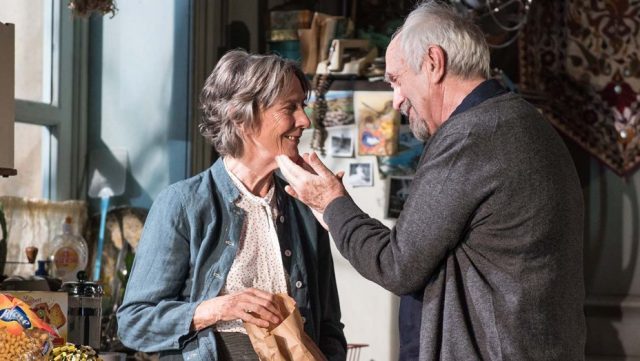
To Shakespeare newbies — or even longtime Bard fans — Willie B.’s works can feel like they’re written in a different language, with unique rhythms and phrasings and complex plots that can be difficult to unravel. Czech-born British playwright Tom Stoppard (née Tomas Straussler) first tackled Shakespeare in 1966’s Rosencrantz and Guildenstern Are Dead, which gave new life to a pair of minor characters from Hamlet. In act two, the Player tells Guildenstern, “You understand, we are tied down to a language which makes up in obscurity what it lacks in style.” Stoppard takes that idea to a whole new level in Dogg’s Hamlet, Cahoot’s Macbeth, two Shakespearean romps, meant to be performed together, currently being revived by PTP/NYC (Potomac Theatre Project) at Atlantic Stage 2 through August 4.

In Dogg’s Hamlet, inspired by a section of Ludwig Wittgenstein’s Philosophical Investigations and Ed Berman’s Dogg’s Troupe, a children’s school is preparing for a fifteen-minute version of Hamlet, but they speak in Dogg, an alternate language in which English words mean something else. “Undertake sun hollyhocks frankly sun pelican crash?” Baker (Connor Wright) asks as he and two other students sit down to have lunch. “Hollyhocks? Nit!” Abel (Zach Varicchione) replies. Baker: “Squire!” Abel: “Afternoons!” Baker: “Afternoons! Phew — cycle racks hardly butter fag ends.” Charlie (Madeleine Russell): “Fag ends likely butter consequential.” Abel: “Very true.” Thus, the audience has to use its linguistic skills to untangle meaning, much like a newcomer to Shakespeare. (In the published version of the play, Stoppard does translate Dogg, so, for example, “Very true” means “Needs salt.”)

When truck driver Easy (Matthew Ball) arrives to deliver the props for the play, he and the students have trouble communicating, because Easy doesn’t speak Dogg, and the students don’t know English. The props are tossed around to form walls of blocks that spell out such phrases as “Maths Old Egg,” which confuse Easy but infuriate the headmaster, Dogg (Peter Schmitz), because they form gibberish (doggerel?). Shakespeare to the students is like Dogg to the audience; the students perform the brief Hamlet in its original language, even though they don’t understand the words. But context is everything, and we all learn to figure it out. Or we don’t. PTP/NYC, which combines experienced actors with young apprentices, doesn’t quite get hold of Dogg’s Hamlet until nearer the end of its forty-five minutes; it mostly comes off as too silly, with haphazard slapstick comedy and uneven performances, although Ball is terrific as Easy, essentially a stand-in for the audience, trying to figure out just what the heck is going on.

(photo by Stan Barouh)

An inspector (Tara Giordano) interrupts an illegal house performance of Shakespeare in Tom Stoppard’s Cahoot’s Macbeth (photo by Stan Barouh)

Director Cheryl Faraone, the cast, and Stoppard fare much better in the fifty-five-minute Cahoot’s Macbeth, which the three-time Tony-winning playwright dedicates to Czech playwright Pavel Kohout, who staged shows in living rooms in the 1970s when the government banned them from theaters during “normalization.” A society woman (Lucy Van Atta) is hosting a truncated version of the Scottish play in her home, starring actors Pavel Landovsky (Christopher Marshall) as Macbeth and Cahoot (Christo Grabowski) as Banquo. Audience members are her invited guests to watch this illegal gathering. Everything is going along fine until a siren is heard offstage and an inspector (Tara Giordano) enters, stopping the proceedings. She has come both to bury the show and to praise it.

She is enamored of Landovsky and the actress playing Lady Macbeth (Denise Cormier) but raves about their past performances away from the theater, in their day jobs, singling out Landovsky hawking papers at a newsstand and the woman working as a waitress. When Macduff (Will Koch) comes in and recites his lines, the investigator declares, “What’s your problem, sunshine? Don’t tell me you found a corpse — I come here to be taken out of myself, not to be shown a reflection of the banality of my own life,” echoing the audience’s feelings about the intrusion of the investigator herself. She’s also well aware of Cahoot, who she refers to as a “social parasite and slanderer of the state.” After Cahoot acts like a dog (barking is yet another language, in this case one that also evokes the previous act), the inspector leaves, only to come back later, joining Easy, who has a delivery to make and now speaks only Dogg. The wordplay explodes in cunning yet hysterical ways as the madcap story reaches its conclusion.

Dogg’s Hamlet, Cahoot’s Macbeth lasted less than a month when it debuted on Broadway in 1979, and it’s easy to see why: It’s a strange exercise in the language of theater and authority and how the two tend not to mix well under authoritarian leadership. There’s a Monty Python–like quality to some of the humor — the British comedy troupe often had people in power (police, censors, government officials) interrupting skits, and PTP/NYC’s (Scenes from an Execution, The Possibilities / The After-Dinner Joke) version of Dogg’s Hamlet even includes a snippet of MP’s television theme music, which is actually John Philip Sousa’s “The Liberty Bell” — but where the first play is inconsistent and scattershot, the second play flows much more smoothly in Faraone’s hands. Perhaps it’s the political aspects of Stoppard’s attack on Czechoslovakia’s suppression of freedom that has the cast — which also features Olivia Christie, Emily Ma, and Katie Marshall as three young, attractive witches (and, later, three murderers), Schmitz as King Duncan, and Varicchione as Malcolm — and the crew at the top of their game. It’s delightfully fun, like doing a crossword puzzle but not in your native tongue; you’re not going to get it all, but it’s cool trying. Dogg’s Hamlet, Cahoot’s Macbeth is playing in repertory with Havel: The Passion of Thought, consisting of works by Harold Pinter, Samuel Beckett, and former Czech dissident and president Vaclav Havel, who Stoppard was greatly impressed by and met with in 1977.

BLAK WHYTE GRAY

Boy Blue returns to Lincoln Center with Blak Whyte Gray at Mostly Mozart Festival (photo by Carl Fox)

Boy Blue returns to Lincoln Center with Blak Whyte Gray at Mostly Mozart Festival (photo by Carl Fox)

MOSTLY MOZART FESTIVAL
Gerald W. Lynch Theater at John Jay College
524 West Fifty-Ninth St. between Tenth & Eleventh Aves.
August 1–3, 7:30
Festival continues through August 9
www.lincolncenter.org
boyblueent.com

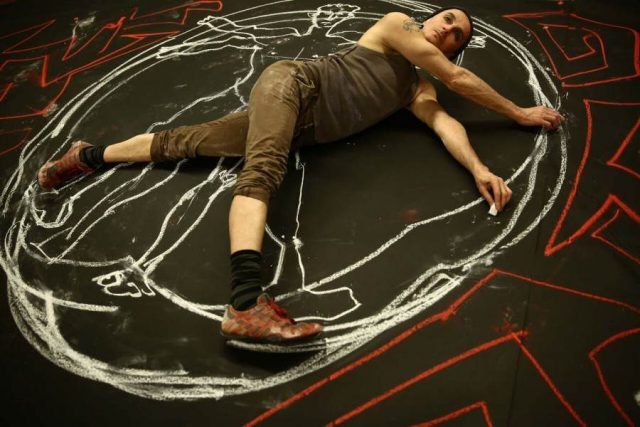
London-based troupe Boy Blue’s Blak Whyte Gray consists of a trio of vibrant, electrifying works that fuse hip-hop, contemporary dance, and African movement while taking on the current state of sociopolitical tension in England, America, and the world. “Do we crack and break the system made for us? / rules give people purpose / can you tell them what they know is a lie?” Boy Blue cofounder, composer, and co-artistic director Michael “Mikey J” Asante asks in a poem printed in the program. “Inhale. Exhale. / You’re ALIVE / Wake Up / It’s REVOLUTION.” Blak Whyte Gray made its US debut last November at Lincoln Center’s White Light Festival, where it was such a hit that it’s back for a special return engagement at the Mostly Mozart Festival, continuing through August 3 at the Gerald W. Lynch Theater at John Jay College. It’s divided into three thrilling sections in which Asante and choreographer and director Kenrick “H2O” Sandy proceed from the subtle to the overt in making their case.

Boy Blue returns to Lincoln Center with Blak Whyte Gray at Mostly Mozart Festival (photo by Carl Fox)

Michael “Mikey J” Asante and Kenrick “H2O” Sandy call for revolution in Blak Whyte Gray (photo by Carl Fox)

The evening begins with Whyte, with Gemma Kay Hoody, Ricardo Da Silva, and Nicole McDowall in white fringed dress that evokes both straitjackets and Japanese anime robots; the three dancers move like automatons, seemingly trapped in a white rectangular box, at one point their hands behind their backs as if handcuffed. On the screen behind them is projected a white box with black vertical lines that recalls a barcode or uneven prison bars; the barcode shows up again on the floor in a later piece. (The costumes are by Ryan Dawson Laight, the lighting by Lee Curran.) The dancers move as if controlled by rather than in response to the music, individually and in unison, eventually letting out silent screams. Gray opens with Theophillus “Godson” Oloyade, wearing a hooded winter jacket, sliding on his back onto the stage, soon joined by Natasha Gooden, Jordan Franklin, and others, incorporating hip-hop, African dance, and krumping as they rally together in an uprising, pointing unseen rifles and lobbing invisible hand grenades at the audience in a powerful statement of action rather than reaction.

Following intermission, the troupe returns for the scintillating Blak: A man falls to the ground, possibly dead, and is surrounded by others, who try to resuscitate him, lift him up, and get him to stand on his own. The community refuses to give up, and moments later they are wrapping him in an elegant red cloth, as if anointing him king, an indirect reference to Asante’s Ghanaian and Egyptian heritage, while masks descend paying tribute to their ancestors. The company, which also includes Dani Harris-Walters and Idney De’Almeida, is extraordinary, bold and physical, with exquisite control of their bodies. Blak Whyte Gray is an exhilarating experience, with a spectacular conclusion that is filled with hope for a new conception of individual and collective identity.