twi-ny recommended events

PHENOMENAL NATURE: MRINALINI MUKHERJEE

(photo by twi-ny/mdr)

“Mrinalini Mukherjee: Phenomenal Nature” continues at the Met Breuer through September 29 (photo by twi-ny/mdr)

The Met Breuer
945 Madison Ave. at 75th St.
Through September 29, suggested admission $12-$25
212-731-1675
www.metmuseum.org

It’s a shame that Indian artist Mrinalini Mukherjee didn’t live long enough to see her lovely Met Breuer retrospective, “Phenomenal Nature.” This first major US survey follows the career of Mukherjee, who passed away in 2015 at the age of sixty-five, as she balanced between figuration and abstraction, the traditional and the modern, and Western and non-Western modalities while moving from fiber wall hangings and free-standing works to ceramic and bronze objects. The show, arranged chronologically, features her feminist totems that at times evoke a walk through the Star Wars Cantina, populated by strange and intriguing, often erotically charged creatures.

(photo by twi-ny/mdr)

Mrinalini Mukherjee, Aranyani
(Goddess of the Forests),
fiber, 1996 (photo by twi-ny/mdr)

Inspired by nature, Mukherjee’s colorful fiber and hemp sculptures reference both humans and animals and bear Sanskrit names such as Apsara (Celestial Nymph), Yakshi (Female Forest Deity), Rudra (Deity of Terror), and Black Devi (Black Goddess). Thoughtfully curated by Shanay Jhaveri, it’s a menagerie of snakes, peacocks, palm fronds, flowers, and figures with sexual organs that form their own kind of iconography; other pieces mimic furniture, from chairs to lamps, but there is nothing mundane about Mukherjee’s oeuvre, which she intended to be seen as an artistic whole rather than craft pieces. “My work is physical — my body, my materials, the way of life, the environment, all work together,” she said. The fifty-seven works are on view through September 29, a poignant introduction to a sadly little-known artist you can learn more about at the free MetFridays lecture “Mrinalini Mukherjee: Materials and Experience,” with Julia Bryan-Wilson, Fred Moten, and Jhaveri at the Met Fifth Ave. at 6:30 on September 27.

OEDIPUS: Sex with Mum Was Blinding

(photo by Elias Moraitis) OEDIPUS - Photos OEDIPUS

Elli Papakonstantinou’s multimedia, immersive adaptation of Oedipus Rex debuts at BAM this week (photo by Elias Moraitis)

BAM Fisher, Fishman Space
321 Ashland Pl.
September 25-29, $30
718-636-4100
www.bam.org/oedipus

Perhaps more than any other Greek tragedy, Sophocles’s Oedipus Rex lends itself to all kinds of adaptations. The violent tale of murder, suicide, incest, and self-mutilation has been turned into operas, films, oratorios, and plays in multiple languages around the world; among those who have tackled the 429 BCE work are Pier Paolo Pasolini (Edipo Re), Luis Alfaro (Oedipus El Rey), Toshio Matsumoto (Funeral Parade of Roses), Gabriel García Márquez (Edipo Alcalde), Ola Rotimi (The Gods Are Not to Blame), Peter Schickele (Oedipus Tex), Jean Cocteau (La Machine Infernale), Park Chan-wook (Oldboy), German comedian Bodo Wartke (könig ödipus), and many others, moving the story to South Central LA, the Philippines, Japan, Nigeria, Colombia, and even outer space.

 ( photo by © Karol Jarek)

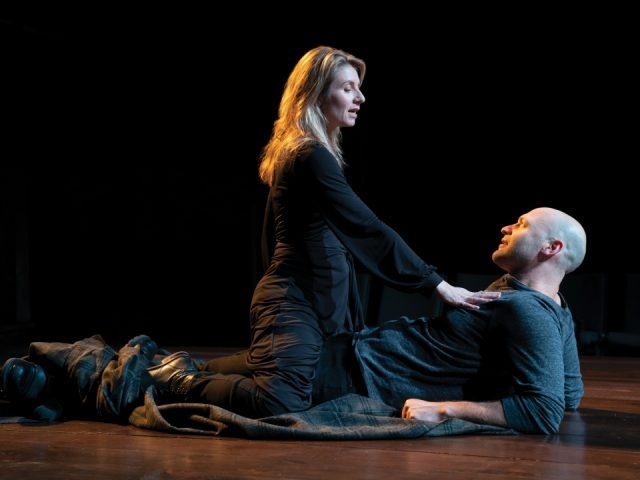
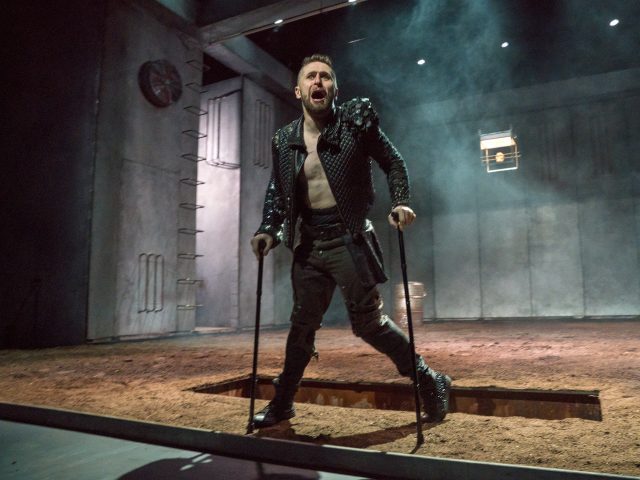
Lito Messini stars as title character in OEDIPUS: Sex with Mum Was Blinding (photo by © Karol Jarek)

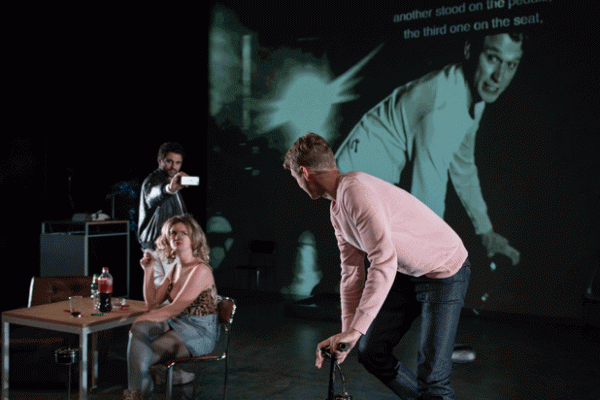
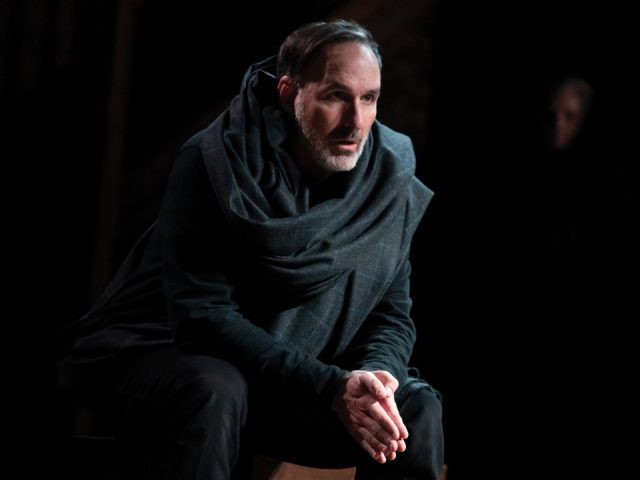
Greek avant-garde creator Elli Papakonstantinou transforms Sophocles’s play into an immersive hybrid opera for the multimedia OEDIPUS: Sex with Mum Was Blinding, running at the BAM Fisher September 25-29. The hundred-minute piece, a collaboration between the Athens-based ODC Ensemble and New York City’s the Directors Company, features a score composed by Tilemachos Moussas and Julia Kent and played live by Kent on cello, Misha Piatigorsky on piano, and Barbara Nerness on live electronics; real-time video by Hassan Estakhrian and Stephanie Sherriff, with cinematic environments by Sherriff; costumes by Jolene Richardson; and masks by Maritina Keleri and Chrysanthi Avloniti. Papakonstantinou, whose previous work includes Louisette: The Backstage of Revolution, Touching the Bottom of the Sea, and The Kindly Ones (at the Mauthausen Concentration Camp Memorial), is credited with the concept, stage direction, libretto, and lighting. Lito Messini stars as Oedipus, with Nassia Gofa as Jocasta, Elias Husiak as the boy, Anastasia Katsinavaki as Teiresias, Theodora Loukas as the woman, Misha Piatigorsky as the MC, and Manos Tsakiris as the researcher. Papakonstantinou developed parts of the show during a residency at Stanford’s Center for Computer Research in Music & Acoustics, where she worked with artists and scientists to address such questions as “Are we free?,” “Dο we experience free will?,” and “Are there real alternatives, or is all that takes place the outcome of necessity?” University of London professor Manos Tsakiris served as the scientific adviser for yet another unusual and original adaptation of this classic story.

MAC WELLMAN: PERFECT CATASTROPHES — BAD PENNY / SINCERITY FOREVER / THE INVENTION OF TRAGEDY

(photo by)

Kat (Emma Orne) points out some of society’s ills in strong revival of Mac Wellman’s Bad Penny at the Flea (photo by Allison Stock)

BAD PENNY
Flea Theater, the Pete
20 Thomas St. between Broadway & Church St.
Thursday – Monday through October 13, $17-$102
theflea.org

If there’s one thing to take away from the first three productions in the Flea’s five-play tribute to cofounder Mac Wellman, it’s to expect the unexpected. The seventy-four-year-old Cleveland-born Wellman, who started the Flea with Jim Simpson and Kyle Chepulis in 1996, eschews standard narrative conventions in his works, favoring unusual characters in unusual situations saying unusual things. You should kick off your Wellman adventure with 1989’s Bad Penny, a forty-five-minute site-specific piece originally staged in Central Park. Director Kristan Seemel has reimagined it for the Flea’s outdoor theater known as the Pete, a cramped space transformed by Jian Jung into a picnic area with a variety of chairs, tables, blankets, fake grass, and coolers. The oddball Kat (superbly played by Emma Orne) has picked up a tails-up penny and does not want it to ruin a perfectly fine day in the park, but she might not have a choice as she is joined by a group of ever-more-bizarre, surreal people who emerge from the audience. That person sitting next to you just might be the next actor to get up and pontificate on the state of the world; Emily White’s costumes are meant to mix them right in with us.

“I come here every day, every single day,” Kat says at the beginning. “I come here, to this spot, every single day and every single day, every single goddam day, it’s the same or it’s different or it rains or it’s clear or it snows or it’s bright and beautiful or it’s dark, rainy, and kinda foul. Or it’s like it is now, kinda strange. Sometimes the sky reminds me of home and sometimes the sky reminds me of the sea, or sometimes it doesn’t remind me of anything at all, much, and I pay no attention and sometimes the sky looks like its own reflection in an oily puddle of rain water, like nothing, nothing at all.” That covers about everything. Ray X (Joseph Huffman) is from Ugly, Montana, and is carrying a tire, looking for a gas station to fix his flat. Man #2 (Alex J. Moreno) thinks Ray X is crazy and a liar. Man #3 (Lambert Tamin) also doesn’t believe his story, accusing Ray X of being up to no good. Woman #2 (Bailie de Lacy) is suspicious of Kat, declaring, “There’s something the matter with you. Normal people don’t talk like you.” Meanwhile, a chorus of three women (Caroline Banks, Dana Placentra, and Katelyn Sabet) murmurs about the Dead Boatman of Bow Bridge (Ryan Wesley Stinnett), who just might be “coming to ferry the criminal to hell, the one who stole his penny, the one who thieved his bad penny, the one who thoughtlessly took what did not belong to him.”

(photo by)

Bad Penny takes place in the Flea’s outdoor space known as the Pete (photo by Allison Stock)

In Bad Penny, Wellman toys with audience expectations as monologues evolve into unpredictable diatribes, unfair judgments are made, and fear lurks close by. Performed by the Bats, the Flea’s resident company, the show features a mixed bag of acting, some good, some not so good, but it’s Wellman’s words, which he refers to as “objects,” that drive the story as he explores the mythology of the everyday and the “bad habits” we all “might acquire by hanging out with the wrong type of people, people not used to acting normal, people who act strange.” It’s an entertaining picnic in the park, enveloped in a warm and friendly weirdness that is as funny as it is intriguing and, well, strange. And yes, that actress is mimicking your movement.

(photo by)

The Bats revive Mac Wellman’s Sincerity Forever at the Flea (photo by Allison Stock)

SINCERITY FOREVER
Flea Theater, the Siggy
20 Thomas St. between Broadway & Church St.
Thursday – Monday through October 13, $17-$102
theflea.org

Wellman’s 1990 play Sincerity Forever presaged a key reason why Hillary Clinton lost the 2016 election to Donald Trump as well as predicting a defining moment in the latter’s presidency: Clinton’s use of the phrase “basket of deplorables” and Trump’s claim that there are “very fine people” among white supremacists, respectfully. However, what may have been satire thirty years ago now feels more like a tepid documentary, resulting in a show that falls flatter than some very fine conspiracy theorists believe the Earth to be. The sixty-five-minute play, which can be seen the same night as Bad Penny, takes place in the hellish contemporary American town of Hillsbottom, where white hoods and robes are standard wear. (The costumes are by Barbara Erin Delo, with the dark warehouse delivery set by Frank J. Oliva.) The story unfolds through a series of conversations local young folk, who would not be accused of being the brightest bulbs in the chandelier, have in cars, represented by side-by-side chairs pulled up to the very edge of the stage.

“Molly, do you know why God created the world the way he did? So complicated, I mean,” Judy (Malena Pennycook) asks Molly (Charly Dannis), who wonders, “Why else would we not know anything, unless there were an intelligent being out there, somewhere, whose cunning idea it was that you and I, Judy and Molly, should be forever ignorant of the true nature of things, ignorant forever in absolute sincerity. Does Dexter really have a crush on me, or did he just say he did?” With Jesus H. Christ (Amber Jaunai), appearing to them as a black woman with a metaphorical heavy bag, joining them, Tom (Vince Ryne) tells Hank (Nate DeCook), “Now me, I too, may be as dumb as a post, and unclear about the multiplication table, the boundaries of more than a half dozen states, and unable to repair my own toilet, but dammit, Hank, if the English language was good enough for Jesus H. Christ then it’s good enough for me. Furthermore, I do not feel compelled by reason to accept this theory of evolution, nor the periodic table of elements, nor the theory of global warming, nor the supposed crimes against the Jews attributed to one Rudolf Hitler. Nor the spherical nature of the earth, because it’s against the law of nature and we would fall off for sure and my motto is: Never explain, never apologize.”

(photo by)

Sincerity Forever features Klansmen, Furballs, Jesus H. Christ, and warehouse workers (photo by Allison Stock)

Others who share their thoughts are George (Peter McNally), Melvin (Alex Hazen Floyd), and a pair of furballs (Zac Porter and Neysa Lozano) who hate Hillsbottom and everyone in it, as the second one explains: “I mean, it’s all so fucking decent and god-fearing and goody-two-shoes and law-abiding and thankful and smarmy and sentimental and full of wishful thinking and sugar coated bad faith and chintzy, cheesy, boring mediocrity it makes me want to gag. I mean, all these totally square fuckheads who only care about God and family and communication and community and law and order and morality and safe sex and global warming and Jesus H. Christ and the whole moldy, worn-out crock of shit. It makes me want to spew and leave my lunch all over their well-manicured lawns.”

That may have played like acerbic wit in 1990, but in 2019 it hits a little too close to home and comes off as too-easy fodder. It’s all so clear and obvious, as well as repetitive; director Dina Vovsi is unable to add any nuance or legitimate conflict, so the narrative just stagnates, a bunch of vignettes about dumb racists saying dumb racist things without realizing it, its point long made as the characters go on and on until Jesus sums it all up in a grand finale. In his author’s note, Wellman — who dedicated the work to Sen. Jesse Helms, “for the fine job you are doing destroying civil liberties in These States” — takes a shot at the National Endowment for the Arts, which gave him a grant for the project but then demanded not to be credited because they had issues with the play. They’re not the only ones.

(photo by Hunter Canning)

Mac Wellman’s The Invention of Tragedy makes its long-awaited debut at the Flea (photo by Hunter Canning)

THE INVENTION OF TRAGEDY
Flea Theater, the Sam
20 Thomas St. between Broadway & Church St.
Thursday – Monday through October 14, $17-$102
theflea.org

“Perfect Catastrophes” continues with the world premiere of Wellman’s The Invention of Tragedy, which was written in 2004 as a response to the Iraq War but is finally getting its debut staging appropriately during the Trump era, when fear of the other keeps gathering momentum, be it for a wall, a Muslim ban, an upsurge in hate crimes, undocumented workers being rounded up by ICE, refugee deportations tearing apart families, or “imagining a terrorist under every hat.” Running in the Flea’s Sam theater through October 14, the hourlong play uses elements of Greek tragedy mixed with the nonsense lyrical style of Lewis Carroll and Edward Lear and Kurt Schwitters’s “Ursonate” to skewer the America-first attitude that took over after 9/11 and runs rampant today. A chorus of seven young women (Sophia Aranda, Drita Kabashi, Mirra Kardonne, Susan Ly, Alice Marcondes, Ana Semedo, and Zoe Zimin) is disturbed when one of them, who becomes known as the Answerer (Kabashi), breaks away from the pack, followed shortly by the Enforcer, who morphs into the Hare (Ly). “This difference is a problem,” says the Narrator (Sarah Alice Shull), who offers details during each pause — or “paws,” as Wellman includes a never-ending stream of cat references — while playing a piano score by Michael Cassedy. Individuality is verboten in this world of mob mentality.

The second of a series of choruses chanted in unison declares in Orwellian groupspeak: “And chop the chails off all cats. The bird of alignment off to nuts grows grows a possum hell bore can’t do finger whole of a part yessir yessir yessiree at to on an island scamper way to benumbed fruitcake walk to lean to adventure whose whose which of the parterre o glad eyed speak, er, speech and say not to nothing but hinge grammaticus grammarye’s red boast o machine o machine break down de doom. O machine of the other the other imagining.” The chorus is troubled by the Answerer, as explained by the Narrator: “One step steps forth from the rest. Unlawfulness is revealed. Awfulness.” The chorus’s gobbledygook occasionally makes a more specific, understandable point as it soon adds, “Horror horror horror the world is broken broken and come to be fractured,” so the Enforcer is given an ax to take care of business.

(photo by Hunter Canning)

Trouble ensues when the Hare (Susan Ly) and the Answerer (Drita Kabashi) break away from the pack in The Invention of Tragedy (photo by Hunter Canning)

But the Answerer is not about to fall into line with everyone else. “I have become one for my own mind in thought,” she announces. “I perceive how cats have been mistreated in these parts. Fed with crap food. Despised and chased. Played cat in the bag with and other such. Dull the fur. I see them treed and often hopeless and puzzled. And then there is is the oft spoken threat of top er chop off the chails of. Er them.” Later the Hare, who previously was a sandwich man wearing “low and vulgar sandwich boards,” asks, “Is then the symbol the same as the thing symbolized?”

Adroitly directed by Meghan Finn with a keen sense of humor and choreographed by Chanon Judson, The Invention of Tragedy is a terrifically rendered allegory about post-9/11 America. It was written fifteen years ago but feels like it could have emerged today, particularly as partisanship rules the day and Fox News and Trumpists get behind nearly everything the president does and says. Dare to speak your own mind and you risk more than just your tail being chopped off. Wellman is telling us we are all trapped in a hellish fairy tale, albeit one with candy-colored costumes and an innate charm that is ultimately deceiving.

Mac Wellman (photo by Crystal Arnette)

Mac Wellman play series at the Flea also features a three-day symposium (photo by Crystal Arnette)

Up next in the Wellman festival are The Sandalwood Box and The Fez, presented together starting September 26. From October 4 to 6, the Flea will also host “The Art of Stacking the Deck: A Mac Wellman Symposium,” three days of panel discussions and performances with Wellman collaborators, protégés, and scholars.

Friday, October 4
Welcome Reception, 5:30

Saturday, October 5
Critical & Scholarly Discussion of Mac’s Work & Nontraditional Theater, with Kate Benson, Helen Shaw, Karinne Keithley Syers, and Anne Washburn, 10:00

Approaching Language in Mac’s Plays, with Claudia Brown, Meghan Finn, Jan Leslie Harding, David Lang, Paul Lazar, and Kristan Seemel, 11:30

Producing & Directing the Event in Mac’s Plays, with Elena Araoz, Kyle Chepulis, Meghan Finn, Anne Hamburger, Graham Sack, Kristan Seemel, and Maria Striar, 2:00

Performance of Terminal Hip, with Steve Mellor, 8:00

Sunday, October 6
Teaching and Learning Playwriting, with Eliza Bent, Erin Courtney, Kristine Haruna Lee, Young Jean Lee, and Sibyl Kempson, 10:00

A Conversation with Mac and Helen Shaw, 11:30

Performance of Terminal Hip, with Steve Mellor, 7:00

SUNDAY

(photo by Monique Carboni)

A group of close friends gather for their Sunday book club in world premiere at the Atlantic (photo by Monique Carboni)

Atlantic Theater Company
Linda Gross Theater
336 West 20th St. between Eighth & Ninth Aves.
Tuesday – Sunday through October 13, $66.50-$86.50
866-811-4111
atlantictheater.org

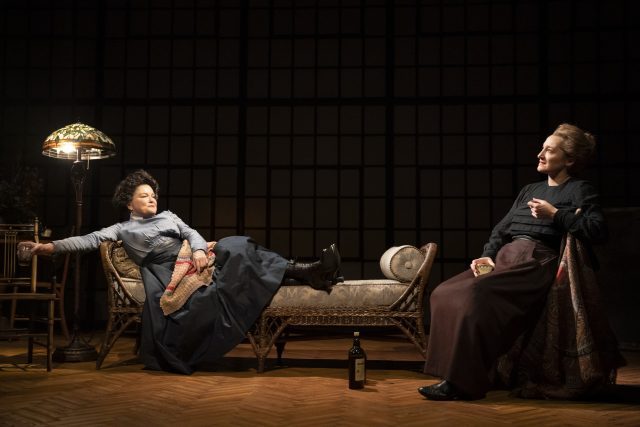
The first rule of book club should be: You do not talk about book club. Tony winner Jack Thorne has followed up his massive hit, Harry Potter and the Cursed Child, with the significantly smaller scale Sunday, an intimate drama, directed by Obie winner Lee Sunday Evans, set on a Sunday when a group of close friends meet for their book club. Self-obsessed millennials Alice (Ruby Frankel), Marie (Sadie Scott), Jill (Juliana Canfield), Keith (Christian Strange), and Milo (Zane Pais) have gathered in Jill and Marie’s cluttered New York City apartment supposedly to discuss Anne Tyler’s Dinner at the Homesick Restaurant but, much to Alice’s consternation, begin by talking about just about anything except the Pulitzer Prize winner’s classic work of fiction. Tyler’s book details a family’s survival after a father’s desertion; theatergoers may wish there were more than children in this narrative as well. It’s a memory play narrated by Alice, who at times sits in a high balcony in the back brick wall, watching the action as we are, sharing details about the characters and telling us about the “most defining moments” of their lives. “Marie is now twenty-four but everyone thinks she’s twenty-two,” Alice says. “She had to take two years off from college and rather than remember those years she’s decided they didn’t exist. She likes books, chicken, alcohol, her roommate, and the possibilities if not the reality of New York.”

(photo by Monique Carboni)

Downstairs neighbor Bill (Maurice Jones) shares his concerns with Marie (Sadie Scott) in Jack Thorne’s Sunday (photo by Monique Carboni)

This kids are definitely home alone, and not really adults: Shortly before the book club meeting begins, Marie’s downstairs neighbor, an odd, awkward older man named Bill (Maurice Jones), comes by to tell her to keep the music down because he needs to get a good night’s sleep before work, something Marie wouldn’t know about, since her recent internship ended without the offer of a full-time job. Once the gang is together they discuss morality, trust, toxic masculinity, sincerity, sex, and whether they would relive their childhoods, which leads to some brutal battling. But it’s all nonsense spouted by self-absorbed twentysomethings wrestling with personal identity and self-pity, and it’s rarely dramatically compelling. The narrative occasionally stops, Masha Tsimring’s lighting shifts, and the characters break out into stylized dance movements choreographed by Evans to music by Daniel Kluger. It’s actually more exciting to see them facing their inner angst and demons this way than listening to them drone on about life and literature, which they do eventually get to. Brett J. Banakis’s set is centered by a mountainous wall of books, from Danielle Steel to David Foster Wallace; it also includes a working sink and toilet. The two scenes with Scott (Downtown Race Riot, CRSHD) and Jones (The Lifespan of a Fact, Linda) are the best in the play, especially the latter one, which has gorgeous moments, but Thorne (King Kong, The End of History) and Evans (Dance Nation, In the Green) can’t quite figure out how to conclude the play, which opened tonight at the Atlantic and runs through October 13. Of course, the second rule of book club is also: You do not talk about book club. And I’ve already said enough.

AUGGIE

Auggie

Richard Kind faces unexpected loneliness as a retired architect in Auggie

AUGGIE (Matt Kane, 2019)
Cinema Village
22 East 12th St. between University Pl. & Fifth Ave.
Opens Friday, September 20
212-529-6799
auggiemovie.com
www.cinemavillage.com

Character actor supreme Richard Kind has excelled at playing more than a few schlemiels during his four decades in showbiz, which has included more than 230 film and television roles in addition to plenty of live theater, from LA and Chicago to Broadway (The Producers, The Big Knife). The sixty-two-year-old Trenton native, who has had recurring parts in Mad about You, Gotham, Spin City, and Red Oaks and played key roles in such films as A Serious Man in addition to voices in the Cars and Toy Story franchises, takes center stage in the bittersweet indie film Auggie, which opened this weekend at Cinema Village.

Kind stars as Felix Greystone, a mensch who is forced into retirement by his architecture firm, which gives him a pair of augmented reality glasses as a going-away present. Felix immediately feels lonely and useless without a job; his daughter, Grace (Simone Policano), is moving in with her boyfriend, Ben (Steven Robertson); and his wife, Anne (Susan Blackwell), has been offered a promotion that will mean longer hours and more close contact with her boss, Jack (James C. Victor). Not knowing what to expect, Felix puts the glasses on and is shocked to find a virtual beautiful young woman who calls herself Auggie (Christen Harper) suddenly next to him. Since she came from his mind, she is seemingly everything he desires in a woman, everything he thinks he is missing in a companion now that he is by himself so much. But the more time he spends with his new imaginary friend, the more potential trouble awaits.

Debut feature director Matt Kane, a Ken Loach protégé who wrote the script with actor Marc Underhill, has made a poignant and insightful film about loneliness and losing one’s value in life, particularly as one ages. Felix is a good guy with an exemplary family, but when too much changes all at once, he doesn’t know where to turn, and the alluring fantasy projected by the glasses becomes addicting — on purpose. One of the most subtle and enjoyable aspects of the film is the way viewers glimpse just how addicting those glasses are built to be; how, like the games on our phones, they are programmed to take us just one step further, to just one purchase more. Kane walks a fine line between male wish fulfillment and outright misogyny; it is doubtful Auggie, a sort of suburban, subdued version of Spike Jonze’s her, could have been written and directed by a woman. But it’s Kind’s riveting, gentle performance that saves the film from devolving into Skinemax territory. He’s an everyman here, embodying the fears of so many people in their later years, when choices are scarcer and the wrong one can result in losing everything one’s constructed so carefully.

MARTA MINUJÍN: MENESUNDA RELOADED

(photo by twi-ny/mdr)

Marta Minujín’s La Menesunda has a neon-heavy room evocative of Buenos Aires and Times Square (photo by twi-ny/mdr)

New Museum of Contemporary Art
235 Bowery at Prince St.
Through September 29, $12-$18
212-219-1222
www.newmuseum.org

If you missed Mika Rottenberg’s “Easypieces” at the New Museum, you still have a chance to catch Marta Minujín’s similarly immersive, astute, and funny “Menesunda Reloaded,” continuing through September 29. The Buenos Aires-born Minujín, collaborating with Rubén Santantonín, debuted the participatory installation La Menesunda in 1965 at the Instituto Torcuato di Tella in her home city to huge acclaim, with long lines of eager art lovers waiting for their chance to go inside the multimedia labyrinth and experience the unique happening, one at a time. “‘LA MENESUNDA’/is a caprice/a nonsense/way of creating difficult/strange/embarrassing ‘situations’/for those who are willing to accept them/INTENSIFYING EXISTENCE/beyond gods and ideas/feelings/mandates and desires,” the pamphlet at the opening described.

(photo by twi-ny/mdr)

Visitors meet a masseuse or a makeup artist in “The Woman’s Head” (photo by twi-ny/mdr)

You’ll have to wait in line at the New Museum as well, but it moves pretty quickly as people make their way up and down stairs and into a series of rooms Minujín, who was only in her early twenties when she made the piece, calls “The Woman’s Head,” “The TV Tunnel,” “The Intestines,” “The Swamp,” “The Rotating Basket,” and “The Forest of Forms and Textures,” among others. Each space offers different types of interactions as visitors can see themselves on an old television monitor, watch a couple in bed, get a schpritz from a makeup artist, and navigate through glowing neon, soft sculptures, and a mirrored area with confetti. The exhibition is supplemented with a black-and-white documentary of people going through the original installation, but avoid watching it until after you come out so it doesn’t ruin any of the surprises.

(photo by twi-ny/mdr)

La Menesunda features hidden surprises around every corner and through mysterious peepholes (photo by twi-ny/mdr)

Now seventy-six, Minujín counted among her friends and colleagues Claes Oldenburg, Allan Kaprow, Carolee Schneemann, Christo, and Andy Warhol and has constructed such other immersive environments as El Batacazo, The Academy of Failure, and Eróticos en Technicolor. She is quite a character, as she reveals in a catalog interview with Helga Christofferson and Massimiliano Gioni in which she touts her success and large ego, declares her work is not spectacle-driven, and explains why she hasn’t gone to a doctor since the birth of her daughter. When asked if La Menesunda was purposely designed so that it was possible for people to exit before seeing every room, she responds, “Yes. I always liked the idea that something is missing. For instance, I am very famous in Argentina, so I signed a dollar with the statement: ‘Take me, I am yours.’ People would then have to think about whether they wanted to sell the dollar with my signature on it, or use it. It’s like if you found a dollar bill signed by Andy Warhol in New York, would you sell it, keep it to sell it later, or spend it? I always want to create that kind of situation. That’s what I like about art: to wake up senses and ideas, to wake people up from their everyday lives, to wake up feelings they’ve never felt before.” Anticipating Instagram-friendly pop-up galleries and the need for publicly-announced instant gratification, La Menesunda accomplishes all that and more.

DINNERLAB: DELMONICO’S — RESTAURANT HISTORY REMIXED

Delmonico’s

MOFAD celebrates historic Delmonico’s restaurant with a special program on September 24

MOFAD Lab
62 Bayard St., Brooklyn
Thursday, September 19, $125, 7:00
718-387-2845
www.mofad.org

We have a special affection for Delmonico’s; we got married there and have been back for several milestone anniversaries. Opened in 1837 by the Delmonico brothers, purveyors of fine coffee, chocolate, liquor, and cigars, the historic New York City eatery at the corner of Beaver and William Sts. gained fame for its Delmonico steak and the invention of eggs Benedict, baked Alaska, lobster Newburg, the wedge salad, and chicken a la Keene as well as for its chic and powerful clientele, from celebrities to politicians, including Jenny Lind, Mark Twain, and Lillian Russell to Theodore Roosevelt, Jacob A. Riis, and Nikola Tesla. In what may have been the first restaurant review in the New York Times, on January 1, 1859, an unnamed critic wrote, “Once let Delmonico have your order, and you are safe. You may repose in peace up to the very moment when you sit down with your guests. No nobleman of England — no Marquis of the ancienne nobless — was ever better served or waited on in greater style that you will be in a private room at Delmonico’s. The lights will be brilliant, the waiters will be curled and perfumed and gloved, the dishes will be strictly en règle and the wines will come with precision of clock-work that has been duly wound up. If you ‘pay your money like a gentleman,’ you will be fed like a gentleman, and no mistake.”

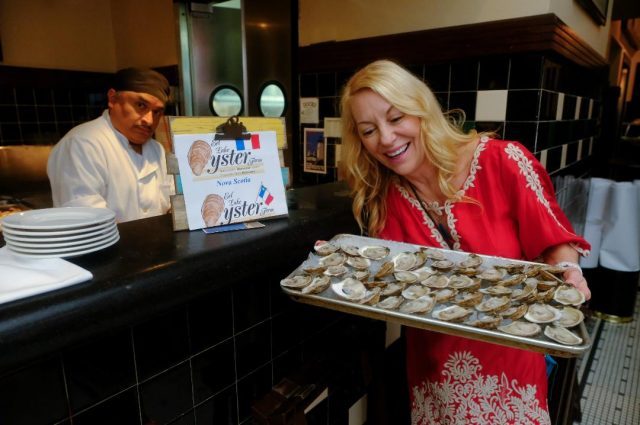
On September 24, the Museum of Food and Drink is celebrating the first fine-dining establishment in the nation with its latest DinnerLab presentation, “Delmonico’s — Restaurant History Remixed.” The program is being held at the MOFAD Lab on Bayard St. in Brooklyn and is hosted by radio personality, lifestyle expert, motivational speaker, and author Max Tucci, the grandson of Oscar Tucci, who owned Delmonico’s from 1926 to 1987. Executive chef Billy Oliva, MOFAD executive chef Eric Kwan, and mixologist and cocktail historian David Wondrich will offer tastings and drinks, including samplings of chicken a la Keene chip & dip, crispy eggs Benedict, XO oysters Jim Brady, “Ladies Only” Newberg iceberg, and iced Alaska Kakigōri; there will also be old photographs, menus, and other rare items on view. Fortunately, you won’t have to be as careful as diners were advised back in the day, as the NYT critic also noted, “If you make the ordinary mistakes of a untraveled man, and call for dishes in unusual progression, the waiter will perhaps sneer almost imperceptibly, but he will go no further, if you don’t try his feelings too harshly, or put your knife into your mouth.”