twi-ny recommended events

NYFF57 MAIN SLATE: THE MONEYCHANGER

The Moneychanger

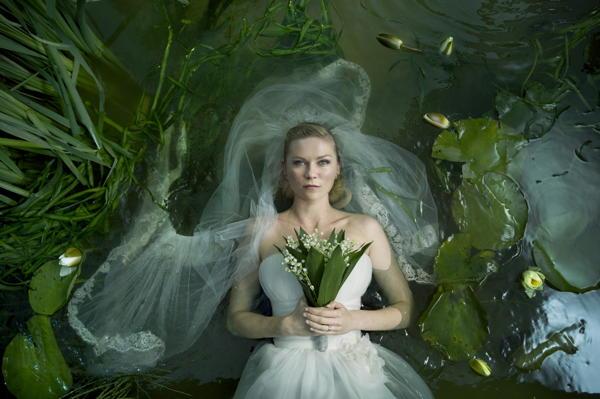
Daniel Hendler plays the harried Humberto Brause in Federico Veiroj’s The Moneychanger

THE MONEYCHANGER (Federico Veiroj, 2019)
New York Film Festival, Film Society of Lincoln Center
144/165 West 65th St. between Broadway & Amsterdam Ave.
Wednesday, October 9, Walter Reade Theater, 9:00
Thursday, October 10, Francesca Beale Theater, 6:00
www.filmlinc.org

“Jesus knew what he was doing; at the very cradle of civilization, we money brokers are the root of all evil. We’re to blame for everything that’s rotten in this world,” Humberto Brause (Daniel Hendler) says at the beginning of The Moneychanger, Uruguayan-Spanish writer-director Federico Veiroj’s fifth narrative feature, making its US premiere at the New York Film Festival on October 9 and 10. Hendler is terrific as Brause, playing the selfish, greedy businessman with a jittery unease, a man clearly uncomfortable in his own skin, especially as his world falls apart all around him.

The film begins in the city of Montevideo in 1975 and flashes back to 1956, when Brause is working for successful financier Schwensteiger (Luis Machín) and takes an instant liking to his boss’s daughter, Gudrun (Dolores Fonzi). Schwensteiger might be highly ethical, but his protégé and son-in-law is soon in bed with corrupt politicians, a questionable couple who needs a whole lot of laundry done, and an unclean prostitute. Brause knows he is doing bad things, breaking laws, and jeopardizing his relationship with his family — he moves about awkwardly, hesitant with his words, a kind of schmendrick who keeps being offered piles of cash — but he just can’t say no. “Our goal in life wasn’t to earn our peers’ respect and admiration,” he narrates. “Life was about making money and enjoying it. Enjoy every penny earned and spent. Getting into the garden of Eden was just a small fortune away.” But when his actions start blowing up in his face, he has to decide how far he will go to protect his interests.

Based on Juan Enrique Gruber’s 1979 novella Así habló el cambista, this cinematic satire was written by Veiroj with Martín Mauregui and cinematographer Arauco Hernández, who shoots the film in a droll 1970s palette of browns, blacks, and grays; the splendid period art direction is by Pablo Maestre Galli. Fonzi is static as Gudrun; her passive expression barely changes no matter what is happening. The cast also includes Benjamín Vicuña as extortionist Javier Bonpland, Paulo Betti as political conspirer Don Marins, and Germán de Silva as hit man Moacyr. Veiroj (A Useful Life, The Apostate) maintains an offbeat pace with subtle humor aimed at the absurdity of it all as one man navigates through a business sector gone off the deep end because of rampant deregulation. The Moneychanger is screening at the Walter Reade Theater on October 9 at 9:00 and at the Francesca Beale Theater on October 10 at 6:00, both followed by Q&As with Veiroj.

NOVENAS FOR A LOST HOSPITAL

(photo  by Julieta Cervantes)

Saint Elizabeth Ann Bayley Seton (Kathleen Chalfant) rules over Novenas for a Lost Hospital (photo by Julieta Cervantes)

Rattlestick Playwrights Theater and other locations
224 Waverly Pl.
Wednesday – Monday through October 13, $20-$60
212-627-2556
www.rattlestick.org

Cusi Cram’s Novenas for a Lost Hospital is part historical walking tour, part theatrical drama, honoring the legacy of St. Vincent’s in Greenwich Village, guiding sixty guests a night from a church courtyard to a theater to the park across the street from where the nonprofit Catholic hospital stood from its beginnings as a one-room medical facility founded by the Daughters of Charity in 1849 until April 2010, when it closed due to ballooning debt and questionable redevelopment plans. In the two-plus-hour show, longtime West Village residents Cram, Rattlestick artistic director Daniella Topol, and dramaturg Guy Lancaster relate the history of St. Vincent’s, a Level 1 trauma institution and teaching hospital that treated victims of the cholera epidemic in 1849, the Triangle Shirtwaist Factory fire in 1911, the Titanic sinking in 1912, the FALN bombing in 1975, and the 9/11 attacks in 2001.

(photo  by Julieta Cervantes)

Cusi Cram’s Novenas for a Lost Hospital explores the history of St. Vincent’s in Greenwich Village (photo by Julieta Cervantes)

But the hospital is perhaps most well known for being front and center battling the AIDS crisis of the 1980s and 1990s, which is what Cram focuses on from the start, in the courtyard of St. John’s in the Village, where a singer (Goussy Celestin) welcomes everyone, hands are ritually washed, a quartet does the Hustle, and an ailing man bathes himself with agonizing difficulty. The action then heads indoors to the Rattlestick black box, where a collection of newspaper articles and photographs about St. Vincent’s are on display on upturned gurneys. After they are wheeled out, a long, repetitive, melodramatic middle section switches back and forth between 1849 and more contemporary times, led by Sisters of Charity founder and first American-born saint Elizabeth Ann Bayley Seton (Kathleen Chalfant), who is accompanied by Sister Mary Ulrica (Natalie Woolams-Torres) and Sister Mary Angela Hughes (Kelly McAndrew) in the past and a pair of nurses (Woolams-Torres and McAndrew) more recently.

They are visited by flamboyant Afro-Caribbean slave, hairdresser, and philanthropist Pierre Toussaint (Alvin Keith) as they treat a series of patients, primarily Lazarus (Ken Barnett), so named because he won’t die, his boyfriend (Justin Genna), and choreographer JB (Justin Genna). “A crisis can be very grounding. Purposeful,” Lazarus tells the audience. “Not dying was my job for three years. And before that, trying to save everyone I loved or admired from dying a miserable, humiliating death was my job.”

(photo by Julieta Cervantes)

The audience is led from a courtyard to a theater to a park in Novenas for a Lost Hospital (photo by Julieta Cervantes)

Ultimately, the show, which is divided into nine novenas, including “A Prayer for the Reluctantly Resurrected,” “A Prayer for the Forgotten,” and “A Prayer for the Beauty of Chaos,” makes its way through the streets to NYC AIDS Memorial Park for a grand finale that brings everything full circle. Despite plenty of bumps and slow moments, Novenas for a Lost Hospital is a touching communal experience, a unique eulogy for an institution that helped define a neighborhood — and a city — through more than a century and a half and is now a memory of a bygone era when money wasn’t everything and individual lives mattered.

NYFF57 SPOTLIGHT ON DOCUMENTARY: THE BOOKSELLERS CAPSULE REVIEW

The Booksellers

Rare-book dealers such as Adam Weinberger scour through private homes to find buried treasure in The Booksellers

THE BOOKSELLERS (D. W. Young, 2019)
Film Society of Lincoln Center, Elinor Bunin Munroe Film Center
144 West 65th St. between Broadway & Amsterdam Ave.
Monday, October 7, Francesca Beale Theater, 6:00
Wednesday, October 9, Howard Gilman Theater, 8:30
Festival runs September 27 – October 13
www.filmlinc.org

D. W. Young’s wonderfully literate documentary The Booksellers is making its world premiere at the New York Film Festival, screening on October 7 at 6:00 and October 9 at 8:30, followed by Q&As with D. W. Young and producers Judith Mizrachy and Dan Wechsler. The film follows the exploits of a wide-ranging group of dedicated bibliophiles who treasure books as unique works of art, buying, selling, and collecting them not merely for the money but for the thrill of it. “The relationship of the individual to the book is very much like a love affair,” Americana collector Michael Zinman explains. Among those who share their thoughts on books are Fran Lebowitz, Susan Orlean, and the owners of such New York City bookstores as Imperial Fine Books, Left Bank Books, the Argosy Book Store, and the Strand. Look for my full review to be posted when the film debuts Monday night.

CROSSING THE LINE: WHY?

Kathryn Hunter in Peter Brook and Marie-Hélène Estienne's play 'Why?' at the Bouffes du Nord in Paris, June 2019 Pascal Gely

Kathryn Hunter wonders why in Peter Brook and Marie-Hélène Estienne production about theater itself (photo by Pascal Gely)

Theatre for a New Audience, Polonsky Shakespeare Center
262 Ashland Pl. between Lafayette Ave. & Fulton St.
Through October 6, $85-$120
866-811-4111
www.tfana.org
crossingthelinefestival.org

The basic three-letter question “Why?” can be a repeated response, over and over again, from a curious child learning about the world, a deeply philosophical inquiry into human nature, or a painful cry when tragedy occurs. In Peter Brook and Marie-Hélène Estienne’s Why?, continuing at Theatre for a New Audience’s Polonsky Shakespeare Center through October 6, it relates to two queries, general and specific: Why do we make and attend theater, and why did Josef Stalin have theater innovator Vsevolod Meyerhold and his actress wife, Zinaida Reich, brutally killed?

Part of FIAF’s multidisciplinary Crossing the Line Festival, Why? is also the centerpiece of “Peter Brook\NY,” a two-week, two-borough tribute to the ninety-four-year-old theater and film director — he actually prefers being called a “distiller” — an Emmy and two-time Tony winner who has written such books as The Open Door: Thoughts on Acting and Theatre, Tip of the Tongue: Reflections on Language and Meaning, and The Shifting Point: Theatre, Film, Opera 1946-1987 and has directed such plays as Hamlet with Paul Scofield, The Visit with Alfred Lunt and Lynn Fontanne, Marat/Sade, and more recently The Suit, The Prisoner, and The Valley of Astonishment. He is a fixture at TFANA, which is around the corner from the BAM Harvey Theater, which he helped renovate in 1987 for his epic version of The Mahabharata. He and Estienne have been collaborating for more than forty decades, and they know theater.

(photo by Pascal Gely)

Marcello Magni gets serious after clowning around in Why? (photo by Pascal Gely)

The first half cheerfully explores why there is theater at all, how it came to be, and what can make it so special. The show begins with Hayley Carmichael, Kathryn Hunter, and Marcello Magni, all dressed in black, giving a kind of master class in acting. Highlights include a clownish Magni running around in circles and Hunter wondering how to make the line “My Lord, the carriage awaits” not boring. They interact with the audience, even bringing a few people onstage for some clever improv, and clearly are in love with their chosen profession, just as we are in love with watching them. There’s lots of laughter, accompanied by Laurie Blundell on piano. Theater appears to be a friendly, safe space for everyone.

But in the second act, the trio, still wearing the same costumes, moving about on the same, mostly empty stage (Brook is known for his spare sets, as evidenced by his seminal book The Empty Space — A Book About the Theatre: Deadly, Holy, Rough, Immediate), the trio becomes far more serious, reading letters, news reports, and other documents relating what happened to Stanislavski protégé Meyerhold and Reich when they supported the communist revolution instead of Stalin, who dealt with them in violent, theatrical ways. The harsh tale also involves actor and director Konstantin Stanislavski and poet Vladimir Mayakovsky. “Theater is a dangerous weapon,” Meyerhold famously wrote in the 1920s. Nearly a century later, it still is; it may be able to entertain, educate, and enlighten us, but it is also seen by far too many as a threat, which Brook and Estienne point out in their inimitable, inestimable way.

LOWER EAST SIDE PICKLE DAY

pickle day

Orchard St. between Houston & Delancey Sts.
Sunday, October 6, free, 12 noon – 5:00 pm
pickleday.nyc

“My first taste memory is pickle,” Padma Lakshmi told the Guardian in 2004. “Even as a kid, I was really weird. I used to climb up the shelves in my grandmother’s pantry. The pickle jar was kept right at the top. One time, I dropped the jar and it broke. I was totally busted.” You won’t have to worry about getting busted for your pickle obsession at the annual Lower East Side Pickle Day, being held Sunday on Orchard St. between Houston and Delancey. Among those participating in the festivities, which include food, fashion, and family-friendly games and activities, are pickled purveyors Guss’ Pickles, Pickle Me Pete, Backyard Brine, Grillo’s Pickles, Crisp Pickles, the Pickle Guys, Rick’s Picks, Horman’s Best Pickles, Adamah Farm, Brooklyn Brine, MacDonald Farms, Epic Pickles, Brine Brothers, City Saucery, Brooklyn Whatever, Kilhaney’s Pickles, Anomaly Season, Messy Brine, and Farm Ferments in addition to Melt Bakery, Ice & Vice, Que Chevere, Nom Wah Tea Parlor, Heros & Villains, Macaron Parlour, the SKINny Bar & Lounge, DACHA Live Cultured Veggies, Renegade Lemonade, and Roni-Sue’s Chocolates, among others. There will also be live music, the Pickling Poet, and a home pickling contest. Pickles have a long affiliation with the Lower East Side, and the annual Pickle Day only adds to that pickled history.

DOWNTOWN BROOKLYN ARTS FESTIVAL

Peter Brook (photo ©-Marian Adreani)

Peter Brook will be celebrated at several events during the Downtown Brooklyn Arts Festival this weekend (photo © Marian Adreani)

Brooklyn Cultural District
The Plaza at 300 Ashland and other locations
October 4-6, free – $115
www.dbartsfestival.org

Downtown Brooklyn is the place to be this weekend for the Downtown Brooklyn Arts Festival, taking place around the Plaza at 300 Ashland from Friday to Saturday. There will be an African drum circle, live music and dance, talks and discussions, theater, glass-making demonstrations, film screenings, classes, treasure hunts, art exhibitions, and more; while many events are free, others require ticketing at BAM, Theatre for a New Audience, the Mark Morris Dance Center, and the New York Transit Museum, among others. Below are some of the highlights.

Friday, October 4
Kickoff with live performance by Soul Tigers Marching Band and dance party with Soul Summit, the Plaza at 300 Ashland, free, 5:00 – 8:00

Free Demonstration Night: The Two-Part Mold, with Kellie Krouse and Jeffrey Close, UrbanGlass, free, 6:00 – 9:00

Peter Brook\NY, with Paul Auster, Marie-Hélène Estienne, and Jeffrey Horowitz, Center for Fiction, $10 (includes $10 off at bookstore), 7:00

Pop-Up: An Artistic Treasure Hunt, by Strike Anywhere and the Tours Soundpainting Orchestra, Fort Greene, free, 7:00

Saturday, October 5
African Drum Circle with Mr. Fitz, the Plaza at 300 Ashland, free, 11:00

NYTM Train Operators Workshop, New York Transit Museum, free with museum admission, 11:30 & 3:30

Dance: Pas de Deux, with Brooklyn Ballet, set to Jean-Phillippe Rameau’s “Gavotte et Six Doubles,” the Plaza at 300 Ashland, free, 2:00

Rhys Chatham: The Sun Too Close to the Earth / Jonathan Kane and Zeena Parkins: Oh, Suzanne, ISSUE Project Room, $20-$25, 8:00

Sunday, October 6
Dance: Tribal Truth, in collaboration with Jamel Gaines Creative Outlet, the Plaza at 300 Ashland, free, 12:00

MC Oddissee, the Plaza at 300 Ashland, free, 1:00

Brooklyn Navy Yard: Past, Present & Future Tour, $15-$30, 2:00

Pop-Up: Nkiru Books, with DJ set by Talib Kweli, the Plaza at 300 Ashland, free, 2:00 – 5:00

THE 60th ANNIVERSARY OF THE TWILIGHT ZONE

twilight zone

Who: Arlen Schumer
What: The Sixtieth Anniversary of The Twilight Zone: A Live Multimedia Presentation
Where: The Triad Theater, 158 West Seventy-Second St. between Amsterdam & Columbus Aves.
When: Wednesday, October 2, $15 (plus two-beverage minimum), 9:00
Why: Submitted for your approval: A Connecticut pop culture historian from New Jersey enters the Upper West Side of an area which we call Manhattan, to share his knowledge of a sixty-year-old black-and-white television program — before the boob tube was taken over by a little boy named Anthony, who wanted everyone to live a good life. The show was hosted by a cigarette-obsessed Syracuse native who eloquently wrote of the past, present, and future within a fifth dimension, beyond that which is known to man. Said figure, most definitely not an old man in a cave, is the magisterial Rod Serling, who for five years shot his arrows into the air with a prescient accuracy, particularly when it came to matters of the very nature of humanity, discovering that people just might be alike all over, from Uncle Simon to the Queen of the Nile, from Jess-Belle to Mr. Dingle, the Strong.

On October 2 at the Triad at 9:00 — do not fear the lateness of the hour — a male Earth resident identified as Arlen Schumer, author of such books as Visions from The Twilight Zone and The Silver Age of Comic Book Art (before reading material was declared obsolete) and no mere nervous man in a four-dollar room, will deliver the whole truth about The Twilight Zone, which arrived on this third planet from the sun on October 2, 1959. “The place is here. The time is now, and the journey into the shadows that we are about to watch could be our journey,” the Serling creature announced. Admission to the Triad, which is a nice place to visit and most likely walking distance for some, is $15, with a two-beverage minimum, but you might not have access to a short drink from a certain fountain. There is no dress code, although masks and black leather jackets are encouraged, but beauty, of course, is in the eyes of the beholder; just make sure you haven’t entered the other place by accident. And beware anyone named Mr. Death or Mr. Fate, the player piano, and that stray pair of fancy shoes.