twi-ny recommended events

CANE RIVER

Cane River

The prodigal son returns in restoration of Horace B. Jenkins’s long-lost Cane River

CANE RIVER (Horace B. Jenkins, 1982)
BAMfilm, BAM Rose Cinemas
30 Lafayette Ave. between Ashland Pl. & St. Felix St.
February 7-20
718-636-4100
www.bam.org

After nearly forty years, Horace B. Jenkins’s Cane River is finally being released theatrically, playing at BAM Rose Cinemas from February 7 to 20, not uncoincidentally during Black History Month. Shortly after its premiere in 1982, Jenkins died at the age of forty-two and the film disappeared without distribution. The original negative was found in 2013 in the DuArt Film & Video Vault and is now screening in a new 4K digital restoration overseen by IndieCollect. Cane River is a touching love story set amid colorism, classism, misogynoir, and the far-reaching tentacles of slavery in Natchitoches Parish in Louisiana, where tensions between blacks, whites, and Creoles have festered for hundreds of years.

A cast of mostly first-time actors (many in their only film) is led by Richard Romain as Peter Metoyer, a college football star who returns to his rural hometown of Cane River instead of pursuing a gridiron career; he was drafted by the New York Jets but would rather be a poet and a writer, choosing to help run the family farm with his father (Lloyd La Cour) and sister, Dominique (Barbara Tasker). One day he is visiting the Melrose plantation — where his ancestor Marie Thérèse Coincoin became a freed slave and successful land owner who married French merchant Claude Thomas Pierre Metoyer, had ten children, and controversially kept slaves as well — when he meets eighteen-year-old Maria Mathis (Tommye Myrick), who is getting ready to leave for college at Xavier. She is reading The Forgotten People: Cane River’s Creoles of Color by Gary B. Mills, a book partly about the very real Metoyer family history and the Melrose plantation. She is so desperate to get away from the boring and staid Cane River while he has come back to make a calm, easygoing life there. Despite his being a Catholic Creole and her being a black southern Baptist, they fall in love, which angers her mother (Carol Sutton), but Maria doesn’t want to stay, adamant to not get caught in the trap her brother (Ilunga Adell) is in, working in the hatchery, getting drunk, and having no perceptible future. “What is more poetic than planting a seed and watching it grow?” Peter asks Maria, both filled with hope.

A response to the blaxploitation movies of the 1970s and partially inspired by the true story of Jenkins’s longtime partner, Carol Balthazar, who served as a consultant on the project, Cane River is a film entrenched in dichotomy, mixing fact and fiction to explore the inherent differences between the country and the city, in the expectations of men versus women, of factory work and higher education, of flashy convertibles speeding down the highway and horseback rides along a beautiful lake, and, most centrally, the color of one’s skin. “You Creoles are different people,” Maria tells Peter, but that statement is more loaded than she realizes. The low-budget film is too static; cinematographer Gideon Manasseh’s camera seldom moves (although it does focus on many gorgeous natural landscapes), and editor Debi Moore can’t establish a consistent rhythm and pace. The acting is often less than compelling, the script can be overly earnest, and Leroy Glover’s score features songs with lyrics that often repeat exactly what you’re seeing onscreen. But there’s a deep-rooted charm to the film, which explores topics that are still hot-button issues today, especially colorism. “Black folks don’t stand a chance,” one character says, evoking the contemporary Black Lives Matter movement. It’s important to have this film back in circulation, and BAM is celebrating its return by hosting four Q&As opening weekend with Romain, Myrick, Jenkins’s son Sacha, and, at one, his daughter Dominique.

FANFAIRE NYC

fanfaire nyc

The High School of Art and Design
245 East 56th St.
Saturday, February 8, and Sunday, February 9, $5-$15 per day, $10-$20 two-day pass, 10:00 am – 6:00 pm
www.fanfairenyc.com

Fanfaire NYC takes place this weekend, a two-day festival celebrating cartooning, animation, graphic design, architecture, and fashion. An annual benefit for the High School of Art and Design, the multidimensional fest features more than 125 artists and vendors, talks and panels, workshops, costume contests, video games, movie screenings, and portfolio reviews. This year’s guests range from artists and professors to cosplayers and editors, from character designers and executives to writers and high school alum, including Neal Adams, Abe Audish, Bob Camp, Klaus Janson, Chip Kidd, Geoff Spear, and David Mazzucchelli. Founded in 1936, the High School of Art and Design, which is a public school, has boasted such graduates as Adams, Tony Bennett, Calvin Klein, Marc Jacobs, Art Spiegelman, Amy Heckerling, and Steven Meisel. Below are only some of the highlights:

Saturday, February 8
Graphic Design & Illustration Portfolio Review, with Joann Hill and Cryssy Cheung, Library, sixth floor, advance registration required, 10:00 am

Careers in Animation, with Bob Camp, Sachio Cook, Chrissy Fellmeth, and Abe Audish, moderated by Kiara Arias and Jaydan Hyman, Black Box, LL2, 10:30

Tracing Is Not a Crime, with Neal Adams, moderated by Josh Adams, Classroom 1, sixth floor, 10:30

My Life in Ink, with tattoo artist Keith “BANG BANG” McCurdy, Black Box, LL2, 12:00

Breaking into Comics and Other Tales, with Klaus Janson, moderated by Chris Allo, Black Box, LL2, 1:30

Storytelling in Comics with David Mazzucchelli, Classroom 1, sixth floor, 3:00

Mythconceptions — Behind the Scenes of George O’Connor’s Olympians, with George O’Connor, Black Box, LL2, 4:30

Sunday, February 9
Ink Flow: Learning to Ink Like Neal Adams, with Neal Adams, moderated by Josh Adams, Classroom 1, sixth floor, 10:00 am

Freelance isn’t Free — How to Build Yourself as an Artist and Run a Business, with Lucinda Lewis, Chrissy Fellmeth, Nik Virella, and Cristian S. Aluas, moderated by Miss Kill Joy, Auditorium, LL2, 12:00

Cosplay Competition: People’s Choice Masquerade, Auditorium, LL2, 2:00 – 5:00

Inside the Art of Sequential Visual Storytelling, with Carl Potts, Black Box, LL2, 2:30

Children’s Books: More than Drawing Cute Bunnies, with Joann Hill, Classroom 3, sixth floor, 3:00

DYNAMIC DUO: The art of last impressions, slide presentation, discussion, and book signing, with Chip Kidd, Geoff Spear, and Charles Kochman, Black Box, LL2, 4:00 – 6:00

NY INDIE THEATRE FILM FESTIVAL

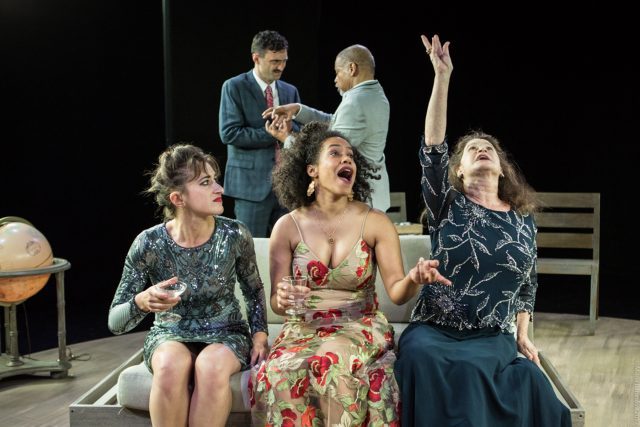
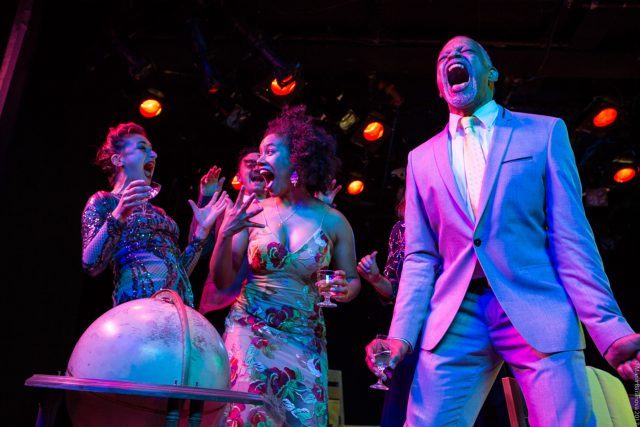
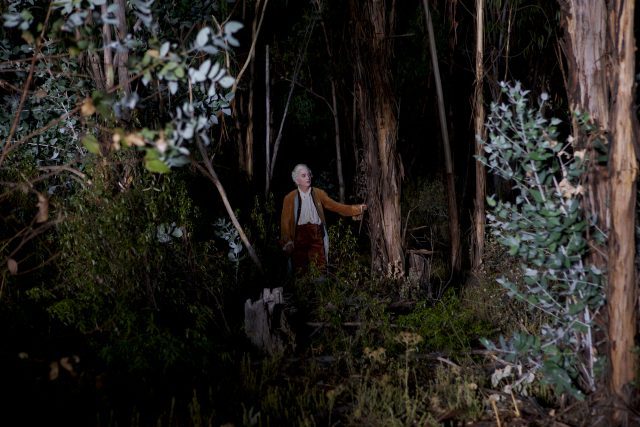
Attending the NY Indie Theatre Film Festival wont be as traumatic as Natalie Johnsons The Taxidermist

Attending the NY Indie Theatre Film Festival won’t be as traumatic as visiting Natalie Johnson’s The Taxidermist, which screens on February 8

New Ohio Theatre
154 Christopher St.
February 6-9, individual events free – $10, day/fest passes $15-$30
866-811-4111
newohiotheatre.org

New Ohio Theatre’s fourth annual NY Indie Theatre Film Festival finishes in a big way on February 9 with a special screening of Charles Busch’s 2006 coming-of-age tale A Very Serious Person, in which the writer-director stars as a gay male nurse taking care of an ailing woman portrayed by Polly Bergen. Busch, whose work includes The Tale of the Allergist’s Wife, The Tribute Artist, and the current Primary Stages production The Confession of Lily Dare at the Cherry Lane, will participate in a talkback after the screening. The festival begins February 6 at 7:00 with a screenplay reading of Brooke Berman’s Polly Freed with Annie Parisse, Paul Sparks, Sadie Seelert, Alysia Reiner, Jamie Harrold, Austin Ku, Sebastian Martinez, Clara Young, Becca Lish, Erin Gann, and Julienne Kim and a free opening-night party at 9:00. There will be five screening blocks of short films and web series episodes February 7-8, including works written and/or directed by Victoria Clark, David Zayas Jr., Wendy MacLeod, Caroline V. McGraw, and Alyssa May Gold. On February 9 at 2:00, the competitive Film Race will take place, a benefit for F*It Club in which teams present movies they made only after getting required script elements on February 5; at 4:00, the panel discussion “What Makes a Pitch Sizzle?” brings together Thom Woodley, Sarah Donnelly, and Gideon Evans. “Our mission is to support indie theatre artists wherever their inspiration takes them. If it takes them into new mediums, we want to be there to help,” New Ohio artistic director Robert Lyons said in a statement. Individual events are $5 to $10, with day or festival passes ranging from $15 to $30.

BOB & CAROL & TED & ALICE

(photo by Monique Carboni)

Carol (Jennifer Damiano) and Bob (Joél Pérez) and Alice (Ana Nogueira) and Ted (Michael Zegen) are seeking some new sexual adventures in Bob & Carol & Ted & Alice (photo by Monique Carboni)

The New Group at the Pershing Square Signature Center
The Romulus Linney Courtyard Theatre
480 West 42nd St. between between Ninth & Tenth Aves.
Tuesday – Sunday through March 22, $48-$133
thenewgroup.org

Paul Mazursky’s 1969 film Bob & Carol & Ted & Alice captured the zeitgeist of a nation high on the summer of love, glorying in the sexual revolution. Nominated for four Oscars, the film starred Robert Culp and Natalie Wood as Bob and Carol Sanders, an adventurous LA couple, while Elliott Gould and Dyan Cannon are their best friends, Ted and Alice Henderson, who are significantly more traditional. The New Group has now turned the script, written by Mazursky and Larry Tucker, into a fun, lighthearted play with music that opened tonight at the Pershing Square Signature Center for an extended run through March 22. (Mazursky’s daughter Jill served as a consultant on the show.)

The hundred-minute show opens with Bob (Joél Pérez) and Carol (Jennifer Damiano) on their way to a consciousness-raising weekend. Derek McLane’s set is arranged like an encounter group for the audience, which sits on three sides of a small stage that boasts a couch, several mod chairs, a pair of microphone stands and cushions, a beaded curtain at the back, and the band, consisting of music director and keyboardist Jason Hart, guitarist and bassist Simon Kafka, Noelle Rueschman on reeds, bassist and drummer Jamie Mohamdein, and the bandleader, wonderfully portrayed by iconic singer-songwriter Suzanne Vega, who took over after composer Duncan Sheik, who wrote the lyrics with Amanda Green, couldn’t take on the role in addition to his other responsibilities. Standing in the back, Vega also serves as emcee and narrator, talking to the characters and the audience as well as singing. Early on she says to Bob and Carol (and the audience): “Welcome to the Institute at Big Sur, home of the Human Potential Movement. . . . Don’t think. Feel. . . . Lose your mind. Come to your senses.”

(photo by Monique Carboni)

Alice (Ana Nogueira) and the bandleader (Suzanne Vega) share an intimate moment in New Group world premiere at the Signature (photo by Monique Carboni)

Bob is primarily there to make a documentary about the institute, but he is ultimately coaxed into participating in a marathon group therapy encounter session. Bob and Carol closely examine their marriage in ways they never did before. “I always accuse you of hiding your feelings, but I hide my feelings, Carol,” Bob admits. Carol responds, “I do hide my feelings, Bob. You’re not the only one hiding your feelings. I hide my feelings all the time. I came here because I felt like it. I wanted to come for me. But I couldn’t tell you. I’m — I’m sometimes afraid of you.” A weepy Bob replies, “Afraid of me? I love you. I love you so much, baby.” When Bob confesses to having an affair, they take their relationship to another, unexpected level. The now swinging couple share their new outlook on love and life with Ted (Michael Zegen) and Alice (Ana Nogueira), who are not so keen on all this openness. Bob and Carol invite Ted and Alice to Vegas for the weekend to see Tony Bennett, but there’s a special surprise in store.

Bob & Carol & Ted & Alice is a sweet-natured period piece, featuring not only groovy dialogue but classic late-1960s-era costumes by Jeff Mahshie, highlighted by Ted’s turtlenecks and the women’s mini dresses. Pérez (Fun Home, Sweet Charity) plays drums and channels Will Ferrell (and a little Elliott Gould), Tony nominee Damiano (Spring Awakening, Next to Normal) ups the sexy quotient, and Zegen (The Marvelous Mrs. Maisel, A View from the Bridge) and Nogueira (Engagements, Mala Hierba) are right-on as the more buttoned-up couple who just might break free of their societal constraints at any moment. Jonathan Marc Sherman’s (Clive, Knickerbocker) book is endearingly playful, as is Scott Elliott’s (The True, Mercury Fur) direction, which involves several willing audience members. When the characters break into song, Kelly Devine’s musical staging can feel out of place, especially when compared to Vega, whose songs have a natural, effervescent flow, and she also reveals some fine acting chops. (Vega previously starred in her own one-woman show, Carson McCullers Talks About Love, playing the title character.) The movie was revolutionary for its time, but this New Group world premiere does not have such lofty ambitions. Instead, it’s a frisky and flirtatious look at a bygone era, a kind of last gasp right before America would lose its innocence.

BEANPOLE

Beanpole

Iya (Viktoria Miroshnichenko) deals with horrific tragedy in Kantemir Balagov’s Beanpole

BEANPOLE (Дылда) (Kantemir Balagov, 2019)
Film Forum
209 West Houston St.
Through February 11
212-727-8110
filmforum.org

Russia’s official submission for the Oscar for Best International Film, for which it was shortlisted, Kantemir Balagov’s Beanpole is an unsparing look at PTSD in women, here specifically in WWII but also more generally as mothers and caretakers. In 1945 Leningrad, Iya (Viktoria Miroshnichenko) is a very tall, quiet, former anti-aircraft gunner working in a military hospital for men with severe injuries. She is particularly drawn to Stepan (Konstantin Balakirev), who is paralyzed. She has a condition in which her body freezes, as if trapped in a limbo between life and death, and it horrifically leads to tragedy. Iya’s best friend and lover, Masha (Vasilisa Perelygina), returns from the front, bearing a frightening scar. She deviously sets out to have a child, involving the oddball Sasha (Igor Shirokov) and the head of the hospital, Nikolay (Andrey Bykov), which confuses and deeply upsets Iya.

Beanpole

Masha (Vasilisa Perelygina) and Iya (Viktoria Miroshnichenko) try to put their lives back together after fighting in WWII in Beanpole

Inspired by Belarus author Svetlana Alexievich’s Nobel Prize-winning 1987 book The Unwomanly Face of War: An Oral History of World War II, Balagov’s second film, following his 2017 drama, Closeness, is a thoroughly unpredictable and purposefully uncomfortable journey into the minds of men and, more specifically, women shell-shocked by war. In their film debuts, Miroshnichenko and Perelygina are mesmerizing; cinematographer Ksenia Sereda zeroes in on Miroshnichenko’s head and Perelygina’s face as if they are characters unto themselves. The film’s palette is ochre-based, with explosions of bright yellows, reds, and especially greens — the color of rebirth, renewal, and envy — which pop up in wallpaper, paint, Iya’s sweater, and Masha’s dress. It’s a world in which women, after experiencing such pain and suffering, are expected to get married and pregnant amid all the death surrounding them. Balagov won Un Certain Regard’s Best Director prize at the Cannes Film Festival for this stark, brutal portrayal of average people looking for love amid the ruins. It might be set in 1945, dealing with the aftereffects of the Siege of Leningrad and what it did to the soul of the Russian city, but its exploration of the physical and psychological trauma of war is as relevant today as it was then.

DIANE KEATON / EDIE FALCO AT 92Y

New York City native Edie Falco will be at the 92nd St. Y on February 6 to talk about her new police drama on CBS

New York City native Edie Falco will be at the 92nd St. Y on February 6 to talk about her new LA-set police drama on CBS

92nd St. Y
1395 Lexington Ave. between 91st & 92nd St.
Diane Keaton: Kauffman Concert Hall, Tuesday, February 4, $50-$65, 7:00
Edie Falco: Buttenwieser Hall, Wednesday, February 5, $35-$40, 7:00
www.92y.org/events

A pair of iconic actresses will be at 92Y this week to discuss their latest projects. On February 4, LA-born Oscar winner Diane Keaton will be in Kauffman Concert Hall in conversation with editor and author David Ebershoff (The Danish Girl), talking about her new book, Brother and Sister: A Memoir, which deals with her relationship with her younger sibling, Randy. Tickets includes a copy of the book. On February 5, Manhattan native Edie Falco will be in Buttenwieser Hall in conversation with CBS This Morning: Saturday cohost Michelle Miller (replacing the previously announced Jane Pauley), chatting about Falco’s new TV series, Tommy, in which the four-time Emmy winner and Tony nominee stars as the first woman police chief of the LAPD, a single mother who is gay. The show is created by the Bronx-born Paul Attanasio, whose other series include Homicide: Life on the Street and Bull.

MY NAME IS LUCY BARTON

(photo by Matthew Murphy)

Lucy Barton (Laura Linney) recalls a significant time in her life in play based on Elizabeth Strout novel (photo by Matthew Murphy)

Manhattan Theatre Club at the Samuel J. Friedman Theatre
261 West 47th St. between Broadway & Eighth Aves.
Monday – Saturday through February 29, $70-$150
www.manhattantheatreclub.com
lucybartonplay.com

It’s always a pleasure watching the exquisite Laura Linney, whether on television, in film, or onstage. Nominated for three Oscars and four Tonys and winner of four Emmys, the Manhattan native has an instantly infectious appeal; you want to be in her luminous presence. She is terrific once again in her latest Broadway play, the one-woman show My Name Is Lucy Barton, which is based on Elizabeth Strout’s 2016 novel and continues at MTC’s Samuel J. Friedman Theatre through February 29. Under Richard Eyre’s expert direction, she flows between sharing her story with the audience and portraying her mother. So why isn’t it better?

Born and raised in the rural town of Amgash, Illinois, Lucy is now reflecting on a critical time in her life, when she spent nearly nine weeks in a New York City hospital. Her husband hates hospitals, so he refuses to visit her, instead choosing to care for their two young daughters. She is estranged from her parents and siblings but is shocked when her mother, who she hasn’t seen in many years, unexpectedly arrives and spends days and days sitting in a chair in Lucy’s hospital room, mostly gossiping about people from the old neighborhood, quite disinterested in Lucy and her family. While her mother is there, Lucy recalls the physical and psychological abuse she suffered at the hands of her parents and discusses the life she led as a child, with no television, no newspapers or magazines, no books, no friends, no sense of personal identity. “How do you even know what you look like if the only mirror in the house is a tiny one high above the kitchen sink?” she says.

(photo by Matthew Murphy)

Laura Linney is once again exquisite in one-woman show on Broadway (photo by Matthew Murphy)

So she set out on a new course, moving to the big city but unable to shake a haunting loneliness. “I was lonely,” she explains. “Lonely was the first flavour I had tasted in my life, and it was always there, hidden inside the crevices of my mouth, reminding me.” It’s this loneliness that is at the center of the story, and primarily women’s loneliness. Her mother can’t stop talking about women like her friend Kathie Nicely and her cousin Harriet, who left their husbands or were left by them, and their often unsuccessful efforts to make new lives and establish their own identities.

But there’s also a lonely feeling watching the play; we wrap ourselves around Linney (The Little Foxes, The Big C, The Savages), not the narrative, which seems inconsequential for the most part, and the material lets down the rest of Eyre’s (Guys and Dolls, Notes on a Scandal) production, which is stellar. Bob Crowley’s pristine set consists of a chair and a hospital bed as well as three successively larger wall screens in the back on which video designer Luke Halls projects peaceful shots of corn and soybean fields in Illinois and the Chrysler Building and streets of New York City, with precise lighting by Peter Mumford as Linney shifts between characters.

Despite it being her story, Lucy is an unreliable narrator. She regularly says “I think,” not firm in what she is relating. At one point she says of her mother, “Maybe she didn’t say that. I don’t remember.” Later she admits, “I still am not sure it’s a true memory, except I do know it, I think. I mean: It is true.” It’s as if she’s doing a (wonderfully) staged reading of the book; Rona Munro’s (The James Plays, Bold Girls) adaptation sounds more like an audiobook you can listen to while driving. In fact, the play is presented “in association with” Penguin Random House Audio, which published the audiobook in 2016, read very differently by Kimberly Farr. But forgetting everything else, there is one main reason to see the play, and her name is Laura Linney.