twi-ny recommended events

SOLDIERGIRLS: A BENEFIT CONCERT

Who: Jenn Colella, Lilli Cooper, Chilina Kennedy, Ezra Menas, Melanie Field, Jessie Shelton, Anna Crivelli, Danielle Chaves, Hannah Van Sciver, Madeleine Barker, Em Weinstein, Emily Johnson-Erday, Sophia Choi, Stephanie Cohen, Rebecca Adelsheim
What: Live, virtual benefit concert
Where: soldiergirls.org
When: Monday, August 31, free with RSVP (donations accepted), 7:00
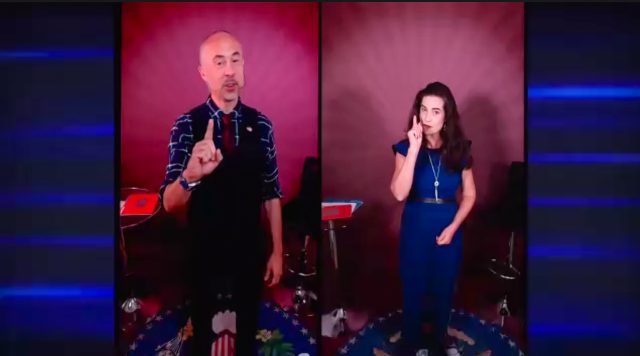
Why: An all-star cast will participate in Rattlestick Playwrights Theater’s live, virtual concert staging of the new “lesbian musical sex comedy” SOLDIERGIRLS. Tickets are free, but donations will be accepted to support SPART*A (Service Members, Partners, Allies for Respect and Tolerance for All), the mission of which “is to advocate for our actively serving transgender military members, veterans, and their families.” The two-person show features book and lyrics by 2019-20 Rattlestick artistic fellow Em Weinstein and music by Emily Johnson-Erday, inspired by actual letters and found and original text from personnel serving in the Women’s Army Corps during World War II. The sixty-minute presentation will include behind-the-scenes information from the creators as well as costume designer Sophia Choi, set designer Stephanie Cohen, and dramaturg Rebecca Adelsheim; among the performers are Jenn Colella, Lilli Cooper, Chilina Kennedy, Ezra Menas, Melanie Field, and Jessie Shelton. You can find out more about the show in this inside look from PBS.

EPICENTRO (with live Q&As)

Epicentro takes a look at paradise, imperialism, war, slavery, freedom, utopia, and the power of cinema in Cuba

Who: Hubert Sauper, Eric Hynes, Beth Gilligan
What: Epicentro (Hubert Sauper, 2019)
Where: Museum of the Moving Image (August 28 – September 13, $12)
When: Sunday, August 30, free, 3:00; Saturday, September 5, free, 3:00
Why: Nothing was ever the same once Christopher Columbus and the Europeans arrived in Cuba on October 28, 1492. Oscar-nominated filmmaker Hubert Sauper explores more than five hundred years of Cuban history in the poetic and intimately honest Epicentro, which opens virtually August 28 through the Museum of the Moving Image here in New York City. Hubert Sauper (Darwin’s Nightmare, We Come as Friends) wanders through the streets of the island nation, taking his camera into apartments and businesses as he passes by burned-out buildings and cars, speaking with men, women, and children about such complex issues as utopia, dystopia, imperialism, racism, slavery, and freedom, relating it all to the invention of film. “Cinema projects our soul. Cinema moves humans to emotion,” a man tells a group of young students while screening documentary images of military battles and Georges Méliès’s fantastical 1902 A Trip to the Moon. The kids boo as America raises its flag in Cuba at the end of the Spanish-American War. “Havana means heaven, the dwelling place of angels, and it was the epicenter of three dystopian chapters of history: slave trade, colonization, and globalization of power, ingredients of modern empire,” Sauper narrates.

The film was inspired by Johannes Schmidl’s 2014 book, Energie und Utopie, and it isn’t hard for Sauper to find the indomitable energy of the Cuban people. Sauper eschews talking-head experts, historians, politicians, and well-known faces and instead lets the people tell their own story, especially two young girls who are wise beyond their years. At one point they have a rather remarkable conversation about Americans. “What happens here in Cuba is that we Cubans are used to . . . it is because they are treating other people like . . . they are superior to us, and they have more money and more of everything. They are richer than us. Some of us don’t know what goes on abroad,” one says. The other adds, “Some Cubans think that they are coming to harm us and treat us badly.” First girl: “Now there is that damned Trump.” Second girl: “Trump cares about nobody . . . he has no feelings.” First girl: “He does not lift the embargo, talks about the bad things in Cuba, and he closed the borders to migrants.” Later, on a rooftop, the first girl explains, “Nobody should be treated as if they were trash. Because black just like white means being a person.” As serious as the girls can get, however, they are later shown having a ball as they dress up and take pictures of each other pretending to be fashion models.

Sauper, who wrote, directed, photographed, and co-edited the film (with Yves Deschamps), also encounters prostitutes; a single mother; lots of people driving classic old cars from the Mafia era; a crowd mourning the death of Fidel Castro; a white photographer who refuses to pay his subjects (“to be photographed by me is an honor”); Oona Castilla Chaplin, Charlie Chaplin’s granddaughter, who teaches the kids about acting and music; and a tango-loving Bavarian man who notes, “Travelers who come here are people who have already traveled the world. And they are on a quest for the yet undiscovered paradise.” Meanwhile, a man in a bar complains, “I’d like to say that tourists are humanity, are human beings in their worst possible form. What kind of future is built by tourism? None. It only devours the future. It devours the past and culture, it renders everything superficial, into stupidity, into a relationship of power, constantly. . . . How much does making cinema resemble tourism?” But more than anything, Sauper captures the innate love Cubans have of their country, their history, their culture, and life itself. Their eyes glow with an infectious spirit even when they’re immersed in poverty, always ready to make the best of a situation, particularly the children, whom Sauper refers to in the credits as “little prophets.”

“Cuba is the beauty for the whole world,” a man says while pointing out the tiny island nation on a giant floor map in a theater. And Epicentro, winner of the Sundance World Cinema Grand Jury Prize for Documentary, is one beauty of a film.

On August 30 at 3:00, the Museum of the Moving Image will host a live Q&A with Sauper, moderated by film curator Eric Hynes, followed on September 5 at 3:00 by a live Q&A with Sauper and Coolidge Corner Theatre director of development and marketing Beth Gilligan.

CELEBRATING CHARLIE PARKER AT 100

Who: Hope Boykin, LaMar Baylor, Patrick Coker, Daniel Harder, Jessica Pinkett, Sam Turvey, Jerome Jennings, Erika Elliott, Sheila Jordan, Christian McBride, Ayodele Casel, Joe Lovano, Charles McPherson, Grace Kelly, Antonio Hart, Barry Harris, Gary Giddins, Melissa Staiger
What: Special programs celebrating the centennial of the birth of Charlie Parker
Where: 92Y and Summerstage
When: Saturday, August 29, free – $25
Why: It’s a tradition at the end of August in New York City to celebrate the life and legacy of Charlie “Bird” Parker, the legendary Kansas City-born saxophonist who moved to New York City in 1939 as a teenager and became one of the greatest jazzmen of all time. Parker was born on August 29, 1920, so the city is paying tribute to the centennial of his birth with several special programs on Saturday. At 7:00, longtime Alvin Ailey dancer Hope Boykin will present the world premiere of …a movement. Journey., a dance film that is part of the 92nd St. Y program “Charlie Parker: Now’s the Time – Celebrating Bird at 100.” The film features LaMar Baylor, Patrick Coker, Daniel Harder, and Jessica Pinkett and will be followed by a live discussion and Q&A. “Living through a time such as this, when our eyes are open to the world’s need for healing, artists continue to refocus their thoughts toward the creatives of the past, those who have paved the way and created lanes, inspiring us to build on their legacies and dreams,” Boykin said in a statement. “Audiences will see short vignettes choreographed and created for dancers who have been isolated during the world’s intermission, struggling to find a way out, and searching for their stage. Standing alone or woven together, the works created will show the struggle and celebrate the survival of life. Charlie Parker left us a soundtrack of the world in which he lived, and I will use the story the music tells, through his body of work, to create and celebrate all he left us.”

The 92Y program, held in conjunction with WGBO, also includes “Celebrating Bird — A Conversation with Music” with Joe Lovano, Charles McPherson, Grace Kelly, Antonio Hart, and Barry Harris, hosted by Gary Giddins; a free “Charlie Parker Online Listening Party!” curated and hosted by Brian Delp; and the online class “Charlie Parker’s Music as Visual Art Catalyst” with Melissa Staiger.

In addition, City Parks Foundation’s twenty-eighth annual Charlie Parker Jazz Festival goes virtual this year, taking place on Instagram from 10:30 am to 5:00 pm, with recaps of the 2018-19 festivals; culture talks with Sam Turvey, Jerome Jennings, and Erika Elliott and Sheila Jordan and Christian McBride; a digital tap class with Ayodele Casel; archival clips; and the world premiere of “Charlie Parker at 100: A Celebration of Parker’s Birthday and the Charlie Parker Jazz Festival.”

JON MEACHAM IN CONVERSATION WITH WES MOORE: JOHN LEWIS AND THE POWER OF HOPE

Jon Meacham and Wes Moore will discuss the life and legacy of John Lewis on August 28

Who: Jon Meacham, Wes Moore
What: Live discussion about John Lewis
Where: 92nd St. Y online
When: Friday, August 28, $20, 6:00
Why: In his new book His Truth Is Marching On: John Lewis and the Power of Hope (Penguin Random House, August 25, $30), Pulitzer Prize-winning presidential historian Jon Meacham writes, “There seemed no hope. An omitted ‘Mister’ might get you dumped in a swamp on an otherwise unremarkable summer day; walking home from church could lead to horrific sexual violence. ‘We know that if we protest we will be called “bad ni–ers,”’ the novelist Richard Wright wrote in his 1941 book Twelve Million Black Voices. ‘The Lords of the Land will preach the doctrine of “white supremacy” to the poor whites who are eager to form mobs. In the midst of general hysteria they will seize one of us — it does not matter who, the innocent or guilty — and, as a token, a naked and bleeding body will be dragged through the dusty streets.’ That was the way of the world into which John Lewis was born.” Lewis contributed an afterword to the book.

On August 28 at 6:00, as part of the 92nd St. Y program “92Y Confronts Hate: The Great Thinkers,” Meacham, who has written such other books as American Lion: Andrew Jackson in the White House, Franklin and Winston, and The Soul of America: The Battle for Our Better Angels, will be joined by bestselling author, army combat veteran, and Robin Hood CEO Wes Moore to discuss the life and legacy of Congressman John Lewis, the beloved civil rights leader who passed away in Atlanta last month at the age of eighty. The talk is being held in conjunction with the fifty-seventh anniversary of the March on Washington, which is being honored virtually this year by the NAACP here. Tickets are $20 and help benefit the 92nd St. Y as it deals with the Covid-19 pandemic; you can hear an audio clip of the book here. “The Great Thinkers” continues August 31 with “Marion Nestle: Master Class on the Politics of Food and Health,” September 15 with “Master Class with Paul Krugman and Mauro Guillen: Our World in 2030,” and September 17 with “Paula Scher: Master Class on Design, Branding and Identity with Ellen Lupton,” while “92Y Confronts Hate” continues September 8 with “Symone Sanders with Jonathan Capehart — No, You Shut Up: Speaking Truth to Power.”

NOMAD: IN THE FOOTSTEPS OF BRUCE CHATWIN (with live Q&A)

Werner Herzog follows the unique path of his friend Bruce Chatwin in Nomad

NOMAD: IN THE FOOTSTEPS OF BRUCE CHATWIN (Werner Herzog, 2019)
Opens Wednesday, August 26, $12
Live virtual Q&A with Werner Herzog on Wednesday, September 2, free, 6:00
Film Forum online

Near the start of Nomad: In the Footsteps of Bruce Chatwin, writer-director Werner Herzog says, “Chatwin was a writer like no other. He would craft mythical tales into voyages of the mind. In this respect, we found out we were kindred spirits.” As the intimate film, which opens virtually at Film Forum on August 26, reveals, they are indeed kindred spirits, a pair of iconoclastic adventurers who detailed their journey in books (Chatwin) and documentaries (Herzog). “In this film here,” Herzog explains, “I will follow a similar erratic quest for wild characters, strange dreamers, and big ideas about the nature of human existence. These were the themes Chatwin was obsessed with.” In fiction and nonfiction works such as Grizzly Man, Fitzcarraldo, Cave of Forgotten Dreams, Encounters at the End of the World, Happy People: A Year in the Taiga, Into the Abyss, and Into the Inferno, the German filmmaker has shared his obsessions, going deep below the surface of the Earth and far into space while introducing us to a sea of fascinating humanity. “Bruce Chatwin was searching for strangeness,” Herzog notes. So is Herzog.

Born in Sheffield in 1940, Chatwin was a travel writer extraordinaire, the author of such books as The Songlines, In Patagonia, and On the Black Hill that take readers across the planet, meeting unusual people and animals in unusual places, from a Brazilian slave trader and Welsh twins to dinosaurs and Aboriginal rituals. Divided into such chapters as “The Skin of the Brontosaurus,” “Landscapes of the Soul,” “Songs and Songlines,” “The Nomadic Alternative,” and “Journey to the End of the World,” the film follows Herzog as he explores Chatwin’s legacy and their close friendship, investigating cultural appropriation by missionaries, technology as distraction, ancient cave drawings, the last nomadic people of Tierra del Fuego, the curative benefits of walking, and such concepts as truth, reality, and authenticity. He speaks with a wide range of people who knew Chatwin, including his widow, Elizabeth Chatwin; his biographer, Nicholas Shakespeare; anthropologist Petronella Vaarzon-Morel; musician and writer Glenn Morrison; Alyawerre elder Michael Liddle Pula; Arrernte elder Marcus Wheeler; Shaun Angeles Penance of the Strehlow Research Centre; writer Peter Bartlett; Warlpiri elder Robin Granites; and Scream of Stone mountain guide Alberto Castillo, who offer beguiling insight into Chatwin, who packed a lot of living into his too-short life — he died of AIDS in 1989 at the age of forty-eight.

But as much as we learn about Chatwin in the film, it’s what we discover about Herzog that gives it its dramatic punch. The director — who adapted Chatwin’s 1980 book, The Viceroy of Ouidah, into the 1987 film Cobra Verde, the final collaboration between Herzog and actor Klaus Kinski, which is a story in itself — is thoroughly enamored of Chatwin; we often see him on camera discussing their relationship, his eyes sometimes tearing, other times glowing, doing both when Shakespeare shows him Chatwin’s annotated copy of the Cobra Verde screenplay, which Herzog has not seen before, or when Herzog talks about Chatwin’s famous rucksack, which he has been using on his own nomadic adventures for decades. Herzog might be too close to his subject, resulting in occasional self-indulgent moments, but watching him open up is as enchanting as finding out so much about Chatwin. They both share the belief that “history aspires to the symmetry of myth,” which gets right to the heart of Nomad. Herzog will participate in a free, live, virtual Q&A on September 2 at 6:00; the film can be rented now online for $12 for 72 hours.

THE NEW GROUP OFFSTAGE: THE JACKSONIAN

Who: Ed Harris, Amy Madigan, Bill Pullman, Juliet Brett, Carol Kane
What: Live reunion reading by the New Group
Where: The New Group Off Stage
When: Thursday, August 27, $25, 7:00 (available through August 30 at midnight)
Why: In my November 2013 review of the New Group’s NYC premiere of The Jacksonian, I wrote, “Pulitzer Prize winner Beth Henley, who was born in Jackson, Mississippi, has crafted a gripping southern Gothic black comedy with sharp, unpredictable dialogue and heavily stylized direction by Robert Falls. An actor’s actor, Ed Harris gives an exceptional performance as the seemingly stalwart dentist who just wants to have a normal family. Amy Madigan plays Susan with a tension ready to explode at any moment. Bill Pullman is nearly unrecognizable as the bartender harboring more than a few secrets, while Glenne Headly has fun chewing some scenery as the scheming Eva. But it’s Juliet Brett who packs the biggest punch in a breakout role as Rosy.” Harris, his real-life wife, Madigan, Pullman, and Brett are reuniting for a live Zoom reading of the play on August 27 at 7:00; Headly, who passed away in 2017 at the age of sixty-two, will be replaced by Carol Kane. Tickets are $25, with ten percent of the proceeds benefiting Race Forward, which “brings systemic analysis and an innovative approach to complex race issues to help people take effective action toward racial equity”; the link will be available through August 30 at midnight. Part of “The New Group Off Stage,” the reunion reading series previously presented Sharr White’s The True and Jesse Eisenberg’s The Spoils. You can still catch the New Group’s “Why We Do It” conversation series with such guests as Cynthia Nixon, Bobby Cannavale, Edie Falco, Donja R. Love, and Suzanne Vega here.

PRIMAL INSTINCTS: NINTH ANNUAL THEATRE 68 ONE ACTS FUNDRAISING FESTIVAL

Who: Theatre 68
What: Live Zoom plays and talkbacks
Where: Theatre68 YouTube
When: Tuesday – Sunday through September 27, free (donations accepted), 8:00
Why: Theater companies all across the country have been trying to survive the pandemic lockdown with reunion readings, livestreamed archival shows, and new works over Zoom, with varying degrees of success. Some have been ingenious (Arlekin Players Theatre’s State vs Natasha Banina, the Public’s The Line, Larry Powell’s The Gaze), while others, well, not so much, which is just like regular theater experienced live and in person. One of the most daring experiments is being done by Theatre 68, which is based in North Hollywood and has a New York City chapter. Resident troupe the 68 Cent Crew Theatre is following up its Bi-Coastal Monologue Jam with its ninth annual One Acts Fundraising Festival, short plays being performed live Tuesday through Sunday nights at 8:00, with a bonus show Friday at 9:00; they go dark on Mondays, giving it a realistic, recognizable schedule that most brick-and-mortar theaters follow. The works are written, directed, and performed by members of the company, taking place live from wherever the actors are sheltering in place, and are followed by a talkback with cast and crew; the shows are not archived for later viewing on YouTube, although if you check out the troupe’s Facebook page, their are occasional links to help you catch up on a show you might have missed.

Theatre 68 rehearses Fear and Self-Loathing over Zoom for one-act festival

Titled “Primal Instincts,” the festival has completed one go-round of the seven plays, which are listed below. Watching them is an intimate experience, especially if you keep the chat box open as company members, friends, relatives, and theater lovers comment on the action, including artistic director Ronnie Marmo, who played the title character in Theatre 68’s I’m Not a Comedian . . . I’m Lenny Bruce, directed by Joe Mantegna. The plays were conceived prior to the pandemic but they work well just the same; stick around for the talkback and you might get to see one of the writers kvelling at how successfully a play they wrote for the stage has been transformed for this virtual presentation. Among the other tidbits you’ll discover is that Carly Wilkins’s Old Habits Die Hard was written for two female lovers but is performed here by a gay male couple and how the actors adapt their performances week to week by studying the previous shows, something they cannot do with such clarity and specificity onstage in a theater. Look out for Evenings, which brings some fun chills, while Doomed to Live offers one way out of our rather challenging human existence and Fear and Self-Loathing resurrects a famous gonzo journalist. By the time you’ve checked out all seven shows, you’ll feel like you’re part of the Theatre 68 family.

Tuesday, 8:00: Doomed to Live, a novel take on suicide, with John Varina, Louis Politan, and Snezhana Chernyavskaya, directed by Annie Lanzillotto, written by Maria Kirke

Wednesday, 8:00: Old Habits Die Hard, in which a cat threatens the relationship between two gay men in a new apartment, with Julian Guzman Abril and Riley Fee, directed by Lauren Winnenberg, written by Carly Wilkins

Thursday, 8:00: Evenings, a creepy fairy tale about pending motherhood, with Annie Lanzillotto, Janelle Gaeta, and David Erba, directed by Carly Wilkins and Riley Fee, written by Kathryn Loggins

Friday, 8:00: Carnivorous, which presents a vegan dilemma, with Samantha Bowen, Christian Leadley, and Alan Braunstein, directed by Janelle Gaeta, written by Megan Magee

Friday, 9:00: The Stork, featuring a bizarre bird-person, with Alexandra Dominguez, Kaya Simmons, and Jade Mason, directed by John Varina, written by Samantha Bowen

Saturday, 8:00: The Hooking Place, in which a lesbian is jealous of her partner’s upcoming night out with an ex-boyfriend, with Megan Magee and Jordan Gelber, directed by Ronnie Marmo, written by Annie Lanzillotto

Sunday, 8:00: Fear and Self-Loathing, where an editor tries to convince Hunter S. Thompson to get back to writing, with Marty Grabstein, Isa Goldberg, and Richard Bernstein, directed by Megan Magee, written by Christian Leadley