Miscast20 features an exciting roster of theater stars performing just the wrong songs
Who: Norbert Leo Butz, Heather Headley, Rob McClure, Isaac Powell, Robert Fairchild, Joshua Henry, Ingrid Michaelson, Lauren Ridloff, Adrienne Warren, Beanie Feldstein, Leslie Odom Jr., Nicolette Robinson, Phillipa Soo, Jocelyn Bioh, Julianna Margulies, Raúl Esparza, Piper Perabo, Judith Light, Thomas Sadoski, Kenneth Cole, Laura Bell Bundy, Kerry Butler, Harvey Fierstein, Jenn Gambatese, Jackie Hoffman, Kamilah Marshall, Matthew Morrison, Corey Reynolds, Judine Somerville, Shayna Steele, Marissa Jaret Winokur What: Virtual edition of MCC Theater’s annual Miscast gala Where:MCC YouTube channel When: Sunday, September 13, free (donations accepted), preshow 7:45, show 8:00 Why: We’ve all been there: We’re in a theater watching a show when we realize that it’s just not going to work because of a bad casting decision. MCC Theater has been spoofing on that situation with its annual Miscast fundraising galas, in which they purposely match talented performers with the wrong song. On September 13, Miscast20 will go virtual, adding a geographic dimension to the wrongness. Admission is free, though donations will be accepted, with ten percent going to the Mental Health Coalition, which was founded earlier this year by fashion designer and activist Kenneth Cole; MHC’s mission “is to build a like-minded community who will work together to destigmatize all mental health conditions by changing the way people talk about, and care for, their mental health.”
Performing at the event, which will be broadcast for free on YouTube, are Norbert Leo Butz, Heather Headley, Rob McClure, Isaac Powell, Robert Fairchild, Joshua Henry, Ingrid Michaelson, Lauren Ridloff, Adrienne Warren, Beanie Feldstein, Leslie Odom Jr., Nicolette Robinson, and Phillipa Soo; Jocelyn Bioh, Julianna Margulies, Raúl Esparza, Piper Perabo, Judith Light, Thomas Sadoski, and Cole will serve as presenters. There will also be a special reunion appearance by the cast of Hairspray: Laura Bell Bundy, Kerry Butler, Harvey Fierstein, Jenn Gambatese, Jackie Hoffman, Kamilah Marshall, Matthew Morrison, Corey Reynolds, Judine Somerville, Shayna Steele, and Marissa Jaret Winokur. In addition, MCC is hosting an online auction where you can bid on such items as an original costume from A Chorus Line, coaching and mentor sessions with professionals, signed Playbills, wine and dinner tastings and getaways, and MCC memberships.
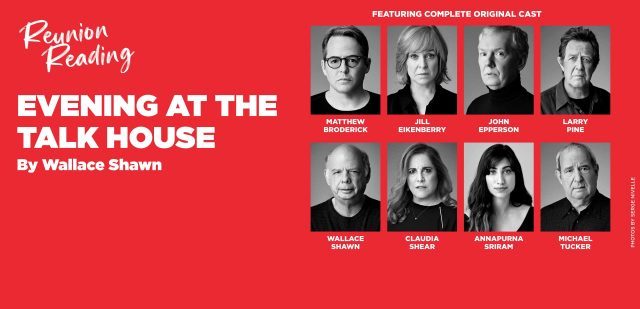
Who: Cary Elwes, Robin Wright, Mandy Patinkin, Wallace Shawn, Christoper Guest, Billy Crystal, Carol Kane, Chris Sarandon, Rob Reiner, Josh Gad, Eric Idle, King Bach, Finn Wolfhard, Shaun Ross, Whoopi Goldberg, Jason Reitman, Patton Oswalt, Norman Lear What: Benefit reunion reading of The Princess Bride script Where:Act Blue When: Sunday, September 13, suggested donation $27, 7:00 Why: After voting Democratic from 1988 to 2012 in the presidential election, Wisconsin went red in 2016, helping Donald J. Trump become the forty-fifth president of the United States of America. Amid protests and riots in the wake of the shooting of Jacob Blake seven times in the back by a police officer, Wisconsin is once more a key swing state, this time in the battle between Trump and former vice president Joe Biden. One way to contribute to turn the Badger State blue again is by signing up for an amazing livestreamed reunion reading of Rob Reiner’s 1987 cult classic, The Princess Bride. On September 13 at 7:00, most of the original cast will participate in a one-time-only table reading of the script, with Cary Elwes as Westley, Robin Wright as Buttercup, Mandy Patinkin as Inigo Montoya, Wallace Shawn as Vizzini, Christoper Guest as Count Rugen, Billy Crystal as Miracle Max, Carol Kane as Valerie, and Chris Sarandon as Prince Humperdinck; joining them are director Rob Reiner as the Grandfather, Josh Gad as Fezzik, Eric Idle as the Impressive Clergyman, Finn Wolfhard as the Grandson, Shaun Ross as the Albino, Whoopi Goldberg as the Ancient Booer and the Mother, Jason Reitman as the Narrator, and King Bach as Yellin, the Assistant Brute, and the King, with Patton Oswalt as the Q&A Moderator and executive producer Norman Lear as the Man That Made It All Happen. Gad has been the king of reunions during the pandemic, having hosted online cast and crew reunions for Back to the Future, Splash, Lord of the Rings, Ferris Bueller’s Day Off, Ghostbusters, and The Goonies on his YouTube channel.
Based on William Goldman’s 1973 novel — he wrote the screenplay as well — The Princess Bride is a riotously told fairy tale about power, family, vengeance, and true love, with memorable lines appearing throughout. (My favorite is “Hello. My name is Inigo Montoya. You killed my father. Prepare to die.” You might prefer “As you wish,” “Anybody want a peanut?,” “You rush a miracle man, you get rotten miracles,” or “Inconceivable!”) In order to get the Act Blue link, you have to make a donation of any amount to the Democratic Party of Wisconsin, which explains, “Anything you donate will be used to ensure that Trump loses Wisconsin, and thereby the White House,” as per the famous saying “As goes Wisconsin, so goes the nation.” In a statement, Elwes added, “I think most people are aware by now that Donald Trump has completely abdicated his duties as president to represent and stand up for all Americans. He has failed to keep the country safe from Covid-19 and as a result he is responsible for the devastating chaos, violence, and economic collapse that we are now experiencing. If America is going to have a real chance at healing we must get rid of Trump. And that is only possible if we win Wisconsin. I am thrilled to be part of this very rare reunion of my colleagues from The Princess Bride as a way to increase awareness and garner resources for the state that will determine the fate of America.” Be sure to take a moment of silence to pay your respects to the crew and cast members who are no longer with us, including Goldman, Peter Falk (the Grandfather), André the Giant (Fezzik), Peter Cook (the Impressive Clergyman), Mel Smith (the Albino), Margery Mason (the Ancient Booer), Anne Dyson (the Queen), and Willoughby Gray (the King). When Westley says, “We’ll never survive!,” he’s of course referring to another four years of the current administration, but we also can’t forget what the Grandfather explains: “Life isn’t always fair.” (For more Princess Bride fun, check out the star-studded Quibi home movie version here, benefiting World Central Kitchen.)
Ledelle Moe’s “When” consists of giant hollow heads across the floor and tiny ones on back walls (photo by twi-ny/mdr)
MASS MoCA
1040 MASS MoCA Way, North Adams, MA
Wednesday – Monday, $8-$20 timed tickets in advance, 10:00 am – 6:00 pm www.massmoca.org
With New York City museums opening up again, we decided to prepare by heading up to the Berkshires to visit MASS MoCA and the Clark Institute, both of which began welcoming visitors post-pandemic lockdown the second week of July. We used the trip as sort of a test case, examining how they were doing things to gauge our approach to arts institutions here in the five boroughs. In our opinion, they are doing everything right, so rent a car and get up there as soon as you can.
At MASS MoCA, a repurposed industrial complex in North Adams with more than one hundred thousand square feet of gallery space indoors and outdoors that opened in 1999, one must order timed tickets in advance; we showed up twenty minutes early but were told nicely that we would have to wait. We spent some of that time looking at Gamaliel Rodríguez’s sixty-foot-long mural La travesía (“Le voyage”), which equates the architecture at MASS MoCA with that of his native Puerto Rico and other locations, in an eye-catching purple tint, which you can see for free by the store and the café (where you can get freshly made lemonade and a killer BLT).
Jarvis Rockwell’s Us is a parade of fun figurines (photo by twi-ny/mdr)
Ticketholders line up outside to enter the museum; the now ever-present dots keep everyone at a distance of six feet. Once inside, communing with the art feels completely safe, as the number of visitors is kept small and most of the galleries are vast and wide open. At times we were the only ones in a space (save for a museum employee or two), and at other moments, even if there were a dozen people in the same gallery, we were all extremely far away from one another. (In addition, everyone was aware of social distancing, so there was never any crowding, as we all were respectful of the situation, and everybody wore a mask, over their mouth and nose.)
It’s nearly impossible to experience any of the art without thinking about the Covid-19 crisis, even if it was made long before that. The centerpiece exhibit, on view through January 3, is Ledelle Moe’s “When,” which consists of fragile-looking colossal heads and bodies that are actually made of weathered concrete, many lying on their sides, with hollow insides you can peer into. The installation is particularly meaningful given the current movement of taking down monuments and statues; on the far wall and upstairs are hundreds of tiny heads that are like the twitterverse commenting on the sight or another group of the displaced, relegated to the background.
Blane De St. Croix’s “How to Move a Landscape” (through September 2021) is a breathtaking collection of environmental works that don’t bode well for the future of the planet. Moving Landscapes is a miniature train in which each car carries a different kind of landscape, circling through two holes in the wall. Broken Landscapes is a miniature re-creation of the US-Mexico border where fencing has been put up; the piece is based on De St. Croix’s travels to fifteen border crossings. You can walk under Hollow Ground, a giant hunk of foam permafrost with holes in it; get up close and personal with Collapsing Pillar, a vulnerable tower that could seemingly fall at any moment; and get on your knees to look up and down at Alchemist Triptych, a trio of gold, silver, and copper tornadoes that decrease in diameter as they approach the floor, where you can look into a void going deep into the earth.
For “Amity/Enmity,” Massachusetts artist Ben Ripley repurposes images from the Field Museum’s 1933 exhibit “Races of Mankind,” which comprised more than a hundred anthropological sculptures by Malvina Hoffman, inspired by white nationalist Sir Arthur Keith, a leader in the scientific racism movement who announced the “amity-enmity complex,” which deals with human tribalism, racial segregation, and evolution. Ripley transposes images of himself over photographs and 3D scans of Hoffman’s sculptures, redefining them. He asks, “This historical example of the forceful authority of museums and the seductive power of beauty leading to visual arguments whose consequences we are only now starting to understand suggest an urgent examination of the responsibility of the visual arts on a larger scale. Are our museums leading to a fruitful exchange of diverse ideas? Is our visual art reductive and divisive or humanizing and complex? What are the future consequences of a pursuit of ideological purity? How can art be used to heal and persuade rather than create an exclusive echo chamber? Who do artists and museums serve?” Those are pertinent questions as arts institutions return amid a health crisis and protests about systemic racism.
ERRE re-creates border scenarios in his powerful multimedia installation (photo by twi-ny/mdr)
ERRE (Marcos Ramírez) also takes on the border dispute in “Them and Us” (“Ellos y Nosotros”) (through summer 2021), setting up a sample San Ysidro Port of Entry. ERRE, who splits his time between his native Tijuana and San Diego, offers visitors the choice of entering through two corridors, one marked “Us,” the other “Them.” The gallery contains such works as Toy-an Horse, the burned remains of his 1997 two-headed Trojan horse; colorful Eye Charts featuring quotes from Thomas Jefferson, US senator Dennis Chavez, Sitting Bull, and others; the video The Body of Crime (The Black Suburban), which reveals blatant corruption in law enforcement; Sing-Sing, an abstract iron cage with a bed inside; Orange Country, four orange prison jumpsuits hanging on a wall, representing a father, mother, and two kids, right next to The Cell, a jaillike solitary confinement structure; and Of Fence (which can be read as “offense,” a word with multiple meanings), a deteriorating, rusted corrugated-metal fence that separates the exhibit while referencing other types of physical and psychological separation.
Ad Minoliti’s “Fantasías Modulares” is a candy-colored wonderland (photo by twi-ny/mdr)
Ad Minoliti’s “Fantasías Modulares” is a fantastical trip back to childhood, with adorably cute characters that feel like they have emerged from a candy-colored cartoon world where there’s no difference between humans, animals, and machines, no gender, race, class, or political gaps. Incorporating painting, sculpture, drawing, and installation, the artist, based in Buenos Aires and Berlin, creates an idyllic place to take a playful break away from an ever-more-challenging real world.
You need to reserve timed tickets (at no extra charge) for James Turrell’s “Into the Light,” a look at his Roden Crater project, several light sculptures, and the pre-socially-distanced Perfectly Clear (Ganzfeld), in which a half dozen people experience a heavenly, mesmerizing color-changing environment, and Hind Sight, a two-person-at-a-time journey into complete darkness.
Among the other must-see exhibits are Sol LeWitt’s “Wall Drawing Retrospective,” a small but tantalizing Louise Bourgeois sculpture show, several rooms of Jenny Holzer’s multimedia truisms, Sarah Oppenheimer’s S-334473 (ask the museum worker to operate them for you), Jarvis Rockwell’s Us parade of character toys and figurines, Barbara Ernst Prey’s “Building 6 Portrait: Interior” ultrarealistic paintings, Franz West’s outdoor Les Pommes d’Adam sculptures, and Joe Wardwell’s Hello America: 40 Hits from the 50 States, which was inspired by J. G. Ballard’s 1981 novel and uses quotes from Negativland’s 1991 song “I Still Haven’t Found Snuggles.” Unfortunately, long-term installations by Stephen Vitiello, Michael Oatman, Gunnar Schonbeck, and Anselm Kiefer are currently closed. Be prepared to spend a full day at MASS MoCA, as there is art everywhere, and you’ll feel safe every step of the way. In addition, the institution is hosting live outdoor concerts in the central courtyard, where the audience hangs out in large individual rectangles drawn on the ground; upcoming shows feature Marco Benevento on September 12 and June Millington on September 19.
Giuseppe Penone’s Le foglie delle radici (“The Leaves of the Roots”) greets visitors to the Clark (photo by twi-ny/mdr)
CLARK ART INSTITUTE
225 South St., Williamstown, MA
Tuesday – Sunday, $20 timed tickets in advance, 10:00 am – 5:00 pm www.clarkart.edu
Since 1955, the Sterling and Francine Clark Art Institute has been displaying the couple’s extensive, impressive collection, along with special exhibitions. It reopened in July and is doing a terrific job with its Covid-19 regulations; timed tickets are required, and every gallery has a limit of how many visitors are allowed in at any one time, from two to see Edgar Degas’s exquisite Little Dancer Aged Fourteen to eight in the museum shop to a maximum of twenty-five in the largest space; I’m not sure there were twenty-five people total in the museum when I was there. The permanent collection is an absolute joy, with paintings and sculptures by Winslow Homer, Frederic Remington, Jean-Léon Gérôme, Mary Cassatt, Jean-Baptiste-Camille Corot, Henri de Toulouse-Lautrec, Jean-François Millet, Frederick William MacMonnies, Claude Lorrain, Édouard Manet, Giovanni Boldini, Pierre-Auguste Renoir, Francisco de Goya, John Constable, and Berthe Morisot. Don’t miss Paul Gauguin’s strikingly yellow Young Christian Girl, George Inness’s glorious Sunrise in the Woods, John Singer Sargent’s unusual Fumée D’ambre Gris (Smoke of Ambergris), Claude Monet’s inviting The Cliffs at Étretat, Auguste Rodin’s frightening Man with Serpent, and J. M. W. Turner’s Rockets and Blue Lights (Close at Hand) to Warn Steamboats of Shoal Water, which appropriately resides on a wall all by itself.
Sir Lawrence Alma-Tadema’s Model D Pianoforte and Stools is a highlight of the Clark collection (photo by twi-ny/mdr)
Through December 13, you can catch “Lines from Life: French Drawings from the Diamond Collection,” containing more than forty chalk, crayon, graphite, charcoal, ink, and graphite works by Paul Cézanne, Eugène Delacroix, William-Adolphe Bouguereau, Jean-Auguste-Dominique Ingres, Théodore Géricault, Odilon Redon, Degas, Millet, Morisot, Pissarro, and others, a gift from Herbert and Carol Diamond, longtime friends of the Clark.
Lin May Saeed, Thaealab, cast bronze, lacquer, hazelnuts, 2017 (photo by twi-ny/mdr)
Mexico City-based artist Pia Camil’s “Velo Revelo,” comprising three large-scale fabric sculptures, will be on view through January 3. But you’ll have to hurry if you want to see Lin May Saeed’s touching “Arrival of the Animals,” which continues at the Clark’s Lunder Center at Stone Hill through October 25, a brief walk or quick drive from the main building. The German artist explores the relationship between animals and humans in her work, which ranges from drawings and paintings to sculptures using such materials as steel and lacquer or polystyrene foam, plaster, wood, and cardboard. As you wander around the space, you’ll come upon a pangolin, a lion school, seven sleepers hiding in a cave to escape religious persecution, a panther, and, outside, a bronze thaealab, which is Arabic for fox. Saeed has also chosen works from the Clark to complement and inform her installation, including pieces by Niccolò Boldrini, Albrecht Dürer, Delacroix, and Géricault.
J. M. W. Turner, Rockets and Blue Lights (Close at Hand) to Warn Steamboats of Shoal Water, oil on canvas, 1840 (photo courtesy the Clark Institute)
As a major bonus, especially during this time of Covid-19, the Clark offers lots to see outside across its 140-acre campus. You can hike through a forest, linger by Schow Pond, walk across a grassy plain, sit under cross-bred trees, and climb up a hill while also enjoying art. When you first arrive, you’re greeted by Giuseppe Penone’s Le foglie delle radici (“The Leaves of the Roots”), a thirty-foot-high upside-down bronze tree with a living sapling growing out of the top, which can now be interpreted as a metaphor for the state of the country at this tense moment. The Clark’s first outdoor exhibition, “Ground/work,” has been delayed because of the pandemic, but Analia Saban’s Teaching a Cow How to Draw is already up, in which Saban has repurposed the long wooden split-rail fence that separates the museum from the outdoor grounds by adding “drawings in space” to the boundary, art lessons (including the Rule of Thirds and the Golden Ratio) meant not only for us but for the cows that live in the hills.
Thomas Schütte’s Crystal offers a respite and beautiful views of the grounds (photo by twi-ny/mdr)
You’ll also find William Crovello’s red granite Katana sculpture on the grass; four of Jenny Holzer’s white granite benches from “The Living Series” situated by the large pond (you can sit on them, but first read their ever-more-relevant messages, such as “It can be startling to see someone’s breath, let alone the breathing of a crowd you usually don’t believe that people extend that far”); and Thomas Schütte’s Crystal, an open, asymmetrical structure made of wood and zinc-coated copper near the top of Stone Hill where you can take a break and savor lovely views of the grounds, with no one around you, as if you have the world to yourself.
The Clark sets out very clear rules during Covid-19 crisis (photo by twi-ny/mdr)
The Met, MoMa, the Morgan, the American Museum of Natural History, the Museum of the City of New York, and the Whitney are now open in New York, with the Guggenheim, El Museo del Barrio, the New-York Historical Society, the Cloisters, the Brooklyn Museum, the Bronx Museum of the Arts, the New Museum, the Museum of Arts and Design, the Rubin, MoMA PS1, the Intrepid Sea, Air & Space Museum, and others scheduled to do so in the coming weeks. One can only hope that their approach to reopening compares favorably to those of MASS MoCA and the Clark, which are doing everything right. Just remember to wear your mask, observe social distancing, wash your hands, and respect your fellow art lover.
Who: Dance companies from the Miami area and around the world What: Livestreamed performances Where:International Ballet Festival of Miami When: September 11-13, $10 for twenty-four-hour access to one performance Why: Since August 15, the XXV International Ballet Festival of Miami has been showcasing prerecorded works by such companies as Ballet Parque del Conocimiento from Argentina, Ballet Metropolitano de Medellin from Colombia, the Estonian National Ballet, Lyric Dance Company from Italy, Ballet Philippines, SNG Opera Ballet Ljubljana from Slovenia, Ballet Flamenco La Rosa from America, and others. The festival concludes with a trio of livestreamed shows that begin each night at 8:00; tickets are $10 for twenty-four-hour access. On September 11, “Contemporary Performance” consists of works by Dance NOW Miami, Dance Town Miami, Ballet Inc, Ballet Flamenco la Rosa, Whole Project, Cuban Classical Ballet of Miami; on September 12, “Classical Gala” features members of Arts Ballet Theatre of Florida, Cuban Classical Ballet of Miami, Dimensions Dance Theatre of Miami, Houston Ballet, Pennsylvania Ballet, and Milwaukee Ballet in famous classical and neo-classical pieces, along with the presentation of the “A Life for Dance” Lifetime Achievement Award to dancer, teacher, choreographer, and author Dr. Daniel Lewis; and on September 13, dancers from around the world will gather virtually for the “Closing Gala of the Stars.”
Special “Table of Silence Project” performance ritual of peace returns for tenth year to Josie Robertson Plaza but can only be viewed virtually (photo courtesy Lincoln Center)
Josie Robertson Plaza, Lincoln Center
65th St. between Broadway & Amsterdam Ave.
Friday, September 11, free, 7:55 – 8:46 am www.tableofsilence.org lincolncenter.org
Every September 11, there are many memorial programs held all over the city, paying tribute to those who were lost on that tragic day while also honoring New York’s endless resiliency. One of the most powerful is Buglisi Dance Theatre’s “Table of Silence Project,” a multicultural public performance ritual for peace that annually features one hundred dancers on Josie Robertson Plaza at Lincoln Center. But it has to be reconfigured this year because of the pandemic lockdown; it will be shown virtually on Facebook and YouTube, as no audience is permitted on the plaza. On Friday morning from 7:55 to 8:46, the time the first plane hit the World Trade Center, BDT, Lincoln Center, and Dance/NYC will present a new, live prologue featuring two dozen socially distanced dancers from BDT, Ailey II, Alison Cook Beatty Dance, Ballet Hispánico’s BHdos, the Juilliard School, Limón Dance Company, Martha Graham Dance Company, and other professional dancers circling Lincoln Center’s Revson Fountain, with original music by electric violinist Daniel Bernard Roumain and spoken-word poetry by Marc Bamuthi Joseph (from the Kennedy Center in DC), with BDT cofounder and principal dancer Terese Capucilli serving as bell master; opening remarks by special guests; an excerpt from Buglisi’s 2001 Requiem, which was choreographed as an immediate response to the attacks; the world premiere of the three-minute film Études by Nel Shelby Productions, highlighting 150 dancers from around the world who recorded their own “Table of Silence” pieces last month; a video of the full 2019 performance; and a call for peace in honor of the tenth anniversary of the work.
“This reimagining is a powerful message for healing as we struggle with the global pandemic and the Black Lives Matter movement for racial justice. We honor all those whose lives are impacted by the crises our country is facing,” BDT artistic director Jacqulyn Buglisi said in a statement. “Expressing so much of what makes us human, the project’s message of peace and healing is far-reaching and holds great relevance today, in addition to the 9/11 commemoration. It strives to be a transformative experience that reveals the strength and resilience of our collective society.” This year also includes a meditation variation and live chat that took place on September 6 and can be viewed above. Admission is free but you can donate to the project here.
Who: Cara Robertson, Harold Holzer, Sarah Blake, Adrienne Brodeur, Roland Foster Miller, Matthew Rimi von Barton What: Livestreamed book awards salon Where:New England Society Zoom When: Thursday, September 10, $25, 6:00 Why: The annual New England Society Book Awards, which honors titles by New England-based authors and/or books about New England history and culture, was scheduled to be held at the National Arts Club, but because of the pandemic it has been moved to Zoom, where it will take place September 10 at 6:00. The salon, featuring author acceptance speeches, a group interview emceed by NES board member Matthew Rimi von Barton, and an audience Q&A, will celebrate this year’s winners: The Trial of Lizzie Borden by Cara Robertson for Historical Nonfiction, Monument Man: The Life & Art of Daniel Chester French by Harold Holzer for Art & Photography, The Guest Book by Sarah Blake for Fiction, and Wild Game: My Mother, Her Lover, and Me by Adrienne Brodeur for Biography/Memoir.
“New England continues to draw from a deep well of talented writers,” Book Awards chair Roland Foster Miller said in a statement. “This year’s winners examine subjects as diverse as Daniel Chester French (the Lincoln Memorial sculptor), and Lizzie Borden’s double-murder trial, where readers take a virtual seat in the jury box. In her provocative memoir, Adrienne Brodeur, the publisher and editor, chronicles her life with her mother and her mother’s lover, and Sarah Blake’s novel tracks the foibles and challenges of three generations of a New England family summering in an island cottage in Maine.” The Zoom salon is open to the public; the $25 donation supports the New England Society [Ed. note: My wife is an NES officer] and its outreach, including the Scholarship Program, which “provides financial help to New York City students attending colleges and universities in the New England states.”
Who:Bruce Springsteen What: Livestreamed address to incoming Boston College class of 2024 Where:Boston College YouTube When: Thursday, September 10, free, 7:00 Why: Bruce Springsteen has been affiliated with Boston College ever since his son Evan went to school there, graduating in 2012, including playing benefit concerts. The Boss is now scheduled to deliver an address to the incoming class of 2024 on September 10 at 7:00, following the traditional torch-lit First Flight Procession, in which first-year students march down Linden Lane, descend the Higgins Stairs, then enter Conte Forum. Each member of the class has received a digital copy of Springsteen’s 2016 memoir, Born to Run, along with a reading guide. “Through his songs, Bruce Springsteen has long been such a conversation partner to his audience, masterfully portraying the American experience through lyrics that inspire reflection about our world, our families, our jobs, our struggles, and our relationships,” Student Formation executive director Michael Sacco said in a statement. “But in his memoir, Bruce reveals the conversation he had with himself as he approached many of his life’s crossroads. In doing so, Bruce shares how attentiveness, contemplation, and authenticity played a key role in his personal growth and honing his immense talents. Each BC student brings a unique set of talents, and reading Bruce’s story will give them an invaluable perspective as they begin their formation at Boston College.” You can watch the livestream of the First Year Academic Convocation on YouTube here.
In explaining why the book was chosen to be distributed to the students at the Jesuit school, the reading guide offers, “In this book, Bruce Springsteen shares his story — the meaningful events and the transformation he has experienced on his journey — and how his reflection on these experiences has impacted his engagement with the world around him. As you read Born to Run it is the hope of the university that it inspires you to reflect on your own story — the meaningful events and the transformation you have experienced and will continue to experience during your time at Boston College — and understand how your own personal narrative enables you to encounter God’s presence in the world. In reading Springsteen’s reflections on truth, identity, and love, you will be invited to consider your own values and encouraged to think about how you respond to life’s questions.” Another of life’s important questions is, Are the rumors of a new E Street Band album releasing October 23, preceded by a single on September 10, real? The truth will be revealed shortly.