twi-ny recommended events

FIRE WILL COME

Amador Arias makes a gripping film debut in Oliver Laxe’s Fire Will Come

WILL COME (O QUE ARDE) (Oliver Laxe, 2020)
Metrograph Virtual Cinema
October 30 – November 5, $12
metrograph.com
www.kimstim.com

“What fire does not destroy, it hardens,” Lord Henry says in Oscar Wilde’s The Picture of Dorian Gray. There’s no disaster quite like a fire; as Californians can attest, it’s one of our greatest fears, that one’s home will suddenly and irrevocably be obliterated in a blaze. But there’s also something beautiful about watching a fire, listening to it crackle, bathing in its light and warmth. Such is the case with Oliver Laxe’s Fire Will Come, a hypnotic and mesmerizing slow burn of a film, equipped with an ever-present fuse that threatens to detonate at any moment.

Winner of the Un Certain Regard Jury Prize at Cannes, the film starts ominously in the dark woods, silent until bare trees start falling down. After a minute, we see yellow bulldozers moving through the forest, knocking them down, but not for logging; it is as if these mechanical monsters are eliminating an enemy before it can strike. The sounds of the bulldozers pushing through the trees soon vanish, replaced by menacing music as the camera floats from a close-up of tree bark to one of the bulldozers, like it’s a large, malicious creature, its two top lights shutting off like a pair of eyes closing after a long day of killing.

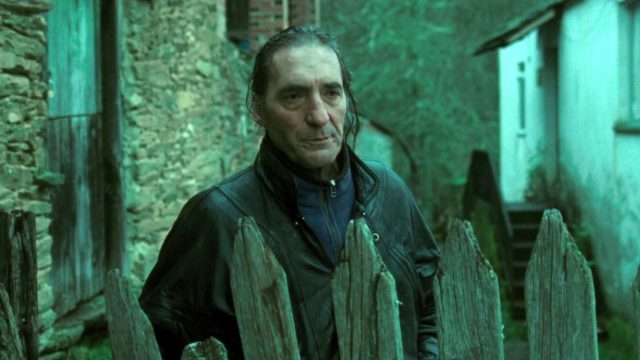
Benedicta (Benedicta Sanchez) surveys her land shortly after her son returns from prison in Fire Will Come

The story moves to a small, tight-knit rural village in the mountains of Galicia, where Amador Coro (Amador Arias) has returned to live with his mother, Benedicta (Benedicta Sanchez), after having spent time in prison for starting a wildfire. He cares for their three cows, is followed around by his loyal dog, and carries with him an unspoken but heavy guilt, a melancholy that overwhelms his every gesture. He says little, enduring taunts from his former friends in town, who tease him by asking for a light, when they speak to him at all. “If they make suffer, it’s because they are suffering,” his mother assures him. She also tells him, “I’m really happy that you’re home,” but there is little evidence of any contentment, few smiles to be had.

We never learn exactly what Amador might have done and what its effects were, but the blame clearly runs deep. This is no obvious situation in which a gender-reveal party led to devastation; instead, it’s more about humanity’s relationship with nature and the planet, about our responsibilities to the land and to the animals, which include ourselves. Like California, Galicia is a place where wildfires run rampant, among the worst in Europe, the result not only of climate change or accidents but of controlled burns that erupt out of control, in part due to invasive eucalyptus trees. The fires have become political because of their economic ramifications as much as for the havoc they wreak.

Water plays a key role in the film alongside fire. During a rainstorm, Benedicta finds shelter in the nook of a large tree. Later, when Amador takes one of the cows, Parda, to bathe in a dirty pond surrounded by greenery, the animal is uneasy, unwilling to leave the safety of the muddy water. After getting help from the local vet, Elena (Elena Fernandez), he rides back with her in her truck as she plays Leonard Cohen’s “Suzanne,” Cohen singing, “And Jesus was a sailor when he walked upon the water / And he spent a long time watching from his lonely wooden tower / And when he knew for certain only drowning men could see him / He said all men will be sailors then until the sea shall free them.” Elena tries to become friends with Amador, but he, broken and feeling forsaken, pushes her away.

His loneliness is palpable, plagued with a conscience that burdens him with shame, a big, strong man now sad and fragile, not interested in seeking redmption. It’s as if he exists on a different plane, dourly wandering through a world that he no longer belongs in, that he feels he doesn’t deserve. In his first film, Arias, a former forest warden who now works with animals, is brutally honest, his craggy face etched in strife, his gait constantly troubled. Fire Will Come is steeped in reality, from the use of nonprofessional actors to the fires themselves. Laxe (You All Are Captains, Mimosas), the French-born son of Galician parents, shot the film in his grandparents’ village, among people he knows. He did not use CGI; instead, he had his cast and crew wait for real forest fires, then filmed actual firefighters battling them. You can almost feel the heat coming off the screen; the film is gorgeously photographed by Mauro Herce, through foggy landscapes, stunning vistas, and claustrophobic interiors, accompanied by natural sounds captured by Sergio da Silva, Xavier Souto, and Amanda Villavieja and a soundtrack that features Vivaldi and Haas in addition to sparse but effective incidental music by Xavi Font. It all comes together in one scene in which Amador is driving in his car, the camera following him from outside, reflections of trees passing over the front windshield as classical music plays. Editor Cristóbal Fernandez maintains a deliberate, almost reluctant pace.

The opening and closing scenes are stark reminders of our connection to the earth and the frightening potential for one to destroy the other. The Galician title of the film, O que arde, means “What burns,” which is not as sinister as “Fire will come,” a warning of what lies ahead. In 1969, Peggy Lee sang, “I remember when I was a very little girl, our house caught on fire / I’ll never forget the look on my father’s face as he gathered me up / in his arms and raced through the burning building out to the pavement / I stood there shivering in my pajamas and watched the whole world go up in flames / And when it was all over I said to myself, is that all there is to a fire.” In his third feature film, Laxe shows us that there is so much more.

[Fire Will Come is streaming at Metrograph October 30 to November 5; each rental comes with access to a conversation between Laxe and master cinematographer Ed Lachman (Far from Heaven, Light Sleeper.)]
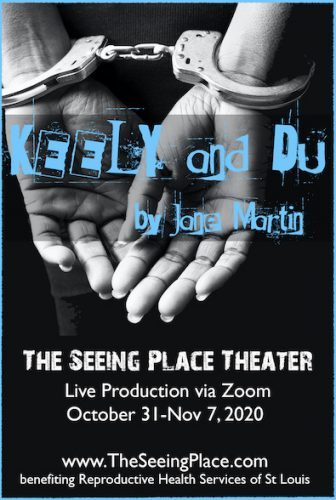

RIPPLE FOR CHANGE: KEELY AND DU BENEFIT READING AND PANEL DISCUSSION

Who: The Seeing Place Theater
What: Livestreamed benefit readings and panel discussions
Where: The Seeing Place Theater Zoom
When: Saturday, October 31, and Sunday, November 1, $10-$50, 7:00 (available on YouTube November 3-7)
Why: The Seeing Place Theater continues its “Ripple for Change” series with two live, virtual readings of the pseudonymous Jane Martin’s 1994 Pulitzer Prize finalist, Keely and Du, a powerful work about a pregnant rape victim and an antiabortion activist. The drama premiered at the Humana Festival of New American Plays at the Actors Theatre of Louisville in March 1993 and continues to be popular, given the subject matter, especially as the Supreme Court becomes more conservative and Roe v Wade and other aspects of health care are in danger. The reading is directed by Brandon Walker and Erin Cronican and features Cronican as Keely, Audrey Heffernan Meyer as Du, Walker as Walter, and Olivia Hanna Hardin as the guard; it will be performed live October 31 and November 1 at 7:00, in honor of Domestic Violence Awareness Month, with proceeds benefiting the Reproductive Health Services of Planned Parenthood of Saint Louis; it will be available for viewing on YouTube November 3-7.

“Rather than tell audiences what to think, this play poses deep questions to get to the heart of the debate over who governs women’s bodies,” Cronican said in a statement. “It asks us to reflect on an individual’s rights, a community’s responsibilities, and the difference between one person’s expectations and another’s reality.” Each performance will be followed by “Action Steps for Protecting Women’s Choices,” a panel discussion with Dr. Colleen McNicholas, an OB-GYN who became Planned Parenthood’s first-ever chief medical officer in July 2019. “I don’t want to get comfortable talking to you,” Keely tells Du at one point. Unfortunately, it’s part of a conversation that is not going away any time soon.

THE ROCKY HORROR SHOW MUSICAL LIVESTREAM

Who: Tim Curry, Wilmer Valderrama, Lance Bass, Rosario Dawson, Jason George, Nell Campbell, Seth Green, Jason Alexander, David Arquette, the Dresden Dolls, Miss Peppermint, Eiza Gonzalez, Josh Gad, Ben Barnes, Jenna Ushkowitz, Rachel Bloom, Karen Olivo, Marissa Jaret Winkour, Madison Uphoff, Kalen Chase, Rumer Willis
What: Livestreamed Halloween political fundraiser
Where: WisDems Zoom
When: Saturday, October 31, suggested donation $31, 10:00
Why: America is in danger of going through a perilous time warp if the current administration gets another four years in office, further setting back gains that have been made over decades toward freedom and equality for all. With that in mind, the Wisconsin Democratic Party has been on a fierce and furious drive to flip the swing state blue on election day with virtual cast reunions of Happy Days, The Princess Bride, Veep, and Superbad that have each raised hundreds of thousands of dollars. Next up is a celebration of the 1975 midnight cult classic The Rocky Horror Picture Show, a film that celebrates individuality and daring to be different. We might not be able to touch-a, touch-a, touch-a, touch one another, but we can reach out and come together online, and joining in the fun on Halloween night will be Dr. Frank N. Furter himself, Tim Curry, along with Wilmer Valderrama, Lance Bass, Rosario Dawson, Jason George, Nell Campbell, Seth Green, Jason Alexander, and David Arquette, with musical performances by the Dresden Dolls, Miss Peppermint, Eiza Gonzalez, reunion champ Josh Gad, Ben Barnes, Jenna Ushkowitz, Rachel Bloom, Karen Olivo, Marissa Jaret Winkour, Madison Uphoff, Kalen Chase, and Rumer Willis. The suggested donation is $31 for the one-time-only live event, but you can give any amount to watch the festivities and submit your own question, so as far as change goes, don’t just dream it, be it.

RESOUNDING LIVE: DRACULA

Audiences will have to imagine what castle looks like in audio adaptation of Dracula

Who: Norm Lewis, Lindsay Nicole Chambers, Siho Ellsmore, Chris Renfro, Dick Terhune, Stuart Williams, John Stimac
What: Virtual, immersive audio presentation of Dracula
Where: Resounding Live
When: Friday, October 20, and Saturday, October 31, $20, 8:00
Why: Because of the pandemic lockdown, theater creators have been looking at innovative ways to bring storytelling into people’s homes. One method that is making a comeback is the radio play. On October 30, Keen Company is performing Orson Welles’s iconic 1938 War of the Worlds radio script. Welles’s legacy also plays a part in Resounding’s audio production of Bram Stoker’s Dracula, inspired by Welles’s 1938 radio adaptation and utilizing cutting-edge proprietary technology that promises “to create a live 360-degree soundscape of howls, bats, screams, creaky floors, slamming doors, and everything that goes bump in the night.” Tony nominee Norm Lewis dons the cape as the bloodsucking count, with Lindsay Nicole Chambers as Mina Murray, Siho Ellsmore as Lucy Westenra, Chris Renfro as Jonathan Harker, Dick Terhune as Prof. Van Helsing, Stuart Williams as Dr. Seward, and John Stimac as Renfield, all performing live from wherever they’re sheltering in place.

“I’ve been thinking for the better part of a decade about how to leverage the internet to increase audience and participation in the theater in America and the world,” Resounding creative director Steve Wargo said in a statement. “My initial ideas were to re-create the style and substance of the broadcasts that Orson Welles and his Mercury Theatre performed live on the radio in the late ’30s. Time passed, other projects came and went, then the pandemic hit, and this idea became front and center. We have an amazing team and now we have some fancy patent-pending new technology on our hands, something potentially revolutionary. And what better way to launch that with the great Norm Lewis as Dracula for Halloween.” In addition, New York City bartender Jena Ellenwood has curated cocktails to accompany the fifty-five-minute show; the audience is also encouraged to dress up for the event and post images to a virtual photo booth on Pinterest to form a unique community. Next up for Resounding are an adaptation of Robert Louis Stevenson’s Treasure Island November 27-28 and the world premiere of The Fantastical Tale of the Nutcracker and the Mouse King December 18-19.

“THE NIGHTMARE BEFORE CHRISTMAS”: A HALLOWEEN NIGHT BENEFIT CONCERT

Who: James Monroe Iglehart, Rafael Casal, Adrienne Warren, James Monroe Iglehart, Danny Burstein, Nik Walker, Lesli Margherita, Rob McClure, Kathryn Allison, Jenni Barber, Erin Elizabeth Clemons, Fergie L. Philippe, Jawan M. Jackson, Brian Gonzales
What: Livestreamed benefit concert
Where: the Actors Fund Vimeo channel
When: Saturday, October 31, $4.99, 7:00
Why: “Year after year, it’s the same routine / And I grow so weary of the sound of screams / And I, Jack, the Pumpkin King / Have grown so tired of the same old thing,” Skeleton Jack sings in Tim Burton’s 1993 animated classic, The Nightmare Before Christmas. In this horrific 2020, everyone will be lamenting the holiday, with no parade in the Village, no club parties and in-person costume contests, no bobbing for apples, and no trick-or-treating; the city is destined to be a lonely place on October 31. But there’s a lot happening online, including a benefit concert featuring Broadway stars performing Danny Elfman’s music from Nightmare. The all-star cast includes Rafael Casal as Jack, Adrienne Warren as Sally, James Monroe Iglehart as Oogie Boogie, Danny Burstein as Santa, Nik Walker as Lock, Leslie Margherita as Shock, and Rob McClure as Barrel, joined by Kathryn Allison, Jenni Barber, Erin Elizabeth Clemons, Fergie L. Philippe, Jawan M. Jackson, and Brian Gonzales. Tickets are only $4.99, with proceeds going to the Actors Fund and the Lymphoma Research Foundation.

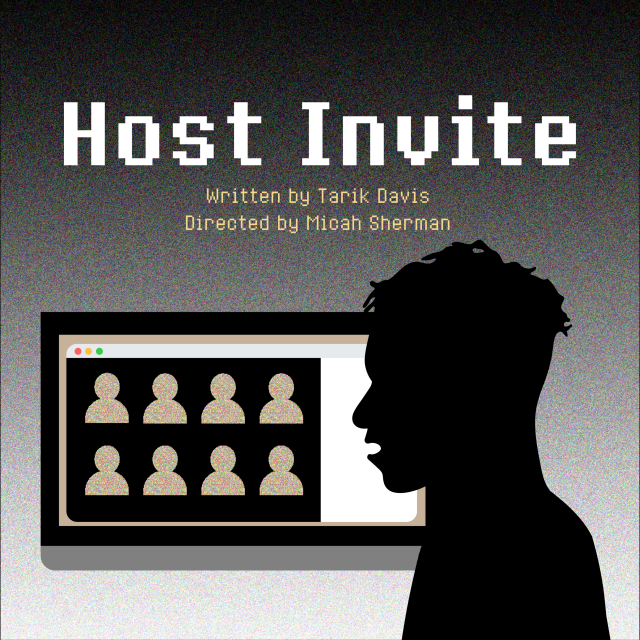
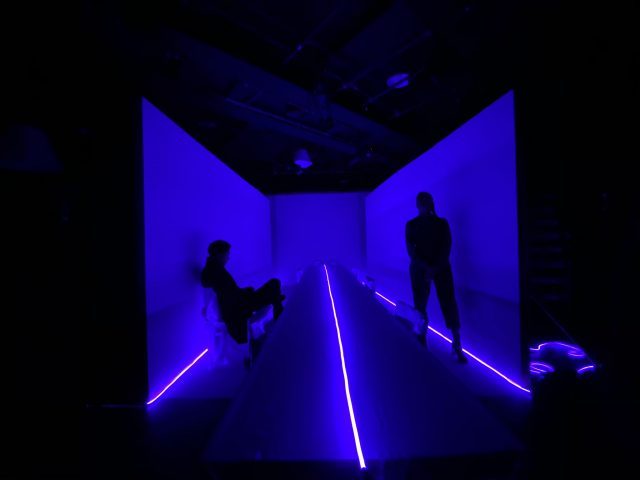
HOST INVITE

Who: Tarik Davis, Micah Sherman, Paul(i) Reese, Mark Stetson, Steve Capps, Greg Kotis, Suni Reyes, Kristin Stokes, Priya Patel, Don P. Hooper, Kelly Aucoin
What: Virtual one-act horror play
Where: The Tank online
When: Saturday, October 31, $10-$125, 7:00
Why: Actor, filmmaker, comedian, and improv teacher Tarik Davis grew up on a diet of sci-fi and horror films on VCR in the 1980s and ’90s, resulting in, among other things, his making the award-winning 2017 short Page One, about danger on a movie set involving a Black actor whose character gets killed on the first page of the script and a white man playing a uniformed police officer. Davis has now returned to the horror genre with Host Invite, a work-in-progress he will be presenting on Halloween night through the Tank’s online portal. “The people who make theater with or without an actual theater are stronger than this damn virus will ever be,” Davis, who appeared on Broadway in Freestyle Love Supreme, noted on Facebook. “Artists are stronger than the forces of racism, fascism, unregulated capitalism, homophobia, transphobia, constitutional originalism. If ever there was a moment to make theater it’s THIS moment.”

The cast and crew for Host Invite includes director Micah Sherman, tech designer Paul(i) Reese, Mark Stetson, Steve Capps, Greg Kotis, Suni Reyes, Kristin Stokes, Priya Patel, Page One director Don P. Hooper, and Kelly Aucoin of Billions and The Americans. Part of the Tank Artists-in-Residence Program, the sixty-minute virtual play deals with a Zoom call and a whistleblower from the multinational conglomerate Tangle. “I had an overwhelming urge to figure out a way to get all the wonderful people who made my debut on Broadway such a dream paid,” Davis continued. “Art is work, work deserves compensation. ‘I’ll write a play for Zoom,’ I thought. And now here we are.” Tickets are pay-what-you-can-can, from $10 to $125.

THE THREEPENNY OPERA

City Lyric Opera reinvents Brecht and Weill’s Threepenny Opera for online viewing and participation

Who: Sara LaFlamme, Sara LeMesh, Michael Parham, Rachelle Pike, Gretchen Pille, Mary Rice, Thomas Walters, Shane Brown, Geddy Warner, Shanelle Valerie Woods, the Curiosity Cabinet
What: Live virtual two-part performances
Where: City Lyric Opera Zoom
When: Thursday – Sunday, October 29 – November 15, viewing $12, live audience with toolkit $24, 8:00
Why: In Die Dreigroschenoper, or The Threepenny Opera, one of composer Kurt Weill’s goals in his collaboration with Bertolt Brecht was to bring opera, primarily an art form enjoyed through the centuries by the wealthy, snobbish elite and royalty, to the common people, making the story and music accessible and the production affordable. During the pandemic, technological online innovation has accomplished just that organically, with such shows as White Snake Projects’ excellent Alice in the Pandemic, which sent the protagonist, an ER nurse, down the rabbit hole in search of her coronavirus-infected mother, journeying through an animated video-game-like dark and empty wonderland, with the singers performing live (October 23-27, free); Orpheus Chamber Orchestra’s version of Beethoven’s Egmont, with the masked, socially distanced musicians playing in a New Jersey bandshell, accompanied by narrator Liev Schreiber and soprano Karen Slack (October 17-22, $15); Here Arts Center’s Zoom opera for all decisions will be made by consensus, a short work broadcast live on Facebook and Zoom about a Zoom meeting (April 24-26, free); and On Site Opera’s To My Distant Love, an adaptation of Beethoven’s six-song cycle, An die ferne Geliebte, delivered via email and cell phone (June – August, $40). Meanwhile, the Met, which will be closed through at least next summer, has been streaming more than 150 video and audio recordings of performances dating back to the 1950s (initially free, now $4.99 each or $14.99 monthly).

So it makes sense that City Lyric Opera (CLO), founded in 2016 by Megan Gillis and Kathleen Spencer to “provide a one-of-a-kind experience for audience members by welcoming them to the operatic art form without judgment, expectation, or financial burden,” is taking on The Threepenny Opera itself. “With the Dreigroschenoper we reach a public which either did not know us at all or thought us incapable of captivating listeners,” Weill explained way back when. “Opera was founded as an aristocratic form of art. If the framework of opera is unable to withstand the impact of the age, then this framework must be destroyed.” Weill and German playwright and librettist Brecht adapted John Gay’s 1728 The Beggar’s Opera, translated by Elisabeth Hauptmann, Brecht’s lover at the time, adding several songs based on works by fifteenth-century French poet and thief François Villon. The work, set during the Victorian era, premiered in Berlin in 1928; it was a Broadway failure in 1933, in a translation by Jerrold Krimsky and Gifford Cochran. However, Marc Blitzstein’s 1952-54 English translation became a hit and is the version we know today, and the one that will be used by CLO, which was scheduled to stage a full, in-person production this season. It has now been reimagined for the internet, being livestreamed in two back-to-back parts, Thursday to Sunday from October 29 to November 15. Tickets are $12 to watch and $24 with a live, interactive toolkit that incorporates the audience into the narrative. (Glow sticks, anyone?) The piece was developed at Here Arts Center, where director Attilio Rigotti and scenographer Anna Driftmier worked with the cast socially distanced in separate Covid performance boxes, each with its own design and lighting.

The company features baritone Justin Austin as Macheath, tenor Kameron Ghanavati as Filch/Smith/Ensemble, baritone Philip Kalmanovitch as Mr. Peachum, soprano Sara LaFlamme as Polly Peachum, soprano Sara LeMesh as Lucy Brown, baritone Michael Parham as Jackie “Tiger” Brown, mezzo-soprano Rachelle Pike as Mrs. Peachum, soprano Gretchen Pille as Dolly, mezzo-soprano Mary Rice as Bob/Berry, tenor Thomas Walters as Jake, baritone Shane Brown as Walt, tenor Geddy Warner as Matt, and mezzo-soprano Shanelle Valerie Woods as Jenny. The conductor and music director is Whitney George, leading the Curiosity Cabinet: Jared Newlen (reed I: clarinet, alto sax), Ben Solis (reed II: clarinet, alto sax), Hugh Ash (trumpet I), Clyde Dale (trumpet II), David Whitwell (trombone), Markus Kaitila (piano/celeste/harmonium), Joe Tucker (timpani, percussion), and Justin Rothberg (banjo, guitar). With its bitingly satirical view of capitalism and societal norms, The Threepenny Opera should feel right at home online in 2020, as we are all sheltering in place, in the midst of health and economic crises and a contentious presidential election where decency, humanity, wealth inequality, health care, and the social contract are on the ballot.