twi-ny recommended events

PJ HARVEY: A DOG CALLED MONEY

PJ Harvey traveled to Kosovo, Kabul, and Washington, DC, to inspire 2016 album The Hope Six Demolition Project

A DOG CALLED MONEY (Seamus Murphy, 2019)
Film Forum online
Opens virtually Wednesday, December 9, $12 for 48-hour rental
filmforum.org

Irish photojournalist Seamus Murphy lays bare English musician PJ Harvey’s creative process in the irresistible documentary A Dog Called Money. Polly Jean Harvey initially hired Murphy to take photos for her 2011 album, Let England Shake, after having seen Murphy’s 2008 exhibit and book, A Darkness Visible: Afghanistan. Murphy ended up making twelve short films with her, one for each song on the record, and in 2012 he asked Harvey if she wanted to accompany him on his trips to Kabul, Kosovo, and Washington, DC, where they would work separately, he on a book, she on a record. But the journeys led to a creative cornucopia that also resulted in their collaborating on the book The Hollow of the Hand, featuring his photographs and her poetry, as well as the 2016 album The Hope Six Demolition Project and the documentary, which opens virtually December 9 at Film Forum.

Murphy follows Harvey, dressed all in black, as she goes through old photos and other detritus in a looted, destroyed home, sits on the rocky shore of a lake writing in her journal (with voice-over narration of her thoughts), hangs out with Corny’s crew in Anacostia, wanders into a theater in ruins (“I’ve heard twenty years ago, you could pay to get into the cinema with bullets,” she says), has tea with a group of children, and visits with local musicians in Kabul’s “Tin Pan Alley.” Murphy cuts between these scenes and Harvey and her band recording new songs in a specially constructed studio in the basement of the historic arts center Somerset House in London. Harvey, who burst onto the alternative music scene in the 1990s with such seminal records as Dry, Rid of Me, and To Bring You My Love, turns the sessions into an art installation by allowing people to watch from behind a one-way mirror; they can see her, but she can’t see them. It’s a genuine treat to observe Harvey’s process as she works with such musicians as John Parish, Terry Edwards, Kenrick Rowe, Enrico Gabrielli, Mike Smith, Alessandro Stefana, James Johnston, Alaine Johannes, Adam “Cecil” Bartlett, Jean-Marc Butty, and Mick Harvey (no relation) on melody, vocalization, and instrumentation, the songs taking shape right before our eyes and ears.

Murphy draws direct parallels between what Harvey witnesses and the songs she is writing. She meets a woman walking with her hands behind her back, holding a chain with two keys, who says, “I would kill them with my own hands if I knew who was responsible”); in “Chain of Keys,” Harvey sings, “The woman’s old / The woman’s old and dressed in black / She keeps her hands / She keeps her hands behind her back / Imagine what / Imagine what her eyes have seen / We ask if she / We ask but she won’t let us in.” After playing with the Kabul musicians, she transforms their sounds into the powerful “Homo Sappy Blues.” She uses some of Corny’s crew’s exact words and actions in her lyrics for “A Dog Called Money.” She also captures the overall feeling of her experience in such tunes as “The Ministry of Defence” (“Those are the children’s cries from the dark / These are the words written under the arch / Scratched in the wall in biro pen / This is how the world will end”) and the stunning “I’ll Be Waiting” (“They swept across the land / They did not leave a thing / They did not leave a person / A stone or a tree / They did not leave anything / They did not leave anything / All that’s left is sand / All that’s left is sand”).

At first what seems like it could be cultural appropriation develops into something else, a genuine attempt to understand what is happening in these countries and around the world — as well as in America with the inclusion of DC — and sharing that through music. “Everyone driving in one direction / Everyone driving in every direction / Where to go? / Why? / What to say when I get there?” Harvey narrates near the start of the film, which opens with an extended close-up of a smiling boy with a dirty face, his nose pressed against the window of a car, the sound of traffic all around him. For ninety minutes, we are all that boy, and he is us. And we have a book, an album, and now a documentary to remember that.

A TOAST TO DOWNTOWN

Who: Paul Pfeiffer, Eiko Otake, Amina Henry, Morgan Bassichis, Mona Chalabi, Ivy Mix, Mariana Valencia, Jessica Lappin, Maggie Boepple
What: LMCC benefit fundraiser
Where: Lower Manhattan Cultural Council online
When: Wednesday, December 9, free with RSVP (donations accepted), 7:00
Why: Since 1973, the Lower Manhattan Cultural Council has “served, connected, and made space for artists and communities in NYC through programs that deepen artists’ creative practice and afford them opportunities to share their process and work with local communities.” Rarely has that been more important than during the pandemic lockdown. On December 9 at 7:00, LMCC’s annual fundraiser goes virtual with “A Toast to Downtown,” celebrating the great work the organization does not only in Lower Manhattan but on Governors Island and other locations. This year’s civic leadership honorees are Downtown Alliance president Jessica Lappin and former LMCC president Maggie Boepple; in addition, Amina Henry (The Animals, Bully) will receive the Sarah Verdone Writing Award, Eiko Otake will be presented with the Sam Miller Award for Performing Arts, and Paul Pfeiffer will receive the Michael Richards Award for Visual Arts.

The evening will include video from Pfeiffer, who will show excerpts from a new work as well as from 2001’s Orpheus Descending, which was installed at the World Trade Center and follows the life cycle of a flock of chickens; a new video from Eiko, made for this gala and recently shot on location at LMCC’s Arts Center at Governors Island; and appearances by LMCC artists and alumni Morgan Bassichis, Mona Chalabi, Ivy Mix, and Mariana Valencia. It’s free to RSVP, but $20 gives you a chance to win a limited edition “100 New Yorkers” print by Chalabi based on her 2020 River to River project, $50 helps fund artist residencies, $100 supports grants to neighborhood arts communities, and $250 gives artists the opportunity to share their work and their creative process.

FOLKSBIENE CHANUKAH SPECTACULAR

Who: Carol Burnett, Emanuel Azenberg, Mayim Bialik, Billy Crystal, Tovah Feldshuh, Beanie Feldstein, Joel Grey, Jackie Hoffman, Carol Kane, Barry Manilow, Mandy Patinkin, Itzhak Perlman, Eleanor Reissa, Neil Sedaka, Steven Skybell, Dr. Ruth Westheimer, Jerry Zaks, Geni Brenda, Mendy Cahan, Yefim Chorny, Josh Dolgin, Suzanna Ghergus, Miwazow Kogure, Shura Lipovsky, Freydi Mrocki, Polina Shepherd, Merlin Shepherd, Motl Didner, Zalmen Mlotek, Frank London, Tatiana Wechsler, Elmore James, more
What: Global online Chanukah celebration
Where: National Yiddish Theatre Folksbiene
When: Tuesday, December 8, free with RSVP, 7:00 (available for ninety-six hours)
Why: National Yiddish Theatre Folksbiene is doing more than its part in keeping alive Yiddish theater and the Yiddish language itself, with regular presentations at the Museum of Jewish Heritage. But with the pandemic lockdown, it has adapted to online shows and discussions, and on December 8 it will welcome in the Festival of Lights with a Chanukah celebration with guests from around the world. Debuting on December 8 at 7:00 and available on demand for ninety-six hours, “Folksbiene Chanukah Spectacular” features an all-star lineup, beginning with an audio greeting from Carol Burnett and including appearances by such favorites as Mayim Bialik, Billy Crystal, Tovah Feldshuh, Beanie Feldstein, Joel Grey, Jackie Hoffman, Carol Kane, Barry Manilow, Mandy Patinkin, Itzhak Perlman, Neil Sedaka, Dr. Ruth Westheimer, and many others.

Although it’s free to watch, Chanukah gelt will be gladly accepted, as this is a fundraiser for the company, which in recent years has staged such wonderful Yiddish productions as Fiddler on the Roof, The Sorceress, and The Golden Bride, under the leadership of conductor and artistic director Zalmen Mlotek, who said in a statement with executive director Dominick Balletta, “We’re excited to present this exceptional Yiddish celebration, bringing together Yiddish ambassadors from across the globe, from across the United States to as far away as Australia. This will be a theatrical experience like no other — presented virtually so that families and communities across the world can enjoy it together.” Directed and produced by Adam B. Shapiro, the evening will include music and dance, comedy sketches, and tributes to the golden age of Yiddish theater, along with a grand finale led by members of the Children’s Choir from Tzipporei Shalom of Congregation Beth Shalom in New Jersey. There’s also a special preshow Zoom event with Skybell, Mlotek, and others if you donate at a certain level, in addition to an appetizer delivery from the Lox Cafe.

A CELEBRATION OF LIGHT

Eleanor Reissa teams up with Zalmen Mlotek for intimate holiday concert filmed in her home

Who: Zalmen Mlotek, Eleanor Reissa
What: Virtual Hanukkah concert
Where: On Stage at Kingsborough online
When: December 6-20, suggested admission $10
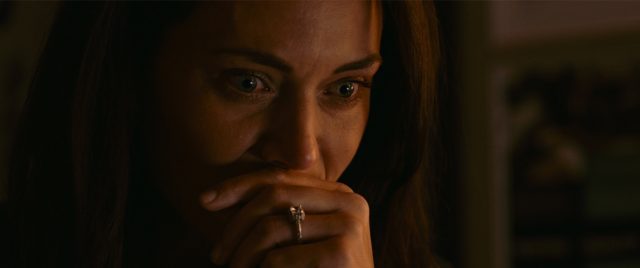
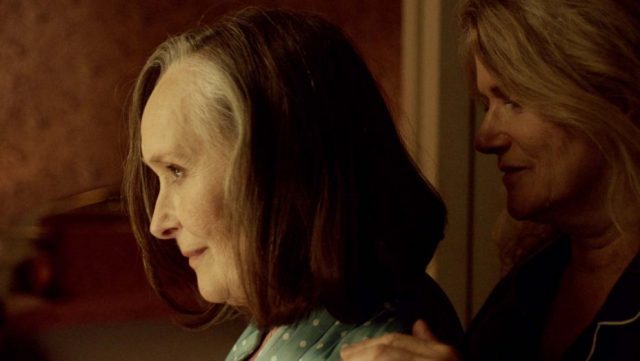
Why: Hanukkah takes place December 10-18 in this year, but you can get a head start by checking out On Stage at Kingsborough’s special holiday concert, “A Celebration of Light,” streaming December 6-20. Suggested admission is $10, although you can give less or more, depending on what you can afford, to watch the inimitable Zalmen Mlotek, conductor, musical arranger, pianist, accompanist, composer, and artistic director of the National Yiddish Theatre, and Eleanor Reissa, Tony-nominated director, singer, writer, and actor. Mlotek (Fiddler on the Roof in Yiddish, The Sorceress) and Reissa (Those Were the Days, God of Vengeance) performed the intimate concert in Reissa’s home, where they celebrated the Festival of Lights in addition to the Yiddish language itself, sharing songs, stories, and more. You can get a taste of the wonderful Reissa here.

UNBOUND: BLACK FUTURES

Who: Kimberly Drew, Jenna Wortham, Raquel Willis, Naima Green
What: Livestream Unbound discussion
Where: BAM / Greenlight Bookstore
When: Monday, December 7, $15 ($45-$50 with book), 7:00
Why: BAM’s ongoing literary program, “Unbound,” copresented with Greenlight Bookstore, goes virtual with the launch of Black Futures (Penguin Random House, $40). Edited by Kimberly Drew and Jenna Wortham, the book features contributions from Alicia Garza, Alexandra Bell, Hank Willis Thomas, LaToya Ruby Frazier, Zadie Smith, Dawoud Bey, Jackie Sibblies Drury, Kara Walker, Ta-Nehisi Coates, Amy Sherald with Kehinde Wiley, and dozens of other creators, divided into such chapters as “Power,” “Joy,” “Justice,” “Ownership,” and “Legacy.” In their introduction, Drew and Wortham explain, “‘The Black Futures Project’ started a few years ago as a Direct Message exchange on Twitter and has evolved into a shared desire to archive a moment. In developing Black Futures, we sought to answer the question: What does it mean to be Black and alive right now?” The book explores that idea through photography, essays, recipes, screenshots, poetry, memes, social media posts, paintings, song lyrics, and other prismatic text and imagery. You can hear an excerpt from the book here.

On December 7 at 7:00, writer, curator, influencer, and activist Drew and culture writer and Still Processing podcast host Wortham will be joined by transgender artist and activist Raquel Willis (whose “Welcome to the Trans Visibility Era” is included in Black Futures) and artist Naima Green (who contributed “Documenting the Nameplate” with Azikiwe Mohammed) to talk about the book, which is nonlinear and is meant to “provoke you, entice you, enrage you, spark joy, and call you to action.” Tickets are $15, or $45-$50 with a copy of the book, depending on whether you can pick it up in person or need it shipped; a portion of the ticket revenue will be split between BAM and the Campaign Against Hunger, a Brooklyn-based emergency food and community support organization that advances equity for the underserved, helping “build self-determination, engaging in grassroots activism, and investing in civic life,” which is needed now more than ever during the Covid-19 crisis.

CREATING GARDEN OF STONES: A CONVERSATION WITH ANDY GOLDSWORTHY AND JACK KLIGER

Andy Goldsworthy will discuss Garden of Stones, his permanent installation at the Museum of Jewish Heritage, in Zoom talk (photo courtesy the Museum of Jewish Heritage)

Who: Andy Goldsworthy, Jack Kliger
What: Live Q&A
Where: Museum of Jewish Heritage Zoom
When: Sunday, December 6, free with RSVP, 11:00 am
Why: In the summer of 2003, British sculptor, land artist, and photographer Andy Goldsworthy installed Garden of Stones outdoors in the 4,150-square-foot garden at the Museum of Jewish Heritage — A Living Memorial to the Holocaust, a collection of eighteen massive rocks that had small holes hollowed out in them in order to place dwarf oak saplings inside, planted by Holocaust survivors and members of their families at a special ceremony. The number eighteen is represented in Hebrew by the letters chet (ח‎) and yod (י‎), which form the word chai, which means “life.” The work offers a twist on the traditional Jewish cemetery, where people leave pebbles on headstones when visiting graves that are surrounded by growing grass, a kind of life out of death.

Goldsworthy, who interacts with the natural world like no other artist, has been profiled in such documentaries as Leaning into the Wind and Rivers and Tides, which reveal his deep connection to the earth and his often time-consuming process. On December 6 at 11:00 am, in “Creating Garden of Stones,” he will discuss his methods specifically relating to the project in a live Zoom talk and Q&A with Museum of Jewish Heritage president and CEO Jack Kliger. The ever-changing permanent installation takes on new meaning while the country struggles through a horrific health crisis that has led to more than 280,000 American deaths, with many funerals happening virtually instead of in person and cemetery visits few and far between. Admission is free with RSVP.

76 DAYS

Two essential healthcare workers take a much-deserved brief break in a Wuhan hospital in 76 Days

76 DAYS (Hao Wu, Weixi Chen, and Anonymous, 2020)
Opens virtually at Film Forum at Home on Friday, December 4
Live Q&A Tuesday, December 8, 7:00
filmforumhome.org
www.76daysfilm.com

The prospect of sitting through a ninety-minute documentary about essential healthcare workers in four hospitals in Wuhan fighting in the early days of Covid-19, during the city’s seventy-six-day lockdown, might seem daunting. But what could have been a difficult, emotional, and political roller coaster about fear and anger, government lies and finger pointing turns out to be a deeply affecting film that celebrates our most basic hopes and humanity.

Chinese director Hao Wu was researching a film about pandemics when, in mid-February, he came upon footage being shot by a pair of reporters in Wuhan, Weixi Chen and a man who has decided to remain anonymous. They had been given full access to four hospitals, where they followed doctors, nurses, patients, and family members for several months. There are no talking heads, and no one speaks directly to the camera; instead, 76 Days offers a fly-on-the-wall perspective that manages to be as uplifting as it is frightening.

The film opens like a sci-fi thriller, as an unidentified group of people in head-to-toe protective gear that includes light-blue masks, long face shields, white Hazmat suits, and blue footies comforts a distraught colleague who is prevented from saying goodbye to her father, who has just died from the novel coronavirus. Near the end of the scene, one of her coworkers tries to calm her down, saying, “We don’t want to see you in distress or pain. What will we do if you fall sick? We all have to work in the afternoon.” Moments later, sick people are banging on a door of the hospital to be let in, like a crowd trying to escape a coming zombie apocalypse, while two workers decide who to admit first. Those exchanges set the stage for the rest of the film, in which doctors and nurses go about their business with a relatively relaxed demeanor, displaying endless empathy and compassion as they care for scared patients with uncertain futures.

Wu focuses on a few specific cases that serve to represent the crisis as a whole, following an elderly couple who both have the virus and are not permitted to see each other even though they are on the same floor, and a young couple who are forced to quarantine in their apartment after the woman gives birth to a baby girl, unable to see their newborn for two weeks. While the nurses fall in love with the infant, who must stay in an incubator and whom they name Little Penguin, the workers have their hands full with the old man, who constantly tries to leave the hospital and doesn’t seem capable of wearing his mask correctly, if at all.

Doctors and nurses in Wuhan care for Covid patients, displaying empathy and compassion during seventy-six-day lockdown

The genuine kindness and concern displayed by the hospital employees is, well, infectious. They are risking their lives at every moment; each encounter is fraught with the possibility that they could contract the virus even with all the PPE. It’s hard not to cringe when they feed the old man, wipe the face of the infant, or use a patient’s phone to call a relative with news, because the reality is that people die from this disease, and Wu is not afraid to show that. It’s a riveting film that immerses you in this global emergency that started right there, at that time; if this doesn’t make you wear a mask, wash your hands, observe social distance protocols, and avoid gathering with others indoors, I don’t know what will.

We also see the empty streets and highways of Wuhan, a city of eleven million people, deserted, with signs advising, “Staying home makes a happy family.” All the action is happening in the hospitals, where the doctors and nurses bond with themselves and the patients, decorate their white Hazmat suits with drawings and sayings (“Clay Pot Chicken: I miss you”), and caution everyone to “be extra vigilant.” As the crisis continues to surge around the world and here in America, where politics trumps safety, those are indeed words to live by. Winner of the Best Cinematography award at DOC NYC 2020 and nominated for a Best Documentary Gotham Award, 76 Days launches virtually at Film Forum on December 4; Wu will share more about the documentary and his process in a free, live Q&A on December 8 at 7:00.