twi-ny recommended events

CLOUD OF THE SERPENT: KIYOSHI KUROSAWA AT JAPAN CUTS FESTIVAL

A disengaged online reseller (Masaki Suda) gets more than he bargained for in Kiyoshi Kurosawa’s Cloud

JAPAN CUTS — FESTIVAL OF NEW JAPANESE FILM 2025: KIYOSHI KUROSAWA
Japan Society
333 East 47th St. at First Ave.
January 10-20
www.japansociety.org

The annual summer Japan Cuts festival is underway at Japan Society, eleven days of new and restored works that began July 10 with Yasuhiro Aoki’s debut feature, ChaO, and continued with Yuya Ishii’s The Real You, Kenichi Ugana’s The Gesuidouz, and Kichitaro Negishi’s Yasuko, Songs of Days Past, prime examples of the wide range of works at the fest, many of them North American premieres and followed by Q&As. Upcoming highlights include Daihachi Yoshida’s Teki Cometh, Takashi Miike’s Blazing Fists, Masashi Iijima’s Promised Land, and the closing night selection, Joseph Overbey’s documentary The Spirit of Japan, complete with a shochu reception.

The 2025 edition celebrates the career of Kiyoshi Kurosawa, who will participate in Q&As and introductions at several screenings. “The very base of cinematic expression is to film the reality in front of you using cameras. So, the similarity with the reality would be the feature of a movie,” Kurosawa told Dirty Movies in 2018. “This could be also its limitation, but anyway, I am particularly interested in the fact that a movie is almost the same as reality, but at the same time is slightly different than reality. This difference or unreality is always my starting point when I create my work.” That quote can be applied to the two Japan Cuts films that are reviewed below.

CLOUD (『クラウド』) (KURAUDO) (Kiyoshi Kurosawa, 2024)
Wednesday, July 16, 6:00
japansociety.org

Kobe-born suspense master Kiyoshi Kurosawa returns to Japan Cuts with a pair of intense revenge thrillers that are not for the faint of heart. Both were made in 2024, both feature torture and violence, and both are tons of fun.

Up first for Kurosawa, who has made such horror faves as Cure, Pulse, and Creepy as well as such psychological dramas as Bright Future and Tokyo Sonata, is Cloud, the centerpiece selection. Masaki Suda stars as Yoshii, a quiet, disengaged young man who works at a cleaning factory, supplementing his income as an online reseller, purchasing goods at cut rates — unethically taking advantage of people — and selling them online at exorbitant prices, with no care whether the items are actually legitimate or fakes. He is upset when the owner, Takimoto (Yoshiyoshi Arakawa), offers him a promotion; Takimoto sees promise in Yoshii, but Yoshii has no interest in taking on more responsibility. When one of his deals makes him a lot of money, he quits his job and dedicates all his time to reselling whatever products he can get his hands on, from designer handbags to anime figures. Yoshii alienates his business partner, Muraoka (Masataka Kubota), and moves with his girlfriend, Akiko (Kotone Furukawa), to a house in a small, faraway town, where a young local man, Sano (Daiken Okudaira), insists on being his assistant. As his deals get more and more lucrative and dangerous, Yoshii builds a well-deserved bad reputation as a ruthless operator, and soon a group of men, armed to the hilt, come after him, determined to get even.

Cloud is a fierce, propulsive trip down the internet rabbit hole, where anonymity might feel safe but reality threatens to blow it all up. Yoshii ruins every relationship he has, with clients, customers, Sano, Akiko, Takimoto, et al., seemingly without any care or regard; he spends hours staring at his computer screen, waiting for his items to start selling, with more concern and passion than he has for any human being. And when the posse finds him, he has no understanding why they want him dead.

Suda (Kamen Rider, Cube) is terrific as Yoshii; we are initially offput by his herky-jerky movement and disengagement from society, but as everything closes in on him, we also feel compassion for his potential fate. The film is beautifully shot by Yasuyuki Sasaki and expertly directed by Kurosawa, who knows just how to make the audience squirm, especially at unexpected moments.

“Grudges, revenge, they’ll only drag you down,” one member of the posse tells another. “Think of this as a game.” It’s a wry comment on how too many people look at the real world these days.

Cloud is screening July 16 at 6:00 and will be followed by a Q&A with Kurosawa, who will also receive the Cut Above Award at a reception afterward.

Kiyoshi Kurosawa’s remake of his own Serpent’s Path is another suspense gem

THE SERPENT’S PATH (『蛇の道』) (HEBI NO MICHI) (Kiyoshi Kurosawa, 2024)
Thursday, July 17, 6:00
japansociety.org

When Kiyoshi Kurosawa was asked by a studio in France to remake one of his earlier films, he opted to revisit his 1998 straight-to-video thriller Serpent’s Path, which was written by Hiroshi Takahashi (Ringu, Sodom the Killer) and starred Show Aikawa and Teruyuki Kagawa. He cowrote the new script with French journalist Aurélien Ferenczi, who passed away in October 2024 at the age of sixty-one. The result is a brutal, gripping white-knuckle shocker that you won’t be able to turn away from, no matter how much you might want to.

Albert Bacheret (Damien Bonnard) is a disheveled, distraught man who is determined to find whoever murdered and dismembered his eight-year-old daughter, Marie (Hélène Caputo). He is helped by Sayoko Mijima (Ko Shibasaki), a calm, composed hospital psychiatrist who is treating Yoshimura (Hidetoshi Nishijima), a Japanese man having trouble adjusting to life in France. Sayoko has also moved from Japan to Paris, leaving behind her partner, Soichiro (Munetaka Aoki).

Albert and Sayoko are not criminal masterminds, but they expertly kidnap Laval (Mathieu Amalric) and chain him to a wall in an abandoned warehouse. Albert accuses Laval of having killed Marie, but Laval adamantly denies he had anything to do with it, claiming he is just an accountant at the Minard Foundation, an institution that we slowly learn more about, none of it good. Deprived of food, drink, and a bathroom, Laval eventually gives up his boss, Pierre Guérin (Grégoire Colin), who Albert and Sayoko decide to capture as well. Like Laval, Pierre is not forthcoming at first, but torture has a way of making people talk, whether it be truth or lies, and the plot thickens, offering more and more surprises along with more and more violence.

Throughout the film, Albert, who became estranged from his wife, Lola (Vimala Pons), after the tragic incident, shows a short video of Marie playing the piano and roller skating as he reads a newspaper report that details exactly what happened to her, making Laval, Pierre, and, later, Christian Samy (Slimane Dazi) watch it — but the audience as well, as if inuring us to the atrocity while also feeling Albert’s torment. Kurosawa and cinematographer Alex Kavyrchine have created a fascinating dichotomy between the kind of violence we see onscreen, whether a movie in a theater or a video on a smartphone or laptop, and the kind we are not shown but only have to imagine, especially when it involves children. We cringe every time Albert narrates the video but not at what Albert and Sayoko do; in fact, we are rooting for them. As the body count rises, so do humorous shots of the victims, eliciting uncomfortable yet necessary laughter.

Albert Bacheret (Damien Bonnard) and Sayoko Mijima (Ko Shibasaki) hunt for a killer in The Serpent’s Path

Bonnard (Staying Vertical, Les Misérables) is terrific in a similar way as Suda is in Cloud, portraying a laser-focused but perhaps misguided man who has disconnected from society, impulsive and restless, turning to screens to redefine his purpose. His unease is so palpable you just want to give him a giant hug — but maybe not when he’s armed. Actress and singer Shibasaki (One Missed Call, xxxHolic) adds just the right amount of mystery to Sayoko, who might be more than she seems. Meanwhile, the mighty Amalric (Kings and Queen, The Grand Budapest Hotel) once again proves why he’s one of the best actors on the planet.

At one point, when Yoshimura talks to Sayoko about facing the end, she replies, “The end? The end of what? Are you afraid of the end? Isn’t the hardest part when there is no end?”

Or, in other words, be careful what you wish for.

The Serpent’s Path is screening July 17 at 6:00 and will be followed by a Q&A with Kurosawa, who had a busy 2024, directing Cloud, The Serpent’s Path, and the forty-five-minute experimental Chime following a four-year pause at least in part because of the pandemic. In addition, you can catch the North American premiere of the 4K restoration of the 1998 original on July 19 at 9:00 as well as Kurosawa’s 1998 License to Live on July 17, a reconstruction of Sam Peckinpah’s 1970 western The Ballad of Cable Hogue.

[Mark Rifkin is a Brooklyn-born, Manhattan-based writer and editor; you can follow him on Substack here.]

WHEN IS A FILM NOT A FILM: CELEBRATING JAFAR PANAHI AT METROGRAPH

NOT A FILM: FILMS OF JAFAR PANAHI
Metrograph
7 Ludlow St. between Canal & Hester Sts.
July 12 – August 5
metrograph.com

“The hope of creating again is a reason for existence,” Iranian filmmaker Jafar Panahi said in a statement at the 2022 New York Film Festival, where his latest work, No Bears, was screening. Panahi could not attend the festival because he had been arrested again and sentenced to six years, a political prisoner of the regime that had banned him from making films. But that has never stopped Panahi, who was released following a hunger strike in February 2023.

In anticipation of the October release of his newest film, It Was Just an Accident, another illegal, banned-in-Iran production and winner of the Palme d’Or at Cannes, Metrograph is presenting “Not a Film: Films of Jafar Panahi,” consisting of eight of his eleven features, from his 1995 debut, The White Balloon, cowritten by his mentor, Abbas Kiarostami, through 2000’s Golden Lion–winning The Circle, the 2003 thriller Crimson Gold, and the 2015 Golden Bear–winning Taxi Tehran, one of several films in which Panahi plays a fictionalized version of himself.

It’s worth reading the full NYFF statement from this masterful auteur:

“We are filmmakers. We are part of Iranian cinema. For us, to live is to create. We create works that are not commissioned. Therefore, those in power see us as criminals. Independent cinema reflects its own times. It draws inspiration from society. And cannot be indifferent to it. The history of Iranian cinema witnesses the constant and active presence of independent directors who have struggled to push back censorship and to ensure the survival of this art. While on this path, some were banned from making films, others were forced into exile or reduced to isolation. And yet, the hope of creating again is a reason for existence. No matter where, when, or under what circumstances, an independent filmmaker is either creating or thinking about creation. We are filmmakers, independent ones.”

The Metrograph series runs July 12 to August 5; below are select reviews.

The unscripted Offside is part of Metrograph tribute to Iranian filmmaker Jafar Panahi

OFFSIDE (Jafar Panahi, 2006)
Saturday July 19, 2:10
Sunday July 20, 1:50
metrograph.com
www.sonyclassics.com/offside

Filmed on location in and around Tehran’s Azadi Stadium and featuring a talented cast of nonprofessional actors, Jafar Panahi’s Offside is a brilliant look at gender disparity in modern-day Iran. Although it is illegal for girls to go to soccer games in Iran — because, among other reasons, the government does not think it’s appropriate for females to be in the company of screaming men who might be cursing and saying other nasty things — many try to get in, facing arrest if they get caught. Offside is set during an actual match between Iran and Bahrain; a win will put Iran in the 2006 World Cup. High up in the stadium, a small group of girls, dressed in various types of disguises, have been captured and are cordoned off, guarded closely by some soldiers who would rather be watching the match themselves or back home tending to their sheep. The girls, who can hear the crowd noise, beg for one of the men to narrate the game for them. Meanwhile, an old man is desperately trying to find his daughter to save her from some very real punishment that her brothers would dish out to her for shaming them by trying to get into the stadium.

Despite its timely and poignant subject matter, the unscripted, Silver Bear–winning Offside — which was banned in Iran before it was released — is a very funny film, with fine performances by Sima Mobarak Shahi, Shayesteh Irani, Ida Sadeghi, Golnaz Farmani, Mahnaz Zabihi, and Nazanin Sedighzadeh as the girls and M. Kheymeh Kabood as one of the soldiers.

Even house arrest and potential imprisonment cannot stop Iranian auteur Jafar Panahi from telling cinematic stories

THIS IS NOT A FILM (IN FILM NIST) (Jafar Panahi & Mojtaba Mirtahmasb, 2011)
Saturday July 26, 12:15
Sunday July 27, 2:25
metrograph.com

“You call this a film?” Jafar Panahi asks rhetorically about halfway through the revealing 2011 documentary This Is Not a Film. After several arrests beginning in July 2009 for supporting the opposition party, highly influential and respected Iranian filmmaker Panahi was convicted in December 2010 for “assembly and colluding with the intention to commit crimes against the country’s national security and propaganda against the Islamic Republic.” Although facing a six-year prison sentence and twenty-year ban on making or writing any kind of movie, Panahi is a born storyteller, so he can’t stop himself, no matter the risks. Under house arrest, Panahi has his friend, fellow director Mojtaba Mirtahmasb (Lady of the Roses), film him with a handheld DV camera over ten days as Panahi plans out his next movie, speaks with his lawyer, lets his pet iguana climb over him, and is asked to watch a neighbor’s dog, taking viewers “behind the scenes of Iranian filmmakers not making films.” Panahi even pulls out his iPhone to take additional video, photographing New Year’s fireworks that sound suspiciously like a military attack. Panahi is calm throughout, never panicking (although he clearly does not want to take care of the barking dog) and not complaining about his situation, which becomes especially poignant as he watches news reports on the earthquake and tsunami disaster in Japan.

“But you can’t make a film now anyhow, can you?” Mirtahmasb — who will later be arrested and imprisoned as well — asks at one point. “So what I can’t make a film?” Panahi responds. “That means I ask you to take a film of me? Do you think it will turn into some major work of art?” This Is Not a Film, which was smuggled out of Iran in a USB drive hidden in a birthday cake so it could be shown at Cannes, is indeed a major work of art, an important document of government repression of free speech as well as a fascinating examination of one man’s intense dedication to his art and the creative process. Shortlisted for the Best Documentary Academy Award, This Is Not a Film is a mesmerizing experience from a genius who has since gifted the world with Closed Curtain, Taxi Tehran, 3 Faces, and No Bears, defying the government while constantly looking over his shoulder.

3 Faces

Iranian auteur Jafar Panahi plays a version of himself in gorgeously photographed and beautifully paced 3 Faces

3 FACES (SE ROKH) (Jafar Panahi, 2018)
Saturday, August 2, 4:30, and Sunday, August 4, noon
metrograph.com

One of the most brilliant and revered storytellers in the world, Iranian auteur Jafar Panahi proves his genius yet again with another cinematic masterpiece, the tenderhearted yet subtly fierce road movie 3 Faces. The film made its US premiere at the New York Film Festival, won the Best Screenplay prize at Cannes, and was shown in IFC’s inaugural Iranian Film Festival New York. As with some of Panahi’s earlier works, 3 Faces walks the fine line between fiction and nonfiction while defending the art of filmmaking. Popular Iranian movie and television star Behnaz Jafari, playing herself, has received a video in which a teenage girl named Marziyeh (Marziyeh Rezaei), frustrated that her family will not let her study acting at the conservatory where she’s been accepted, commits suicide onscreen, disappointed that her many texts and phone calls to her hero, Jafari, went unanswered. Deeply upset by the video — which was inspired by a real event — Jafari, who claims to have received no such messages, enlists her friend and colleague, writer-director Panahi, also playing himself, to head into the treacherous mountains to try to find out more about Marziyeh and her friend Maedeh (Maedeh Erteghaei). They learn the girls are from a small village in the Turkish-speaking Azeri region in northwest Iran, and as they make their way through narrow, dangerous mountain roads, they encounter tiny, close-knit communities that still embrace old traditions and rituals and are not exactly looking to help them find out the truth.

3 Faces

Iranian star Behnaz Jafari plays herself as she tries to solve a mystery in Jafar Panahi’s 3 Faces

Panahi — who is banned from writing and directing films in his native Iran, is not allowed to give interviews, and cannot leave the country — spends much of the time in his car, which not only works as a plot device but also was considered necessary in order for him to hide from local authorities who might turn him in to the government. He and Jafari stop in three villages, the birthplaces of his mother, father, and grandparents, for further safety. The title refers to three generations of women in Iranian cinema: Marziyeh, the young, aspiring artist; Jafari, the current star (coincidentally, when she goes to a café, the men inside are watching an episode from her television series); and Shahrzad, aka Kobra Saeedi, a late 1960s, early 1970s film icon who has essentially vanished from public view following the Islamic Revolution of 1978-79, banned from acting in Iran. (Although Shahrzad does not appear as herself in the film, she does read her poetry in voiceover.) 3 Faces is gorgeously photographed by Amin Jafari and beautifully edited by Mastaneh Mohajer, composed of many long takes with few cuts and little camera movement; early on there is a spectacular eleven-minute scene in which an emotionally tortured Jafari listens to Panahi next to her on the phone, gets out of the car, and walks around it, the camera glued to her the whole time in a riveting tour-de-force performance.

3 Faces

Behnaz Jafari and Jafar Panahi encounter culture clashes and more in unique and unusual road movie

3 Faces was Panahi’s fourth film since he was arrested and convicted in 2010 for “colluding with the intention to commit crimes against the country’s national security and propaganda against the Islamic Republic”; the other works are This Is Not a Film, Closed Curtain, and Taxi Tehran, all of which Panahi starred in and all of which take place primarily inside either a home or a vehicle. 3 Faces is the first one in which he spends at least some time outside, where it is more risky for him; in fact, whenever he leaves the car in 3 Faces, it is evident how tentative he is, especially when confronted by an angry man. The film also has a clear feminist bent, not only centering on the three generations of women, but also demonstrating the outdated notions of male dominance, as depicted by a stud bull with “golden balls” and one villager’s belief in the mystical power of circumcised foreskin and how he relates it to former macho star Behrouz Vossoughi, who appeared with Shahrzad in the 1973 film The Hateful Wolf and is still active today, living in California. Panahi, of course, will not be at Metrograph for the series, as his road has been blocked, leaving him a perilous path that he must navigate with great care.

[Mark Rifkin is a Brooklyn-born, Manhattan-based writer and editor; you can follow him on Substack here.]

A CONSTELLATION OF STARS: DIANE ARBUS AT THE ARMORY

“Diane Arbus: Constellation” continues at Park Avenue Armory through August 17 (photo by twi-ny/mdr)

DIANE ARBUS: CONSTELLATION
Park Avenue Armory, Wade Thompson Drill Hall
643 Park Ave. at 67th St.
Daily through August 17, $25
www.armoryonpark.org

Don’t look too hard for a theme to “Constellation,” the exciting and dramatic Diane Arbus installation at Park Ave. Armory. “The connection is that there is no connection,” curator Matthieu Humery explained at a press preview.

The exhibition fills half of the armory’s 55,000-square-foot Wade Thompson Drill Hall, with a mylar mirror in the middle that makes it look like the entire space is populated by the seemingly endless parade of diverse people the New York City–born Arbus photographed during the course of her career, cut short by her suicide in 1971 at the age of forty-eight. There are 454 photos in all, arranged on gridlike beams that form a kind of maze, where visitors can take multiple paths, like walking through the streets of the metropolis that was her canvas; the setup also evokes an alternate subway map. The black frames match the black beams, giving it an organic feel.

The photos are placed at different heights, identified by small blocks on the floor and in a long list inside the official pamphlet; there are no detailed labels, making each photo, like each person she photographed, equal, whether a stripper, a drag performer, a political supporter, kids playing, a circus strongman, twins and triplets, a well-known artist, a corpse, a dominatrix, or swimmers at the beach. The only specific organization is the section that includes her breakthrough limited edition “box of ten,” which contains iconic, familiar images. Other favorites are scattered about in a colossal, inviting jumble. The lighting creates fascinating shadow patterns that have a ghostly presence on the floor.

“They are the proof that something was there and no longer is. Like a stain,” Arbus wrote in a 1971 letter to Davis Pratt of Harvard’s Fogg Museum. “And the stillness of them is boggling. You can turn away but when you come back they’ll still be there looking at you.” To take that philosophy to another level, numerous photos at the armory are backed by mirrors so visitors can imagine themselves being caught by Arbus’s lens and becoming part of the unique and welcoming community she built more than fifty years ago. “I would like to photograph everybody,” she wrote in the margin of a letter to photographer, graphic designer, and teacher Marvin Israel, seen in #120 in the show. Famous faces range from Tiny Tim, Jorge Luis Borges, Norman Mailer, and Roy Lichtenstein to James Brown, Charles Atlas, Peter Ustinov, and Jayne Mansfield, but Arbus treated all of her subjects as celebrities.

However, whereas we’re all taught to avoid making eye contact on New York City buses, subways, and sidewalks, you should take your time as you wander through the aisles, making friends with these hundreds of strangers, among them a young couple eating hot dogs in a park, an elderly gentleman apparently with three legs, a woman on a couch holding a baby monkey like an infant, a Jewish giant towering over his parents in their Bronx home, four members of the radical feminist group the Red Stockings, a transvestite on her bed with her birthday cake, a girl in a devil mask with a naked doll, a wax museum ax murderer, a boy clutching a toy grenade, a silhouetted couple watching a newsreel of a cross burning, kids playing baseball, two women at the Automat, and Ronald C. Harrison, the Human Pincushion. Most shots are posed, with many of the subjects looking directly into the camera.

“Constellation” offers a multitude of paths to take (photo by twi-ny/mdr)

I highly recommend not reading the titles of the works, at least not during your first trip around, to get the full impact of Arbus’s egalitarian view of humanity; each one of us is unique, yet we are also alike, and we basically all want the same thing out of life: happiness. Arbus’s photos inherently make us happy.

The prints were made by Neil Selkirk, a photographer who studied with Arbus and is the only person authorized by her estate to produce prints from the original negatives, using what he calls an “abstruse technical process.” He has cited A family one evening in a nudist camp as one of the works that stands out for him, holding a special place; it’s a 1965 gelatin print of a husband, wife, and child hanging out naked in a grassy field, the corner of a car’s tailfin visible on one side, all three people peering at us as if they have something better to do.

The display, sponsored by the LUMA Foundation, is supplemented with a short video of close-up eyes from Arbus’s photos, projected onto a freestanding wall in the drill hall, as well as, in the Board of Officers Room, two documentaries, including the ninety-minute What Diane Arbus Wasn’t Doing, and How She Wasn’t Doing It, a filmed conversation between Selkirk and Darius Himes from Christie’s.

“I have learned to get past the door, from the outside to the inside. One milieu leads to another,” Arbus wrote in her 1966 application for her second Guggenheim fellowship (which she received), “a certain group of young nihilists, a variety of menages, a retirement town in the Southwest, a new kind of Messiah, a particular Utopian cult who plan to establish themselves on a nearby island, Beauties of different ethnic groups, certain criminal types, a minority elite.”

Just another day in New York City, this time courtesy of Diane Arbus and Park Ave. Armory.

[Mark Rifkin is a Brooklyn-born, Manhattan-based writer and editor; you can follow him on Substack here.]
FREE LAND FOR FREE PEOPLE: THE RETURN OF COMMUNE

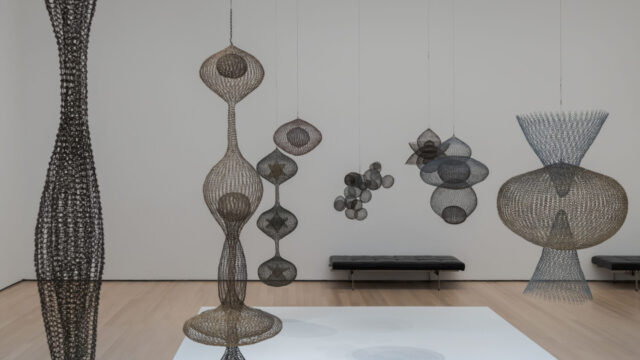
Restored documentary looks at life at Northern California commune from 1968 to 1979 and beyond (photo by Jock Sturges)

COMMUNE (Jonathan Berman, 2005 / restored 2025)
DCTV Firehouse Cinema
87 Lafayette St.
July 11-17
www.dctvny.org

Jonathan Berman’s twentieth anniversary restoration of his documentary Commune could hardly be more timely. The film details the fascinating story of Black Bear Ranch in Siskiyou County in Northern California near Mt. Shasta, where dozens of people left their traditional lives and started their own community to escape what was happening in the country in the wake of the violent Democratic National Convention in Chicago in 1968.

“After going to Washington, DC, for a while and thinking, boy, it’s going to be a long time before all these people retire and get out of here and something changes, I don’t think I can stand to wait around,” Mahaj Seeger says in the film.

Actor Peter Coyote explains, “We thought the government was going to be overthrown in two years and there would be a new culture rising from the ashes, and we wanted to have an alternative, a nonmercantile alternative that offered citizens the options of being something other than a consumer or an employee.”

And Cedar Seeger admits, “I moved there to get away from America; I did not want to be an American as defined by the mainstream, although I guess deep down I’ve always felt proud that I’m an American. But to me those values are represented in open-mindedness and free thinking and tolerance and the ability to do what you want.”

The group purchased eighty acres of woods for twenty-two thousand dollars, with contributions from the Doors, the Monkees, Frank Zappa, and others. The goal was to create a society that played by its own rules, not subject to political parties or any existing set of laws and mores. As Michael Tierra declares in the film, their motto was “Free Land for Free People.”

In addition to all the above, Berman speaks with such commune participants as Creek Hanauer, Martin Linhart, Peter Leaf, and Kenoli Oleari. Elsa and Richard Marley share critical behind-the-scenes information. Tierra relates how he tried to get James Coburn involved. Catherine Guerra preaches free love. Osha Neumann, a member of the anarchist Motherfuckers, says that it “felt like coming home.” Activist Harriet Beinfeld brings up the FBI, which in 1970 reported, “Commune might be a training ground for militants planning insurrection in Northern California.” Geba Greenberg and Allegra Brucker discuss becoming self-trained midwives to help women give birth on the ranch.

We learn what they are doing in 2005 and meet some of the children who grew up in the commune, including Aaron Marley, a scientist who works with experimental lab rats, and Tesilya Hanauer, a writer and massage therapist.

While neighbor Hoss Bennett remembers fondly about how he helped the commune, local resident Mel Kramer declares, “It was shocking,” and public defender Larry Bacon calls it an “invasion of flower children.”

Berman and editors Michael Taylor and Marisa Simpson interweave archival news footage and photos and home movies taken at the ranch, showing the group renovating a ramshackle barn, growing vegetables, preparing food, and prancing about naked, which they did a lot. Ultimately, it was not as idyllic as was hoped, as the concept of free love led to jealousies, and there was debate over how the children were being raised. The beginning of the end might have been the infiltration of the Shivalila cult in 1979, led by Gridley Wright, who had unique and controversial views of child-rearing. A 1987 reunion offers engaging perspective.

In his 2025 director note, Berman (The Shvitz, Calling All Earthlings) points out, “With the very real modern struggles of Trump’s America, people are seeking solutions of every kind to an increasing authoritarianism. As feminist activist Carol Hanisch wrote in 1969, ‘The personal is political,’ and nothing is more personal than how we live and the who, what, and where of the place we call home. . . . In our modern high-tech world, where an Amazon delivery is moments away and there’s less need to leave our dwellings, we face a plague of loneliness. Is coming together the cure? Or perhaps, as Sartre wrote, ‘Hell is other people’!”

Accompanied by a lovely country-bluegrass-groovy-pop soundtrack by Elliott Sharp, Commune makes a compelling case for living off the grid, at least for a little while.

The twentieth anniversary restoration is screening July 11–17 at DCTV Firehouse Cinema, with Q&As with Berman on July 11 at 7:00 with a live performance by Sharp, on July 12 at 7:00 with Taylor, and on July 13 at 4:00; on July 17 at 7:00.

[Mark Rifkin is a Brooklyn-born, Manhattan-based writer and editor; you can follow him on Substack here.]
LIVING IN A FISHBOWL: BERLINDIA! AT THE TANK

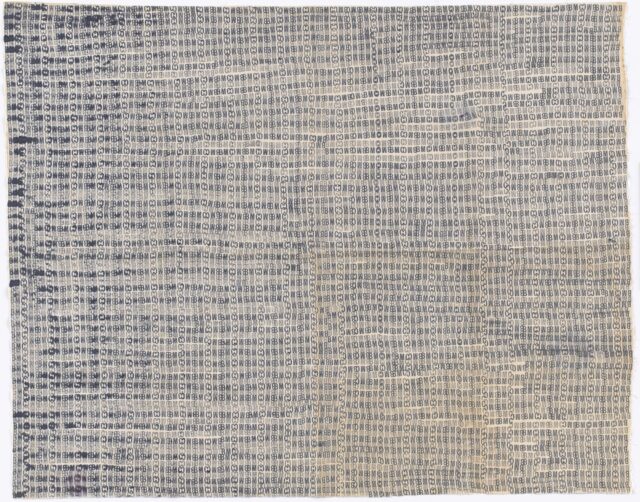
A family undergoes strange, unexpected changes in the unpredictable world of Berlindia! (photo by Maria Baranova)

BERLINDIA!
The Tank
312 West 36th St. between Eighth & Ninth Aves.
Thursday – Monday through July 27, $28-$53
thetanknyc.org

There was an infectious buzz at the Tank on July 7, opening night of the world premiere of Daniel Holzman’s surreal fantasia, Berlindia! It felt like we were all fortunate to have gotten past the velvet ropes and into a hot club, full of lively chatter and bodies moving about as if a techno dance party was about to break out, while overflow audience members sat on cushions up and down the aisle. And indeed, a kind of dance party did break out, for sixty exhilarating, hilarious, and playfully perplexing minutes.

“Do you think it’s cruel to own fish?” nose-picking eight-year-old Burger (Rosalie Neal) asks her mother (Rita Wolf). It’s more than just an innocent question but sets the stage for a wildly unpredictable show about busting out of expectations and challenging the status quo — and in this case, it’s the older generation leading the revolt.

Twenty years later, Mother has suddenly and unexpectedly taken off from their South San Francisco home for a mysterious new land called Berlindia! to immerse herself in the illegal Surf-Sun-Techno-BitchDrop-CoreCow-GrauStraßeM6-Percolan scene, which upsets Burger and her younger brother, Fuck (Arjun Biju), which he changed from the somewhat bulkier Jacob Morowitz Shpeigelman Needlework Groschheimer. “A name should be a symbol of individuality,” he says.

Meanwhile, their father (Pete Simpson) is in New York City to visit holocaust museums. “I love watching blonde women from the South cry,” he explains.

Burger and Fuck decide to track down their mother in Berlindia to find out what’s going on with her. On one of the flights, Burger is sitting behind her elementary school art teacher, Ms. M (Susannah Millonzi), who is also heavy into Surf-Sun-Techno-BitchDrop-CoreCow-GrauStraßeM6-Percolan. Ms. M tells Burger, “They say night and day don’t exist there. They say they don’t believe in it. They say they don’t believe in anything. They say everything there is cheap except water. They say they imported a piece of ozone from Antarctica to be the ceiling, which you can’t even see from the ground. They say the bouncer is half man half dog, like an Egyptian god. They say it’s two hundred degrees in a heating system no one knows the name of. They say there’s a room where you can see Chloë Sevigny fist an entire government. They say that once there was a void, and then there was a light, and then there were the plants and the oceans, and the insects, and then there was Berlindia, and then there was everything else.” That speech just about sums up the play.

Along the way, Burger and Fuck encounter a series of oddball characters, including Sexy Flight Attendant, Seven Foot Tall Swedish Woman, Asymmetrical Haircut Man, a Bouncer, Andre 3000, and a Blonde Woman from the South Named Dolly, and meet their mother’s twin brother, Uncle Mother (Mike Iveson), who is also living and thriving in Berlindia.

Berlindia! features an excellent ensemble cast at the Tank (photo by Maria Baranova)

On the surface, Berlindia! might seem like a fun but weird expanded episode of the SNL skit “Sprockets,” in which Mike Myers starred as Dieter, host of a West German talk show and dance party. But it’s much more than that; it’s about one’s identity, about what home means, about who our family is. We live in a world that is changing so fast that if you blink, you won’t know what you’ve missed, what has passed you by.

It’s also about different types of connection. Speaking in the third person, which happens often throughout the play, Burger says, “When Burger was ten years old Fuck bit her so hard that a piece of his consciousness was imbedded in her arm. Ever since then, they have been able to communicate telepathically on another plane of existence.” Dad does not resent his wife’s departure; he says to his kids, “I love your mom more than anything in the world. Why wouldn’t I want her to find some strange favorite thing? In some strange city. With some strange name.” Because cities and countries have been inexplicably moving around the globe, it takes six planes for Burger and Fuck to travel from South San Francisco to Berlindia, having to make a series of connections in order to see their mother.

At its heart, the show explores our connection with the past, with how our childhood led to becoming who we are as adults. At one point, Burger is muttering to herself; when Fuck asks what she’s doing, Burger responds, “I’m reassessing the past.” Later, when Burger is worried what will happen if and when they locate their mother, she says to her brother, “I’m scared we’ll find her. And she’ll be different. And it’ll ruin the entire past forever. Forever ever.” Fuck offers, “But what if it’s fun? What if she’s happy? What if it’s right? So don’t be scared. Or do. That’s fine. But don’t only be scared.” Burger also reassesses the past when she is with Ms. M, who is not quite how she remembers her; when they are about to land in Berlindia, Ms. M scoffs at Burger, “Good luck getting in, normie!”

The play is directed with controlled chaos by Noah Latty (Kinderkrankenhaus), where just about anything can happen in its own brand of anarchy, occasionally meandering a bit too much. Colleen Murray’s set morphs from a plain room with a kitchen table, chairs, a black-and-white tiled floor, and a flower curtain to a dark club with flashing, multicolored lights while the sound shifts from morning birds cooing to loud techno. (The lighting is by Marika Kent, with sound design by Chris Darbassie.) Sam DeBell’s costumes match the eccentric narrative. Even the script is a hoot, filled with adorable drawings of planes, soft cheese, chains, and a goldfish.

The ensemble cast looks like it could not be having more fun, featuring an endearing Neal (Holzman’s Adelia, or the Nose Play), a gentle Biju (White Bitches in Delhi), a sweet-natured Wolf (A Delicate Balance, Out of Time), a charming Simpson resembling Chevy Chase (Is This a Room, The Wind and the Rain), and a riotous Millonzi (The Crucible, New York Animals) in multiple roles.

“I started writing Berlindia! in 2019 as a tribute to my family and the way they always figure out how to be fine, no matter how absurd things get,” Holzman (Middle School Play) wrote last year. “Since then, the world has only gotten more and more absurd and we’ve faced more and more things that are so far from fine. But if anything, I think this is a play about the importance of true beautiful ambivalence. Two things can be true at once. The darker things get, the more important it is to hold on to that.”

When deciding whether to find their mother, Fuck tells Burger, “I have absolutely no way of knowing how to feel,” like he’s a fish trapped in a bowl.

As Berlindia! makes clear, it’s all fine in these changing times.

[Mark Rifkin is a Brooklyn-born, Manhattan-based writer and editor; you can follow him on Substack here.]
HITS AND MISSES: MIKE FORNATALE’S 1970 BIRTHDAY SHOW AT THE CUTTING ROOM

MURDERERS’ ROW PRESENTS MIKE FORNATALE’S 1970 SHOW
The Cutting Room
44 East 32nd St. between Madison & Fifth Aves.
Thursday, July 10, $27.83, 7:00
212-691-1900
thecuttingroomnyc.com

When he turned sixty-four in 2018, singer, guitarist, and producer Mike Fornatale put together a special show consisting of songs from 1964 — not just famous tracks but deep cuts and B-sides he dug. “I decided a few years ago that, starting with 1964 — the year I started loving music again after walking away from it, while still in kindergarten, during the Fabian/Avalon/Rydell era (something I still haven’t forgiven Philadelphia for) — I was going to assemble a group of stalwart musicians and singers every year and do a show consisting of great songs from the corresponding year,” he said in 2024. “We had a blast with 1964, ’65, ’66, ’67, and ’68. I’m going to do this every year for as long as I can still stand up. Hey! I can still stand up!”

On July 10, Fornatale, who has performed with the Left Banke, the Monks, Moby Grape, the Washington Squares, and Losers’ Lounge, will be at the Cutting Room to celebrate his seventy-first birthday by playing songs from 1970 — they are one year off because of Covid. Among the stalwart musicians and singers joining him, a revolving group he calls Murderers’ Row, are Lauren Agnelli, Russ Alderson, Emilie Bienne, Rembert Block, Tom Clark, Tommy DeVito, Lizzie Edwards, Pam Fleming, Dave Foster, Jeff Hudgins, J. J. Jordan, Stephanie Marie, David Milone, Charly Roth, Tom Shad, Carlton J. Smith, Erica Smith, Peter Stuart Kohman, Tommy Von Voigt, Jahn Xavier, Tony “Z” Zajkowsky, and Jim Allen. Fornatale compiles the setlist and decides who will play what; don’t necessarily expect to hear the biggest songs of the year, like “Bridge Over Troubled Water,” “(They Long to Be) Close to You,” and “American Woman,” but then again, who knows?

Murderers’ Row veteran Jim Allen of the Lazy Lions and the Ramblin’ Kind told twi-ny, “It’s always a blast and an honor to be among such a powerful assemblage of players and singers, reveling in the great anthems and obscurities of the past.”

Fornatale is packing so much in that he will be hosting the second half later this fall. But as he promises, “Hits! Misses! Things you’ve never heard before! And just some other stuff that I really like! How many songs? TONS OF ’EM!! Don’t worry! You’ll be sitting down!”

He also doesn’t refer to these shows as a series; he prefers crusade.

“We’re going to do it every year. I hope I can make it at least as far as, oh, I don’t know, eighty-six? Eighty-seven?” he recently posted on Instagram. “I want to make DeVito play the tympani on ‘Life in a Northern Town.’”

[Mark Rifkin is a Brooklyn-born, Manhattan-based writer and editor; you can follow him on Substack here.]

SOMETHING NEW: CARL HOLDER’S OUT OF ORDER IN EAST VILLAGE BASEMENT

Carl Holder shares his hopes and dreams, his successes and failures in Out of Order (photo by Rebecca J Michelson)

OUT OF ORDER
East Village Basement
321 East Ninth St. between First & Second Aves.
Thursday – Tuesday through July 30, $30-$60
www.outofordertheshow.com
www.carlholder.com

“When was the last time you felt something new?” Carl Holder asks in the New York City premiere of his solo participatory Out of Order, which opened tonight for a three-week run at the appropriately named East Village Basement on Ninth St.

I now have the answer: Holder’s frantic and frenetic show.

Despite penning plays for twenty years and winning several awards and grants, upon turning forty the Gainesville-born, Brooklyn-based Holder found himself with a bad case of writer’s block. Worried he had reached the end of the road, he came up with Out of Order, a one-man production that challenges him to perform prompts from three dozen index cards, tossed into a bowl in random order, many involving audience participation. The only element that is the same for each presentation is the first card, which falls from a box on the ceiling and is read by an audience member, laying out the ground rules, including the following: “Everything you are about to see is real. If Carl doesn’t complete every task tonight, he will quit theater forever.” He’s not kidding.

The evening actually begins with the audience gathering downstairs, filling small bags of free popcorn from a cart in the center of the room and purchasing beer, wine, or seltzer from the bar in the far corner, operated by Simon Henriques, who will soon serve as “referee,” running the sound and lighting, strumming a ukulele, and keeping track of the time.

Audience members are encouraged to take and post their own photos at one point of unique solo show at East Village Basement (photo by Rebecca J Michelson)

Wearing a blue track suit and off-white sneakers, Holder races around the room, selecting a card from a big glass bowl in the middle, reading it out loud, and then acting it out, sometimes using a whiteboard, a lone chair, and/or an audience member. On the floor are such words and phrases as “You,” “Me,” “RIP,” and “Climax.” For “Three questions,” he says “How long do I have to wait?” three very different ways, each with its own meaning. For “Show your bank statement,” he does exactly that, projecting his bank statement on a wall and going over it in detail, talking about how much he has in his account, what he has spent money on, and how he might not be able to make his next rent payment by the due date. For “Teach them how to write a play,” he outlines on the board the five key ingredients of a play: Exposition, Inciting Incident, Rising Action, Climax, and Falling Action or Denouement. There are also separate cards for each element, allowing him to give a mini-theater class. Among the other prompts are “How much do you like being in control?,” “Can this be enough?,” and “Be brave.” While not every prompt works, the vast majority do.

There are several cards that relate the complex story of Ass, Chicken, and Peacock on Farmer Farmer’s Farm, involving ego, corporatization, self-awareness, drinking, and dancing; as with “Teach them how to write a play,” the order in which they’re told impacts the narrative, particularly when it comes to how a carrot is used, not just as food, but as creative incentive. For “Try again,” Holder explains, “This whole thing really started because I couldn’t write a play. And I guess I still can’t. But I found I could write down the things I couldn’t stop thinking to myself, the thoughts that were getting in the way of a play. Card by card. And somehow, more than anything I’ve tried to make for the last twenty years, doing this actually feels like being an animal.”

The night I went, the first prompt was about the bank statement, so that led to a focus that might change if, for example, “Mortality” or “Open this later” was selected instead. Thus, we knew from the start what serious financial shape Holder is currently in and how important this play is to his daily existence. It also makes us think about our own fiscal solvency, although so many of the prompts make us look at our unique personal situations.

I was chosen for one of the final cards, “Review the possibilities,” in which I read sixteen statements about how Holder’s life might go, and he decided which might happen and which should be tossed in the trash as a pipe dream. As I announced what was written on each card, I thought about how it related to my own life, and I imagine that must have been the case with just about everyone in the audience. Who hasn’t considered such possibilities as “I will have the money I need to live comfortably” or “I will mend ties with my family”?

Audience interaction is central to Carl Holder’s Out of Order (photo by twi-ny/mdr)

And therein lies why Out of Order, previously staged in living rooms, a theater lobby, a public park, and a bird sanctuary and designed by Adam Wyron and Obie-winning director Skylar Fox, is such a success, whether Holder realizes or not. At each performance, forty or so strangers are brought together in a small room, partake of food and drink, and interact with Holder and other audience members for ninety nearly breathless minutes as Holder shares his hopes and dreams with us, almost painfully realistically, and we do the same with him (if we so desire).

He is eminently likable; we immediately want him to do well. And he is very funny and quick on his feet, with sharp improvisatory skills. I was sitting at the far end of my row and had put my popcorn, wineglass, and phone on the shelf next to me. When Holder ran over there to act out a card, he first took my bag of popcorn and started casually eating from it. It’s important to note that he does not force anyone to do anything, but as one of the prompts announces, “Content warning: audience participation.”

For “The forgotten intro,” Holder even sings, summing up life in a few stanzas: “We are all born once and then we die / along the way we try some things / some are good some are bad some are great / most are forgettable . . . / but every so often a moment comes along / that’s a little bit different than all of the other moments / . . . you get to have this one special moment / and the other special moments where you’re not dead yet / and sometimes people gather around and they want to wish you well / and tell you something special, something very special / and this is one of those moments and that something very special is . . .”

I’m not about to give away what that something very special is here, since, in the show, just like in life, that’s for you to discover. But we should all be thankful that Holder has shared his special moments with us.

[Mark Rifkin is a Brooklyn-born, Manhattan-based writer and editor; you can follow him on Substack here.]