twi-ny recommended events

EGON SCHIELE SYMPOSIUM

Who: Hans-Peter Wipplinger, Verena Gamper, Franz Smola, Sandra Tretter, Elisabeth Leopold, Elisabeth Dutz, Christian Bauer, Jane Kallir, Gemma Blackshaw, Stefan Kutzenberger, Karin Maierhofer, Sandra Maria Dzialek
What: Fourth Egon Schiele Symposium
Where: Leopold Museum online
When: Friday, December 3, free with advance RSVP, 3:45 – 11:30 am
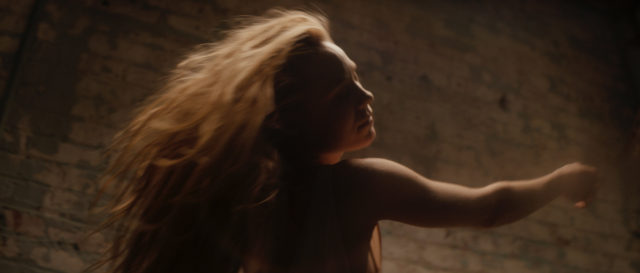
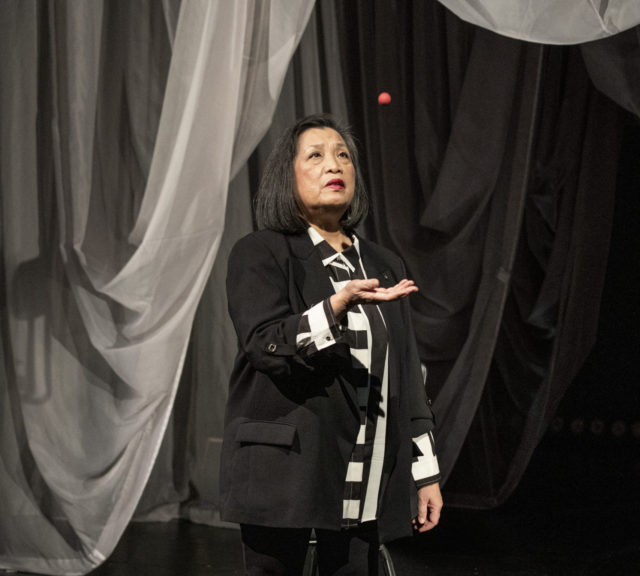
Why: The Leopold Museum, whose Egon Schiele collection comprises 42 paintings, 184 watercolors, drawings, and prints, and numerous writings and miscellaneous texts, will be hosting its fourth Egon Schiele Symposium on December 3, streaming live from Vienna beginning at 3:45 am EST. Interest in Schiele, who died in 1918 at the age of twenty-eight of the Spanish flu, has continued to grow over the last decade, from a centennial exhibition at St. Galerie Etienne to the documentary Portrait of Wally to John Kelly’s remounting of his one-man show Pass the Blutwurst, Bitte.

The symposium, the first of which was held in 2016, features twelve presentations, including one in English by Galerie St. Etienne head and Kallir Research Institute director Jane Kallir, “Reconfiguring Gender: Egon Schiele and the Gay Subculture.” If, like me, you miss Kallir’s extraordinary essays about the gallery’s exhibits, her talk should be a special treat. Below is the full schedule; the symposium will be available for on-demand viewing following the livestream, which will have an interactive Zoom chat.

9:45 am: Welcoming Remarks, with Leopold Museum director Hans-Peter Wipplinger and Leopold Museum Research Center head Verena Gamper

10:00 am: Egon Schiele’s Painting Jugendströmung [Current of Youth] – New Findings About Schiele’s Contribution at the International Art Show Vienna 1909, with Österreichische Galerie Belvedere curator Franz Smola

10:30 am: Gustav Klimt and Egon Schiele at the Vienna Art Show in Berlin 1916, with Klimt Foundation deputy director Sandra Tretter

11:00 am: “I Went Through Klimt”: On Egon Schiele’s Painting Hermits and the Faculty Paintings of Gustav Klimt, with Elisabeth Leopold of the Leopold Museum Private Foundation

11:30 am: Schiele’s Death Masks – New Findings of the Ongoing Research at the Albertina’s Egon Schiele Archive, with Albertina curator Elisabeth Dutz

1:30 pm: The Body Electric: Erwin Osen – Egon Schiele, with Leopold Museum Research Center head Verena Gamper

2:00 pm: Erwin Dominik Osen: An Approach, with Egon Schiele Museum curator Christian Bauer

2:30 pm: Reconfiguring Gender: Egon Schiele and the Gay Subculture (English), with Kallir Research Institute director Jane Kallir

3:00 pm: “Dear Curator …”: Correspondence as Care for Erwin Osen’s Lustknabe [Catamite] (English), with art historian and curator Gemma Blackshaw and architectural historian and artist Adam Kaasa

4:00 pm: Blue Lady in Green Nature: A Workshop Report from Silicon Valley – Egon Schiele and Artificial Intelligence, with writer, curator, and literary scholar Stefan Kutzenberger

4:30 pm: Egon Schiele’s Painting Young Mother – Insights into the Research and Restoration Project, with Wien Museum restorer Karin Maierhofer

5:00 pm: Egon Schiele’s Towns – the Leopold Museum Holdings from a Material-Technology Perspective, with Leopold Museum restorer Sandra Maria Dzialek

NETFLIX’S PASSING: SCREENING AND CONVERSATION

Who: Rebecca Hall, Ruth Negga, André Holland, David Nugent
What: Screening and conversation
Where: 92nd St. Y, 1395 Lexington Ave. at 92nd St., Buttenwieser Hall and 92Y online
When: Friday, December 3, $25 in person, 6:30; $20 online, 8:20
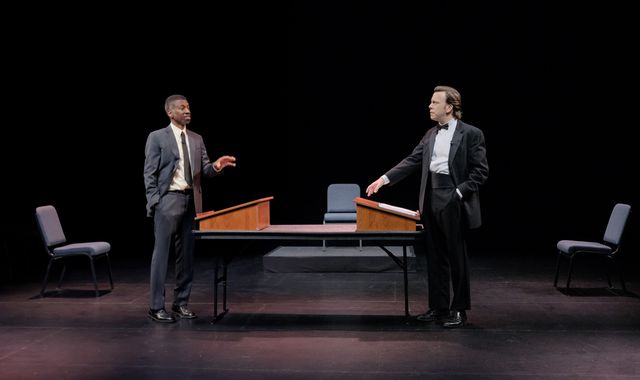
Why: In her directorial debut, Passing, award-winning actress Rebecca Hall (Vicky Cristina Barcelona, Machinal) makes her father, the late Sir Peter Hall of the RSC and the National Theatre, proud. The black-and-white Netflix drama stars Tessa Thompson as Irene “Reenie” Redfield, a Black woman living in Harlem who meets up with an old friend, Clare Kendry (Ruth Negga), who is living her life passing as a white woman. Although Reenie is uncomfortable with Clare’s decision, she takes advantage of certain situations where she can pass as well. As Clare starts spending more time with Reenie, her secret threatens to be exposed. Set during the Harlem Renaissance, the tense, beautifully photographed Passing, based on Nella Larsen’s 1929 novel, also features André Holland as Reenie’s husband, Brian Redfield, Alexander Skarsgård as Clare’s bigoted spouse, John Bellew, and Bill Camp as Hugh Wentworth, a friend and mentor to Reenie. On December 3, the 92nd St. Y is hosting a rescheduled hybrid event in which the Ethiopian-Irish Negga (Loving, Shirley), Alabama-born Holland (Selma, Moonlight), and London native Hall will screen and discuss the film with Hamptons International Film Festival artistic director David Nugent at Buttenwieser Hall; the conversation can be livestreamed beginning at 8:20.

CULLUD WATTAH

A tight-knit family of five women battle the Flint water crisis in world premiere at the Public (photo by Joan Marcus)

CULLUD WATTAH
Martinson Theater, the Public Theater
425 Lafayette St. at Astor Pl.
Tuesday through Sunday through December 12, $40-$150
212-539-8500
publictheater.org

“You are free to bear collective witness & be collectively witnessed,” Erika Dickerson-Despenza writes in a program note to her extraordinary Cullud Wattah, continuing through December 12 at the Public’s Martinson Theater. The play is a powerful call to action inside a harrowing drama about one of humanity’s most basic needs: clean water. As you enter the space, you are met by hundreds of plastic bottles filled with dirty brown water, lining the stage and hanging from the ceiling, a forest of sickness that resembles a mass lynching.

Nine-year-old Plum (Alicia Pilgrim) is adding tally marks in chalk to the wall, tracking how many days it’s been since the city of Flint, Michigan, has been without clean drinking water. For years, their water has been tainted by lead, which Michigan governor Rick Snyder and GM were well aware of — but both government and corporation chose profit over public health. Plum makes her way into a bathtub at the front of the stage as she is joined by her mother, Marion (Crystal Dickinson), her seventeen-year-old sister, Reesee (Lauren F. Walker), her aunt, Ainee (Andrea Patterson), and her grandmother, Big Ma (Lizan Mitchell). The five women, four dressed in white, looking like ghosts, sing a spiritual while gathering in a type of ritual procession: “lead/ in thuh wattah/ lead/ in thuh wattah cheeldrun/ lead/ in thuh wattah/ snyder playin god/ with wattah.”

The play is set in Michigan’s fifth ward, Genessee County, in the fall of 2016, five years ago to the day. It takes place in the home of the Coopers, their house suggested by a set with no walls and only a partial ceiling. (The stunning design is by Adam Rigg, the costumes by Kara Harmon.) In the script, Dickerson-Despenza explains that the form and structure “are fundamental components of an artistic aesthetic & political instrument the playwright calls ‘jook joint writing’: a radical, subversive practice that dis/orders linguistic (neo)colonialism & imperialism, building vernacular without walls.” The characters move throughout the space with a rhythm that the outside world forbids.

Playwright Erika Dickerson-Despenza, director Candis C. Jones, and actress Crystal Dickinson rehearse Cullud Wattah (photo by Joan Marcus)

Marion is a widowed third-generation assembly-line worker at GM, trying to keep her job amid layoffs. Her older sister, Ainee, an addict survivor who is prepared to fight for change, is thirty-four weeks pregnant and worried that she will lose this baby as she has several before. Reesee wants to be a doula and a dancer and is immersed in Yoruba culture. Plum is battling illness, concerned for her immediate future. And Big Ma is trying to hold it all together. “White folks’ll take this house n flip it for a million once this whole lead thing is ovah,” she says. As word of a potential strike at the plant spreads, Marion and Ainee are at odds that could cause a rift in this tight-knit family of strong women.

Although Cullud Wattah is not part of Susan Smith Blackburn Prize winner Dickerson-Despenza’s planned ten-play Katrina Cycle, which includes the superb [hieroglyph] and the compelling radio play shadow/land, it features similar themes, exploring the intersection between water, race, and politics. References to liquids as a life-giving (and life-taking) force abound throughout the play. Ainee says that the baby in her womb is “doin wattah aerobics.” Reesee prays to Yemoja, the Yoruba water deity. Blood and piss figure prominently. The title itself can be read in several ways, from referring to the color of the water in the bottles to foul water that has been served to Black families.

Elegantly directed by Candis C. Jones (Pipeline, shadow/land), Cullud Wattah might specifically be about the Flint lead crisis but also recalls the history of whites-only water fountains and segregated pools in America; racism and colonialism are embedded in the play’s bones without Dickerson-Despenza having to stress them. Inspired by the works of Zora Neale Hurston, Toni Morrison, Toni Cade Bambara, Ntozake Shange, and Suzan-Lori Parks, the playwright keeps the audience on edge for all 110 minutes, with a stellar cast led by Dickinson (Why Would I Dare: The Trial of Crystal Mason, You Can’t Take It with You, The Low Road) as a widowed mother willing to go to extreme lengths to support her family and Mitchell (Here Is Future: The Transformed Returns, Passage, shadow/land) as the matriarch who says exactly what she thinks.

Discussing the loss of Marion’s husband in the Afghanistan war, Big Mama says, “He provided for his family by any means necessary/ there’s money in war,” to which Marion responds, “There are wars in money mama/ too many to count.” As the play reminds us at the very end, there’s still a war going on in Flint over money and water, swiftly approaching its twenty-eight-hundredth day.

[Note: For more on the play, you can watch a conversation between Dickerson-Despenza and Jones here.]

APPROVAL JUNKIE

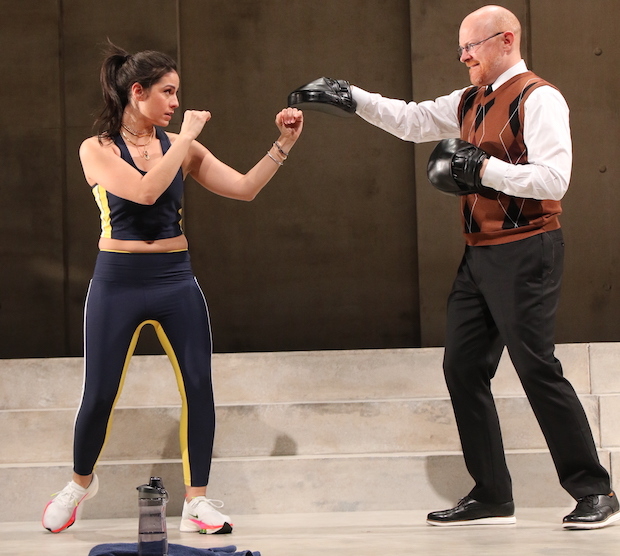
Faith Salie shares her quest for approval in one-woman show (photo by Daniel Rader)

APPROVAL JUNKIE
Audible Theatre’s Minetta Lane Theatre
18 Minetta Lane between Sixth Ave. and MacDougal St.
Tuesday – Sunday through December 12, $46-$56
www.audible.com

In her one-woman show, Approval Junkie, actress, author, and television and radio correspondent Faith Salie explains that when she would share a personal or professional success with her father, he would say, “I’m impressed, but not surprised.” I was impressed and surprised by how much I enjoyed the monologue, in which Salie details her lifelong quest for approval, from being an anorexic Georgia high school beauty and talent show contestant to auditioning for acting parts to getting married and wanting to have children. She also admits to being an applause junkie. “I’m half a century old, and I give a ton of fucks that you’re sitting at my feet,” she tells the audience. “Y’all came to the theater. And I’m pretty sure you’re wearing pants. And I hope you’re smiling behind those masks.”

Salie, an Emmy winner who appears regularly on NPR’s Wait Wait . . . Don’t Tell Me! and CBS Sunday Morning, is charming and likable — and brutally honest. She talks about some intensely private moments, but as much as she’s after our approval, she takes a humble, self-deprecating approach, telling a story that, in many ways, could be about any woman, although she acknowledges her significant privilege. She doesn’t brag about her accomplishments or look for sympathy for her failures; she just wants us to enjoy ourselves and, hopefully, learn about how we don’t need to search for approval ourselves around every corner.

Faith Salie accepts approval on opening night of Approval Junkie (photo by Daniel Rader)

The show is adapted from her book of the same name, which has two different subtitles: Adventures in Caring Too Much for the hardcover, My Heartfelt (and Occasionally Inappropriate) Quest to Please Just About Everyone, and Ultimately Myself for the paperback and ebook. For ninety minutes, Salie, in a lovely dark blue jumpsuit and beige heels (the costume is by Ivan Ingermann), walks across Jack Magaw’s spare set, which features a central platform, two small speakers where she sometimes sits, and a stained-glass-like backdrop of abstract geometric shapes on which video and animation are occasionally projected. Salie shares funny and moving stories about going to an Ayurvedic Healing Center in a Sarasota, Florida, strip mall to exorcise the darkness out of her in order to please her wasband (what she calls her ex-husband); being retweeted by Hillary Clinton and Mandy Patinkin; her desperation to look good at her divorce hearing; and attempting to be a hit on Bill O’Reilly’s Fox program. She remembers that early in her career, she took vocal lessons from acting coach Lesly Kahn, who asked her, “Why aren’t you as pretty as I want you to be?” She answers now, “I don’t know — I’m not as pretty as I want me to be.”

Directed by actor and producer Amanda Watkins, the play — which continues at Audible’s Minetta Lane Theatre through December 12, after which an Audible audio recording will be available — has a warm, welcoming atmosphere. Even when lines fall flat, and a bunch do, Salie proceeds, okay with that momentary lack of approval. Except for the animation at the beginning and end, the projections are random and inconsistent; you’ll find yourself time and again thinking something will be shown when nothing is. And that’s okay too.

It’s all bookended by tales about Shel Silverstein’s classic children’s book The Giving Tree (Salie calls the titular tree “the ultimate woodland approval junkie”) and Salie’s friendship with 104-year-old Ruth Rosner, a journey from childhood to old age. Describing Rosner’s sudden fame from Salie’s television profile of her, Salie says, “We all want to sit at the feet of someone with a century of wisdom and hear that once you get old enough, you stop striving, you figure it all out. You have, as the kids say, ‘zero fucks to give.’ But it doesn’t work that way. It feels too good to take a bow.” In this case, Salie has our approval, and she can take a well-deserved bow. (Salie will be taking part in an Audible Theater online 92Y conversation about Approval Junkie with writer and comic Josh Gondelman on November 30 at 7:00.)

MORNING’S AT SEVEN

Alley Mills, Lindsay Crouse, Patty McCormack, and Alma Cuervo play four sisters in Morning’s at Seven (photo by Maria Baranova)

Theatre at St. Clement’s
423 West Forty-Sixth St. between Ninth & Tenth Aves.
Through December 5, $44
www.morningsat7.com

It’s a shame that Dan Wackerman’s warm and cozy adaptation of Paul Osborn’s 1939 family comedy, Morning’s at Seven, is ending its run a month earlier than planned at the Theatre at St. Clement’s, closing on December 5 instead of January 9. It certainly can’t be because of the overall quality of the show, which is first-rate, with an outstanding cast and a terrific set. Perhaps it’s the space itself; over the last nine years, I’ve seen only one other play at the theater that I’ve heartily recommended (although I was in the minority); this is the second.

The three-act, 135-minute show (including one intermission) is set in an unnamed middle America small town in 1922, in a quaint backyard shared by an extended family. In one house, Cora (Lindsay Crouse) and her husband, Thor (Dan Lauria), live with one of Cora’s sisters, the single Arry (Alley Mills). Next door, another sister, Ida (Alma Cuervo), lives with her husband, Carl (John Rubinstein), and their forty-year-old nerdy son, Homer (Jonathan Spivey). The fourth and oldest sister, Esty (Patty McCormack), lives a few blocks away with her condescending professor husband, David (Tony Roberts), who thinks her relatives are a bunch of morons. Everyone (except David) is all atwitter that Homer is finally bringing home his girlfriend, Myrtle (Keri Safran), after dating her for twelve years. The general expectation is that Homer will finally marry Myrtle and move into the nearby house on Sycamore Drive that his father Carl built for them, off in the distance as if a beacon of hope. (The homey, comfortable set is by Harry Feiner, with modest, unembellished period costumes by Barbara A. Bell.)

But all is not a Thomas Kinkade / Norman Rockwell scene. Carl has what at the time would be called “a nervous condition,” suffering from vaguely existential spells in which he thinks he is a failure and asks himself, “Where am I?” When the supercilious David finds Esty visiting her family against his wishes, he declares her to be a “free agent” and banishes her to the second floor of their house while he plans to live on the first, barely interacting with her. It soon becomes evident that Arry is no mere old maid but has been in love with Thor for decades. And Cora dreams of at last being alone with her husband, a considerate, likable man who smokes a pipe and prefers to avoid controversy.

Dan Lauria and Alley Mills of The Wonder Years reunite in John Osborne revival (photo by Maria Baranova)

“Cora’s made a couple of awful funny remarks lately about me living by myself. She’s got some bee in her bonnet. She’s up to something,” Arry tells Thor. “Oh, she isn’t either,” Thor says. “Well, she hadn’t better be, that’s all I say,” Arry adds. “Now, your home’s right here with us, Arry. Just as long as you want it,” Thor promises. Arry replies, “Well, don’t you forget it either.” Of course, Cora is up to something, and this long-suffering sister is plotting to take home all the pie, as it were.

Over the course of less than twenty-four hours, long-held secrets, and new ones, emerge as a nine people take stock of their lives, asking themselves, “Where am I?” And they’re not always satisfied with the answer to a question that the audience itself can relate to. It’s probably one of the reasons why the play has been so successful on the rare occasions it has been mounted, earning a slew of Tony awards and nominations for its 1980 and 2002 Broadway revivals, for example.

David (Tony Roberts) has some pointed advice for Carl (John Rubinstein) in Morning’s at Seven (photo by Maria Baranova)

It’s also a treat to watch a play starring seven wonderful actors in their seventies and eighties, at the top of their game. Lauria (Lombardi, A Christmas Story The Musical) and Mills (The Bold and the Beautiful, Bad Habits with her late husband Orson Bean) rekindle the chemistry they had as the father and mother on The Wonder Years from the 1980s; Mills ably stepped in when Judith Ivey tore a tendon during previews. Obie winner and Emmy and Grammy nominee Crouse (The Homecoming, Places in the Heart) is touching as the woman caught between them.

Oscar nominee McCormack’s (The Bad Seed, Frost/Nixon) Esty is just the right foil for two-time Tony nominee Roberts’s (The Tale of the Allergist’s Wife, Play It Again, Sam) ornery and persnickety David, while Obie winner Cuervo (Uncommon Women and Others, On Your Feet!) is appropriately motherly to everyone, especially Tony winner Rubinstein’s (Pippin, Children of a Lesser God) Carl, who is a lost little boy except when he has his manly tools. Safran (Typhoid Mary) and Spivey (The Front Page) hold their own in such talented company as the naive, somewhat simpleminded young couple trying to figure out how to start their life together while the others are closer to reaching the end of theirs.

Obie winner Wackerman (Rocket to the Moon, Ten Chimneys), of the Peccadillo Theater Company, makes the audience feel like it’s a part of this small community, investing in the gossip and intimate drama of a family that unknowingly hides behind false modesty and a self-imposed politeness. They live in their own bubble; they don’t talk about politics, or the economy, or war, which is refreshing. Oscar and Tony winner Osborne, who wrote such hard-hitting plays as Look Back in Anger, The Entertainer, and Luther, took a lighter approach with Morning’s at Seven, and it works wonderfully in this version. Catch it while you can at this theater of doom.

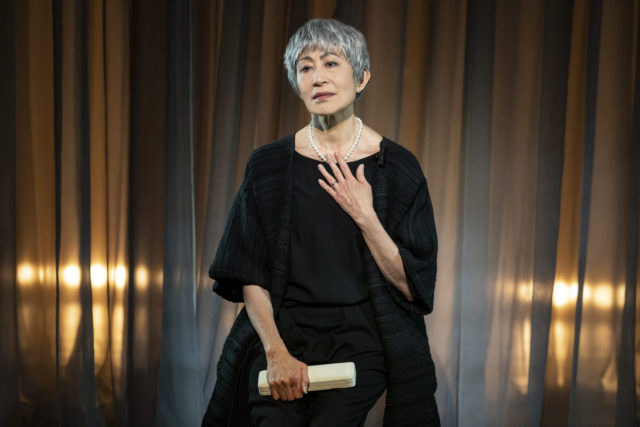
JOHN SIMS RESIDENCY — 2020: (DI)VISIONS OF AMERICA

John Sims speaks out in multimedia presentations at La MaMa

Who: John Sims
What: Five-day multidisciplinary residency
Where: The Ellen Stewart Theatre, La MaMa Experimental Theatre Club
When: December 1-5, pay what you can $10-$60
Why: Conceptual artist and activist John Sims has been working on the multimedia project Recoloration Proclamation for two decades; it is now ready to be unveiled at La Mama, where the Detroit native is the 2021 artist-in-residence. From December 1 to 5, Sims will present six programs hitting on topical issues involving race, slavery, the Confederacy, police brutality, and inequalities that came to light during the Covid-19 pandemic.

The residency kicks off December 1 at 7:00 with an installation viewing and artist talk featuring the AfroDixieRemixes Listening Session — fourteen different Black versions of “Dixie” — and the world’s largest AfroConfederate flag, followed December 2 at 7:00 (and December 5 at 2:00) with a film screening of Recoloration Proclamation. On December 3, 4, and 5 at 7:00, Sims will take part in live performances of 2020: (Di)Visions of America. It all forms a unique self-portrait of the artist as well as a multidisciplinary look at the mind-set of contemporary America as Sims seeks redemption and rebirth through peace, liberty, and justice.

ALVIN AILEY AMERICAN DANCE THEATER WINTER SEASON 2021

Robert Battle’s new For Four is part of his tenth anniversary celebration at Ailey (photo by Christopher Duggan)

ALVIN AILEY AMERICAN DANCE THEATER
New York City Center
130 West 56th St. between Sixth & Seventh Aves.
December 1-19, $29-$159
212-581-1212
www.alvinailey.org
www.nycitycenter.org

If you weren’t following Alvin Ailey American Dance Theater during the pandemic lockdown, you missed out on some of the best virtual presentations of the last twenty months, from online conversations, “Dancer Diaries,” and “Ailey Up Close” talks to archival performances available on Ailey All Access and brand-new works created over Zoom and outdoors. Among the highlights were a celebration of the fiftieth anniversary of Alvin Ailey’s Cry, members of the Ailey company, Ailey II, and the Ailey School taking on artistic director Robert Battle’s The Hunt, a special filmed edition of Revelations Reimagined, and excerpts from Camille A. Brown’s City of Rain, Rennie Harris’s Lazarus, Judith Jamison’s Divining, and Jamar Roberts’s Ode in addition to Roberts’s exhilarating outdoor work A Jam Session for Troubling Times.

The Manhattan-based troupe, with new members Lloyd A. Boyd III, Caroline T. Dartey, Ashley Kaylynn Green, and Ashley Mayeux, is now back in person for its annual season at City Center, running December 1 to 19. In past years, AAADT has bid farewell to retiring dancers Linda Celeste Sims (now assistant to the rehearsal director) and Matthew Rushing (now associate artistic director) and longtime associate artistic director Masazumi Chaya; the winter run is centered around Bessie winner Roberts’s final performance, as he turns his attention to serving as AAADT’s resident choreographer. On December 9, Roberts will dance his last solo, You Are the Golden Hour That Would Soon Evanesce, with pianist Jason Moran playing his song “Only the Shadow Knows (Honey)” live; the evening also includes the world premiere of Roberts’s Holding Space, which was first seen virtually during the pandemic. Set to an electronic score by Canadian musician Tim Hecker, the piece features an onstage open cube that Roberts calls “a metaphor for many things: quarantine, being confined in a small space — if you were to, let’s say, look at an apartment building and you see the window and you see different people living in the apartment building, but the cube was sort of like taking a magnifying glass and going deeper into just one apartment unit and seeing what that experience is like, experiencing one person out of the whole.”

At City Center, AAADT will also present the in-person world premiere of Battle’s For Four, previously seen only online, with music by Wynton Marsalis. There will be new productions of Ailey’s 1976 Pas de Duke, restaged by Rushing and rehearsal director Ronni Favors, comprising five solos and duets set to songs by Duke Ellington; Reflections in D, Ailey’s 1963 solo restaged by Jamison; The River, Ailey’s thirty-four-minute 1970 opus with an original score by Ellington, restaged by Rushing, Favors, and Clifton Brown; and Battle’s Unfold, a 2007 duet set to Leontyne Price’s rendition of Gustave Charpentier’s “Depuis Le Jour,” restaged by Ailey dancer Kanji Segawa.

AAADT celebrates Battle’s tenth anniversary as artistic director with an evening consisting of Mass, Ella, In/Side, For Four, Unfold, Takademe, and the finale from Love Stories. Also on the schedule are Lazarus, Cry, Jawole Willa Jo Zollar’s Shelter, Aszure Barton’s BUSK, and Ailey’s Blues Suite and Memoria, divided into such programs as “New Works,” “All Ailey,” “50 Years of Cry,” and “Ailey & Ellington.” As always, the Saturday matinees will be followed by a Q&A with members of the company.

Seeing Ailey on its home stage at City Center is a rite of passage, something all New Yorkers must experience; just don’t be surprised when it becomes an annual December sojourn.