twi-ny recommended events

WELCOME TO THE MACHINE: TIM BLAKE NELSON WORLD PREMIERE AT LA MAMA

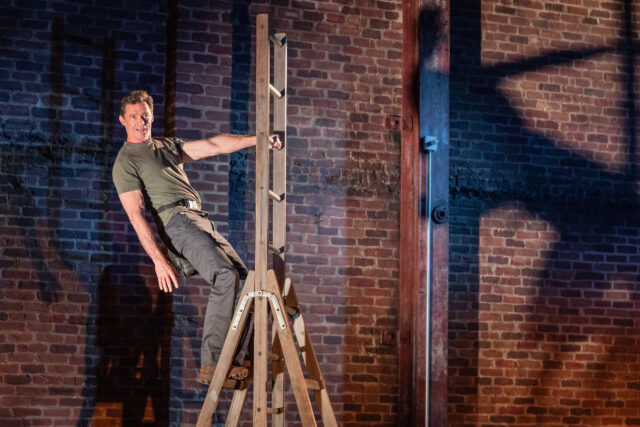
A Lawyer (Elizabeth Marvel) attempts to defend her client in Kafka-esque And Then We Were No More (photo by Bronwen Sharp)

AND THEN WE WERE NO MORE
La MaMa Experimental Theatre Club
The Ellen Stewart Theatre
66 East Fourth St. between Second Ave. & Bowery
Tuesday – Sunday through November 2, $49-$99
www.lamama.org

“‘It’s a remarkable piece of apparatus,’ said the officer to the explorer and surveyed with a certain air of admiration the apparatus which was after all quite familiar to him. The explorer seemed to have accepted merely out of politeness the Commandant’s invitation to witness the execution of a soldier condemned to death for disobedience and insulting behavior to a superior.”

So begins Franz Kafka’s 1918 short story, “In the Penal Colony,” which actor, director, novelist, playwright, and screenwriter Tim Blake Nelson recently read with one of his sons. The existential tale serves as the inspiration for Nelson’s gripping new play, And Then We Were No More, continuing at La MaMa through November 2.

The two-hour show (plus intermission) takes place in the near future, in a privately owned prison in a large complex that has a new machine that apparently can painlessly and efficiently execute those convicted of capital crimes. It’s a Kafka-esque institution where no one has a name and everything has been decided in advance. An Official (Scott Shepherd) goes by the book but likes making an occasional joke, which floats away without a laugh. He has brought in a Lawyer (Elizabeth Marvel) to defend the Inmate (Elizabeth Yeoman), who has been convicted of killing her husband, their two children, and her mother. Often watching the proceedings from a distance is an Analyst (Jennifer Mogbock) representing the corporation’s financial interest in the machine. Meanwhile, the Machinist (Henry Stram) fiercely defends the system and his beloved execution device as he tracks statistics.

The Lawyer reluctantly accepts the job; selected by a computer algorithm she essentially has no choice. At the Lawyer’s first meeting with her client, the Inmate says to her in an irrational manner, “I am not no my name / by name name me by name / but you would say know me / by name / by my name / you would swim / in the muddy of no more name / rise up and see / vapor wickedness / bloom in white sky / rain retreat like lost / far flood / nameless name. . . . smell on you same air / breathe / anger / plague skin crawled / needs swarming / scratch self death.” The Lawyer soon learns that there is no option to delay or cancel the execution based on her client’s possible insanity.

During the trial, the case is made directly to the audience, which serves as a kind of jury; when the verdict is announced, the powerlessness of the individual envelops the room with Kafka-esque grandeur.

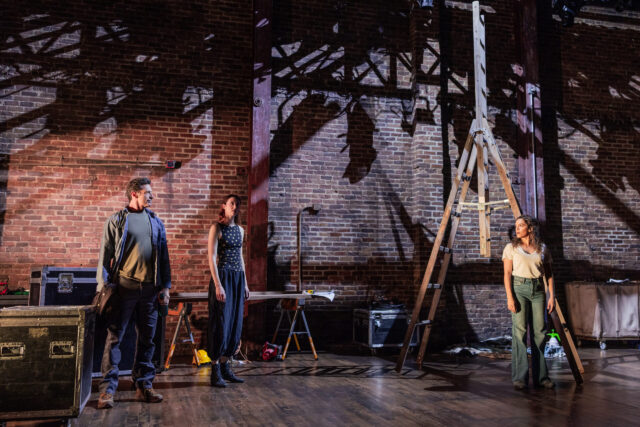
A Lawyer (Elizabeth Marvel) faces impossible odds with her client (Elizabeth Yeoman) in world premiere at La MaMa (photo by Bronwen Sharp)

And Then We Were No More is gorgeously staged by director Mark Wing-Davey (The Hitchhiker’s Guide to the Galaxy, Mad Forest), as the tension, and strangeness, ratchet up scene after scene. David Meyer’s jaw-dropping set features a series of strikingly colored air ducts, bland chairs and tables, and the mysterious machine that supernumeraries move around like automatons. Marina Draghici’s costumes range from office chic to an odd, somewhat deranged outfit worn by those about to be executed. Henry Nelson (one of Tim’s children) and Will Curry’s sound design switches from compelling interstitial music to ominous machine drones to horrific screeches when the Lawyer says the Inmate’s name out loud, in defiance of the rules.

The cast, which also includes William Appiah, E. J. An, Kasey Connolly, and Craig Wesley Divino as the supernumeraries in multiple roles, capture the feeling of the Kafka-esque environment, where so much is not explained. Nelson, who has written two novels and such plays as Socrates, Eye of God, and The Grey Zone (he adapted the last two into films) and has appeared in such movies as The Thin Red Line, Captain America: Brave New World, and O Brother, Where Art Thou?, has created a sinister, foreboding dystopian existence with And Then We Were No More, one that feels all too real given what is happening to the justice system under the current US administration.

Various scenarios are like warning signals, telling us what might be waiting for us right around the corner:

An Analyst: If the work is stymied, if we cannot demonstrate success . . .
An Official: I understand.
An Analyst: Everyone must understand.
An Official: We can do what we can do.
An Analyst: This is a sentiment no longer relevant in our time.
An Official: Or it’s the only relevant sentiment.

“Ready now!” the officer announces after preparing the machine to do its business in Kafka’s tale.

He might be, but are we?

[Mark Rifkin is a Brooklyn-born, Manhattan-based writer and editor; you can follow him on Substack here.]

JUST ONE PUNCH: HARROWING PLAY EXITS BROADWAY RING

Will Harrison leads an excellent cast in harrowing true story (photo by Matthew Murphy)

PUNCH
Samuel J. Friedman Theatre
261 West Forty-Seventh St. between Broadway & Eighth Ave.
Through November 2, $94-$235.50
www.manhattantheatreclub.com

Will Harrison makes an electrifying Broadway debut as a young Nottingham man whose life changes forever on a wild night in James Graham’s Punch, continuing at the Samuel J. Friedman Theatre through November 2 though deserving of a longer run. However, the final shows can be livestreamed with a twenty-four-hour replay for $75.

Harrison stars as Jacob in the true story, based on the memoir Right from Wrong by Jacob Dunne, which explores bullying, drugs, class, and restorative justice. One night, Jacob and his large gang of friends are out drinking and snorting as they barhop through Nottingham, Jacob in search of some action.

“This is the problem, no one likes to admit . . . Doing bad things . . . creates good feelings. It just does,” Jacob tells the audience. “Because there is no other high in the world, forget your fuckin’ skunk or spice or smack or scratch, none of it can beat the buzz that comes with beatin’ up a slippin’ bastard in defence of a mate. The look in their eyes when they’re impressed, grateful, respectful . . . and even a bit fuckin’ scared of you now too . . . Barrelling back to someone’s house, covered in blood and validation. . . . Being chased and chasing highs, rushing round, scoring drugs and doing deals, seeking out parties and pulling girls. People dancing, trance like, getting high, snogging. Problem for someone like me is that cause I’d lived on the outskirts, coz mum had kept our heads down . . . not a lot of people knew us. And thriving and surviving in this world is all about your reputation, who you are . . . Which means I . . . have to always go farther, drink faster, walk taller. And most importantly . . . fight. Fight harder. Harder than anyone else.”

Chasing those highs, nineteen-year-old Jacob unleashes a massive punch on a random stranger just for kicks, but when the young man, twenty-eight-year-old James Hodgkinson, dies as a result of the altercation, Jacob is sent to prison while James’s parents, David Hodgkinson (Sam Robards) and Joan Scourfield (Victoria Clark), deal with the tragic loss of their son and contemplate whether they should forgive Jacob.

The energetic, fast-paced first act shifts between the punch and its immediate aftermath and a group therapy session led by Sandra (Lucy Taylor, who also plays Jacob’s mother and a probation officer), where Jacob shares his story with others. Sandra describes it as a place for “talking and listening. Difficult conversations.” Those conversations center on restorative justice, as Jacob, Joan, and David decide if they are going to meet face-to-face.

Victoria Clark and Sam Robards star as parents facing a horrific tragedy in Punch (photo by Matthew Murphy)

The first half of Punch unfolds like a thrilling boxing match, with aggressive, breathtaking movement by Leanne Pinder as Jacob and his friends make their way across and under set and costume designer Anna Fleischle’s reimagining of Trent Bridge in Nottingham, propelled by Alexandra Faye Braithwaite’s scorching original music and sound design. Robbie Butler’s lighting is like a character unto itself, a large, nearly complete circle hovering above the stage, consisting of rows of chasing lights that change color; it made me think of a boxing ring even though it isn’t square.

Graham (Ink, Dear England) and first-time Broadway director Adam Penford slow things down after intermission, as if the fighters have tired out, their tanks running out. Yes, it’s based on what actually happened, but it involves a whole lot of sitting around and talking, falling short of the knockout blow. Two-time Tony winner Clark (Kimberly Akimbo, The Light in the Piazza) and Robards (The 39 Steps, Absurd Person Singular) are powerful as James’s parents, tenderly dealing with a situation that is every mother and father’s nightmare.

But the play belongs to Harrison, who was born in Ithaca and raised in Massachusetts. He fully inhabits the British Jacob, physically and psychologically; you can’t take your eyes off him. Harrison made an impressive off-Broadway debut in 2023 as a young navy medic in Keith Bunin’s The Coast Starlight at Lincoln Center and has followed that up with this Tony-worthy performance; he is a rising star with a bright future.

[Mark Rifkin is a Brooklyn-born, Manhattan-based writer and editor; you can follow him on Substack here.]

TRAGIC AND COMIC HAPPENINGS: MARTHA@BAM — THE 1963 INTERVIEW AT BAM

Martha@BAM — The 1963 Interview re-creates classic conversation with Martha Graham (photo by By Peter Baiamonte)

MARTHA@BAM — THE 1963 INTERVIEW
BAM Fisher, Fishman Space
321 Ashland Pl.
October 28 – November 1, $55, 7:30
www.bam.org

On March 31, 1963, dance writer and educator Walter Terry interviewed legendary dancer and choreographer Martha Graham at the 92nd St. Y. Early in the seventy-seven-minute conversation, Terry asked Graham about her attraction to Greek history and mythology.

“There seems to be a way of going through in Greek literature and Greek history all of the anguish, all of the terror, all of the evil and arriving someplace. In other words, it is the instant that we all look for, or the catharsis, through the tragic happenings,” she responded. “Everyone in life has tragic happenings, everyone has been a Medea at some time. That doesn’t mean that you’ve killed your husband or that you’ve killed your children. But in some deep way, the impulse has been there to cast a spell — to use every ounce of your power, and that’s true of a man as well as a woman, for what one wants.”

It’s classic Graham; you can now catch a staged re-creation of the discussion in Martha@BAM — The 1963 Interview, running October 20 through November 1 at BAM’s intimate Fishman Space as part of the Next Wave Festival.

In 1996, dancer and choreographer Richard Move began the “Martha@” series, in which they portray Graham, combining text and movement. In 2003, they starred as Graham in the film portrait Ghostlight. In 2011, in commemoration of the twentieth anniversary of Graham’s passing in 1991 at the age of ninety-six, Move presented Martha@ — The 1963 Interview at New York Live Arts, with Move as Graham, and Tony-winning actress and playwright Lisa Kron (Well, Fun Home) as Terry, accompanied by dancers Catherine Cabeen and Katherine Crockett. For the 2025 revival, Move, Kron, and Cabeen are reprising their roles, joined by Taiwanese dance maker PeiJu Chien-Pott, who, like Cabeen, is a former Martha Graham Dance Company member.

Move, who has collaborated with MGDC as a choreographer and performer, conceived and directed the sixty-minute production, which takes place on Gabriel Barcia-Colombo and Roberto Montenegro’s relatively spare set, centered by two chairs, a small table, and two microphones where Graham and Terry talk. Barcia-Colombo and Montenegro also designed the props the dancers use in their performance, as well as the lush, elegant costumes, immediately recognizable as part of Graham’s oeuvre. Among the other works that are brought to life are Clytemnestra, Errand into the Maze, and Appalachian Spring.

There is no video of the original interview, only audio, which you can stream here.

At the end of the interview, after bringing up comedy, Terry says, “The great characteristic of movement with Martha Graham is not only her fabulous gallery of heroines of the theater but also characteristic is the movement of one of the great dancers of all time, and I’m so glad she could be with us today. Thank you, Martha.”

To which I add, thank you, Richard Move, Lisa Kron, Catherine Cabeen, PeiJu Chien-Pott, and BAM.

[Mark Rifkin is a Brooklyn-born, Manhattan-based writer and editor; you can follow him on Substack here.]
COMING TOGETHER: REAL TALK FROM WOMEN SCULPTORS

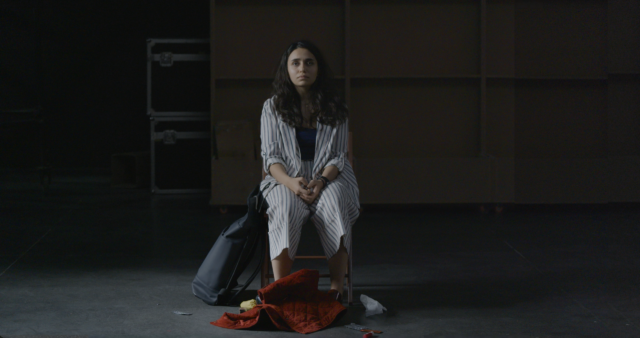
Five women sculptors will gather for special discussion at New York Academy of Art on October 28

WOMEN SCULPTORS: REAL TALK
New York Academy of Art
111 Franklin St. between Sixth Ave. & West Broadway
Tuesday, October 28, 6:30
nyaa.edu

On October 28 at 6:30, the New York Academy of Art is hosting the free public forum “Women Sculptors: Real Talk,” a gathering of five women sculptors who will be discussing the state of art in contemporary culture, exploring celebrity commissions, traveling solo exhibitions, social-media uproar, and more.

NYAA sculpture department chair and sculptor Nina Levy will moderate the panel, which includes Vinnie Bagwell, Meredith Bergmann, Donna Dodson, and Barbara Segal. Levy specializes in large-scale realistic depictions of humans (cast clay, polyester resin), Bagwell in figurative African American statuary (bronze), Bergmann in sociopolitical representational works (bronze, plaster, marble, clay), Dodson in the relationship between humans and animals (wood), and Segal in works with a feminist take on consumer culture (marble, steel, onyx, fused glass, aluminum). The artists have been gathering online for the past year to share their observations regarding the state of the contemporary art world.

“In our monthly zoom meetings, our group of five women sculptors, with over two hundred years of collective art world experience, engages in conversations in order to be generous and listen to one another, learns from each other, helps each other network, connects to new technologies, supports one another through tough times, and celebrates our triumphs as we each face the challenges that come with navigating galleries and collectors, municipalities and public art commissions,” Dodson told twi-ny.

It should be fascinating to see these five artists finally in the same room together, speaking face-to-face; admission to what should be a lively event is free.

[Mark Rifkin is a Brooklyn-born, Manhattan-based writer and editor; you can follow him on Substack here.]
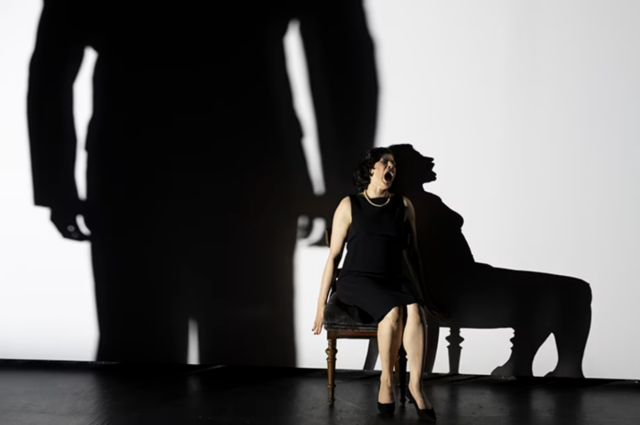
WHAT’S GOING ON? GINGER TWINSIES AND HEATHERS THE MUSICAL

Ginger Twinsies is a parody of the 1998 remake of The Parent Trap (photo by Matthew Murphy)

GINGER TWINSIES
Orpheum Theatre
126 Second Ave. between Seventh & Eighth Sts.
Monday – Saturday through October 25, $49-$149
gingertwinsies.com

In Barry Levinson’s classic 1982 film Diner, Fenwick (Kevin Bacon) says to Boogie (Mickey Rourke), “Do you ever get the feeling that there’s something going on that we don’t know about?”

I get that feeling at times in theater, especially at shows based on books or movies. While you don’t need to have read E. L. Doctorow’s 1975 novel, Ragtime, or seen Miloš Forman’s 1981 film adaptation in order to enjoy the current Broadway revival at Lincoln Center, it doesn’t hurt. However, my knowledge of such films as Some Like It Hot and Sunset Blvd. did negatively impact my enjoyment of the stage musicals; while artistic license must be granted, certain changes from the original just seemed plain awful, altering motivations and important points.

At the curtain call for Sunset Blvd., as most of the audience stood and cheered with wild applause, I turned to my friend and said, “Did they see the same show we did?” She shrugged in agreement.

I had similar experiences at two recent shows, each of which I liked, but not nearly as much as my fellow theatergoers, who were watching them at a different level.

Continuing at the Orpheum through October 25, Ginger Twinsies is a farcical love letter to Nancy Meyers’s 1998 film, The Parent Trap, in which Lindsay Lohan portrayed identical eleven-year-old twins Hallie Parker and Annie James, separated at birth and ignorant of each other’s existence until they meet at summer camp and decide to switch places. It’s a remake of David Swift’s 1961 original, which made a star of Hayley Mills and was based on Erich Kästner’s 1949 children’s book.

The play features a lot of satirical music, inside jokes, and Easter eggs for those in the know; for example, one of the actors portrays Jamie Lee Curtis, who played Lohan’s mother in the body-switching 2003 remake of Freaky Friday, which was based on Mary Rodgers’s 1972 novel. Also appearing as characters in Ginger Twinsies are Shirley Maclaine, who had some choice words about Lohan after the younger actress had to be pulled out of a film they were working on together; Julianne Moore, whose daughter looks like she could be Lohan’s twin; and Demi Moore, who spoke with Lohan at the 2025 Oscars. Whether you get the references or not, the connections are confusing.

Russell Daniels and Aneesa Folds are hilarious as Annie and Hallie, respectively, from the get-go, as they don’t look anything alike. The show works best when it concentrates on the relationship between the two girls; numerous subplots with minor characters are overused as writer-director Kevin Zak attempts to squeeze too much into eighty minutes. I did eventually get into the flow once I realized there was no way I was going to get all of the jokes, but it’s still dispiriting to watch large portions of the audience laughing when you and others are scratching their heads.

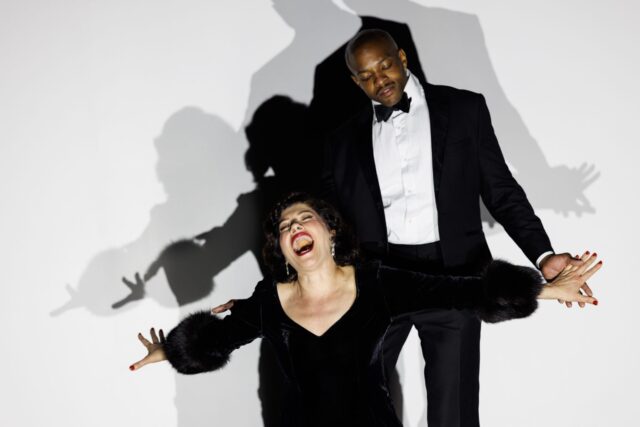
Veronica joins the Heathers in musical adaptation of 1980s cult favorite (photo by Evan Zimmerman)

HEATHERS THE MUSICAL
New World Stages
340 West Fiftieth St. between Ninth & Tenth Aves.
Tuesday – Sunday through September 6, $72-$195
heathersthemusical.com
newworldstages.com

A different kind of cult fandom can be found at Heathers the Musical, a revival of the 2014 show based on Michael Lehmann’s 1988 teen romance-thriller. The iconic film featured Winona Ryder as Veronica Sawyer, a student at Westerburg High who joins the mean girls clique of Heather Duke (Shannen Doherty), Heather McNamara (Lisanne Falk), and Heather Chandler (Kim Walker) while falling for dangerous new guy J. D. Dean (Christian Slater, in his best Jack Nicholson impersonation).

I had seen the film some years back and was looking forward to the musical, which continues at New World Stages through January 25. But what I wasn’t expecting were the shrieks that rattled the theater for two and a half hours (with intermission). Huge screams accompanied the first appearance of many of the characters, and nearly every song, from “Beautiful” and “Candy Store” to “Veronica’s Chandler Nightmare” and “My Dead Gay Son,” turned into a sing-along, as all the young women around me blared the lyrics out loud, wearing huge smiles as they did.

Director Andy Fickman and choreographer Stephanie Klemons capture the essence of the film, although the book, by Kevin Murphy and Laurence O’Keefe (they also wrote the music and lyrics), takes too many liberties with the plot, making changes that didn’t improve on the original, from altering who did what and combining multiple characters into one to commercializing the generic candy store and modifying the ending. However, thank goodness they corrected the spelling of the high school, which is named after Paul Westerberg of the Replacements.

The cast, which includes a terrific Lorna Courtney as Veronica, Casey Likes as J.D., Olivia Hardy as Heather Duke, Elizabeth Teeter as Heather McNamara, McKenzie Kurtz as Heather Chandler, Xavier McKinnon as Ram Sweeney, Erin Morton as Martha Dunnstock, and Tony nominee Kerry Butler as Ms. Fleming and Ms. Sawyer, is first rate, and the music is fun.

The story takes on added meaning in the wake of so many school shootings the past twenty years while also tackling the subject of teen suicide, but it doesn’t dive deep enough and takes off in directions that can drain certain scenes of their potency. But like Ginger Twinsies, despite its flaws, Heathers the Musical is worth seeing, at least in part for watching everyone else in the audience have an absolute ball even when there’s something going on that you don’t know about — a status of exclusion the mean girls of Heathers and cult theater insiders might actually relish.

[Mark Rifkin is a Brooklyn-born, Manhattan-based writer and editor; you can follow him on Substack here.]
LISTENING TO THE WATER: RIVER OF GRASS AT FIREHOUSE CINEMA

River of Grass explores the past, present, and future of the Everglades

RIVER OF GRASS (Sasha Wortzel, 2025)
DCTV Firehouse Cinema
87 Lafayette St.
October 24-30
www.riverofgrassfilm.com
www.dctvny.org

When I was a kid, I was fascinated by the Everglades. I loved Gentle Ben, the television series starring Dennis Weaver, Clint Howard, and a seven-hundred-pound bear, set in and around the Everglades; the show opened with the three of them speeding through swampland on an airboat. When we visited my grandparents in Florida, a trip to the Everglades was often on the agenda, but I did not encounter the cuddly bear.

Thus, I felt a personal connection when watching Sasha Wortzel’s debut feature-length documentary; for the filmmaker, the experience was “profoundly personal.”

Wortzel wrote, directed, narrated, produced (with Danielle Varga), and edited (with Rebecca Adorno Dávila) River of Grass, a poetic work about the battle to preserve the Everglades, the region in Florida where she was born and raised. Eight years in the making, the “project grows out of my process grappling with what it means to be from a place that may cease to exist in my lifetime and with the complexities of ‘home’ in a settler colonial landscape,” she explains in her director statement.

The documentary was inspired by The Everglades: River of Grass, the 1947 book by Marjory Stoneman Douglas, published the same year President Harry S. Truman dedicated the Everglades as a national park. Douglas was a longtime resident of Coconut Grove in Miami — she died there in 1998 at the age of 108, having spent much of her life as an environmental activist. In addition to writing the book, she organized the Friends of the Everglades in 1969, and she is the namesake of the Parkland, Florida, high school where the 2018 Valentine’s Day shooting occurred.

“Man’s life on earth is limited by the conflict between his stupidity and his intelligence,” Stoneman Douglas says in the film, which includes rare archival audio and movie footage that Wortzel was surprised to find. “I think man can prolong his life on the earth for many thousands of years if he is intelligent, but I don’t know whether he’s intelligent enough. I just don’t know.”

All these years later, that intelligence is still up for debate as governments and corporations continue to display little or no respect for the natural environment as they mess with nature’s cycle. Wortzel introduces us to park ranger Leon Howell, who discusses the importance of the alligator to the ecosystem; Donna and Deanna Kalil, a mother and daughter team who spot and catch pythons, who negatively impact the area; two-spirit Miccosukee environmentalist and poet Houston R. Cypress, who talks about the tree islands, where his Native American ancestors would take refuge from soldiers hunting them down (Cypress is also a consulting producer on the film and a member of the Love the Everglades Movement); Kina Phillips, who advocates against the burning of the sugarcane crop, which releases toxic chemicals into the air and water; and the Stokes family, sixth-generation fishers whose livelihood is in jeopardy because of the draining and development of the Everglades.

Most significantly, we meet tireless activist and educator Betty Osceola, who, among many other things, leads prayer walks to protect the water. “I always talk to water, and I listen. Water has life. It has memory. If you slow down and listen and you pay attention, you can actually start hearing it and seeing what it’s trying to tell you,” Osceola, seen navigating in an airboat, says.

The documentary has a choppy, disjointed narrative as it winds between the past and the present. The participants and their affiliations are not identified, and Wortzel speaks only with those seeking to save the Everglades.

However, it is beautifully photographed by cinematographer J. Bennett, who captures gorgeous shots of the moon and sun over the Gulf of Mexico, stunning panoramas of the landscape, and striking vistas of the eight prayer walkers seen far in the distance, dedicated to what might be an impossible task but determined to keep up the fight.

But perhaps the most memorable image is that of Stoneman Douglas’s empty chair, sitting empty amid the destruction wrought by Hurricane Ian in 2022.

River of Grass opens October 24 at DCTV Firehouse Cinema, with Wortzel on hand for six special events: postscreening Q&As with Varga, and Bennett, moderated by Tourmaline, on October 24 at 7:00; with Sierra Pettengill on October 25 at 7:00; with musician Angélica Negron and Keith Wilson on October 26 at 6:00 (Negron will also perform before the showing); with Osceola and Joseph Pierce on October 28 at 7:00; with Osceola and Arielle Angel on October 29 at 6:30; and with Lauren O’Neill Butler and Dominic Davis on October 30 at 7:00.

[Mark Rifkin is a Brooklyn-born, Manhattan-based writer and editor; you can follow him on Substack here.]
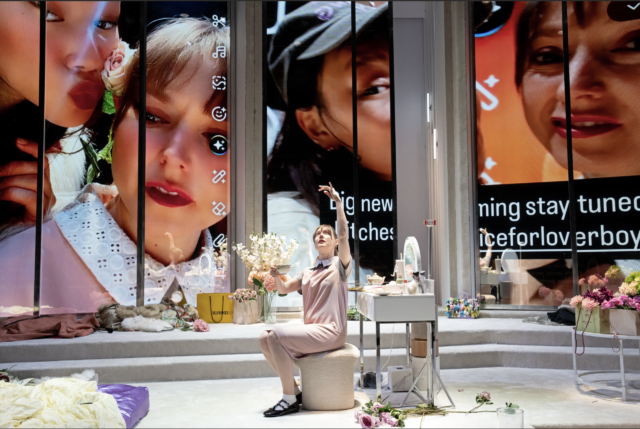
PAINTER OF THE FUTURE: VAN GOGH AT NYBG

“Van Gogh’s Flowers” continues at the New York Botanical Garden through October 26 (photo by twi-ny/mdr)

VAN GOGH’S FLOWERS
The New York Botanical Garden
2900 Southern Blvd., Bronx
Through October 26, $15-$39, 10:00 am – 6:00 pm
718-817-8700
www.nybg.org
online photo and video slideshow

This is the last weekend to catch the lovely “Van Gogh’s Flowers” exhibit at the New York Botanical Garden, a floral tribute to the post-Impressionist Dutch master who revolutionized painting. The show consists of sculptures, three-dimensional re-creations, quotations, and floral displays celebrating Vincent van Gogh, who died by suicide in 1890 at the age of thirty-seven.

“Considering my life is spent mostly in the garden, it is not so unhappy,” Vincent van Gogh to Theo van Gogh, May 1889.

French artist Cyril Lancelin has created an outdoor pathway of yellow sunflowers made of steel, plywood, eva foam, nylon, 3D printing, cork, and urethane paint, arranged in various settings, highlighted by a walkthrough area of giant blooms.

“The painter of the future is a colorist such as there hasn’t been before,” Vincent van Gogh to Theo van Gogh, 1888.

Amie J. Jacobsen contributes four framed sculptures and vases inspired by van Gogh’s unusual technique and floral paintings, featuring irises, roses, oleanders, and imperial fritillaria. “One of the funnest, most energetic parts of this is picking up on his very fast and colorful brushstrokes and getting to do that on a 3-D form — that was my favorite part,” she told twi-ny at the May press opening.

Amie J. Jacobsen has designed four floral installations for van Gogh show (photo by twi-ny/mdr)

“You know that Jeannin has the peony, Quost has the hollyhock, but I have the sunflower, in a way,” Vincent van Gogh to Theo van Gogh, January 22, 1889

Catherine Borowski and Lee Baker of Graphic Rewilding designed colorful, large-scale panel installations covered in floral patterns based on van Gogh’s subjects and palette, including irises in the Enid A. Haupt Conservatory indoor pond and sunflowers, chrysanthemums, buttercups, daisies, cornflowers, forget-me-nots, and birds in and around the circular reflecting pool by the visitors center.

“I’ve been influenced by van Gogh’s work for many years, so it’s really coming full circle for us to be able to make work about his work within the botanical garden,” Baker told me. “I’ve drawn irises for years, so it was a natural progression, but drawing them in this style — if you took the sculptural lines away, you’d have something more akin to my original style. I wanted to take on that and extend my designs through the sculptural feeling of van Gogh’s work. It’s taken me in a new direction. We had to compete with the trees — no, you work with them.”

“The bizarre lines . . . multiplied and snaking all over the painting aren’t intended to render the garden in common, unimportant resemblance but [to] draw it for us as if seen in a dream, in character and yet at the same time stranger than the reality,” Vincent van Gogh to Wilhelmina van Gogh, November 12, 1888.

Of course, there are also plenty of live plants throughout the conservatory, making van Gogh’s works come to life, as the NYBG has done previously with such other artists as Frida Kahlo, Ebony G. Patterson, Claude Monet, Yayoi Kusama, and Roberto Burle Marx.

“It is actually one’s duty to paint the rich and magnificent aspects of nature,” Vincent van Gogh to Wilhelmina van Gogh, September 16, 1888.

[Mark Rifkin is a Brooklyn-born, Manhattan-based writer and editor; you can follow him on Substack here.]