The New York apple will be celebrated at street fair on Orchard St. on Sunday
APPLES ON ORCHARD
Orchard St. between Broome & Grand Sts.
Sunday, September 26, free, 11:00 am – 5:00 pm
212-226-9010
www.lowereastsideny.com
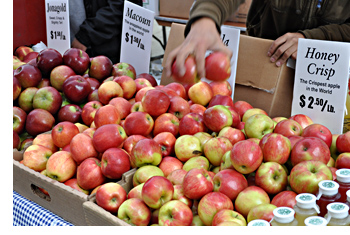
Some three hundred and sixty-three years ago, Peter Stuyvesant planted an apple tree on Thirteenth & Third, and New York has been identified with the healthy fruit ever since. On Sunday, the Lower East Side Business Improvement District will be sponsoring the annual New York City Apple Day, held in the general location where French farmer James De Lancey Sr.’s apple orchard thrived back in the eighteenth century. The afternoon will include live performances by Grandma Fantasy, Tyrone Noonan Band, Cows Like Shrimp with Sefton Stallard, and Stella Winkelman of Bell Book and Scandal; the Mark Miller Gallery will be sponsoring an art activities table for kids; and such restaurants as Café Katja, Bunny Chow, and Georgia’s Eastside BBQ will be serving dishes featuring apples. Among the other participants are An Choi, the Henry Street Settlement, Biscuits by Lambchop, the New Museum, the LES Ecology Center, Red Jacket Orchards, the Tenement Museum, and Newtown Pippin.


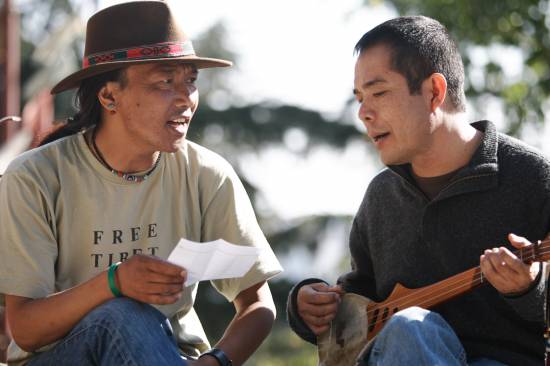
 Ngawang Choephel wrote, directed, produced, narrates, and composed the score for the fascinating, intensely personal documentary TIBET IN SONG. Born in western Tibet in 1966, Ngawang set out in 1995 to capture the dying folk music of Tibet, a critical part of the country’s tradition and yet another aspect of their culture being buried by the Chinese takeover that had begun in 1959. Risking his life as well as his family’s — he also wanted to find the father he had not seen in decades — Ngawang, who grew up in a South Indian refugee camp, started to record Tibetan folk music to preserve its heritage, leading to his arrest on espionage charges. But he let nothing stop him, especially when he came upon Tibetans who were using native melodies to sing propaganda lyrics supplied by the Chinese government. But TIBET IN SONG, which has won awards at the Sundance Film Festival, the One World International Human Rights Film Festival, the Asian American International Film Festival, and others, is more than just one person’s private struggle; it is an important document about human rights, particularly when Ngawang speaks with Tibetan exiles in India who are not afraid to tell the truth.