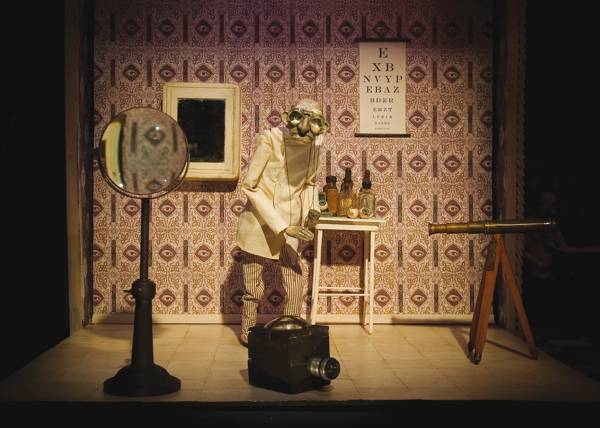
Theater for the New City hosts its annual celebration of thrills, chills, and much weirdness
Theater for the New City
155 First Ave. at Tenth St.
Sunday, October 31, $20, 3:30 – ?
www.theaterforthenewcity.net/halloween
Crystal Field’s annual Halloween Costume Ball at the Theater for the New City is another massive extravaganza of music, theater, dance, performance art, astrology, numerology, magic, and general mayhem, taking place on the bandstage outside and in the lobby as well as in the Ballroom, the Cauldron, the Cabaret, the Womb Room, and in the House of Horrors deep in the basement. Among the myriad performers are Jennifer Blowdryer, Penny Arcade, Alien Surfer Babes, Clowns with Gowns, Evan Laurence, Annie Wilson’s Haunted Pianoforte, the Hell Souls, the Hot Lavender Swing Band, the Love Show, Bambi Killers, Flahooley, Suspended Cirque, and Emperor Satan’s Rococoach, in addition to such productions as “The Land of Investment Banking,” “Clutter: I’m Saving My Life & It’s Killing Me,” and “The Red and Black Masque.” At midnight, the costume parade and contest gets under way, with such celebrity judges as Judith Malina, Matt Morillo, and Sabura Rashid. And believe it or not, admission to everything is a mere twenty bucks.
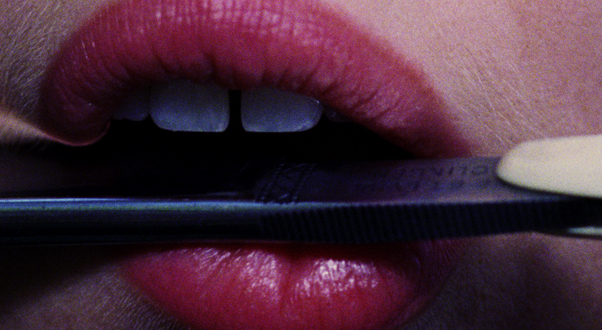
 Hélène Cattet and Bruno Forzani’s complex genre exercise, AMER, revisits and reimagines the Italian giallo films from the 1960 and ’70s, made by such masters as Dario Argento, Lucio Fulci, and Mario Bava. Hyperstylized with deep, lush colors, minimal dialogue, and surreal, erotic imagery, AMER, which means bitter, is a different kind of coming-of-age story, told in three sections. The protagonist, Ana, is first seen as a young girl (Cassandra Forêt) trying to avoid the woman in black living in the closet and wondering if her decrepitly dead grandfather will wake up. In the second part, Ana (Charlotte Eugène-Guibbaud) is a teenager discovering her sexuality and its power as she walks seductively by a motorcycle gang, the wind gently lifting the hem of her dress. In the final section, Ana (Marie Bos) is a grown woman returning to her ancestral home — and the ghosts and memories she left behind. Cattet and Forzani favor extreme close-ups and voyeuristic shots, with eyes peering through keyholes and looking at Ana with various types of desire. While they nail the style — they even use music from earlier giallo films — they are severely lacking in substance. What narrative there is gets particularly derailed in the second segment, replaced by uncomfortable scenes that feel like a separate short film or a European advertisement; in fact, the filmmakers have spent most of their career making shorts. AMER is beautiful to look at and listen to, with danger lurking around every corner, but it tries too hard to be true to its genre forebears’ shortcomings instead of improving on it.


 In 2006, documentarian Doug Block released 51 BIRCH STREET, a deeply personal examination of his parents’ marriage as well as his own tense relationship with his father. He has followed that up with another intimate, revealing family portrait, THE KIDS GROW UP, this time focusing on his relationship with his daughter, Lucy, as she prepares to leave their Stuyvesant Town home to go to college in California. Block has been recording as much of Lucy’s life as he can since she was a small child, continually asking her what she wants to be when she grows up and leaving the camera on even during uncomfortable moments when it’s clear she doesn’t want to be filmed. At one point, Lucy can be seen mouthing the words “Stop it” and “Turn it off” at her father, who doesn’t at first. Perhaps most telling is his obsession with one scene in which the sound didn’t work during a conversation he had with her; he admits to being haunted by what is missing. He also films his wife as she lies in bed, suffering from a debilitating depression, and talks to his father about the elder Block’s parental shortcomings as if he were discussing the weather. And it’s hard not to be taken aback when he says he has little interest in his stepson’s newborn baby as the whole family is gathered in the hospital room, the mother cradling her six-day-old infant. THE KIDS GROW UP is no mere extended home movie; Lucy is an engaging character who shines on camera, but as much as the film is about her maturation, it is also about her father’s coming to terms with his daughter’s imminent departure. Block is not ready for his baby girl to not be there day in and day out, and he’s particularly troubled when she gets a French boyfriend, Romain George, while studying overseas. Marjorie and Doug are modern parents who allow their daughter the freedom to do as she chooses, but audiences will feel Doug’s palpable jealousy and how uncomfortable he must be as he films Lucy and Romain together on a couch, Romain lovingly stroking Lucy’s inner thigh right in front of her father, who, once again, keeps the camera rolling. The plural in the title is no accident; the “kids” refer not only to children in general but specifically to Lucy and Doug, who is described by his wife as a Peter Pan-like figure who still hasn’t grown up. THE KIDS GROW UP is a compelling, brutally honest look at a man who is not ashamed of his very distinctive view of his family and himself, warts and all.
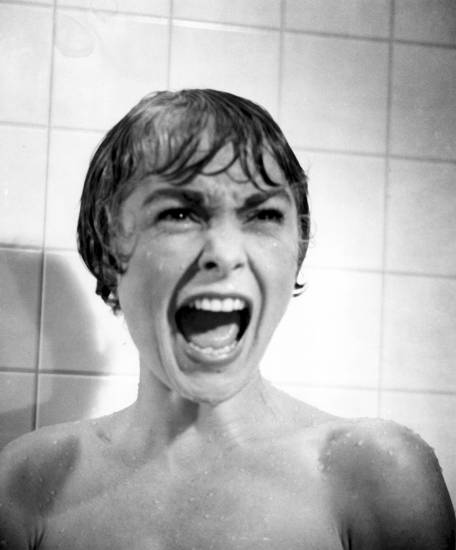
 Yes, it’s now been fifty years since Alfred Hitchcock’s PSYCHO first started scaring people silly, especially those considering taking a shower. (Rumors that Americans smelled pretty foul in the early 1960s have never been substantiated.) The master of suspense turned to horror in 1960, transporting Robert Bloch’s novel, inspired by the case of serial killer Ed Gein, onto celluloid for all time. Anthony Perkins is at his creepy best as Norman Bates, the owner of a motel in the middle of nowhere who has a thing for stuffed birds and his mother. He gets somewhat titillated when Marion Crane (Janet Leigh) shows up one night; she is on the run with a wad of cash that isn’t hers. Marion’s sister (Vera Miles), boyfriend (John Gavin), and a private detective (Martin Balsam) are trying to find her, but they’re not gonna have much luck. PSYCHO became the blueprint for psychological terror, a thriller that doesn’t stab you in the back with red herrings and gore and violence. Instead, it gets deep inside your head — where it will stay the rest of your life. Film Forum is celebrating the film’s silver anniversary by showing it wrapped around Halloween weekend, just to make things extra frightening. Film critic David Thomson will introduce the 7:45 screening on October 29 and sign copies of THE MOMENT OF PSYCHO and THE NEW BIOGRAPHICAL DICTIONARY OF FILM afterward.