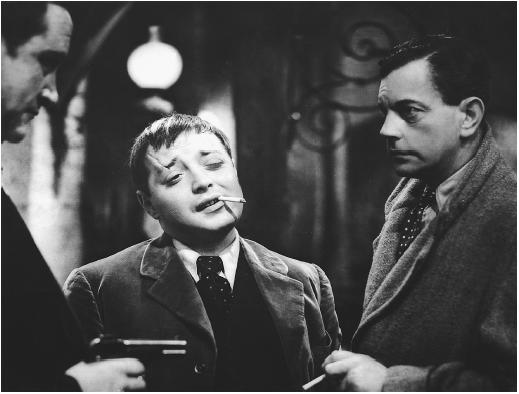
Peter Lorre makes an excellent villain in Alfred Hitchcock’s first version of THE MAN WHO KNEW TOO MUCH
THE MAN WHO KNEW TOO MUCH (Alfred Hitchcock, 1934)
Anthology Film Archives
32 Second Ave. at Second St.
Tuesday, March 22, 7:30 & 9:00
Series continues through March 31
212-505-5181
www.anthologyfilmarchives.org
 Alfred Hitchcock’s first version of The Man Who Knew Too Much set off a flurry of successes (The 39 Steps, Secret Agent, Sabotage, Young and Innocent, and The Lady Vanishes) that led to his move to Hollywood. In St. Moritz during a winter sports competition, Louis Bernard (Pierre Fresnay) is participating in the ski jump, while his friend Jill Lawrence (Edna Best) is battling Ramon (Frank Vosper) in a shooting contest. At a dance party that night, Louis is murdered, but not before giving secret information to Jill’s husband, Bob (Leslie Banks). It turns out that Louis was a spy, and Ramon and his associates, including the villainous Abbott (Peter Lorre, displaying terrific two-toned hair), need to make sure that no one else finds out about their nefarious plot, so they kidnap the Lawrence’s precocious young daughter, Betty (Nova Pilbeam), to prevent Bob from talking to the police or the British government. Bob decides to play secret agent himself, enlisting family friend Clive (Hugh Wakefield) to follow the trail to reveal the evil plans while also trying to save Betty. Written by Charles Bennett, who scripted many of Hitchcock’s early British films, and D. B. Wyndham-Lewis, The Man Who Knew Too Much is an exciting thriller filled with light humor and an overabundance of charm; for example, when Betty ruins both Louis’s and her mother’s chances at victory, they shake it off as if it were funny, which it actually isn’t. But the suspense scenes work well, including one set in a dentist’s office in addition to the final shoot-out. Lorre is particularly effective in his first English-language role, which he performed phonetically. The Man Who Knew Too Much is screening March 22 at 7:15 at Anthology Film Archives as part of its “Auto-Remakes” series, comprising works that were remade by the original filmmakers, and will be followed at 9:00 by Hitchcock’s 1956 version, which stars James Stewart and Doris Day as the unsuspecting couple suddenly caught up in international intrigue. (Hitchcock had told François Truffaut that he felt the original was the work of a talented amateur, thus the remake.) The series also features such “auto-remakes” as Yasujiro Ozu’s I Was Born, But… (1932) and Good Morning (1959), Raoul Walsh’s High Sierra (1941) and Colorado Territory (1949), John Ford’s Judge Priest (1934) and The Sun Shines Bright (1953), Leo McCarey’s An Affair to Remember (1939 and 1957), and other reworkings by Ken Jacobs, Ernst Lubitsch, Howard Hawks, and Marcelo Gomes and Karim Aïnouz.



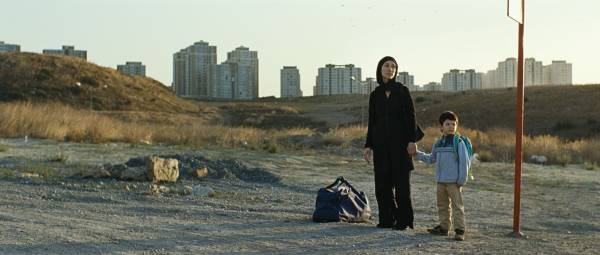
 Viennese actress Feo Aladag makes a powerful directorial debut with her heartbreaking melodrama, When We Leave. Inspired by her work with Amnesty International’s Stop Violence Against Women campaign, Aladag tells the story of a young mother, Umay (Head-On’s Sibel Kekilli), who leaves her abusive husband, Kemal (Ufuk Bayraktar), in Istanbul and returns with her son, Cem (Nizam Schiller), to her family in Germany. But her father, Kader (Settar Tanriogen), her mother, Halime (Derya Alabora), and especially her older brother, Mehmet (Tamer Yigit), insist she return to Kemal despite his mistreatment of her, since she has now brought shame to her family among the tight-knit Turkish community in Berlin. But as Umay refuses their demands and tries to put her life back together, Kader and Mehmet steadfastly turn away from her pleas to be accepted by them and instead conspire to return her and Cem to Kemal, no matter the cost. Winner of the Best Narrative Feature and Best Actress Award (for Kekilli) at the 2010 Tribeca Film Festival and Germany’s official entry for the 2011 Academy Awards for Best Foreign Language Film, When We Leave is a heart-tugging tale of misguided tradition, familial obligation, and the basic need to be loved. The film falters a bit as Umay continues going back to her parents time and time again, risking her life and that of her son, but it’s still a poignant, moving tale reminiscent of Abdullah Oguz’s 2007 film Mutluluk (Bliss), which brilliantly dealt with the theme of honor killings in Turkey. One of the most frightening aspects of the film is that the crimes of honor it deals with are all too real in numerous societies around the world, although Aladag wisely avoids getting overly preachy and pedantic. When We Leave is screening at Symphony Space as part of the weekly Thalia Film Sundays program on March 20, March 27, and April 3.

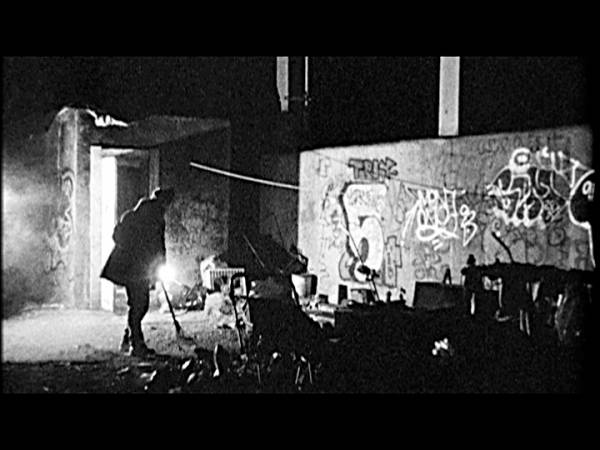
 The award-winning documentary Dark Days takes a frightening look at a community of homeless men and women — many of them former or current crack users — who live in the Amtrak tunnels beneath Penn Station. They sleep in tents, cardboard shacks, and small plywood shanties, some of which have been painted and decorated. As the belowground residents shave, cook, play with their pets, and take showers under leaking pipes, trains speed by, and rats scavenge through the countless mounds of garbage. At times some of the men venture aboveground (“up top”) to go through trash cans, mostly looking for recyclable bottles and junk items they can resell. First-time filmmaker Marc Singer became a part of this colony for two years (he initially went down to help the people, not to film them), getting the residents to open up and tell their fascinating stories, which turn out to be filled with a surprising zest for living. In fact, all of the underground shooting was completed with the help of the subjects themselves acting as the crew when they were not on camera. DJ Shadow composed the haunting music for this strangely enriching look at a mysterious, truly terrifying part of New York City. Dark Days kicks off the True Crime New York series at the Maysles Cinema in Harlem on March 21 and will be introduced by former mayor David Dinkins; the special event, curated by Sylvia Savadjian, will be followed by a discussion with Singer and Mary Brosnahan, the executive director of the Coalition for the Homeless. The series continues March 22, 24, and 26 with Alex Gibney’s Client 9: The Rise and Fall of Elliot Spitzer and March 23, 25, and 27 with Charles Ferguson’s Oscar-winning Inside Job. There will be postscreening Q&As on March 24 with Gibney and March 25 with activist Carl Dix, with more to be announced.