
Chunky Move will present the multimedia piece I LIKE THIS at the Joyce SoHo this week (photo by Proud Mother Pictures)
Joyce SoHo
155 Mercer St. between Houston & Prince Sts.
April 6-9, $18
212-242-0800
www.joyce.org
www.chunkymove.com.au
In describing their sixty-minute piece I Like This, directors and choreographers Antony Hamilton and Byron Perry use such phrases as “dialogue firmly seated in the ridiculous,” “the challenge of extrapolating this unbridled creative fascination,” “fantastically muscular and rhythmic conversations,” “sheer delight and mutability of thought,” “creative cannibalism,” and “general silliness.” In many ways, those terms also relate to their company itself, the Australian-based Chunky Move, which has been presenting visual and physical wonders since its founding in 1995 by artistic director Gideon Obarzanek. In such works as Glow, which played the Kitchen in February 20008 and featured a solo dancer performing on a rectangular floor with motion detectors that integrated her movement with light projections, and Mortal Engine, a 2009 BAM Next Wave entry that took place on a tilted platform that incorporated light and sound into the troupe’s movement, Chunky Move uses cutting-edge technology to create intriguing works that range from being deeply intimate to being overly dependent on too many bells and whistles, although their work is always dazzling to watch. This week Chunky Move will present I Like This at the Joyce Soho, a multimedia piece that comments on itself as it develops in front of the audience, performed by a five-person team that includes Hamilton and Perry along with Stephanie Lake, Alisdair Macindoe, and Joseph Simons. I Like This debuted in November 2008 in Australia, part of the company’s Next Move series, which focuses on work by emerging talent. An After Hours @ Joyce SoHo event will take place following the April 7 performance, with a Q&A and refreshments.
Update: It’s easy to like I Like This. Chunky Move’s hour-long piece is an ingenious display of creation and experimentation as the co-director-choreographer team of Antony Hamilton and Byron Perry have a blast with performers Stephanie Lake, Alisdair Macindoe, and Joseph Simons. Hamilton and Perry spend most of the show on the floor amid exposed, snaking power cords and a boombox, flicking on and off handheld lights to perfectly synchronized electronic soundscapes and effects as the dancers go from seated positions to traversing the stage. Lake does most of the talking, getting into the process as the troupe hides behind chairs, enters a noir tale, finds itself at a campfire, and floats underwater, casting shadows on the surrounding black curtains and changing their positions in the dark as lights go on and off. But I Like This never feels gimmicky; instead, Chunky Move involves the audience by enjoying their own work just like the audience is doing, everyone in the theater getting a kick out of just how much fun all this process-based performance is. Hamilton and Perry also allow Lake, Macindoe, and Simons time to show off their mad dance skills in several vignettes. Following the high-tech grandeur of Mortal Engine, Chunky Move’s I Like This is an immensely likable low-tech wonder.
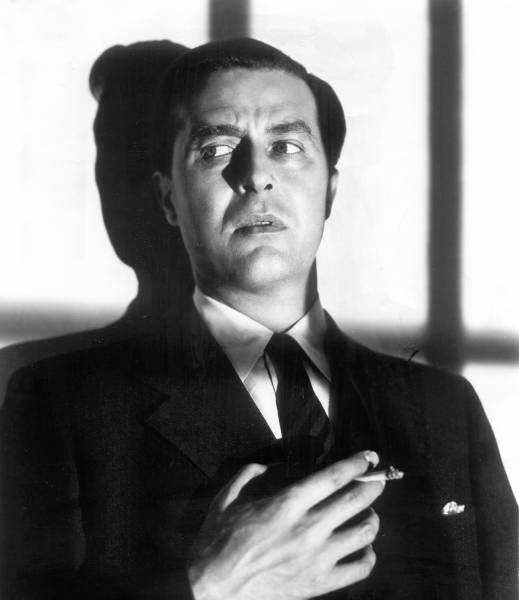
 Based on the 1943 novel by Graham Greene, Fritz Lang’s Ministry of Fear is a classic Hitchcockian noir about an innocent man caught up in a dangerous web of mystery and intrigue. Ray Milland stars as Stephen Neale, a man who, as the film opens, is being released from an asylum after serving time related to the death of his wife. His freedom doesn’t last long, as he stops at a local fair and visits the fortune-teller, who accidentally helps him win a guess-the-weight cake that some very bad people want to get their hands in. Out on the run, his only friends are Willi (Carl Esmond) and Carla (Marjorie Reynolds), foreign siblings who run the charity organization the Mothers of Free Nations, the sponsor of the fair. Throw in a séance, the Blitz, an old blind man, an alcoholic private investigator, a book called The Psychology of Nazism, a disbelieving Scotland Yard detective, and wonderfully shadowy camerawork and the result is a tense, exciting spy tale filled with plenty of twists and surprises. Ministry of Fear is screening as part of 92YTribeca’s Closely Watched Films series, hosted by Elliott Kalan and featuring special guest speaker Jackson Publick.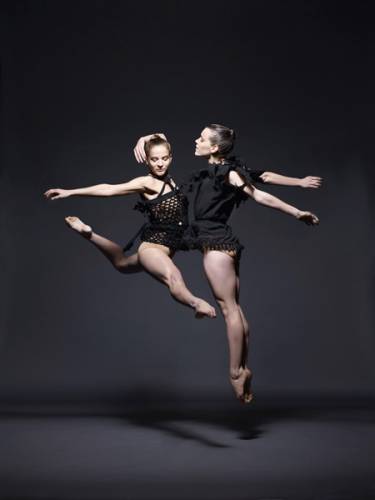


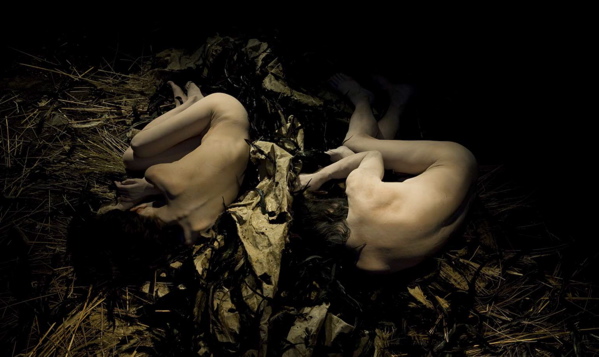

 Based on the Russian novel Yama (The Pit) by Aleksandr Kuprin, protofeminist director Kenji Mizoguchi’s Sisters of the Gion offers a poignant look at the changing desires of women in twentieth-century Japan. In the Gion District, geisha have become one-man prostitutes, taking up with one wealthy patron at a time. When Furusawa (Benkei Shiganoya) loses his business, the bankrupt man turns away from his wife and instead goes to Umekichi (Yōko Umemura), who takes him in, believing that it is her responsibility. Her younger sister, Omocha (Isuzu Yamada), is furious, arguing that geisha, and women in general, should be more than just the playthings of men. She wants her sister instead to find a rich patron who can take care of her in style. Omocha is a manipulative woman, willing to lie to get what she thinks she and Umekichi deserve, but she is not doing it for evil reasons as much as she wants to change the plight of the geisha and give more power to women. But Umekichi cannot break free of the old-fashioned ways as Omocha plays games with successful businessman Jurakudo (Fumio Okura) and his assistant, Kimura (Taizō Fukami), devising a plot that threatens to tear everything apart. Mizoguchi fills Sisters of the Gion with long shots of narrow passageways as characters try to escape from their situations but are unable to. Made in 1936, just before a war that would change Japan’s views on houses of ill repute, the film is virtually timeless for most of its too-brief sixty-nine minutes, until one man decides to take actions into his own hands and suddenly cars and the nearby city shift the overall perspective. In the end, it’s about more than just money, although it’s definitely about that, but it’s also about respect, about common decency, and about humanity, as seen from all sides. Sisters of the Gion is screening April 4 with Yasujiro Ozu’s 1933 silent crime drama, Dragnet Girl, starring Kinuyo Tanaka, as part of Film Forum’s “5 Japanese Divas” series, featuring four weeks of films starring Yamada, Tanaka, Machiko Kyo, Setsuko Hara, and Hideko Takamine, who play strong, determined women in such classic works as Ozu’s Early Summer (1951) and Tokyo Story (1953), Hiroshi Teshigahara’s The Face of Another (1966), Mikio Naruse’s Okaasan (1952) and Flowing (1956), Akira Kurosawa’s The Idiot (1951) and Throne of Blood (1957), Keisuke Kinoshita’s Carmen Comes Home (1951) and Twenty-Four Eyes (1954), and Mizoguchi’s Ugetsu (1953), Sansho the Bailiff (1954), and Street of Shame (1956), among others.