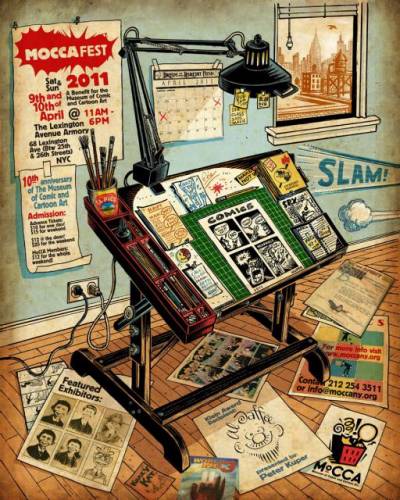
69th Regiment Armory
68 Lexington Ave. between 25th & 26th Sts.
April 9-10, $10-$12/day, $15-$20/both days, 11:00 am – 6:00 pm
212-254-3511
www.moccany.org
The Museum of Comic and Cartoon Art is celebrating its tenth anniversary this year at MoCCA Fest 2011, taking place April 9-10 at the 69th Regiment Armory on Lexington Ave. The lineup, as usual, is extensive and impressive, featuring such exhibitors as Drawn + Quarterly, Fanfare-Ponent Mon, Meathaus, NBM, First Second, Rabid Rabbit, Top Shelf, Pantheon, Act-I-Vate, Abrams, Fantagraphics, and various Scandinavian consulates general along with signings by Ben Katchor, Michael Kupperman, Dean Haspiel, Kim Deitch, Mo Willems, R. Sikoryak, Galit & Gilad Seliktar, Neil Kleid, Stephen Vrattos, Farel Dalrymple, and Tom Forget, among many others. Two dozen panels are scheduled, from “The State of Editorial Cartooning,” with Ruben Bolling, Tim Kreider, and Ted Rall, moderated by Brian Heater, and “A New Generation of New Yorker Cartoons,” with Drew Dernavich, Paul Noth, Zachary Kanin, and Emily Flake, moderated by Bob Mankoff, to “Reciprocal Influence: Comics and Graphic Design,” with Chip Kidd, Craig Yoe, Yuko Shimizu, Josh Bernstein, and David Mac, moderated by Jeff Newelt, and “The Enterprising Will Eisner,” with Jules Feiffer, Denis Kitchen, and Paul Levitz, moderated by Charles Brownstein. In addition, Jerry Robinson will be talking “Batman, the Joker, and Beyond,” Gahan Wilson will be getting into “Playboy and Beyond,” and Peter Kuper will be presenting the 2011 Klein Award to the great MAD veteran Al Jaffee. Brings lots of cash, especially singles and fives so you can buy lots of small books and cool pamphlets that you’ll find only at MoCCA Fest. And if you’re looking for a little something extra, sign up for the Tenth Anniversary Wine Tasting and Fundraiser for the Museum of Comic and Cartoon Art, being held at their 594 Broadway home Saturday night from 8:00 to 10:00; admission is only twenty bucks.

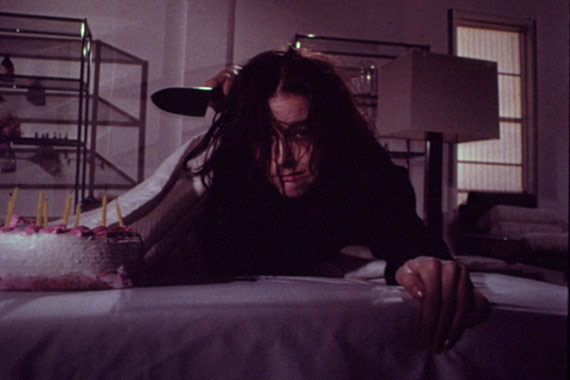
 Brian De Palma lets his Hitchcockian roots show in Sisters, even going so far as to hire Bernard Herrmann to compose the music for this low-budget horrorfest starring Margot Kidder as a detached Siamese twin and Jennifer Salt (Eunice from Soap) as a writer for the Staten Island Panorama, the author of such columns as “The Lost Borough,” “Save the Ferry,” and “Why We Call Them Pigs.” You’ll guess the twist about twenty minutes in, but you’ll still have a lot of fun with the usual load of De Palma sex, gore, and violence. Sisters is screening in a rare 35mm print at BAM on Friday at 7:30, kicking off the “De Palma Suspense” series, and will be introduced by writer-director Noah Baumbach (The Squid & the Whale). The series continues Saturday night with Paul Williams starring in De Palma’s cult favorite Phantom of the Paradise, which will be followed by a Q&A with producer Ed Pressman and costar William Finley. Carrie and Body Double screen on Sunday, with The Fury on Monday, Obsession on Tuesday, Blow Out on Wednesday, Raising Cain on April 18, Femme Fatale on April 19, and the great Dressed to Kill closing things out on April 20.
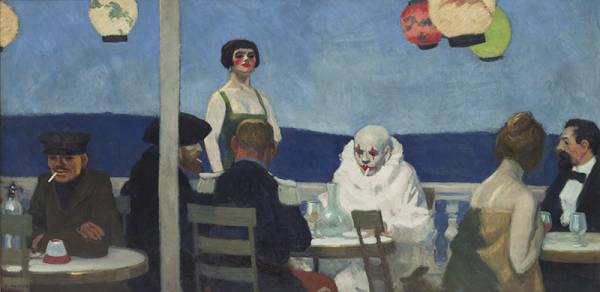
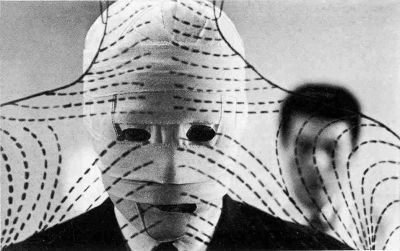
 Kôbô Abe and director Hiroshi Teshigahara collaborated on five films together, including the marvelously existential Woman of the Dunes in 1964 and The Face of Another two years later. In The Face of Another, Tatsuya Nakadai (The Human Condition, Kill!) stars as Okuyama, a man whose face has virtually disintegrated in a laboratory accident. He spends the first part of the film with his head wrapped in bandages, a la the Invisible Man, as he talks about identity, self-worth, and monsters with his wife (Machiko Kyo), who seems to be growing more and more disinterested in him. Then Okuyama visits a psychiatrist (Mikijirô Hira) who is able to create a new face for him, one that would allow him to go out in public and just become part of the madding crowd again. But his doctor begins to wonder, as does Okuyama, whether the mask has actually taken control of his life, making him as helpless as he was before. Abe’s remarkable novel is one long letter from Okuyama to his wife, filled with utterly brilliant, spectacularly detailed examinations of what defines a person and his or her value in society. Abe wrote the film’s screenplay, which tinkers with the time line and creates more situations in which Okuyama interacts with people; although that makes sense cinematically, much of Okuyama’s interior narrative, the building turmoil inside him, gets lost. Teshigahara once again uses black and white, incorporating odd cuts, zooms, and freeze frames, amid some truly groovy sets, particularly the doctor’s trippy office, and Tōru Takemitsu’s score is ominously groovy as well. As a counterpart to Okuyama, the film also follows a young woman (Miki Irie) with one side of her face severely scarred; she covers it with her hair and is not afraid to be seen in public, while Okuyama must hide behind a mask. But as Abe points out in both the book and the film, everyone hides behind a mask of one kind or another. The Face of Another is screening April 7 as part of Film Forum’s “5 Japanese Divas” series, featuring four weeks of films starring Kyo, Isuzu Yamada, Kimuyo Tanaka, Setsuko Hara, and Hideko Takamine, who play strong, determined women in such classic works as Yasujiro Ozu’s Early Summer (1951) and Tokyo Story (1953), Hiroshi Teshigahara’s The Face of Another (1966), Mikio Naruse’s Okaasan (1952) and Flowing (1956), Akira Kurosawa’s The Idiot (1951) and Throne of Blood (1957), Keisuke Kinoshita’s Carmen Comes Home (1951) and Twenty-Four Eyes (1954), and Kenji Mizoguchi’s Ugetsu (1953), Sansho the Bailiff (1954), and Street of Shame (1956), among others.