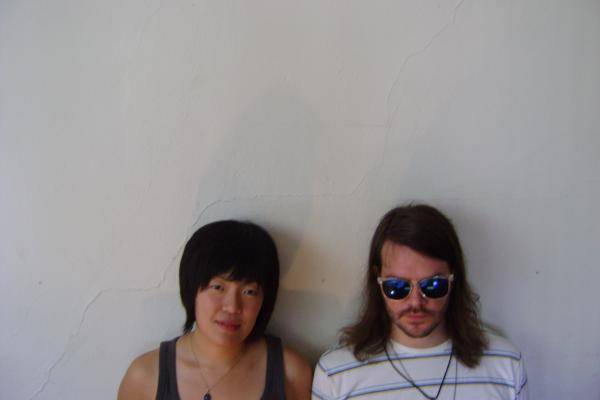
Eternal Summers headlines NYC Popfest show at Bruar Falls June 16 at Northside Festival
Northside Festival
Multiple venues in Greenpoint and Williamsburg
June 16-19
www.northsidefestival.com
The Northside Festival is back June 16-19 following an outstanding launch last year. The festival features four days of indie music at venues all over Greenpoint and Williamsburg, in addition to film screenings and open art studios. There are hundreds of bands, so don’t get too frustrated if one of the shows you wanted to see is already sold out; festival badges are gone as well, but there’s still lots to choose from. We’ll be featuring highlights and recommendations every day of the festival; here are today’s:
Tiger Mountain presents Hospitality (7:30), Lady Lamb the Beekeeper (8:20), Indian Rebound (9:10), Radical Dads album release show for Mega Rama (10:00), and Pursesnatchers (10:50), Union Pool, $8
Rooftop Films Presents: This Point in Time, including the short films Broad Channel (Sarah J. Christman), Train (Darius Clarke Munroe), The Voyagers (Penny Lane), Block (Chadd Harbold), Door Man (Andrew Goldman & Andrew Blackwell), Love Lockdown (Nadia Hallgren), and Welcome to Pine Point (Paul Shoebridge), followed by a Q&A with the filmmakers, IndieScreen, $10, 6:00
NYC Popfest presents Seapony (8:30), the Secret History (9:15), Reading Rainbow (10:00), and Eternal Summers (11:00), Bruar Falls, $10
Art & Real Estate: The Love/Hate Relationship, panel discussion about North Brooklyn arts community, with District Councilmember Stephen Levin, Hrag Vartanian, Marisa Sage, Jackie Moynahan, Ryan Kuonen, and David Pincus, Causey Contemporary, free, 7:00
HoZac Records presents Making Friendz (9:30), My Teenage Stride (10:30), Xray Eyeballs (11:30), K-Holes (12:30), Shea Stadium, $8
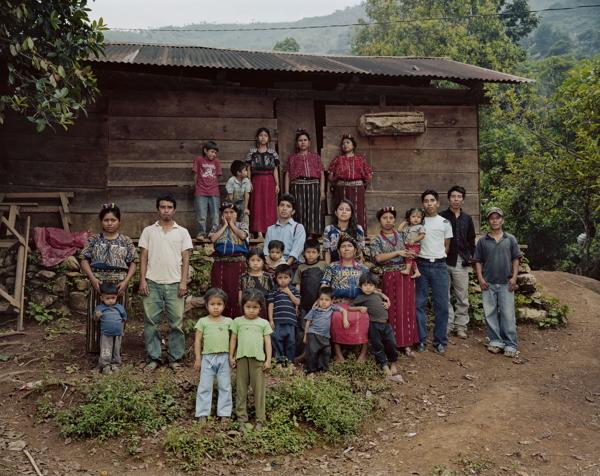
 The opening-night selection of the twenty-second Human Rights Watch Film Festival, Granito: How to Nail a Dictator is an illuminating, if at times overly self-referential, examination of the power of documentary filmmaking. In 1982, Pamela Yates and Newton Thomas Sigel made When the Mountains Tremble, which told the inside story of civilian massacres of the indigenous Maya people as government forces and guerrilla revolutionaries fought in the jungles of Guatemala; one of the film’s subjects, Rigoberta Menchú, became an international figure and went on to win the Nobel Peace Prize. “When I made that film, I had no idea I was filming in the middle of a genocide,” Yates says at the beginning of Granito. A quarter-century after When the Mountains Tremble, Yates was contacted by lawyer Almudena Bernabeu, who asked Yates to comb through her reels and reels of footage to find evidence of the Guatemalan genocide and help bring charges again dictator Ríos Montt, whom Yates had met with back in 1982. In researching the case, Yates speaks with Menchú, forensic archivist Kate Doyle, journalist liaison Naomi Roht-Arriaza, forensic anthropologist Fredy Peccerelli, Spanish national court judge Santiago Pedraz, victims’ rights leader and genocide survivor Antonio Caba Caba, and Gustavo Meoño, a founding member of the Guerrilla Army of the Poor, each of whom sheds light on the proceedings from various different angles, from digging up bones in mass graves to discussing redacted documents that reveal U.S. involvement in Guatemala. Several of them are risking their lives by both continuing to fight the government and appearing on camera. Part of the “Truth, Justice, and Accountability” section of the Human Rights Watch Festival, which also includes “Times of Conflict and Responses to Terrorism,” “Human Dignity, Discrimination, and Resources,” and “Migrants’ and Women’s Rights,” Granito, which Yates directed with Peter Kinoy and Paco de Onís and is her sixth film to be shown at the festival, is a compelling look at how individuals can make a difference. The music is often overly melodramatic, and Yates does seem to like to show herself both in outtakes from her first film and in serious poses in the new film, but its ultimate point overrides those tendencies. Granito will be shown June 17 at 7:00 and June 18 at 1:00; both screenings will be followed by a discussion with the filmmakers as well as subjects Kate Doyle, Alejandra Garcia, and Fredy Peccerelli. The June 17 screening will also be followed by a reception, while the June 18 screening will be followed by a special presentation of When the Mountains Tremble (1982). The festival, which runs June 16-30, features nineteen films from twelve countries that deal with human rights issues around the world. Keep watching twi-ny for further select reviews.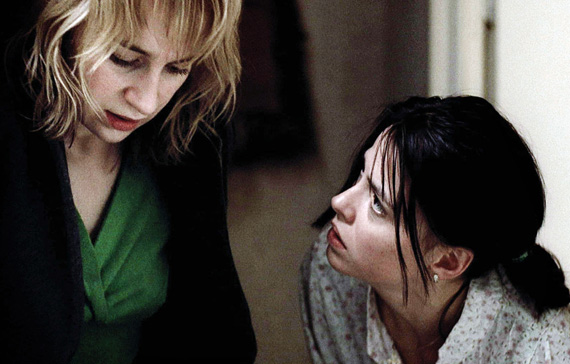
 Winner of the Palme D’Or at the 2007 Cannes Film Festival, Cristian Mungiu’s 4 Months, 3 Weeks and 2 Days is a harrowing look at personal freedom at the end of the Ceausescu regime in late-’80s Romania. Anamaria Marinca gives a powerful performance as Otilia, a young woman risking her own safety to help her best friend, Gabita (Laura Vasiliu), out of a difficult, dangerous situation. Their lives get even more complicated when they turn to Bebe (Vlad Ivanov) to take care of things. Cinematographer Oleg Mutu, who shot Cristi Puiu’s brilliant The Death of Mr. Lazarescu, keeps the camera relatively steady for long scenes, without cuts, pans, dollies, or zooms, as the actors walk in and out of view, giving the film a heightened level of believability without looking like a documentary. Set in a restrictive era with a burgeoning black market, 4 Months goes from mystery to psychological drama to thriller with remarkable ease — and the less you know about the plot, the better. Four Months is screening at MoMA on June 17 & 18 as part of the series “In Focus: IFC Films,” which continues with such films as Gus Van Sant’s Paranoid Park (2008), Lukas Moodysson’s Together (2001), Hirokazu Koreeda’s Nobody Knows (2004), and a sneak peek at Errol Morris’s Tabloid (2010).
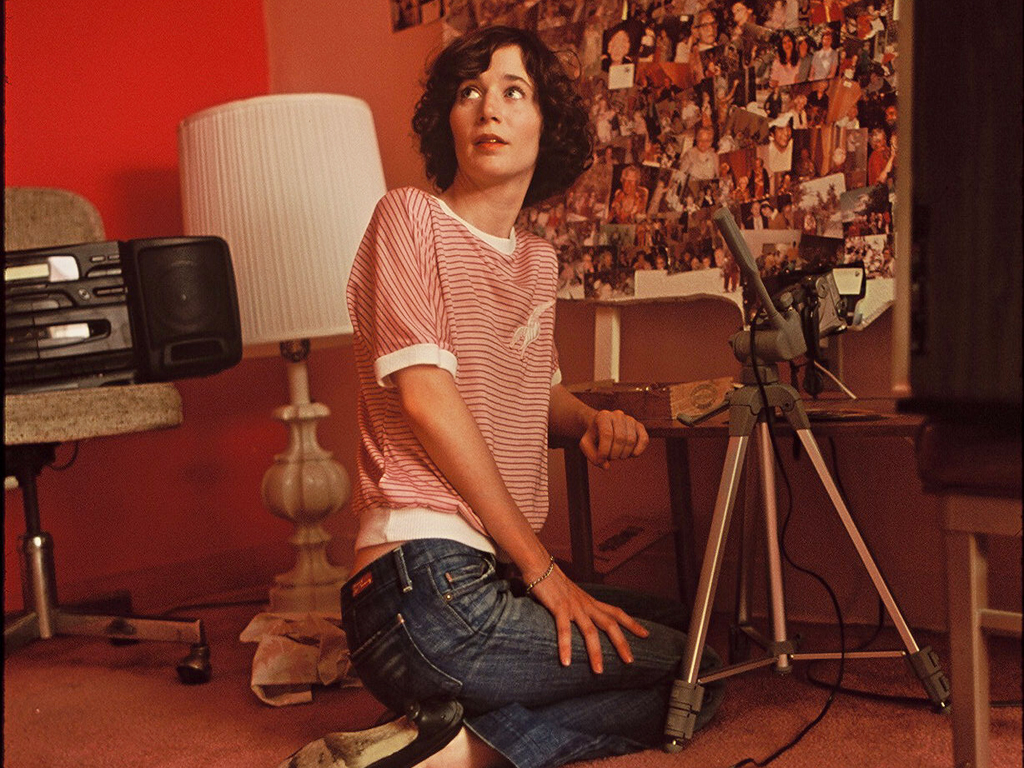
 Winner of a Special Jury Prize at Sundance “for originality of vision,” performance artist Miranda July’s feature-film directorial debut is a success from start to finish, an original, engaging, and utterly charming romantic comedy that is as unique as it is familiar. July, who also wrote the screenplay, stars as a quirky young performance artist who is looking for a relationship in her rather mundane life. She immediately falls for a shoe salesman (John Hawkes) who is separating from his wife and trying to understand his kids (Brandon Ratcliff and Miles Thompson), who are having a strange online dalliance with a mystery e-mailer. Meanwhile, two high school girls (Najarra Townsend and Natasha Slayton) are sexually tormenting a bizarre loner (Brad Henke) who is sexually tormenting them right back, both humorously and dangerously. It’s nearly impossible to take your eyes off of July, whose innovative audio and visual installations and short films have been shown at the Andy Warhol Museum, the Whitney Biennial, the Kitchen, Lincoln Center, the Museum of Modern Art, Union Square Park, and the Rotterdam International Film Festival, among many other prestigious places. Me and You and Everyone We Know is screening at MoMA on June 16 as part of the series “In Focus: IFC Films,” which continues with such films as Kevin McDonald’s Touching the Void (2003), Alfonso Cuaron’s Y tu mamá también (2001), Armando Iannucci’s In the Loop (2009), and Steven Soderbergh’s four-hour epic, Che (2008). MoMA will also present a sneak peek at July’s latest feature, The Future, on July 13 prior to its New York opening on July 29.