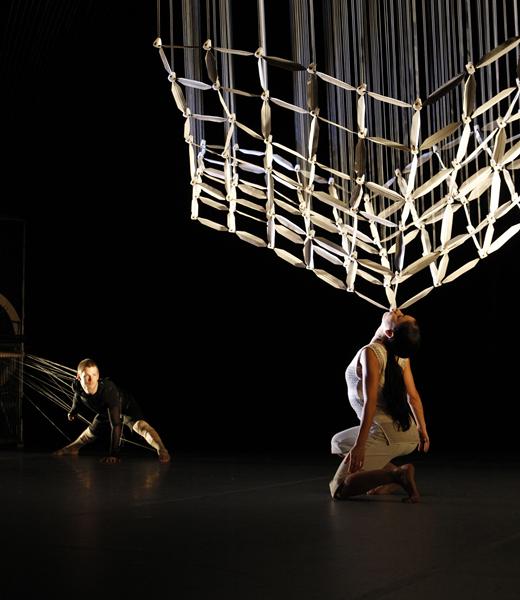
Chunky Move collaborates with sculptor Reuben Margolin in CONNECTED (photo by Jeff Busby)
The Joyce Theater
175 Eighth Ave. at 19th St.
November 2-6, $10-$49
212-691-9740
www.joyce.org
www.chunkymove.com
One of the most inventive and innovative contemporary dance companies in the world, Australia’s Chunky Move will be staging the New York premiere of the hour-long Connected November 2-6 at the Joyce. A collaboration between company artistic director Gideon Obarzanek and California sculptor Reuben Margolin, Connected eschews Chunky Move’s usual fascination with digital technology, kinetic motion tracking, and brilliant light displays in favor of a more hands-on approach to building a work of art with dancers and physical, graspable objects. We can’t get enough of this company, having seen the decidedly low-tech I Like This in April at Joyce SoHo, Mortal Engine at BAM in 2009, and Glow at the Kitchen in 2008. Connected is performed by five dancers — Sara Black, Ross McCormack, Marnie Palomares, Joseph Simons, and Harriet Ritchie — with music by Oren Ambarchi and Robin Fox, lighting by Benjamin Cisterne, and costumes by Anna Cordingley. “I was fortunate to meet Reuben Margolin in October, 2009 in Maine USA, where we were both invited to speak at PopTech, a conference focusing on social change through current innovations in science, art and economics,” explains choreographer Obarzanek in a program note. “There, I witnessed Reuben’s various sculpture machines made of wood, recycled plastic and steel transcend their concrete forms once they were set into motion and appear as waveforms in nature — a weightless kinetic flow. This was not dissimilar to the changeability of a dancer from a person to a moving figure when performing on stage. We were immediately drawn to each other’s work and began discussing possibilities for future collaboration.” Connected is the initial result of that partnership.
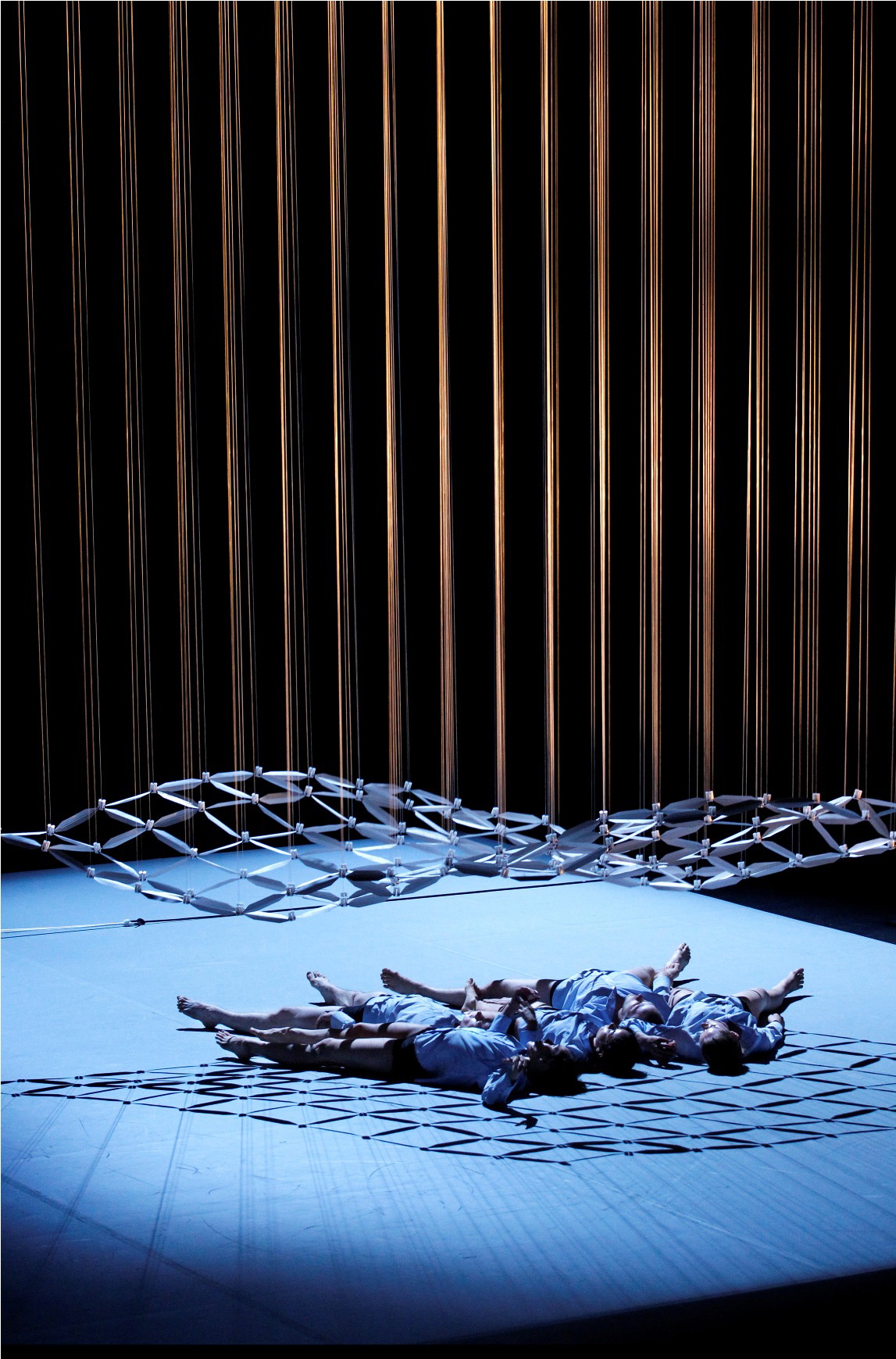
Dancers move in, under, and around Reuben Margolin’s sculpture in CONNECTED (photo by Jeff Busby)
Update: Chunky Move founder and artistic director Gideon Obarzanek and his Australian company regularly employ gadgetry in their works. Glow consisted of a single dancer performing on a motion-sensor floor that emitted a dazzling LED display, Mortal Engine let loose with a spectacular flurry of smoke and lasers and other special effects, and I Like This was built around a group of individuals toying with old-fashioned handheld lights. For his latest work to come to New York, Connected, Obarzanek has collaborated with California sculptor Reuben Margolin, who has designed a large-scale loomlike object, complete with spinning wheel, that lies at the heart of the evening-length piece. Four dancers dressed in black (Ross McCormack, Harriet Ritchie, Joseph Simons, and Sara Black) and one in white (Marnie Palomares) move about the dominant kinetic installation, with McCormack, soon joined by Palomares, adding white pieces of recycled plastic to the bottom of a cubelike structure composed of hundreds of wires hanging from above while the other dancers whirl their arms and writhe on the floor to Oren Ambarchi and Robin Fox’s electronic score, which at times seems to include homemade DIY percussion sounds. When several of the dancers are attached to the wires coming out of the wheel so that every surge backward or forward, every arm lift and twist, alters the shape of the cube, Palomares moves beneath it, as if she is creating the resulting waves and forms herself. It’s an unusual and exciting sight, but the narrative shifts about halfway through as the dancers change outfits and become museum security guards protecting a work of art, talking about their jobs and saying things like, “Oh, I could do that” and “I’m never bored because I’ll always find something to do.” Unfortunately, this second half of Connected is far less interesting than the first section, as if Obarzanek wasn’t quite sure what else to do with Margolin’s sculpture, deciding to call attention to its artiness instead of creating more dances around and within it. Still, there’s much to admire about Connected, which also requires the audience to remain connected; there is no intermission during the sixty-minute piece, and the audience is told beforehand that if they leave the theater at any time during the performance, they will not be allowed back in.
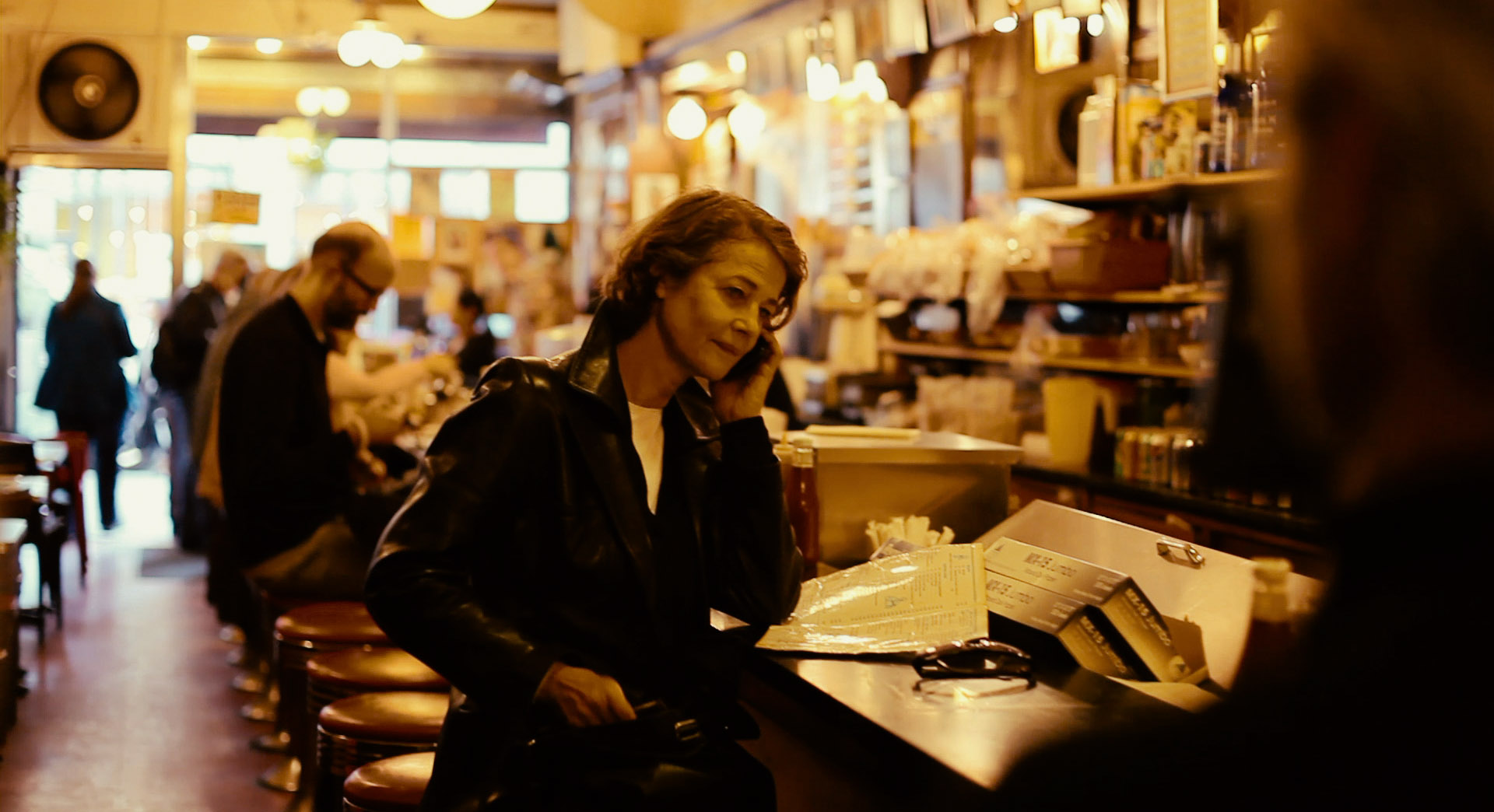
 Born in Sussex in 1946, model and actress Charlotte Rampling has made more than eighty films in her highly distinguished five-decade career, carefully choosing intelligent, challenging projects, never resting on her many laurels. As gorgeous as ever in her mid-sixties and well known for appearing nude in numerous films, some as recent as just a few years ago, Rampling’s most striking feature is not necessarily her body, her high cheekbones, her bare feet, or her dark hair. Instead it is the Look, the strong, powerfully emotional gaze that can hit you from all sides — it can terrify you as well as melt you, making you fall in love with her over and over again. Angelina Maccarone’s unusual but fascinating documentary Charlotte Rampling: The Look begins by focusing on that look, as seen in Woody Allen’s Stardust Memories and portraits taken by Peter Lindbergh. In a section titled “Exposure,” Lindbergh and Rampling talk about the photo sessions they had together, two old friends informally reminiscing about the good old days, never hesitating to make sly cracks about their current age. It’s a wonderfully intimate way to start this unique biography of Rampling, subtitled “a self portrait through others,” one that never delves into her personal life, her two marriages, her children, her ups and downs, her parents — instead, Maccarone divides the film into nine parts, each one concentrating on a specific film and most of them pairing Rampling with a friend, a member of her family, or someone she has worked with. For “Age,” Rampling goes for a ride on a tugboat with author Paul Auster, with clips from Luchino Visconti’s The Damned. In “Resonance,” Rampling sits in a boxing ring with her son, director Barnaby Southcombe, supplemented by scenes from Silvio Narizzano’s Georgy Girl. Things get rather risqué as Rampling is joined by photographer Juergen Teller to discuss “Taboo” and Liliana Cavani’s The Night Porter. The topic turns to “Death” as Rampling visits painter Anthony Palliser, along with clips from François Ozon’s moving Under the Sand. Maccarone slyly adds one last section, ending not with “Death” but with “Love,” and even then she avoids the obvious, teaming Rampling with Cynthia and Joy Fleury and showing scenes from Nagisa Oshima’s Max, My Love, in which Rampling falls for a chimpanzee. Through it all, Rampling is neither egotistical nor self-effacing, as she travels from London and Paris to Times Square and Coney Island, speaking poignantly and intelligently — and with a wry sense of humor — about her philosophy of life and the meaning of her career, never becoming didactic, pedantic, or vain. Charlotte Rampling: The Look is a lovely portrait of a beautiful, successful woman who isn’t afraid to look back at where she’s been — and look ahead to where she’s going. Charlotte Rampling: The Look is screening November 3 at 7:00 as part of the Special Events section of the Doc NYC festival, which continues at the IFC Center through November 10; director Maccarone and star/subject Rampling are expected to attend. The film opens theatrically on Friday at
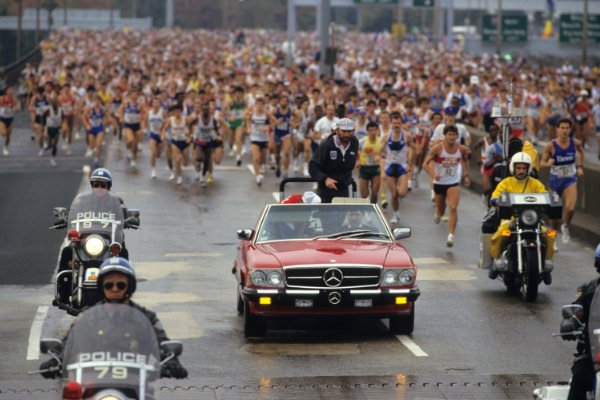
 Run for Your Life tells the remarkable story of Fischl Leibowitz, better known to the world as Fred Lebow. At the age of fourteen, Lebow left his home in Romania and eventually immigrated to the United States. In the late 1960s, he became obsessed with running, at the time a strange form of exercise practiced by very few New Yorkers. But soon Lebow was organizing events such as the Cherry Tree Marathon through the Bronx in 1969 and the Central Park Marathon, leading to the first-ever five-borough New York City Marathon in 1976, a race that many believe helped lead the city through its financial, crime-filled crisis. Through archival footage, news reports, photos, and new interviews with Lebow’s friends, family, and colleagues, a fascinating picture emerges of a driven visionary who was a masterful manipulator and negotiator, a man ahead of his time with regard to marketing and sponsorship. Among the people who share their memories of Lebow are marathoners Bill Rodgers, Frank Shorter, and Greta Waitz, former mayor Ed Koch, parks commissioners Henry Stern and Gordon Davis, past presidents and board members of the New York Road Runners Club, and his sister, who makes latkes for filmmaker Judd Ehrlich. Lebow was one of the all-time great New York characters, forever wearing a painter’s cap and sweatsuit, doing whatever was necessary to get himself and his sport to the next level. The ending is both exhilarating and heartbreaking. With the New York City Marathon scheduled for November 6, Run for Your Life, which was a highlight of the 2008 Tribeca Film Festival, will have a special screening at the Brooklyn Museum on November 3, followed by a Q&A with Ehrlich and other special guests.