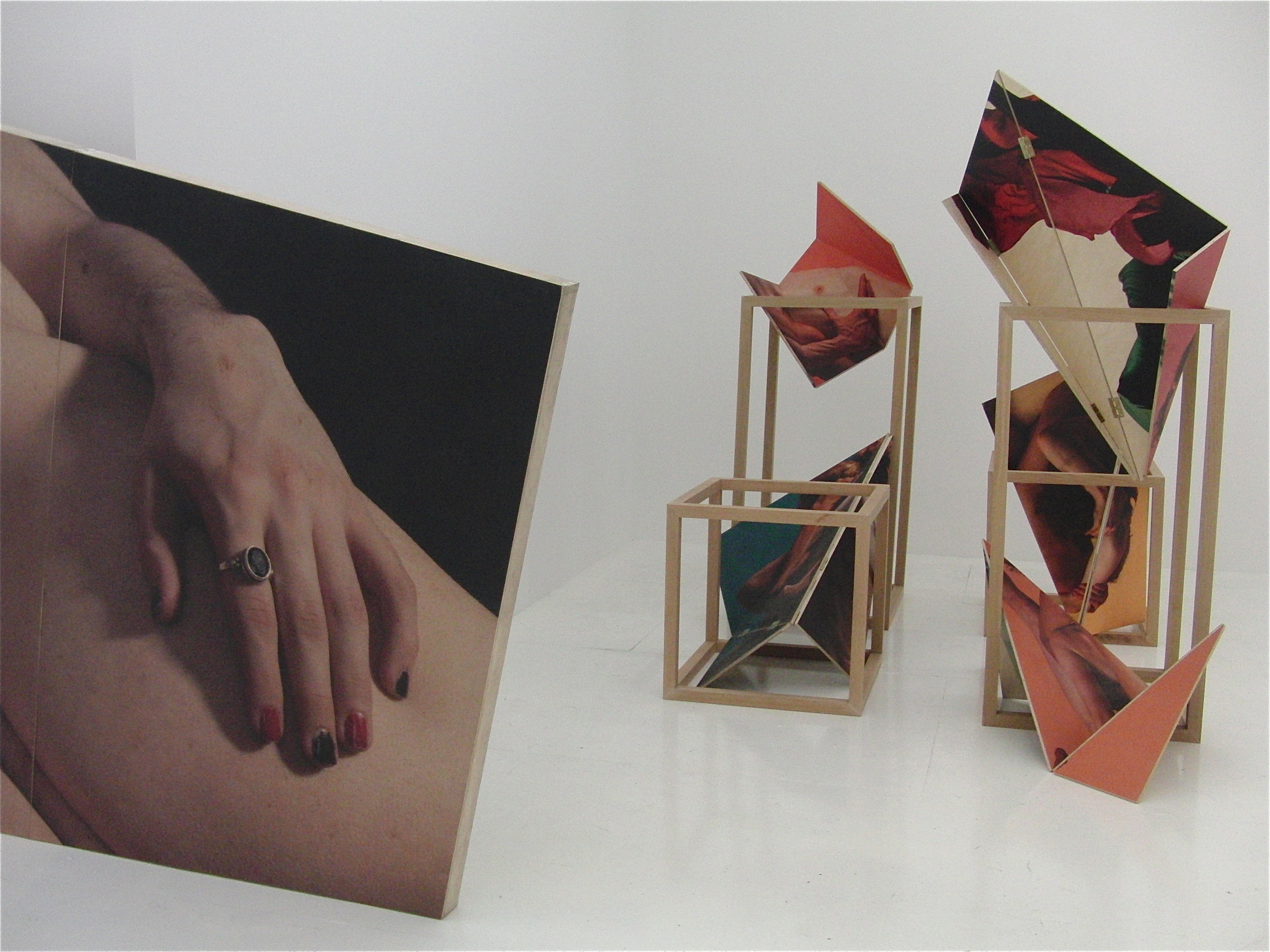
Matthew Stone optimistically melds the past, present, and future at the Hole (photo by twi-ny/mdr)
The Hole
312 Bowery
Tuesday – Saturday through December 10, 12 noon – 7:00 pm
212-466-1100
www.theholenyc.com
www.matthewstone.co.uk
optimism as cultural rebellion slideshow
Matthew Stone is the very embodiment of the twenty-first-century artist. The twenty-nine-year-old Camberwell graduate is a painter, sculptor, photographer, techno composer, curator, performance artist, provocateur, music-video director, interviewer, art theorist, DJ, shaman, and event host. This past March, he collaborated with Catherine Borra on “The Next 100 Years,” which was about nothing less than “the future of art.” Stone, a protégé of Terence Koh’s and a leader of South London’s !WOWOW! art collective, which made a name for itself through its squat parties, has installed his first major U.S. gallery show at the Hole, a stunning collection of photographs on wooden boards that reaches back into the classical past while also foretelling the next generation of art. Evoking the name of his 2007 debut solo show at London’s Union Gallery, “Future Hindsight,” the new “Optimism as Cultural Rebellion” is based on Stone’s belief that “optimism is the vital force that entangles itself with and then shapes the future.” Upon first glance, it appears that the British artist has created classical-style paintings that recall Caravaggio, Michelangelo, and other Renaissance masters, but it turns out that they are actually photographs printed on birch and, in one case, fabric, making the two dimensional three dimensional. Many of the works are made of frames that have been folded into sculptural pieces set on the floor or dramatically arranged on wooden cubes. As realistic as the images appear to be — one work lies flat on the floor, actual drapery emerging from it — closer inspection reveals impossible poses and body formations. Amid all the cynical negativity prevalent in the art world today, Stone offers a fresh, nearly irresistible alternative, sticking it to the status quo with a calm sense of optimism that is both beautiful and stirring. (Also on view at the Hole through December 16 is Matt Stone’s “Residuum,” consisting of sculptures in a variety of materials and colors in the rear gallery; Matt Stone, an SVA grad who was an assistant to Judy Pfaff and is currently assisting Marilyn Minter, is not related to Matthew Stone, and yes, their shows were put together primarily because of the similarity of their names.)
 Based on the play by Charles Bennett, Alfred Hitchcock’s 1929 thriller, Blackmail, is both his last silent picture as well as his first sound film. The transition is evident from the very beginning, eight glorious minutes of a police arrest with incidental music only, highlighted by an unforgettable mirror shot (courtesy of cinematographer Jack E. Cox) as the cops close in on their suspect. After those opening moments, the film switches to a talkie, as New Scotland Yard detective Frank Webber (John Longden) gets into a fight with his girlfriend, Alice White (Anny Ondra, later to become the longtime Mrs. Max Scmeling)), who goes off on a secret rendezvous with a slick artist named Crewe (Cyril Ritchard). When things go horribly wrong at Crewe’s studio, Frank assures Alice that he will help her, but slimy ex-con Tracy (Donald Calthrop) has other ideas, thinking he can use some inside information to make a small killing. After shooting the picture with sound — including having Ondra’s dialogue spoken off-screen by Joan Barry because Ondra’s Eastern European accent was too thick — Sir Alfred filmed some scenes over again in silence, resulting in two versions of this splendid psychological thriller, both laced with elements of German Expressionism and early film noir as well as flashes of Edgar Allan Poe’s “The Tell-Tale Heart” and Fyodor Dostoyevsky’s Crime and Punishment. Look for Alfred as the man on the subway being menaced by a young boy. The rarely shown silent version of Blackmail is being screened December 7 and 8 at the Nitehawk Cinema in Williamsburg, with Hayes Greenfield and the Eclectic Electric providing live musical accompaniment.