Joe’s Pub
425 Lafayette St.
Sunday, January 8, $15, 9:30
212-967-7555
www.joespub.com
www.facebook.com
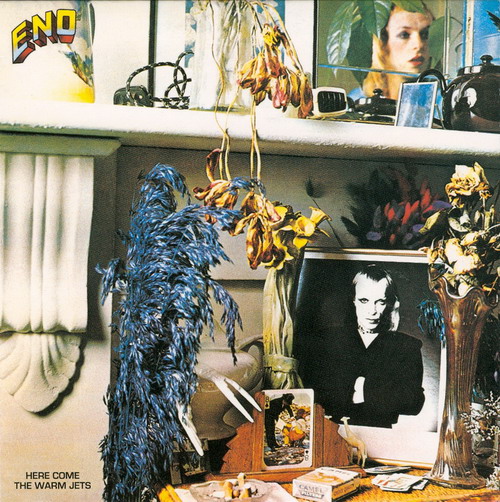
Brian Eno might be best known today for such ambient albums as Music for Films and Music for Airports and his production work for a diverse range of artists (U2, David Bowie, Talking Heads, Laurie Anderson, Coldplay), but in the 1970s he made a series of seminal records that served as a kind of bridge between glam and prog rock and avant and experimental pop. After three years as a member of Roxy Music, Eno released the solo LPs Here Come the Warm Jets, Taking Tiger Mountain (by Strategy), Another Green World, and Before and After Science, all within a remarkable four-year period. On January 8 at Joe’s Pub, a group of musicians will gather together to pay tribute to Here Come the Warm Jets by doing something that Eno never did: Play every song from the album live. Initiated by recording engineer Rob Christiansen, produced by Dan Efram, and hosted by WNYC’s John Schaefer, the event features an all-star band consisting of Vernon Reid, Travis Morrison, Sohrab Habibion, Paul Duncan, Joan Wasser, Dom Cipolla, and others re-creating Eno’s masterpiece, which was recorded with such guest musicians as Robert Fripp, Chris Spedding, Phil Manzanera, John Whetton, and Andy Mackay. The scorching guitars of “Baby’s on Fire” and “Blank Frank,” the electronic fun of “The Paw Paw Negro Blowtorch” and “Driving Me Backwards,” and the sweet harmonies of “Cindy Tells Me” and “Some of Them Are Old” should fill Joe’s Pub with beautiful sounds, but don’t look for important messages in the lyrics, about which Eno, who came up with the words via scatlike nonsense syllables, has said, “Essentially all these songs have no meaning that I invested in them.” In preparation for what should be a great night, we’ve been listening to Here Come the Warm Jets repeatedly, just as we did in our college years, taking us back and lifting us away all over again. Efram, the founder and president of Tractor Beam and an adjunct professor at NYU’s Tisch School of the Arts, also has been having a blast with the record, as evidenced by this twi-ny talk.

twi-ny: What kind of personal associations do Here Come the Warm Jets and Brian Eno have for you?
Dan Efram: My first introduction to Eno was through his production work and only then became aware of his ambient compositions — à la Music for Airports and Music for Films. It was only when I started studying audio engineering myself that some of my musician friends turned me on to Here Come the Warm Jets, Taking Tiger Mountain, and Another Green World. Finding out that he had these extremely broad sensibilities was fascinating — with Warm Jets perhaps the most whimsical ear candy that I had come across.
twi-ny: So many amazing musicians played on the original record; how did you come up with the lineup that will be at Joe’s Pub? How closely will they be re-creating HCTWJ?
Dan Efram: Rob Christiansen, the musical director and a terrific, knowledgeable musician and engineer in his own right, has done a great job in trying to analyze the sounds of the original album. He’s taken great pains in order to figure out the sounds on the album, when the band should experiment and when to replicate. This balance is fun to watch!
We chose our lineup with the goal to represent the many different generations of musicians that are hardcore fans of the album and wanted to celebrate this album in the best spirit possible. As a coincidence, we realized that its fortieth anniversary was nearing and that we could help celebrate its legacy by giving fans this unique chance to experience it for themselves in a live setting. We can only hope that those in attendance get as much of a kick out of listening to it live as the musicians will have performing it for them.
twi-ny: Are there other classic albums, either by Eno or other artists, that you might want to tackle next?
Dan Efram: In early 2011, I was fortunate to produce Big Star’s Third/Sister Lovers album live with musical director Chris Stamey, which really introduced me to the idea that some of these wonderful albums could have a life beyond their vinyl grooves, that people really wanted to experience some of these adventurous albums live — if the program was approached with the correct spirit. If all goes well on Sunday, we are hoping to try to perform Here Come the Warm Jets in selected markets in North America and Europe in 2013. With some good fortune, we have a shot.

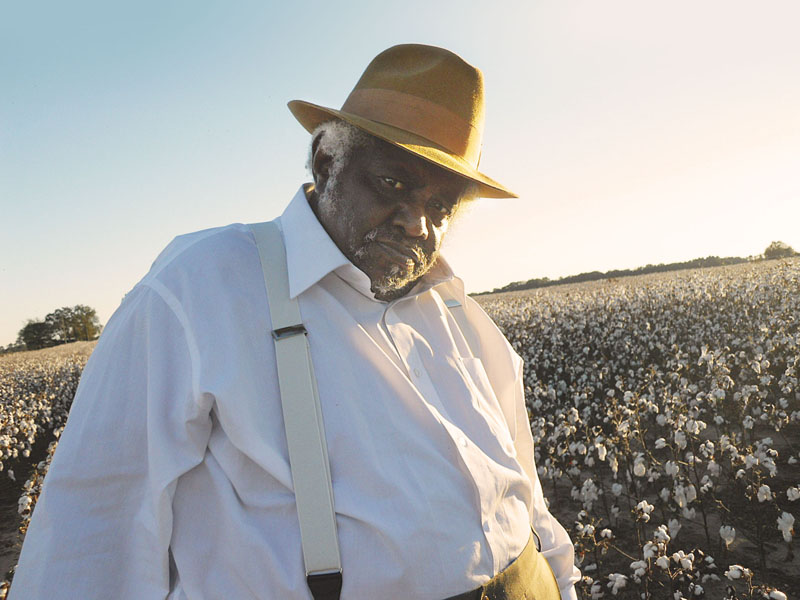
 Curator Sylvia Savadjian and the Maysles Institute have put together a terrific program for Wednesday night, offering audiences the opportunity to meet one of the most fascinating characters they’re ever likely to come upon. Born in 1945 in rural Georgia to a mother who abandoned him when he was three months old, Winfred Rembert grew up picking cotton, dropped out of high school, spent time in jail and on a chain gang, and lost nearly all his teeth. But it was his years behind bars that turned him into a new man, as he learned to read and write and developed a unique art style that soon had him carving out the tales of his life on leather. Longtime journalist, producer, and writer Vivian Ducat tells Rembert’s amazing story in her engaging feature-length debut, All Me: The Life and Times of Winfred Rembert. Ducat follows the oversized Rembert, who regularly bubbles over with joy, as he returns for a show in Cuthbert, Georgia, and prepares for a big opening in New York City. “I know he’s here for a reason,” his sister Lorraine says in the film. “To help people and to be a witness through his art.” Throughout All Me, Rembert discusses many of his works, in which he uses indelible dyes on carved leather, in great detail, each one representing a part of his life, focusing on being a poor black man in a white-dominated society. It is quite poignant late in the film when he points out that his art seems to be most appreciated by whites even though it is meant as a visual history for blacks. But what really makes the documentary work is not just that Rembert is such an enigmatic, larger-than-life figure but that his art is exceptional, his self-taught, folksy style reminiscent of such forebears as Romare Bearden and Jacob Lawrence, capturing a deeply personal, intensely intimate part of the black experience in twentieth-century America. Rembert will be at the Maysles Institute on January 11 for a reception, a screening of All Me, and what should be an enlightening Q&A with Ducat. And if you’re as captivated by Rembert’s story as we are, you can see more of his work in his “Amazing Grace” exhibition, running January 21 through May 5 at the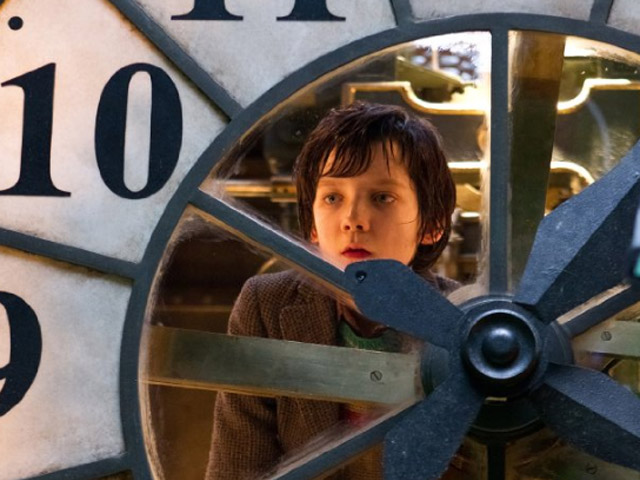
 Martin Scorsese wears his cinematic heart on his sleeve in his first family-friendly film, Hugo. Based on Brian Selznick’s Caldecott-winning 2007 illustrated historical-fiction novel The Invention of Hugo Cabret, the 3-D movie follows the adventures of the title character, a homeless orphan boy (Asa Butterfield) who survives by his wits in a Paris train station in the early 1900s. He spends his days stealing small bits of food, winding the big clock, avoiding Inspector Gustav (Sacha Baron Cohen), and trying to find parts for an automaton he is rebuilding, hoping it will have a message for him from his father (Jude Law). He soon makes his only friend, a girl named Isabelle (Chloë Grace Moretz) who is being raised by her godparents, the bitter Papa Georges (Ben Kingsley) and his wife, Mama Jeanne (Helen McCrory). When it turns out that Papa Georges is the one and only Georges Méliès, who made the world’s first science-fiction film, A Trip to the Moon, among hundreds of others, then was thought to have died in obscurity, all of his work destroyed, Hugo and Isabelle, along with the help of film historian René Tabard (Michael Stuhlbarg), are determined to resurrect Papa Georges and his reputation. Gorgeously shot by Robert Richardson and featuring marvelous period sets by Dante Ferretti, Hugo is beautiful to look at, the camera roaming through the immense train station and up the tall clock tower like in a Jules Verne story. Such side plots as the budding romances between a café owner (Frances de la Tour) and the newspaper seller (Richard Griffiths) and between Gustav and a shy flower girl (Emily Mortimer) feel forced, and the main narrative meanders its way into treacly territory as all the parts slowly come together. At its heart, Hugo is a movie about the love of movies, paying tribute to the early cinema of Méliès, Harold Lloyd, and others but it gets too stuck on the underlying theme of the preservation of old films, one of Scorsese’s driving forces. Still, Hugo is a visual treat in which Scorsese makes the most of 3-D technology, particularly in the first half, before things get a little too sticky (and slickly) sweet, even for a children’s film.