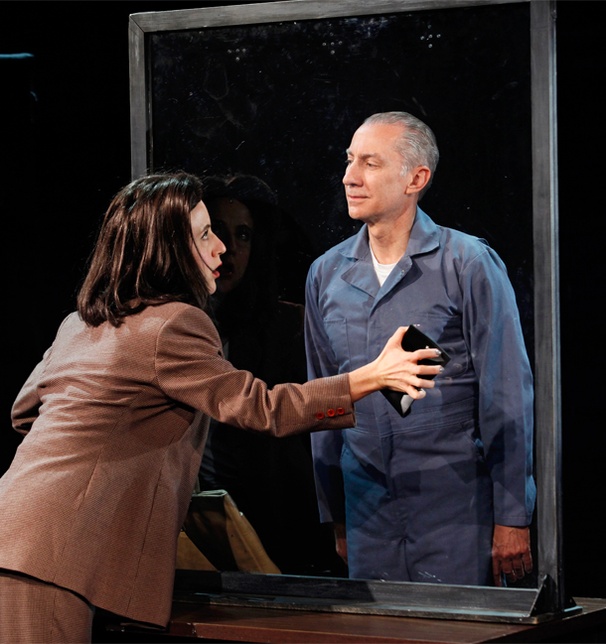
Siobhan O’Loughlin’s THE ROPE IN YOUR HANDS revisits Hurricane Katrina as part of Frigid New York theater festival
Kraine Theater, the Red Room, 85A St. Marks Pl. between Second & Third Aves.
Under St. Marks, 94 St. Marks Pl. between Second & Third Aves.
February 22 – March 4, $8-$16
www.frigidnewyork.info
Founded in 2007 by Horse Trade and Exit Theatre, this year’s Frigid New York festival features thirty productions in three downtown theaters over the course of twelve days. A member of the U.S. Association of Fringe Festivals, Frigid takes place February 22 through March 4 at the Kraine Theater, the Red Room, and Under St. Marks, with tickets for all shows, which run between forty and sixty minutes, only $8 to $16, with proceeds going directly to the artists. On February 21 at 7:00, Under St. Marks will present “Snapshots,” offering snippets from various shows in order to help attendees select what they want to see. Among the shows to choose from are Bricken and Birch Productions’ Death, it happens: A girl’s guide to death, in which four women discuss the loss of their fathers; the love story Coosje, inspired by the relationship between artists Claes Oldenburg and Coosje van Bruggen; Musical Pawns, which delves into what happened to composer David Nowakowsky’s musical manuscripts; Siobhan O’Loughlin’s one-woman show The Rope in Your Hands, about thirteen survivors of Hurricane Katrina; Hard Sparks’ sexual paean Love in the Time of Chlamydia; Theatre Arlo’s Man Saved by Condiments! about a stranded dude who made it through an accident by eating packets of condiments he found in his car; Theatre Reverb’s futuristic multimedia Initium/Finis; the hit Montreal Fringe solo show Afternoon Tea with Jane Austen; and Una Aya Osato’s wacky LOL: The End. At the ridiculously cheap prices and relatively short running times, Frigid New York offers adventurous theatergoers plenty of opportunity to check out some great low-budget indie productions that are deserving of an enthusiastic audience. Under St. Marks will also be home to Canuck Cabaret, six midnight gatherings hosted by Canadian comic Paul Hutcheson in which anything can, and probably will, happen.
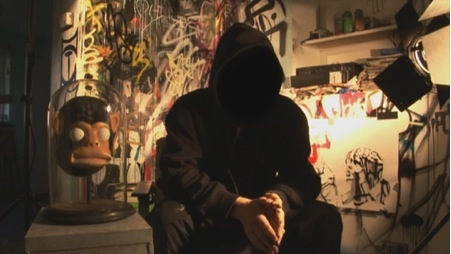
 In 1999, L.A.-based French shopkeeper and amateur videographer Thierry Guetta discovered that he was related to street artist Invader and began filming his cousin putting up his tile works. Guetta, who did not know much about art, soon found himself immersed in the underground graffiti scene. On adventures with such famed street artists as Shepard Fairey, Swoon, Ron English, and Borf, Guetta took thousands of hours of much-sought-after video. The amateur videographer was determined to meet Banksy, the anarchic satirist who has been confounding authorities around the world with his striking, politically sensitive works perpetrated right under their noses, from England to New Orleans to the West Bank. Guetta finally gets his wish and begins filming the seemingly unfilmable as Banksy, whose identity has been a source of controversy for more than a decade, allows Guetta to follow him on the streets and invites him into his studio. But as he states at the beginning of his brilliant documentary, Exit Through the Gift Shop, Banksy—who hides his face from the camera in new interviews and blurs it in older footage—turns the tables on Guetta, making him the subject of this wildly entertaining film.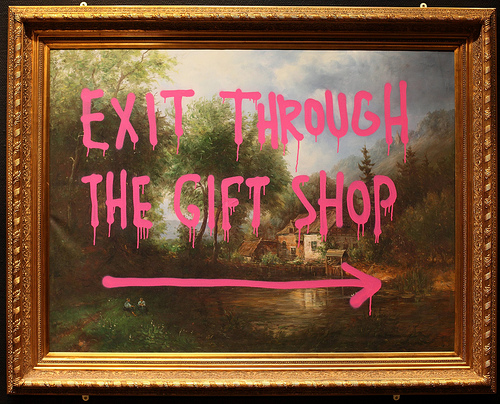
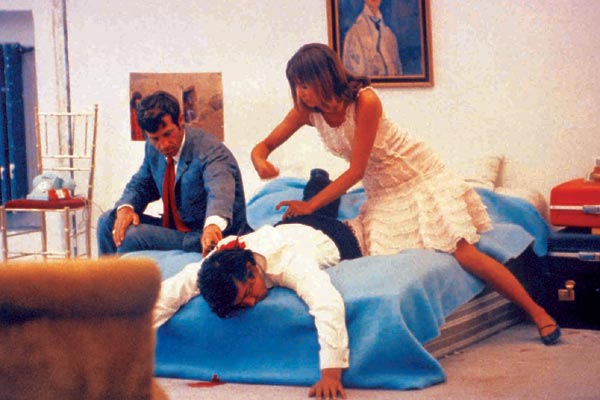
 Art, American consumerism, the Vietnam and Algerian wars, Hollywood, and the cinema itself get skewered in Jean-Luc Godard’s fab feaux gangster flick / road comedy / romance epic / musical Pierrot Le Fou. Based on Lionel White’s novel Obsession, the film follows the chaotic exploits of Ferdinand Griffon (Jean-Paul Belmondo) and Marianne Renoir (Anna Karina, Godard’s then-wife), former lovers who meet up again quite by accident. The bored Ferdinand immediately decides to leave his wife and family for the flirtatious, unpredictable Marianne, who insists on calling him Pierrot despite his protestations. Soon Ferdinand is caught in the middle of a freewheeling journey involving gun running, stolen cars, dead bodies, and half-truths, all the while not quite sure how much he can trust Marianne. Filmed in reverse-scene order without much of a script, the mostly improvised Pierrot Le Fou was shot in stunning color by Raoul Coutard. Many of Godard’s recurring themes and style appear in the movie, including jump cuts, confusing dialogue, written protests on walls, and characters speaking directly at the audience, which is more or less along for the same ride as Ferdinand. And as with many Godard films, the ending is a doozy. Pierrot Le Fou is screening February 21 at 7:30 as part of FIAF’s “Cinema & Fashion: Carte Blanche to agnès b.” series, which also includes Godard’s Vivre sa vie the same day at 12:30 & 4:00 and concludes February 28 with Jacques Becker’s Casque d’or.