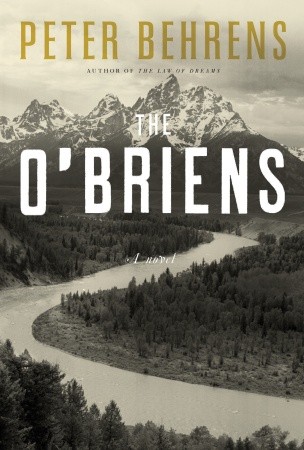
“The old priest waltzed with each of the O’Brien children while his pretty housekeeper, Mme Painchaud, operated the Victrola. She was a widow whose husband had been killed at the sawmill. Sliding the disc from its paper sleeve, she carefully placed it on the turntable and started turning the crank. As the needle settled onto the disc, a Strauss waltz began bleating from the machine’s horn, which resembled, Joe O’Brien thought, some gigantic dark flower that bees would enter to sip nectar and rub fertile dust from their legs.” So begins Peter Behrens’s second novel, The O’Briens (Pantheon, March 6, $25.95), an epic family drama about Irish immigrants that spans 1887 to 1960. A Canadian native who now lives in Maine, Behrens, whose first novel, the award-winning The Law of Dreams, dealt with the potato famine, will be at the Irish Arts Center tonight at 7:30 to launch The O’Briens in a special event cosponsored by NYU’s Glucksman Ireland House and the Consulate General of Canada. Behrens will also be at the Center for Fiction on April 9 at 7:00 for a discussion and book signing.
twi-ny recommended events
STEPHEN PETRONIO COMPANY

Julian De Leon and Joshua Tuason will perform in the world premiere of THE ARCHITECTURE OF LOSS (photo by Sarah Silver)
Joyce Theater
175 Eighth Ave. at 19th St.
March 6-11, $10-$69
212-645-2904
www.joyce.org
www.stephenpetronio.com
The New York City-based Stephen Petronio Company is known for its unusual collaborations and innovative choreography that shows off the sheer strength and beauty of its dancers. Last year at the Joyce, SPC performed Underland, an evening-length piece that was set to murder ballads by Nick Cave, while in 2010, Petronio put together old and new works set to tunes by Elvis Presley, Wire, Radiohead, and the Wordless Music Orchestra. This year SPC will present the world premiere of The Architecture of Loss, a coproduction with the Nordic House of the Faroe Islands that investigates formation and disintegration in an ever-morphing global society. The work features a score by Icelandic composer Valgeir Sigurðsson with contributions from Nico Muhly, costumes by Guðrun & Guðrun, lighting by Ken Tabachnick, and visual design by Rannvá Kunoy, with Sigurdsson, Nadia Sirota, and Shahzad Ismaily performing the score live. The program also includes the first-ever revival of Steve Paxton’s 1970 Intravenous Lecture, which examines censorship and will be performed by Petronio; 2002’s City of Twist, which pays homage to post-9/11 New York with music by Laurie Anderson and costumes by Tara Subkoff/Imitation of Christ; and an updated version of 2003’s Ethersketch I (March 6-9 only), a solo from Underland that has been reimagined for New York City Ballet principal dancer Wendy Whelan. (Note: There will be a Dance Chat following the March 7 performance.)
THINKSWISS: GENÈVE MEETS NEW YORK

Foofwa d’Imobilité will pay tribute to Pina Bausch, Merce Cunningham, and Michael Jackson as part of ThinkSwiss festival
A FESTIVAL OF GLOBAL IDEAS BORN IN GENEVA: JEAN CALVIN, JEAN-JACQUES ROUSSEAU, ALBERT GALLATIN, HENRY DUNANT
Multiple locations
March 6-12, free – $35
212-599-5700, ext 1061
www.thinkswissny.org
“The world of reality has its limits; the world of imagination is boundless,” Geneva philosopher Jean-Jacques Rousseau wrote nearly three centuries ago. The Social Contract author’s native country is celebrating the three hundredth anniversary of the master thinker’s birth with a series of events around the world, including this month’s ThinkSwiss Festival of Global Ideas Born in Geneva. Examining issues that impact both America and Switzerland, the week-long festival includes live music and dance, panel discussions, literary readings, film screenings, and art exhibits, most of which are free but require advance RSVP. Things get under way on March 6 ($10) with a screening of Swiss director Jacob Berger’s 2002 feature film Loving Father (Aime Ton Père) and his 2002 short I Think About Alain Tanner (Je pense à Alain Tanner) as part of FIAF’s weekly CinémaTuesdays series, with Berger on hand to participate in a Q&A at 7:00. On March 7, the American Red Cross will host “Can the Geneva Conventions Still Protect Civilians and Non-Combatants in Contemporary Warfare?” a roundtable with Philip Gourevitch, Colonel (ret.) Dick Jackson, Roger Mayou, and Gabor Rona, moderated by Walter A. Füllemann. On March 8, the exhibition “L’Esprit de Genève by Its Posters” will open at Posters Please, and the NYU Presidential Medal Ceremony will include a conversation between honoree Michel Butor and Lois Oppenheim examining “L’Esprit de Genève: From Albert Gallatin to Michel Butor.” On March 9 ($35, lunch included), Adam Gopnik will moderate the discussion “A la Table de Rousseau: What Is Progressive About Education Today?” at FIAF with Butor, Megan Laverty, Jean-Michel Olivier, and Shimon Waronker, followed by “How to Read Rousseau in the 21st Century,” led by François Jacob. Also on March 9 ($25), Pascal Couchepin, Thomas Kean, Eliot Spitzer, Benjamin Barber, Guillaume Chenevière, Victor Gourevitch, Amin Husain, Laura Flanders, Nannerl Keohane, Dr. Khalil Gibran Muhammad, and Simon Schama will occupy the Celeste Bartos Forum at the New York Public Library for “Occupy Rousseau: Inequality & Social Justice,” which seeks to answer the question “What would Jean-Jacques Rousseau say about our democracies if he were among us today?” On March 10, pianist Louis Schwizgebel, cellist Lionel Cottet, and violinist François Sochard will perform the U.S. premiere of “Variations on a Theme by J.J. Rousseau” by Friedrich W. Kalkbrenner and André-François Marescotti, Ravel’s “Ondine,” Brahms’s “Scherzo in C Minor” and “Hungarian Dances Nos. 1, 2, 6 and 7,” Mendelssohn’s “Piano Trio No. 1, Op. 49,” and Liszt’s “Les Cloches de Genève” in the program “Soloists from L’Orchestre International de Genève” at Merkin Concert Hall. On March 11 at 4:00, Foofwa d’Imobilité will pay tribute to dance legends Pina Bausch, Merce Cunningham, and Michael Jackson in “Pina Jackson in Mercemoriam” at the Kitchen, and the Marc Perrenoud Trio will perform at 7:00 at the Allen Room. And on March 12, Rebecca MacKinnon will moderate “Breaking Through Internet Censorship” at the Cooper Union with Stéphane Koch, Ebtihal Mubarak, Thérèse Obrecht, Anas Qtiesh, and a surprise guest, and journalist and writer Jean-Michel Olivier will give a lecture in French at the Haskell Library at FIAF.
TICKET ALERT: NEW YORK METS 2012 SEASON

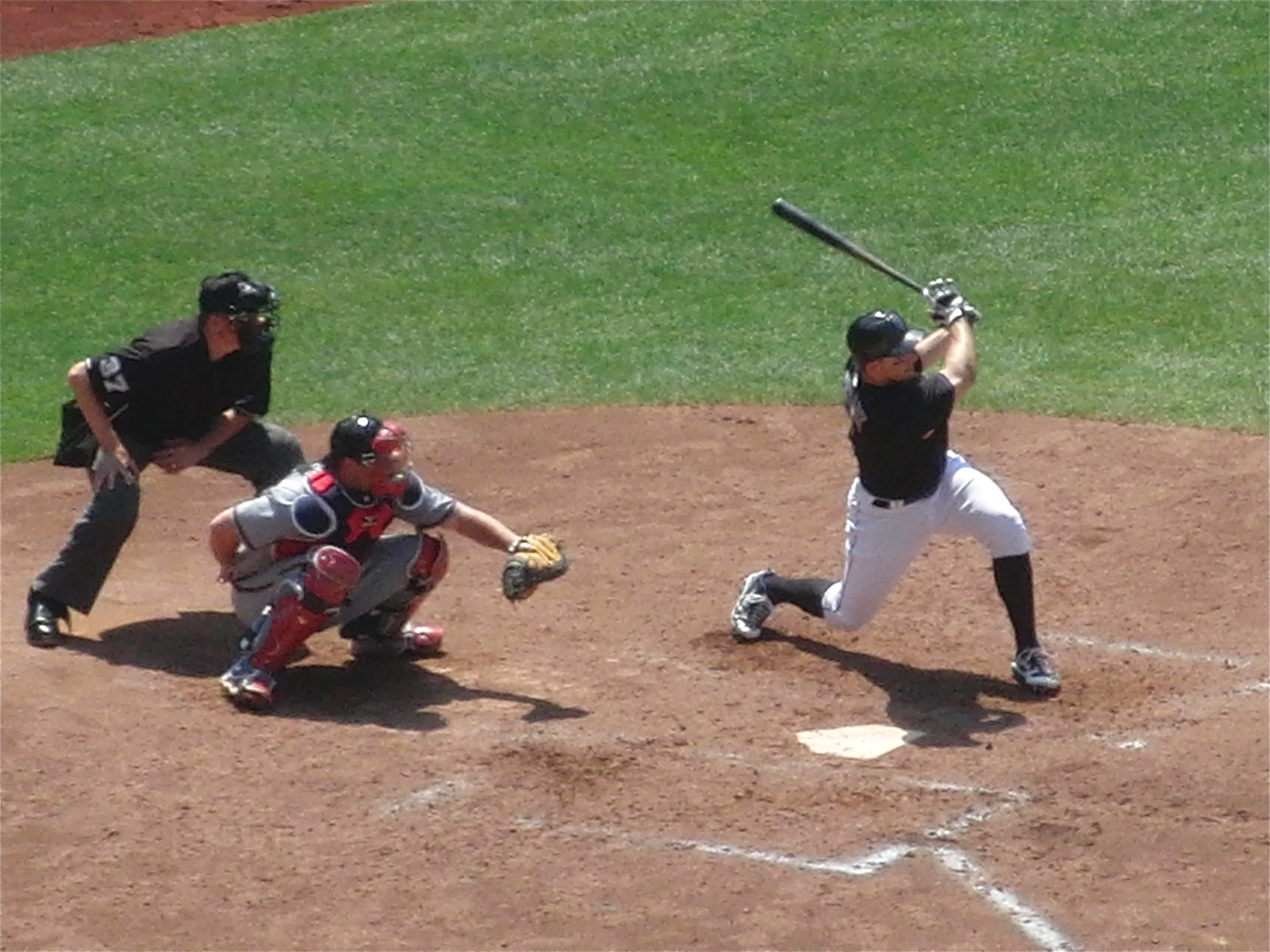
The Mets are looking for David Wright to get back in the swing of things this season (photo by twi-ny/mdr)
Citi Field
123-01 Roosevelt Ave. at 126th St.
Monday, March 5, 10:00 am
718-507-TIXX
www.newyorkmetscom
Fifty years ago, Casey Stengel’s Mets were not quite so amazin’, famously going 40-120 in their inaugural season, still a record of futility for America’s pastime. They’re currently in the doldrums again, finishing 70-92, 79-83, and 77-85 the last three years, a lot closer to last place than to first each season. Mired in a financial crisis, they let their best player go to a division rival and brought in the fences at Citi Field, hoping to increase the power numbers of such players as David Wright, Ike Davis, and Jason Bay. But much of the 2012 season will depend on the ability of lefty ace Johan Santana to pitch at the high level he’s accustomed to — as well as his ability to take the mound at all. And even with ten of the thirty Major League teams now making the playoffs, it’s still highly unlikely that the Amazin’s will be playing past the October 3 finale against the Marlins. Single-game tickets for the Mets’ hopefully celebratory fiftieth anniversary season go on sale this morning, but don’t expect the servers to crash like Kraftwerk playing MoMA. Among this year’s giveaways and promotions are texting gloves on April 7, a Tom Seaver bobblehead on April 22, a Rusty Staub bobblehead on May 26, the return of Banner Day on May 27, a Keith Hernandez bobblehead on June 17, fireworks on July 3, a Mr. Met poster on July 8, Merengue Night on August 24, and a Mike Piazza bobblehead on August 25. In addition, the Friday-night concert series includes postgame shows by REO Speedwagon on June 15, Cheap Trick on July 20, and MercyMe on August 10
BJORK: BIOPHILIA LIVE

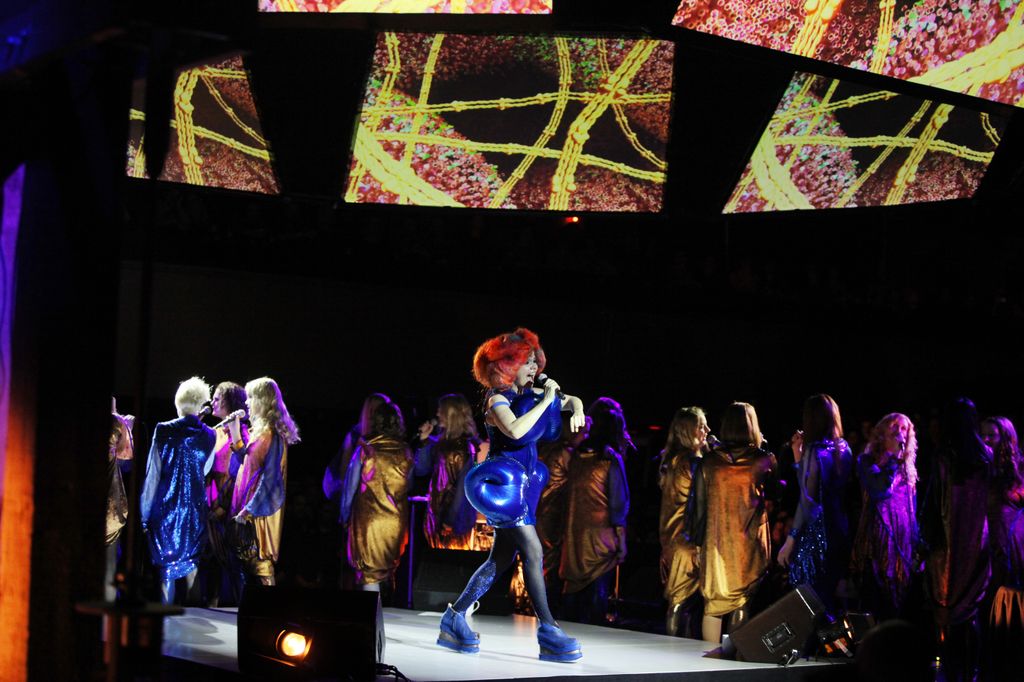
Björk brings together music, nature, and technology in captivating ways in multimedia BIOPHILIA Live
Roseland Ballroom
239 West 52nd St. between Broadway & Eighth Aves.
Monday, March 5, $75-$150
212-247-0200
www.roselandballroom.com
www.bjork.com
On Monday, March 5, Björk Guðmundsdóttir concludes a monthlong New York City residency that began with five shows at the New York Hall of Science, along with an educational program for children, followed by five more at the Roseland Ballroom. Melding together music, nature, and technology, Björk’s latest project, Biophilia, is a fascinating journey into art and science, a thrilling multimedia trip that travels from deep inside the human body into the vast cosmos and beyond. “The reason why Biophilia is on such a grand scale is that I can’t even attempt to explain sound and the world of rhythm and scales without looking into the solar system and atoms,” the forty-six-year-old former leader of the Icelandic band the Sugarcubes explains in the concert program. “For me that’s sort of the same world.” “Biophilia Live” is a captivating ninety-minute production that features all of the new album in addition to some older Björk favorites. Each of the Biophilia songs is introduced by the recorded voice of Sir David Attenborough and accompanied by animated videos projected from the innovative app onto eight two-sided screens hanging in a circle above the performers: Björk, percussionist Manu Delago, electronics master Matt Robertson, harpist Zeena Parkins, and the twenty-woman Icelandic chorus Graduale Nobili.
At Roseland, the stage has been moved to the center of the dance floor, and fans either sit or stand on all four sides, making for an involving and intimate experience. “My romantic genes is dominant / And it hungers for union / Universal intimacy / All embracing,” Björk sings on “Thunderbolt,” the opening track from Biophilia, and that’s exactly what she achieves in the show, an embracing intimacy that features a bevy of offbeat and unusual instruments, some adapted and/or invented specifically for Biophilia, from a gravity harp and a gameleste to a hang and a Tesla coil that turns electric bolts into sound. “To risk all is the end all and the beginning all,” she adds on “Moon,” as the show moves from the Big Bang far out into the future. Wearing a freaky reddish orange wig, elevator shoes, and a deep blue polyester sheath wildly padded at chest and hips, Björk uses all four sides of the stage, and the obvious fun she’s having spreads throughout the energized crowd. She playfully tosses in a few older songs, including Vespertine’s “Hidden Place” and its B-side, “Generous Palmstroke,” before going full-out for the encores, which on February 28 began with 1995’s dreamlike “Possibly Maybe,” then turned Roseland into a dance rave, closing the show with rollicking versions of 2008’s “Náttúra” and “Declare Independence” that had everyone up and grooving. If you can, grab the general admission side-stage seating and arrive early to get in the first row, which offers a spectacular view, the best seats we have ever had for a concert.
CELEBRATING 100 YEARS

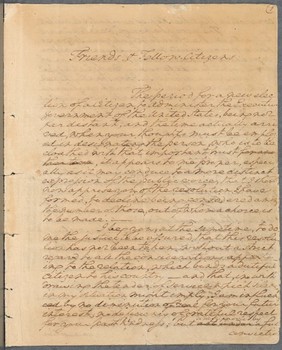
The final draft of George Washington’s 1796 farewell address is among the many amazing artifacts in NYPL exhibit (photo by Jonathan Blanc/New York Public Library)
New York Public Library
Stephen A. Schwarzman Building, Gottesman Exhibition Hall
Fifth Ave. at 41st St.
Through Sunday, March 4, free, 1:00 – 5:00
www.nypl.org
Today is your last chance to catch the New York Public Library exhibit “Celebrating 100 Years,” featuring a treasure trove of more than 250 items of literary paraphernalia. Divided into Observation, Contemplation, Creativity, and Society, the display honors the centennial of the landmark Beaux-Arts building on Fifth Ave. between 40th & 42nd Sts., built by Carrère and Hastings and dedicated by President William Howard Taft in 1911. Curated by Thomas Mellins, “Celebrating 100 Years” includes a bevy of fascinating memorabilia, from a Gutenberg Bible to a copy of Mein Kampf, from Jack Kerouac’s glasses and rolling paper to Charles Dickens’s letter opener, from a lock of Mary Shelley’s hair to Charlotte Brontë’s traveling writing desk, from Malcolm X’s briefcase and hat to Virginia Woolf’s walking stick and diary, showing a page she wrote just four days before her suicide. There are photographs, prints, and drawings by Diane Arbus, Man Ray, Faith Ringgold, Lewis Wickes Hine, Otto Dix, Francisco Goya, and Vik Muniz, marked-up manuscripts, speeches, and scores from Jorge Luis Borges, George Washington, Ernest Hemingway, John Coltrane, and T. S. Eliot, a copy of “The Star-Spangled Banner” with a bad typo, letters from Pablo Picasso, Harry Houdini, and Groucho Marx, and self-portraits by Kiki Smith, David Alfaro Siqueiros, Chuck Close, and Käthe Kollwitz. The exhibit, a kind of wonderful self-portrait of the library’s holdings, looks at the past, with cuneiforms dating back to the third century BCE, as well as aims forward, with a peek into their impressive digital archives.
MICHAEL SAILSTORFER: TORNADO
Scholars’ Gate, Doris C. Freedman Plaza
Central Park entrance, 60th St. & Fifth Ave.
Extended through April 1
646-862-0933
www.publicartfund.org
tornado slideshow
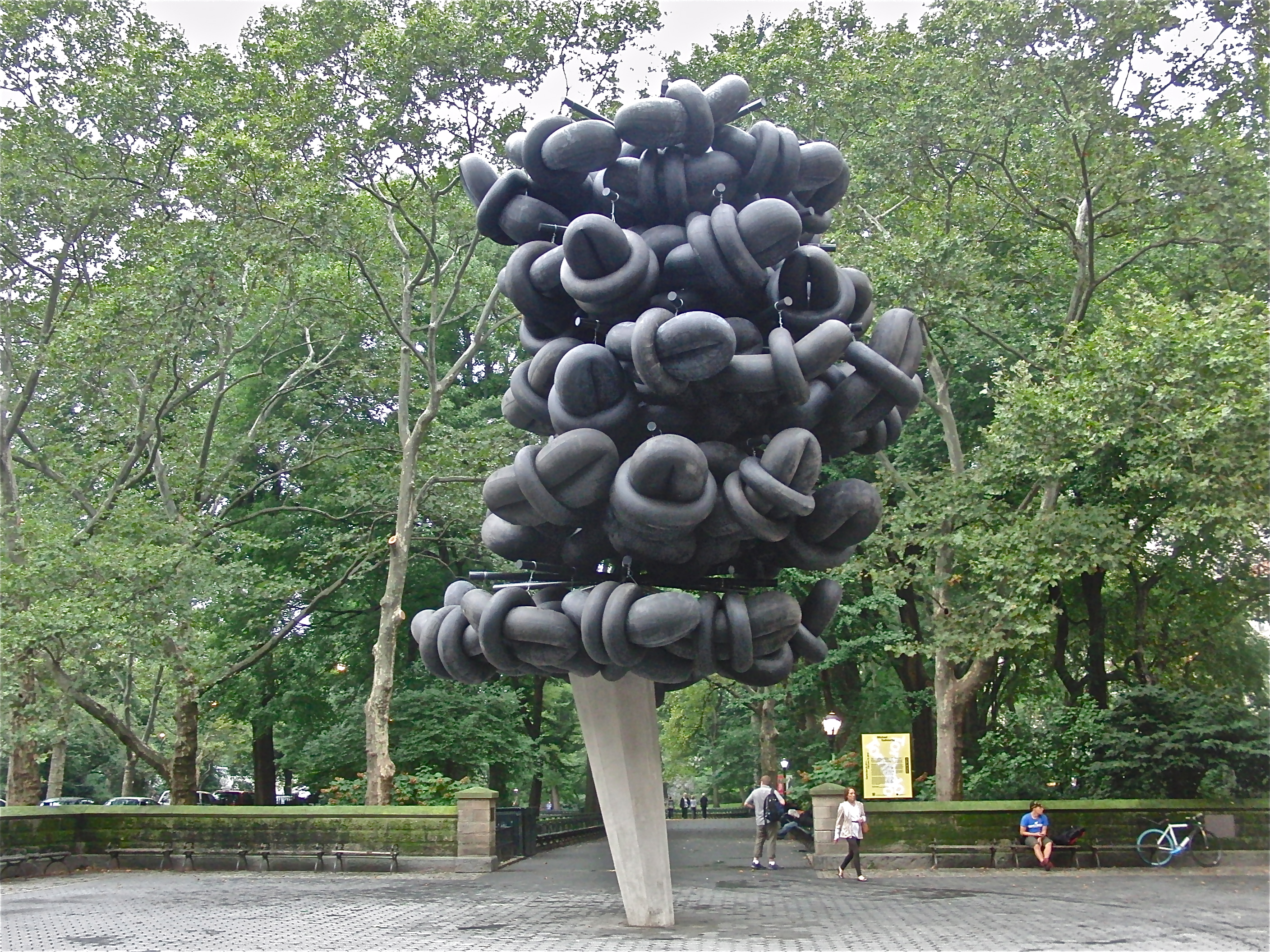
Berlin-based multidisciplinary installation artist Michael Sailstorfer creates scenarios that appear to be trapped in time, with a mysterious past and an uncertain future. Such works as “1 zu 43 bis 47,” in which a broken popcorn stand has left food on the floor, and “Forest Cleaning,” a collaboration with Alfred Kurz in which a rectangular forest area has been shorn of its greenery, pose questions about physical space and the surrounding environment as well as life and death. For “Knots Like Clouds” in 2010, Sailstorfer repurposed truck tire inner tubes, which are associated with motion, by twisting them together and hanging them from gallery ceilings, ominous black clouds threatening just overhead. For his first U.S. commission, Sailstorfer has brought together dozens of these black clouds and placed them on a narrow, angled base for the site-specific installation “Tornado.” Rising more than thirty feet high at the Scholars’ Gate entrance to Central Park by the Plaza, “Tornado” evokes the trees around it as well as the taxis, buses, and trucks that zoom past all day long, once again melding physical space and its environment. In heavier winds, the piece shifts ever so slightly, suddenly bringing these urban materials to life, if only for a few seconds. Although it has a weightless appearance — it is, of course, filled with air — closer inspection reveals the metal rods and wires holding it in place, not allowing this playful storm system to wield its damage on an unsuspecting city.