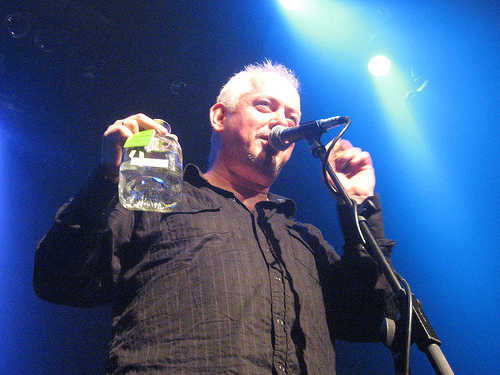
Jon Langford will kick off the musical festivities at the tenth annual Big Apple Barbecue Block Party (photo by twi-ny/mdr)
Madison Square Park
23rd to 26th Sts. between Fifth & Madison Aves.
Saturday, June 9, and Sunday, June 10, 11:00 am – 6:00 pm
Admission: free; $8 per plate of barbecue, $4 per dessert
www.bigapplebbq.org
www.madisonsquarepark.org
The weather is not looking great for the first day of the tenth annual Big Apple Barbecue Block Party, but maybe that will help cut down on the ridiculously long lines that surround Madison Square Park. This year’s menu features baby back ribs from Mike Mills (Las Vegas), western Tennessee-style whole hog from Patrick Martin (Martin’s Bar-B-Que Joint in Nashville), pulled pork shoulder from Garry Roark (Ubon’s Barbecue in Yazoo City), St. Louis-style ribs and fried pies from Joe Duncan (Baker’s Ribs in Dallas), beef brisket and sausage from Scott Roberts (Salt Lick BBQ in Driftwood, Texas), whole hog from Ed Mitchell (Raleigh), smoked sausage from Drew Robinson (Jim ’N Nick’s Bar-B-Q in Birmingham), pulled pork shoulder from Chris Lilly (Big Bob Gibson Bar-B-Q in Decatur, Alabama), beef brisket from Myron Mixon (Jack’s Old South in Unadilla, Georgia), whole hog from Rodney Scott (Scott’s Bar-B-Que in Hemingway, South Carolina), St. Louis-style ribs from Tommy Houston (Checkered Pig in Danville, Virginia), pulled pork shoulder from Jimmy Hagood (BlackJack Barbecue in Charleston), baby back ribs from Mike Emerson (Pappy’s Smokehouse in St. Louis), and ’cue from New York City joints Dinosaur Bar-B-Que, Blue Smoke, Hill Country, and Rack & Soul. The excellent music lineup begins with the Mekons’ Jon Langford on Saturday at 1:00, followed by JC Brooks & the Uptown Sound at 2:45 and Southern Culture on the Skids at 4:30 (check out our interview with SCOTS here); on Sunday, Roadside Graves takes the stage at 1:00, the Revelations featuring Tre Williams at 2:45, and Alejandro Escovedo and the Sensitive Boys at 4:30. Among the seminars, workshops, demonstrations, and film screenings are “Easy Ideas for Summer Staples” with Allie Lewis Clapp and Dawn Perry, “Signature Southern Dishes” with Norman King, “Ready, Set, Grill” with Billy Strynkowski, and “The Oyster Is Our World” with Chris Hastings. As always, our advice is to go with a large group of people, split up and wait on various different lines to get a wide range of food, then meet up at the music tent and enjoy.
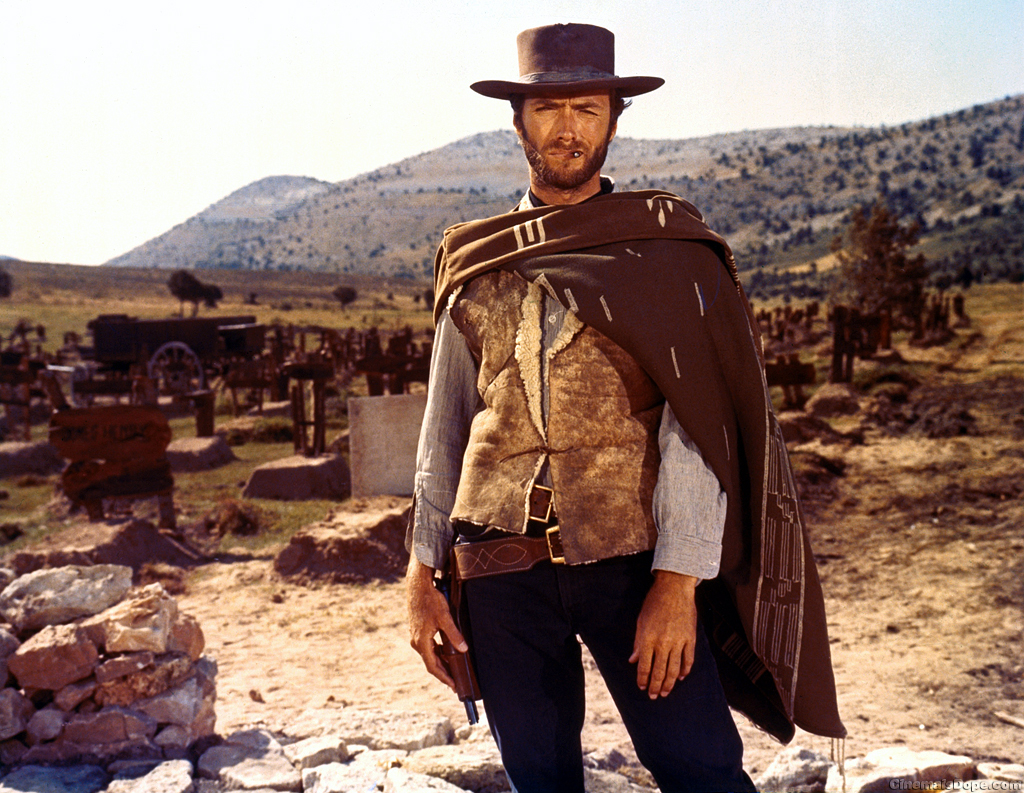
 One of the all-time-great spaghetti Westerns, Sergio Leone’s dusty three-hour operatic oater stars Clint Eastwood as the Good (Blondie), Lee Van Cleef as the Bad (Angel Eyes), and Eli Wallach as the Ugly (Tuco Benedicto Pacifico Juan Maria Ramirez, whose list of criminal offenses is a riot), three unique individuals after $200,000 in Confederate gold buried in a cemetery in the middle of nowhere. Nearly 20 minutes of never-before-seen footage added to the film several years ago, with Wallach and Eastwood overdubbing brand-new dialogue, so if you haven’t seen it in a while, it might just be time to catch it again, this time on the big screen as part of Film Forum’s impressive “Spaghetti Westerns” series. Ennio Morricone’s unforgettable score and Torino delli Colli’s gorgeous widescreen cinematography were also marvelously enhanced; their work in the scene when Tuco first comes upon the graveyard will make you dizzy with delight. And then comes one of the greatest finales in cinema history. The Good, the Bad and the Ugly is screening at Film Forum on June 9, 10, 12, and 21, with the series continuing with such well-known classics and under-the-radar gems as Damiano Damiani’s A Bullet for the General, Giulio Petroni’s Death Rides a Horse, Monte Hellman’s China 9, Liberty 37, and Giulio Questi’s Django Kill . . . If You Live, Shoot!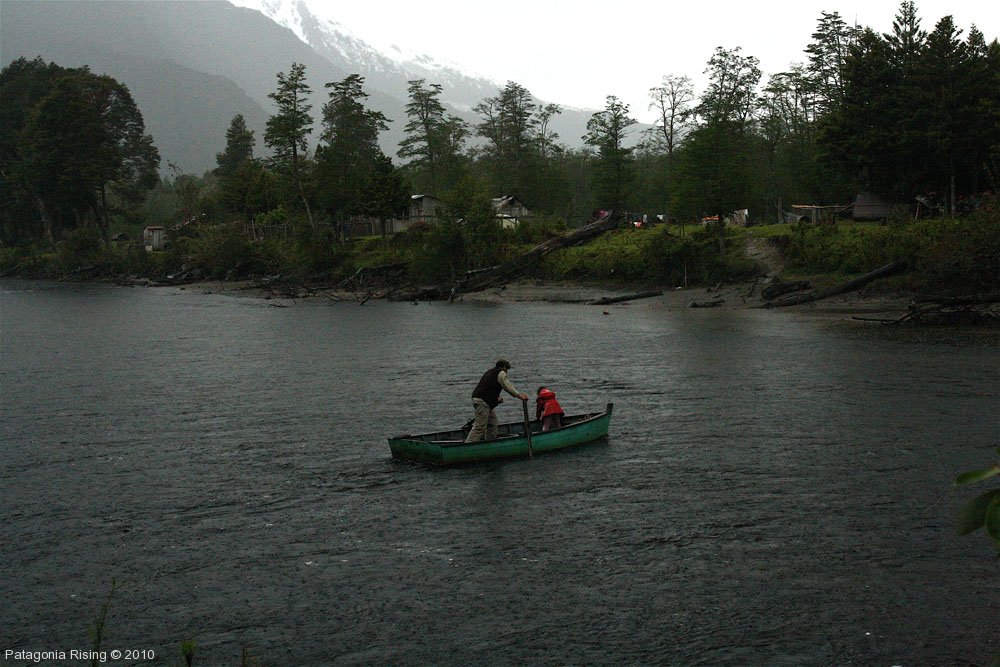
 For generations, gauchos have been roaming through southern Chile, living off the land along the Baker and Pascua Rivers. But the lifestyle of these South American cowboys, as well as their surrounding environment, is being threatened by the potential construction of five dams along the two rivers. In Patagonia Rising, filmmaker Brian Lilla examines the hard-fought battle currently going on between the ranchers and farmers and hidroAysén, the global corporation behind the massive project. Lilla (Tale of Two Bondage Models, Ghetto Fabulous) speaks to such families as the Sanchezes, the Sandovals, and the Arratias, whose livelihoods and culture are being threatened; glaciologists who point out the environmental damage the dams can cause, especially given the climate change that is wreaking havoc in Patagonia; a hidroAysén general manager who explains that the project will bring much-needed energy resources to Chile while also being environmentally sound and sustainable; and other scientific experts and activists, as well as a few gauchos who are in favor of the dams. Patagonia Rising features beautiful shots of the region, but they are carefully situated to play on viewers’ sympathies in a mostly one-sided documentary earnestly narrated with a lack of authority by Carla Wilkins. The film comes off as a sounding board for the anti-dam movement, but it still raises important points about the future of the area and the possibility of developing alternative energy sources that would be more friendly to the land and its inhabitants.

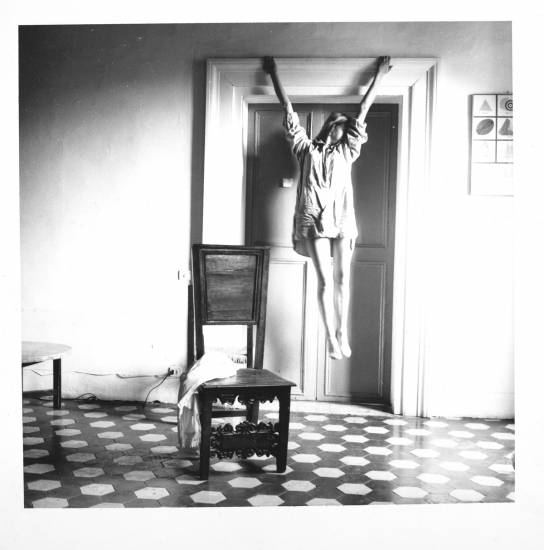
 There’s something inherently creepy about The Woodmans, C. Scott Willis’s documentary about an intriguing family of artists. For the first half of his debut theatrical release, Willis, an eleven-time Emmy winner who has spent most of his career working for television news organizations, speaks with successful ceramic sculptor Betty Woodman, who had a