twi-ny recommended events

RICHARD AVEDON: MURALS & PORTRAITS

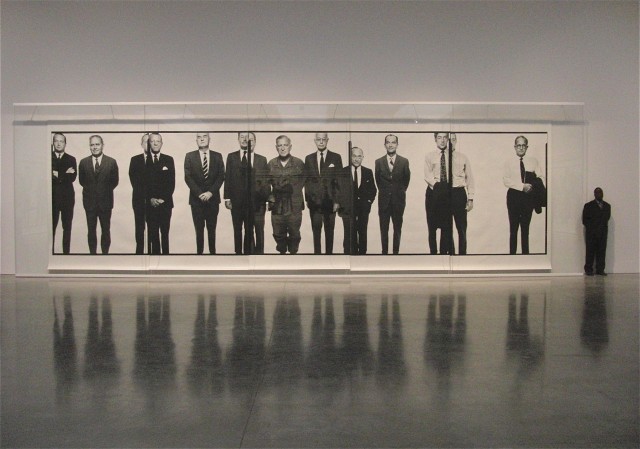
Richard Avedon, “The Mission Council,” silver gelatin prints, five panels mounted on linen, printed 1975, © The Richard Avedon Foundation (photo by twi-ny/mdr)

Gagosian Gallery
522 West 21st St. between Tenth & Eleventh Aves.
Monday – Friday through July 27, free, 10:00 am – 6:00 pm
212-741-1717
www.gagosian.com
www.richardavedon.com

Born and raised in New York City, photographer Richard Avedon began taking pictures at the YMHA when he was twelve, eventually honing his craft while serving in the Merchant Marine during WWII and studying at the New School. Renowned for his fashion photography, Avedon, who died in 2004 at the age of eighty-one, also specialized in silver gelatin portraits that explored the sociopolitical climate of America, particularly between 1969 and 1971. “My photographs don’t go below the surface,” he once said. “I have great faith in surfaces. A good one is full of clues.” Extended through July 27 at Gagosian’s Twenty-first St. gallery, “Richard Avedon: Murals & Portraits” features spectacular murals and intimate portraits that have beautiful surfaces indeed while providing plenty of clues about the state of the nation. Spread out in an awe-inspiring space designed by David Adjaye that holds surprises around every corner, the smaller portraits and massive murals — which run as high as ten feet and as long as thirty-five — feature such seminal counterculture figures as the Chicago Seven, Allen Ginsberg and his family, and Andy Warhol and such Factory denizens as Paul Morrissey, Candy Darling, Joe Dallesandro, Viva, Taylor Mead, and Gerard Malanga in addition to members of the Mission Council, a group of war administrators who influenced U.S. involvement in Vietnam. There are also smaller portraits of writers Brendan Behan, Julius Lester, and Jean Genet, activist Julian Bond, the sons of Julius and Ethel Rosenberg, Ginsberg and Peter Orlovsky naked, civil rights lawyers Leonard Weinglass, William Kunstler, and Florynce Kennedy, Nixon secretary Rose Mary Woods, and Vietnamese survivors of napalm attacks that put the pro- and antiwar movements and the sexual revolution in perspective, supplemented by vitrines containing paraphernalia relating to the nearby photographs and specific subject matter. Made before the era of digital manipulation and Photoshop, the large-scale murals, which include some subjects twice in the same series of panels, hang loosely behind sheets of plexiglass in an almost nonchalant way that adds to their mystique. The lighting also affects the murals, casting shadows of the men and women across the floor and even reflecting the mural opposite; although it was most likely accidental, it is quite intriguing to look at the eleven men of the Mission Council with a small, subtle reflection of nude factory members ghosted over them.

MOVIES WITH A VIEW: SLUMDOG MILLIONAIRE

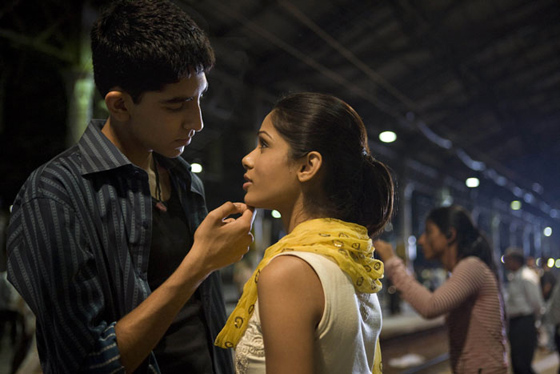
A very dangerous love blossoms in Oscar-winning SLUMDOG MILLIONAIRE

SLUMDOG MILLIONAIRE (Danny Boyle, 2008)
Brooklyn Bridge Park, Harbor View Lawn
Thursday, July 19, free, 6:00
www.brooklynbridgepark.org/a>
www.foxsearchlight.com

In modern-day Mumbai, Jamal Malik (Dev Patel) is being brutally interrogated by a police inspector (Irrfan Khan) who is certain that Jamal is cheating on the popular game show Who Wants to Be a Millionaire? The cop won’t even consider that a young, uneducated chaiwalla, a lowly tea server at a call center, could possibly know enough to be successful on the program. But through a series of harrowing flashbacks, Jamal recounts his difficult, miserable life growing up on the streets with his brother, Salim (Madhur Mittal), explaining how his experiences with extreme poverty, bigotry, child abuse, and gang violence led him to know certain answers in fascinating, bizarre, and mostly sad ways. As he approaches the final question, everything he’s ever loved and believed in hangs in the balance. Slumdog Millionaire is extremely well directed by Danny Boyle (Trainspotting, 28 Days Later), with a smart script by Simon Beaufoy (The Full Monty) based on Vikas Swarup’s novel Q and A. Freida Pinto makes a strong debut as Latika, the girl who comes between the two brothers, and Bollywood star Anil Kapoor is wonderfully smarmy as Prem Kumar, the Indian Regis Philbin. A mesmerizing, edge-of-your-seat tale, Slumdog Millionaire was the sleeper hit of 2008 until it won four Golden Globe awards and went on to take home eight Oscars, including Best Original Score, Best Original Song, Best Cinematography, Best Adapted Screenplay, Best Director, and Best Picture. Slumdog Millionaire is screening for free on July 20 in Brooklyn Bridge Park as part of the summer Movies with a View series, preceded by a DJ set by Emch Subatomic and Àlex Lorca Cercos’s short film Odysseus’ Gambit.
TWI-NY TALK: CATALPA FOUNDER DAVE FORAN

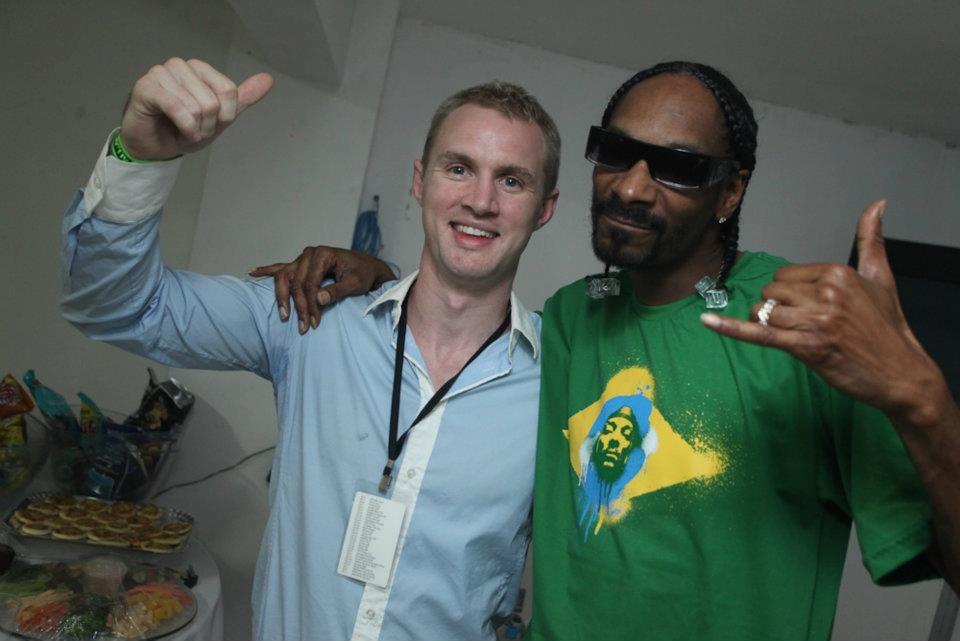
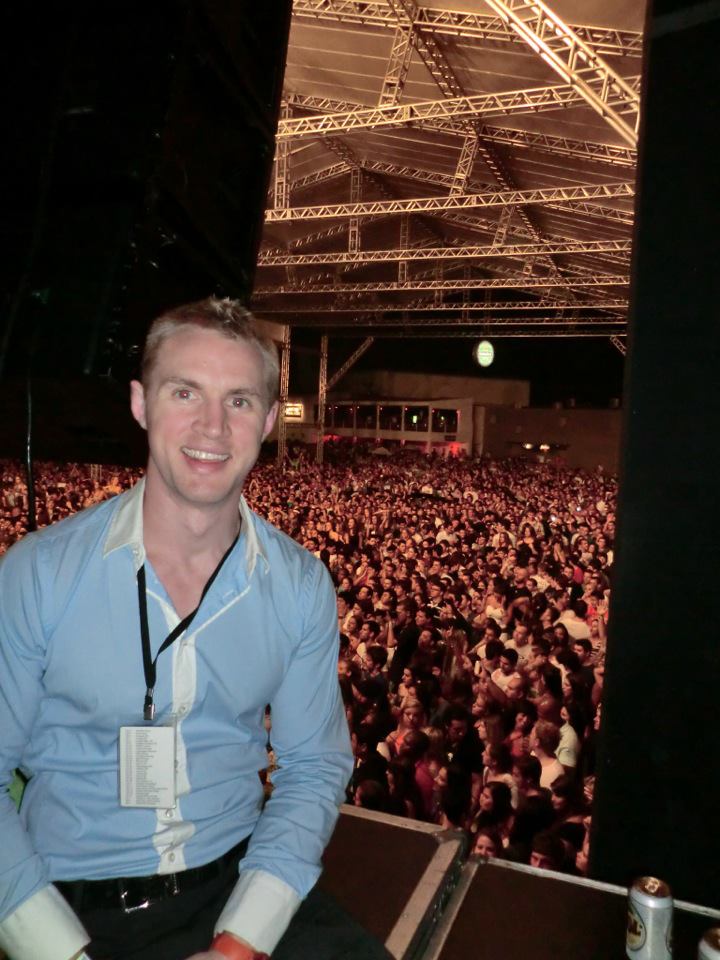
Dave Foran partied with Snoop Dogg at Vivo Rio last September and will do so again later this month on Randall’s Island

Catalpa Festival
Randall’s Island
Saturday, July 28, and Sunday, July 29
Weekend passes $179.99, day passes $99.99
www.catalpanyc.com

Dave Foran is hoping to achieve what no previous event promoter has done before in New York. Over the years, such outdoor music gatherings as the Fleadh, Lollapalooza, Across the Narrows, and All Points West have each failed to maintain a lasting presence, something the Dublin-born Foran is planning on doing with the Catalpa Festival. Taking place July 28-29 on Randall’s Island, the two-day inaugural festival boasts a diverse lineup of live acts, including the Black Keys, TV on the Radio, Umphrey’s McGee, Hercules and Love Affair, and Zola Jesus on Saturday and Snoop Dogg, Girl Talk, Matt and Kim, Cold War Kids, and Matisyahu on Sunday, among many other groups. In addition, Catalpa will host such special installations as Arcadia’s fire-shooting “Afterburner” and the Silent Disco Tent, where people can dance to wireless music beamed into their headphones. A former professional rugby player whose father was a promoter as well, the twentysomething Foran started his promotional company, Frisky, in 2010, with the goal of putting together “mind-blowing events.” The University of Sydney graduate recently discussed the genesis of Catalpa with us as the festival grew near.

twi-ny: What was the selection process like to come up with the roster of musical and visual artists participating in the festival?

Dave Foran: I didn’t want to pigeon-hole Catalpa in its first year and really wanted to create a diverse and slightly eclectic assortment of artists that I really feel had quite a bit of substance, their own style, and collectively a personality for the festival that I hope will be attractive. I did not set out to create a pop festival at all, but you do need some big names to get everyone interested. The Black Keys were my first-choice band for Catalpa. I really think they are amazing, and their recent explosion has been built on a solid foundation of developing a following year on year from creating incredible blues-rock; to me that is the epitome of what I would like Catalpa to represent.

Dave Foran started Frisky in 2010 with the goal of throwing “mind-blowing events”

twi-ny: How did the decision to hold it on Randall’s Island come about?

Dave Foran: There really are not that many large green-field sites in NYC that can hold a suitable capacity and which are tried and trusted. In my view it really is the best of the bunch. Governors Island is landlocked and a logistical nightmare. Liberty State Park is in Jersey and that has its own problems with getting people over there from Manhattan and Brooklyn; people don’t like going across that water too much!!! Liberty State Park is also an old landfill with terrible drainage, and I think that is where a lot of problems with All Points West came from, as they were very unlucky with the weather.

twi-ny: What is the most difficult part of putting together a festival like Catalpa in New York City?

Dave Foran: The hardest things I have found so far is trying to make noise about a new event like this in a place so busy and difficult to get heard like NYC. You either need to be very clever about it or be willing to shovel over huge amounts of cash to get your brand out there. Also, booking a first-year festival as a relatively minor event producer from Ireland is not easy at all. I am not Live Nation or AEG, and a lot of talking was necessary to get some of the big artists I wanted.

twi-ny: Over the years, New York City has seen a slew of outdoor festivals come and go. What do you think the key is to make Catalpa work where others have failed?

Dave Foran: I am aiming for Catalpa to have a much more eclectic, left-field, and experience-based slant to it than other regular bar and stage events. I really believe that what keeps people remembering a good festival is not just the live acts they saw but also the subsidiary experiences they had. I am trying to bring this heightened dimension to Catalpa through elements such as Frisky’s Church of Sham Marriages, where a pimp pastor will marry couples, groups, threesomes, whatever, in an outrageous ceremony. There are also things like the Silent Disco and the High Times Reggae Stage, surrounded by hammocks where famous HT writers will be giving speeches on related topics. There are a lot of art installations, various site artistry, the world’s smallest nightclub (you need to see this!) etc. In my view it is these elements which also give a festival a life of its own and ultimately lead to its longevity.

OUR HAUS

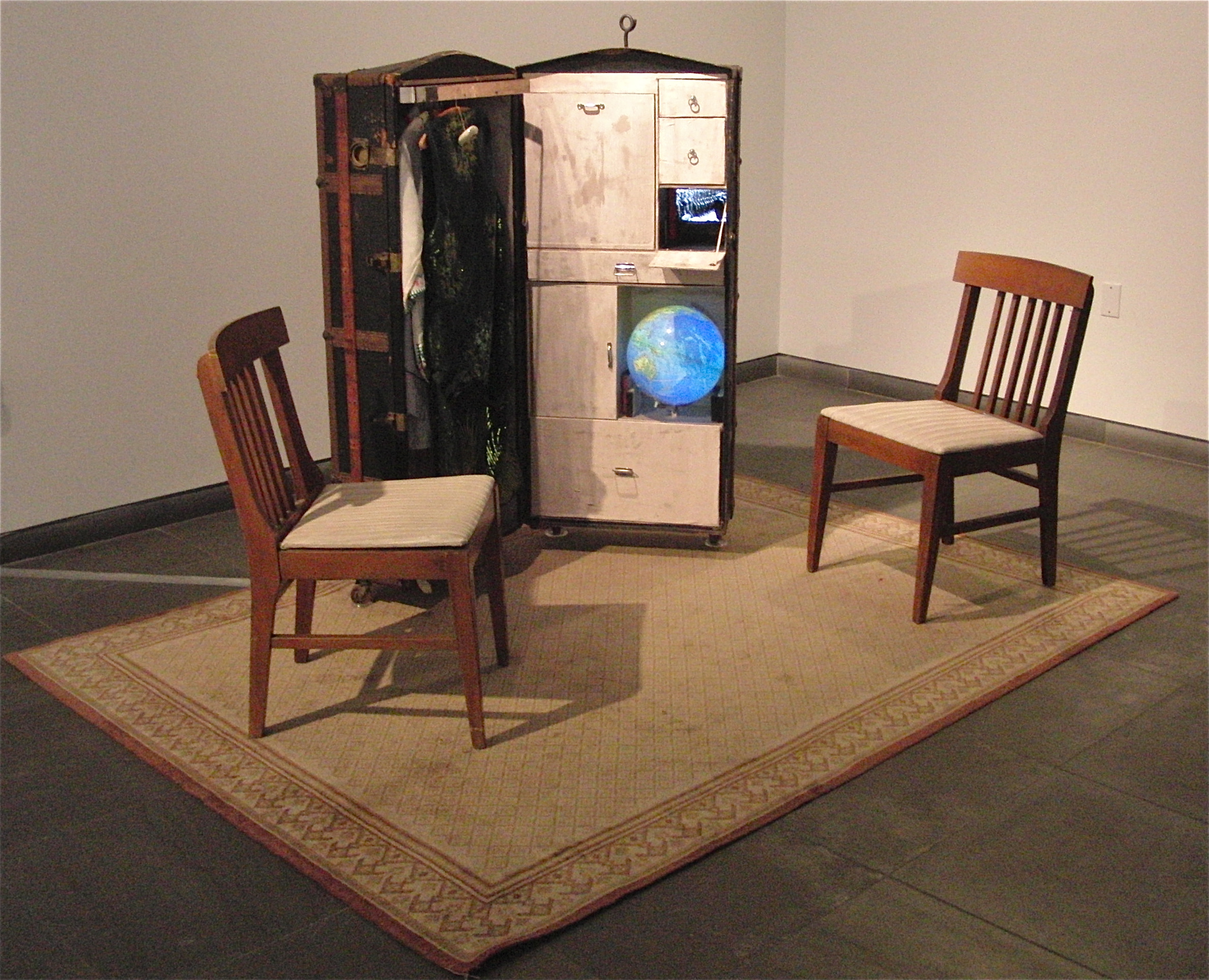
“Unattended Luggage” by Time’s Up gives visitors a chance to explore personal aspects of immigration and home (photo by twi-ny/mdr)

Austrian Cultural Forum
11 East 52nd St. between Madison & Fifth Aves.
Daily through August 26, free, 10:00 am – 5:00 pm
212-319-5300
www.acfny.org
our haus slideshow

In 1970, Crosby, Stills, Nash & Young sang, “Our house is a very, very, very fine house.” The same can be said of architect Raimund Abraham’s stunning Austrian Cultural Forum tower, which turns ten this year. In honor of the anniversary, the ACFNY has put together the multimedia exhibit “Our Haus,” consisting of specially commissioned works that explore the nature of home, the physicality and psychology of place, and the cross-cultural link between New York and Austria. Spread across four floors of the twenty-five-foot-wide, eighty-one-foot-deep, twenty-four-story building that ACFNY director Andreas Stadler calls “an artistic lighthouse in this metropolis of creativity and communication,” the show includes photography, painting, video, sculpture, and site-specific installations that curator Amanda McDonald Crowley says “recognize the ACFNY as a space for conversation, contradiction, intimacy, and conviviality.” In Brünnerstraße 165, Helmut and Johanna Kandl go back to Johanna’s childhood home, combining vintage Super-8 footage of her as a little girl playing in the backyard with contemporary video of her rising out of a pond on the now-abandoned property. Austrian-born artist Rainer Ganahl examines two sides of New York in “Haunted Houses — Vacant Buildings on Third Avenue between 99th and 120th Street,” a two-channel video that he made while riding his bicycle through his adopted home of Spanish Harlem; while the bottom images depict stores and signs of life, the top shows broken windows, empty apartments, and shattered dreams. Judith Fegerl’s “Untitled (cauter)” intrudes on Abraham’s tower itself, as electrical wires burn lines onto the wall. Time’s Up investigates travel and immigration in “Unattended Luggage,” which invites visitors to look through drawers in a large open suitcase filled with items that remind one of home. Matthias Herrmann conjures up Felix Gonzalez-Torres and Bruce Naumann in a series of still-life postcards, free for the taking, that he made during a New York City residency.

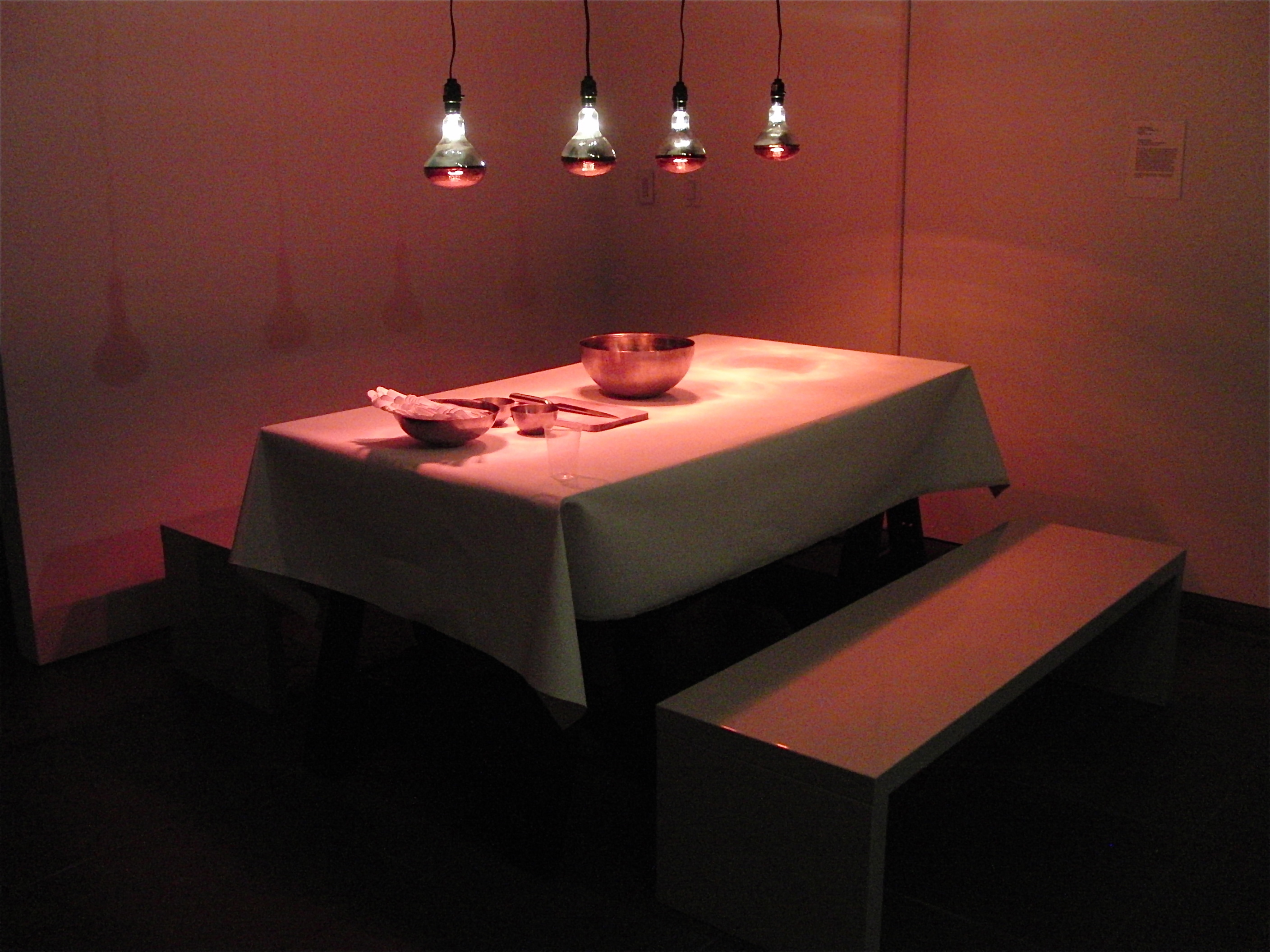
Rainer Prohaska’s “Floor Cuisine, ACF New York” offers a place to gather at the Austrian Cultural Forum (photo by twi-ny/mdr)

In 1982, the British ska band Madness sang, “Our house it has a crowd / There’s always something happening,” and the same can be said for “Our Haus.” Rainer Prohaska’s “Floor Cuisine, ACF New York” features kitchen stations throughout the exhibit, culminating in a table downstairs where people can come together and enjoy a drink from Mathias Kessler’s “Das Eismeer, Die gescheiterte Hoffnung (The Arctic Sea, the Failed Hope),” a refrigerator stocked with beer and containing a sculptural tribute to Caspar David Friedrich in the freezer. Meanwhile, the collective WochenKlausur has set up a meeting room that will host various gatherings over the course of the exhibition; through July 22, “It Came from chashama” will highlight works from the nonprofit organization that displays art in public spaces. (The Center for Urban Pedagogy takes over July 23-29, with a panel discussion that first night at 7:00, followed by Green Guerillas, CAAAV, and Not an Alternative.) And in conjunction with the anniversary, Anthology Film Archives is hosting “The Austrian Cultural Forum New York: The First Decade,” a series of screenings through July 22 of Austrian films made over the last ten years, including Nikolaus Geyrhalter’s Our Daily Bread, Götz Spielmann’s Revanche, Michael Haneke’s The White Ribbon, and Ruth Beckermann’s Zorro’s Bar Mitzva.

THE MOBILE SHAKESPEARE UNIT: RICHARD III

Multiple locations July 17 – August 3, free
The Public Theater’s LuEsther Theater
425 Lafayette Ave.
August 6-25, $15 general admission
212-967-7555
www.publictheater.org

In the summer of 1957, Joseph Papirofsky literally brought Shakespeare to the masses, trucking through all five boroughs to present a free outdoor production of Romeo and Juliet. The theater guru would soon shorten his last name to Papp and create the world famous New York Shakespeare Festival, which has been presenting high-quality free shows in Central Park’s Delacorte Theater for fifty years now. But the traveling Bard road show is back, as the Public Theater’s Mobile Shakespeare Unit is up and running, spending the next three weeks performing Richard III at locations where people have limited access to the arts (after having presented Measure for Measure last November). The unit will pay visits to such venues as the Jamaica Service Program for Older Adults on July 17, Charlotte’s Place on July 18, the Eric M. Taylor Center on Rikers Island on July 19, the Al Oerter Recreation Center on July 20, the Brownsville Recreation Center on July 24, the Fortune Society on July 26, the Goddard Riverside Community Center’s the Other Place on July 27, the Fort Hamilton Army Base on August 3, and several correctional facilities; some stops will also include educational workshops. Directed by Amanda Dehnert, who also composed the original score, the play stars Ron Cephas Jones as the villainous title character, with Kevin Kelly as Edward, Miriam Hyman as Clarence, Michael Crane as Buckingham, Keith Eric Chappelle as Hastings, Michelle Beck as Anne, Suzanne Bertish as Margaret, Alex Hernandez as Catesby, and Lynn Hawley as Elizabeth. Linda Roethke designed the set and costumes. The production will then move indoors August 6-25 at the Public, with all tickets $15 except for twenty per performance that will be donated to community organizations that were not part of the tour.

JAMES ROSENQUIST: F-111

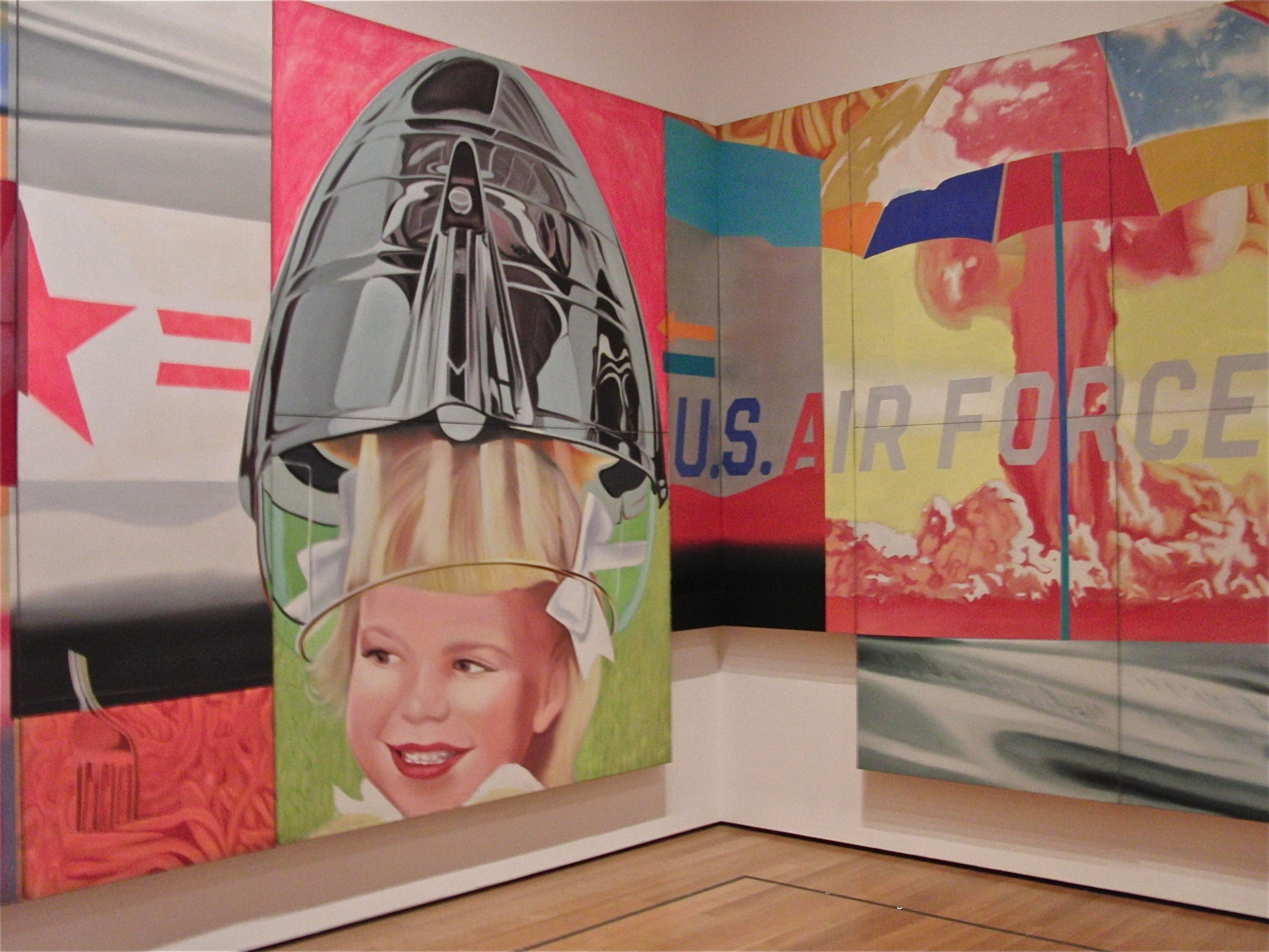
James Rosenquist, “F-111” (detail), oil on canvas with aluminum, 1964-65 (photo by twi-ny/mdr)

Museum of Modern Art, fourth floor
11 West 53rd St. between Fifth & Sixth Aves.
Daily through July 30, $25 (includes same-day film screenings)
212-708-9400
www.moma.org
f-111 slideshow

First flown in December 1964 and officially deployed during the Vietnam War in 1967, General Dynamics’ $75 million F-111 Aardvark multipurpose tactical fighter bomber was a prime example of cutting-edge weaponry in its time, built with taxpayer money. In 1964, New York-based artist James Rosenquist, who grew up in North Dakota and Minnesota, raised by parents who were amateur pilots, began what would become one of his most powerful and influential installations, “F-111.” Designed as its own room, “F-111” has been reconstructed at MoMA and is being shown as it first was at the Leo Castelli Gallery in 1965, along with eight framed preparatory pieces that give insight into Rosenquist’s creative process. Resembling a four-walled billboard (Rosenquist was a former billboard painter), “F-111” consists of twenty-three colorful wraparound panels that meld consumer and advertising culture with ironic militaristic imagery. A pretty little girl is getting her hair done under the nose of the jet plane. A mushroom cloud is exploding under a rainbow umbrella. A fork is digging into spaghetti. Flags in a white cake proclaim its health benefits. A diver is swimming through a nuclear explosion. The eighty-six-foot-long mural took Pop art to another level, not merely re-creating familiar societal images but juxtaposing them with an instrument of mass destruction while the country was escalating its involvement in a controversial war. The immersive installation, inspired in part by Claude Monet’s large-scale works, provides a dizzying sensation of inescapable rapid-fire imagery that Rosenquist says on the Acoustiguide “felt to me like a plane flying through the flak of an economy.” Rosenquist, perhaps best known for paintings that look like they’ve been torn to reveal another work beneath it, here places his messages front and center, creating a visual collage of images that effortlessly flow into one another. On the audio tour the artist also notes that the plane’s “mission seemed obsolete before it was finished.” All these years later, Rosenquist’s “F-111” seems far from obsolete itself, perhaps even as relevant as ever.

ROOFTOP FILMS: MANHATTAN

MANHATTAN will be screening for free in Coney Island on July 16

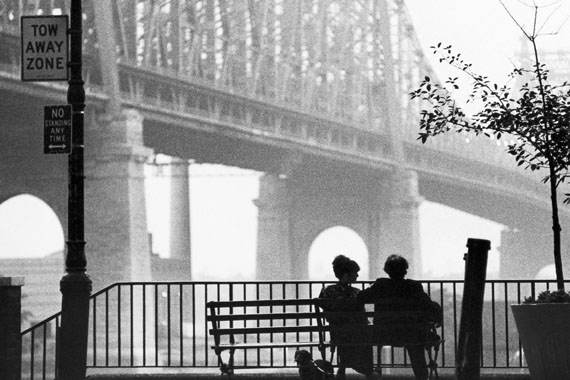
MANHATTAN (Woody Allen, 1979)
3059 West 12th St, on the beach at Coney Island
Monday, July 16, free, music and dancing 7:00, film 8:30
rooftopfilms.com

Woody Allen’s Manhattan opens with one of the most beautiful tributes ever made to the Big Apple, a lovingly filmed black-and-white architectural tour set to the beautiful sounds of George Gershwin’s “Rhapsody in Blue.” As Allen’s character says at the beginning, “He adored New York City, he idolized it all out of proportion — no, make that, he romanticized it all out of proportion.” Once again collaborating with screenwriter Marshall Brickman, master cinematographer Gordon Willis, and Oscar-winning actress Diane Keaton, Allen’s tale of a nebbishy forty-two-year-old two-time divorcee who takes up with a seventeen-year-old ingénue (Mariel Hemingway) is both hysterically funny and romantically poignant, filled with classic dialogue (Yale: “You think you’re God.” Isaac: “I gotta model myself after someone.”) and iconic shots of city landmarks. Manhattan is being screened in an iconic landmark itself, Coney Island, on July 16, a free presentation of Rooftop Films, with music and dancing at 7:00, followed by the film at 8:30. Future free Rooftop Films screenings include a “Coming Home” shorts program with Shenandoah and the Night at MetroTech on July 20, The Muppets in Coney Island on July 23, Peter Nicks’s The Waiting Room in Dag Hammarskjöld Plaza on July 24, Nina Conti’s Her Master’s Voice and a pair of shorts in Socrates Sculpture Park on July 25, and The Natural in Richmond County Bank Ballpark on July 26.