twi-ny recommended events

TICKET ALERT: FALL FOR DANCE FESTIVAL 2012

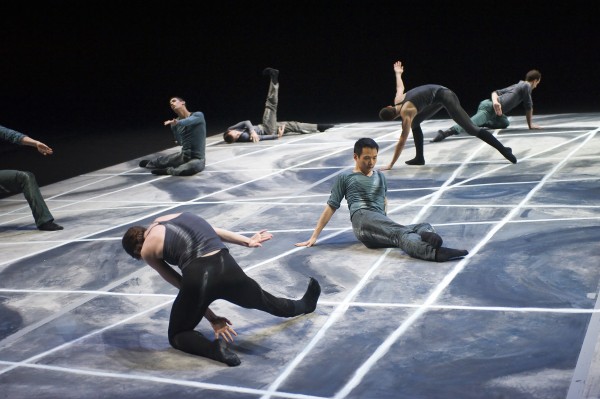
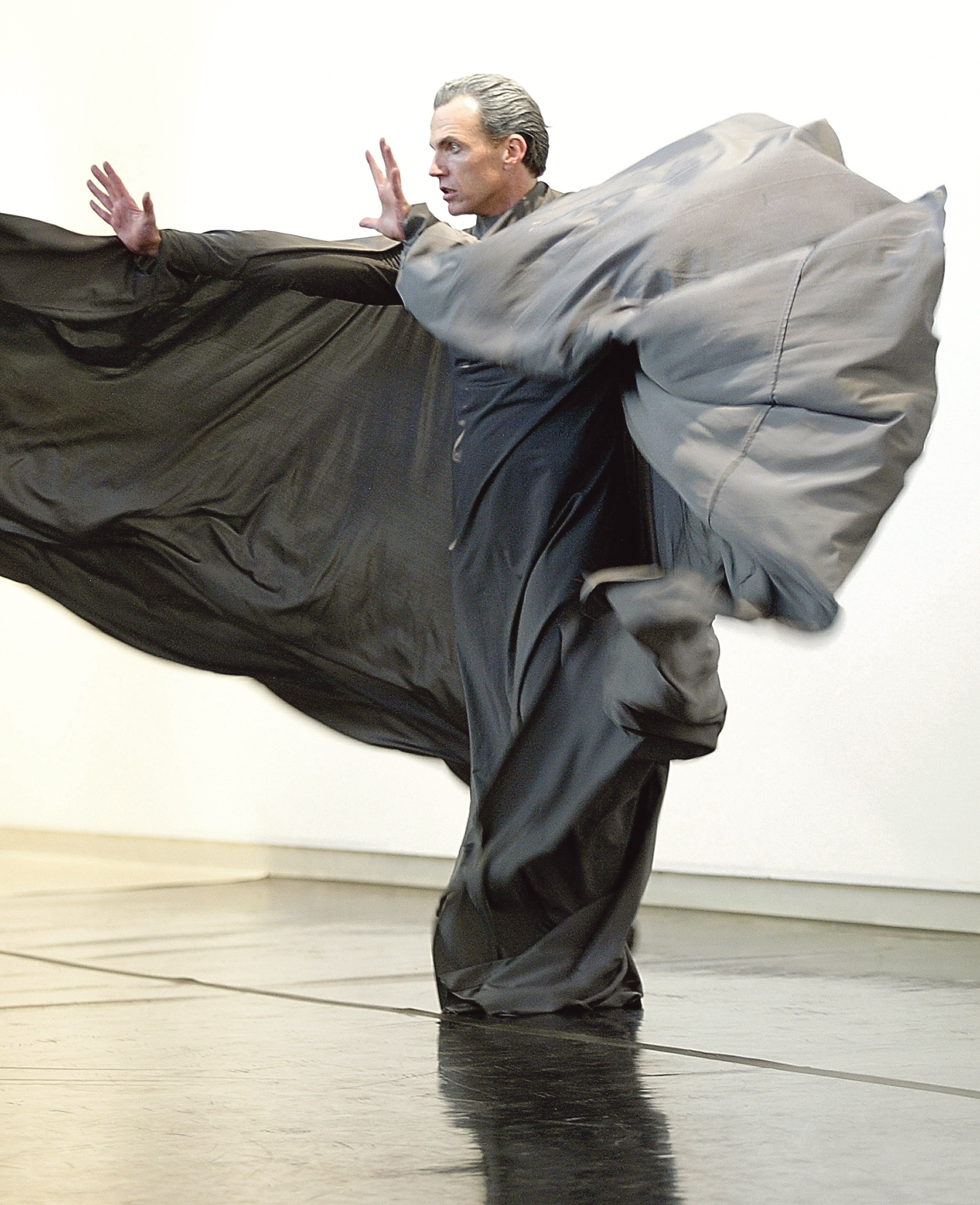
Shen Wei Dance Arts will perform RITE OF SPRING at Fall for Dance Festival at City Center (photo by Stephanie Berger)

City Center
131 West 55th St. between Sixth & Seventh Aves.
Tickets go on sale September 9 at 11:00 am
Festival runs September 27 – October 13, $15
212-581-1212
www.nycitycenter.org

On your mark, get set . . . Tickets for the ninth annual Fall for Dance Festival at City Center, which runs September 27 through October 13, go on sale September 9 at 11:00 am, but you better not delay if you want to go, because this hotly anticipated event sells out quickly. All seats are only fifteen dollars, with each program featuring multiple works in various disciplines from established and up-and-coming international companies. For example, the first two nights bring together Jared Grimes’s Dancing the Tap (choreographed by Grimes), Fang-Yi Sheu & Artists’ Five Movements, Three Repeats (Christopher Wheeldon), Nederlands Dans Theater’s Shutters Shut (Sol León and Paul Lightfoot), and BalletBoyz’ Void (Jack Cemerek), while September 29-30 consists of Juilliard Dance’s Fortune (Pam Tanowitz), American Ballet Theatre’s Sinatra Suite (Twyla Tharp), the Hong Kong Ballet’s Luminous (Peter Quanz), and Martha Graham Dance Company’s Chronicle (Graham). Among the other groups participating in the festival are the Moiseyev Dance Company, Shantala Shivalingappa, Pacific Northwest Ballet, Jodi Melnick, Shen Wei Dance Arts (Rite of Spring, which they performed last fall at the Park Avenue Armory), and Ballet West. Before and after each show, audience members can relax in Lounge FFD, where they can grab a drink and meet some of the dancers and choreographers. And there will be three special free DanceTalk panel discussions at the City Center Studios during the festival: “Dance and Live Music: How Do Choreographers Work with Composers?” on September 30 at 5:30 with Jodi Melnick, Steven Reker, Pam Tanowitz, and Charles Wuorinen, moderated by Maura Keefe; “For Public Consumption: Shaping Social and Cultural Dance for the Stage” on October 3 at 6:30 with Kumu Kaleo, Eri Mefri, Carlota Santana, and Elena Shcherbakova, moderated by Wendy Perron; and a lecture/demonstration on October 5 with Ka Leo O Laka I Ka Hikina O Ka La.
AMERICAN GAGSTERS — GREAT COMEDY TEAMS: WOODY ALLEN & DIANE KEATON

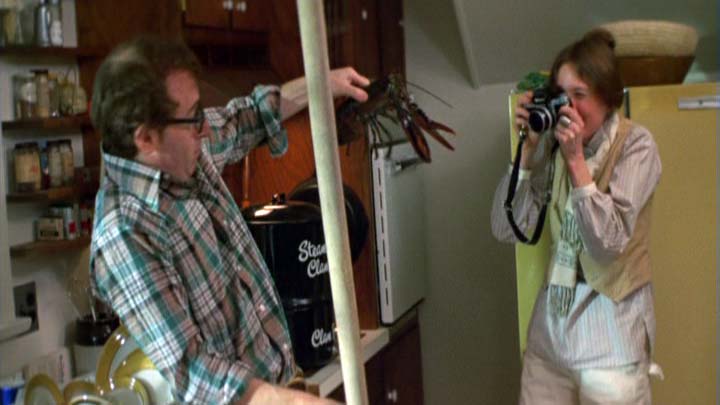
Woody Allen and Diane Keaton struggle with domestic bliss in ANNIE HALL

BAMcinématek, BAM Rose Cinemas
30 Lafayette Ave. between Ashland Pl. & St. Felix St.
September 8-9
Series runs through September 17
212-415-5500
www.bam.org

“We enjoy your films, particularly the early, funny ones,” an alien tells Sandy Bates in Woody Allen’s vastly underrated 1980 Fellini homage, Stardust Memories. Allen stars as Bates, a very serious director being honored at a film festival where everyone raves about his early stuff, much as fans and critics did after the Woodman shocked his public with the Bergmanesque Interiors in 1978. But what early stuff it was, with Allen and real-life partner Diane Keaton teaming up to become one of the greatest comedy duos of them all, right up there with Tracy and Hepburn, Powell and Loy, Martin and Lewis, and Cary Grant and any number of leading ladies. BAMcinématek is honoring Allen and Keaton (as well as all those others) as part of the fabulous series “American Gagsters: Great Comedy Teams,” screening four of their best films this weekend. In 1977’s Annie Hall (Saturday at 2:00 & 6:50), Allen plays Alvy Singer, a Jewish television writer who has fallen in love with the ultimate goy, Annie (a never-better Keaton, whose real name is Diane Hall). As their relationship ebbs and flows, they discuss major spiders, lobsters, sharks, and other creatures while driving through Plutonium and meeting Marshall McLuhan. (Alvy: “What’s the difference? It’s all mental masturbation.” Annie: “Oh, well, now we’re finally getting to a subject you know something about.” Alvy: “Hey, don’t knock masturbation. It’s sex with someone I love.”) In 1973’s Sleeper (Saturday at 4:30 & 9:15), Allen is Miles Monroe, a cryogenically preserved liberal who has woken up two hundred years later to find a very different world as poses as a robot butler for the snooty Luna Schlosser (Keaton), tests out an orgasmotron, and becomes a revolutionary. (Luna: “Oh, I see. You don’t believe in science, and you also don’t believe that political systems work, and you don’t believe in God, huh?” Miles: “Right.” Luna: “So then, what do you believe in?” Miles: “Sex and death — two things that come once in a lifetime . . . but at least after death, you’re not nauseous.”)

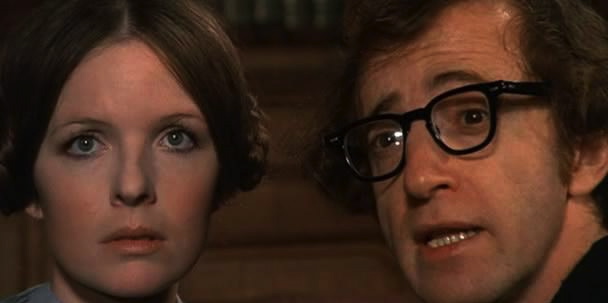
Diane Keaton and Woody Allen fight for Mother Russia in intellectual slapstick comedy

In 1979’s Manhattan (Sunday at 2:00 & 6:50), a celebration of Gershwin and New York City, Allen plays Isaac Davis, a forty-two-year-old television writer who starts dating seventeen-year-old Tracy (Mariel Hemingway), much to the consternation of the snobby Mary Wilkie (Keaton), who is having an affair with Isaac’s best friend (Michael Murphy). (Mary: “What are you thinking?” Isaac: “I dunno, I was just thinking. There must be something wrong with me, because I’ve never had a relationship with a woman that’s lasted longer than the one between Hitler and Eva Braun.”) And in 1975’s absolutely riotous Love and Death (Sunday at 4:30 & 9:15), a hysterical parody of classic Russian literature, Allen takes on the role of the less-than-heroic Boris Grushenko, who finds himself dueling with a gentleman and going after Napoleon with Sonja (Keaton), the cousin he is madly in love with. (Sonja: “And I want three children.” Boris: “Yes. Yes. One of each.”) Allen went on to make some terrific films with his future partner, Mia Farrow, but it his work with Keaton that cemented his reputation and is likely to be best remembered now, in 2173, and beyond.

FROM THE PEN OF . . . THE PANIC IN NEEDLE PARK

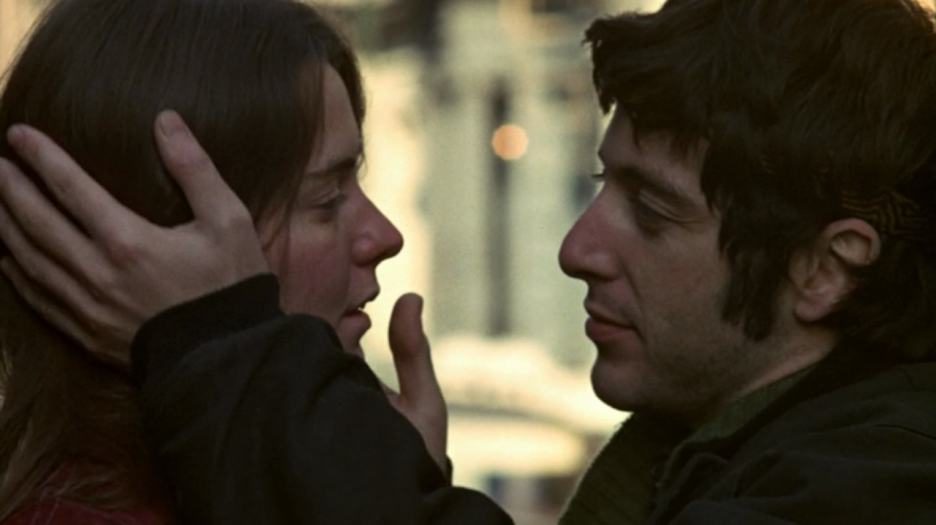
Kitty Winn and Al Pacino struggle with love and addiction in THE PANIC IN NEEDLE PARK

THE PANIC IN NEEDLE PARK (Jerry Schatzberg, 1971)
Anthology Film Archives
32 Second Ave. at Second St.
Sunday, September 9, 6:45, Thursday, September 13, 9:15, and Monday, September 17, 6:45
Series continues through September 19
212-505-5181
anthologyfilmarchives.org

Al Pacino burst onto the cinematic landscape in The Panic in Needle Park, his first starring role. Pacino is fabulously unsettling as Bobby, a junkie always looking to score around Sherman Square at 72nd St. and Broadway, known then as Needle Park. Bobby hooks up with Helen (Kitty Winn, who was named Best Actress at the 1971 Cannes Film Festival for her performance), and the two of them do whatever is necessary to stay high as they wander the streets of the city. Director Jerry Schatzberg (Scarecrow, The Seduction of Joe Tynan, Street Smart) uses natural sound and light to give the film a more realistic feel, as if you are walking through the streets with Bobby and Helen. Several scenes will break your heart, including the one on the Staten Island Ferry; the powerful screenplay was the first written by novelist Joan Didion. The film launched Pacino’s stellar film career; his next five movies were The Godfather, Scarecrow, Serpico, The Godfather Part II, and Dog Day Afternoon, arguably the best start to an acting career ever. Gritty, realistic, and surprisingly tender, The Panic in Needle Park will be screening September 9, 13, and 17 as part of Anthology Film Archives’ ongoing series From the Pen of . . ., paying tribute to the often underrecognized writers behind some great films, this time around focusing on screenplays written by novelists, including Donald Westlake (Cops and Robbers, The Stepfather), Elmore Leonard (Joe Kidd, Mr. Majestyk), James Salter (Downhill Racer), Richard Matheson (House of Usher), Truman Capote (The Innocents), and others.
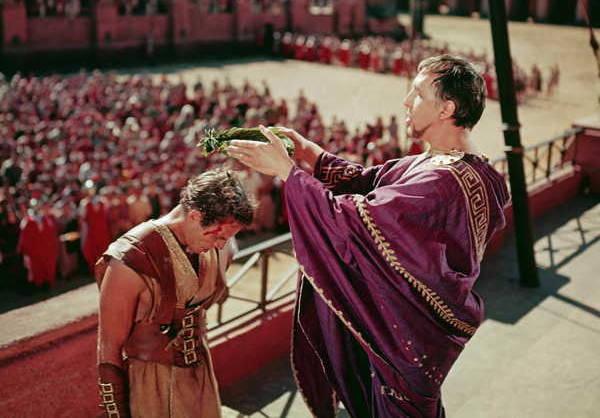

SEE IT BIG! BEN-HUR

Digital restoration of BEN-HUR will be shown on the big screen at the Museum of the Moving Image

BEN-HUR (William Wyler, 1959)
Museum of the Moving Image
35th Ave. at 36th St., Astoria
Saturday, September 8, and Sunday, September 9, free with museum admission, 2:00
718-777-6800
www.movingimage.us

One of the grandest epics ever made, William Wyler’s Ben-Hur was shown in a new digital restoration last fall as part of the New York Film Festival’s Masterworks sidebar, and now it’s coming to the Museum of the Moving Image, where it will screen September 8-9 in the “See It Big!” series. The DCP restoration of Wyler’s remake of Fred Niblo’s 1925 silent version, which starred Ramón Novarro and Francis X. Bushman (there was also a fifteen-minute Ben Hur made in 1907, all adapted from Lew Wallace’s 1880 novel), celebrates the fiftieth anniversary of the eleven-time Oscar winner, which garnered Academy Awards for Best Picture, Best Director, Best Actor (Charlton Heston as Judah Ben-Hur), Best Supporting Actor (Hugh Griffith as Sheik Ilderim), Best Score (Miklós Rózsa), Best Cinematography, Best Set Decoration, Best Costume Design, and Best Special Effects, among other trophies. The $15 million blockbuster tells the story of two childhood friends, Judah Ben-Hur and Messala (Stephen Boyd), who get caught up in religion, politics, and slavery in first-century Rome and eventually have a magnificent showdown on the chariot course. As cinema spectacles go, they don’t get much bigger or better than this.
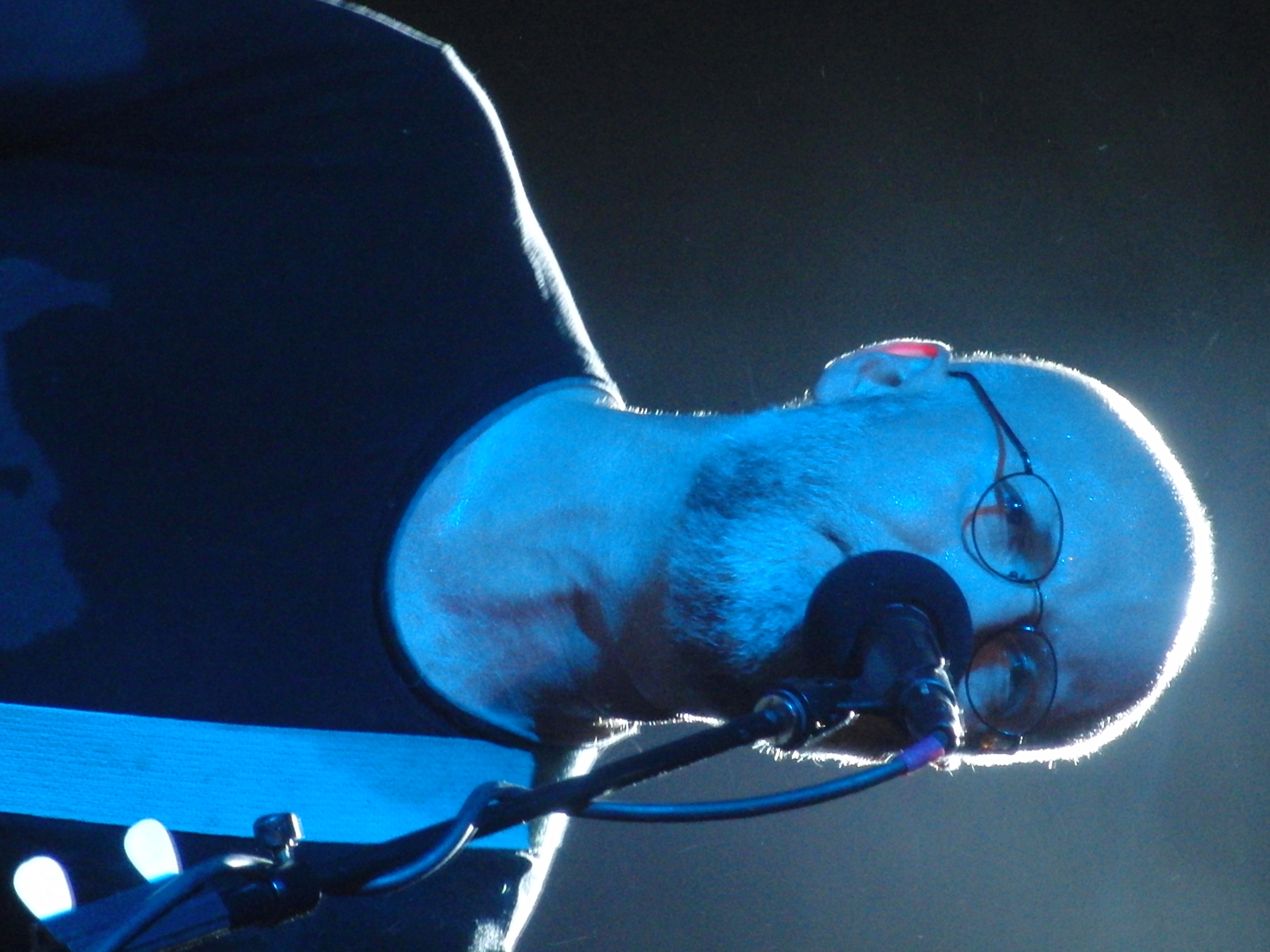
BOB MOULD PLAYS COPPER BLUE & SILVER AGE

Bob Mould will revisit COPPER BLUE and highlight new SILVER AGE at free show Friday night in Williamsburg (photo by twi-ny/mdr)

The Lacoste Live Concert Series
Williamsburg Park
50 Kent Ave. at North 12th St.
Friday, September 7, free, 6:00
www.bobmould.com

Twenty years ago, in a small club in New York City, we saw the loudest show we’ve ever experienced, a blistering attack on body, mind, and soul by three dudes making awesomely beautiful music together. Sugar, consisting of singer-guitarist Bob Mould, bassist David Barbe, and drummer Malcolm Travis, were behind this sonic tsunami, powering through songs from their debut record, the instant classic Copper Blue. “I want something like I remember / And I want something that lasts forever,” Mould declared on “Changes,” seeming to look back at the recent arc of his career, which included the brutal breakup of Hüsker Dü in 1988, followed by his acoustic solo debut, Workbook, as well as at his future. Over the last few years, Mould has once again been looking back, particularly on 2009’s almost painfully honest Life and Times and his intimate and revealing 2011 memoir, See a Little Light: The Trail of Rage and Melody, bringin along his acoustic guitar on the book tour. But after bonding with Dave Grohl and Foo Fighters on record and onstage, Mould tossed away the acoustic in favor of more electric madness, going into the studio with live bandmates Jason Narducy on bass and Jon Wurster on drums and coming out with the explosive Silver Age (Merge, September 4, 2012, stream available here), the twentieth anniversary of Copper Blue very much on his mind. “I’m never too old to contain my rage,” he announces on the title song, and he indeed lets his rage soar on such searing tracks as “Star Machine,” “The Descent,” “Steam of Hercules,” and “Angels Rearrange” (which echoes the earlier “Changes”), only slowing down just a bit for the finale, “First Time Joy.” Mould, who will turn fifty-two next month, is on the road right now, celebrating the newly remastered reissue of Copper Blue by performing the album in its entirety, featuring such Mould standards as “The Act We Act,” “A Good Idea,” “Hoover Dam,” and “If I Can’t Change Your Mind.” He’ll then play a second set of songs focusing on Silver Age while also reaching back to the Hüsker Dü and solo years. Mould will be at Williamsburg Park in Brooklyn on Friday night, giving a free show as part of the Lacoste Live Concert Series, with Cymbals Eat Guitars opening up. And be prepared; it should be LOUD. (Mould will also be spinning tracks later that night at his regular Blowoff gig with Richard Morel at the Highline Ballroom.)

AMERICAN DANCE GUILD: ANNUAL PERFORMANCE FESTIVAL 2012

John Pennington will perform Harald Kreuzberg’s Dances Before God at ADG Performance Festival (photo by Tammy Abbott)

The Ailey Citigroup Theater
The Joan Weill Center for Dance
405 West 55th St. at Ninth Ave.
September 6-9, $22 (festival pass $50)
www.americandanceguild.org

The annual American Dance Guild Performance Festival returns to the Ailey Citigroup Theater this week with four nights of dance featuring thirty-three international artists. This year’s honorees are award-winning dancers, teachers, and choreographers Dianne McIntyre and Elaine Summers, who will be presenting works of their own at the festival. Thursday night’s gala features pieces by Kyla Barkin, Rebecca Netl-Fiol, John Pennington (reimaging Harald Kreutzberg’s “Dances Before God”), Shani Collins-Achille (“Swing Us Sky Rain[bow]”), and Hee Ra Yoo in addition to McIntyre’s “Life’s Force,” celebrating the fortieth anniversary of Sounds in Motion, with trumpeter Ahmed Abdullah, McIntyre, and a cast of twenty people who have performed with McIntyre during her career (Saturday also), and Summers’s 1976 “Windows in the Kitchen,” a multimedia work with Douglas Dunn, Jon Gibson, and Matt Turney (Friday also). Friday’s lineup includes Dawn Robinson, Sue Bernhard, Sarah Stackhouse, Joe Cele, Maxine Steinman, Tina Croll, Jenny Showalter, Sarah Mettin, and Laurie Taylor, while Saturday features Rebecca McArthur, Peggy Choy, Allison Jones, Claudia Gitelmann, Mary Seidman, Kaoru Ikeda, Sasha Spielvogel, and Andrew Janetti. The festival concludes Sunday with Marta Renzi, Betsy Fisher (taking on “Angst” from Dore Hoyer’s “Affectos Humanos”), Erin La Sala, Joan Gavaler, Kathy Wildberger, Gloria McLean (the Will Barnet tribute “Dancing Without Illusion”), Nancy Zendora, Joseph Mills (the solo “Circlewalker”), and Molissa Fenley (the new duet “100 Vessels”). Be sure to get there early to check out videos of works by McIntyre and Summers that span their long, influential careers.

CITIZEN KANE VS. VERTIGO

CITIZEN KANE is back on the campaign trail, seeking victory

CITIZEN KANE (Orson Welles, 1941
Film Forum
209 West Houston St. between Sixth & Seventh Aves.
September 5-11
212-727-8110
www.filmforum.com
www2.warnerbros.com

Citizen Kane is the best-made film we have ever had the pleasure to watch — again and again and again — and it is even more brilliant on the big screen. A young, brash, determined Orson Welles created a masterpiece unlike anything seen before or since — a beautifully woven complex narrative with a stunning visual style (compliments of director of photography Gregg Toland) and a fabulous cast of veterans from his Mercury radio days, including Everett Sloane, Joseph Cotten, Ray Collins, Paul Stewart, and Agnes Moorehead. Each moment in the film is unforgettable, not a word or shot out of place as Welles details the rise and fall of a self-obsessed media mogul. The film is prophetic in many ways; at one point Kane utters, “The news goes on for twenty-four hours a day,” foreseeing today’s 24/7 news overload. And it doesn’t matter if you’ve never seen it and you know what Rosebud refers to; the film is about a whole lot more than just that minor mystery. Like every film Welles made, Citizen Kane was fraught with controversy, not the least of which was a very unhappy William Randolph Hearst seeking to destroy the negative of a film he thought ridiculed him. Kane won only one Oscar, for writing — which also resulted in controversy when Herman J. Mankiewicz claimed that he was the primary scribe, not Welles. The film lost the Oscar for Best Picture to John Ford’s How Green Was My Valley, but it has topped nearly every greatest-films-of-all-time list ever since. However, after being number one on Sight & Sound’s poll that comes out every ten years (in 1962, 1972, 1982, 1992, and 2002), Citizen Kane has shockingly been beaten out this year by Alfred Hitchcock’s 1958 thriller Vertigo, which has been climbing the Sight & Sound spiral staircase from number 7 in 1982 to number 4 in 1992 and number 2 in 2002 after not having even made the top ten in 1962 and 1972. Film Forum is setting the two films against each other this month, with Citizen Kane screening September 5-11, followed by Vertigo, which isn’t even the best Hitchcock film, being shown September 12-18, giving everyone a chance to see just how wrong Sight & Sound, the magazine of the British Film Institute, is.