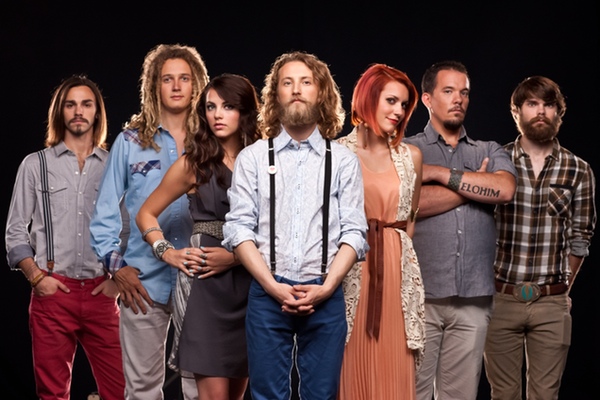
Gulfport, Mississippi, septet is off to quite a beginning, winning Hard Rock Battle of the Bands and releasing debut album
Thursday, September 27, the Rock Shop, 294 Fourth Ave., 718-230-5740, $10, 8:00
Friday, September 28, Mercury Lounge, 217 East Houston St., 212-260-4700, $10-$12, 6:30
www.roscobandana.com
Americana folk rockers Rosco Bandana introduce themselves with a shot of brash, bold honky tonkin’ on “Time to Begin,” the title track of their just-released, same-named debut album. Singers Jason Sanford, Jennifer Flint, and Emily Sholes trade vocals while the rest of the band plays hot grooves behind them, coming together to declare over and over, “Yes, it’s time to begin.” Indeed, it’s quite a beginning for the seven-member Gulfport, Mississippi, group, whose first record also includes the country-blues “Woe Is Me,” the infectious story-song “Radio Band Singer,” the ballad “Long Way Down,” the jaunty “Tangled Up,” and the foot-stompin’ “Black ’Ol Water” (which features a curiously placed apostrophe). Formed by childhood friends Sanford and drummer Barry Pribyl Jr. along with Sanford’s former girlfriend Sholes, the band added Flint, Josh Smith, Jackson Weldon, and Patrick Mooney at wine-bar open mic sessions. Rosco Bandana will be at the Rock Shop in Brooklyn on September 27 with Sasha Pearl and Mail the Horse and at Mercury Lounge on September 28 with Arit and Food Will Win the War. Sanford recently discussed the group and its origins in our latest twi-ny talk.
twi-ny: You’re the first band signed to Hard Rock Records. How did that come about?
Rosco Bandana: We won the Hard Rock Rising Battle of the Bands, and they decided they wanted us to be the first band on the label. They saw something in us that they found promising.
twi-ny: Are you worried about being labeled as a corporate rock band?
Rosco Bandana: No, we will always stay true to our roots.
twi-ny: There are seven members of your group, including three singers. What are the songwriting and recording processes like?
Rosco Bandana: Jason writes the songs. The recording process was a learning experience in which we grew tremendously. Greg Collins is the first professional producer we have worked with.
twi-ny: On your Facebook page, you mention that one of your influences is “other people’s music.” What “other people’s music” have you been inspired by?
Rosco Bandana: Elliott Smith, Wilco, Fleet Foxes, Fleetwood Mac, Avett Brothers, Mumford and Sons, John Harper, Luther Dickinson.
twi-ny: You’re going to be in Brooklyn on September 27 and the Lower East Side on September 28. What kind of expectations do you have for these NYC shows?
Rosco Bandana: We expect a good response, since new York is notorious for launching newer, uprising bands.
twi-ny: Dare we ask where the name came from?
Rosco Bandana: We wanted something symbolic of America. That’s where we got Bandana. We got Rosco from a Midlake song [“Roscoe”].

 Fernando Meirelles knows how to make movies. His previous film, the remarkable City of God (2002), was deservedly nominated for an Oscar for Best Foreign Language Film, and he earned a nod for Best Director as well, sending him off to Hollywood for his first English-language effort. The result is this exciting tale of a low-level British diplomat who becomes obsessed with investigating his radical wife’s murder. As he uncovers more and more information, he learns surprising things about his wife — and the British government. Based on John Le Carré’s novel, The Constant Gardener opens with the murder of Tessa Quayle (Rachel Weisz); her husband, Justin (Ralph Fiennes), is a diplomat stationed in Kenya who prefers not to ruffle any feathers. As he is told what might have happened to her, he continues watering his plants, tending to his garden. Tessa’s death is ruled a crime of passion, allegedly committed by a peace worker, Dr. Arnold Bluhm (Hubert Koundé), but Justin believes there’s more to it. He soon finds himself in the middle of a complex conspiracy that puts him in the cross hairs of some very powerful — and dangerous — people. Meirelles alternates between the past and the present, using flashbacks to reveal Justin and Tessa’s complicated, often mysterious relationship. By focusing on the characters instead of the conspiracy, Meirelles has crafted an exciting spy thriller with a heart. Nominated for four Oscars, The Constant Gardener is screening at BAM on September 27, kicking off the BAMcinématek series “John le Carré,” comprising suspense films based on the espionage novels of onetime MI5/MI6 officer David Cornwell and also including Tomas Alfreson’s Tinker Tailor Soldier Spy, Frank Pierson’s The Looking Glass War, Sidney Lumet’s The Deadly Affair, John Boorman’s The Tailor of Panama, Martin Ritt’s The Spy Who Came in from the Cold, and George Roy Hill’s The Little Drummer Girl.
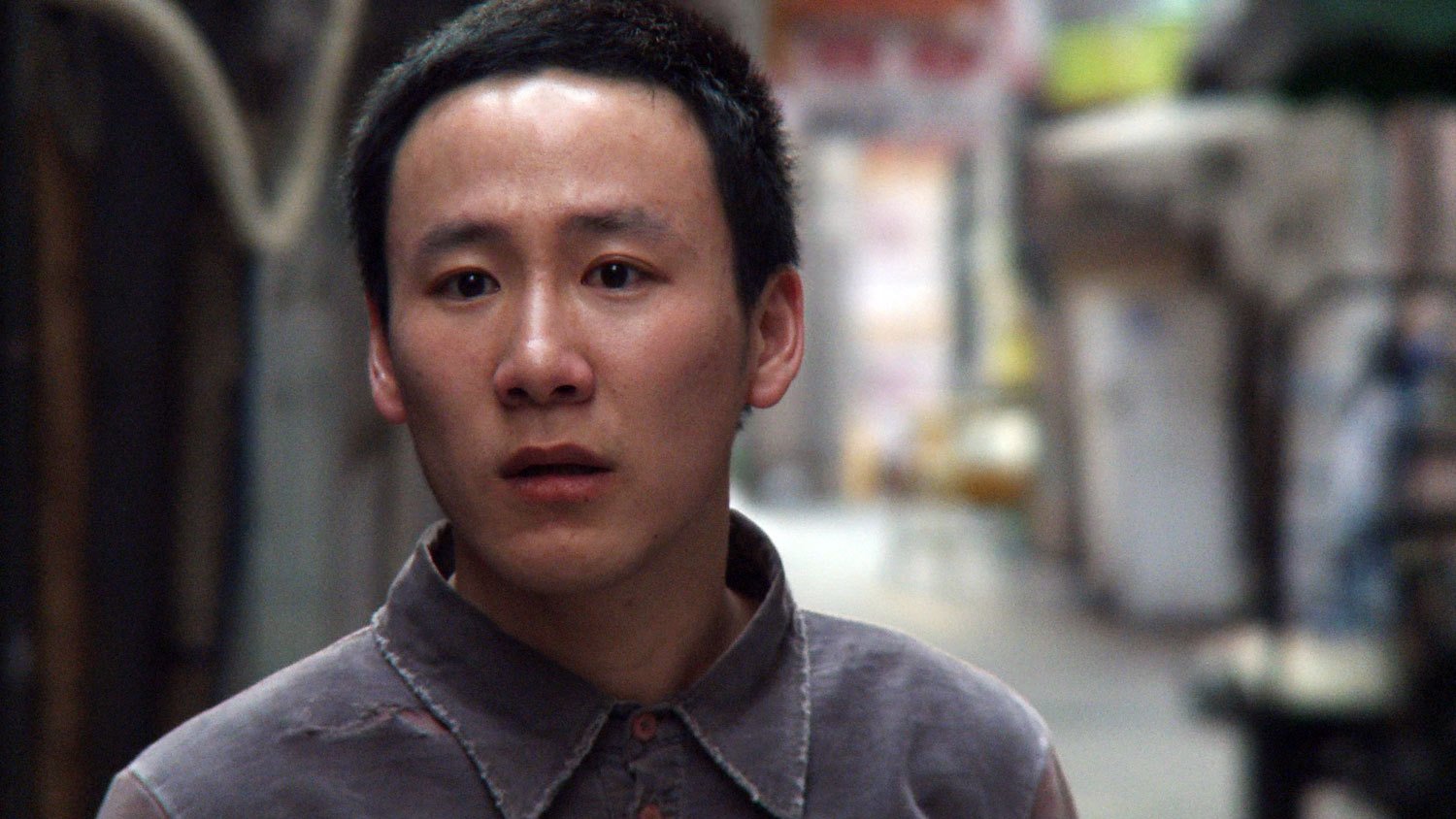
 Queer filmmaker Kim Kyung-mook, a film festival favorite, follows up his controversial 2005 feature debut, the three-part Faceless Things, which centers on an explicit gay sexual tryst, and his 2008 work, A Cheonggyecheon Dog, about sex changes and a talking dog, with another unconventional narrative. In Stateless Things, Kim examines the difficult life of social minorities in modern-day Korea. In the first section, filmed primarily with a handheld camera, North Korean defector Joon (Lee Paul) works at a gas station with Soonhee (Kim Sae-byuk), an ethnic Korean who has just gotten out of China. The two shy, quiet people work for a manager (Kim Jeong-seok) who sexually abuses Soonhee and mistreats Joon until they can take no more, fighting back and heading out on the run. In the second section, Yeom Hyun-joon plays Hyun, a beautiful young man being kept by successful businessman Sunghoon (Lim Hyung-kook), his jealous, closeted sugar daddy. The two make love in a stunning apartment with spectacular views of Seoul, but they are trapped in their own little world, filled with fear and obsession. Save for one quick scene in a bathroom stall — an extremely graphic scene, reminiscent of Carlos Reygadas’s Battle in Heaven, that will ensure the film is unrated — it is hard to connect the two parts until after the title credit is emblazoned on the screen and the shorter third section attempts to bring everything together in poetic, abstract, and surreal ways. Like its predecessors, Stateless Things is aimed at more adventurous moviegoers who don’t need films tied up in a little bow at the end but instead enjoy being challenged by what they are shown. And there is a lot of challenge in Stateless Things, not all of which works. Stateless Things is screening on September 28 at 8:00 as part of MoMA’s third annual “Yeonghwa: Korean Film Today” series, a collaboration with the