live performance

STATE OF THE ARTS: WE THE PEOPLE AT DANSPACE PROJECT

Who: Gregory Mosher, Sarah Calderón, Sara Farrington, Ty Jones, Lisa Kron, Mino Lora, Gary A. Padmore
What: “We the People: An Assembly of New York Artists”
Where: Danspace Project, St. Mark’s Church in-the-Bowery, 131 East Tenth St. at Second Ave.
When: Monday, January 26, free with advance RSVP, 4:00-7:00
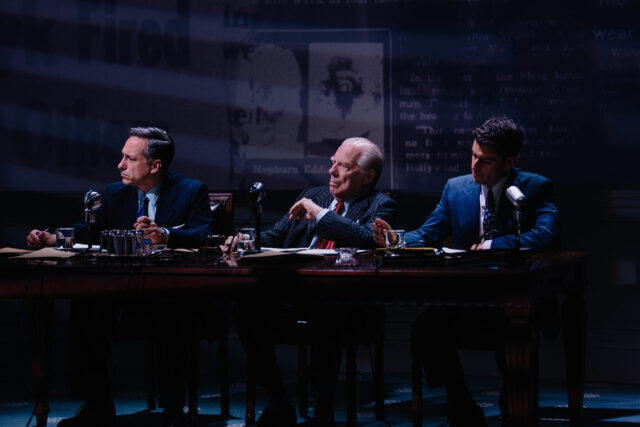
Why: On May 1, 2025, the Office of the Arts at Hunter College, under the leadership of film and stage director Gregory Mosher, hosted “We the People: A Forum on Working Class Artists in America,” in which artists, arts administrators, policymakers, economists, scholars, elected officials, students, and journalists discussed the financial and social barriers that artists and audiences face around the country.

On January 26, they are following that up with “We the People: An Assembly of New York Artists,” a town-hall-style gathering at St. Mark’s Church in-the-Bowery where the focus will be more local. The panel features Classical Theatre of Harlem producing artistic director Ty Jones, award-winning playwright and performer Lisa Kron (Fun Home, Well), the People’s Theatre executive artistic director and cofounder Mino Lora, former Creatives Rebuild New York executive director Sarah Calderon, New York Philharmonic vice president of education and community engagement Gary A. Padmore, and playwright and author Sara Farrington (CasablancaBox, A Trojan Woman). Farrington, who writes the indispensable Substack Theater Is Hard, will make her way through the audience with a microphone, giving members of the community the chance to speak their mind for sixty seconds (and maybe more); it is pointed out that “everyone who comes will already know that art is good, so be specific.”

The presentation will be recorded for online viewing, and a detailed report will be sent to Mayor Mamdani and Governor Hochul. Attendance is free with advance RSVP, although it is all dependent on the weather.

[Mark Rifkin is a Brooklyn-born, Manhattan-based writer and editor; you can follow him on Substack here.]
BOXING SHADOWS: JUXTAPOSING CORNELL, JEUNET, AND TATI AT 59E59

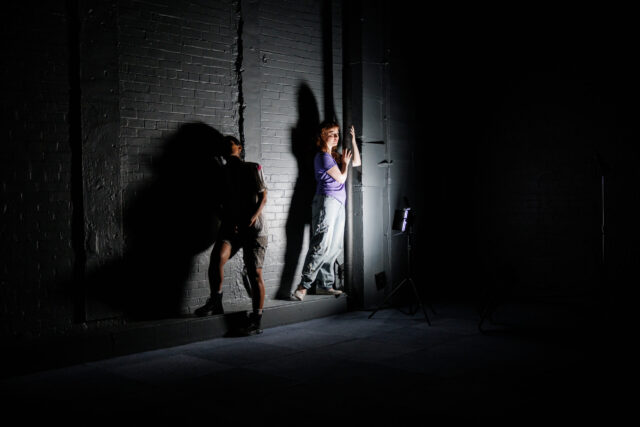
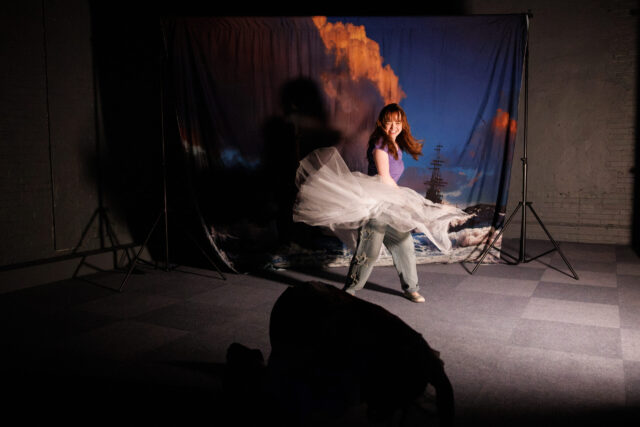
Juxtapose brings the shadow boxes of Joseph Cornell to life (photo by Leah Huete)

JUXTAPOSE
59E59 Theaters
59 East 59th St. between Park & Madison Aves.
Tuesday – Sunday through January 25, $44
www.59e59.org

“Shadow boxes become poetic theater or settings wherein are metamorphosed the elements of a childhood pastime,” Nyack-born artist Joseph Cornell wrote. “The fragile, shimmering globules become the shimmering but more enduring planets — a connotation of moon and tides — the association of water less subtle, as when driftwood pieces make up a proscenium to set off the dazzling white of sea foam and billowy cloud crystallized in a pipe of fancy.”

Or, as a character declares in Happenstance Theater’s Juxtapose: A Theatrical Shadow Box, which advertises itself as being inspired by the art of Cornell and the films of Jean-Pierre Jeunet and Jacques Tati, “Sacre bleu! What a mess.”

You can say that again.

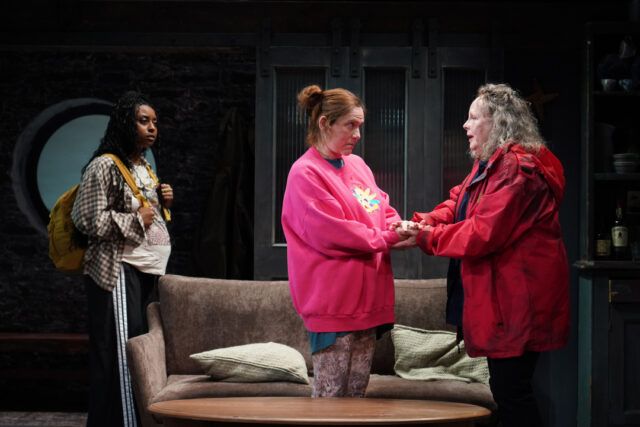
You have to look hard to find those art and film references in the final product, a confusing seventy-five minutes in which five actors wander around an abstract rooming house doing odd, repetitive things that don’t make much sense, psychologically or geographically. They consist of an unnamed collector (Mark Jaster), concierge Rosabelle (Sabrina Selma Mandell), Spilleth, a bird-woman who falls from the sky and through the roof (Gwen Grastorf), Étoile, a ballerina (Sarah Olmsted Thomas), and Blue, a childlike juggler-magician (Alex Vernon). The set and props, by Vernon and codirectors Jaster and Mandell, are centered by a large, empty white frame that is occasionally filled with various objects, from a laundry clothing line and a ladder to a window and a white scrim on which a circular image is projected. The stage also includes an old phonograph, a coat rack, a wrapped package, a conch shell, and a globe. Étoile makes weird noises when she locks and unlocks her door. Blue bounces a ball. The collector toys with his hat. Rosabelle puts on a scratchy record. Étoile tries on a new costume. Spilleth — well, I’m not sure what she does.

Among the Cornell works that served as inspiration were Observatory: Corona Borealis Casement, Toward the Blue Peninsula, and Andromeda: Grand Hôtel de l’Observatoire, but the show never fully captures the surreal nature of Cornell’s constructions, the quirky atmosphere of Jeunet’s films (Amélie, Delicatessen), or the comic genius of Tati’s Monsieur Hulot (Mon Oncle, Playtime). However, the soundtrack is a highlight, featuring songs by Irving Berlin, J. S. Bach, Hoagy Carmichael, George Frideric Handel, and Jacques Offenbach.

When the pandemic lockdown took effect, Happenstance reimagined the in-progress piece as Juxtapose Tenement, an interactive website in which you click on each character’s key to enter their unique shadow box and follow their narratives. I found that far more charming, inventive, and engaging than what is brought to life onstage, which failed to stir the audience the night I saw the play.

If this whets your appetite for more Cornell online, it’s worth checking out The House on Utopia Parkway, Wes Anderson’s Paris re-creation of the artist’s Queens studio; interestingly, Cornell never left America, and he traveled outside New York only to attend Phillips Academy in Andover, Massachusetts.

[Mark Rifkin is a Brooklyn-born, Manhattan-based writer and editor; you can follow him on Substack here.]
FLIRTING WITH DISASTER: THE DISAPPEAR

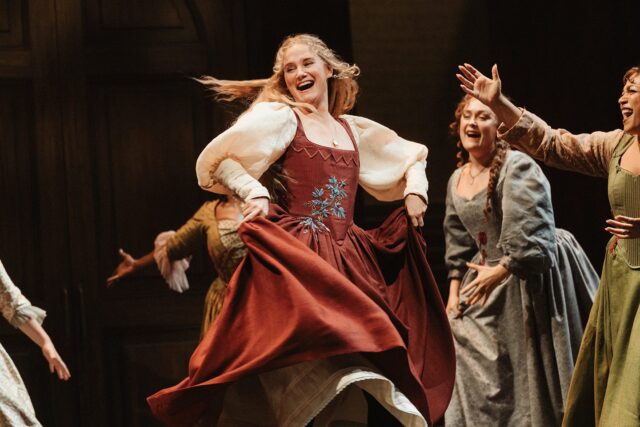
Hamish Linklater and Miriam Silverman play spouses forced to collaborate on a film in The Disappear (photo by Jeremy Daniel)

THE DISAPPEAR
Audible’s Minetta Lane Theatre
18 Minetta Lane between Sixth Ave. and MacDougal St.
Tuesday – Sunday through February 22, $54-$130
www.audible.com

In writer-director Erica Schmidt’s wildly entertaining The Disappear, Hamish Linklater stars as an egocentric narcissistic film director who is considering deleting all the dialogue from the violent horror movie he is working on. Fortunately, Schmidt has not opted to silence Linklater’s character, who spends the first act spouting so much self-centered cringy bluster that you want him to shut up already, but after intermission you can’t wait to hear what idiotic blather he’ll spit out next.

Making its world premiere at Audible’s Minetta Lane Theatre through February 22, the play takes place in the rustic living room of a farmhouse in the Hudson Valley, where Benjamin Braxton (Linklater) lives with his understanding wife, successful novelist Mira Blair (Miriam Silverman), and their teenage daughter, climate activist Dolly (Anna Mirodin). While Mira misses the city, Ben is insistent that he needs the peace and quiet of the country to finish editing the screenplay he is preparing to shoot.

“Am I exhausting? Am I exhausting to you?” Ben asks Mira at the very beginning. We soon find out that he’s exhausting to everybody.

Much to the chagrin of his longtime friend and producer, the erudite Brit Michael Bloom (Dylan Baker), Ben has his heart set on casting ingénue Julie Wells (Madeline Brewer) as Mirabella, a name suspiciously like his wife’s. Ben is instantly smitten with Julie, declaring her his muse, and they seal the deal with a kiss. It turns out that this is not the first time Ben has fallen for his leading lady. “Oh, Ben. It isn’t happening again, is it? You haven’t . . . ,” Michael says with concern.

When Michael refuses to let Ben hire Julie, Ben decides to write a new film specifically for her, a nearly dialogue-free tale about a man having an affair who makes a joke about wishing his wife were dead, only to have her actually vanish. Ben gets handsome movie star Raf Night (Kelvin Harrison Jr.) for the male lead, which further excites Julie (and, later, Mira).

But soon they are all working together on an adaptation of Mira’s book All the Silence and All the Wonder, and hilarious mayhem ensues as a torrential storm threatens.

The Disappear is a hilarious seriocomedy about art and love (photo by Jeremy Daniel)

With its numerous Chekhovian elements, The Disappear has a timeless quality; Ben works at a small table with pencil and paper, there are no electronics in the living room, candles line the fireplace mantel, and many of Jennifer Moeller and Miriam Kelleher’s costumes are old-fashioned, highlighted by Julie’s silly bonnet-topped outfit. Only later does the contemporary world appear: a smartphone and laptop show up and Julie enters wearing a half green-screen VFX suit, while the repartee often recalls sly British drawing room comedies.

And oh, what repartee! Among Ben’s fanciful lines are “God, Mira. Was your heart consumed by your efficiency?,” “I look at you and I see my death — like: this is it?!? This is it until I die?,” and “I will not think before I speak. God. You’re so restrictive! Ughhh.” When Ben asks Mira, “Do you know how smart one has to be to play dumb really well?,” she replies, “Tell me more about that, Ben.” And when Mira says, “Aren’t you always lying — just a little bit,” Ben answers, “At least I’m honest about it.”

Ben is so obnoxious and self-obsessed that he even admits that he loves filmmaking more than he does Dolly. Despite Ben’s endless flaws, Michael sticks by him, and Mira claims she loves him. Ben says about his film, “It’s an epic story about human connection,” but he has no idea how to connect with people or the world, which is the play’s central focus. He is an inconsiderate man-child who can’t relate to Julie’s fascination with butterflies, Dolly’s desire to plant trees, or Mira’s caring nature.

Linklater (The Pain of My Belligerence, Seminar) is sensational as the boorish Ben, imbuing him with a riotous physicality as he lumbers across Brett J. Banakis’s charming set. Tony winner Silverman (The Sign in Sidney Brustein’s Window, Junk) is an excellent foil as Mira, who sees through his shenanigans but remains as loyal as she can for as long as she can. (“Mira” means “look” in Spanish, perhaps referring to how she regards him.) Tony and three-time Emmy nominee Baker (La Bête, Not About Heroes) is a joy as Michael, who gets to shine in an uproarious late scene. Brewer (Cabaret, Little Shop of Horrors), best known as Janine on The Handmaid’s Tale, is sublimely seductive as the mysterious Julie, who can quote from Dido and Aeneas and King Lear while also playing coy. Harrison Jr. (Cyrano, The Lion King) is extremely funny as Raf, a self-aware, practical man who knows what he wants and goes after it. And Mirodin makes a wonderful New York stage debut as Dolly, nearly stealing the second act right out from under Linklater.

In the script, Schmidt, whose previous works include the gorgeously rendered Lucy, the beautifully frenetic Mac Beth, and the musical adaptation Cyrano, aptly describes the play as “a seriocomedy about making art while the world is falling apart,” and at one point Mira explains, “We all have to plan around disaster.”

The world may be falling apart, but seeing The Disappear would be part of any good plan around disaster.

[Mark Rifkin is a Brooklyn-born, Manhattan-based writer and editor; you can follow him on Substack here.]
BROOKLYN BY CANDLELIGHT: HARRIET STUBBS PAYS TRIBUTE TO QUEEN AND COLDPLAY

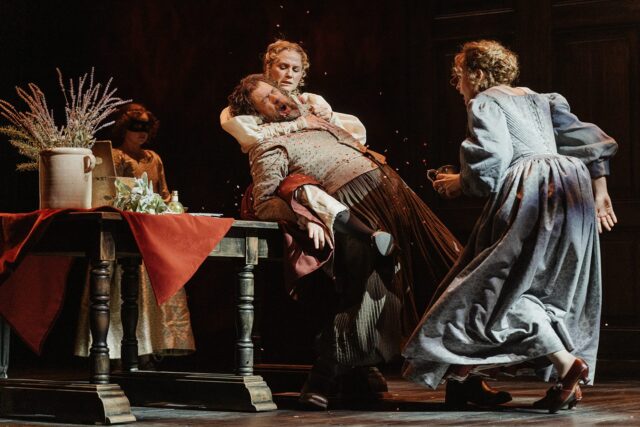
Harriet Stubbs will by paying tribute to Queen and Coldplay in Candlelight concerts on January 16 (photo by Julienne Schaer)

Who: Harriet Stubbs
What: Candlelight concerts
Where: St. Ann & the Holy Trinity Church, 157 Montague St.
When: Friday, January 16, Queen, $46.50-$67, 6:30; Coldplay, $36.50-$65.50, 8:45
Why: “There’s nothing like playing to my adopted hometown of New York; it’s electrifying,” pianist Harriet Stubbs told me in a May 2024 twi-ny talk. A child prodigy in her native England, Stubbs is an extraordinary pianist, performing an intoxicating mix of classical and pop music, ranging from Beethoven, Bach, and Gould to David Bowie, Nick Cave, and the Beatles. Having recovered from a debilitating nerve injury that left her unable to even text — she had successful hand surgery in the fall — Stubbs is back behind the keys, doing what she does best.

On January 16 at 6:30, she will be at St. Ann & the Holy Trinity Church in Brooklyn for “Candlelight: Tribute to Queen,” in which she will play mind-blowing instrumental versions of many of Queen’s best-loved hits, from “Another One Bites the Dust” to “Bohemian Rhapsody.” That will be followed at 8:45 (separate admission) by “Candlelight: A Tribute to Coldplay,” featuring such songs as “Clocks,” “Paradise,” and “Sky Full of Stars.”

There’s a reason why I’ve asked her to participate in twi-ny’s twenty-fifth anniversary celebration at the Coffee House Club on June 3: She’s a unique and dynamic performer and a delightful human being.

[Mark Rifkin is a Brooklyn-born, Manhattan-based writer and editor; you can follow him on Substack here.]
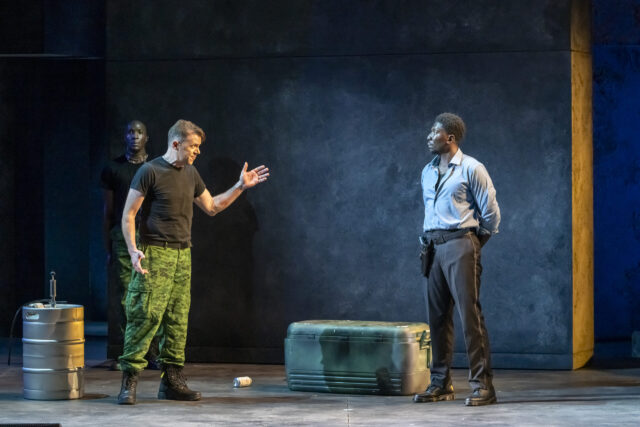
BREAKING DOWN BARRIERS: KANJINCHO AT JAPAN SOCIETY

Kinoshita Kabuki offers a modern take on an 1840 classic at Japan Society (photo © Ayumi Sakamoto)

UNDER THE RADAR: KANJINCHO
Japan Society
333 East 47th St. at First Ave.
January 8–11, $63
japansociety.org
utrfest.org

Kinoshita Kabuki makes its North American debut at Japan Society with a rousing adaptation of the 1840 Kabuki classic Kanjincho (“The Subscription List”), reimagining it as a contemporary hip-hop and pop-culture-infused theatrical experience.

Based on the Noh play Ataka, the original Kanjincho was written by Namiki Gohei III, with nagauta songs by Kineya Rokusaburo IV and choreography by Nishikawa Senzo IV. Company founder Yuichi Kinoshita has modernized the text, with a new score by Taichi Kaneko and movement by Wataru Kitao, resulting in a tense and thrilling eighty-minute drama about loyalty, revenge, and the borders that separate people not only geographically but by race, gender, class, and power in the past and present.

Inspired by actual twelfth-century events, Kanjincho tells the story of half brothers Lord Minamoto-no Yoritomo and General Minamoto Yoshitsune around the time of the Genpei War. Yoritomo has become the first shogun of the Kamakura shogunate, but he distrusts the motives of the military hero Yoshitsune (Noemi Takayama) and has demanded his capture. Yoshitsune, disguised as a porter, heads out on the seldom used Hokurokudō road with the brave and loyal Benkei (Lee V) and four shitenno (armed retainers), Kamei Rokuro (Kazunori Kameshima), Kataoka Hachiro (Hiroshi Shigeoka), Suruga Jiro (Yuya Ogaki), and Hitachi (Yasuhiro Okano), who are pretending to be mountain priests collecting donations on their way to repair Todaiji Temple in Nara. In fact, they are seeking safety in Michinoku with the Fujiwara clan.

When they reach the Ataka Barrier checkpoint, one of many set up throughout Japan to stop Yoshitsune, they are met by Mr. Togashi (Ryotaro Sakaguchi) and his four guards (Kameshima, Shigeoka, Ogaki, and Okano), who are determined to bring Yoshitsune back and behead him in front of Yoritomo. Togashi has been told that Yoshitsune is traveling with a group of fake mountain priests, so he is suspicious of them. “I’m gonna make every last damn mountain priest grovel at Mr. Togashi’s feet!” one of the guards declares.

Togashi decides to test Benkei with a series of questions about their mission and Buddhism that turns into a sensational verbal duel in which Benkei shows off his considerable mental acuity, impressing Togashi, who is leaning toward letting them pass even as one of his guards believes that the lowly porter is Yoshitsune. The cat-and-mouse game continues through a picnic with a transistor radio and contemporary snacks, the four shitenno breaking out into a J-pop boy band, and Benkei enjoying a whole lot of sake.

Kinoshita Kabuki’s Kanjincho features sensational lighting effects and characters dressed in all black (photo © Ayumi Sakamoto)

Beautifully directed and designed by Sugio Kunihara (Tokaido Yotsuya Kaidan, Shin Suikoden), Kanjincho — the English title, “The Subscription List,” refers to the scroll of supposed temple donors Togashi asks Benkei to reveal — takes place on a raised horizontal hanamachi (“flower path”) platform behind which two rows of the audience sit. The characters are dressed by Haruki Okamura in modern-day black militaristic gear except for Yoshitsune, who wears a wide-brimmed hat and carries a large walking stick, and Togashi, who is in more regal attire. The sound, by Daisuke Hoshino and Chiharu Tokida, includes moments of silence amid forest noises and Kaneko’s loud electronic and rap score.

Lighting designers Masayoshi Takada, Arisa Nagasaka, and Naruya Sugimoto nearly steal the show with spectacular effects, from pinpoint laserlike beams, slow, shadowy atmospheres, and an occasional subtle white bar on the floor that represents the numerous barriers separating the characters. “No matter how much I care about you / I can’t hold on to you / because of the borderline / You’re right next to me / but still so far away,” the pseudo–boy band sings in Japanese, except for the word borderline, which they say in English, connecting East and West. The East-West relationship is further developed by Kitao’s choreography, which incorporates traditional kabuki (primarily by Takayama) and hip hop, as well as by the casting of Benkei, portrayed by the outstanding Lee V, a caucasian poetry slam champion who was born in the United States; he evokes David Harbour as Sheriff Hopper in Stranger Things.

At its heart, Kinoshita’s adaptation attempts to break down barriers without preaching, even as the shitenno proclaim, “Equality for all!” and “Everyone’s the same! No more discrimination!” Having the same four men play the shitenno and the guards, running from one side of the stage to the other to indicate who they are without changing costumes — one actor apologizes for coughing first as a shitenno, then as a guard, equating the two despite their being enemies — packs a powerful message, especially in America today, as ICE agents patrol the streets of major cities rounding up citizens and legal and illegal immigrants alike.

Kunihara and Kinoshita may be delivering a warning, but they do so with a masterful sense of fun that transcends all our differences.

[Mark Rifkin is a Brooklyn-born, Manhattan-based writer and editor; you can follow him on Substack here.]
ENCORE PRESENTATION: THE HONEY TRAP AT IRISH REP

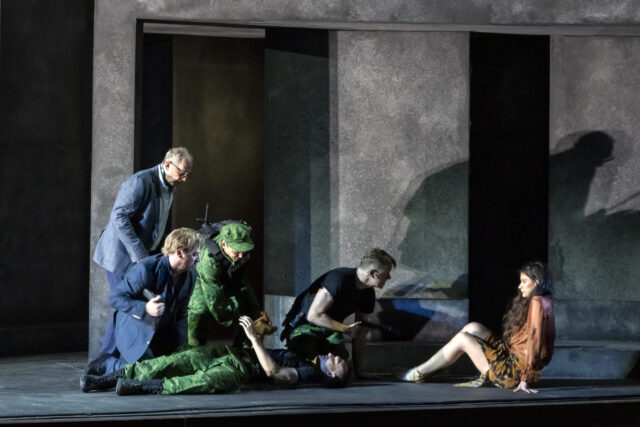
Leo McGann’s The Honey Trap at Irish Rep travels between the present and 1979 (photo by Carol Rosegg)

THE HONEY TRAP
Irish Repertory Theatre, Francis J. Greenburger Mainstage
132 West Twenty-Second St. between Sixth & Seventh Aves.
Wednesday – Sunday through February 15, $60-$125
irishrep.org

Inspired by Ed Moloney’s Belfast Project at Boston College, in which audio interviews were conducted with approximately fifty former paramilitaries involved in the Troubles in Northern Ireland in the 1970s and ’80s, Leo McGann’s The Honey Trap is a gripping thriller that explores the Troubles in a unique and compelling way. It is now back at the Irish Rep for an encore run January 10 through February 15, giving everyone a second chance to catch this piece of theatrical magic.

The play begins in the dark, with snippets of dialogue heard in voiceover from former members of the IRA, the UDR, and a Scottish soldier talking about the thirty-year conflict. “They act holier than thou but they were rotten to the core. They couldn’t kill us themselves so they got their death squads to do it for them,” a Republican woman says. A former Ulster Defence Regiment man states, “I see them rarely enough but I do now and then. The post office. The big supermarket. Petrol station sometimes. I look them straight in the eye. They know what they did.”

As the voiceovers fade out, we see Emily (originally Molly Ranson, now played by Rebecca Ballinger), a twentysomething American PhD candidate and researcher, sitting at a table preparing to interview David Henson (Michael Hayden), a former British soldier. He is suspicious of Emily’s possible biases, as the vast majority of her previous subjects were on the side of the IRA, but he sees this as an opportunity to set the record straight. “Okay. I mean, I know you’re more interested in talking to IRA types, but here we are. I’m glad I’m going to get a chance to tell you the truth. Because you won’t get that from them,” he says. She responds, “We’re thrilled that you’re telling your truth.” To which he shoots back, “My truth? No. The truth.”

For the next two hours (with intermission), the play shifts between the present and 1979, when the young Dave (Daniel Marconi) and his friend and fellow soldier, Bobby (Harrison Tipping), had a night out that ended up with Bobby’s murder, a case that was never solved. We gradually disover that Dave is not speaking with Emily merely to share his story but also to find out who killed Bobby — and perhaps exact revenge.

In 1979, Dave and Bobby, who are both married, are at a pub after a tough day working riot control in West Belfast. As part of a game meant to embarrass Bobby, Dave forces his mate to approach two young women, Kirsty (Doireann Mac Mahon) and Lisa (Annabelle Zasowski), despite Bobby’s initial reluctance. Soon the four of them are flirting.

The action occurs in flashback around the table where Emily is interviewing Dave, who carefully watches his memories unfold as Emily continues to probe. Dave insists that he and Bobby were at the bar just to relax and have a few pints. “Did you have any idea anything was amiss?” she asks. He replies, “Not a clue.”

Dave eventually takes off, leaving Bobby with the two women. “And that was it. Last I ever saw of him,” Dave explains. “They took him to some flat just outside Belfast. We don’t know if they interrogated him first or what. Then someone shot him twice in the head. His own mum wouldn’t have recognised him. But they left his army ID in his pocket. So that made it a bit easier. Thoughtful of them, eh?”

In the second act, the modern-day Dave travels to South Belfast to meet Sonia (Samantha Mathis), who he believes knows exactly what happened to Bobby that night.

Every character gets more than they bargained for in The Honey Trap. McGann (Friends Like These, In the Moment) and director Matt Torney (The White Chip, Stop the Tempo), both of whom grew up in Belfast, maintain a simmering tension all the way to an explosive conclusion, with plenty of shocks and surprises, overcoming a few awkward moments. At the center of it all is the older Dave, who is onstage the entire show, either in the present day meeting with Emily and Sonia or watching his younger self on the night his life changed forever.

Tony and Olivier nominee Hayden (Judgment at Nuremberg, Carousel) is riveting as Dave, a private man on a quest while fighting off his demons; it will make you wonder what you would do if given the opportunity to watch scenes from your past unfurl before your very eyes. The rest of the cast is strong, led by a tender performance by Mathis (33 Variations, Make Believe) as a woman who thought she had escaped her past.

Master set designer Charlie Corcoran expertly integrates the different time periods and locations, from the unionist pub to a coffee shop to a bedroom, enhanced by Sarita Fellows’s casual and military costumes and Michael Gottlieb’s sharp lighting, switching between brightness and dark, shadowy interiors. James Garver’s sound ranges from the voiceovers to a loud pub and a quiet café.

The Honey Trap — which takes its name from the form of covert deception in which an operative uses seduction to lure someone into a manipulative situation — is another winner from the Irish Rep, a complex play that explores issues of guilt, responsibility, trauma, and vengeance that might be about a specific fictional event but feels all too relevant in today’s world.

[Mark Rifkin is a Brooklyn-born, Manhattan-based writer and editor; you can follow him on Substack here.]
EDWARD REVISITED: INTERACTIVE SOLO SHOW TOURS CITY BOOKSTORES

Ed Schmidt’s Edward is back for a bookstore run this winter (photo by Sophie Blackall)

EDWARD
Multiple bookstores including the Strand, Rizzoli, PowerHouse Arena, the Mysterious Bookshop, McNally Jackson, and Books Are Magic
January 22 – March 1, $40
edschmidttheater.com

Last May, I saw Ed Schmidt’s Edward at the All Street Gallery on the Lower East Side. It is now back for a tour of New York City bookstores in Brooklyn and Manhattan, running January 22 through March 1. Below is my original review; please note that tickets go fast to this unique theatrical experience.

Ed Schmidt knows about endings. His 2010 solo show, My Last Play, was ostensibly his swan song, written two years after the death of his father and a transformative rereading of Our Town, concluding a twenty-year career that had also featured Mr. Rickey Calls a Meeting, The Last Supper, held in his Brooklyn kitchen, and the monthly variety show Dumbolio. Nevertheless, in 2015, Schmidt, at the time a professor and basketball coach at Trinity on the Upper West Side, wrote and performed the high school basketball drama Our Last Game, staged in an actual high school locker room.

Thankfully, Schmidt is back again with the superb Edward, the poetic, graceful, intimate tale of one Edward O’Connell, an unspectacular but respectable and enigmatic divorced father and educator. The hundred-minute play takes place at All Street Gallery on Hester St., with the audience of between twelve and eighteen people sitting around a long white table covered with twenty-seven objects and an empty box. Fortunate ticket holders are encouraged to arrive early and examine each piece, to pick them up and scrutinize them closely: A Brooks Robinson baseball glove. Four neckties. Mr. Potato Head. A copy of The Catcher in the Rye. A “Goose Girl” Hummel. An ashtray. A jazz CD. A postcard of a boy on a lake. A business card.

“Edward O’Connell died twelve years ago, at the age of seventy-three, and left behind this box, and all that it contained,” Schmidt, resembling a mild-mannered Kevin Costner and sounding like a toned-down Albert Brooks, begins. “With these twenty-seven objects, there are over ten octillion ways to tell Edward’s story. Ten octillion. That’s a one followed by twenty-eight zeroes. That’s the number of grains of sand on the Earth. Multiplied by the number of stars in the Milky Way. In other words, an unfathomable number. Tonight, we will tell one of those ten octillion versions.”

Wearing a dark suit and white shirt, Schmidt then serves as an Our Town–style Stage Manager, going through the objects in random order, each one a way into Edward’s life, directly or indirectly. He speaks in the third person although it feels like he’s channeling O’Connell, delving deep into his being. We learn about Edward’s wife, Angela, and their children and grandchildren; his love of the Celtics and Red Sox; his battles with department head Nona and headmaster Renée Marsh at his school, Enright Academy; his first car; his favorite word; the vacation when he thought his son had drowned; where he was at seminal moments in US history; his multiple regrets.

Many passages unfurl with a quiet majesty. “He likened her transformation to watching a sunset: you can sense a change coming — the air cools, the light fades, the sky pinkens, and then, all of a sudden, you realize, ‘It’s dark. When did that happen?’ Or perhaps the proper metaphor was a sunrise, and darkness slowly, suddenly turning to day,” he muses.

Others are experiences that everyone can relate to. “You know how, on every To Do List, there’s that one task that never gets done? It’s the one item that, for whatever mysterious reason, you can’t cross off, and it ends up getting transferred to the next list and the next and the next, and, in the end, you either complete the task or you just let it slip away and forget, but, in either case, your inability to follow through feels like a moral failure. Why did it take me so long to clean out the gutters? Or send that thank-you note? Or throw away that box of stuff in the attic? What is wrong with me?”

But each helps us learn who Edward O’Connell was and, in turn, who Ed Schmidt is — and who we are. As you walk around the table, examining the objects, several almost certainly will stand out to you personally, bringing up your own memories; for me, the baseball glove, The Catcher in the Rye, the small rock, and the Hummel figurine sent me back. The friend I attended with had actually completed the very jigsaw puzzle that was on the table. Schmidt’s writing is so evocative that the stories will also remind you of similar situations you got tangled up in as a child and an adult.

In Francesco Bonami’s newly updated semifictional Stuck: Maurizio Cattelan — The Unauthorized Autobiography, about the Italian artist and prankster, Bonami writes, “Here is my story of his story. You can believe it or not — it doesn’t matter, just as long as you enjoy it, that’s enough. If cultivating ‘doubt’ is essential to life . . . well, Maurizio Cattelan harvests doubts like nobody else.” Schmidt has accomplished a similar feat with Edward.

Ed Schmidt’s Edward is an intimate and poetic tale of an ordinary man’s life (photo courtesy Ed Schmidt)

Spoiler alert: The next two paragraphs give information about the show that you might not want to know before seeing it but was a critical part of my connecting with the work. The objects are chosen one at a time by the audience, going around in a clockwise circle. I thought long and hard about the two that I selected, wanting to impress Schmidt, hoping they would lead to great anecdotes that I would feel partly responsible for, and imagining that I could have shared my own reminiscence about them.

It seems impossible for Schmidt to know O’Connell as well as he does, especially since Edward did not leave behind a memoir or journal. But as real as O’Connell’s life appears to be, did he even exist? Did Schmidt make it all up, or perhaps use elements from his own life in crafting the play? Going on an intense Google search, I found that there is very little on the internet about Schmidt, and there seems to be no Edward O’Connell who died in 2012 at the age of seventy-three. However, I did find facts about other Edward O’Connells and various Schmidts that pop up in Edward, from names to professions to family relationships. For example, Schmidt talks about a skiing accident that Edward’s brother, Steven, had. I discovered a Substack post by political pundit Steve Schmidt about a skiing accident as well as a news story about a man named Steve Schmit who survived a life-threatening skiing mishap. Coincidence? Maybe — but maybe not.

Spoilers over, it’s also clear that Schmidt has some prankster in him too, as well as a wicked sense of humor, which emerges in his official bio, where he calls himself a “Playwright, Performer, Director, Producer, Genius,” lists the many rejections his plays have received from “some of the most and least venerable theater companies in America,” and explains that “none of Mr. Schmidt’s work has been made possible, in part or in whole, by the generous support of the National Endowment for the Arts, the New York State Council on the Arts, or the New York City Department of Cultural Affairs, or of any corporate foundation or charitable institution, though it’s not for lack of trying.”

As Bonami posits about Cattelan, “It doesn’t matter, just as long as you enjoy it, that’s enough.” For one thoroughly enjoyable evening in a Lower East Side gallery, it was enough to believe in Edward O’Connell, to believe in Ed Schmidt, and just maybe to believe in oneself.

[Mark Rifkin is a Brooklyn-born, Manhattan-based writer and editor; you can follow him on Substack here.]