this week in literature

TARKOVSKY INTERRUPTUS: STALKER

STALKER (Andrei Tarkovsky, 1979)
The New School, Tishman Auditorium
6 West 12th St. at Fifth Ave.
Saturday, March 10, free, 5:00
212-998-2101
www.nyihumanities.org
www.amt.parsons.edu

Set in a seemingly postapocalyptic world that is never explained, Andrei Tarkovsky’s Stalker is an existential work of immense beauty, a deeply philosophical, continually frustrating, and endlessly rewarding journey into nothing less than the heart and soul of the world. Alexander Kaidanovsky stars as Stalker, a careful, precise man who has been hired to lead Writer and Professor (Tarkovsky regulars Anatoli Solonitsyn and Nikolai Grinko, respectively) into the forbidden Zone, a place of mystery that houses a room where it is said that people can achieve their most inner desires. While Stalker’s home and the bar where the men meet are dark, gray, and foreboding, the Zone is filled with lush green fields, trees, and aromatic flowers — as well as abandoned vehicles, strange passageways, and inexplicable sounds. The Zone — which heavily influenced J. J. Abrams’s creation of the island on Lost — has a life all its own as past, present, and future merge in an expansive land where every forward movement is fraught with danger but there is no turning back. An obsessive tyrant of a filmmaker, Tarkovsky (Andrei Rublev, Solaris) imbues every shot with a supreme majesty, taking viewers on an unusual and unforgettable cinematic adventure. On March 10 at 5:00, the New York Institute for the Humanities at NYU and the Illustration Program at Parsons are teaming up to present “Tarkovsy Interruptus,” a free screening of the film that will be stopped at several points for commentary from what is being referred to as a “a distinguished panel of Tarkovsky fanatics,” including Geoff Dyer, Walter Murch, Phillip Lopate, Francine Prose, Michael Benson, and Dana Stevens. The program is being held in conjunction with the publication of Dyer’s latest work, Zona: A Book About a Film About a Journey to a Room (Pantheon, February 21, $24). For more on Dyer, who will also introduce the screening, you can read our twi-ny talk with him here.

TWI-NY TALK: GEOFF DYER

ZONA: A BOOK ABOUT A FILM ABOUT A JOURNEY TO A ROOM
Friday, March 9, 192 Books, 192 Tenth Ave., free, 7:00
Saturday, March 10, “Tarkovsky Interruptus,” the New School, Tishman Auditorium, 6 West 12th St., free, 5:00
Sunday, March 11, “Geoff Dyer on Tarkovsky, Cinema, and Life,” Museum of the Moving Image, 36-01 35th Ave., free with museum admission, 3:00 & 6:00
Monday, March 12, School of Visual Arts, Beatrice Theater, 333 West 23rd St., free, 7:00

“This book is an account of watching, rememberings, misrememberings, and forgettings; it is not the record of a dissection,” British author Geoff Dyer writes in Zona: A Book About a Film About a Journey to a Room (Pantheon, February 21, $24). Over the course of some two hundred pages, Dyer immerses the viewer in the fantastical world of Andrei Tarkovsky’s 1979 film, Stalker, in which the title character leads two men, Writer and Professor, on a dangerous trip into the Zone, a mysterious area that harbors a room where people’s most inner desires are said to come true. Dyer’s obsessively thorough scene-by-scene examination of the film includes tidbits about the making of the existential work as well as stories about his own personal life while referencing Michelangelo Antonioni and Jean-Luc Godard, Roland Barthes and Timothy Leary, Werner Herzog and Richard Widmark, Leo Tolstoy and T. S. Eliot, Mick Jagger and Jim Jarmusch, Milan Kundera and Don DeLillo, John Berger and Alan Watts, and Robert Bresson and Ingmar Bergman, sometimes extending footnotes across several pages that dwarf the main text. Zona is a wonderful companion piece to the film, a must-read for fans of Tarkovsky and the study of cinema itself.

On March 9, Dyer will be reading from and signing copies of Zona at 192 Books in Chelsea, then will participate in the “Tarkovsky Interruptus” program being held at the New School on March 10, a screening of Stalker that will occasionally be interrupted by commentary from Dyer, Walter Murch, Phillip Lopate, Francine Prose, Michael Benson, and Dana Stevens. Dyer will continue his whirlwind adventure on March 11 at the Museum of the Moving Image when he hosts “Geoff Dyer on Tarkovsky, Cinema, and Life,” a discussion with David Schwartz at 3:00, followed by a screening of Tarkovsky’s Mirror at 6:00. And on March 12 he’ll be at the School of Visual Arts for a lecture and book signing.

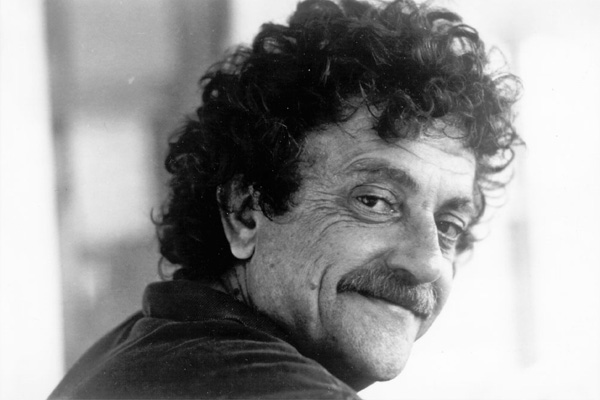
Geoff Dyer will share his Tarkovsky obsession with special appearances all over the city (photo by Marzena Pogorzaly)

twi-ny: In Zona, you essentially play the part of Writer, Professor, and Stalker as you guide readers through the film and certain parts of your life. Which of the three characters do you most closely identify with?

Geoff Dyer: Well, ostensibly it would have to be Writer. He’s my embedded representative. I like his washed-up-ness, his sense of failure, his dissatisfaction with himself and the world. But ultimately it would be Stalker because he’s a believer.

twi-ny: You first saw Stalker in February 1981; how many times have you now seen it on the big screen?

Geoff Dyer: I’ve lost track. More than any film except Where Eagles Dare, which, now that I think of it, I’ve only seen on the big screen once. At this particular moment I’m not in a hurry to see it again but I’m sure I will do so again in the future. It is nothing if not inexhaustible — despite my attempts to exhaust it.

twi-ny: On March 11, you’ll be at the Museum of the Moving Image introducing Tarkovsky’s Mirror, which is mentioned often in Zona. What should a Tarkovsky virgin know about Mirror before experiencing it?

Geoff Dyer: I don’t think you need to know much about it; you just need to relax, to abandon preconceptions and expectations about how a film should proceed, and give yourself to it. It’s the same with Indian classical music; people worry that they don’t know enough to get into it when all you really need is a pair of ears. On reflection, maybe cannabis helps in both these cases. It might also be interesting to think about Terence Malick’s recent Tree of Life. He must have had Mirror in mind when he was making that.

twi-ny: In previous books, you’ve taken unique approaches in examining D. H. Lawrence, jazz, John Berger, and now Andrei Tarkovsky and Stalker. Do you see any similarities among these subjects that drove you to write about them in such detail?

Geoff Dyer: Not really, only my own fan-ness, my love for these things. I see a different continuity with some of the other books — Yoga for People Who Can’t Be Bothered to Do It, The Missing of the Somme, and the second part of Jeff in Venice, Death in Varanasi — and that is more about an ongoing fascination with the idea of the Zone. The one in the film is a sort of invented place but I’ve been drawn to similar places in the real world — places of heightened meaning, of religious significance, places where time has stood its ground, where you have some kind of peak experience — in these books.

BOOK OF THE DAY: THE O’BRIENS BY PETER BEHRENS

“The old priest waltzed with each of the O’Brien children while his pretty housekeeper, Mme Painchaud, operated the Victrola. She was a widow whose husband had been killed at the sawmill. Sliding the disc from its paper sleeve, she carefully placed it on the turntable and started turning the crank. As the needle settled onto the disc, a Strauss waltz began bleating from the machine’s horn, which resembled, Joe O’Brien thought, some gigantic dark flower that bees would enter to sip nectar and rub fertile dust from their legs.” So begins Peter Behrens’s second novel, The O’Briens (Pantheon, March 6, $25.95), an epic family drama about Irish immigrants that spans 1887 to 1960. A Canadian native who now lives in Maine, Behrens, whose first novel, the award-winning The Law of Dreams, dealt with the potato famine, will be at the Irish Arts Center tonight at 7:30 to launch The O’Briens in a special event cosponsored by NYU’s Glucksman Ireland House and the Consulate General of Canada. Behrens will also be at the Center for Fiction on April 9 at 7:00 for a discussion and book signing.

THINKSWISS: GENÈVE MEETS NEW YORK

Foofwa d’Imobilité will pay tribute to Pina Bausch, Merce Cunningham, and Michael Jackson as part of ThinkSwiss festival

A FESTIVAL OF GLOBAL IDEAS BORN IN GENEVA: JEAN CALVIN, JEAN-JACQUES ROUSSEAU, ALBERT GALLATIN, HENRY DUNANT
Multiple locations
March 6-12, free – $35
212-599-5700, ext 1061
www.thinkswissny.org

“The world of reality has its limits; the world of imagination is boundless,” Geneva philosopher Jean-Jacques Rousseau wrote nearly three centuries ago. The Social Contract author’s native country is celebrating the three hundredth anniversary of the master thinker’s birth with a series of events around the world, including this month’s ThinkSwiss Festival of Global Ideas Born in Geneva. Examining issues that impact both America and Switzerland, the week-long festival includes live music and dance, panel discussions, literary readings, film screenings, and art exhibits, most of which are free but require advance RSVP. Things get under way on March 6 ($10) with a screening of Swiss director Jacob Berger’s 2002 feature film Loving Father (Aime Ton Père) and his 2002 short I Think About Alain Tanner (Je pense à Alain Tanner) as part of FIAF’s weekly CinémaTuesdays series, with Berger on hand to participate in a Q&A at 7:00. On March 7, the American Red Cross will host “Can the Geneva Conventions Still Protect Civilians and Non-Combatants in Contemporary Warfare?” a roundtable with Philip Gourevitch, Colonel (ret.) Dick Jackson, Roger Mayou, and Gabor Rona, moderated by Walter A. Füllemann. On March 8, the exhibition “L’Esprit de Genève by Its Posters” will open at Posters Please, and the NYU Presidential Medal Ceremony will include a conversation between honoree Michel Butor and Lois Oppenheim examining “L’Esprit de Genève: From Albert Gallatin to Michel Butor.” On March 9 ($35, lunch included), Adam Gopnik will moderate the discussion “A la Table de Rousseau: What Is Progressive About Education Today?” at FIAF with Butor, Megan Laverty, Jean-Michel Olivier, and Shimon Waronker, followed by “How to Read Rousseau in the 21st Century,” led by François Jacob. Also on March 9 ($25), Pascal Couchepin, Thomas Kean, Eliot Spitzer, Benjamin Barber, Guillaume Chenevière, Victor Gourevitch, Amin Husain, Laura Flanders, Nannerl Keohane, Dr. Khalil Gibran Muhammad, and Simon Schama will occupy the Celeste Bartos Forum at the New York Public Library for “Occupy Rousseau: Inequality & Social Justice,” which seeks to answer the question “What would Jean-Jacques Rousseau say about our democracies if he were among us today?” On March 10, pianist Louis Schwizgebel, cellist Lionel Cottet, and violinist François Sochard will perform the U.S. premiere of “Variations on a Theme by J.J. Rousseau” by Friedrich W. Kalkbrenner and André-François Marescotti, Ravel’s “Ondine,” Brahms’s “Scherzo in C Minor” and “Hungarian Dances Nos. 1, 2, 6 and 7,” Mendelssohn’s “Piano Trio No. 1, Op. 49,” and Liszt’s “Les Cloches de Genève” in the program “Soloists from L’Orchestre International de Genève” at Merkin Concert Hall. On March 11 at 4:00, Foofwa d’Imobilité will pay tribute to dance legends Pina Bausch, Merce Cunningham, and Michael Jackson in “Pina Jackson in Mercemoriam” at the Kitchen, and the Marc Perrenoud Trio will perform at 7:00 at the Allen Room. And on March 12, Rebecca MacKinnon will moderate “Breaking Through Internet Censorship” at the Cooper Union with Stéphane Koch, Ebtihal Mubarak, Thérèse Obrecht, Anas Qtiesh, and a surprise guest, and journalist and writer Jean-Michel Olivier will give a lecture in French at the Haskell Library at FIAF.

CELEBRATING 100 YEARS

The final draft of George Washington’s 1796 farewell address is among the many amazing artifacts in NYPL exhibit (photo by Jonathan Blanc/New York Public Library)

New York Public Library
Stephen A. Schwarzman Building, Gottesman Exhibition Hall
Fifth Ave. at 41st St.
Through Sunday, March 4, free, 1:00 – 5:00
www.nypl.org

Today is your last chance to catch the New York Public Library exhibit “Celebrating 100 Years,” featuring a treasure trove of more than 250 items of literary paraphernalia. Divided into Observation, Contemplation, Creativity, and Society, the display honors the centennial of the landmark Beaux-Arts building on Fifth Ave. between 40th & 42nd Sts., built by Carrère and Hastings and dedicated by President William Howard Taft in 1911. Curated by Thomas Mellins, “Celebrating 100 Years” includes a bevy of fascinating memorabilia, from a Gutenberg Bible to a copy of Mein Kampf, from Jack Kerouac’s glasses and rolling paper to Charles Dickens’s letter opener, from a lock of Mary Shelley’s hair to Charlotte Brontë’s traveling writing desk, from Malcolm X’s briefcase and hat to Virginia Woolf’s walking stick and diary, showing a page she wrote just four days before her suicide. There are photographs, prints, and drawings by Diane Arbus, Man Ray, Faith Ringgold, Lewis Wickes Hine, Otto Dix, Francisco Goya, and Vik Muniz, marked-up manuscripts, speeches, and scores from Jorge Luis Borges, George Washington, Ernest Hemingway, John Coltrane, and T. S. Eliot, a copy of “The Star-Spangled Banner” with a bad typo, letters from Pablo Picasso, Harry Houdini, and Groucho Marx, and self-portraits by Kiki Smith, David Alfaro Siqueiros, Chuck Close, and Käthe Kollwitz. The exhibit, a kind of wonderful self-portrait of the library’s holdings, looks at the past, with cuneiforms dating back to the third century BCE, as well as aims forward, with a peek into their impressive digital archives.

SUNDAY SESSIONS

Mårten Spångberg will be at MoMA PS1 for a special performance and book signing (photo by Gaetano Cammarota)

MoMA PS1
22-25 Jackson Ave. at 46th Ave.
Sunday, March 4, 1:00 – 6:00
Series continues through May 13
Suggested admission: $10 (free for MoMA ticket holders within thirty days of ticket)
718-784-2084
www.ps1.org

MoMA PS1’s weekly Sunday Sessions continues on March 4 with another afternoon of diverse, cutting-edge programming. Darren Bader, whose sculptures are on view in “Images” (and where salad is served on Saturdays and Mondays), will present “E-Party” under the Performance Dome, an exploration of the letter E[e] with Enya and Ed Hardy at 1:00, Michelangelo Antonioni’s L’Eclisse at 2:30, and an experimental dance party at 4:30 with DJs Justin Strauss, Darshan Jesrani, and Domie Nation. At 3:00 in the Mini-Kunsthalle, dancer-choreographer Maria Hassabi has invited Swedish multidisciplinary artist Mårten Spångberg to give an hour-long comedic lecture in conjunction with the publication of his latest book, Spangbergianism, followed by a discussion moderated by André Lepecki. “It’s an exorcism, an attempt to engage in the lowest and dirtiest truths, delusions, opportunisms and what we don’t talk about. It shows no mercy,” Spångberg writes in the preface. Also at 3:00, ARTBOOK @ MOMA PS1 will present Lars Müller in conversation with Steven Holl in the museum lobby, followed by a book signing of Steven Holl: Color Light Time and Steven Holl: Scale. In addition, be sure to check out the current exhibitions, which include “Darren Bader: Images,” “Clifford Owens: Anthology,” “Frances Stark: My Best Thing,” and shows by Henry Taylor, Surasi Kusolwong, Rania Stephan, and the art collective Chim↑Pom.

FIRST SATURDAYS: FIERCE, PHENOMENAL WOMEN

Rachel Kneebone, “The Descent,” porcelain, 2008 (© Rachel Kneebone; photo by Stephen White, courtesy White Cube)

Brooklyn Museum
200 Eastern Parkway at Washington St.
Saturday, March 3, free, 5:00 – 11:00 (some events require free tickets distributed in advance at the Visitor Center)
212-864-5400
www.brooklynmuseum.org

The Brooklyn Museum honors “Fierce, Phenomenal Women” in its March First Saturday programming with a series of events celebrating the second sex. The evening will feature live performances by Alakande! Spread Joy!, Making Friendz, Fredericks Brown, the Brooklyn Ballet, and Queen Godis, artist and curator talks with Mary Lucier, Kate Gilmore, and Catherine Morris, a book talk with author Sara Marcus, a presentation of “The Bad Feminist Readings,” a newspaper illustration workshop, a dance party hosted by DJs Reborn, Moni, Selly, and shErOck, and an action station where visitors can contribute to a community panel inspired by Judy Chicago’s “The Dinner Party.” In addition, the galleries will be open late, giving visitors plenty of opportunity to check out “Playing House,” “Rachel Kneebone: Regarding Rodin,” “Raw/Cooked: Shura Chernozatonskaya,” “Newspaper Fiction: The New York Journalism of Djuna Barnes, 1913–1919,” “Question Bridge: Black Males,” and “19th-Century Modern.”