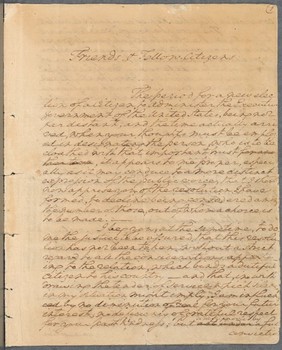
The final draft of George Washington’s 1796 farewell address is among the many amazing artifacts in NYPL exhibit (photo by Jonathan Blanc/New York Public Library)
New York Public Library
Stephen A. Schwarzman Building, Gottesman Exhibition Hall
Fifth Ave. at 41st St.
Through Sunday, March 4, free, 1:00 – 5:00
www.nypl.org
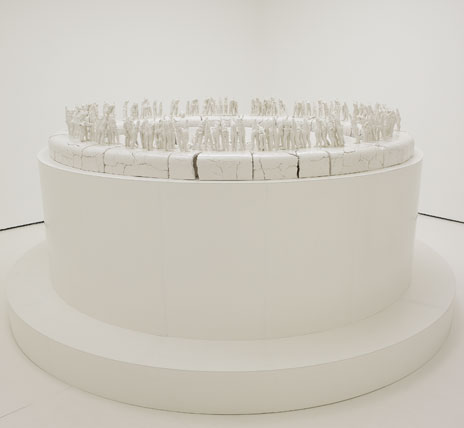
Today is your last chance to catch the New York Public Library exhibit “Celebrating 100 Years,” featuring a treasure trove of more than 250 items of literary paraphernalia. Divided into Observation, Contemplation, Creativity, and Society, the display honors the centennial of the landmark Beaux-Arts building on Fifth Ave. between 40th & 42nd Sts., built by Carrère and Hastings and dedicated by President William Howard Taft in 1911. Curated by Thomas Mellins, “Celebrating 100 Years” includes a bevy of fascinating memorabilia, from a Gutenberg Bible to a copy of Mein Kampf, from Jack Kerouac’s glasses and rolling paper to Charles Dickens’s letter opener, from a lock of Mary Shelley’s hair to Charlotte Brontë’s traveling writing desk, from Malcolm X’s briefcase and hat to Virginia Woolf’s walking stick and diary, showing a page she wrote just four days before her suicide. There are photographs, prints, and drawings by Diane Arbus, Man Ray, Faith Ringgold, Lewis Wickes Hine, Otto Dix, Francisco Goya, and Vik Muniz, marked-up manuscripts, speeches, and scores from Jorge Luis Borges, George Washington, Ernest Hemingway, John Coltrane, and T. S. Eliot, a copy of “The Star-Spangled Banner” with a bad typo, letters from Pablo Picasso, Harry Houdini, and Groucho Marx, and self-portraits by Kiki Smith, David Alfaro Siqueiros, Chuck Close, and Käthe Kollwitz. The exhibit, a kind of wonderful self-portrait of the library’s holdings, looks at the past, with cuneiforms dating back to the third century BCE, as well as aims forward, with a peek into their impressive digital archives.

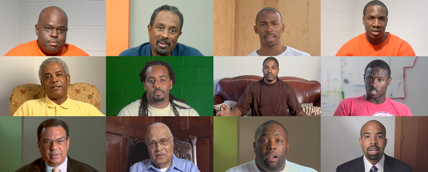
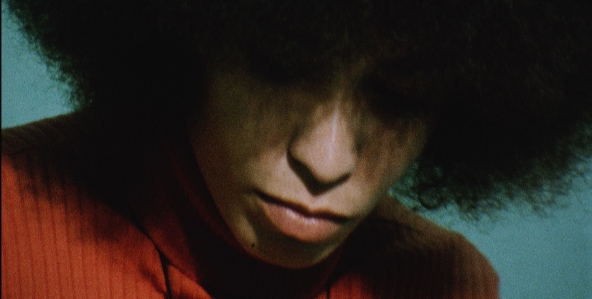
 From 1967 to 1975, a group of more than two dozen Swedish journalists came to America to document the civil rights movement. More than thirty years later, director and cinematographer Göran Hugo Olsson discovered hours and hours of unused 16mm footage — the material was turned into a program shown only once in Sweden and seen nowhere else — and developed it into The Black Power Mixtape 1967-1975, a remarkable visual and aural collage that focuses on the Black Panthers and the Black Power movement, a critical part of American history that has been swept under the rug. Olsson and Hanna Lejonqvist have seamlessly edited together startlingly intimate footage of such seminal figures as Eldridge Cleaver, Bobby Seale, Huey P. Newton, Dr. Martin Luther King, Jr., and Stokely Carmichael, including a wonderfully personal scene in which Carmichael interviews his mother on her couch. But the star of the film is the controversial political activist Angela Davis, who allowed the journalists remarkable access, particularly in a jailhouse interview shot in color. (Most of the footage is in black and white.) Davis also adds contemporary audio commentary, sharing poignant insight about that tumultuous period, along with Abiodun Oyewole of the Last Poets, singer Erykah Badu, professor, poet, and playwright Sonia Sanchez, Roots drummer Ahmir Questlove Thompson (who also composed the film’s score with Om’Mas Keith), and rapper Talib Kweli, who discusses specific scenes in the film with a thoughtful grace and intelligence. The Black Power Mixtape 1967-1975 is an extraordinary look back at a crucial moment in time that has long been misunderstood, if not completely forgotten. The Black Power Mixtape 1967-1975 is screening on February 3 as part of the Bronx Museum of the Arts’ free First Fridays program honoring Black History Month and will be followed by a Q&A with coproducer Joslyn Barnes. There will also be performances by GIF, Latasha N. Nevada Diggs, Mahogany L. Browne, and M.C. K~Swift, and the galleries will remain open until 10:00, giving visitors plenty of time to check out the exhibition “Urban Archives: Emilio Sanchez in the Bronx” and the Acconci Studio long-term installation “Lobby-for-the-Time-Being.”