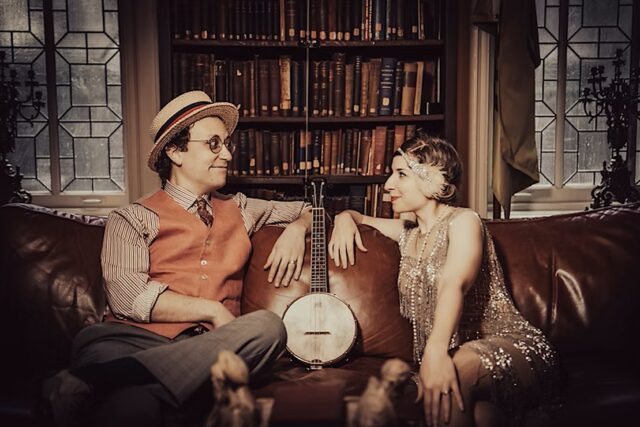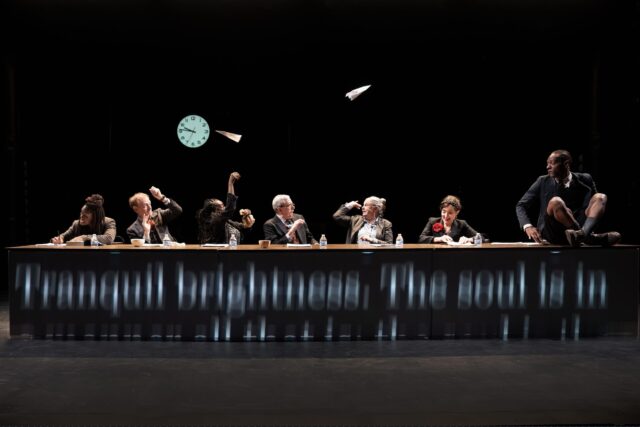
Who:Maria Bea Alfano,Corey Ann Haydu,Katie Risor What:Book launches with readings and signings Where:Books of Wonder, 42 West Seventeenth St. When: Saturday, November 8, free with RSVP, 3:00 Why: “GioGioGio! Ruffruffruff, arooo!” So begins Maria Bea Alfano’s Barker’s Doghouse 2: Leave It! (Pixel+Ink, November 25, $16.99), the follow-up to the first Barker’s Doghouse book, Fetch! Illustrated by Laura Catalán, the books detail the adventures of ten-year-old Gio Barker as he moves to a new town and finds friends in a group of talking canines.
Alfano will be at Books of Wonder on November 8, joined by Corey Ann Haydu, author of Zoomi and Zoe and the Tricky Turnaround and Zoomi and Zoe and the Sibling Situation (Quirk, $15.99), a series, illustrated by Anne Appert, about a monster and her new imaginary friend, and Katie Risor, the author-illustrator of Welcome to the Forest: The Harvest Party (Andrews McMeel, $11.99), about charming woodland creatures.
Each author will introduce and/or read from their books, then be available for a meet and greet to sign copies.
[Mark Rifkin is a Brooklyn-born, Manhattan-based writer and editor; you can follow him on Substack here.]

STROKES OF GENIUS: HIRSCHFELD AT THE ALGONQUIN
The Algonquin Hotel Oak Room
59 West 44th St. between Fifth & Sixth Aves.
Through September 20, free, noon – 7:00 pm www.alhirschfeldfoundation.org www.algonquinhotel.com
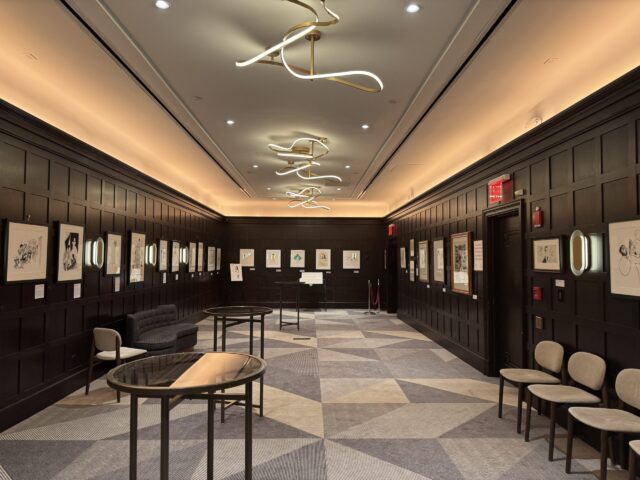
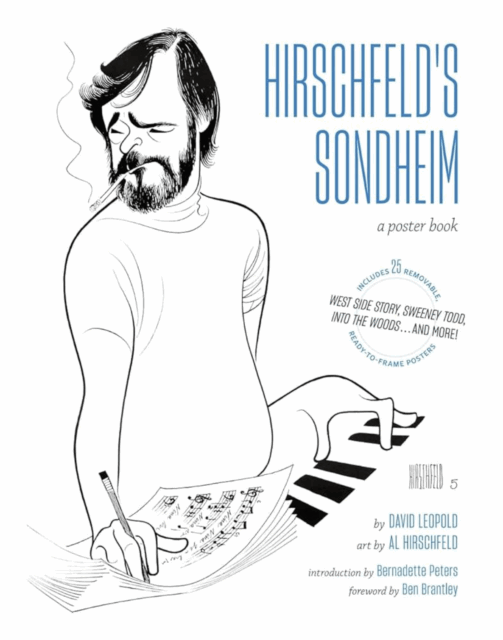
On September 9, theater stars came out of the woodwork — or, actually, their framed caricatures on the walls of the Alqonquin’s famed Oak Room — to celebrate the opening of the new exhibition “Strokes of Genius: Hirschfeld at the Algonquin” as well as the launch of the oversize poster book Hirschfeld’s Sondheim (Abrams ComicArts, $29.99).
Among those on hand to share their stories about being drawn by Al Hirschfeld, the St. Louis–born artist who spent decades making black-and-white portraits of Broadway celebrities, writers, and other famous names, were Tony winners Danny Burstein, John Leguizamo, and Len Cariou, Emmy winner and Tony nominee Lonny Price, Tony nominee and Obie winner Charles Busch, Obie winner Jackie Hoffman, Tony nominee Veanne Cox, and Broadway stalwart Jim Walton. Al Hirschfeld Foundation creative director David Leopold presented several of them with reproductions of the images they are in.
As you walk around the space, you’ll see Cathy Rigby in Peter Pan, Yul Brynner in The King and I, Carol Channing in Hello, Dolly!, Leonard Nimoy and William Shatner in Star Trek, and Liza Minnelli, George Gershwin, Carol Burnett, Zero Mostel, Katharine Hepburn, Leonard Bernstein, Whoopi Goldberg, Stephen Sondheim, Barbra Streisand, Dizzy Gillespie, Frank Sinatra, the Grateful Dead, the casts of The Phantom of the Opera,The Sopranos, and A Funny Thing Happened on the Way to the Forum, the Algonquin Round Table, and a few self-portraits.
Meanwhile, Hirschfeld’s Sondheim consists of ready-to-frame posters of drawings from West Side Story,Passion,Company,Getting Away with Murder,Assassins,Into the Woods, and many more in addition to a graphic timeline; each drawing is accompanied by a brief anecdote. “I can hardly think of a better way to memorialize Steve and his art other than actually watching his shows or listening to his songs,” Bernadette Peters writes in the introduction. “Al, in a single image, captures a memorable emotion, indelibly etching out hearts and memories with Steve’s artistic contributions.”
Longtime theater critic Ben Brantley explains in his foreword, “In these drawings, I have found something like a past-recapturing, Proustian madeleine, made of ink instead of flour and sugar. These seemingly simple pen strokes — and the ellipsis of the white space, which your own, happily collaborative mind fills in — are anything but static. They tremble with energy, tension, and, above all, character, as it is conjured in real time on a stage.”
The exhibit at the Algonquin continues through September 20; an online companion show runs at Helicline Fine Art until November 2.
“It’s hard to imagine twentieth-century Broadway without either Hirschfeld or Sondheim,” Leopold writes in the book’s afterword. “Both men admired each other’s work, and both loved the theater, their legacies strengthened by remaining a presence on the Great White Way with two Broadway houses named in their honor.”
[Mark Rifkin is a Brooklyn-born, Manhattan-based writer and editor; you can follow him on Substack here.]
YUKIO MISHIMA CENTENNIAL SERIES: EMERGENCES
Japan Society
333 East 47th St. at First Ave.
September 11 – December 6 japansociety.org
“Only art makes human beauty endure,” Yukio Mishima wrote in his 1959 novel Kyoko’s House.
In his short life — Mishima died by suicide in 1970 at the age of forty-five — the Japanese author and political activist penned approximately three dozen novels, four dozen plays, five dozen story and essay collections, ten literary adaptations, and a libretto, a ballet, and a film.
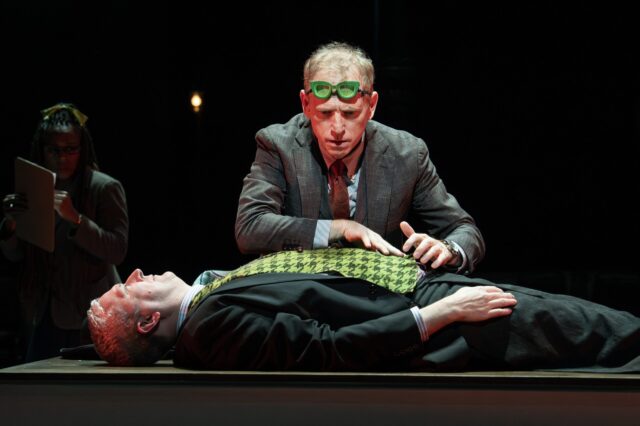
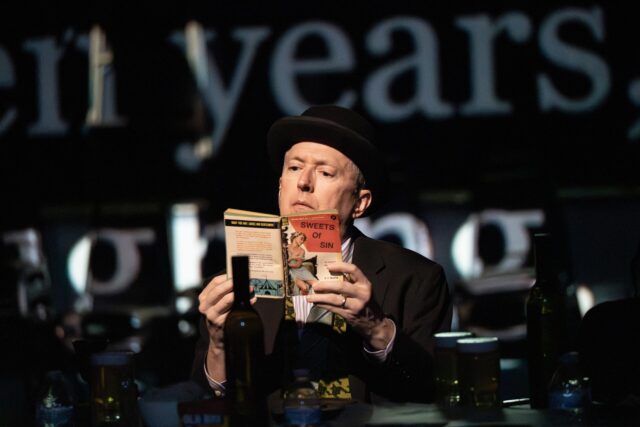
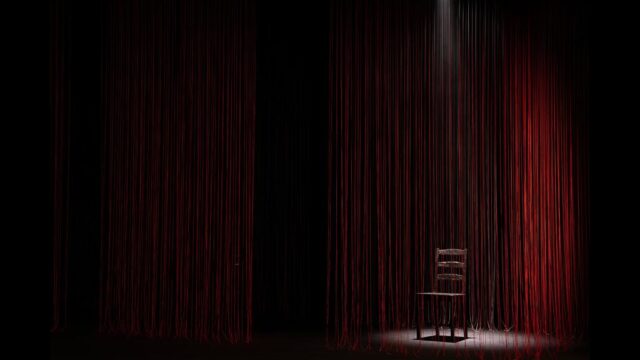
Japan Society is celebrating the hundredth year of his birth — he was born Kimitake Hiraoka in Tokyo in January 1925 — with “Yukio Mishima Centennial Series: Emergences,” comprising six events through December 6. The festival begins September 11–20 with Kinkakuji, SITI company cofounder Leon Ingulsrud and Korean American actor Major Curda’s theatrical adaptation of Mishima’s intense 1956 psychological novel The Temple of the Golden Pavilion, based on the true story of extreme postwar actions taken by a young Buddhist monk. Creator and director Ingulsrud cowrote the script with Curda, who stars in the play. The stage design is by Japanese visual artist Chiharu Shiota, whose international installations, featuring red and black yarn structures, include “In the Light,” “My House Is Your House,” and “Memory of Lines.” Her latest, “Two Home Countries,” runs September 12 through January 11 in the Japan Society gallery, consisting of immersive, site-specific works created in commemoration of the eightieth anniversary of the end of WWII.
There will be eleven performances of Kinkakuji, with a gallery-opening reception following the September 11 show, a separate gallery talk on September 12, a lecture preceding the September 16 show, and an artist Q&A on September 17. Each ticket comes with free same-day admission to “Two Home Countries.”
On September 27, Japan Society, as part of the John and Miyoko Davey Classics series, will screen Kon Ichikawa’s 1958 film, Conflagration, based on The Temple of the Golden Pavilion and starring Raizo Ichikawa, Tatsuya Nakadai, and Ganjiro Nakamura.
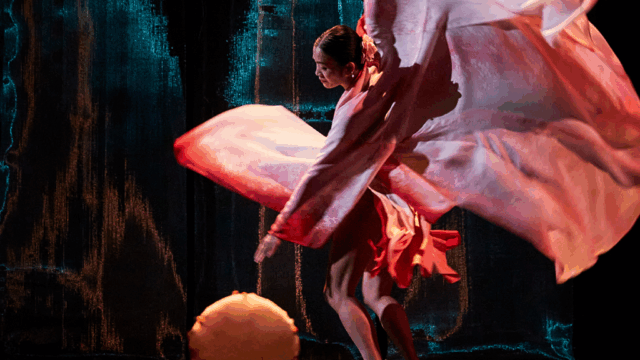
In conjunction with L’Alliance New York’s Crossing the Line Festival, Japan Society will present Le Tambour de Soie (The Silk Drum) on October 24 and 25, Yoshi Oida and Kaori Ito’s adaptation of Mishima’s 1957 Noh play Aya no Tsuzumi, a dance-theater piece about love and aging featuring downtown legend Paul Lazar and choreographer Ito, with music by Makoto Yabuki. The second show will be followed by an artist Q&A. On November 6, Japanese novelist and cultural ambassador Keiichiro Hirano (Nisshoku,Dawn) and Tufts University Mishima scholar Dr. Susan J. Napier will sit down for a conversation discussing Mishima’s life and legacy.
On November 15 and 16, the Tokyo-based company CHAiroiPLIN brings The Seven Bridges (Hashi-zukushi) to Japan Society, a visually arresting adaptation for all ages of Mishima’s short story about four women seeking wishes during a full moon. The series concludes December 4–6 with the US debut of Hosho Noh School and Mishima’s Muse – Noh Theater, three unique programs of noh and kyogen theater comprising performances of works that inspired Mishima: Shishi (Lion Dance),Busu (Poison),Aoi no Ue (Lady Aoi),Kantan, and Yoroboshi. The December 4 performance will be followed by a ticketed soirée, and there will be an artist Q&A after the December 5 show with Kazufusa Hosho, the twentieth grand master of Hosho Noh School, which dates back to the early fifteenth century. In addition, members of Hosho Noh School lead a workshop on December 6.
“This series revitalizes Mishima’s contributions to the world of the arts through a slate of brand new commissions and premieres adapting his writings, as well as a historic US debut for a revered noh company,” Japan Society artistic director Yoko Shioya said in a statement. “This series recognizes not only Mishima’s critical legacy but the ongoing current influence of this essential postwar author on artists today.”
That legacy can be summed up in this line from his 1963 novel Gogo no Eikō (The Sailor Who Fell from Grace with the Sea): “Of course, living is merely the chaos of existence, but more than that it’s a crazy mixed-up business of dismantling existence instant by instant to the point where the original chaos is restored.”
Russ & Daughters cookbook is starting a tasty New York City tour
Who: Niki Russ Federman, Josh Russ Tupper, Gabriella Gershenson What: Book launch and tasting Where:Temple Emanu-El Streicker Cultural Center, 1 East 65th St. between Madison & Fifth Aves., and online When: Thursday, September 11, $43 (includes copy of book), 6:00 Why: Latkes, matzo ball soup, smoked whitefish chowder, babka, rugelach, black-and-white cookies, bagels — those are only some of the recipes collected in Russ & Daughters: 100 Years of Appetizing (Flatiron, September 9, $39.99). In 1907, Polish immigrant Joel Russ sold Jewish food in a pushcart on the Lower East Side; seven years later he opened J Russ International Appetizers in an Orchard St. storefront before moving in 1920 to 179 East Houston St., changing the name to Russ & Daughters. The business, currently run by cousins Josh Russ Tupper and Niki Russ Federman, the fourth-generation co-owners, expanded to a popular café at 127 Orchard St. in 2014 and has more recently added an outpost near Hudson Yards. The book, a follow-up to 2013’s Russ & Daughters: Reflections and Recipes from the House That Herring Built, by Mark Russ Federman and featuring a foreword by Calvin Trillin, also includes anecdotes and personal reminiscences from the smoked-fish institution’s storied history.
On September 11, Tupper, Niki Russ Federman, and coauthor Joshua David Stein (Notes from a Young Black Chef,The Nom Wah Cookbook) will be at the Temple Emanu-El Streicker Cultural Center for “A Century of Schmears,” a book launch and tasting with James Beard Award–winning food writer and editor Gabriella Gershenson that kicks off the fall Festival of Jewish Ideas & Culture. You don’t have to grab a number when you enter, as tickets are available in advance and come with a copy of the book. You can also livestream the event at home. The book tour then stops at Platform by JBF at Pier 57 on September 14 with Rozanne Gold, the Center for New Jewish Culture in Brooklyn on September 18 with Daniel Squadron, P&T Knitwear on September 20 with a scavenger hunt, walking tours, and more, and the New York City Wine & Food Festival, where Tupper will host a Smoked Fish Master Class on October 19 at the Institute of Culinary Education.
[Mark Rifkin is a Brooklyn-born, Manhattan-based writer and editor; you can follow him on Substack here.]
Who:Michael G. Garber,Miss Maybell,Charlie Judkins What: Book talk with music Where:Ceres Gallery, 547 West 27th St. between 10th & 11th Aves., #201 When: Thursday, September 11, free with advance RSVP (suggested donation $15), 6:30 Why: “This book celebrates women who wrote popular songs in the early twentieth century. These female composers and lyricists deserved greater opportunities and fame and to be more highly valued. Generations later, the same could be said for many of their sisters in songwriting in the early decades of the twenty-first century. Hopefully, looking at the past will inspire change in the future. To do this, we must travel in our minds back to what was, in effect, a different world.”
So begins historian, professor, scholar, and artist Michael G. Garber’s Songs She Wrote: 40 Hits by Pioneering Women of Popular Music (Rowman & Littlefield, March 2025, $36), an illustrated journey into that different world, focusing on women’s contributions to popular music, including ragtime, jazz, Broadway, and Hollywood. Featuring a foreword by Janie Bradford and Dr. Tish Oney, the book explores such tunes as Lucy Fletcher’s “Sugar Blues,” Lovie Austin and Alberta Hunter’s “The Down Hearted Blues,” Bessie Smith’s “Backwater Blues,” Dorothy Parker’s “Serenade from The Student Prince,” and Billie Holiday’s “God Bless the Child.”
Charlie Judkins and Miss Maybell will perform as part of book event at Ceres Gallery
On September 11 at 6:30, in conjunction with the Tin Pan Alley American Popular Music Project, Garber (My Melancholy Baby: The First Ballads of the Great American Songbook, 1902–1913) will be at the nonprofit feminist Ceres Gallery for a free book talk with live performances by Jazz Age artists Miss Maybell and Charlie Judkins, surrounded by Carlyle Upson’s nature-based “Submerged” watercolors and Marcy Bernstein’s “Evocative Abstractions” paintings, which Bernstein says “invite viewers to look inward. They’re filled with allusions to the raw energy of creation itself,” a fitting sentiment that applies to Garber’s book as well. Admission is free with a suggested donation of $15.
[Mark Rifkin is a Brooklyn-born, Manhattan-based writer and editor; you can follow him on Substack here.]
Ann Tashi Slater will discuss her new book at Rizzoli with Dani Shapiro on September 10
Who:Ann Tashi Slater,Dani Shapiro What: Book launch with reading, conversation, and signing Where:Rizzoli Bookstore, 1133 Broadway & West 26th St. When: Wednesday, September 10, free with advance RSVP, 6:00 Why: “In a world where nothing lasts forever, how do we live?” writer, speaker, and traveler Ann Tashi Slater asks in her new book, Traveling in Bardo: The Art of Living in an Impermanent World (Balance, September 9, $29). Slater will address that question and more at the book launch at Rizzoli on September 10, where she will sit down with Dani Shapiro, author of such books as Signal Fires and Inheritance and host and creator of the podcast Family Secrets and who provided the foreword to the book.
“In my work, I explore how our personal histories and cultural roots shape us and how we find meaning in a world where everything — including we ourselves — changes and ends,” Slater explains on her website. “Traveling in Bardo interweaves explorations of impermanence in relation to marriage and friendship, parents and children, and work and creativity with stories of my Tibetan ancestors and Buddhist perspectives on the fleeting nature of existence, offering a new way to navigate change and live life fully.”
[Mark Rifkin is a Brooklyn-born, Manhattan-based writer and editor; you can follow him on Substack here. Full disclosure: Mark’s wife is Ann Tashi Slater’s literary agent.]
Who: Lizzie Olesker, Lynne Sachs, Silvia Federici, Veraalba Santa What: Reading and performance Where:Unnameable Books, 615 Vanderbilt Ave., Brooklyn When: Monday, September 8, free, 7:00 Why: “This is not a play. It is something else. / Call it a blueprint, a map, a documentation / of something that has already happened / but could happen again — / a rendering in book form of a performance. / Making a mark, words on a page instead of bodies in space. / A book that contains what’s remembered and what could be. / All of it written down and placed here, into this / Hand Book: A Manual,” Lizzie Olesker and Lynne Sachs write in the introduction to Hand Book: A Manual on Performance, Process, and the Labor of Laundry (Punctum, June 2025, 425). “We are a playwright and a filmmaker who discovered a shared interest in making work that magnifies quotidian elements of life in the city where we live. We met years ago in Brooklyn while sitting on a bench waiting for our young daughters to finish their music lessons. A conversation began about our lives as mothers and working artists. We couldn’t yet know that those early encounters would lead to a ten-year theater and film collaboration. Now in our sixties, our daughters fully grown, we continue to build an experimental model for making live performance and film, engaging in a dialogue on how art-making can alter our understanding of urban life.”
Olesker, an actor and playwright who has penned such shows as 5 Stages of Grief,A Kind (of) Mother, and Night Shift, and Sachs, a fiction writer and filmmaker who has directed such works as Which Way Is East,Your Day Is My Night, and Film About a Father Who, are the coauthors and codirectors of Hand Book, which Sachs describes as “a collection of writings and images from a performance and film set within a neighborhood laundromat.” In addition to sections by Olesker and Sachs, the illustrated, colorfully designed book (by Vincent W. J. van Gerven Oei) features contributions from Margarita Lopez (“A Thousand Pieces a Day”), Jasmine Holloway (“Taking on a Role”), Stephen Vitiello (“Shake, Rattle, and . . .”), Amanda Katz (“Sound of a Machine Door Closing”), Emily Rubin (“Loads of Prose: From the Beginning”), Veraalba Santa (“Score for a Folding Dance”), and others. The foreword, “A New Refusal and a New Struggle,” is by feminist historian, author, and activist Silvia Federici.
On September 8, Olesker, Sachs, Federici, and Santa will be at Unnameable Books in Brooklyn for a reading and performance. There will also be a reading and signing September 13 at noon at Printed Matter’s NY Art Book Fair at MoMA PS1 and a performance, reading, and signing September 28 at 2:00 at Torn Page with Tony Torn and Alvin Eng. Sachs continues, “As authors, Lizzie and I along with our many collaborators construct a model for making art about essential work that often goes unrecognized. Turning a page becomes a quasi-cinematic encounter, calling to mind the intimacy of touching other people’s clothes, almost like a second skin, the textural care for things kept close to the body.”
[Mark Rifkin is a Brooklyn-born, Manhattan-based writer and editor; you can follow him on Substack here.]