this week in literature

TWI-NY TALK: DANNY PEARY

roger maris

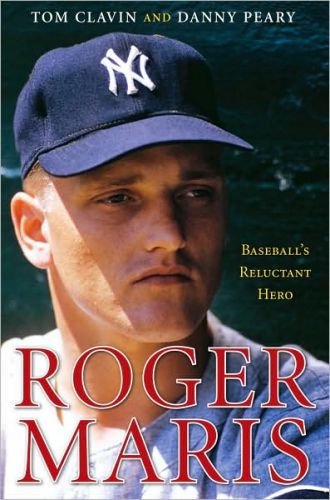
ROGER MARIS: BASEBALL’S RELUCTANT HERO by Tom Clavin and Danny Peary (Touchstone, March 2010, $26.99)
Wednesday, March 24, Borders, Time Warner Center, 10 Columbus Circle, free, 7:00
Tuesday, April 13, Mickey Mantle’s Restaurant and Sports Bar, 42 Central Park South, free, 4:00
www.borders.com
www.mickeymantles.com
www.books.simonandschuster.com

In seeking to publish the definitive biography of Roger Maris, coauthors Tom Clavin and Danny Peary had a very specific goal in mind as they spent two years speaking with Maris’s family and friends as well as such Hall of Famers as Yogi Berra, Al Kaline, Ferguson Jenkins, Stan Musial, Tom Seaver, Ralph Kiner, and dozens of other baseball players, broadcasters, and executives.

“Like us,” the two writers point out in the acknowledgments at the end of the just-released ROGER MARIS: BASEBALL’S RELUCTANT HERO, “they passionately believed that Roger Maris never received proper recognition from fans and the media for his talent and achievements, his fine character, and his pivotal role in the emerging war between the press and uncooperative celebrities.”

The chapter titles alone reveal that this is not just some feel-good biography: “Family Turmoil,” “Defiance,” “The Villain,” “The Betrayal,” and “Rock Bottom.”

Peary, who has written some twenty books, recently took some time away from his hectic schedule to answer some questions about asterisks, steroids, and home run champs.

What was the most surprising thing you learned about Maris while researching the book?

In the book we document Roger’s war with reporters who were frustrated in their attempts to get him to exchange good quotes for friendly coverage. I knew before doing the research that Roger had a hard time dealing with celebrity and simply attributed that to his being shy and another midwesterner who cherished privacy. What I didn’t know was that he was so unwilling to answer personal questions because, also, there was a history of secrecy in his family dating back to before he was born (including much dysfunction, feuds, and grudges) and that Roger had always kept quiet about his parents hating each other, and his mother’s disreputable behavior.

An even bigger reason Roger was uneasy talking about himself and his on-field heroics was because he idolized his older brother, Rudy Jr., who was considered the better athlete until he got polio. Roger always felt guilty that he went on to have the baseball career that was intended for his brother, so he never felt comfortable tooting his own horn. Rudy Jr.’s polio affected him in profound ways, particularly in regard to the press as he broke Ruth’s record. The sad part is that Roger most definitely became a better athlete than his brother ever would have, but he never admitted it.

Do you think Maris should be in the Hall of Fame?

One reason I wanted to write this book, with Tom Clavin, is that I was there when Maris played and believe Roger’s history as written by sportswriters who didn’t like Roger personally is a distortion of the truth, which was he was a great player who is worthy of Hall of Fame consideration. That he was the guy who broke Babe Ruth’s record — no one else can make that claim — might be enough, as Hank Greenberg asserted, to qualify him for the Hall. But he accomplished a lot more, including two MVPs and All-Star appearances, matching an in-his-prime Mickey Mantle in stats in their seven years together, being the top left-handed batter in the league during his time in the AL, and being an exceptional clutch hitter even when his average was low.

What really qualifies him, I believe, is that he led his era in World Series appearances — seven in nine years — and the only two years his teams didn’t make it were when he was injured. He came to the Yankees when they were a third-place team and they won five straight pennants; he came to the Cardinals when they were a third-place team and they won titles both years he was with them (he was the only major addition to the team), and they stopped winning when he retired. I value greatness and accomplishments over stats, and Maris was great and was the most “winning” ballplayer of his time. (His teams in the minors also improved dramatically when he joined them, so he had a history of making moribund teams into contenders and champions.) Unfortunately, there is no stat for being a great all-around player and there is no stat for never making a mistake, which is how his managers described him. I agree with his teammates who played with him after 1962 who believe he should be in the Hall of Fame.

Maris initially had an asterisk next to his home run record, and now there are many people calling for asterisks to go next to the names Barry Bonds, Sammy Sosa, and Mark McGwire, who all hit more than sixty-one homers presumably while taking steroids. Who do you think is the current home run champion, in your mind and the mind of the public?

No asterisk was ever implemented for Maris, contrary to popular belief, but it didn’t matter because Babe Ruth’s name remained in the record books along with Roger’s as the home run champion for 154 games — no other category had such a thing. In 1991, commissioner Fay Vincent got rid of Ruth’s name. McGwire, while on steroids, erased Maris’s name from the record book, getting rid of his identity for the younger generation, a real travesty. Maris was the only one of the four players who bettered Babe Ruth’s record to do it without performance-enhancing drugs and of course should be regarded as the home run champion.

Many of his fans call him the Natural Home Run Champion, and that seems like an appropriate title. Unfortunately, we can never get rid of the other guys from the record books unless they admit they all took illegal substances — and unfortunately steroids weren’t officially illegal in those days. It would be great if the more than one hundred players in the Mitchell Report admitted what they did and we could put asterisks by all of their numbers, but that won’t happen. And remember, it’s not just home runs but singles, doubles, and triples in the record books that are suspect as well. All of the steroid users committed a grave crime against Maris and Ruth but also against the rest of us because the record book can never be fixed.

Tom Clavin and Danny Peary will be reading from and signing copies of ROGER MARIS: BASEBALL’S RELUCTANT HERO on March 24 at 7:00 in the Time Warner Center Borders and on April 13 at Mickey Mantle’s at 4:00, right after the Yankees’ home opener.
WILLIAM KENTRIDGE: SHEETS OF EVIDENCE

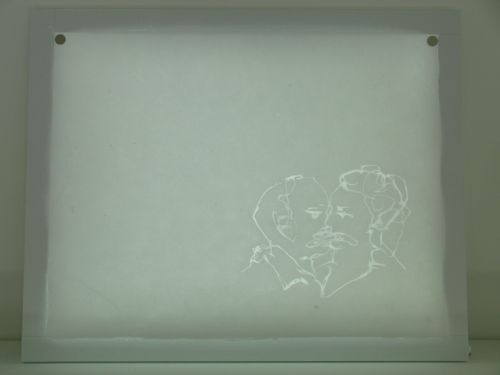
William Kentridge, page six of SHEETS OF EVIDENCE, watermarked cotton, 2009 (photo by twi-ny/mdr)

William Kentridge, page six of SHEETS OF EVIDENCE, watermarked cotton, 2009 (photo by twi-ny/mdr)

Dieu Donné
315 West 36th St. between Eighth & Ninth Aves.
Monday-Saturday through April 24
212-226-0573
www.dieudonne.org

One of the myriad delights about South African visual artist William Kentridge is that he follows no conventions; he does things his own way, resulting in engaging and unique films, drawing, operas, one-man performances, and stereoscopic installations. For the past several years, he has been collaborating with Dieu Donné on an ambitious series of limited-edition books. Through March 27, SHEETS OF EVIDENCE, his latest such work consisting of unusual watermarked images on special handmade paper, is on view, offering an exciting glimpse into the mind and working process of the ingenious creator. The small gallery has laid out all eighteen sheets of images and text, each one propped against a lightbox so they can be more easily seen; the sparse scenes primarily depict a man and a woman experiencing love, eroticism, and death. Some of Kentridge’s studio materials can be examined at the front desk; be sure to ask the person there to explain how it’s all done, as the procedures are fascinating. Dieu Donné is also displaying THINKING IN WATER, a three-piece suite made by using copper wire and watermarks, and RECEIVER, a book consisting of twenty-three Kentridge etchings that accompany poems he selected by Nobel Laureate Wislawa Szymborska; it’s so fragile that you have to wear white gloves in order to page through it. Whether you know anything about Kentridge or not, this show is a must-see.

TENNESSEE WILLIAMS IN NEW YORK

New York City is celebrating Tennessee Williams’s ninety-ninth birthday with numerous special events

New York City is celebrating Tennessee Williams’s ninety-ninth birthday with numerous special events

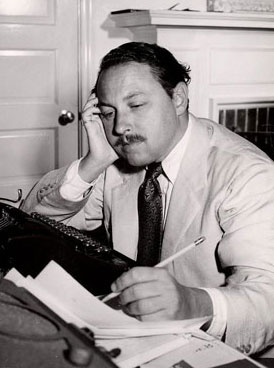
Tennessee Williams, who died under questionable circumstances in New York in 1983, would have turned ninety-nine this month. In advance of his centennial, there is a multitude of Williams-related events going on in the city, celebrating the storied career of the award-winning Mississippi-born playwright. The LAByrinth Theater Company is hosting “TENN 99” at the Cherry Lane Theater’s Cherry Pit, three days of nonstop readings, including plays, essays, letters, interviews, even notes on a napkin if Williams wrote on it; among the remarkable all-star participants are Ellen Burstyn, Philip Seymour Hoffman, Sam Rockwell, Michael Stuhlbarg, Eli Wallach, Judith Ivey, Kyra Sedgwick, and dozens more, beginning March 26 at 6:00 and continuing through March 28 at midnight (free). The Target Margin Theater is in the third week of its Unknown Williams festival at the Bushwick Starr, featuring productions of NOW THE CATS WITH JEWELLED CLAWS, THE PRONOUN “I,” GREEN EYES, and THE REMARKABLE ROOMING-HOUSE OF MME. LE MONDE ($12, March 24-28). TMT will follow that with the world premiere of THE REALLY BIG ONCE, about the collaboration between Williams and Elia Kazan, with previews beginning April 13 at the Ontological at St. Marks. Meanwhile, the Roundabout is staging a revival of THE GLASS MENAGERIE at the Laura Pels Theatre, set for a March 24 opening ($70-$80).

SABOR! OUR ABUELAS LEGACY

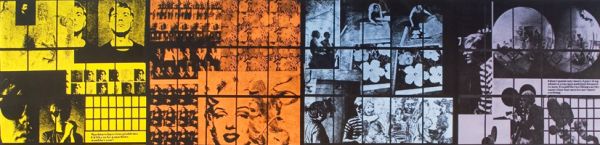
Carlos Irrizary’s “Andy Warhol” is part of “Voces y Visiones” exhibit

Carlos Irrizary’s “Andy Warhol” is part of “Voces y Visiones” exhibit

SUPER SABADO
El Museo del Barrio
1230 Fifth Ave. at 104th St.
Saturday, March 20, free, 11:00 am – 8:30 pm
212-831-7272
www.elmuseo.org

On the third Saturday of every month, the recently renovated El Museo del Barrio opens its doors for free, hosting a full day of special programming. On March 20, the schedule includes an art workshop in which kids can create a self-portrait using food and spices, storytelling with Carmen Peláez, a photo station, a screening of WHAT’S ON YOUR PLATE? (Catherine Gund, 2009), a spoken-word workshop with the Peace Poets, tortilla making, and a “Rainbow Racionality” performance. Although it’s in between temporary exhibitions right now (“Phantom Sightings: Art After the Chicano Movement” opens on March 24, though if you’re good they’ll let you have an advance sneak peek), there will be gallery tours of the permanent display “Voces y Visiones: Four Decades Through El Museo del Barrio’s Permanent Collection,” which gives a terrific capsule history of the museum and its mission, with works going back to the Taíno Legacy through graphics and politics, traditional and devotional objects, abstraction, migration and language. And the café features some fine fare, homemade Latino plates (all under ten dollars) with an ever-changing menu; we highly recommend the spicy pulpo if it’s available.

SCRIPT TO SCREEN CONFERENCE

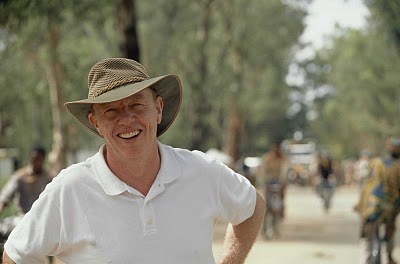
Oscar-nominated writer-director Terry George (HOTEL RWANDA, THE BOXER) is one of the features guest at annual Script to Screen Conference at 92YTribeca

Oscar-nominated writer-director Terry George (HOTEL RWANDA, THE BOXER) is one of the featured guests at annual Script to Screen Conference at 92YTribeca

92YTribeca
200 Hudson St.
Weekend Pass: Members $150, Nonmembers $200
($150 with the discount code FREE2010)
www.conference.ifp.org

Looking to be the next Geoffrey Fletcher or Mark Boal, both of whom won screenwriting Oscars earlier this month for independently produced films? (Fletcher won for PRECIOUS, Boal for THE HURT LOCKER.) The Independent Filmmaker Project will be holding its annual Script to Screen Conference at 92YTribeca this weekend, featuring two days of panel discussions, in-depth conversations, workshops, networking opportunities, and more with award-winning screenwriters, producers, casting directors, film festival programmers, executives, and other industry insiders and outsiders. Among the participants at last year’s conference, the first after a five-year hiatus, were Lee Daniels, James Schamus, Nelson George, Ramin Bahrani, and Ted Hope, with such seminal figures as Paul Schrader, Allison Anders, James Toback, Gale Ann Hurd, and Tom Fontana having attended in previous years.

Saturday (9:00 am – 4:30 pm) is devoted to “Launching Your Next Project,” with such events as “Development Demystified,” with Sophie Barthes, Anne Carey, and Jonathan Shukat, moderated by Susan Lewis, and “The Art of Selling & Storytelling,” with Rodney Evans, John Hadity, and Jenny Schweitzer, moderated by Monty Ross, in addition to DAILY SHOW head writer Steve Bodow in conversation with Filmmaker magazine’s Jason Guerrasio. Sunday’s theme is “Sustaining Your Filmmaking Career,” beginning at 2:00 with Terry George (HOTEL RWANDA, IN THE NAME OF THE FATHER) in conversation with Filmmaker’s Scott Macaulay and followed by “Writing for a New Landscape: New Media & Cross-Platform Opportunities,” with Keith Bunin, Lena Dunham, Ryan Bilsborrow-Koo, and Zack Lieberman, moderated by Christian Vesper; “Now What? A Screenwriting Career with Peter Hedges,” with Hedges (PIECES OF APRIL, WHAT’S EATING GILBERT GRAPE) discussing his work with moderator Adam Brooks (ALMOST YOU, DEFINITELY, MAYBE); and concluding with Brian Koppelman (ROUNDERS, SOLITARY MAN) in conversation with film critic Elvis Mitchell. Weekend passes are $150 for IFP members and $200 for nonmembers, but nonmembers can get the member price with the discount code FREE2010.

TIBET IN NEW YORK

secretlives

SECRET LIVES OF THE DALAI LAMA by Alexander Norman (Doubleday Religion, February 2010, $15)
www.broadway-books.crownpublishing.com

Those Brits do tell a ripping yarn! And what better subject than Tibet, the nation once mythologized as Shangri-La? Alexander Norman is a British scholar and writer at Oxford; the Dalai Lama is a world-renowned Nobel Peace Prize–winning, sometimes controversial Tibetan spiritual leader. And a temporal leader. And a monk. And . . . Well, what, exactly? Westerners are often awed by Tenzin Gyatso, the current incarnation of Chenrezig, the bodhisattva of compassion, and frequently mistake him for something like the Pope of Buddhism, or at least of Tibetan Buddhists. Not so, not so at all, and Norman explains the how and why in SECRET LIVES OF THE DALAI LAMA. Norman’s excellent book looks at the whole span of Tibetan history and culture through the prism of the Dalai Lama. Trying to explain exactly who and what the Dalai Lamas (all fourteen of them) are and have been to the Tibetan people and the world creates a tome that does not shy away from troubling aspects of the society and its history while still conveying the magic and wisdom of Tibetan culture. (In fact, the current Dalai Lama even contributes the foreword.)

The book sparkles with insightful flashes of history, art, monastic life, magic and folklore, politics, military history, foreign affairs—the Tibetan world as a whole, warts, jewels, and all. Face it: Any book that starts with a politically motivated murder in the Dalai Lama’s compound in 1997 and proceeds to a discussion of both the doctrine of dependent origination (emptiness, or shunyata) and the living embodiment of compassion could be either dry or sensationalist. But not this one; Norman is too expert a storyteller and so devoted to the tale that one can’t help but be swept along—surprised, touched, exhilarated, and, finally, awed.

tibet in harlem

Norman was supposed to come to New York City for several talks and book signings, but those events were unexpectedly canceled. But that doesn’t mean there’s not a whole bunch of other things to do in relation to Tibet and its spiritual leader. The Dalai Lama himself will be teaching May 20-23 at Radio City Music Hall, discussing Nagarjuna’s Commentary on Bodhicitta and Shantideva’s Guide to the Bodhisattva’s Way of Life (tickets on sale now, $100-$360) and also giving a public lecture on “Awakening the Heart of Selflessness” (tickets on sale March 18, $25-$40). From March 14 to 20, the Maysles Institute’s Tibet in Harlem 2: Origins series features screenings of Sherwood Hu’s PRINCE OF THE HIMALAYAS (March 14, followed by the opening-night reception), Duan Jinchuan’s 16 BARKOR SOUTH STREET (March 15), Dorje Tsering Chenaktsang’s TANTRIC YOGI and ANI LHACHAM (March 16), Padma Tseten’s THE SILENT HOLY STONES (March 17, followed by a Q&A with the director), Sonam’s MILAREPA (March 18), Tseten’s THE GRASSLAND and Rigdan Gyatso’s THE GIRL LHARI (March 19, followed by a panel discussion and reception with Tseten and Gyatso), and Tseten’s THE SEARCH (March 20, followed by a Q&A with Tseten and the closing-night reception). The Maysles Institute will also host a short film showcase on March 22 featuring works by Tibetan filmmakers from around the world, with a number of the directors and actors present for a postscreening Q&A.

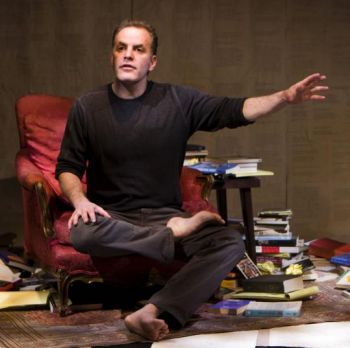
Evan Brenner will perform one-man show THE BUDDHA PLAY at Village Zendo on March 19

Evan Brenner will perform one-man show THE BUDDHA PLAY at Village Zendo on March 19

On March 19 at Village Zendo, you can catch a special one-night-only performance of Evan Brenner’s one-man show, THE BUDDHA PLAY—THE LIFE OF BUDDHA, which uses original texts to examine the “Triumph & Tragedy in the Life of the Great Sage.” At Tibet House, “Modern Buddhist Visions: Paintings by Pema Namdol Thaye” continues through April 16, comprising mandalas, tangkas, sculptures, and 3-D artworks. And at the Rubin Museum,“Bardo: The Tibetan Art of the Afterlife” runs through September 6, along with other exhibitions and special programs.

WILLIAM KENTRIDGE & THE NOSE

The Metropolitan Opera, Lincoln Center
Between West 62nd & 65th Sts. and Columbus & Amsterdam Aves.
March 5-25, $15 standing room – $375
212-362-6000
www.metoperafamily.org

In spring 2007, William Kentridge’s magical production of Mozart’s THE MAGIC FLUTE dazzled audiences at BAM. Now, as part of numerous events across the city celebrating the multifaceted career of the South African artist, his highly anticipated adaptation of Shostakovich’s version of Gogol’s 1836 short story THE NOSE will  have six performances at the Metropolitan Opera this month. The multimedia presentation, conducted by Valery Gergiev and featuring baritone Paulo Szot as Kovalyov and tenors Andrei Popov as the police inspector and Gordon Gietz as the Nose, was designed by Kentridge with Sabine Theunissen. Tickets are going fast in the lower-priced sections, so act quickly if you’d rather pay $150 or less rather than as much as $375. In addition, Kentridge’s NOSE-related drawings and collages are on view at the Gallery Met, his limited edition SHEETS OF EVIDENCE book is on display at Dieu Donné through April 24, he will be in conversation with Paul Goldberger discussing “Learning from the Absurd” at the New York Public Library on March 12, “Sounds from the Black Box: The Music of Philip Miller for the Films of William Kentridge” screens at the World Financial Center, with live music by Ensemble Pi, March 21-22, and the major retrospective “William Kentridge: Five Themes” runs at MoMA  through May 17.