featured

THEATER OF WAR: FDR FOUR FREEDOMS PARK

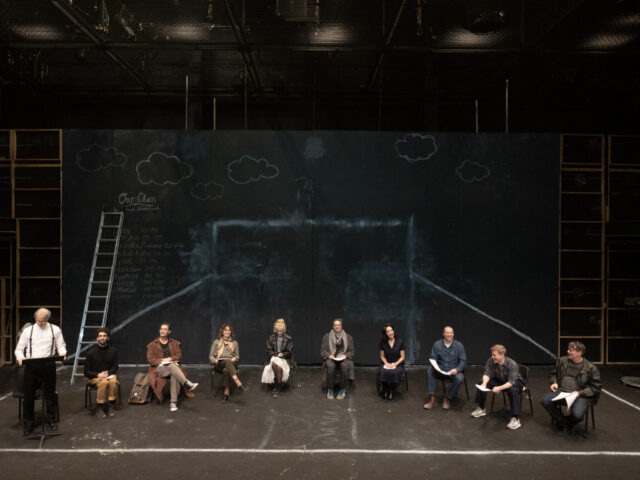
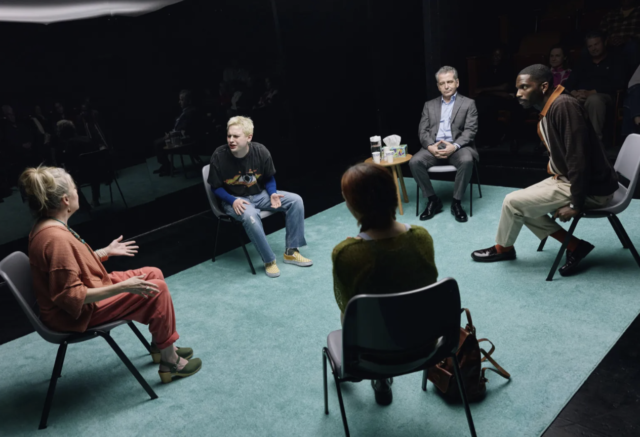
Who: Ato Blankson-Wood, Jesse Eisenberg, Amy Ryan, Bill Camp, Marjolaine Goldsmith, Eduardo Jany, Latoya Lucas, Craig Manbauman, Bryan Doerries
What: Live dramatic reading and discussion from Theater of War Productions
Where: FDR Four Freedoms Park, Roosevelt Island
When: Wednesday, September 27, free with RSVP, 5:00
Why: On January 6, 1941, President Franklin D. Roosevelt said, in his annual speech to Congress, “In the future days, which we seek to make secure, we look forward to a world founded upon four essential human freedoms. The first is freedom of speech and expression — everywhere in the world. The second is freedom of every person to worship God in his own way — everywhere in the world. The third is freedom from want . . . everywhere in the world. The fourth is freedom from fear . . . anywhere in the world. That is no vision of a distant millennium. It is a definite basis for a kind of world attainable in our own time and generation.”

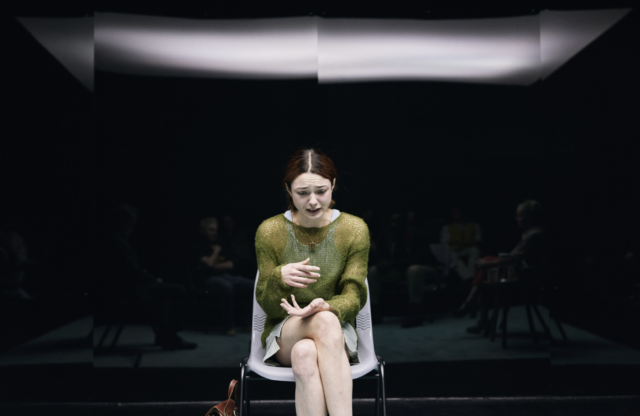
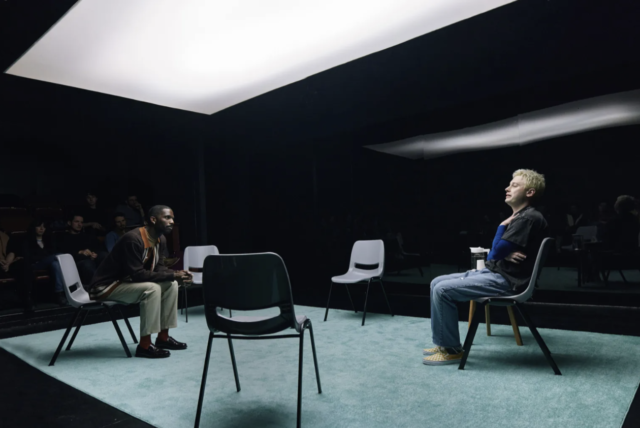
That quote is embedded in s block of marble in FDR Four Freedoms Park on Roosevelt Island. On September 27 at 5:00, Theater of War will present its latest production, performing scenes from Sophocles’s Ajax, a fifth-century BCE Greek tragedy about the warrior who played a key role in Homer’s Iliad and the Trojan War. The event is free; audiences can watch the show in the park or virtually as a Zoom webinar. The impressive cast features actors Ato Blankson-Wood, Jesse Eisenberg, Amy Ryan, and Bill Camp, company manager Marjolaine Goldsmith, and retired military veterans Eduardo Jany, Latoya Lucas, and Craig Manbauman, with Theater of War artistic director and translator Bryan Doerries serving as facilitator of a panel discussion and open dialogue exploring the physical and psychological wounds of war on individuals, families, and the community.

“I pity him in his misery for all that he is my foe, because he is bound fast to a dread doom,” Ajax says in the play. “I think of my own lot no less than his. For I see that we are phantoms, all we who live, or fleeting shadows.”

THE CREEPS

Catherine Waller plays multiple roles in creepy one-person off-Broadway show (photo by Andrew Patino)

THE CREEPS
Playhouse 46 at St. Luke’s
308 West Forty-Sixth St. between Eighth & Ninth Aves.
Thursday – Monday through November 5, $49-$79
thecreepsoffbroadway.com
playhouse46.org

It you’re going to name a show The Creeps, you better make sure it’s plenty creepy. Catherine Waller’s one-woman show, The Creeps, is indeed plenty creepy. It’s also intimate, funny, and welcoming.

“Hey, how’s it going?” Waller asks as Lizardman, one of four characters she portrays over eighty minutes. And Lizardman is not going to proceed until he gets an answer, eventually engaging in brief chats with several willing audience members.

Serving as a kind of host to the eerie proceedings, Lizardman moves awkwardly across the floor, more insect than amphibian. “We’re like a family in here, you understand me? We’re all connected,” he says. “Here for an experience, and we will not disappoint. But you gotta pay attention. . . . Pay attention. Coz the devil’s in the details.” Lizardman promises a good time while laying out the rules, which advises no photos after the introduction and encourages the audience, seated on all four sides of a fog-laden black space in the center, to talk — not so much amongst themselves but to the characters.

Waller, wearing a tight black bodysuit throughout, alternates as Lizardman; Bill, a hardworking blind man shoveling coal in this dark dungeon; Harley the Harlett, a pregnant prostitute and addict looking for her next fix; and Stumpy, a young girl who has had her hands and feet cut off.

Bill, in a black knit hat and squatting on the floor, engages with the audience in his working-man Cockney accent, interested in who they are and what they do. He discusses the love between a parent and a child and wonders whether life is random or preconceived. He might be resigned to his fate, but he also marvels at life’s possibilities.

Harley leans against a lamppost, whispering to her belly that everything’s going to be all right when clearly it isn’t.

The Creeps supplies plenty of creeps at Playhouse 46 (photo by Andrew Patino)

And Stumpy, as the comic relief, shares jokes amid the sound of crying babies. In fact, she insists that the audience tell jokes; the night I went, they came fast and furious, each more tasteless than the last but delighting Stumpy.

Hovering above it all is the Doctor, an unseen villain who appears to revel in dispensing pain.

The set is spare, but Scott Monnin’s lighting and Hidenori Nakajo’s sound are extraordinary, immersing the audience in the mysterious proceedings, from Monnin’s shifting colored spots to Nakajo’s haunting soundscape. Waller might rely a bit too much on the audience; at the show I was at, some people were getting overly involved, trying to impress their friends and Waller by asking questions that were better left for the talented performer to answer as part of the narrative; it occasionally felt like asking Orson Welles in the middle of Citizen Kane what Rosebud means.

Written and created by Waller (Hounds, The Luring), The Creeps is a beguiling exploration of the dark side, which is too often dangerously near the marginalized and the forgotten. Lizardman, Bill, and Harlett all talk about “good times,” but the meaning is different for each character. Bill, Harlett, and Stumpy might be in horrific situations, but they persevere, even if the Doctor, representing an uncaring social system, is not about to help them in any traditional or necessary way.

Another concept that comes up often is “fun” and its cost. Lizardman offers, “You can’t have too much fun for free, you know?” Harley begs, “Just for a small fee, I can show you all a real good time. Would you like some fun?” And Bill explains, “How’d you get down here, eh? Not many people come down here. Not many people find this place. The fun’s upstairs! I hear it.”

In this case, though, the fun’s downstairs.

[Mark Rifkin is a Brooklyn-born, Manhattan-based writer and editor; you can follow him on Substack here.]
DOPPELGANGER

Park Ave. Armory’s Wade Thompson Drill Hall is transformed into a WWI military hospital in Doppelganger (photo by Monika Rittershaus / courtesy of Park Avenue Armory)

DOPPELGANGER
Park Avenue Armory, Wade Thompson Drill Hall
643 Park Ave. at 67th St.
September 22-28, $54-$259
212-933-5812
www.armoryonpark.org

Park Avenue Armory once again confirms that its Wade Thompson Drill Hall is the most sensational performance space in New York City with the world premiere of Claus Guth’s bold and breathtaking Doppelganger.

In 1828, ailing Austrian composer Franz Schubert wrote “13 Lieder nach Gedichten von Rellstab und Heine,” a baker’s dozen of songs set to text by German poet, pianist, and music critic Ludwig Rellstab (originally written for Beethoven) and German poet and literary critic Heinrich Heine. Schubert died of syphilis in November of that year at the age of thirty-one; the works were published in 1829 as a fourteen-song cycle, Schwanengesang (“Swan Song”), with the addition of a song with lyrics by Austrian archaeologist and poet Johann Gabriel Seidl.

Innovative German director Guth has adapted Schwanengesang into a riveting tale of love, war, and death, set inside a military field hospital; the armory itself was built for the Seventh Regiment during the Civil War, adding a layer of reality. Michael Levine’s stunning set consists of nine rows of seven white-sheeted beds, in austere alignment, with Helmut Deutsch’s piano at the center (where one of the beds would have been, but the pianist is in no need of any kind of assistance). At the front and back are six chairs and mobile IV units for nurses. The audience sits in rising rafters on either side of the beds.

When the doors open about fifteen minutes prior to the official start time, nearly two dozen of the beds are already occupied by barefoot men in WWI-era brown pants and jacket, white shirt, and suspenders (the costumes are by Constance Hoffman); they shift in restless sleep as the nurses proceed in unison through the rows of beds and Deutsch waits patiently at his grand piano.

A seriously injured soldier faces heartbreak in Doppelganger (photo by Monika Rittershaus / courtesy of Park Avenue Armory)

Schubert did not intend for the fourteen songs to form a continuous, complete narrative, but Guth transforms it into a seamless, deeply compelling, and powerful story. The doors close and the show begins, soon focusing on an unnamed solitary individual (German-Austrian tenor Jonas Kaufmann). “In deep repose my comrades in arms / lie in a circle around me; / my heart is so anxious and heavy, / so ardent with longing,” he sings in Rellstab’s “Warrior’s foreboding,” continuing, “How often I have dreamt sweetly / upon her warm breast! / How cheerful the fireside glow seemed / when she lay in my arms.”

Rellstab’s words are beautiful and romantic as the man makes numerous references to nature while contemplating his bleak future. “Murmuring brook, so silver and bright, / do you hasten, so lively and swift, to my beloved?” he asks in “Love’s message.” In “Far away,” he speaks of “Whispering breezes, / gently ruffled waves, darting sunbeams, lingering nowhere.” Other stanzas refer to “snowy blossoms,” “slender treetops,” a “roaring forest,” “gardens so green.”

Heine’s lyrics cast the man as a lonely soul desperate for connection. “I, unhappy Atlas, must bear a world, / the whole world of sorrows. / I bear the unbearable, and my heart / would break within my body,” he proclaims. Tears figure prominently, appearing in four songs. “My tears, too, flowed / down my cheeks. / And oh – I cannot believe / that I have lost you!” he declares in “Her portrait.”

Kaufmann is in terrific voice; he wanders around the set seeking solace, looking for a reason to fight for a life that is draining from his body. He stops at a bedpost, lays out on the floor, and stands under falling rose petals. He makes sure to visit each part of the audience, sometimes coming within only a few feet. The other soldiers and the nurses weave in and out of the columns, sitting on beds or gathering together. (The movement is expertly choreographed by Sommer Ulrickson.)

Helmut Deutsch calmly plays at a center piano while action swirls around him (photo by Monika Rittershaus / courtesy of Park Avenue Armory)

Urs Schönebaum’s brilliant lighting is like a character unto itself; each bed has its own white spotlight, and occasionally a stand of lights bursts from one end, casting long shadows amid the nearly blinding brightness. The projections by rocafilm include bare trees and an abstract static on the floor, as if we’re inside the man’s disintegrating mind. Mathis Nitschke’s compositions feature sudden blasts of the noises of war, providing theatrical accompaniment to Deutsch’s gorgeous playing, all balanced by Mark Grey’s tantalizing sound design, which links songs that were not meant to mellifluously follow one after another to do exactly that, flowing like the brooks so often referenced in the lyrics.

Guth, who played Schubert’s Winterreise as a student and previously collaborated with Kaufmann on the composer’s Fierrabras, takes advantage of nearly everything the armory has to offer; it’s hard to imagine the ninety-minute Doppelganger being quite as successful anywhere else. Surtitles are projected in English and German above the seating. The cavernous fifty-five-thousand-square-foot hall has rarely felt so intimate despite its impressive length and vast, high ceiling. And the finale holds a powerful surprise that also explains the title of the work, and not just because the name of the song is “Der Doppelgänger.”

Incorporating dance, theater, music recital, art installation, and poetry, Doppelganger is a triumphant, site-specific marvel that is not just for classical music fans. It’s a timeless emotional treatise on the evils of war and the heartbreak of lost love as a man reflects on his life while staring death straight in the face.

It’s a harrowing and thoroughly astounding journey. Although it grew out of the European wars of the nineteenth century, it remains painfully relevant even as a twenty-first-century war rages on the borders of Eastern Europe today.

[Mark Rifkin is a Brooklyn-born, Manhattan-based writer and editor; you can follow him on Substack here.]
FIRST & LAST: FEAR AND DESIRE

Stanley Kubrick’s first feature-length film, Fear and Desire, is screening at Metrograph in new 4K restoration

FEAR AND DESIRE (Stanley Kubrick, 1953)
Metrograph
7 Ludlow St. between Canal & Hester Sts.
September 22-27
metrograph.com

As part of its ongoing “First & Last” series, Metrograph is presenting a new 4K restoration of Stanley Kubrick’s seldom-seen 1953 psychological war drama, Fear and Desire. The Bronx-born ex-pat’s debut full-length film, made when he was twenty-four, Fear and Desire is a curious tale about four soldiers (Steve Coit, Kenneth Harp, Paul Mazursky, and Frank Silvera) trapped six miles behind enemy lines. When they are spotted by a local woman (Virginia Leith), they decide to capture her and tie her up, but leaving Sidney (Mazursky) behind to keep an eye on her turns out to be a bad idea. Meanwhile, they discover a nearby house that has been occupied by the enemy and argue over whether to attack or retreat. Written by Howard Sackler, who was a high school classmate of Kubrick’s in the Bronx and would later win the Pulitzer Prize for The Great White Hope, and directed, edited, and photographed by the man who would go on to make such war epics as Paths of Glory, Full Metal Jacket, and Dr. Strangelove, or How I Learned to Stop Worrying and Love the Bomb, Fear and Desire features stilted dialogue, much of which is spoken off-camera and feels like it was dubbed in later.

Many of the cuts are jumpy and much of the framing amateurish. Kubrick was ultimately disappointed with the film and wanted it pulled from circulation; instead it was preserved by Eastman House in 1989 and restored twenty years later — and now available in a digital restoration from Kino Lorber and the Library of Congress, which is good news for film lovers, as it is fascinating to watch Kubrick learning as the film continues. His exploration of the psyche of the American soldier is the heart and soul of this compelling black-and-white war drama that is worth seeing for more than just historical reasons. “There is a war in this forest. Not a war that has been fought, nor one that will be, but any war,” narrator David Allen explains at the beginning of the film. “And the enemies who struggle here do not exist unless we call them into being. This forest then, and all that happens now, is outside history. Only the unchanging shapes of fear and doubt and death are from our world. These soldiers that you see keep our language and our time but have no other country but the mind.” Fear and Desire lays the groundwork for much of what was to follow in Kubrick’s remarkable career; Metrograph is also screening Kubrick’s swan song, 1999’s Eyes Wide Shut, an adaptation of an Arthur Schnitzler novella that stars Tom Cruise and Nicole Kidman and features one of the most memorable parties ever put on celluloid.

PSYCHIC SELF DEFENSE

Nikki Calonge merges with the scenery in Normandy Sherwood’s Psychic Self Defense (photo by Maria Baranova)

PSYCHIC SELF DEFENSE
HERE Arts Center
145 Sixth Ave.
Tuesday – Sunday through September 30, $10-$100
here.org

“We should never respond to attack by attack, thus bringing ourselves down to the moral level of our attackers, but rely upon more humane methods, which are, in reality, equally effectual and far less dangerous to handle,” British occultist and Society of the Inner Light founder Dion Fortune writes in her 1930 book Psychic Self-Defense: The Classic Instruction Manual for Protecting Yourself Against Paranormal Attack.

Writer, designer, director, and performer Normandy Sherwood appropriates that title for her unusual show, Psychic Self Defense, continuing at HERE Mainstage Theater through September 30.

The unique theatrical experience begins with ticket holders being divided into small groups and led by a mysterious figure in black at the outside stage door through short hallways done up in Victorian horror-splendor, with low-hanging chandeliers, glowing orbs, bell pulls, and various ornate fabrics decorating the walls. The audience is brought to a small space with four rows of rising seats, some featuring knitted, elaborate antimacassars. There’s a bar separating the crowd — limited to no more than forty-four people — from the stage, which is several feet below, making it difficult to see the action when it is up front.

Ean Sheehy takes an uncomfortable seat in unique work at HERE (photo by Maria Baranova)

Curtains have become a disappearing element of theater; more often than not these days, both on and off Broadway, there is no curtain when attendees enter the theater; the set is already open and visible, eliminating the thrill of revelation. But Psychic Self Defense has curtains galore, of all sizes, banks and banks of them in different colors, designs, and fabrics, a seemingly endless stream of lovingly designed and potentially menacing barriers.

Early on, Ean Sheehy and Nikki Calonge take the stage, both pointing out that they are practicing “psychic self-defense.” There is no other dialogue or traditional narrative. Over the course of about fifty minutes, the two characters are enveloped by the curtains, eerie creatures in black, and fanciful beings draped in bolts of shiny fabric — part Disney fantasy, part DIY entities that would feel right at home on Lost in Space, the animated Beauty and the Beast, or Sigmund and the Sea Monsters (only more elegant). As time passes, one group of beings form a kind of charming family unit, albeit perhaps with a taste for human blood. While Sheehy attempts to fight off all comers, Calonge, her enormous smile dominating the set, takes a different approach, considering assimilation, since resistance just might be futile.

Wickedly cool and creepy projections are beamed onto the curtains, interacting with Christina Tang’s coolly unpredictable lighting, while sound designer Craig Flanagin’s original score incorporates bangs, knocks, whistles, creaks, and other dissonant, sometimes disturbing electronic noises. (Sherwood and Flanagin are both members of the Drunkard’s Wife theater company and the no-wave postpunk band God Is My Co-Pilot.)

Psychic Self Defense needs a little time to warm up. It’s a delight watching Calonge, but Sheehy is not nearly as engaging. The set and costumes have a charming, homespun, handmade feel, but some of the magic is not quite Mummenschanz level; you can see hands pulling objects and faces hiding behind curtains when they’re supposed to be invisible. But the show — performed by Sheehy, Calonge, Flanagin, Sherwood, Daniel Allen Nelson, Kate Brehm, Adrienne Swan, and Elyse Durand — kicks into high gear just past the halfway point, as the curtains and creatures assume control.

Strange beings take over in Psychic Self Defense at HERE (photo by Maria Baranova)

The show, a presentation of HERE’s Dream Music Puppetry program, identifies itself as “part séance,” but it doesn’t ever turn in that direction. It was created by Sherwood (Madame Lynch, Tiny Hornets) during the pandemic, when people were unable to connect to one another in person, and it could benefit from more interactivity. It does offer plenty of surprises and unusual things to look at— fans of textiles and patterns will be well rewarded — but a lot of it is head-scratchingly perplexing and abstruse.

Although there is no need to dig deep to try to find a cohesive narrative, the play does seem to be hinting at the future state of independent theater, which is suffering greatly right now around the country. In Psychic Self Defense, the robotic props and curtains are swallowing the space and the human aspects of storytelling, as if AI is firmly in command of this piece of object theater.

Perhaps we’ll all need to read Robert Bruce’s 2011 book The Practical Psychic Self-Defense Handbook: A Survival Guide, in which the author writes about unseen environments, addicted and deranged ghosts, psychic interference, and other paranormal situations. However, he also notes in a legal disclaimer that “while spiritual and psychic protection and cleansing are the main focus of this book, there are no guarantees that you will experience or achieve anything whatsoever from following any of the instructions, procedures, and advice given within this book.”

[Mark Rifkin is a Brooklyn-born, Manhattan-based writer and editor; you can follow him on Substack here.]
NO GOOD THINGS DWELL IN THE FLESH

An Astoria tailor shop is the setting for Christina Masciotti’s No Good Things Dwell in the Flesh (photo by Maria Baranova)

NO GOOD THINGS DWELL IN THE FLESH
Jeffrey and Paula Gural Theatre
A.R.T./NY Theatres
502 West Fifty-Third St.
Wednesday – Sunday through September 23, $34.12
www.christinamasciotti.com

There’s a loose thread dangling through much of Christina Masciotti’s No Good Things Dwell in the Flesh, hanging in there until it’s finally pulled and the previously moving play comes undone.

The show is set in 2019 in a tailor shop in Astoria run by Agata Priechev (Kellie Overbey), a straightforward Soviet immigrant. She has hired Janice (Carmen Zilles), one of her students at FIT, as her apprentice. Janice, from a family of Brazilian descent, is approaching thirty, and while Agata is teaching her how to be an expert seamstress, Janice is getting advice that translates as life lessons as well.

Agata’s devotion to and love of her craft makes tailoring a vocation, more than a job, and she does her best to call Janice to that as well. “Everybody knows dying profession. It’s dying because it’s hard way to learn and you have to be creative. People doesn’t wanna learn. It’s time taking. Again, again until perfection,” Agata says in her broken English. “You never see young people working in alterations. You can be lawyer or doctor in ten years. Can’t be alterations in ten years. Now click on internet, make a lot of money. With this you can’t just click, you have to work a hundred years. I prefer this but. Last week, I was stitching so many things, I fell asleep on my couch. Tomorrow will be third, I have to do jacket, two things will go home with me. At home I don’t have that spare of a moment. I can’t continue like this. All of a suddenly, I realized in twelve years I had one vacation. I’m sixty-four. Life will be over soon. I need a vacation.”

Agata, who has a daughter living in London, has decided to take more than just a vacation; she wants to retire and give the shop to Janice, who isn’t sure she’s up to the responsibility and the commitment. Janice has trouble putting down her cell phone and is busy trying to find the right man to settle down with. While she starts dating an old high school friend, Agata is being harassed by Vlad (T. Ryder Smith), a Romanian man from Venezuela who has been obsessed with her since they met at Bloomingdale’s twelve years earlier. Vlad, who could be an Eastern European spy, a sexual predator, or an immigrant with mental health issues, shows up at odd times, asking for strange alterations and making unfounded accusations. Agata remains steadfast, as if Vlad is part of the unhappy old days that she has put behind her. “The past is dead body in basement,” Agata tells Janice.

As Janice weighs her future with Eddie, Agata fights off Vlad, grumpily refuses to take on jobs she doesn’t want to do, and attempts to prepare Janice to take over the business.

Vlad (T. Ryder Smith) is obsessed with Agata Priechev (Kellie Overbey) in No Good Things Dwell in the Flesh (photo by Maria Baranova)

The title of Masciotti’s 105-minute play (without intermission) was inspired by a quote from the apostle Paul about law and sin: “For I know that nothing good dwells in me, that is, in my flesh. For I have the desire to do what is right, but not the ability to carry it out.” The three central characters — Jeffrey Brabant, Annie Fang, and Megan Lomax appear in multiple minor roles, portraying various customers and police officers — all desire to do what is right, but various factors make them unable to, preventing them from flourishing.

Director Rory McGregor (Buggy Baby, Interior) can’t quite weave all the materials together into a satisfying whole. Brendan Gonzales Boston’s set is open on several sides, making it difficult to understand the geography surrounding the tailor shop, especially near the end, when characters start walking through areas that previously seemed to be invisible walls.

A rack of clothes hanging from above in the back is a deft touch, as if representing Agata’s achievement over the years. Given the setting, Johanna Pan’s costumes are not exemplary, although I’m still a bit creeped out by Vlad’s preference for mandals no matter what else he’s wearing. The steady lighting is by Stacey Derosier, with sound by Brian Hickey.

The next line of the Bible quote, from Romans 7:19, reads, “For I do not do the good I want, but the evil I do not want is what I keep on doing.” The title and the biblical quotes that relate to it are both compelling, but the narrative doesn’t live up to that promise. No Good Things Dwell in the Flesh is not a tale of good and evil as much as it is a story of characters in search of a happiness they’re not sure they deserve. Masciotti (Raw Bacon from Poland, Social Security) leaves too many threads untied, too much unused cloth on the cutting-room floor.

Overbey (Love and Information, Mary Page Marlowe) is firm and direct as Agata, a woman who doesn’t know how to be happy. “Tailor are special people,” she tells Janice. “You know it’s dying profession.” Zilles (Epiphany, Fefu and Her Friends) imbues Janice with a kind of wide-eyed wonder, not yet ready for what the world can offer her. Smith (The White Devil, Oslo) plays Vlad with a nervous jitteriness that will make you uncomfortable in your seat.

No Good Things Dwell in the Flesh start off with a good pattern but, in the end, could have used more custom tailoring and alterations.

[Mark Rifkin is a Brooklyn-born, Manhattan-based writer and editor; you can follow him on Substack here.]
JEREMY THOMAS PRESENTS: 13 ASSASSINS

A small group of samurai sets out to end a brutal madman’s tyranny in Takashi Miike’s brilliant 13 Assassins

13 ASSASSINS (JÛSAN-NIN NO SHIKAKU) (Takashi Miike, 2010)
Quad Cinema
34 West 13th St. between Fifth & Sixth Aves.
Saturday, September 23, 4:00 & 7:00
Series runs September 18-28
212-255-2243
quadcinema.com
www.13assassins.com

Japanese director Takashi Miike’s first foray into the samurai epic is a nearly flawless film, perhaps his most accomplished work. Evoking such classics as Kurosawa’s Seven Samurai, Mizoguchi’s 47 Ronin, Aldrich’s The Dirty Dozen, and Eastwood’s High Plains Drifter, 13 Assassins is a thrilling tale of honor and revenge, inspired by a true story. In mid-nineteenth-century feudal Japan, during a time of peace just prior to the Meiji Restoration, Lord Naritsugu (Gorô Inagaki), the son of the former shogun and half-brother to the current one, is abusing his power, raping and killing at will, even using his servants and their families as target practice with a bow and arrow. Because of his connections, he is officially untouchable, but Sir Doi (Mikijiro Hira) secretly hires Shinzaemon Shimada (Kôji Yakusho) to gather a small team and put an end to Naritsugu’s brutal tyranny. But the lord’s protector, Hanbei (Masachika Ichimura), a former nemesis of Shinzaemon’s, has vowed to defend his master to the death, even though he despises Naritsugu’s actions. As the thirteen samurai make a plan to get to Naritsugu, they are eager to finally break out their long-unused swords and do what they were born to do. “He who values his life dies a dog’s death,” Shinzaemon proclaims, knowing that the task is virtually impossible but willing to die for a just cause. Although there are occasional flashes of extreme gore in the first part of the film, Miike keeps the audience waiting until he unleashes the gripping battle, an extended scene of blood and violence that highlights death before dishonor.

Selected for the 2009 Cannes Film Festival and nominated for the Silver Lion at the 2010 Venice Film Festival, 13 Assassins is one of Miike’s best-crafted tales; nominated for ten Japanese Academy Prizes, including Best Picture, Best Director, Best Screenplay (Daisuke Tengan), Best Editing (Kenji Yamashita), Best Original Score (Koji Endo), and Best Actor (Yakusho), it won awards for cinematography (Nobuyasu Kita), lighting direction (Yoshiya Watanabe), art direction (Yuji Hayashida), and sound recording (Jun Nakamura). It’s screening September 23 at 4:00 and 7:00 (with a prerecorded intro from Miike) in the Quad Cinema series “Jeremy Thomas Presents,” consisting of a wide range of films from British producer Thomas, who says of 13 Assassins, “I met Miike at the Venice Film Festival and proposed him a Tanizaki book I had, and he said to me, ‘Well, I’ve got this idea for a special samurai movie, and would you like to produce it?’ — which started this relationship of four movies with Miike. Three years later, we were back premiering the film at the festival. It’s truly an epic story with memorable characters, and the finale rivals anything we’ve ever seen, and everything was shot in-camera with a film camera. I was thrilled with the worldwide reception for this film. Really spectacular.”

The series, which runs at the Quad through September 28, includes such other works as Stephen Frears’s The Hit, Bernardo Bertolucci’s The Last Emperor (followed by a Q&A with Thomas and Julian Schnabel), David Cronenberg’s Naked Lunch (followed by a Q&A with Thomas and composer Howard Shore), Nagisa Ōshima’s Merry Christmas, Mr. Lawrence, Jonathan Glazer’s Sexy Beast, and Jerzy Skolimowski’s The Shout, in conjunction with the September 21 theatrical release of Mark Cousins’s documentary The Storms of Jeremy Thomas, with Cousins and Thomas participating in a Q&A after the 7:15 show on September 22 to discuss their filmed trip to Cannes.