featured

BEING BIRKIN: JANE BY CHARLOTTE

Jane Birkin is seen through the eyes of her daughter in Jane by Charlotte

FIAF CineSalon: JANE BY CHARLOTTE (JANE PAR CHARLOTTE) (Charlotte Gainsbourg, 2021)
French Institute Alliance Française (FIAF)
FIAF Florence Gould Hall
55 East 59th St. between Madison & Park Aves.
Tuesday, January 16, $20, 7:30
Series continues through January 30
fiaf.org

Jane by Charlotte is a documentary that only a daughter could make about her mother, a movie about two women who are always being looked at looking at each other. And on January 16 at 7:30, the director, Charlotte Gainsbourg, will introduce a special screening as part of FIAF’s “Being Birkin” series to look even further at her mother, Jane Birkin, a frequent visitor to FIAF who passed away in July 2023 at the age of seventy-six.

In 1988, French New Wave auteur Agnès Varda made Jane B. par Agnès V., in which the director herself was a character in the film, showing London-born French singer, actress, and fashion icon Jane Birkin galivanting through imaginative and playful set pieces as Varda photographed her, with Varda sometimes revealing herself in front of and behind the camera. She had just finished Kung Fu Master, a family affair starring Birkin, her daughters Charlotte Gainsbourg (who also appeared in the documentary) and Lou Doillon, and Varda’s son Mathieu Demy.

Charlotte, the actress and singer who is the daughter of Birkin and French pop star and heartthrob Serge Gainsbourgh, now picks up the camera to delve into her complicated relationship with her mother in another family affair, Jane by Charlotte. It’s a deeply personal film in which mother and daughter share intimate details of their lives together, the good and the bad, while also avoiding certain topics as they head toward milestones, with Jane approaching seventy-five and Charlotte fifty.

Daughter and mother take a break in bed by Jane by Charlotte

“Filming you with a camera is basically an excuse to just look at you. That’s a brief explanation of the process, OK?” Charlotte tells her mother, who has been looked at most of her life. Birkin has been a public figure since she was a teenager as an international model in the 1960s, her name immortalized in the treasured Hermés Birkin bag. She’s released some twenty albums and appeared in such films as Blowup, Je t’aime moi non plus, La Belle Noiseuse, and Death on the Nile. Charlotte is no stranger to the limelight either, starring in such films as Lars von Trier’s Antichrist, Melancholia, and Nymphomaniac, Franco Zeffirelli’s Jane Eyre, Alejandro González Iñárritu’s 21 Grams, and Michel Gondry’s The Science of Sleep and releasing five records of her own.

Cinematographer Adrien Bertolle follows Jane, Charlotte, and, occasionally, Charlotte’s young daughter, Jo, as they roam from Paris and New York City to Brittany, visiting the beach, a Manhattan rooftop, and, for the first time in many years, the home Jane and Charlotte lived in with Serge, who passed away in 1991 at the age of sixty-two. They are shown rehearsing a duet at the Beacon for the touring concert “Birkin Gainsbourg: Le Symphonique,” performing Serge’s song “Ballade de Johnny-Jane.” The soundtrack also features snippets of Birkin’s “F.R.U.I.T.,” “Max,” and “Je voulais être une telle perfection pour toi!” and Charlotte’s “Lying with You” and “Kate.”

Jane often poses for her daughter, who takes still shots and movies of her mother, who speaks openly about her aging as Charlotte snaps close-ups of her mother’s wrinkled face, arms, and hands. They lie together in bed, all in a heavenly white, as Jane talks about her insomnia and her longstanding near-addiction to sleeping pills.

Jane had one child with each of her major relationships: She had Kate with her husband, conductor and film composer John Barry, in 1967; Charlotte with Serge, who she never married, in 1971; and singer, actress, and model Lou with director Jacques Doillon in 1982. But mother and daughter carefully avoid several details. They discuss Jane’s recent illness without ever naming it as leukemia. And although they often mention Kate, they never speak of her as being dead; a fashion photographer, Kate died in 2013 at the age of forty-six, perhaps by suicide. Both Jane and Charlotte divide their lives into two segments, before and after Kate, a haunting presence who hovers over them.

Charlotte Gainsbourgh and Jane Birkin stroll through Paris in intimate documentary

Jane has come to terms with getting older. “We don’t have much of a choice, you know,” she says. “I’m very lucky.” She also admits to making mistakes with Charlotte and in other parts of her life. “I never wanted to do wrong in regards to you,” she tells her. “You were so private, and so . . . secretive. I didn’t have any clues.” Later, sitting in front of projections of home movies, Jane confesses, “I think I’m always tormented by guilt. I often wonder if it was all my fault, if I should have done differently, in regards to everything.”

Ultimately, in her directorial debut, Charlotte makes some confessions of her own, revealing what she still needs from her mother. It’s a poignant and emotional, wholly French finale, evoking Truffaut as we watch Jane on a beach, her hair blowing in the wind. The two of them then hug as if they never want to let go, Charlotte’s Bolex camera dangling over her shoulder.

The series also includes Serge Gainsbourg’s 1976 I Love You, Me Neither (Je t’aime moi non plus) on January 16 at 4:00 and Birkin’s 2007 Boxes on January 30 at 4:00 and 7:30.

[Mark Rifkin is a Brooklyn-born, Manhattan-based writer and editor; you can follow him on Substack here.]
UNDER THE RADAR: HAMLET | TOILET

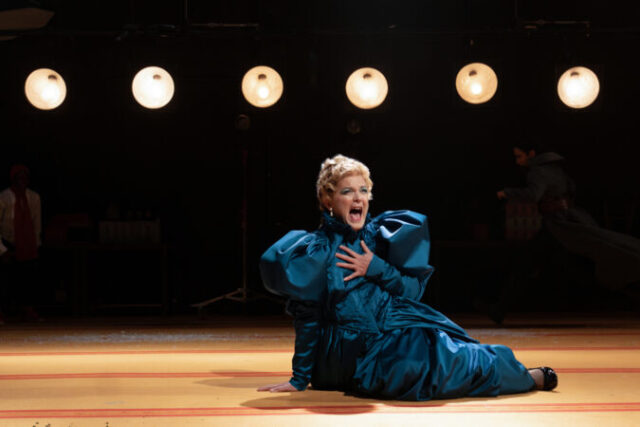
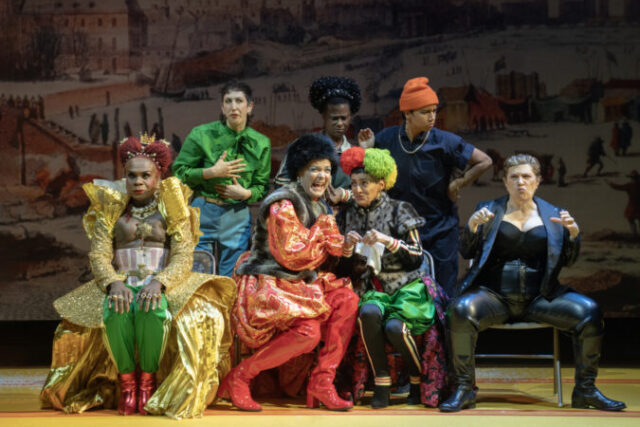
Hamlet (Takuro Takasaki) is in desperate need of a bowel movement in HAMLET | TOILET (photo © Maria Baranova)

HAMLET | TOILET
Japan Society
333 East 47th St. at First Ave.
January 10-13, $35
japansociety.org

To go, or not to go? That is the multilayered question asked in Yu Murai and Kaimaku Pennant Race’s absurdist, scatological HAMLET | TOILET, continuing at Japan Society through January 13 as part of the Under the Radar festival.

As you enter Japan Society, you are greeted by a different kind of step and repeat; instead of posing in front of a show logo, you can snap a selfie with a glitteringly white Japanese Toto washlet on a red platform, a fancy toilet with such special features as a heated seat and a bidet. It sets the mood for what is to follow, ninety minutes of controlled chaos involving more flatulence than the beans scene in Mel Brooks’s Blazing Saddles.

Murai has previously reimagined works by William Shakespeare in Romeo and Toilet and Ashita no Ma-Joe: Rocky Macbeth, wildly unpredictable tales that incorporate dance, music, strange props, and bizarre costumes. HAMLET | TOILET sits comfortably within that oeuvre. The production takes place in and around a three-stall installation, an open cube with a back wall and no doors. The three actors, Takuro Takasaki, G. K. Masayuki, and Yuki Matsuo, are dressed in unflattering white body-hugging latex suits reminiscent of the spermatozoa in Woody Allen’s Everything You Always Wanted to Know About Sex* (*But Were Afraid to Ask).

Plenty of flatulence is on the menu in unique adaptation of Hamlet at Japan Society (photo © Maria Baranova)

The essence of the Bard’s tragedy is in there, somewhere: Hamlet’s (Takasaki) uncle, Claudius (Masayuki), has killed Hamlet’s father, married his mother, and become king. Hamlet is in love with Ophelia (Masayuki), whose brother, expert fencer Laertes (Matsuo), is not a Hamlet fan. Hamlet’s besties, Horatio (Masayuki) and Marcellus (Matsuo), have encountered the ghost of their friend’s father, who tells his son that his murder must be avenged. To do so, Hamlet has to face his conscience, which is not lodged in his brain or heart but in his painful belly — the load he is carrying is an intensifying bowel movement that his multidimensional constipation will not allow him to release.

For much of the show, the actors are in the middle stall, trying to take dumps, either squatting by themselves or sitting on a cushiony human bowl formed by the other two actors. They gleefully pass gas that is projected in colorful animation by Takashi Kawasaki, accompanied by the appropriate sounds. The characters discuss aspects of making number two in ways that no play or novel that I know of ever has; no bathroom subject or feces joke is off limits, regardless of how silly or lowbrow. Nobody can find relief, not even from Ophelia’s headdress, which consists of dozens of rolls of toilet paper.

Amid deep dives into the shape, consistency, aroma, and chocolatey nature of human waste, Murai also delves into cowardice, sanity, suffering, and revenge. The dialogue is similarly mixed; Hamlet veterans will appreciate such real Shakespearean lines as “That adulterate beast won to his shameful lust . . . my queen,” “Never make known what you have seen [and heard] tonight,” “[I am going to] put an antic disposition on,” and “I should have fatted all the region kites / With this slave’s offal: bloody, bawdy villain!”

Purists might grimace at the more coarse language, such as “Something must be born that will trace a single line / like a magnificent line of feces / straight through all of this wonderful society,” “Please, just this once / couldn’t it be soft and gently flow like water,” “You must cleanly and completely defecate me!” and “In a world that is moved by the strict laws of almighty God / that which should not have moved has passed / That’s why my movement will not pass!” Even the subtitles themselves are in on the fun, changing the spelling and capitalization of nec-ASS-arily and BUTT (instead of but).

The three actors occasionally break out into song and dance; the music is by DJ and hip-hop producer Tsutchie from Shakkazombie, with hilarious choreography by Shinnosuke Motoyama. There’s far too much repetition, as numerous jokes spew out like the preparation for a colonoscopy, and in one scene the play makes fun of that itself as repeated statements fill up the subtitles monitor in ever-smaller type. But just when you think the production is merely a fart-fantasy concocted by Eric Cartman or Beavis and Butt-Head, Murai slips in something ridiculously clever so you won’t lose your appetite; it’s not merely Shakespeare as bathroom reading, although that’s in there too. Murai is not claiming that Shakespeare, or theater in general, is full of shit, but it might be in need of a thorough cleansing.

Which brings us back to the original question: To go, or not to go? HAMLET | TOILET is certainly not for everyone; some gags were met with laughter and applause, while others received random chuckles or guffaws — or silence. If you do get a ticket — the January 12 performance will be followed by an artist Q&A — be sure to use the facilities, which have several washlets, in addition to doors to ASSure your privacy.

[Mark Rifkin is a Brooklyn-born, Manhattan-based writer and editor; you can follow him on Substack here.]
HELL’S KITCHEN

A jubilant cast lifts Hell’s Kitchen at the Public Theater (photo by Joan Marcus)

HELL’S KITCHEN
Newman Theater, the Public Theater
425 Lafayette St. at Astor Pl.
Tuesday – Sunday through January 14, $175
publictheater.org

Hell’s Kitchen, heading from the Public to the Shubert — it ends its run downtown January 14 and starts previews on Broadway on March 28 — (mostly) succeeds where New York, New York failed. Both stories take place in the city, use stage scaffolding to replicate fire escapes, follow the relationship between a man and woman involved in music, and are built around a hugely popular hit song about New York.

The latter, based on Martin Scorsese’s 1977 film, declares, “If I can make it there, I’d make it anywhere,” while the former proclaims that New York is a “concrete jungle where dreams are made of / There’s nothing you can’t do / Now you’re in New York!” But where New York, New York felt like a miscast movie shot in Toronto, Hell’s Kitchen, inspired by the life of Alicia Keys (who wrote the music and lyrics), has a far more legitimate feel, a more “empire state of mind,” flaws and all.

Maleah Joi Moon makes an explosive professional debut as Ali, a seventeen-year-old girl living with her extremely protective single mother, Jersey (Shoshana Bean), in a “one-bedroom apartment on the forty-second floor of a forty-four-story building on Forty-Third Street between Ninth and Tenth Avenues, right in the heart of the neighborhood some people know as Hell’s Kitchen.” The building is filled with artists, including a trumpeter on thirty-two, a dance class on twenty-seven, opera singers on seventeen, poets on nine, painters on eight, a string section on seven through four, and a gospel pianist in the Ellington Room on the ground floor.

It’s summer in the 1990s, and Ali has decided it’s time for her to get busy with the older Knuck (Chris Lee), who drums on buckets in the street with his friends Q (Jakeim Hart) and Riq (Lamont Walker II). Ali and her homegirls, Jessica (Jackie Leon) and Tiny (Vanessa Ferguson), are sure the men are “up to no good,” but as Ali says, “We need that trouble in our lives.”

Knuck (Chris Lee) and Ali (Maleah Joi Moon) find themselves in trouble in Alicia Keys musical (photo by Joan Marcus)

That’s the last thing Jersey wants for her daughter, so she enlists her besties, Millie (Mariand Torres) and Crystal (Crystal Monee Hall), and jovial doorman Ray (Chad Carstarphen) to keep an eye on Ali’s comings and goings. Jersey does not want what happened to her — an early, unwanted pregnancy by an unreliable man, a jazz musician named Davis (Brandon Victor Dixon) — to happen to her stubborn daughter.

As she prepares for her potential sexual awakening, Ali becomes intrigued by Miss Liza Jane (Kecia Lewis), the elderly woman who plays the piano in the Ellington Room and soon becomes Ali’s mentor. But the trouble that Ali soon encounters is not the trouble she needs.

Hell’s Kitchen is structured around two dozen Keys songs, from such albums as 2001’s Songs in A Minor, 2003’s The Diary of Alicia Keys, 2007’s As I Am, 2012’s Girl on Fire, 2020’s Alicia, and 2021’s Keys, and three new tunes written specifically for the show, “The River,” “Seventeen,” and “Kaleidoscope.” The orchestrations by Tom Kitt and Adam Blackstone are lively, and Camille A. Brown’s choreography captures the energy of the street on Robert Brill’s set, enhanced by projections of the neighborhood by Peter Nigrini. The naturalistic costumes are by Dede Ayite, with effective lighting by Natasha Katz and sound by Gareth Owen.

The show is directed with a vibrant sense of urgency by Tony nominee Michael Greif (Dear Evan Hansen, Next to Normal), but the book by Kristoffer Diaz (The Elaborate Entrance of Chad Deity, Welcome to Arroyo’s) languishes in clichés, including several cringey scenes that don’t feel real, creating a choppy narrative that doesn’t flow like Keys’s music.

Moon is magnetic as Ali; you can’t take your eyes off her for even a second. Tony nominee Bean (Mr. Saturday Night, Waitress) is engaging as the overwrought mother, shaking things up with “Pawn It All,” while Obie winner Lewis (Dreamgirls, Ain’t Misbehavin’) nearly steals the show as Miss Liza Jane, channeling Maya Angelou when she says such lines as “I will not allow you to let the pain win,” then bringing down the house with “Perfect Way to Die.” Lee (Hamilton) has just the right hesitation as Knuck, acknowledging the obstacles he faces every step of the way, and Carstarphen (Between the Bars, Neon Baby) is eminently likable as the adorable doorman.

In the last nine years, the Public has seen a bunch of shows transfer to Broadway, with differing levels of success (Hamilton, Fun Home, Ain’t No Mo’, for colored girls who have considered suicide / when the rainbow is enuf, Fat Ham, and Here Lies Love, with Suffs coming in April). With some significant tweaking, Hell’s Kitchen has the chance to be both a critical and popular hit on the big stage.

[Mark Rifkin is a Brooklyn-born, Manhattan-based writer and editor; you can follow him on Substack here.]
NEW YORK JEWISH FILM FESTIVAL 2024

Adam Breier’s All About the Levkoviches is part of 2024 NYJFF

THIRTY-THIRD ANNUAL NEW YORK JEWISH FILM FESTIVAL
Walter Reade Theater, Film at Lincoln Center
165 West 65th St. between Broadway & Amsterdam Aves.
January 10-24, $14-$17
212-875-5050
www.filmlinc.org
thejewishmuseum.org

With the scourge that is antisemitism on the rise yet again, this time spurred by Hamas’s October 7 terrorist attack on Israel and the IDF’s military response, it feels like a political statement just to attend the thirty-third annual New York Jewish Film Festival, taking place January 10–24 at the Walter Reade Theater at Lincoln Center. The 2024 iteration consists of more than two dozen features, documentaries, and shorts from Hungary, Poland, Germany, the Czech Republic, France, Italy, Austria, the UK, Israel, Ukraine, and America, exploring such topics as antisemitism, family estrangement, Nazi-looted art, the 1976 trial of Pierre Goldman, Klezmer music, survival in the desert, excommunicated philosopher Baruch Spinoza, and the Shabbos goy.

The opening night selection is the New York premiere of James Hawes’s One Life, in which Sir Anthony Hopkins portrays Sir Nicholas Winton, an unassuming British stockbroker who was a quiet WWII hero; producer Joanna Laurie will participate in a postscreening discussion. The centerpiece film is the New York premiere of Michal Vinik’s Valeria Is Getting Married, about two Ukrainian sisters who come to Israel and get involved in contemporary arranged marriages. The festival closes with Ron Frank’s documentary Remembering Gene Wilder, a celebration of the beloved stage and screen star, with reminiscences from Mel Brooks, Alan Alda, Carol Kane, Harry Connick Jr., Rain Pryor, and others; the New York premiere will be introduced by executive producer Julie Nimoy and followed by a talk with Frank, writer Glenn Kirschbaum, and Peter Ostrum, who played Charlie Bucket in Willy Wonka and the Chocolate Factory, his only film role.

Below are five films to watch out for; most screenings throughout the festival will be followed by a discussion with directors, producers, subjects, cast members, or experts.

The 1939 Yiddish melodrama Mothers of Today will be shown at NYJFF in a 35mm restoration

MOTHERS OF TODAY (Henry Lynn, 1939)
Thursday, January 11, 2:30
Sunday, January 14, 12:00
www.filmlinc.org

Yiddish radio star Esther Field, the “Yiddishe Mama,” made her only film appearance in Henry Lynn’s 1939 shund film, Mothers of Today, being shown in a 35mm restoration at the festival, followed by a discussion with National Center for Jewish Film codirectors Lisa Rivo and Sharon Rivo. It’s a working-class immigration melodrama about a widow trying to hold on to Jewish tradition as her children begin straying from the religion in America. The film was shot in the Bronx and features Jewish songs and prayers, including the Kiddush, “Got Fun Avrohom,” and Kol Nidrei.

Gad Elmaleh’s autobiographical comedy Stay with Us deals with religious conversion

STAY WITH US (Gad Elmaleh, 2022)
Thursday, January 11, 5:30
Wednesday, January 24, 4:00
www.filmlinc.org

A minor controversy erupted when it was reported in 2022 that Moroccan-Canadian-French Jewish comedian and actor Gad Elmaleh had converted to Christianity. It wasn’t true, but Elmaleh had studied Christianity extensively, resulting in his autobiographical comedy Stay with Us, in which he plays a Jewish man named Gad who announces to his family, played by his actual mother, father, and sister, that he is converting to Catholicism. Just wait till you see his parents’ reaction when his mother finds a statue of the Virgin Mary in his suitcase. “Get your fingers off it!” his father declares.

The Books He Didn’t Burn goes inside Adolf Hitler’s private library

THE BOOKS HE DIDN’T BURN (Claus Bredenbrock & Jascha Hannover, 2023)
Monday, January 15, 1:00
www.filmlinc.org

Jeremy Irons narrates Claus Bredenbrock and Jascha Hannover’s The Books He Didn’t Burn, which asks the question “Can literature provide a handbook for mass murder?” as American historian Timothy Ryback examines Adolf Hitler’s book collection, which totaled sixteen thousand at the time of his suicide. “Our whole notion, going back to the ancient Greeks, that art, beauty, literature ennobles the human spirit . . . Hitler’s library turns this whole thing on its head,” Ryback says in the film. Hannover will participate in a discussion after the screening.

Isabelle Cottenceau immerses viewers into the life and career of designer Gaby Aghion in Looking for Chloé

LOOKING FOR CHLOÉ (Isabelle Cottenceau, 2023)
Saturday, January 20, 7:00
www.filmlinc.org

The Jewish Museum is currently hosting the wide-ranging exhibition “Mood of the Moment: Gaby Aghion and the House of Chloé,” about the Jewish Egyptian entrepreneur who founded the French fashion house Chloé. In Looking for Chloé, Isabelle Cottenceau follows the life and career of Gaby Aghion, who was born Gabrielle Hanoka in Egypt in 1921; launched Chloé in 1952; hired Karl Lagerfeld, Stella McCartney, and Phoebe Philo; and had such clients as Brigitte Bardot, Jackie Kennedy, and Maria Callas. Aghion was married to her husband, gallery owner and fellow political activist and intellectual Raymond Aghion, for nearly seventy years and was a leader in the development of prêt-à-porter. Producer Sophie Jeaneau and Museum at FIT director Dr. Valerie Steele will be on hand for a postscreening discussion.

Adam Low digs deep into James Joyce’s 1922 novel, Ulysses, in 2022 doc

JAMES JOYCE’S ULYSSES (Adam Low, 2022)
Sunday, January 21, 1:00
www.filmlinc.org

In honor of the centennial of the publication of James Joyce’s Ulysses, documentarian Adam Low goes behind-the-scenes of the writing, publication, and legacy of the notoriously difficult 1922 novel, set during one June day in Dublin in 1904. In the film, British journalist and novelist Howard Jacobson declares that the book is “the greatest Jewish novel of the twentieth century — the first one with a Jew at its very center,” Leopold Bloom. Low also speaks with Salman Rushdie, Colm Tóibín, Anne Enright, Eimear McBride, Paul Muldoon, John McCourt, Nuala O’Connor, Vivienne Igoe, and others as he details the heroic efforts by such people as Margaret Anderson, Jane Heap, Sylvia Beach, Harriet Shaw Weaver, and Nora Barnacle, who played such important roles in its ultimate success. Low and producer Martin Rosenbaum will be on hand for a postscreening talk.

[Mark Rifkin is a Brooklyn-born, Manhattan-based writer and editor; you can follow him on Substack here.]
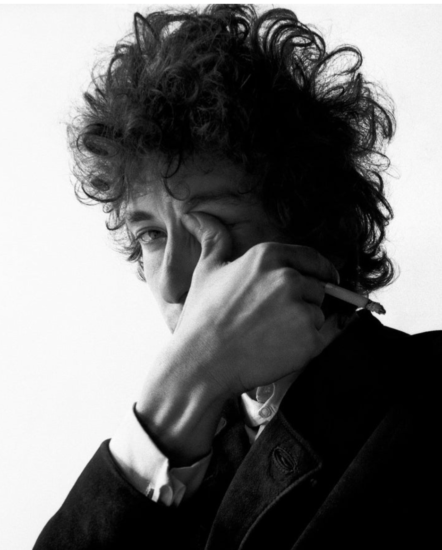
POETIC TRIGONOMETRY

Who: Clara Joy, K. Porcelain, Ed Pankov
What: Music and poetry in conjunction with the exhibit “Bey, Nkem & Elechi: A Triangulation”
Where: ChaShaMa Gallery, 340 East Sixty-Fourth St. between First & Second Aves.
When: Wednesday, January 10, suggested donation $10-$20, 6:00
Why: In conjunction with the Gallery Particulier show “Bey, Nkem & Elechi: A Triangulation” at ChaShaMa on the Upper East Side, which closes on January 13, a special celebratory event is being held on January 10 at 6:00, “Poetic Trigonometry,” featuring musician and artist Clara Joy, musician K. Porcelain, and poet, mystic, musician, and ordained minister Ed Pankov. The exhibition, curated by Grace Nkem and Arabella von Arx, puts works by Nkem, Amir Bey, and Obinna Elechi in conversation, exploring cultural identity and colonialism via the African diaspora through paintings, drawings, and sculpture, including Figure in a Corridor by Nkem, Purple Mask by Bey, and The Everything by Elechi.

[Mark Rifkin is a Brooklyn-born, Manhattan-based writer and editor; you can follow him on Substack here.]
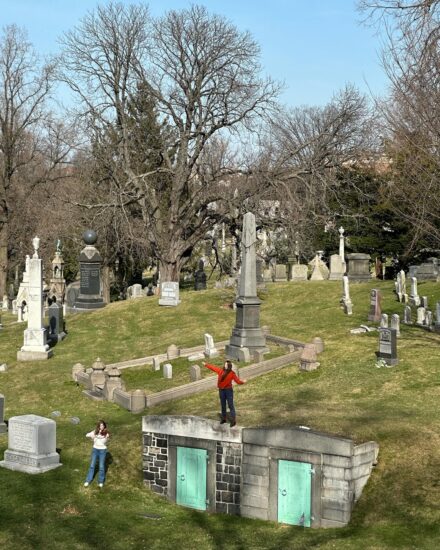
Out-FRONT! Festival

Ogemdi Ude’s Hear is part of Pioneers Go East Collective’s Out-FRONT! Festival (photo by Maria Baranova)

Out-FRONT! FESTIVAL
LGBT Community Center, 208 West Thirteenth St.
Abrons Arts Center, 466 Grand St.
January 10–20, free – $28.52 (suggested donation)
pioneersgoeast.org

Pioneers Go East Collective, which is dedicated to “radical queer performance, dance, and film for social change,” is presenting the 2024 Out-FRONT! Festival, taking place January 10-15 at the LGBT Community Center and January 17-20 at Abrons Arts Center. The bill features live performances by Arthur Aviles and Collaborators, Joey Kipp with Pioneers, Christopher Unpezverde Núñez, Jason Anthony Rodriguez, Paz Tanjuaquio, Ogemdi Ude, and Annie MingHao Wang; workshops with Rodriguez and Magda Kaczmarska; and a film program.

“This year’s festival brings together ten extraordinary multigenerational artists whose socially engaged practices explore issues of race, gender, disability, grief, migration, and our collective humanity in ways that continue to inspire us,” Pioneers artistic director Gian Marco Riccardo Lo Forte said in a statement. “We created Out-FRONT! to both celebrate artists with community-driven approaches to art-making and to offer them a platform to share their work with audiences during the Association of Performing Arts Professionals conference, an opportunity we hope provides new connections and sparks a positive dialogue about creative participation in shared spaces.”

Rodriguez, who played Lemar Wintour on Pose, will stage Take a Good Look with Dominican dancer and actor Gaymer and the solo Meet Me in the Moon. Aviles’s Naked Vanguard series continues with reimaginations of earlier works (Morning Dance, In the End, Let’s Begin, and A Jamaican BattyBwoy in America) in addition to the world premiere of Untitled #5A After Ted Shawn AKA Dansé Mexicaine & Jamaïquaine Américaine, performed by Nikolai McKenzie Ben Rema, Hunter Sturgis, and Aviles. The film screenings consist of a new short by Fana Fraser, And I was recognized by Omega X, Danni Venne, Matt Harvey, and Laura Marie Marciano, and The Personal Things by Tourmaline.

Below is the full schedule; admission to all events is free with RSVP (suggested donation $25).

Wednesday, January 10
Jason Anthony Rodriguez, Take a Good Look / Meet Me in the Moon, LGBT Community Center, Theatre 301, 8:00

Thursday, January 11
Jason Anthony Rodriguez, Take a Good Look / Meet Me in the Moon, LGBT Community Center, Theatre 301, 7:00

Joey Kipp with Pioneers Go East Collective, Tracing Lorraine, LGBT Community Center, Theatre 301, 8:00

Friday, January 12
Voguing for Teens, NEXT! TEEN Workshop with Jason Anthony Rodriguez, LGBT Community Center, Theatre 301, 3:00

Joey Kipp with Pioneers Go East Collective, Tracing Lorraine, LGBT Community Center, Theatre 301, 8:00

Saturday, January 13
Films by Fana Fraser, Omega X & Danni, Matt Harvey, Laura Marie Marciano, and Tourmaline, LGBT Community Center, Gallery 101, 5:00

Ogemdi Ude, Hear, LGBT Community Center, Theatre 301, 7:00

Sunday, January 14
NEXT! Workshop for older adults with Magda Kaczmarska, dance and storytelling, LGBT Community Center, 5:00

Ogemdi Ude, Hear, LGBT Community Center, Theatre 301, 6:00

Christopher Unpezverde Núñez, YO OBSOLETE, LGBT Community Center, Theatre 301, 7:00

Monday, January 15
Christopher Unpezverde Núñez, YO OBSOLETE, LGBT Community Center, Theatre 301, 8:00

Wednesday, January 17
Arthur Aviles and Collaborators, Naked Vanguard, Abrons Arts Center Playhouse, 8:00

Thursday, January 18
Annie MingHao Wang, had my mouth, Abrons Arts Center Playhouse, 8:00

Friday, January 19
Paz Tanjuaquio / TOPAZ ARTS Dance Productions, Silweta, Abrons Arts Center Playhouse, 7:00

Arthur Aviles and Collaborators, Naked Vanguard, Abrons Arts Center Playhouse, 8:00

Saturday, January 20
Annie MingHao Wang, had my mouth, Abrons Arts Center Playhouse, 5:00

Paz Tanjuaquio / TOPAZ ARTS Dance Productions, Silweta, Abrons Arts Center Playhouse, 6:00

[Mark Rifkin is a Brooklyn-born, Manhattan-based writer and editor; you can follow him on Substack here.]
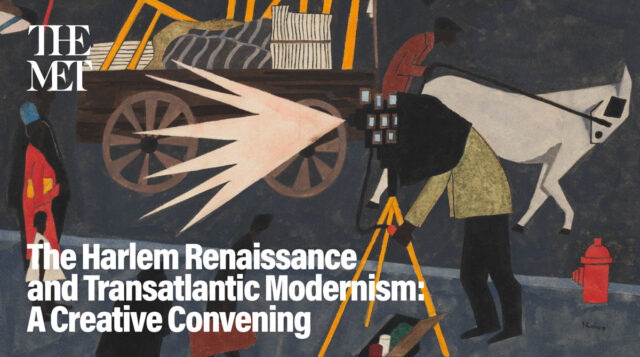
LIVE ARTERY 2024: WEATHERING

Humanity gets caught up in the maelstrom in Faye Driscoll’s Weathering (photo by Maria Baranova / courtesy New York Live Arts)

WEATHERING
New York Live Arts
219 West Nineteenth St. between Seventh & Eighth Aves.
January 9-13, $10-$45
212-924-0077
newyorklivearts.org
www.fayedriscoll.com

As I noted in April 2023, Faye Driscoll’s latest work, Weathering, is, well, everything.

It is now back for an encore run January 9-13 as part of New York Live Arts’ Live Artery 2024 series. Below is my original review; do whatever you can to get a ticket to this extraordinary experience.

—————————————————

The seventy-minute Weathering takes place on a squishy white movable platform raft designed by Jake Margolin and Nick Vaughan. The audience sits on all four sides of the object. One by one, ten performers — James Barrett, Kara Brody, Miguel Alejandro Castillo, Amy Gernux, Shayla-Vie Jenkins, Jennifer Nugent, Cory Seals, Eliza Tappan, Carlo Antonio Villanueva, and Jo Warren, in Karen Boyer’s costumes of everyday dress, some with backpacks, bags, and other accoutrements — step on and off the platform, eventually all standing in place and freezing, becoming what Driscoll calls a flesh sculpture.

Stage managers Emily Vizina and Ryan Gamblin, in all black, go to opposite corners and gently push the platform so it spins around, extremely slowly at first. The dancers barely move a muscle, but as the platform rotates, you can start to tell that the performers have shifted ever so slightly, lowering a knee, reaching out a hand, turning a foot, almost imperceptibly; the effect is like you are watching a living, creeping flipbook. Soon they begin touching, the connections electrifying, as if the contact is life affirming, which is especially potent as we emerge from Covid restrictions that kept us physically apart from one another. As the bodies interweave, they close gaps, filling spaces of loss and absence.

Performers encounter all five senses while spinning around the New York Live Arts stage (photo by Maria Baranova / courtesy New York Live Arts)

Driscoll incorporates all five senses as she and the stage managers occasionally spray the performers (and the audience) with citrus-smelling water and some of the dancers let out small groans and grunts as they put their mouths on an arm, leg, or neck that approaches them, somewhere in between the hunger for sex and the hunger of zombies seeking sustenance.

As the score builds — the sound and music direction is by Sophia Brous, with live sound and sound design by Ryan Gamblin and composition, field recordings, and sound design by Guillaume Malaret — the raft is spun around faster and faster. Personal items fall haphazardly to the ground: keys, a wallet, cellphones. Clothes start coming off, revealing more of who these people are and challenging what we might have previously thought about them while harkening back to our primeval existence, equating the beginning and the end. Chaos ensues, as the audience tries to capture as much of the action as it possibly can, not wanting to miss a single thing, as if every little movement, every sound, every change could upset the balance of this mini-universe.

Driscoll is telling us to pay attention, letting us know that humanity is failing and we are destroying the planet. The raft, evoking Earth and its orbit, sometimes slides slightly out of control, nearly hitting the people in the first row.

Faye Driscoll’s Weathering continues at NYLA through April 15 (photo by Maria Baranova / courtesy New York Live Arts)

The faster the raft goes, the more the audience is overcome by an intoxicating joy mixed with impending doom; it is absolutely exhilarating to follow each of the performers’ journeys, ten individuals striving to survive on their own and as a group, just as we in the audience are.

The show is accompanied by the companion reader Durations of Short Detail, with short pieces by dramaturg Dages Juvelier Keates (“We Are So Close”), dancer and choreographer Jesse Zaritt (“To Hold and Be Held”), and Driscoll, whose poem “Chariots of Flesh” relates, “We’ve been trembling in the trench for / Days? / Weeks? / Years? / Lifetimes? / Despite thick fog / I am overcome / By the smell of your clean shaven skin / Face, eyes, gaze, nose, mouth, fear / I try to pound you out but you latch onto my arm, / wrap your leg around me and reverse position / You try to pound me out but I latch onto your arm, / wrap my leg around you and reverse position / We are desperate to know the outcome / Desperate to know the outcome / Desperate to know the outcome. . . .”

As she has in such previous pieces as the Thank You for Coming trilogy, You’re Me, and There is so much mad in me, Driscoll investigates the intrinsic relationship between performer and audience, the imperative bond, but there is a lot more at stake in Weathering, nothing less than the future of the human race.

I don’t know that we can save the world through art, but with creators such as Driscoll, we can have a hell of a lot of terrifying fun trying.

[Mark Rifkin is a Brooklyn-born, Manhattan-based writer and editor; you can follow him on Substack here.]