featured

THE WANDERING

THE WANDERING
April 15 – May 15, $24.99 – $29.99
experiencethewandering.com

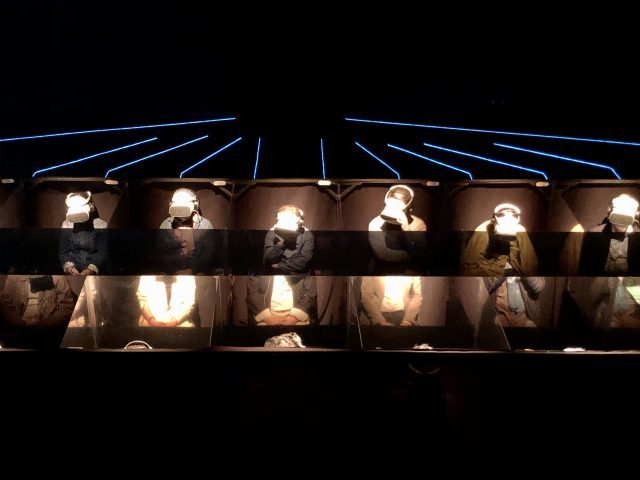
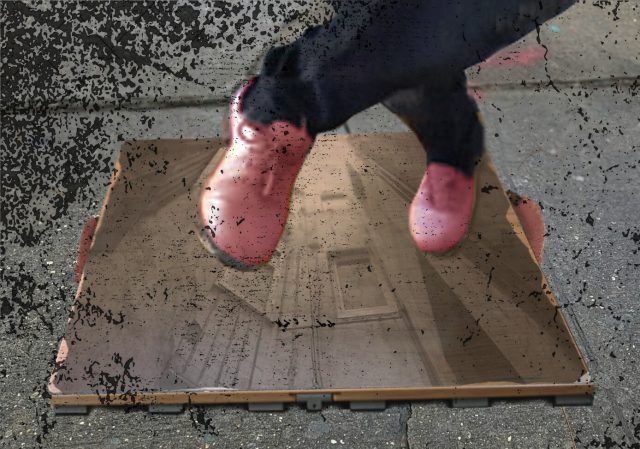
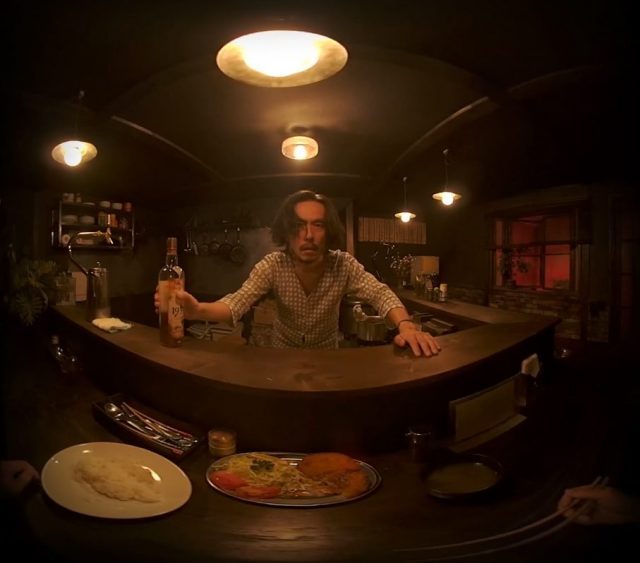
Every spring for more than forty years, the Schubertiade has celebrated the work of Austrian composer Franz Schubert through concerts, exhibitions, lectures, and discussion. Overlapping with the 2021 Schubertiade, which runs April 28 to May 2, is an unusual, immersive hybrid production called The Wandering, available online April 15 through May 15. The multimedia presentation uses film, music, props, postcards, and photography to explore Schubert’s creativity and sexual orientation.

In his 1992 New York Times article “Critic’s Notebook: Was Schubert Gay? If He Was, So What? Debate Turns Testy” about a 92nd St. Y symposium on the composer, Edward Rothstein wrote, “As for the issue of homosexuality, Mr. [Maynard] Solomon’s case is compellingly argued, but I defer to scholars for a final verdict. The most vexing problems arise in judging the musical importance of the composer’s sexuality. Mr. Solomon asserts, for example, that Schubert’s homosexuality demonstrated a ‘resistance to compulsion’ and that it revealed a ‘heroic region in Schubert’s personality.’ But while Schubert obviously possessed a profound knowledge of suffering and isolation, heroism seems alien to his compositions, imported from some contemporary views of sexual ‘unorthodoxy.’”

Conceived by actor and curator Calista Small, baritone and actor Jeremy Weiss, designer Charlotte McCurdy, theater artist Christine Shaw, filmmaker Lara Panah-Izadi, and animator Zach Bell, The Wandering, which delves into Schubert’s suffering, isolation, heroism, and sexuality in abstract ways, is meant to take place over four days, although you can proceed at your own pace. Each day features a short film starring Weiss as the Wanderer, a curious man traversing a strange landscape, with music by Schubert played by pianist Marika Yasuda and German lyrics sung by Weiss. (English translations by Julian Manresa are available.)

Jeremy Weiss portrays the Wanderer in hybrid immersive production about Franz Schubert

In the Matthew Barney–like films, which can be viewed only once — there’s no going back after you start each one — cinematographer Frank Sun follows the Wanderer as he encounters a series of mysterious characters out on the road, in a forest, in the historic Tivoli Theatre in Downers Grove, Illinois, and at the landmark Wright in Kankakee home in the Illinois woods: Bambi Banks Couleé as the Performer, Ethan Kirschbaum as the Doppelgänger, Daria Harper as the Crow, Small as the Crystallography Denizen, and Josh Romero as the Gardener Denizen. Directed by Panah-Izadi, the films, ranging between six and ten minutes apiece, are beautifully shot tone poems incorporating music, theater, and dance, with choreography by Craig Black, sound by Jared O’Brien, costumes by Casey Wood (the Doppelgänger outfit is particularly impressive), sets by Rachel Cole, and hair and makeup by Erica Martens.

After watching each individual film, you open a packet you received in the mail (well worth the additional $5 cost) containing an object for you to interact with, poetry, letters, pre-addressed stamped postcards you can fill with drawings and/or words and send, QR codes for augmented reality (by Sahil Gupta), and various prompts surrounding your personal “wunderlich,” which can mean “wondrous,” “queer,” “odd,” “fantastical,” or “whimsical.” Several tasks involve going outside, taking a photo, and posting it to the gallery on the main site, known as the Prism (the web design is by TanTan Wang), which features a perennial meditative soundscape. There’s also a page where you can listen separately to the songs, which include “Wandrers Nachtlied,” “Die Krähe,” “Die Gebüsche,” “Nacht Und Träume,” and “Ganymed.”

Schubert was born in Vienna in 1797 and died there at the age of thirty-one, having produced more than 1,500 works, from orchestral overtures, operas, and symphonies to lieder, cantatas, and song cycles. In an 1822 letter the composer sent to his friend and maybe lover, Austrian actor, poet, and librettist Franz von Schober (and which is excerpted in the show’s packet), he describes a dream he had, explaining, “I wandered into a distant land. . . . For long, long years, I sang songs. When I wanted to sing about love, it turned to pain. When I wanted to sing of pain, it turned to love. Thus, love and pain divided me.”

Weiss responds with his own letter to Schubert, writing, “Your music was the first thing I turned to in a moment of crisis during a pandemic. Thank you for writing of your pain, and of your love. Did you ever learn not to let them divide you? Might we?” It’s a question a lot of us have been asking, especially during this last, tumultuous year.

PARTY IN THE BARDO

Park Ave. Armory, Wade Thompson Drill Hall
643 Park Ave. at 67th St.
May 5-9, $45
212-933-5812
www.armoryonpark.org

The Park Ave. Armory’s Social Distance Hall series has been selling out almost immediately, so act right now if you want to get the chance to experience Party in the Bardo, a collaboration between Laurie Anderson and Jason Moran, consisting of only four sixty-minute shows in which they will play live music over the epic soundscape that is Lou Reed: Drones, joined by special guests. The season began with Steven Hoggett, Christine Jones, and David Byrne’s SOCIAL! the social distance dance club, in which audience members get to dance in their own spotlights in the drill hall (through April 22), and continues May 9-26 with Bill T. Jones’s previously Covid-delayed Afterwardsness. Curator of the armory’s Artists Studio Series, Moran is a musician, composer, visual artist, MacArthur Fellow, and more, as depicted in his revelatory 2019-20 Whitney exhibition. In October 2015, Anderson presented Habeas Corpus at the armory with Mohammed el Gharani, a dazzling multimedia, sociopolitical installation. And Lou Reed’s former guitar tech and collaborator Stewart Hurwood has been guiding Drones through a variety of locations, from outdoors at Lincoln Center to the Cathedral Church of St. John the Divine, keeping Lou’s guitars humming. It should all come together for a compelling evening of improvisation and meditation at New York City’s best venue to see just about anything.

JEWELS: A BALLET IN THREE PARTS

San Francisco Ballet presents a dazzling virtual production of Balanchine’s Emeralds (photo by Erik Tomasson)

JEWELS
SF Ballet online
Available on demand through April 21, $29
www.sfballet.org

You’re likely to let out a gasp when the curtain rises on San Francisco Ballet’s newly filmed production of George Balanchine’s Emeralds, the first section of the legendary choreographer’s three-part masterpiece, Jewels. I know I did. Onstage are a dozen dancers, the most I’ve seen at any one time together since the pandemic lockdown started. Then Gabriel Fauré’s score kicks in — consisting of extracts from Pelléas et Mélisande Suite, Op. 29 and incidental music to Shylock, Op. 57, conducted by Martin West — and principals Misa Kuranaga and Angelo Greco touch hands, leading to another gasp. I’ve watched a lot of dance pieces made during the current health crisis, but it’s mostly been solos or works outdoors, with no contact between performers. To see a full ensemble dance without restrictions for thirty glorious minutes is exhilarating, especially every lift, throw, and turn involving physical human connection. (Of course, SFB followed all Covid-19 protocols.)

The floor of the War Memorial Opera House reflects the dancers, who are wearing dark tops with necklaces, the women in green calf-length tulle skirts. A chandelier laden with faux emeralds hangs above, while stars dot the back wall, melding inside and outside. Balanchine considered Emeralds to be “an evocation of France — the France of elegance, comfort, dress, and perfume,” and that’s precisely what comes across in this glittering production, staged by the late Elyse Borne and Sandra Jennings, with additional decor by Susan Touhy and costumes by Karinska (re-created by Haydee Morales).

The camera slowly zooms in and out and pans right and left but always stays at orchestra level while concentrating on two couples, a trio, and a corps de ballet of ten women. The many stunning moments include a line of four women in attitude position, with three men on their knees, their right leg flat behind them, all holding hands; a gorgeous solo by Kuranaga; duets first with Kuranaga and Greco, then with Sasha Mukhamedov and Aaron Robison; and a concluding trio with Greco, Robison, and Esteban Hernandez, the three men left all alone at the end, their arms reaching out dramatically.

As the curtain descends, something strange and unexpected happens; applause can be heard, getting louder as the dancers take their bows. The work was filmed on January 28 without an audience, and there was no piped-in applause at intermediary points of beauty. It’s a bit unnerving, since we know that the seats are empty, though the show is well worthy of high praise.

Emeralds debuted at the New York City Ballet on April 13, 1967, followed by Rubies and Diamonds, a sparkling trilogy inspired by Claude Arpels’s designs for jeweler Van Cleef & Arpels. For both of the latter pieces, applause is heard as the curtain rises and throughout; the former was recorded February 2, 2016, the latter March 12, 2017, both at the War Memorial as well, giving the full program an added visual continuity, making it feel as if it is all occurring over the course of one evening. It also might explain why SFB decided not to add more camera angles to the 2021 performance; it would have been exciting to see closeups as well as views from the mezzanine, but it would not have matched the next two works.

The featured trio for Rubies are Mathilde Froustey, Pascal Moulat, and Wanting Zhao; the cast is dressed in tight red bejeweled tops with frills at the waist, the women with red hair accessories. Set to Stravinsky’s Capriccio for Piano and Orchestra, Rubies is passionate and exuberant; in one pas de deux, Froustey, wearing a flowery red tiara, and Moulat run, bounce, and spin around the floor. The focus is on the movement itself; there is no chandelier, and the stars on the backdrop are muted.

An homage to Marius Petipa, Diamonds is an opulent, luxurious climax, taking place in an icy blue world with two chandeliers and Tchaikovsky’s lovely Symphony No. 3 in D major, Op. 29, movements 2, 3, 4 & 5, conducted by Ming Luke. It begins with a glorious seven-minute scene with first twelve, then fourteen women, in glistening white tutus, followed by a pas de deux between De Sola and Tiit Helimets. In the finale, more than thirty dancers come together for a grand ball, intersecting and weaving among themselves with an infectious romanticism as the music builds to a thrilling crescendo.

And then, one last surprise; as the dancers take their bows, audience members rise to give a standing ovation, their heads partially blocking our view. It is an apt reminder that ballet — and theater, music, opera, et al. — is meant to be seen live and in person, in a crowd of people all there for one purpose, to share an experience that is happening right then and there, in real time. May it soon be so again.

(For more on SFB’s Jewels, you can stream a virtual discussion about “three composers, three styles, three moods” with De Sola, Helimets, Mukhamedov, and Molat here; there is also extensive background information available here.)

JOHN CULLUM: AN ACCIDENTAL STAR

John Cullum shares a life in the theater in one-man show (photo by Carol Rosegg)

JOHN CULLUM: AN ACCIDENTAL STAR
Available on demand through May 6, $28.75 – $81 (pay-what-you-can)
Live watch party: Saturday, April 17, 2:00
irishrep.org
www.vineyardtheatre.org

“Most of the shows I’ve done – and the parts I’ve played – have come to me through the back door, by accidents, you might say, or coincidence, or just plain luck. And tonight, I’d like to share with you some of my lucky accidents,” two-time Tony winner John Cullum says at the start of his wonderful one-man show, An Accidental Star, streaming on demand through April 21. Copresented by three theaters that have played an important role in Cullum’s long, distinguished career, the Vineyard, the Irish Rep, and Goodspeed Musicals, the eighty-minute production takes viewers behind the curtain as Cullum relates funny and poignant anecdotes and sings songs from throughout his more than sixty years in the business.

Cullum, who turned ninety-one last month, was born in Tennessee and had dreams of making it as an actor. When he arrived in New York City in 1956, he was ready to do whatever it took to land an audition and get an acting job. Through a series of lucky accidents, he soon found himself cast in three summer plays for Joe Papp’s Shakespeare in the Park, even though he had zero experience with the Bard. That led directly to auditioning for Moss Hart for Camelot on Broadway, where Cullum would meet Richard Burton, who became a lifelong friend.

Julie McBride plays piano as John Cullum reflects on his long career in An Accidental Star (photo by Carol Rosegg)

Cullum, who won Tonys for Shenandoah and On the Twentieth Century, was nominated for On a Clear Day You Can See Forever, Urinetown, and 110 in the Shade, and scored an Emmy nomination for his role as Holling Vincoeur in Northern Exposure, also chronicles experiences involving Maximilian Schell, Louis Jourdan, Lerner & Lowe, Hal Prince, Robert Preston, Robert Goulet, Madeline Kahn, The Scottsboro Boys, and his wife of more than sixty-one years, choreographer and writer Emily Frankel. Filmed by Carlos Cardona in January onstage at the Irish Rep, An Accidental Star was conceived by Cullum and Jeff Berger, written by David Thompson (The Scottsboro Boys; Priscilla, Queen of the Desert), and directed by Lonny Price and Matt Cowart (110 in the Shade, Lady Day at Emerson’s Bar & Grill), with music supervision by Georgia Stitt and music direction by Julie McBride, who accompanies Cullum on piano. The cameras shoot Cullum, dressed in an unbuttoned vest, purple shirt, and brown pants, from all sides as he sits on a stool, gets up and spreads his arms for a big finale, and walks over to the piano to join McBride. He’s an engaging raconteur who is deservedly proud of what he’s accomplished yet humble enough to understand how fortunate he’s been on this amazing journey, which includes a live watch party on April 17 at 2:00.

UNRAVELLED

Dr. Bruce Miller (Leo Marks) meets with Anne Adams (Lucy Davenport) and her husband, Robert (Rob Nagle), in Jake Broder’s UnRavelled (photo by Corwin Evans)

UNRAVELLED
The Global Brain Health Institute / Trinity College Dublin
Available on demand through April 30, free
www.gbhi.org/unravelled

One of the most fascinating plays of the Zoom era comes to us from an unlikely source: the Global Brain Health Institute at the University of California, San Francisco. Jake Broder’s UnRavelled is a deeply affecting ninety-minute play that shares the true story of Canadian scientist Anne Adams, who, in 1994, at the age of fifty-three, became obsessed with Maurice Ravel’s “Bolero” and made a remarkable painting based on the 1928 musical work, which Ravel composed for dancer Ida Rubenstein in 1928, when he was fifty-three. As it turns out, both Adams and Ravel had the same serious brain disease that affects memory while lighting a creative fuse.

Directed by Nike Doukas and edited by Corwin Evans in Zoom boxes, UnRavelled stars Lucy Davenport as Anne, a mathematician, chemist, and biologist, and Rob Nagle as her husband, Robert, a traffic architectural engineer. They are trying to hold together following a serious accident involving their son, but when they continue to have trouble communicating and Anne starts spending more time by herself in her studio, listening to “Bolero” and painting, Robert begins to suspect something else is going on, and Dr. Bruce Miller (Leo Marks) ultimately confirms that.

Doukas cuts between the current reality, in color, and Anne’s imaginary conversations with Ravel (Conor Duffy) about art, love, and science, usually in black-and-white. The play not only traces the intricate details of Anne’s illness but the effects it has on Robert, a gentle, caring man whose world has also been turned upside down. Prior to her submersion into “Bolero,” Anne is painting strawberries over and over, which upsets Robert. “You aren’t a painter,” he tells her. Anne responds, “You’re going to tell me what I can and can’t do?” Robert: “You’d be wasting your gifts, your experience in your field. And you will leave the world a poorer place, let alone our family.” Anne: “You don’t get to take a spiritual high ground. . . . I don’t need my choices mansplained to me, thank you. . . . I’m stopping to paint strawberries for a while, but that should be all I have to say.” Robert: “Yes, that’s true if you were some normal person and it didn’t matter, but you’re not and it does.” Later, after Anne considers leaving her chair at the university, Robert says to himself, “Seriously, who are you and what have you done with my wife?”

Anne Adams (Lucy Davenport) and Maurice Ravel (Conor Duffy) have something in common in fascinating new play (photo by Corwin Evans)

Broder includes interstitial scenes in which Dr. Miller, a neurologist who becomes Anne’s physician, is giving an intriguing lecture about modern art, while Ravel also speaks with Rubenstein (Melissa Greenspan), who has commissioned “Bolero,” which Ravel detests and can’t believe he actually wrote. “It just dumped itself into my lap all at once,” Ravel tells Anne. “At the premiere, the crowd roared. And I knew that this would be the first line of my obituary, and there is not a note of music in it.” The merging of the different aspects of science and the artistic process in the two distinct time periods works well as more information comes out about Anne’s condition. Nagle stands out among the cast, representing a kind of everyperson suddenly having to face a difficult, unexpected situation that he can’t control; he’s the character the audience can most identify with. The power of the play, which features the London Symphony Orchestra’s version of “Bolero” as well as French pianist Pierre-Laurent Aimard performing Ravel’s “Jeux d’eau, M.30,” lies in how it develops organically, like a work of art or, sadly, an untreatable disease.

Copresented by GBHI and Trinity College Dublin, UnRavelled is streaming for free through April 30. In conjunction with the play, there are several talkbacks and panel discussions available on demand, with Broder (Our American Hamlet, His Royal Hipness Lord Buckley), Doukas UnRavelled (Red Ink, The Hothouse), GBHI codirector and UCSF Memory and Aging Center director Miller, neurologists Bill Seeley and Adit Friedberg, neuroscientist Francesca Farina, theater and dementia specialist Nicky Taylor, GBHI alumni relations manager Camellia Latta, as well as a related dance choreographed by Magda Kaczmarska.

CONFLICT

(photo by Todd Cerveris)

A surprise guest (Jeremy Beck) in the middle of the night shocks Lord Bellingdon (Graeme Malcolm) and Major Sir Ronald Clive (Henry Clarke) in Conflict (photo by Todd Cerveris)

The Mint Theater
The Beckett Theatre at Theatre Row
410 West 42nd St. between Ninth & Tenth Aves.
Tuesday – Sunday through July 21, $65
minttheater.org
www.theatrerow.org

Ah, thank goodness for the Mint Theater Company. Amid all the world’s problems, the Mint has been a breath of a fresh air for more than two decades, offering exquisitely rendered productions of long-forgotten works by little-known playwrights under the leadership of producing artistic director Jonathan Bank. The troupe has now followed up its Drama Desk-nominated Hindle Wakes with the impeccably staged Conflict, an exceptional 1925 romantic political tale by British character actor, dramatist, and social reformer Miles Malleson, whose Yours Unfaithfully was given the superb Mint treatment last year. The play is set in 1920s London, where the upstart Labour Party is trying to make inroads against the Conservatives in the upcoming elections. Jessie Shelton stars as Lady Dare Bellingdon, a highly privileged young woman on the verge of becoming independent, a carefree spirit who abhors boredom and is determined to make her own choices instead of following convention and doing what is expected of her class and gender. Her stern father, the very wealthy Lord Bellingdon (Graeme Malcolm), approves of her relationship with Major Sir Ronald Clive, DSO (Henry Clarke), a straightforward, overly formal military hero who is running for Parliament and wants to marry Dare, who is not exactly ready to settle down yet.

(photo by Todd Cerveris)

Major Sir Ronald Clive (Jeremy Beck) has his heart set on Lady Dare Bellingdon (Jessie Shelton), but she is about to become woke in Mint production (photo by Todd Cerveris)

One evening they are interrupted by the appearance of Tom Smith (Jeremy Beck), a beggar with a rather pathetic tale to tell, one that Lord Bellingdon isn’t buying. “I don’t want to mock or sneer. It was wrong of me if I seemed to. I hope I’m not hard-hearted; but I’m hard-headed,” the rich man says. “I don’t believe a man falls through society — to the bottom, as you’ve done — without something in himself to drag him down.” Smith responds, “That’s a fine thing for a man to say who’s at the top. By God, it shows a complacency, a self-satisfaction, that’s almost splendid. You must be damn pleased with yourself.” Lord Bellingdon and Clive offer him food, whiskey, and cash and send him on his way, but they and Dare are surprised by what they see when he returns eighteen months later, with quite another tale to tell.

(photo by Todd Cerveris)

Lady Dare Bellingdon (Jessie Shelton) looks on as her father (Graeme Malcolm) can’t believe what he hears in Miles Malleson’s Conflict (photo by Todd Cerveris)

Directed with wit and verve by Jenn Thompson (Women without Men, Abundance), Conflict never descends into preachy pablum as it explores the socioeconomic and cultural differences among rich and poor, conservative and liberal, male and female in post-WWI England. Though written nearly a century ago — it was also adapted into the 1931 film The Woman Between — the play is very much of today as the personal gets very political, and the political gets very personal, especially as so many twenty-first-century Americans use party affiliation and faith (or lack thereof) in the current government to help determine their friends and lovers, on social media and in real life. As is Mint tradition, the set, by John McDermott, is utterly lovely, a fancy drawing room with a garden; a later scene in Smith’s hovel of a bedroom further differentiates the haves from the have-nots, as does Martha Hally’s costume finery. Beck (Hindle Wakes, The Cocktail Party) and Henry Clarke (Private Lives, Baskerville) excel as rivals in more ways than one, Malcolm (Equus, Mary Broome) plays Lord Bellingdon with delicious relish, his mustache and eyebrows practically a character unto themselves, while Jasmin Walker (Avenue Q, Only Children) makes the most of her small role as Mrs. Tremayne, a merry widow who encourages Dare to live her life the way she wants to, unbound by tradition. (The cast also features James Prendergast as Daniells, the Bellingdons’ much-put-upon butler, and Amelia White as Mrs. Robinson, Smith’s nosy landlady.)

“It’s not loving him I’m bothering about — it’s marrying him,” Dare tells Mrs. Tremayne about Clive. “I don’t want my marriage to be a sort of brown-paper parcel in which I wrap up my romance, and seal it and say ‘That’s that.’ . . . I want my marriage to be . . . something more.” A high-minded socialite and good-time girl slowly becoming woke, Lady Dare is portrayed magnificently by Shelton (Hadestown, The Skin of Our Teeth) with an intoxicating hope that life can get better, for everyone. Delivered by a company that needs to be on your radar if it isn’t already, Conflict is an elegant and precise work that demands, and is more than worthy of, close attention, filled with myriad small touches that almost pass you by as you get caught up in its all-too-relevant story of strange bedfellows indeed.

IF THESE WALLS COULD TALK: CELEBRATING THE LIFE AND TIMES OF THE BOTTOM LINE

if these walls could talk

Who: David Bromberg, Jimmy Vivino, Darlene Love, David Johansen, Sean Altman, Marshall Chapman, Clint de Ganon, the GrooveBarbers, Ula Hedwig, Garland Jeffreys, Christine Lavin, Curtis King, Terre Roche, Feifei Yang, Garry Dial, the Uptown Horns, Will Lee, Paul Shaffer, Gregg Bendian
What: Music and memories about the Bottom Line
Where: Schimmel Center at Pace University, 3 Spruce St. between Park Row and Gold St., 212-346-1715
When: Friday, October 13, and Saturday, October 14, $29-$55, 7:30
Why: From February 11, 1974, to January 22, 2004, the Bottom Line was one of the great music clubs in the country, a four-hundred-seat venue that featured acts from a multitude of genres, good food and drink, and large pillars that could block part of your view depending where you were sitting, but there was no place else like it. Among the myriad performers who played there from a multitude of genres were Lou Reed, Bruce Springsteen, Charles Mingus, Patti Smith, Donovan, Warren Zevon, Prince, Little Feat, Mary Chapin Carpenter, Meat Loaf, Janis Ian, Santana, Melissa Etheridge, Steve Earle, the Indigo Girls, the New York Dolls, Mose Allison, Joan Armatrading, the Uncle Floyd Show, Tom Waits, Captain Beefheart, Barry Manilow, Cheech & Chong, Television, Jimmy Buffett, Buddy Guy and Junior Wells, Nona Hendryx, Gil Scott-Heron, the Roches, the Cars, Miles Davis, the Hollies, Richard Thompson, Suzanne Vega, Steve Forbert, Dolly Parton, 10,000 Maniacs, Jorma Kaukonen, Carly Simon with James Taylor, Richard Belzer, and regulars Flo & Eddie from the Turtles and Buster Poindexter, the alter ego of David Johansen. Owners Allan Pepper and Stanley Snadowsky had a knack for finding new talent; in some ways, the Bottom Line was the folk version of CBGB, a key step on an artist’s rise to national, and international, success.

On October 13 and 14, tribute will be paid to the legendary club with the special program “If These Walls Could Talk: Celebrating the Life and Times of the Bottom Line,” two evenings of live music and personal stories about the venerable venue, which closed its doors over back-rent and lease issues with NYU. Hosted by Paul Shaffer and with Gregg Bendian serving as music director, the shows will feature Sean Altman, David Bromberg (Friday), Clint de Ganon, the GrooveBarbers, Nona Hendryx, Garland Jeffreys (Saturday), David Johansen, Christine Lavin (Saturday), Will Lee, Darlene Love with Ula Hedwig and Curtis King, Terre Roche with Feifei Yang and Garry Dial (Friday), the Uptown Horns, and Jimmy Vivino. It’s like the ultimate version of “In Their Own Words,” the Bottom Line’s long-running series of “a Bunch of Songwriters Sittin’ Around Singing,” which was started on May 24, 1990, by the great Vin Scelsa. The Bottom Line had a personality all its own, and it is dearly missed by those of us who frequented its hallowed halls on the corner of Mercer and West Fourth Sts., so this should bring back some grand memories, along with some great music.